Two Chaosbunnies in the Desert: The Beginning

Part 1 of this saga is here. Part 7 of this saga is here.
Part 2 of this saga is here. Part 8 of this saga is here.
Part 3 of this saga is here. Part 9 of this saga is here.
Part 4 of this saga is here. Part 10 of this saga is here.
Part 5 of this saga is here. Part 11 of this saga is here.
Part 6 of this saga is here. Part 12 of this saga is here.

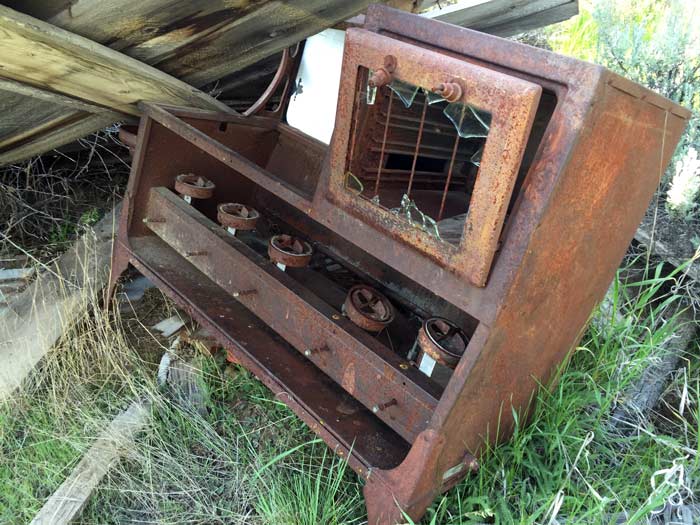
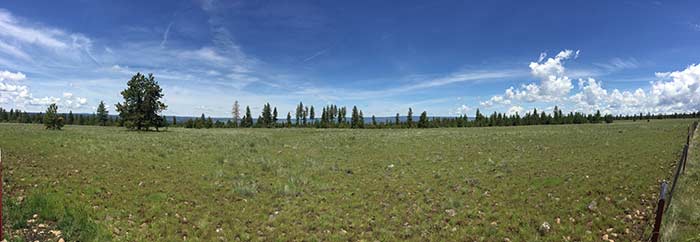
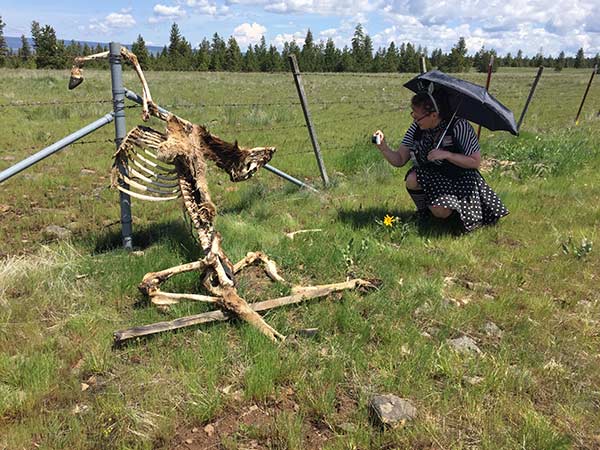
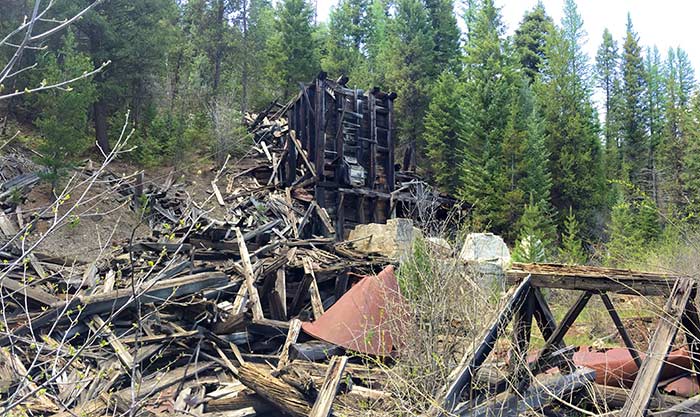
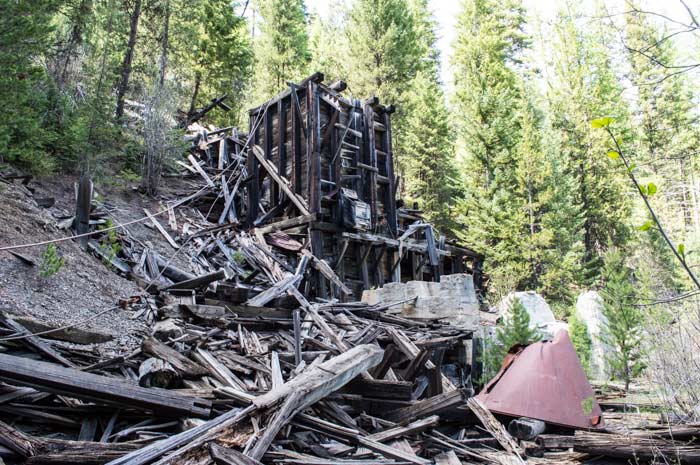
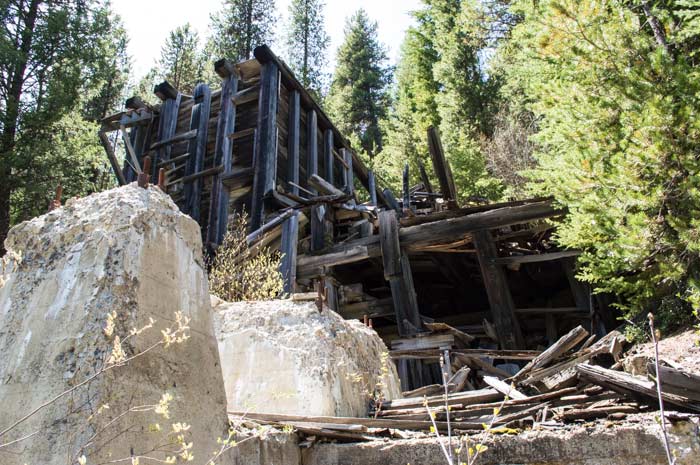
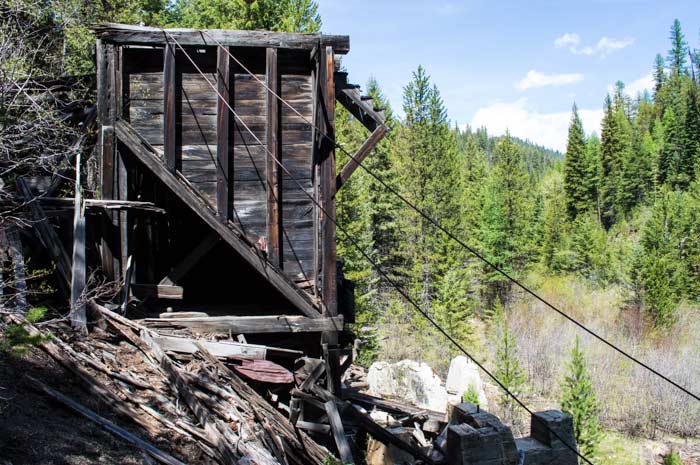
So there we were, in the middle of the California desert, atop a mountain at 8500 feet where the sun was so brutal it burned us through our clothing and the air was so thin that walking a dozen yards meant sitting down to rest, surrounded by the ruins of cutting edge Victorian technology…

But maybe I should back up a little.

It all happened because emanix is an artist, and land in Britain is scarce and expensive.

The part about her being an artist is important because she conceived an idea for a graphic novel and decided to embark on the arduous process of birthing that idea into a real thing. And the part about land being scarce in the United Kingdom? There are no ghost towns there. People don’t pack up and abandon entire cities, leaving them to crumble quietly into dust.

But I’m getting ahead of myself again.

So, the graphic novel. It’s set in a ghost town, you see. And ghost towns, well, they’re as thin on the ground where she lives as snowmen in the Philippines.

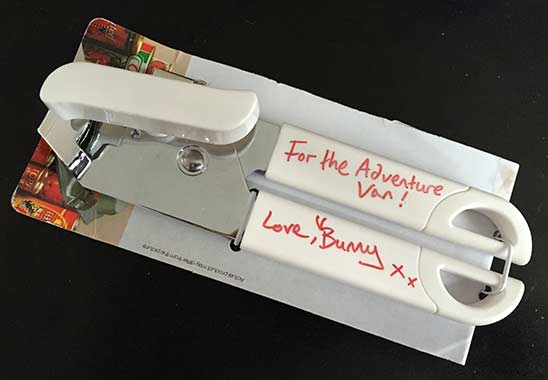
So it came to pass that she flew across the pond to Portland, and we set out to tour the many and varied ghost towns of the western United States. For background research, you see. We would, we thought, spend a few weeks living in the back of a camper van–tax-deductible, of course–surveying and photographing abandoned towns for the sake of making art.

That was the extent of our cunning plan…more a cunning intention, really. We are chaosbunnies, she and I. One does not become a chaosbunny by forming a plan and sticking to it.

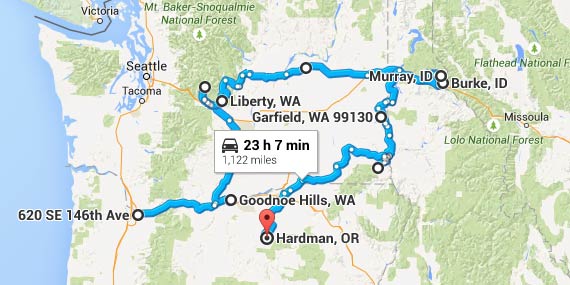
I did some research, by which I mean I typed “ghost towns” into Google and typed the result into Google Maps. It chewed for a while, an enormous massive parallel supercomputer bending some small part of its mighty attention to the task of drawing dotted lines on a map of the western United States. We piled our suitcases into the van and we were off…

…to a Wal-Mart to get supplies and an oil change. Then we were off…

…to the Wal-Mart parking lot, to meet my sweetie zaiah, who had realized I’d forgotten my jacket and kindly ran it out to me. Then we were off…

…and realized we’d nearly forgotten ice for the cooler. That taken care of, we were off, on a three-week adventure that would take us nearly 4,000 miles, across narrow dirt trails winding high into the mountains and through trackless expanses of Forest Service land, looking for places where people had once lived and didn’t any more.

The thing that worried me the most was the shovel. We’d packed a shovel, emanix and I, because she felt there might be an occasion during which we might have to poop in a hole. I’ve never quite got the hand of pooping in the hole. To be honest, I tend to regard the process with some suspicion, not to mention a fair degree of horror.

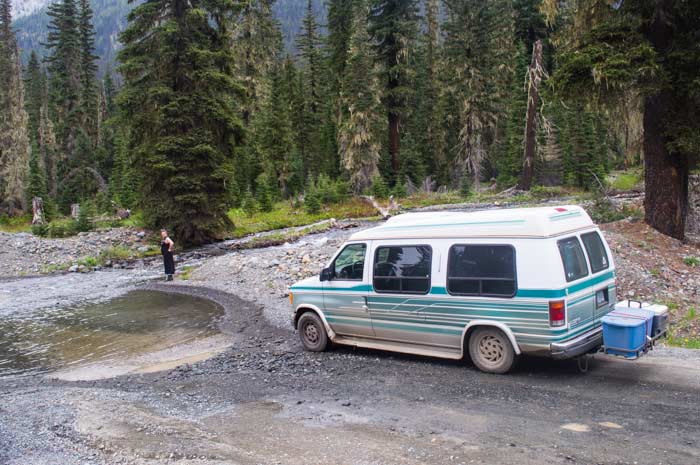
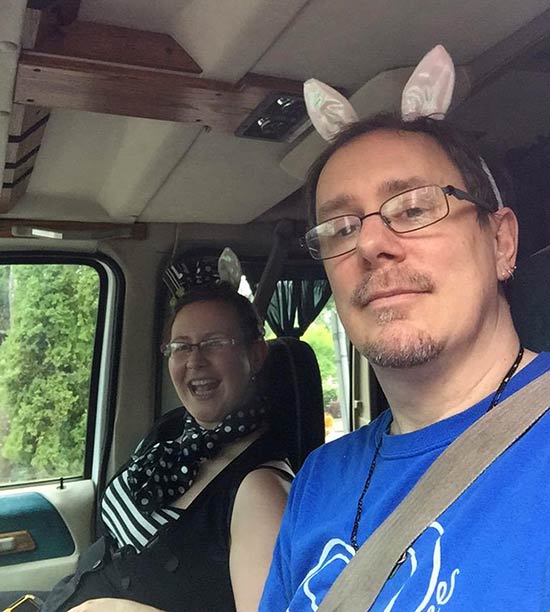
Minor reservations about the shovel aside, we set off with boundless optimism to venture into the desert, just the two of us and a 22-year-old van, bunny ears perched jauntily upon our heads.

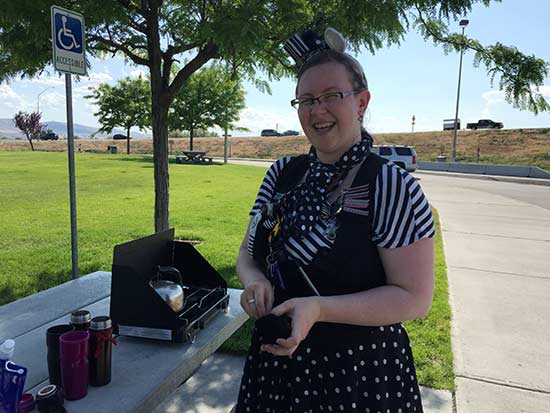
The ears I’m wearing are new, a gift from emanix to replace the previous set she gave me some five or six years ago, and which, after accompanying me on countless adventures across the globe, have become somewhat shabby and dilapidated for the wear. Shabby bunny ears are a sad thing, but everyday, around-town ears are surprisingly difficult to come by.

The first leg of our plan intention had us traveling through Washington, exploring a number of old mining towns throughout the state.

There is a saying among those who practice the art of war: a plan rarely survives contact with the enemy. It might, I think, be extended just a bit, to say a plan rarely survives contact with the enemy or a chaosbunny. Two chaosbunnies in one van is, therefore, right out. (Indeed, I suspect that should your life ever bring you into contact with two chaosbunnies in one van, you might well be advised to batten down the hatches, yo, because things likely will get interesting.)

So off we went, the two of us in a van, driving along the highway without a care in the world save for running out of gas, having a breakdown, having a breakdown in the middle of the desert, having a breakdown in the middle of the desert and running out of food or water, getting bitten by a venomous snake in the middle of the desert, having a breakdown in the middle of the desert and running out of food and water and then getting bitten by a venomous snake, and being attacked by clowns. We ventured into Washington and began searching, that first night, for a hotel to stay in, figuring that the van would be our home once the trip really got going.

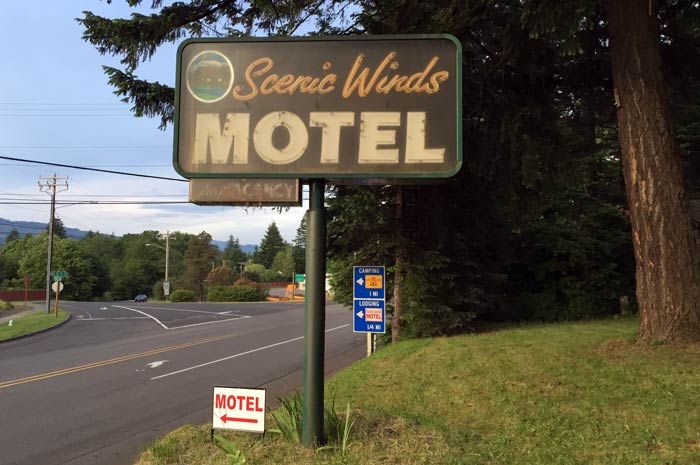
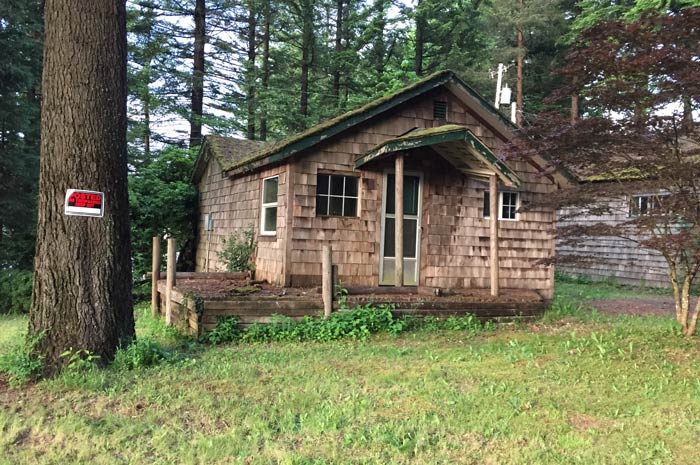
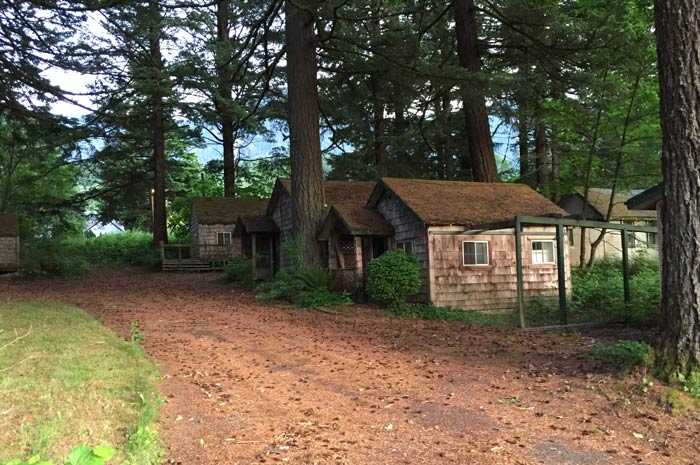
We pulled into the Scenic Winds Motel…

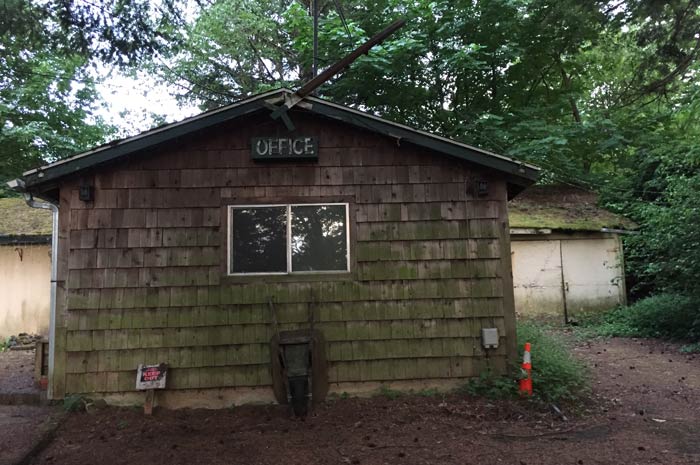
…and immediately realized that, entirely by accident, we’d started our trip in a ghost motel.

Even Norman Bates might have some reluctance to check in here.

“Ah,” thought we, “this bodes well! We’re finding abandoned places without really trying!”

Sadly, we couldn’t actually camp here, as the proximity to the road and the rather forbidding “no trespassing” signs would, we thought, attract the attention of law enforcement, who are notorious for the absence of their sense of irony.

So we spent the night in a motel that wasn’t abandoned, and set off bright and early on the first leg of our tour.

We did actually make the first stop on our planned itinerary, at Goodnoe Hills, Washington. The Internet assured us this town, first established in the 1860s and abandoned soon thereafter, would be a productive stop. We arrived, ears still jaunty, just in time to be underwhelmed.

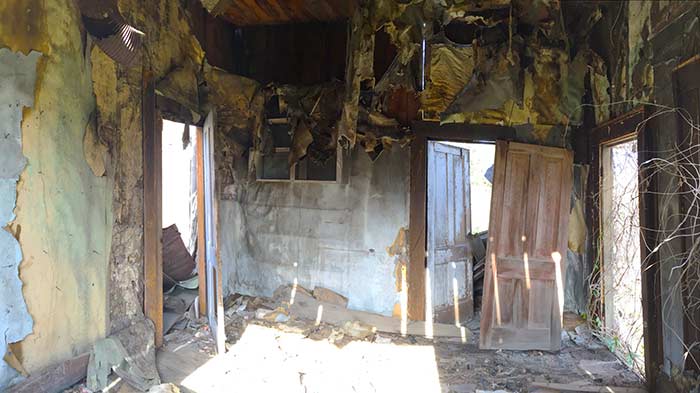
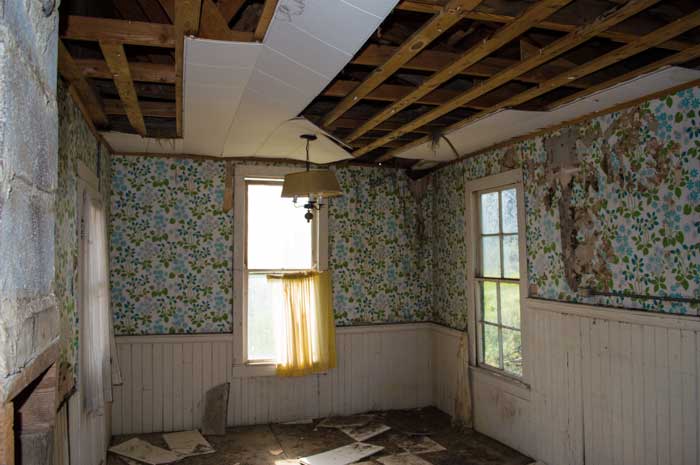
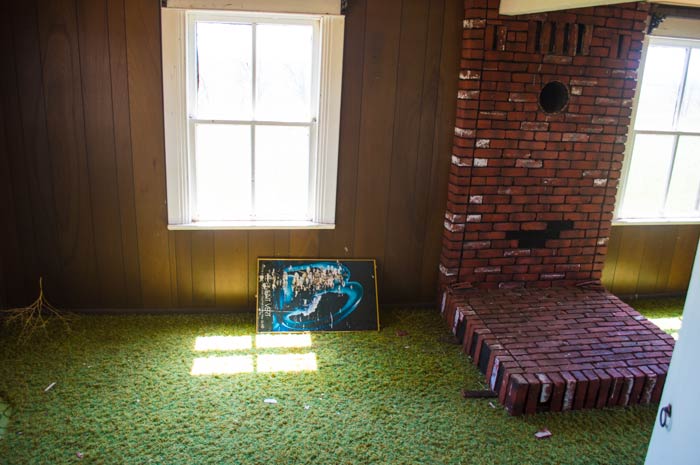
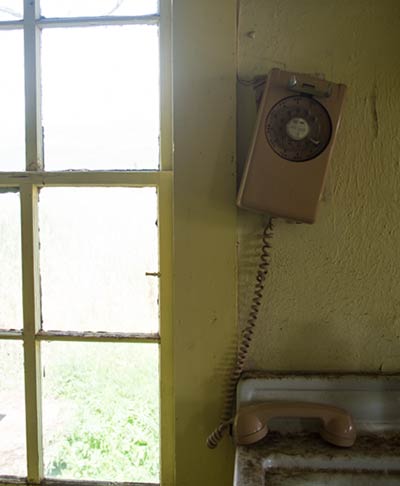
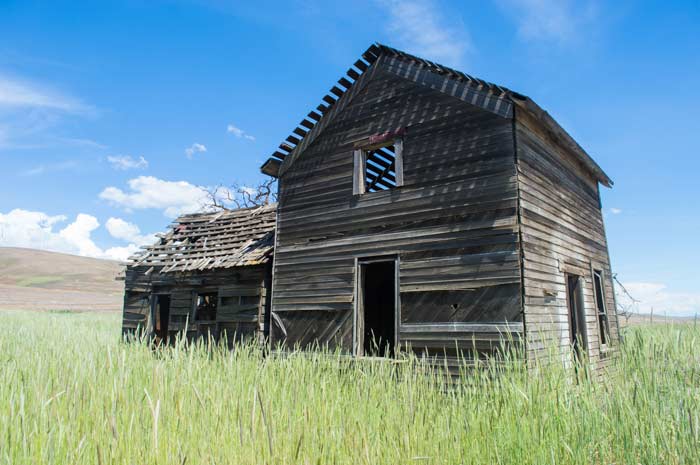
Which is not to say that there was nothing left of the old ghost town, only that there was almost nothing left. We discovered an abandoned house that looked like it was last decorated by human hands sometime in the most hideous part of that most hideous decade, the 70s:

There was an astonishing number of birds living in a bedroom on the second floor, and the quantity of guano was something that had to be seen to be believed. Seriously. I will see it in my nightmares for decades to come.

My parents used to have this exact phone. I haven’t seen one of these in a donkey’s age. Kids today probably wouldn’t know how to work one. No, scratch that, a lot of adults today probably wouldn’t know how to work one.

Cool, in its own ghastly way, but definitely not what we were looking for.

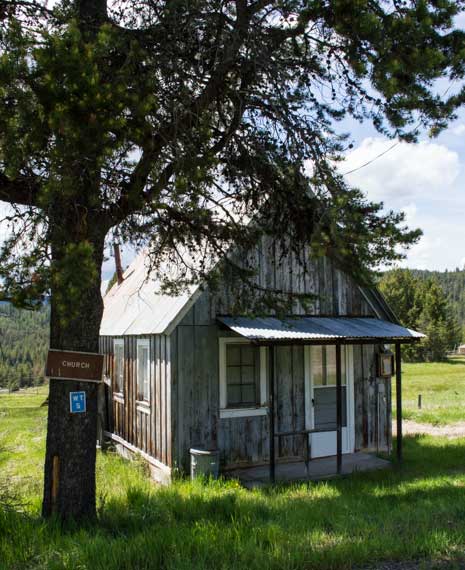
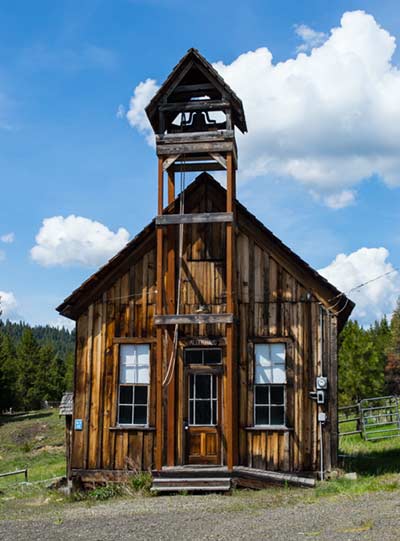
We had a bit better luck a few blocks down the road, for some loose definition of “blocks.” We found the ruins of a lovely old church, gradually crumbling into the dusty ground.

We weren’t able to get inside; the church was surrounded by a barbed-wire fence with dire “no trespassing” signs plastered all over it.

Still, it was quite lovely.

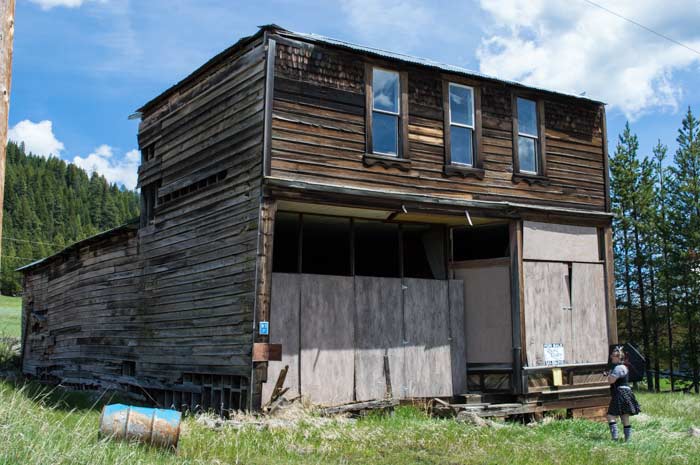
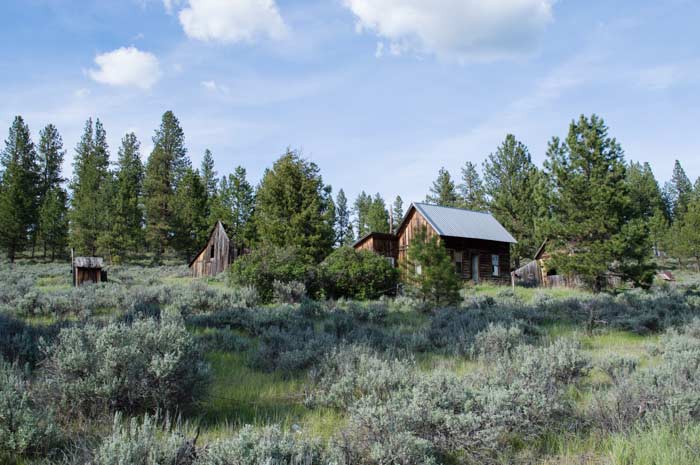
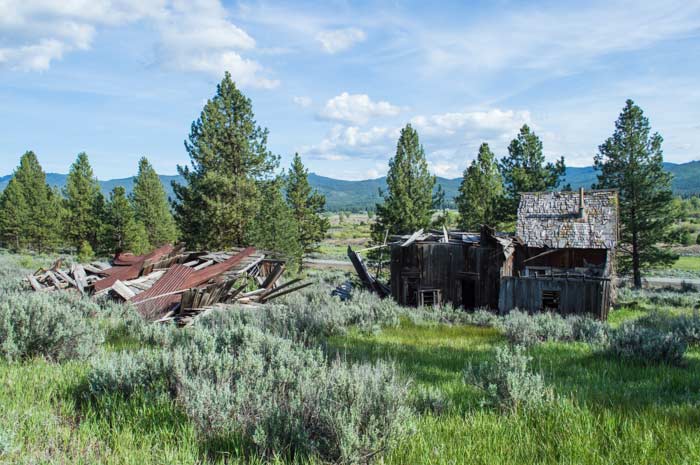
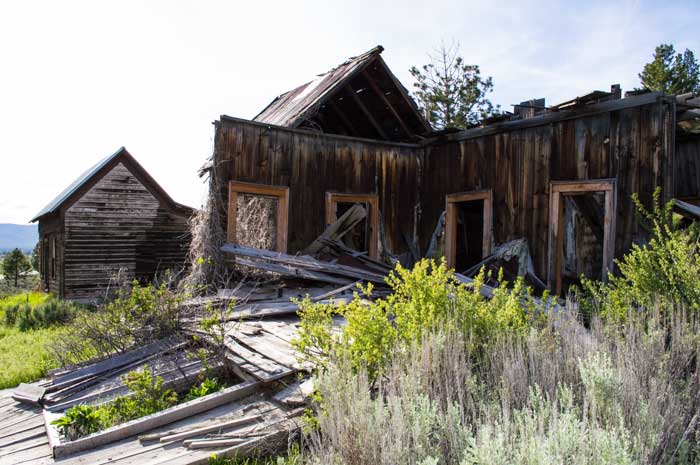
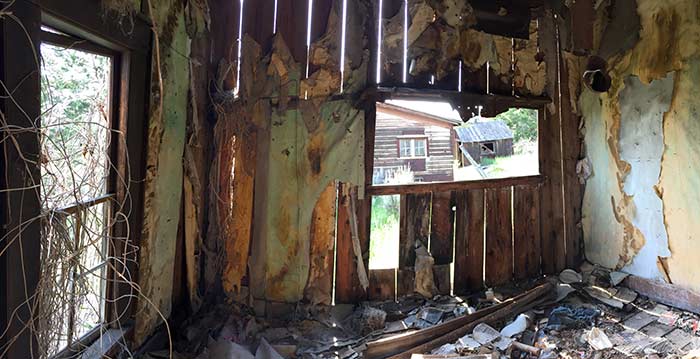
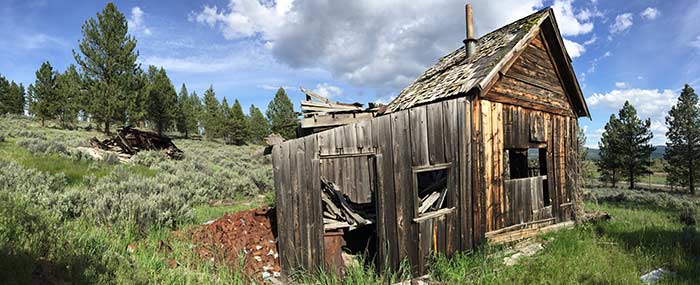
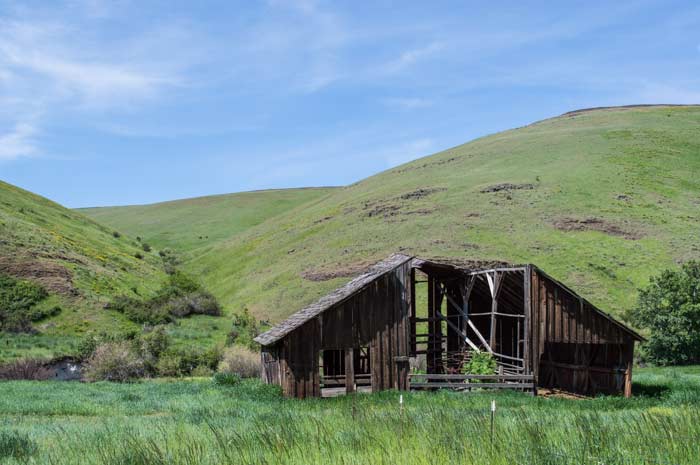
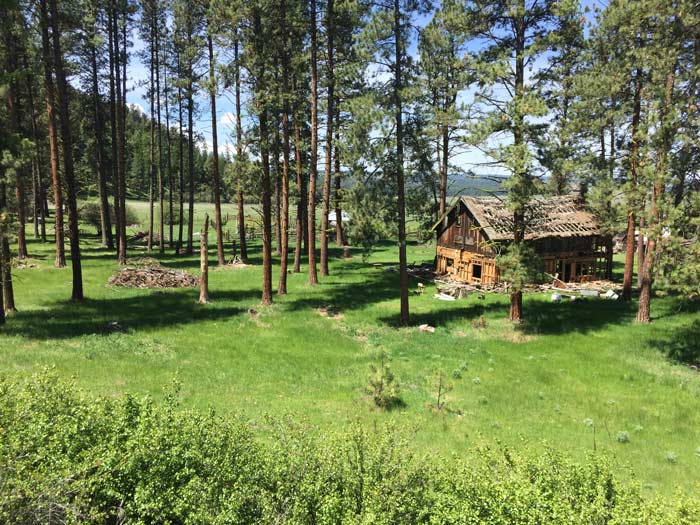
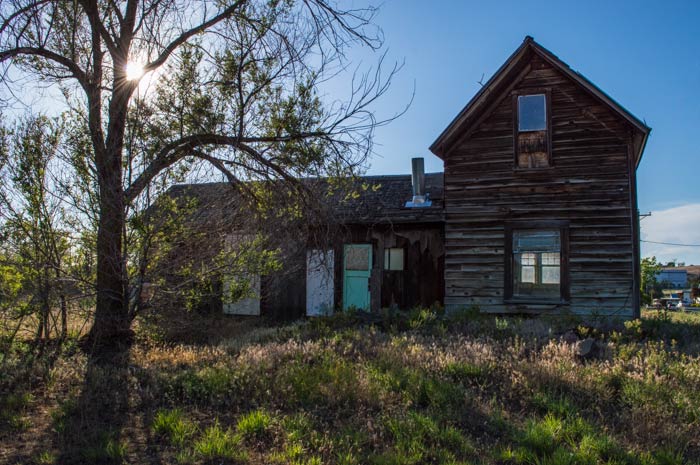
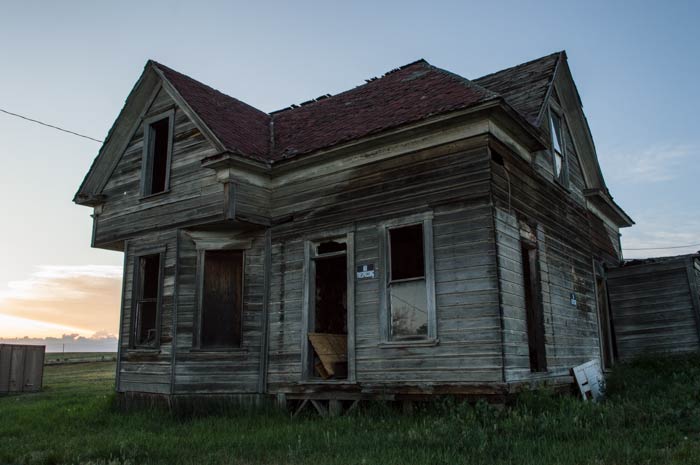
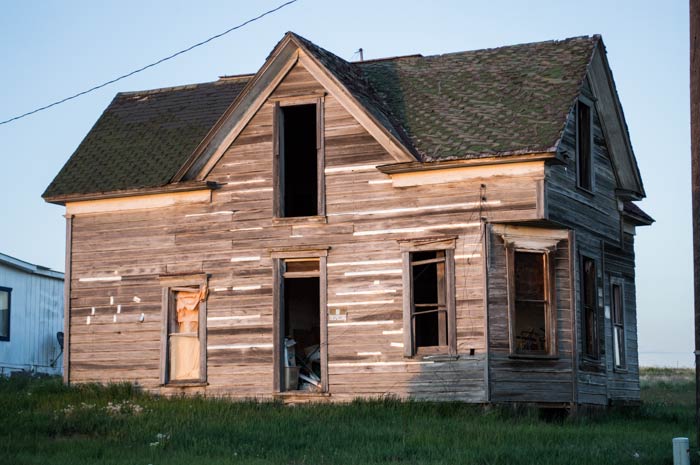
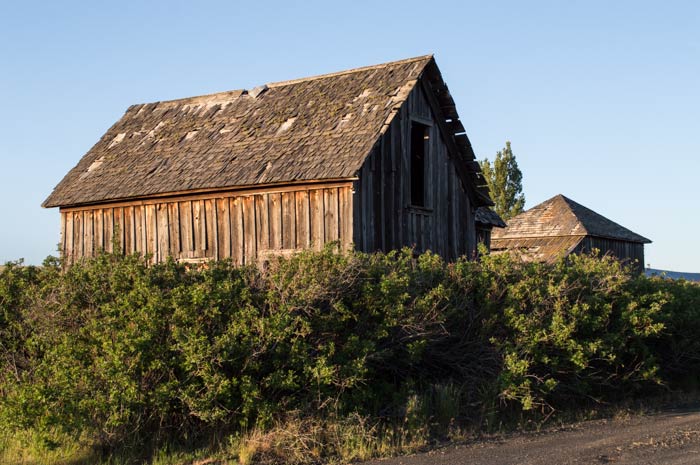
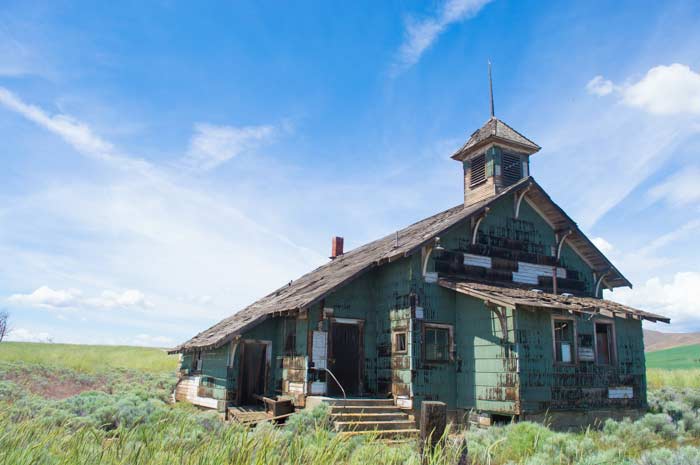
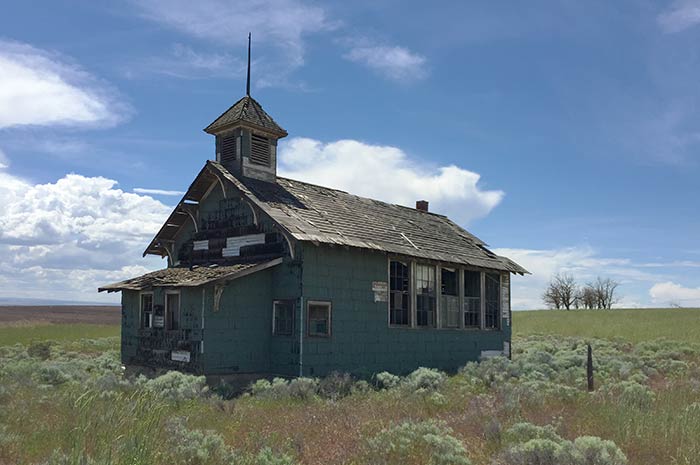
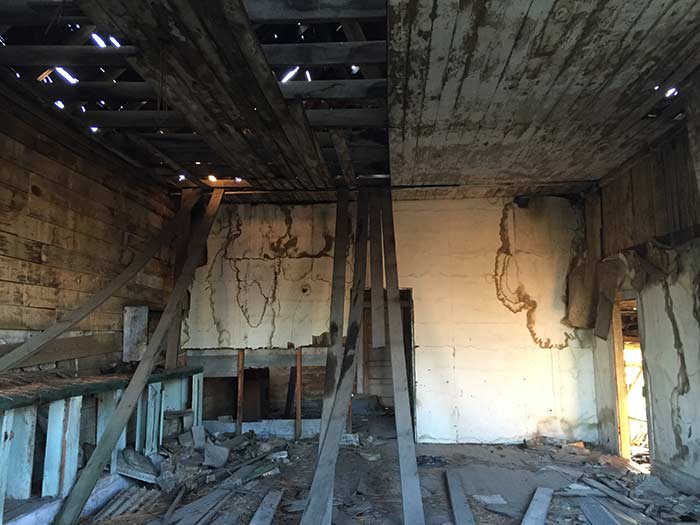
A bit further on, we encountered this place. Now this, we thought, was cooking with fire. This was a proper ruin, just the sort of thing we were hoping to find.

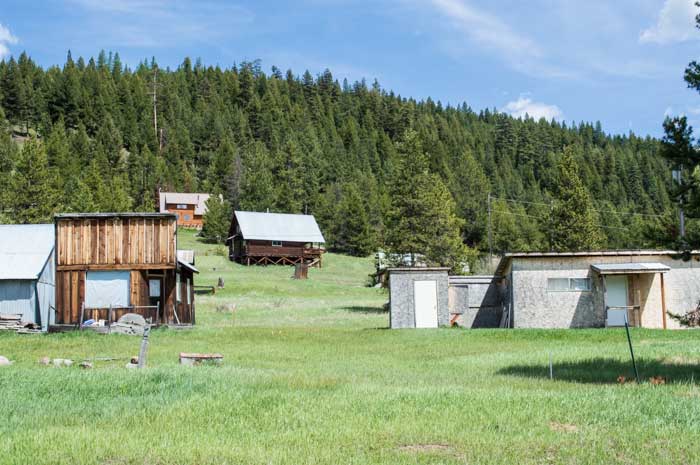
Overall, though, Goodnoe was a bit of a wash. The locals had destroyed most of the remnants of the old town and set down farms where the buildings once stood.

This would turn out to be a recurring theme in the early part of our ghost town adventures, until we figured out a new strategy that necessitated abandoning our original plan altogether.

But that’s a story for the next chapter.

Back in the cabin again!

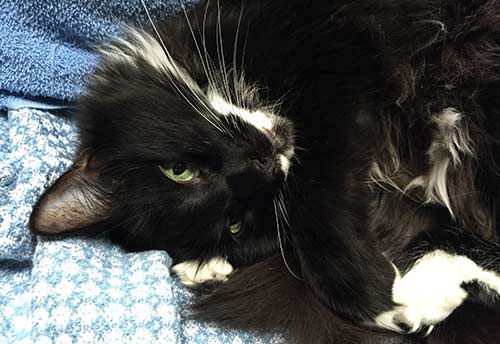
I’m typing this blog post in front of a huge picture window overlooking a temperate rainforest in rural Washington state, which means I’m back at the cabin where Eve Rickert and I wrote our polyamory book More Than Two. The cabin kitty, Whiskers, has been happy to see us, and has scarcely stopped begging for treats since we got here.

This time, I’m here to write my memoir, The Game Changer, about my relationship with my partner Shelly and the many and varied ways it changed my life. Poly folks–especially those of us who are poly activists–tend to be salesmen for polyamory, which means we don’t really talk about the ways polyamory can be disruptive…even when we have years of experience and think we have a pretty good bead on how to make it work.

A lot of folks contributed to the croudfunding of this book, and yet, I’m feeling kinda stuck. For years, I’ve written about the lessons I’ve learned and the conclusions I’ve come to, without really writing about how I got there. Now, in this memoir, I’m trying to write something very different from anything I’ve done before: I’m trying to write the personal story of how I came to be who I am, and how I learned the things I’ve learned. And it’s really hard! They say you get good at what you practice. I haven’t practiced this kind of writing.

And that means, for the first time I can remember, I’m grappling with imposter syndrome. I know you all helped support this book financially, and that means you want to read it…and I don’t want to let you down. But I am struggling with how to write this book.

So, for those of you who want to read The Game Changer, I would love if you could tell me a bit about why you want to read it. I’m trying to get this thing out of my head and into the computer, and I could use your encouragement.

Whiskers and I both thank you.

#WLAMF no. 29: This is hard!

I got the idea to do a blog post for each contribution we got on the Thorntree Press crowdfunding site yesterday evening, while zaiah and I were driving home from the Humboldt Anarchist Bookfair in Arcata, California. “It will be a great motivator to write!” I said. “Sure, it’ll be a lot of writing, but how hard can it be?”

Apparently I’m completely bonkers. I’ve scarcely left the computer all day, and as it turns out, churning out a bunch of blog posts back to back is surprisingly tiring.

But hey, there’s always more caffeine!


I’m writing one blog post for every contribution to our crowdfunding we receive between now and the end of the campaign. Help support indie publishing! We’re publishing five new books on polyamory in 2015.

#WLAMF no. 28: The Erotic Heritage Museum

Should you ever find yourself in Las Vegas, I suggest… Well, to be honest, I suggest you don’t find yourself in Las Vegas. It’s a sad, desperate place, filled with people trying much too hard to convince themselves that this thing they’re having is indeed fun, and not some other thing, like not-fun (which, I must say, is more often the case). And they don’t much cotton to guys wearing bunny ears there.

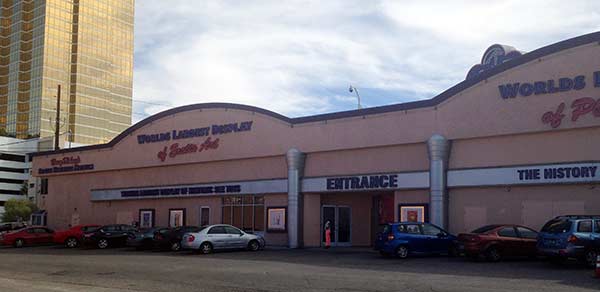
But if you do find yourself in Las Vegas, one of the places on the very shortlist of places I suggest you check out is Harry Mahoney’s Erotic Heritage Museum. It’s quite a bizarre place, part museum, part Vegas festival, part…well, I don’t really know what.

It’s not terribly impressive from the outside, to be sure. It’s in an obscure corner of an industrial park, and from the outside, it looks like this:

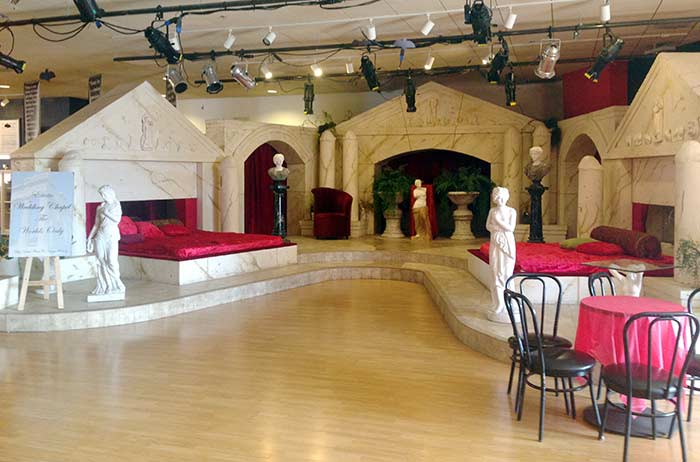
I went there not quite sure what to expect. I certainly didn’t expect the Erotic Heritage Museum wedding chapel, the first thing a visitor encounters when walking through the door. It’s billed as the only wedding chapel in Vegas where you can have your ceremony and also consummate the union, and given how uptight Las Vegas is with its Puritan morality, I believe it. It’s a bit Caligula meets Penthouse Letters, though to be fair the movie Caligula was also a bit Caligula meets Penthouse Letters, so I imagine that makes it about two-thirds Caligula and one-third Penthouse Letters.

I want to do…things in this place. With, and to, lots of people.

Also on the main floor is this…err, sculpture. Artwork. Thing. It’s carved from a solid block of limestone, and weighs something like two thousand pounds and change. It too makes me want to do…things.

Moving downstairs, one finds a large museum space filled with everything from antique vibrators (natch) to a collection, billed as the world’s largest such collection, of antique, ancient, and prehistoric dildos.

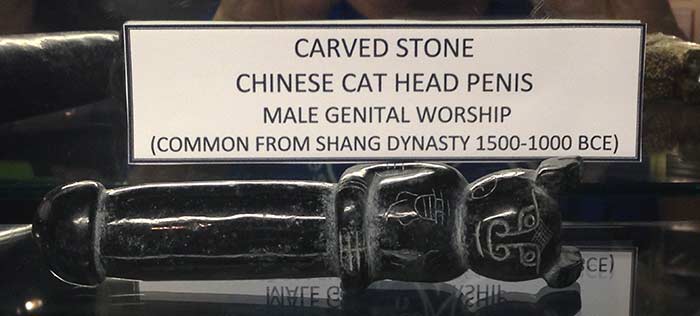
Including this rather fetching fellow, a proto-Hello Kitty design in carved stone.

There are a lot of carved stone dildos on display. Stone has, apparently, been a rather popular medium for sex toys for quite a long time.

I have discussed, for reals, teaming with a museum like this one and creating a line of high-quality replicas of various ancient stone dildos, each of which would come with a little insert that described the particular example of the art, along with historical information, information about where it came from, and so on. What do you think? Do you think there’d be a market for this sort of thing?

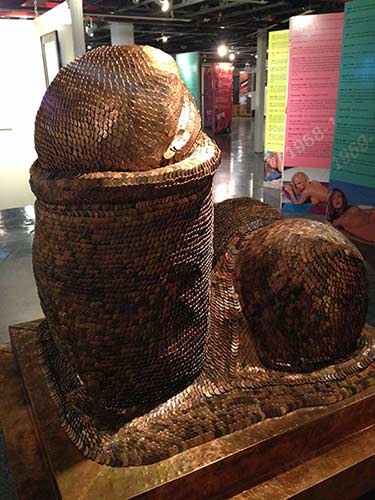
The exhibits also include props from the Star Wars porn parody (because of course there was a Star Wars porn parody) and, more inexplicably, this sculpture of a cock and balls, made of $4,000 worth of pennies.

If you find yourself in Vegas for whatever reason, and you’re unwilling to gnaw your own arm off to escape (possibly because you are the Kwisatz Haderach), definitely check it out. It’s a fascinating place.


I’m writing one blog post for every contribution to our crowdfunding we receive between now and the end of the campaign. Help support indie publishing! We’re publishing five new books on polyamory in 2015.

#WLAMF no. 21: Kitties I have loved and lost

One of the stops on the More Than Two book tour took us to Paonia, Colorado, a remote town of about 1,500 people in the foothills of the Rocky Mountains. We got there late at night, after traveling along windy mountain roads in the dark and very nearly hitting both a bear and a deer, each of whom had for some reason unknown to your humble narrator chosen to amble out in the middle of the road and just kind of sit there.

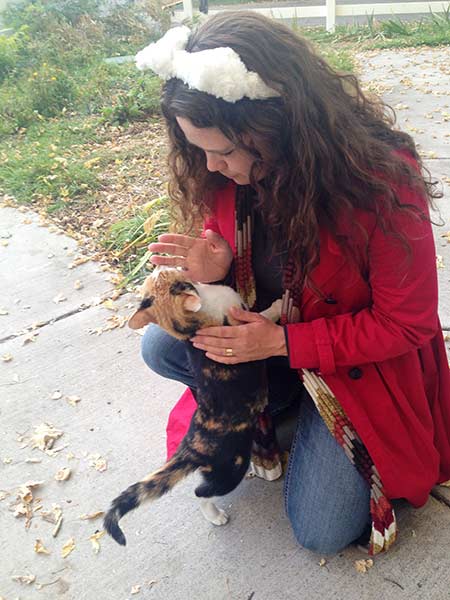
We spent some time exploring the town before our book event, and happened upon a small park more or less in the middle of town. While we were walking through the park, I caught the eye of a young calico cat who was trotting across the street some distance away, doing whatever it is cats do in Paonia, Colorado.

The cat decided she wanted to make friends, and immediately came running over to us, where she threw herself into my arms with some gusto.

After some petting and playing with, she decided she wanted Eve’s attention, too.

We met many cats on the book tour, but this adorable little calico is the one I remember the most. She was incredibly friendly (and I say this as a guy who owns Tonkinese kittens, animals known worldwide for how strongly they bond to their people), but also had some of the signs that somebody somewhere was mistreating her. She was hypervigilant, and took off at the slightest sign that anyone else was walking toward us.

I sincerely hope nobody was being mean to her. There’s a special place in hell for humans who abuse animals. I wonder about this kitten often, and hope that, wherever she is, she is happy and warm.


I’m writing one blog post for every contribution to our crowdfunding we receive between now and the end of the campaign. Help support indie publishing! We’re publishing five new books on polyamory in 2015.

#WLAMF no. 14: Big Science Happens Here

On the plains of New Mexico, there is a road. This road stretches for miles across empty desert. If you drive far enough on this road, eventually after you’ve passed miles of scrubbrush and have begun to imagine that all the people you’ve ever known have never really existed but are only the products of your own hallucinogenic dreams, you will see an enormous radio dish on the horizon. And then another, and another.

You’re not actually close to the Very Large Array yet; there is still a lot of driving ahead of you.

But if you’re up to the challenge, and if you’re patient and persistent, and if you don’t break an axle on the narrow and badly-maintained road, eventually you will come to a place where there are a lot of very smart people who are very dedicated to understanding the physical world.

This is the Very Large Array. It is a collection of radio telescopes that looks into the universe in a wide range of frequencies, frequencies our limited vision is altogether insufficient for. Its purpose? To understand the universe we live in.

I stopped here on the trip around the Southwest. It’s not what I expected. Big Science is never quite as…clean and tidy as Hollywood would have you believe. Big Science often means Big Engineering, and Big Engineering is all about getting things done.

These dishes can act individually, but usually they’re part of a collective whole, gathering and amplifying incredibly faint signals from very far away places. The entire array is, in a sense, a single instrument, and that instrument can be reconfigured to observe radio waves in all kinds of frequencies.

But the best way to align a set of dishes changes according to the frequencies they’re observing, and that means these antennas move. I don’t mean they move as in rotate to sweep the sky, though they do do that as well. I mean move as in grow farther from each other or closer to each other, as the observations require.

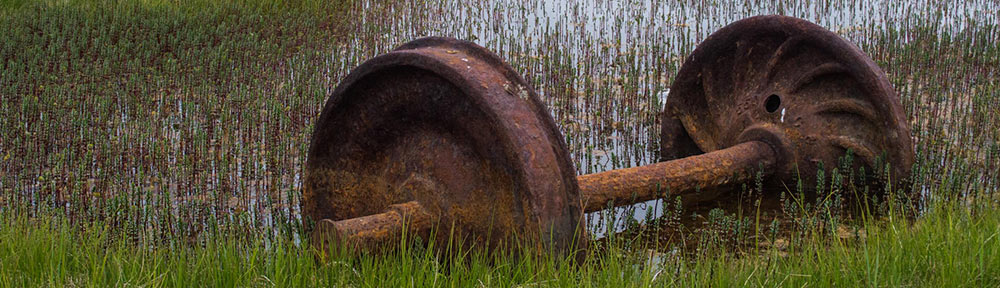
They are huge, and moving huge things means big machinery. Each antenna sits on a pad, and each pad is next to a set of railroad tracks. Those railroad tracks are the roadways for enormous tenders, which literally pick up the antennas and carry them from place to place.

To save room, the train tracks don’t curve. They intersect at 90-degree angles. To make a turn, the tender sets down an enormous hydraulic ram, lifts itself and the antenna completely off the ground, spins around on its own axis, and settles itself back down on the track again.

We were fortunate enough to be able to climb one of the antennas, for a value of “fortunate enough” that means “allowed to take a harrowing climb up a creaking, swaying steel staircase onto the surface of a tremendous and steeply-angled dish made of surprisingly thin sheet metal that’s way, way higher off the ground than you think it is.” Those afraid of heights, falling, ladders, stairs, or swaying back and forth while a long way from the ground need not apply.

I am not afraid of any of these things, and climbing onto the dish was only a little short of terrifying.

Big Science happens here. This is the sort of place where we as human beings learn more about this world we are so uniquely blessed, for a short time, to exist in. There is no more noble nor essentially human quest than the quest for understanding, and places like this are where that happens.


I’m writing one blog post for every contribution to our crowdfunding we receive between now and the end of the campaign. Help support indie publishing! We’re publishing five new books on polyamory in 2015: https://www.indiegogo.com/projects/thorntree-press-three-new-polyamory-books-in-2015/x/1603977

#WLAMF no. 13: Zaiah

Today is the ninth anniversary of my relationship with my partner zaiah.

A lot of folks will say polyamory doesn’t work. “I knew some people who tried that,” they’ll say. “They broke up.” If you ask these people how many monogamous folks they know who’ve broken up, you’ll get some humphing and hawing, but you probably won’t make your point.

zaiah and I have had an interesting adventure, these past nine years. She and I have traveled across the country together, lived together, explored together, tried new things together. I’m looking forward to many more years of adventure. Happy anniversary, darling! I love you.


I’m writing one blog post for every contribution to our crowdfunding we receive between now and the end of the campaign. Help support indie publishing! We’re publishing five new books on polyamory in 2015: https://www.indiegogo.com/projects/thorntree-press-three-new-polyamory-books-in-2015/x/1603977

#WLAMF no. 6: Stonepeckers

During our travels around the country talking to folks about polyamory, Eve and I passed through Colorado. We spent a night at Colorado National Monument, sleeping in the back of the van at a weird angle that made us keep rolling into each other.

Colorado National Monument is awesome in the “nature is grand on a scale beyond mere human endeavor” sense, rather than a “this architecture is grand because it’s designed to manipulate you” sense. It’s filled with towers of stone that look like something right out of an old Roadrunner cartoon, separated from each other by deep canyons that could comfortably swallow a blue whale and a dozen tour buses and you’d never even notice.

Some of those towers of stone are pockmarked with great holes that resemble nothing so much as the holes made in telephone poles by optimistic woodpeckers.

I asked a park ranger1 about the holes. That’s when I first learned of the great stonepeckers.

The similarity to woodpecker holes is no coincidence, for they’re formed by similar processes. During the dry season, giant stonepeckers, with huge talons and beaks like carved diamond, land on the buttes and chip away at the stone, seeking the rock burrowers that live within. They look a bit like woodpeckers, but on a far grander scale. Their iron-feathered wings can stretch more than thirty feet, and when they peck at the cliff face, the sound travels for miles.

They’re not related to woodpeckers at all, I learned. Their similarities are purely a matter of convergent dimorphism; form follows function. The stonepeckers are actually not birds at all; they’re related to wyverns, dragons, and thunder lizards. You can tell not only by their size, but by the morphology of their talons and their skeletal structure, particularly around the hip.

The sky was once full of them, tens of thousands of years ago. We see evidence in the fossil record–not only of stonepecker bones but of their great nests of pine trees, lined with flint. Drying climate reduced their numbers; today, only a handful of stonepeckers remains. They are carefully managed by the Parks and Recreation Service, that uses specially modified Apache attack helicopters to keep them from straying too close to people.

1 By which I mean I thought about asking a park ranger, then decided to run with my own story instead because it was probably more interesting.


I’m writing one blog post for every contribution to our crowdfunding we receive between now and the end of the campaign. Help support indie publishing! We’re publishing five new books on polyamory in 2015: https://www.indiegogo.com/projects/thorntree-press-three-new-polyamory-books-in-2015/x/1603977

b#WLAMF no. 5: Awe

As I mentioned in WLAMF no. 4, Eve and I visited Salt Lake City on our book tour. The tour feels like it happened years ago, even though it ended, what, last month or something? Time does funny things when you upend your life and start down an entirely new path.

Anyway, while we were there, we visited the Mormon temple, because hey! polyamory authors wearing cute animal ears in Salt Lake City! What else would we do, right?

We were kept under the watchful eye of security the entire time, but they were polite about it and let us take pictures.

The Mormon temple is awesome. And I mean that in the literal, old-fashioned sense of the word, not in the modern, Bill and Ted’s Excellent Adventure sense of the word. It is a structure designed and built with the intention of evoking a sense of awe. It is emotion in architecture, every aspect carefully crafted to manipulate the emotions of those who see it.

It’s a bit ironic, really, that human beings can design and build a structure whose design is intended to make other human beings believe they are part of something greater than humanity.

I have always harbored a deep distrust of houses of worship built on such a grandiose scale. The walls of the temple are covered with huge squares of marble, the cost of each one of which would probably feed a dozen needy families for six months. The grounds are that specific kind of lovely that you can only get through hundreds of thousands of dollars’ worth of gardening, all carefully watered every day in this, a place in the center of the desert.

Folks like to talk about Madison Avenue, the epicenter of modern marketing and advertising, as a cynical and soulless machine of mass manipulation. And yet, and yet, I’ve never met an advertiser whose talent can compare in even the feeblest way to that of the architect of religious edifices. This structure is manipulation, every line and every ornament tasked to the goal of making you feel something when you see it. A lot of this building is, in a utilitarian sense, wasted space; it is designed to an end other than efficiency.

Sure is pretty, though, isn’t it?


I’m writing one blog post for every contribution to our crowdfunding we receive between now and the end of the campaign. Help support indie publishing! We’re publishing five new books on polyamory in 2015: https://www.indiegogo.com/projects/thorntree-press-three-new-polyamory-books-in-2015/x/1603977

#WLAMF no. 1: Dance, my puppet! Dance!

We have twelve hours to go on the crowdfunding for the 2015 polyamory book lineup from Thorntree Press. And so, I’m doing something insane. For the next twelve hours, every time someone contributes, I’m going to write a blog post, either here or on the More Than Two blog.

Yep, that’s right. I’m going to be glued to my computer for twelve hours. I have my tea in my “Write Like a Motherfucker” mug, I have my cat, and I am ready! If we get 30 contributions, I’ll write 30 blog posts today. If we get 40, I’ll write 40. You get the idea.

I’ll be Tweeting links to the posts with the hashtag #WLAMF. So if you want to make me dance, just contribute! You’ll be supporting indie publishing of quality polyamory books and making me perform at the same time!