Two Chaosbunnies in the Desert: On the taxonomy of ghost towns

Part 1 of this saga is here. Part 7 of this saga is here.
Part 2 of this saga is here. Part 8 of this saga is here.
Part 3 of this saga is here. Part 9 of this saga is here.
Part 4 of this saga is here. Part 10 of this saga is here.
Part 5 of this saga is here. Part 11 of this saga is here.
Part 6 of this saga is here. Part 12 of this saga is here.

As our journey around the Pacific Northwest unfolded, emanix and I slowly gained an awareness that not all ghost towns are the same. There is, in fact, an entire taxonomic classification of ghost towns–a phylogenic tree, if you will, of abandoned places.

The classic, Scooby Doo variety of ghost town–an entire town whose members have left behind, leaving empty buildings in their wake, is relatively rare. Ghost towns like that don’t usually last very long, unless they’re in high desert. The artifice of human hands is surprisingly fragile and crumbles quickly without human tending. Some of the ghost towns that had formerly be on our list, before we started validating them with Google Earth, are nothing but foundations scattered about in otherwise unremarkable landscape.

Some ghost towns are what Bunny calls “zombie towns.” They’re towns that were mostly or completely dead, then came back to life when the economic conditions changed. One ghost town we had planned to visit but then removed from our list is a classic example, an old mining town settled in the 1800s that became nearly deserted in the 1940s when the mine played out, then saw new life in 2011 when new mining technology made it possible to reopen the mine.

More common are ghost towns that aren’t really ghost towns. People still live in them; there are inhabited houses and ongoing business enterprises set in amongst abandoned houses. The town of Venango, Nebraska where I grew up is a semi-ghost town. Some of these ghost towns reinvent themselves as tourist destinations, playing up the “ghost town” mystique for the benefit of visitors.

Granite is a tourist ghost town. Being there is a bit like being on a very realistic movie set. There are still people living there–quite a few of them, in fact–and many of the abandoned buildings have little signs telling you what they once were.

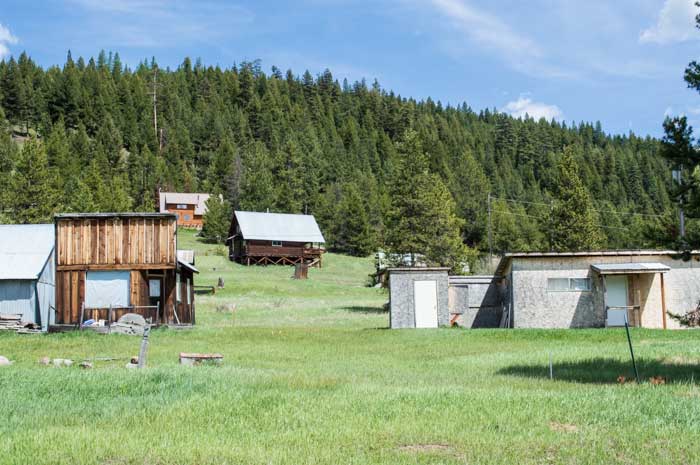
Granite wasn’t all that impressive at first glance.
I have often been told not to judge a book by its cover. It’s advice that never made a whole lot of sense to me; if the cover didn’t matter, why not just put a blank cover with the book’s title on the front? Today, as co-owner of a publishing company, it makes even less sense to me. But the idea behind it has a small grain of truth. You can’t always tell from a first glance at something what you’ll get. First impressions can be deceptive. Something that doesn’t seem impressive at first might be far more impressive once you delve a bit deeper.

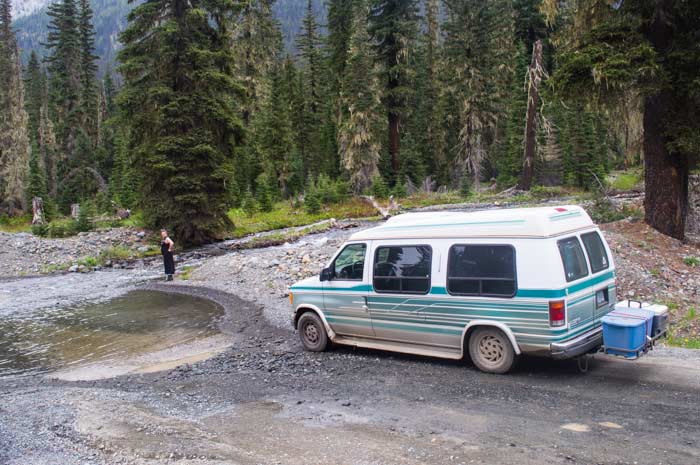
Sometimes, though, you can judge a book by its cover…and Granite was one such book. We hopped out of the Adventure Van and poked around for a while, waiting to be blown away by something amazing. Amazing things failed to happen.

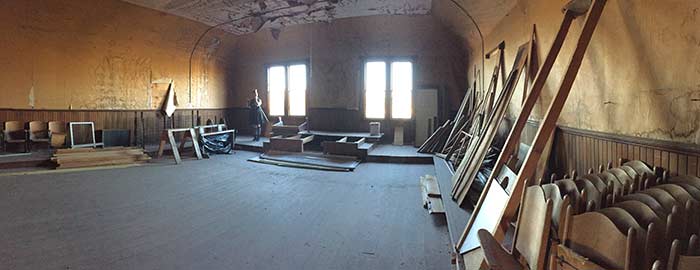
We did both like this old dance hall, to be fair.
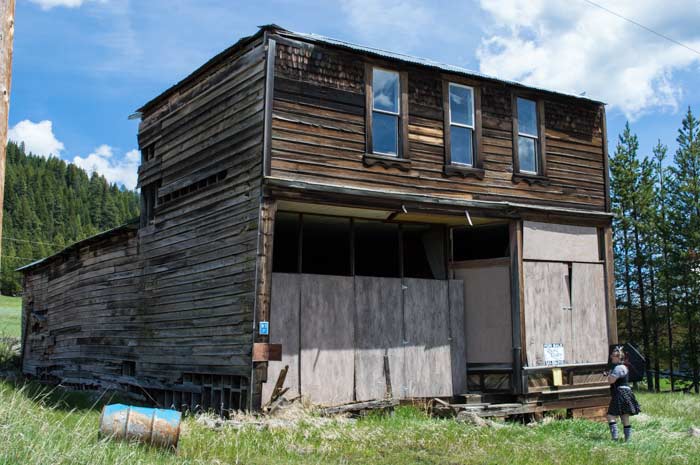
We knew it was a dance hall because a sign told us so.

That sign was probably old when mammoths walked the earth. Oh, the stories that sign could tell–skies filled with the leathery wings of great flying pterosaurs, the discovery of the western reaches of the New World by a strange species of hairless ape, Richard Nixon’s Southern Strategy.

The building is for sale, if you want it.

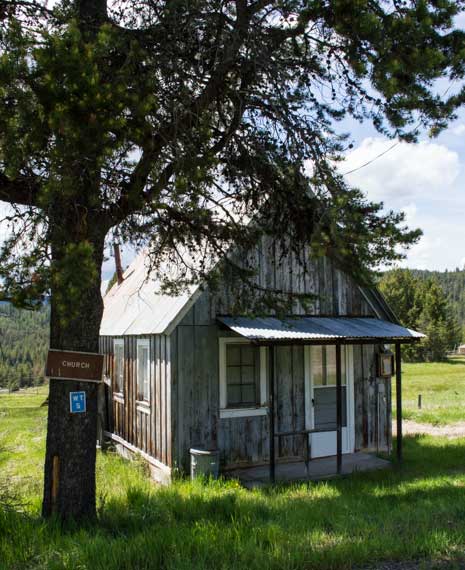
The same style of sign identified the old fire station and the old church. (It’s hard not to put “the old” in front of the remnants of abandoned places–the old Miller place, the old asylum, the old space shuttle Vehicle Assembly Building, the old Detroit.)
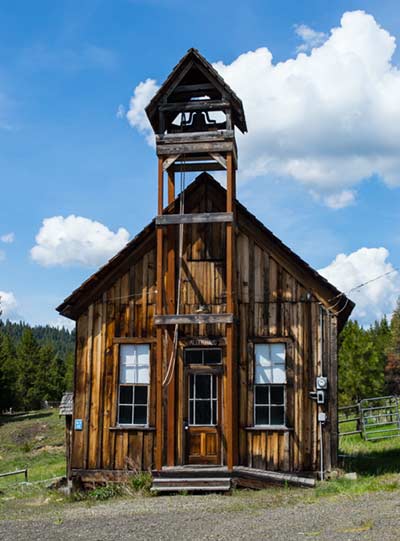
But we soon found ourselves bored and in search of wifi. There was a small combination convenience store/winter sports staging and supply area/restaurant at the edge of town, where we wandered in search of food and Internet access. They had wifi but told us guests weren’t allowed to use it, on account of the considerable expense involved in airlifting data packets to such a remote place.

They also seemed flummoxed by Bunny’s English accent and even more befuddled by her request for tea. It took a while, but they finally sorted out what “tea” was an a loose approximation of how to make it, and delivered, after considerable fussing, a beverage which was more like tea than you might expect from, say, a Sirius Cybernetics Corporation beverage dispenser.

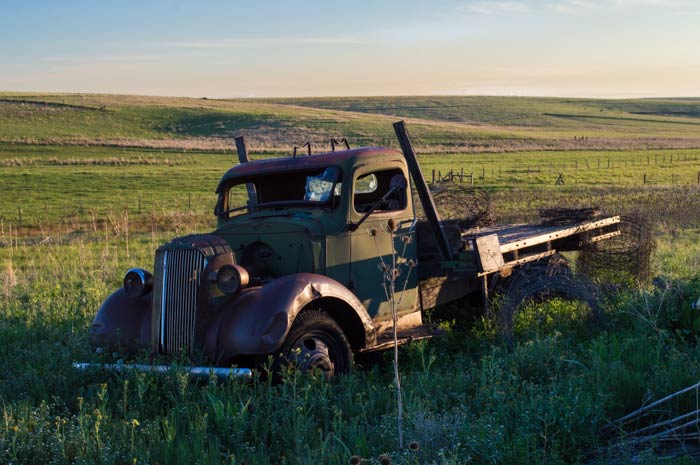
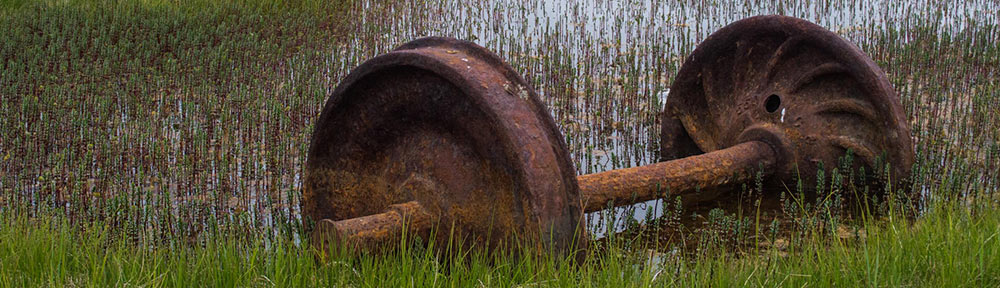
We headed out of town, pausing only long enough to photograph this rather fetching ruin of the old car, located just a short distance from the old lodge right next to the old tree.
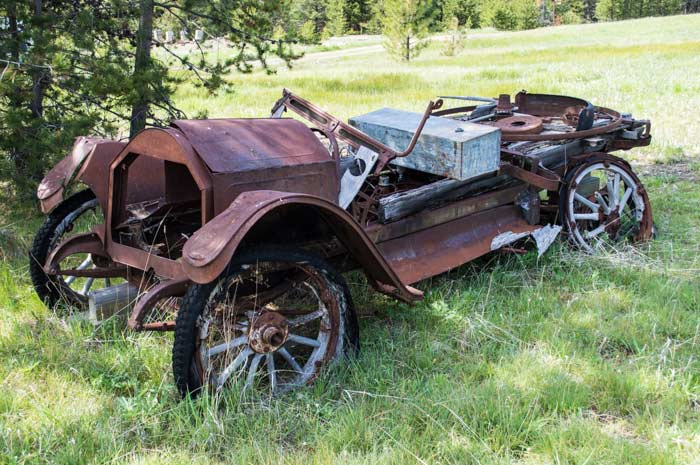
We headed out to our next destination, which we hoped would be less semi-ghost town and more authentic ghost town than Granite, and we–

“Hey! Pull over!” Bunny said. “What’s that?”

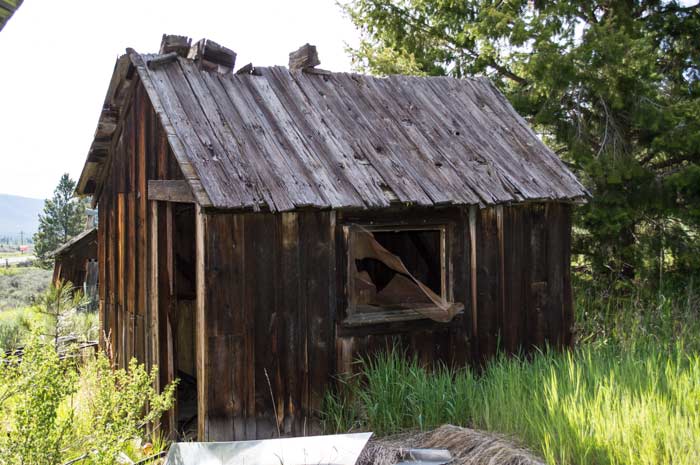
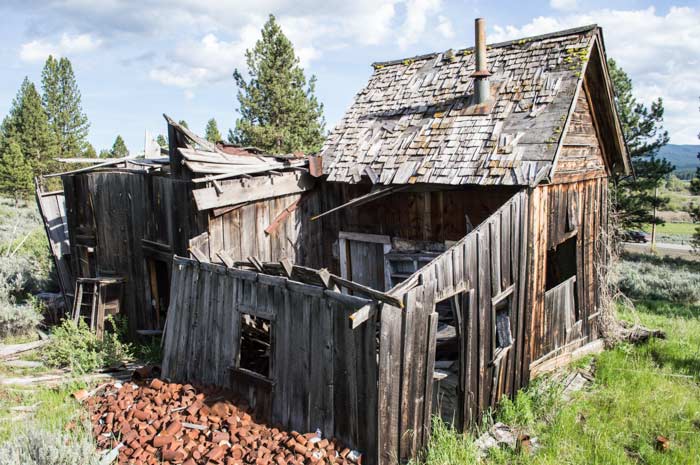
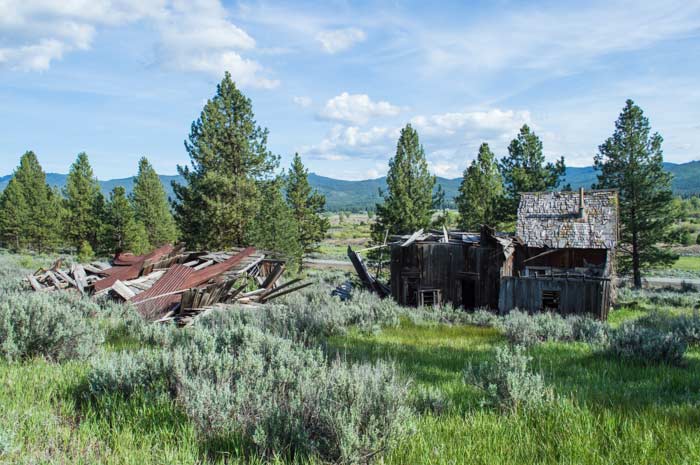
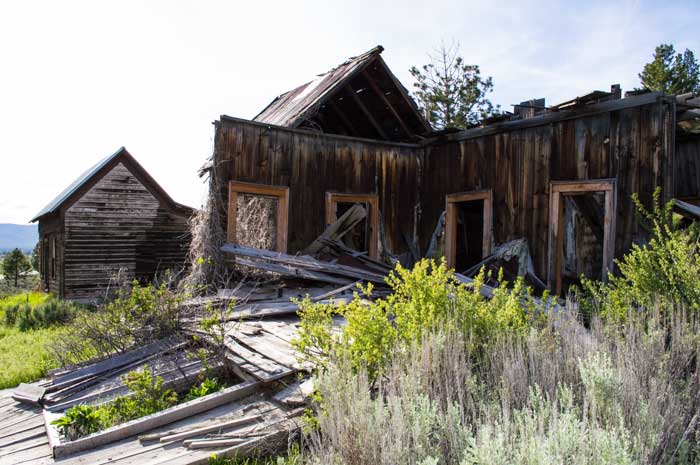
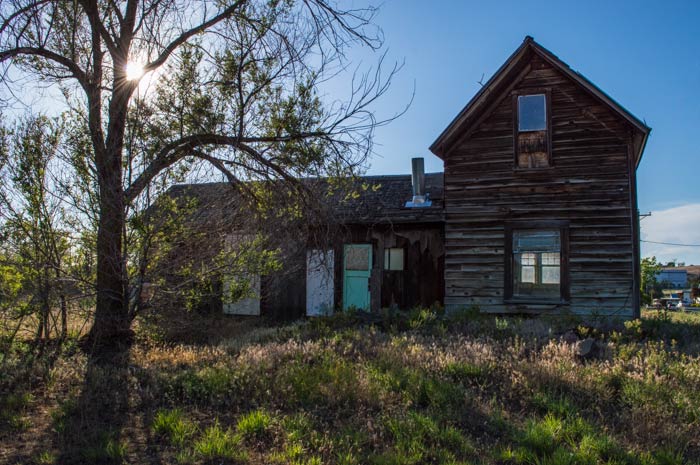
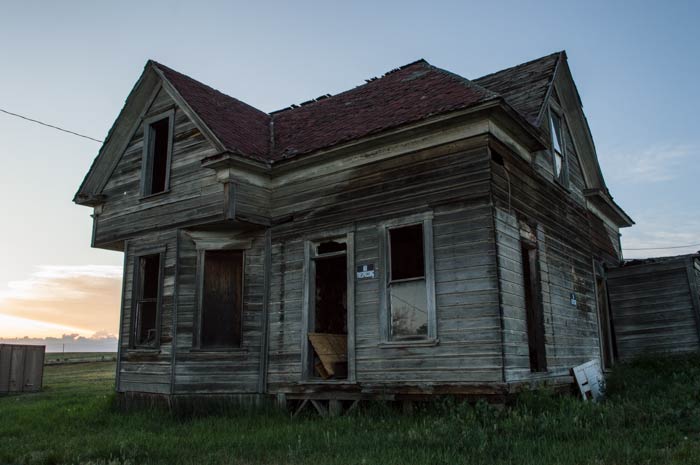
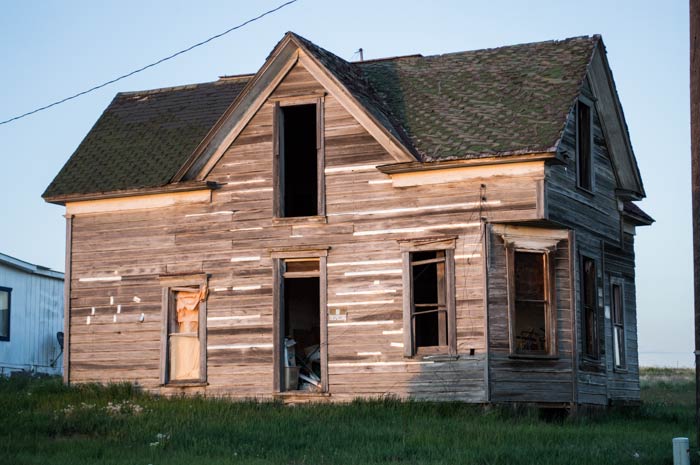
“That” turned out to be a cluster of ruins–not a town, precisely, but more a gathering, or perhaps clump, of old houses long since abandoned.

And it was awesome.

I stopped the Adventure Van off the road, a narrow and straight strip of highway that cut through the desert like a length of electrical tape placed by some unknown hand over an otherwise innocuous birthday cake, or something.

We hopped out, cameras in hand, and explored.
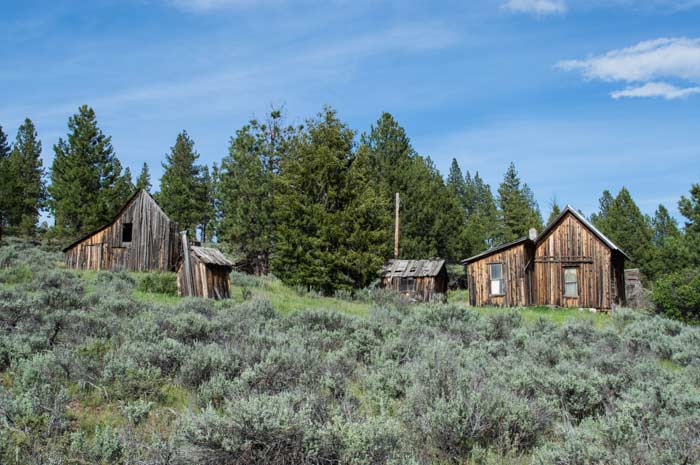
That’s an enormous mound of old tin cans, now rusting, behind that house.
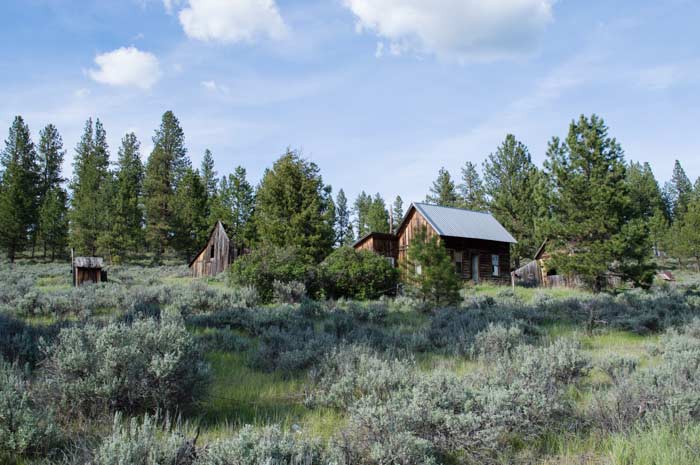
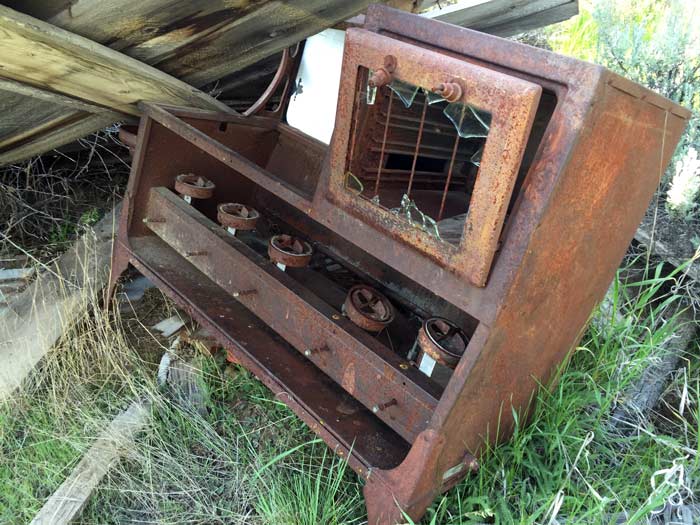
This lovely, lovely old stove was slowly turning to dust beside the collapsed wall of one of the houses. At least I think it’s an old stove. I’m not entirely sure. That’s an old stove, right?
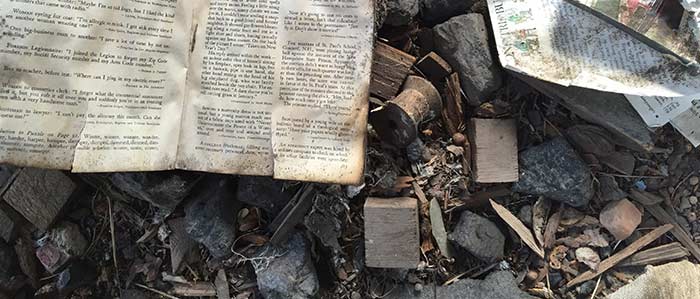
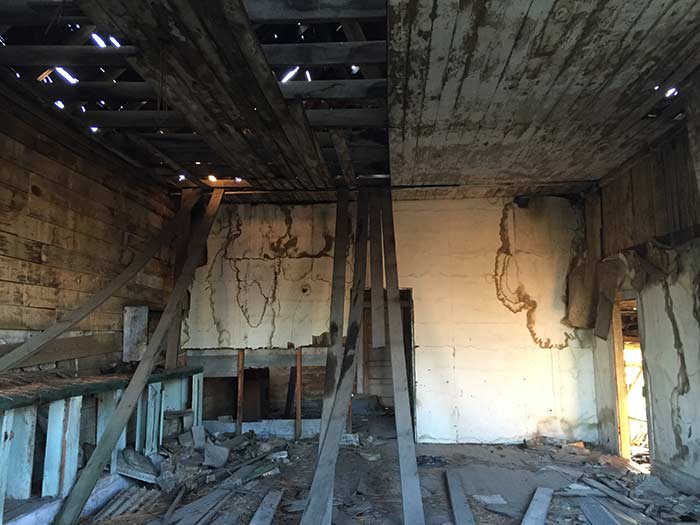
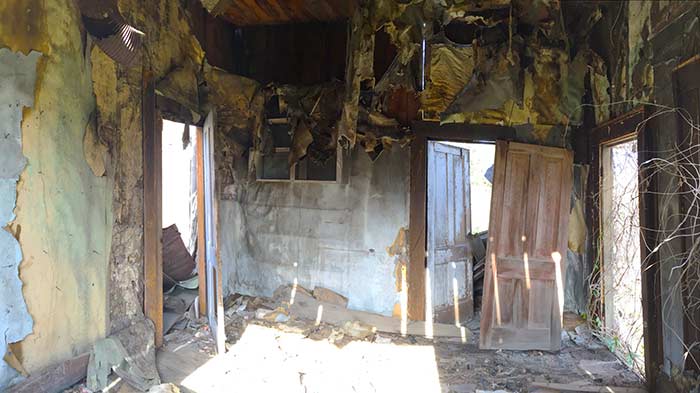
We cautiously poked our noses into one of the houses. The floor was littered with decades of detritus. There were some magazines from the 1940s lying scattered amongst the refuse and rubble.
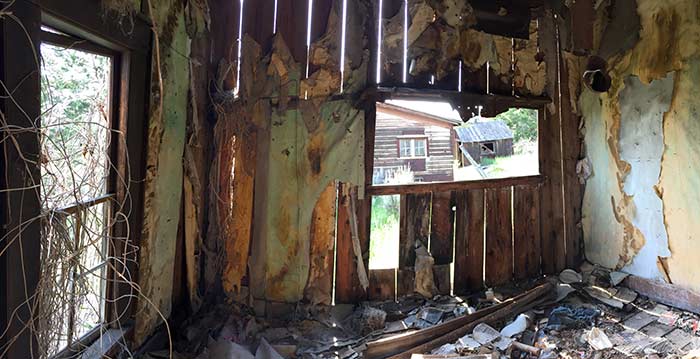
The building next to it was in slightly better repair–but only slightly.
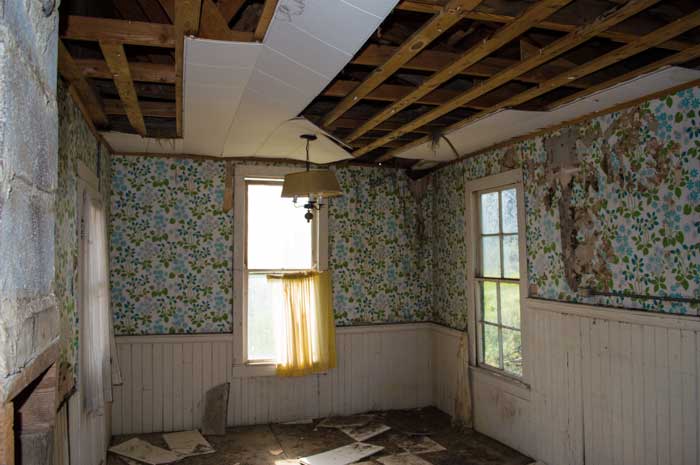
This was our first real jackpot–a completely serendipitous find that was absolutely magnificent in its decay.

We wandered around for a time. Eventually, a car pulled up next to the van. “Hey!” a woman said to Bunny. “I think you’re trespassing.”

“Okay!” Bunny said. That seemed to be enough for her, and she drove away.

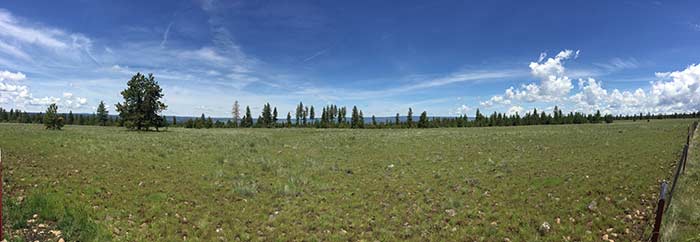
I paused to get one last panorama of the scene before we left.
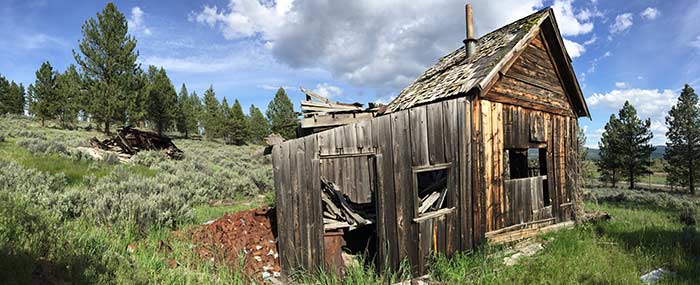
We hopped into the van. I put the transmission in Drive, and approximately two hundred milliseconds later had dropped the front of the van into a ditch.

We got back out. Bunny shook her head.

A car traveling the strip of electrical tape stopped and a lovely young couple got out. “Need a hand?”

I pointed to the van. “Yep. We’re in a ditch.”

I got back in. Bunny and the couple put their backs against the nose of the van. The wheels spun.

I wish I could tell you, gentle reader, what happened next. I feel that I can’t quite properly comprehend it myself. It seemed as if Bunny turned green and…swelled somehow. And roared a mighty roar, a roar to make the heavens tremble and brave men weep. The nose came up out of the ditch and the van lurched backward as though tossed like a Dixie cup in the mighty fist of Hulk Hogan, who was perhaps at a picnic with friends and no longer needed it, having consumed the combination of Kool-Aid and Pabst Blue Ribbon it once contained.

The couple waved cheerfully and drove away. Bunny climbed into the front seat, once again her normal size and color. “I think I popped the clasp on my bra strap,” she said. I stared at her, thankful that time and circumstances have never conspired to cause me to be in a fistfight with her, as she would without question crush me like a bug.

And we were off once again, heading down the electrical tape highway across the great frosted birthday cake of life, destined for more adventures which I shall relate in the next chapter of this tale.
Two Chaosbunnies in the Desert: Of can openers and serendipity

Part 1 of this saga is here. Part 7 of this saga is here.
Part 2 of this saga is here. Part 8 of this saga is here.
Part 3 of this saga is here. Part 9 of this saga is here.
Part 4 of this saga is here. Part 10 of this saga is here.
Part 5 of this saga is here. Part 11 of this saga is here.
Part 6 of this saga is here. Part 12 of this saga is here.

In any human endeavor, there must necessarily be those things that don’t go quite according to plan. Just as Hannibal’s trip over the Alps with an army of elephants met with certain less-than-favorable outcomes, so too did our adventure.

We had to contend with fewer elephants and less snow than the luckless Hannibal, but we faced our own trials nonetheless. Chief among them was a dollar-store can opener, which, like many dollar-store items, was perhaps less splendid in its design and construction as we might have hoped.

This was unfortunate because emanix had, during our provisioning, acquired for us many canned goods, which, lacking a functional can opener, we were unable to use. The hatchet I had thoughtfully packed in the back of the van was an altogether unsatisfactory substitute. Fortunately, emanix is a skilled camper who plans ahead, and she had hidden in her numerous tool belts and pouches a US Army-style miniature can opener, which has a user interface that’s a bit less than obvious but nevertheless succeeded where my can opener failed.

Be prepared, they say.

With our cunning new plan (by which I mean her cunning new plan) to scope out potential ghost towns on Google Earth before journeying forth, we set about revising our itinerary and set off toward Granite, Oregon.

Granite was rather a long way from where we were, as our previous itinerary proved to be almost exactly wrong in every respect when compared with the new. So we set out on a flat ribbon of highway that stretched through the desert of eastern Washington and Oregon, driving for hours along a hypnotic stretch of arid tundra, with nothing to see or do–

“Hey! Pull over!” Bunny said. “What’s that?”

That would, as it turn out, become the refrain of the day “Hey! Pull over! What’s that?”

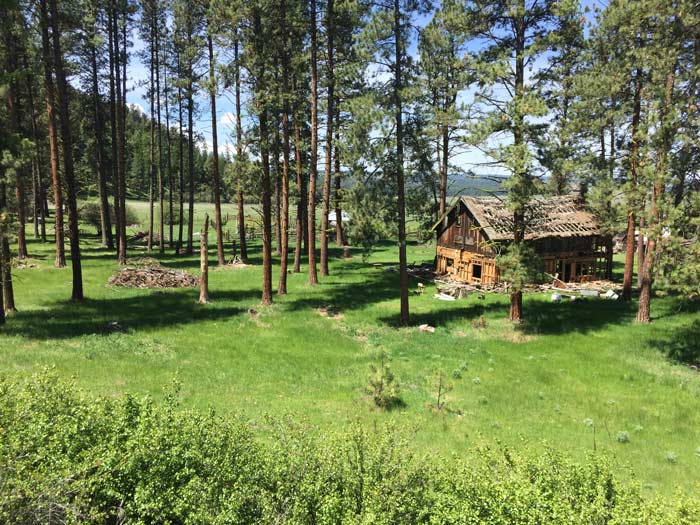
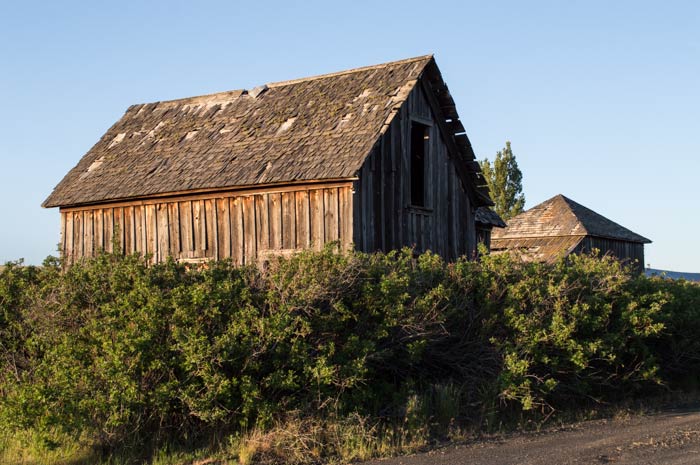
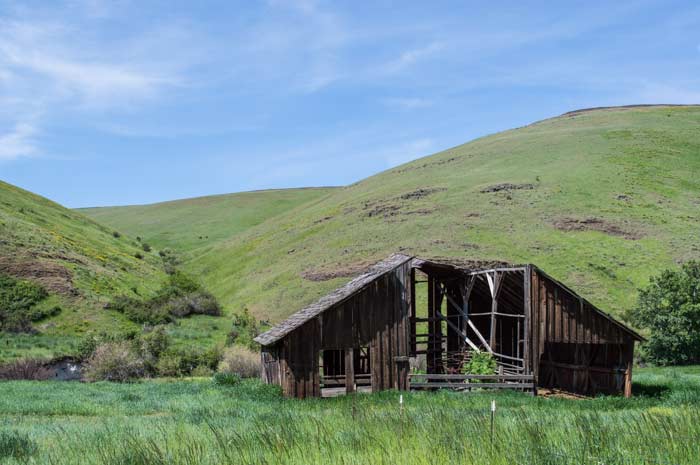
I pulled over. Just off the road, Bunny had seen a crumbling barn, quietly decaying into the landscape.

We stopped to shoot some pictures, then headed off once more, destined for Granite, where we hoped to–

“Hey! Pull over!” Bunny said. “What’s that?”

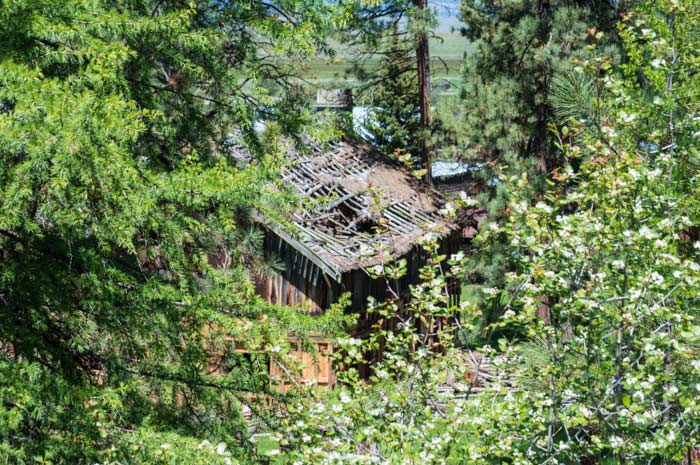
I pulled over. Bunny had spotted the top of a crumbling house just peeking out between the trees in a valley right off the road:

When I’d parked just off the road, we hiked back to take a look. We weren’t disappointed.

This was, Bunny said, the sort of thing you don’t see in England. Great Britain is a small, densely inhabited country completely surrounded by water. The western United States is an enormous, sparsely-populated country with vast quantities of land being put to little use. The two could not be further from each other unless England were a suburb of Hong Kong (which, compared to the desert of rural Oregon, it might as well be), so there is a great deal of stuff we take for granted in the more uninhabited part of this country that you don’t expect to find across the pond.

Sadly, we were unable to get closer, as it likely would’ve been quite a lot of fun to explore this magnificent old ruin.

We piled back in the van. The wheels turned, the road hummed by, and–

“Hey! Pull over!” Bunny said. “What’s that?”

Pulling over turned out to be a bit trickier this time, as we were on a narrow paved road with no shoulder cutting through a vast swath of absolute nothingness.

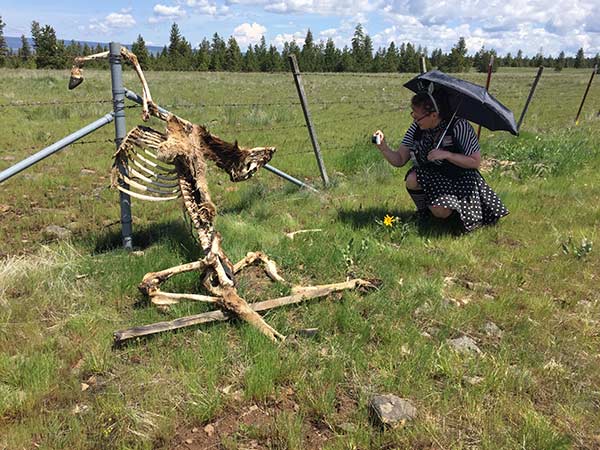
The “what’s that?” in this case turned out to be a deer that had apparently tried to leap over a fence, with sad results.

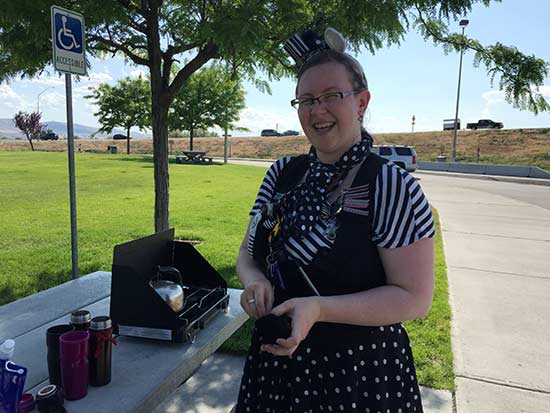
emanix took pictures, with her parasol and bunny ears…there are moments when I am with her that she just seems so very British.

I felt bad for the deer, though. Nothing should have to die like this.

It will definitely be appearing in the book she’s working on, no question about it.

We set off once more, the van eating away at the miles between us and Granite, bringing us closer with each passing mile to–

“Hey! Pull over!” Bunny said. “What’s that?”

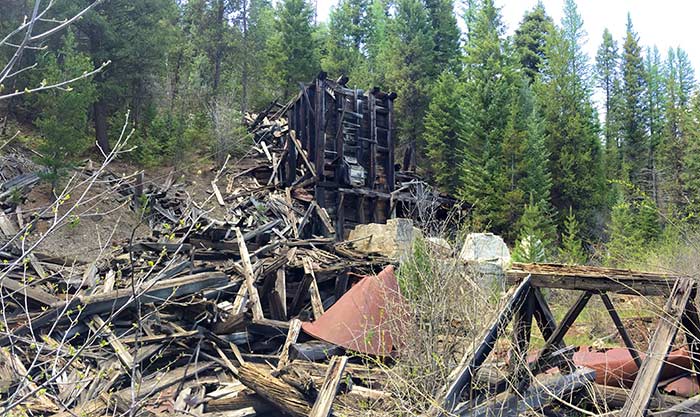
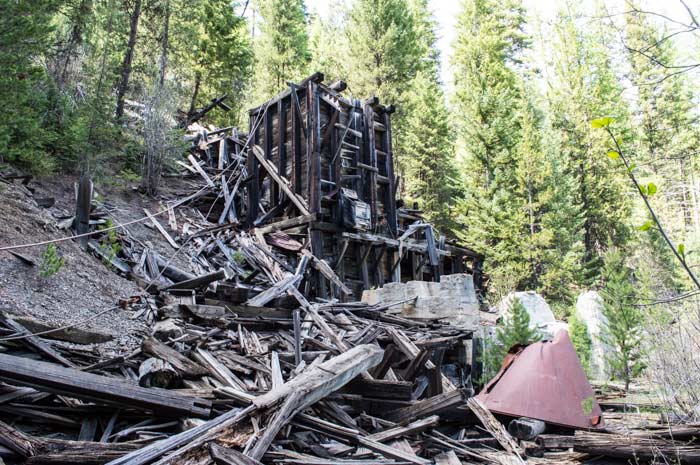
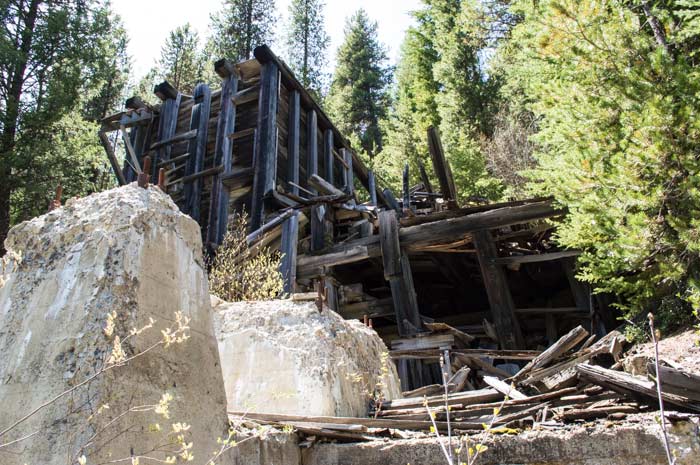
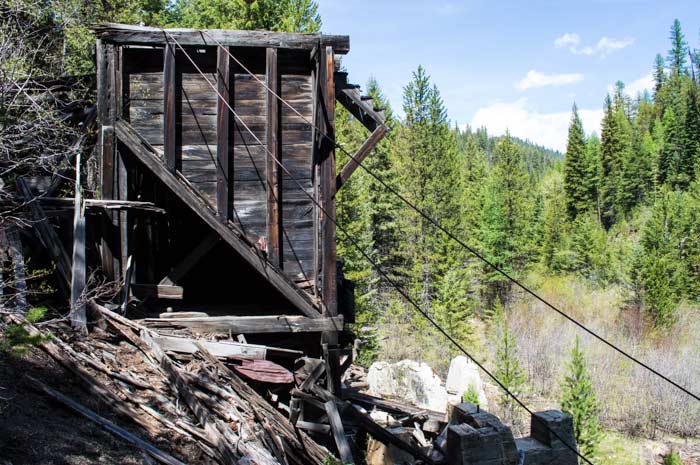
This time, “that” turned out to be the remnants of a long-deserted gold mine.

I should mention as an aside, before I continue on, that the ruins of long-deserted gold mines seem to be a regular theme in my life these days. A few months back, I was on my way to talk polyamory at a swinger convention in Canada when, from the window of our rented car, I spied a glimpse of a long-abandoned gold mine and, naturally (because I am who I am and I must do that which it is in our natures to do) I stopped to explore. The video that accompanies my Patreon was shot there, and I still intend to write about the place (with pictures! Many pictures!)

This gold mine was much different from that one, an altogether cruder and less Indiana Jones place, and crumbing in much more spectacular fashion.

We forded a small stream to get there, which alerted me to the fact that my tumble off the log into the river the day before had not only given me a cracked rib but put a hole in my shoe as well–a brief discomfort, gentle reader, that was soon forgotten, driven from my mind by the splendor of large-scale wood structures in decay.

We scrambled up a steep incline to get more pictures.

That little stairway on top, a few short steps to an abrupt and sticky end in the yawning chasm below, is nightmare fuel, for serious.

Let me take this opportunity to assure you, dear reader, that we did in fact eventually make it to Granite. We also passed something along the way that would turn out to be even more interesting than Granite, and I dumped the Adventure Van into a ditch while we were about it…but hat is a story for the next installment.

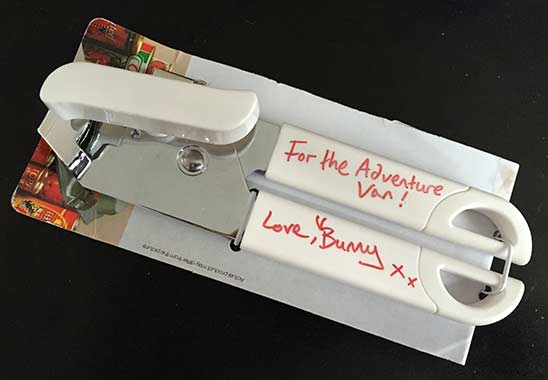
There is a postscript to this portion of my tale. Yesterday afternoon, as I was preparing for another trip to Canada, I received a package in the mail from Bunny, a gift sent all the way from the UK. Inside, I found this.
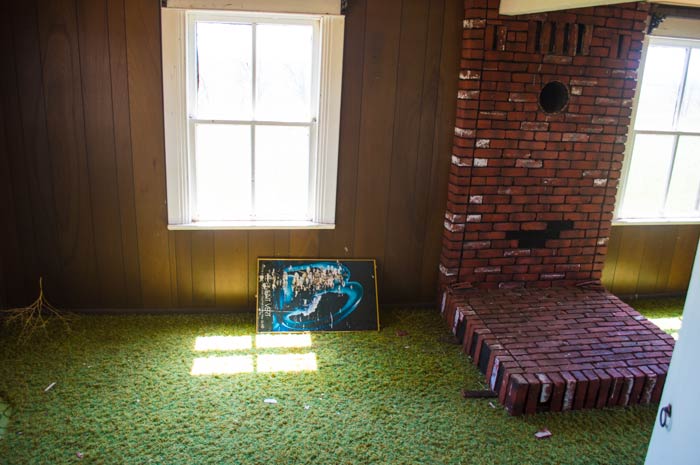
If you’re wondering why I love her, that is but one of many, many reasons.

Two Chaosbunnies in the Desert: A Series of Unfortunate Events

Part 1 of this saga is here. Part 7 of this saga is here.
Part 2 of this saga is here. Part 8 of this saga is here.
Part 3 of this saga is here. Part 9 of this saga is here.
Part 4 of this saga is here. Part 10 of this saga is here.
Part 5 of this saga is here. Part 11 of this saga is here.
Part 6 of this saga is here. Part 12 of this saga is here.

We woke, emanix and I, the next morning with birds chirping all about us. She made breakfast and massive quantities of tea (the latter would soon become a regular fixture on our adventure), and discussed where we would go next.

I do not fully understand, dear reader, what strange malformation of logic gave rise to our decision. Somewhere in that conversation, we lost the guiding light of Reason and Logic, and opted to continue down the narrow dirt road in the direction we were headed, rather than heading back to Liberty, the disappointing ghost-town-that-wasn’t and to our previously established route. Perhaps we thought there was another ghost town to be had at the road’s end, though quite what might have given us that idea, I am not sure.

We packed up the van and proceeded down the track, which gradually grew rockier and more treacherous, until soon we feared getting stuck with every passing yard. We pushed on ahead nonetheless, until finally we came to a narrow but quite rapid stream that bisected the road, or what there was of a road, preventing easy passage.

We stood there, debating whether we should risk taking the van through the stream and up the rocky bank on the other side. While we weighed the merits of going on vs. turning around, a young couple in a Toyota Prius pulled up behind us.

They discussed a discussion that followed along the lines of our discussion. “Where does this road go?” we asked them, reasoning (apparently optimistically) that if they were all the way out here, they must have some notion of where they were headed.

“We don’t know!” they said.

Ultimately, they opted to try their luck with the stream. The Prius did that spooky thing Priuses do where it crawled forward with nary a sound, and was soon axle-deep in water. It pulled up on the other side. We waved. They waved.

“Think we can do that?” I asked Bunny. She looked skeptical.

“I wonder what’s on the other side of the stream,” I said. “I want to take a look.”

She set about making lunch while I went upstream a bit and looked for some way across. I found a large log, stripped of branches and leaves, and cautiously walked out onto it.

It turns out, gentle reader, that logs partly submerged in water become quite slippery. You may guess what happened next. My feet shot out from under me, and I plummeted like a stone into the stream, colliding with the log on the way down. The spot where I went in was deeper than it looked, and cold, and moving very fast.

I struggled back out of the water. emanix waved cheerfully. “Lunch is almost ready!”

That episode would have a long-lasting effect on the rest of the trip, as I had, apparently, managed to crack a rib on colliding with the log. For the rest of our adventure, I was reminded of that log every time I tried to lie down at night.

After dinner, we concluded there was no legitimate reason to try crossing the stream, given that we had no idea what (if anything) the other side might offer. We packed up and headed back, retracing our route to Liberty, and from there to the next stop on our cunningly-devised plan.

That next stop turned out to be rather a lot of nothing. We followed Siri’s directions to what would, according to the Web, be an abandoned gold mining town high in the mountains, and discovered…trees. And narrow muddy roads.

At this point, we’d decided we’d had quite enough of navigating the van along steep mountain trails, and headed to the nearest major road to regroup. We spent the night at a rest stop, and woke bright and early the next day. Bunny prepared a rather astonishing quantity of tea, and we were off once more.

We eventually found ourselves, after many hours of driving, sitting in a small country restaurant in a small town in…well, I think it was Washington, though I’m not convinced I’d wager on it.

“I know!” Bunny said. “We should look at Google’s satellite view of all the places we’re headed, so we can tell if they’re worth going to or not!” Such a simple idea, and yet so brilliant.

We hopped on the WiFi and did just that. The ghost town Web site, as it turns out, was a bit rubbish, and most of the places on our route had either come back to life (“zombie towns,” she called them) or faded into nothingness.

We scrapped our previous plan and, after a bit of frantic Googling, put together a new itinerary. Then we piled into the van once more and started down the road toward Hardman.

Hardman, Oregon was settled in 1879, according to Wikipedia. We arrived shortly before sunset, and finally, we got a taste of some real meat.

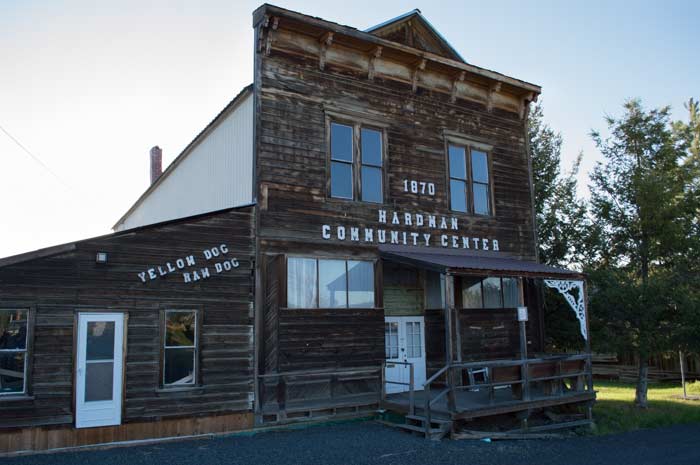
Hardman is not technically abandoned. A small number of folks still live there, and there are trailers and inhabited houses scattered more or less at random through the ruins.

There’s a community center that’s still in use.

We peeked into the community center. A man who lived in a small shack next to it wandered over. “Want to look inside?” he asked.

“You bet!” we said.

He unlocked the door and ushered us in. “Where are you from?” he said.

“I’m from England,” emanix told him. “I’m from Portland,” I said.

“Portland. It’s full of liberals. Always telling us what to do,” he said.

He ushered us upstairs and showed us around, talking about the history of the place, the ruins of the post office next to the community center, and how he hunts cats in the fields around the town.

We discovered this lovely hulk quietly rusting away just outside the town.

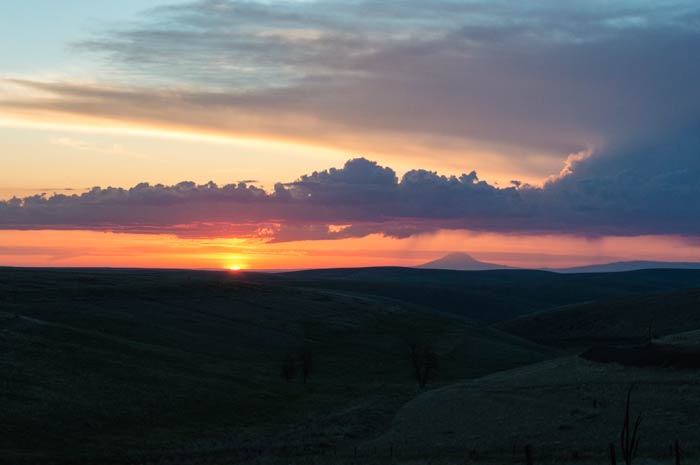
Photos taken, we left town, driving into a most fantastic sunset on the way out.

A much more productive day than falling into the water and cracking a rib, all things considered, but the real jackpots still lay ahead.

Two Chaosbunnies in the Desert: Plans, we have them!

Part 1 of this saga is here. Part 7 of this saga is here.
Part 2 of this saga is here. Part 8 of this saga is here.
Part 3 of this saga is here. Part 9 of this saga is here.
Part 4 of this saga is here. Part 10 of this saga is here.
Part 5 of this saga is here. Part 11 of this saga is here.
Part 6 of this saga is here. Part 12 of this saga is here.

It is a truth often acknowledged that I am not a master of the art of planning. I’ve heard people speak of the many wonderful things that can be accomplished by planning, but the details of this arcane practice have generally been a bit fuzzy to me.

When emanix and I decided to tour the various ghost towns of the Pacific Northwest, I do what I always do: I turned to the Internet. A quick Google search for “ghost towns pacific northwest” turned up a Web site called, logically enough, ghosttowns.com where I could click on states and counties and see lists of ghost towns. Precisely the thing you need if you want to, say, visit ghost towns, right?

As it turns out, it’s not that simple. The site hasn’t been updated in a while, and on top of that, may folks seem to have a…generous definition of “ghost town.”
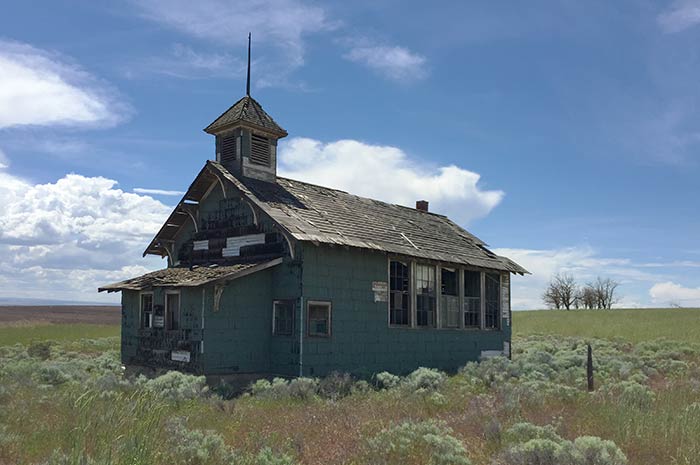
So it was with the ghost town of Liberty, Washington, a place that was first settled as a gold mining town in the 1800s. We were promised many wonderful things in Liberty. Fresh from the disappointment of Goodnoe, which was less “ghost town” than “a c ouple of old buildings in the middle of a farm,” we set off for Liberty.

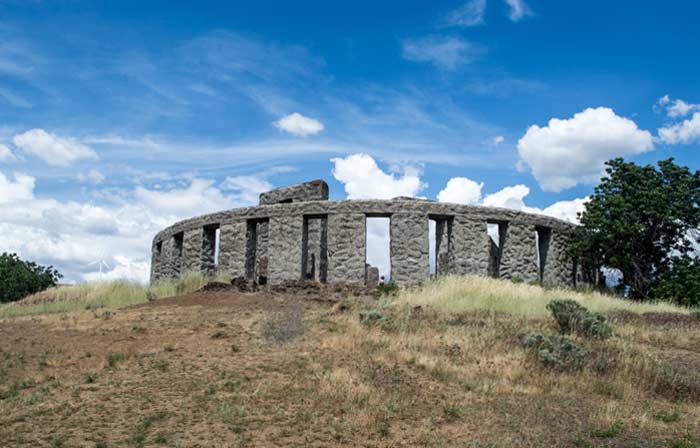
Now, it should be mentioned here that the Pacific Northwest is in the New World, and more specifically, in North America. So you can probably understand our confusion, dear readers, when we came upon a sign pointing the way to Stonehenge.
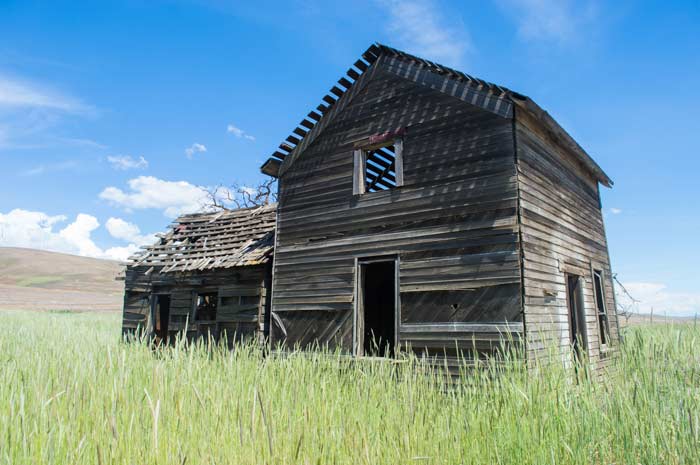
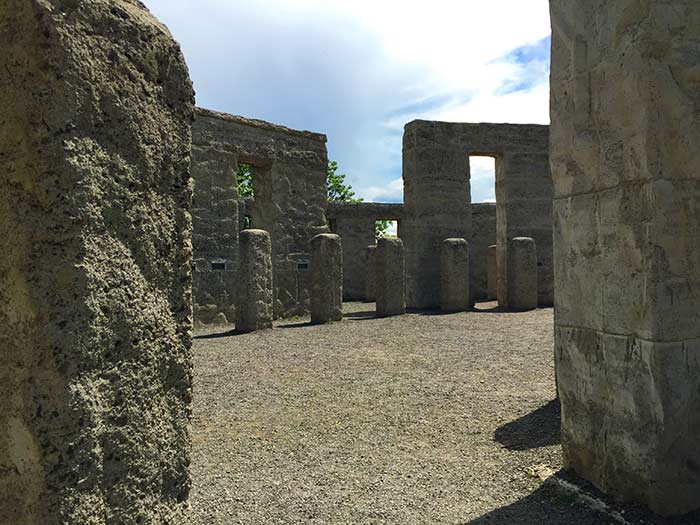
Intrigued, we followed the sign, and discovered…Stonehenge. But not Stonehenge as it is now, oh no. Stonehenge as it was when it was still in operation, in the dim and distant past.

We found a plaque that failed to shed as much light as perhaps it thought it did. Apparently, a Quaker anti-war activist commissioned a 1:1 scale model of Stonehenge in Washington as an anti-war memorial. His reasoning, which I will confess left me scratching my head, was that the original Stonehenge was used for human sacrifice, but the ultimate form of human sacrifice is war, and therefore a model of Stonehenge would be a good anti-war memorial for reasons not clear to your humble scribe. (As it turns out, the original wasn’t used for human sacrifice, it being an observatory and all. I’m not sure what that does to the metaphor.)

Still, it is quite a fantastic place.

We had a discussion about whether or not building a model of Stonehenge in the US counts as cultural appropriation. Can the US culturally appropriate Great Britain’s history?

A quick meal later, I was able to check “have grilled cheese sandwiches prepared on the back of a van at Stonehenge” from my bucket list.

And once again we set off, toward Liberty. Which, after many hours of driving, turned out to be…a still-living town whose residents have made a cottage industry out of promoting as a ghost town.

I have no photos to show you of Liberty, because it seemed weird to us to run around taking pictures of a town that was still very much occupied.

We drove through the town, disappointed, and found a narrow dirt track leading up into the mountains. Thinking, perhaps somewhat optimistically, that anything appropriately decrepit and abandoned might more likely be found on a narrow dirt track in the mountains than on a busy paved road, we ventured up the trail, thinking “we’re heading into the mountains at dusk in a 22-year-old van, what’s the worst that can happen?”

The road got steeper and rougher, then steeper and rougher still, and we soon found ourselves well and truly in the middle of nowhere and facing the unenviable prospect of retracing our steps after dark.

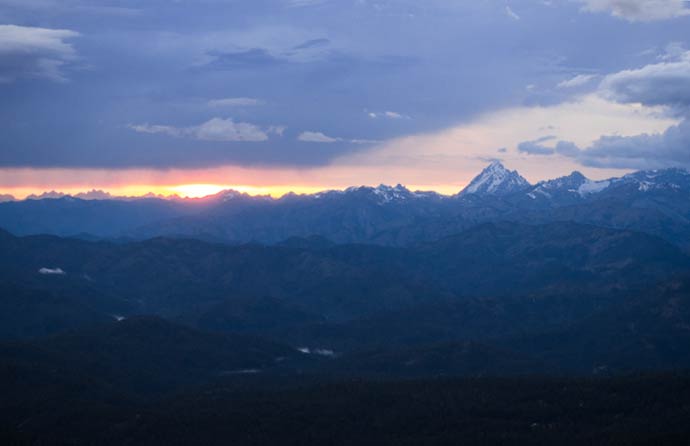
The nice thing about adventuring in the Adventure Van is we always have a bed with us, so we parked on the top of the mountain, surrounded by fantastic scenery, and did precisely that. The view from the campsite looked like this:

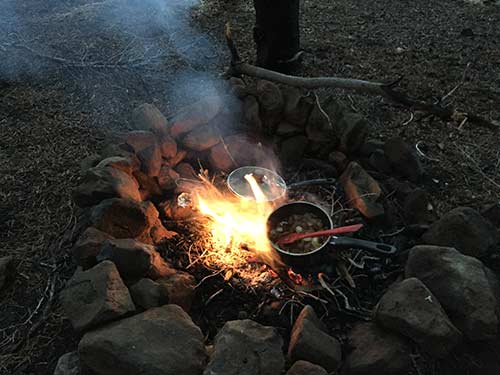
emanix has, it must be said, some epic mad camping skillz, which she demonstrated by building a fire and cooking dinner for us.

The day made obvious to us a small but significant flaw in my cunning plan. Clearly, if we were going to make the most of this adventure, we would need some way to separate the wheat from the chaff and focus our effort on only those ghost towns most likely to give us the best bang for our buck.

I’d like to say it was I who came up with the missing ingredient in our earlier plan, gentle readers, but that would be a filthy, filthy lie. It was in fact emanix who got the idea that would set things aright…but that’s a story for the next chapter.

Two Chaosbunnies in the Desert: The Beginning

Part 1 of this saga is here. Part 7 of this saga is here.
Part 2 of this saga is here. Part 8 of this saga is here.
Part 3 of this saga is here. Part 9 of this saga is here.
Part 4 of this saga is here. Part 10 of this saga is here.
Part 5 of this saga is here. Part 11 of this saga is here.
Part 6 of this saga is here. Part 12 of this saga is here.

So there we were, in the middle of the California desert, atop a mountain at 8500 feet where the sun was so brutal it burned us through our clothing and the air was so thin that walking a dozen yards meant sitting down to rest, surrounded by the ruins of cutting edge Victorian technology…

But maybe I should back up a little.

It all happened because emanix is an artist, and land in Britain is scarce and expensive.

The part about her being an artist is important because she conceived an idea for a graphic novel and decided to embark on the arduous process of birthing that idea into a real thing. And the part about land being scarce in the United Kingdom? There are no ghost towns there. People don’t pack up and abandon entire cities, leaving them to crumble quietly into dust.

But I’m getting ahead of myself again.

So, the graphic novel. It’s set in a ghost town, you see. And ghost towns, well, they’re as thin on the ground where she lives as snowmen in the Philippines.

So it came to pass that she flew across the pond to Portland, and we set out to tour the many and varied ghost towns of the western United States. For background research, you see. We would, we thought, spend a few weeks living in the back of a camper van–tax-deductible, of course–surveying and photographing abandoned towns for the sake of making art.

That was the extent of our cunning plan…more a cunning intention, really. We are chaosbunnies, she and I. One does not become a chaosbunny by forming a plan and sticking to it.

I did some research, by which I mean I typed “ghost towns” into Google and typed the result into Google Maps. It chewed for a while, an enormous massive parallel supercomputer bending some small part of its mighty attention to the task of drawing dotted lines on a map of the western United States. We piled our suitcases into the van and we were off…

…to a Wal-Mart to get supplies and an oil change. Then we were off…

…to the Wal-Mart parking lot, to meet my sweetie zaiah, who had realized I’d forgotten my jacket and kindly ran it out to me. Then we were off…

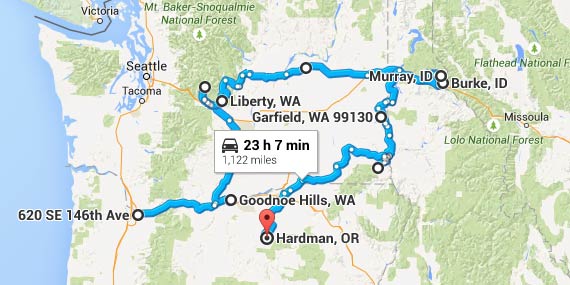
…and realized we’d nearly forgotten ice for the cooler. That taken care of, we were off, on a three-week adventure that would take us nearly 4,000 miles, across narrow dirt trails winding high into the mountains and through trackless expanses of Forest Service land, looking for places where people had once lived and didn’t any more.

The thing that worried me the most was the shovel. We’d packed a shovel, emanix and I, because she felt there might be an occasion during which we might have to poop in a hole. I’ve never quite got the hand of pooping in the hole. To be honest, I tend to regard the process with some suspicion, not to mention a fair degree of horror.

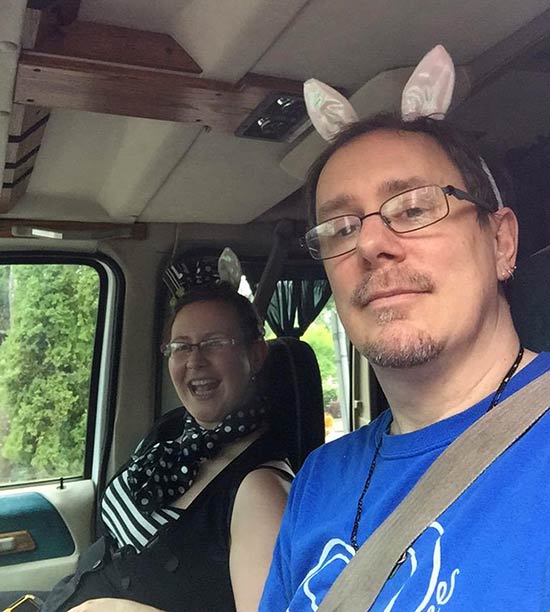
Minor reservations about the shovel aside, we set off with boundless optimism to venture into the desert, just the two of us and a 22-year-old van, bunny ears perched jauntily upon our heads.

The ears I’m wearing are new, a gift from emanix to replace the previous set she gave me some five or six years ago, and which, after accompanying me on countless adventures across the globe, have become somewhat shabby and dilapidated for the wear. Shabby bunny ears are a sad thing, but everyday, around-town ears are surprisingly difficult to come by.

The first leg of our plan intention had us traveling through Washington, exploring a number of old mining towns throughout the state.

There is a saying among those who practice the art of war: a plan rarely survives contact with the enemy. It might, I think, be extended just a bit, to say a plan rarely survives contact with the enemy or a chaosbunny. Two chaosbunnies in one van is, therefore, right out. (Indeed, I suspect that should your life ever bring you into contact with two chaosbunnies in one van, you might well be advised to batten down the hatches, yo, because things likely will get interesting.)

So off we went, the two of us in a van, driving along the highway without a care in the world save for running out of gas, having a breakdown, having a breakdown in the middle of the desert, having a breakdown in the middle of the desert and running out of food or water, getting bitten by a venomous snake in the middle of the desert, having a breakdown in the middle of the desert and running out of food and water and then getting bitten by a venomous snake, and being attacked by clowns. We ventured into Washington and began searching, that first night, for a hotel to stay in, figuring that the van would be our home once the trip really got going.

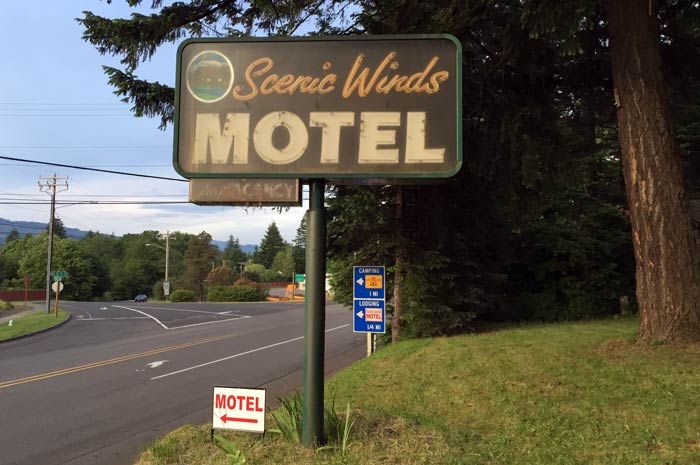
We pulled into the Scenic Winds Motel…

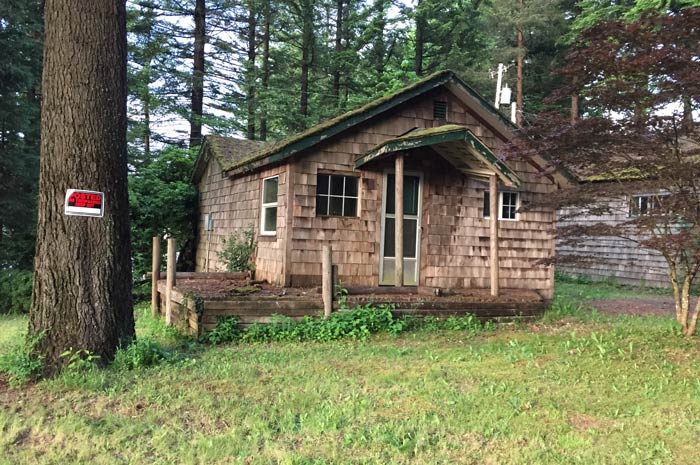
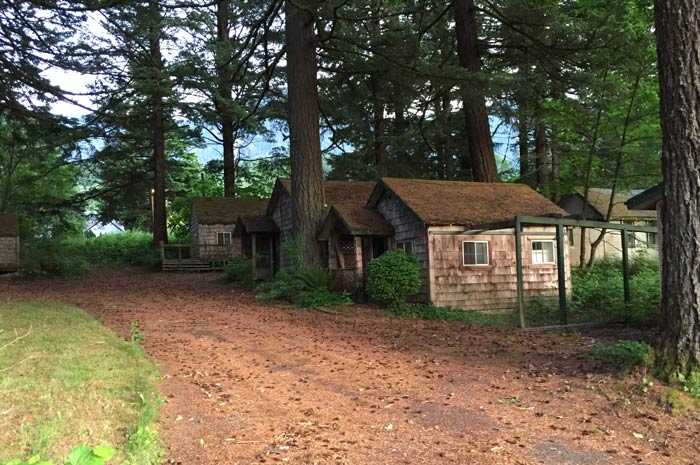
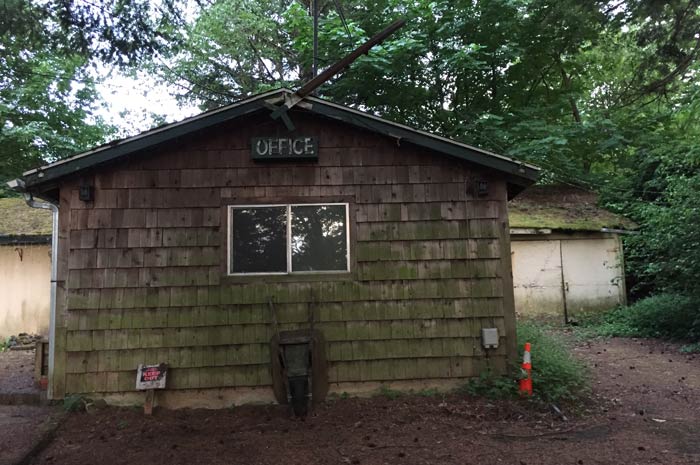
…and immediately realized that, entirely by accident, we’d started our trip in a ghost motel.

Even Norman Bates might have some reluctance to check in here.

“Ah,” thought we, “this bodes well! We’re finding abandoned places without really trying!”

Sadly, we couldn’t actually camp here, as the proximity to the road and the rather forbidding “no trespassing” signs would, we thought, attract the attention of law enforcement, who are notorious for the absence of their sense of irony.

So we spent the night in a motel that wasn’t abandoned, and set off bright and early on the first leg of our tour.

We did actually make the first stop on our planned itinerary, at Goodnoe Hills, Washington. The Internet assured us this town, first established in the 1860s and abandoned soon thereafter, would be a productive stop. We arrived, ears still jaunty, just in time to be underwhelmed.

Which is not to say that there was nothing left of the old ghost town, only that there was almost nothing left. We discovered an abandoned house that looked like it was last decorated by human hands sometime in the most hideous part of that most hideous decade, the 70s:

There was an astonishing number of birds living in a bedroom on the second floor, and the quantity of guano was something that had to be seen to be believed. Seriously. I will see it in my nightmares for decades to come.

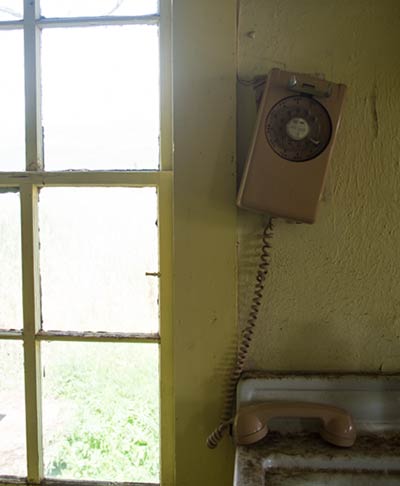
My parents used to have this exact phone. I haven’t seen one of these in a donkey’s age. Kids today probably wouldn’t know how to work one. No, scratch that, a lot of adults today probably wouldn’t know how to work one.

Cool, in its own ghastly way, but definitely not what we were looking for.

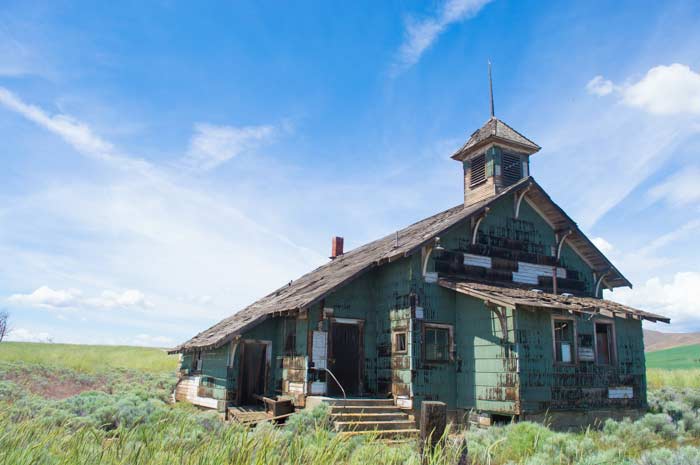
We had a bit better luck a few blocks down the road, for some loose definition of “blocks.” We found the ruins of a lovely old church, gradually crumbling into the dusty ground.

We weren’t able to get inside; the church was surrounded by a barbed-wire fence with dire “no trespassing” signs plastered all over it.

Still, it was quite lovely.

A bit further on, we encountered this place. Now this, we thought, was cooking with fire. This was a proper ruin, just the sort of thing we were hoping to find.

Overall, though, Goodnoe was a bit of a wash. The locals had destroyed most of the remnants of the old town and set down farms where the buildings once stood.

This would turn out to be a recurring theme in the early part of our ghost town adventures, until we figured out a new strategy that necessitated abandoning our original plan altogether.

But that’s a story for the next chapter.

Urban Decay: Seattle’s Gasworks Park

Several weekends ago, zaiah and I went up to Seattle for the weekend. One fo the hilights of the trip while I was there was visiting Gasworks Park, a large public part down on the waterfront, built on the site of an old and long-abandoned coal gasification plant.

We met up with peristaltor while we were out there (and as a side note, if you don’t read his journal, you should–it’s one of the smartest reads on LiveJournal).

The old gasification equipment is still there, slowly crumbling into rust. Some of it is now fenced off, which is a damn shame–I’d love to spend an afternoon with a couple of models and about forty feet of rope out here. I’m told the fences are new; and to some extent, I can kind of understand it–if some damn fool falls off one of these things and busts his head open, I guarantee the first thing he’s going to do is retain a lawyer to sue the city, before he even gets stitched up, even though it’s not “the city” what put his ass up there in the first place.

Anyway, I spent a good bit of time taking pictures, because that’s what I do, and now I’m going to bust your bandwidth, because that’s also what I do.

Clicky here to see more!