How to Have a Happy Relationship

It seems to me that a lot of basic ideas behind happy, healthy relationships are often considered “advanced,” and seem to take rather a lot more time to learn than perhaps they really ought to.

At least, they sometimes did for your humble scribe. Ahem.

So, in the interests of spreading the wealth (because experience is the best teacher, but sometimes the tuition is very high), I present Relationship Ideas That Should Be Obvious But Aren’t.

You can’t expect to have what you want if you don’t ask for what you want.
This is arguably one of the most basic rules for all of life, yet it’s surprising how often we forget. There’s almost no greater recipe for emotional turmoil then wanting something or harboring some expectation, not telling anyone about it, and then not getting it.

Next time you get really, really upset about some desire or expectation not being met, stop and ask yourself: “Did I actually let the people around me know about it?” (Here’s a tip: Dropping hints about what you want doesn’t count. Neither does wishing really hard. Nor waiting for the folks around you to become telepathic.)

If all of your relationships go pear-shaped in the same exact way and end badly in the same exact way, then maybe it’s because of something you’re doing.
Seriously. The one common element in all your relationship failures is you. Someone cheat on you? Well, that sucks, but it happens. Every single person you ever date in your life cheat on you? You’re attracted to folks who cheat.

If all of your relationships end the same way, maybe it’s time to step back and take a good, hard look at the kinds of folks you’re attracted to.

If you find that sex always becomes boring after a while in all your relationships, maybe it’s because you’re choosing to let it.
There’s a lot of fun you can have in (and out) of the bedroom. The total range of the human sexual experience is breathtaking–so much so that if you lived to be a thousand years old and did something different in bed every night for that entire thousand years, you’d still never have time to do it all. Seriously.

If you find that your sex life keeps getting stuck in a rut, maybe it’s time to explore something new. (A sure way to make yourself crazy and have a boring sex life is to keep worrying about whether trying something new would be “too weird.” The expression “That’s too weird” has done more to advance the cause of boring sex than all the world’s religions combined.)

Going into a relationship with the expectation that you can get your partner to change is quite likely to end in tears.
Now, don’t get me wrong–people can and do change. In fact, change is the one constant in life. I’m not the person I was five years ago, and if you’re doing this properly, you aren’t either.

But expecting that a person will change in the ways that you want him to, because you want him to, is setting yourself up for suck and fail. Fixer-upper relationships usually don’t work. And if you go into things thinking “Oh, I can fix him!” you just might find your ship of enthusiasm foundering on the shoals of the fact that maybe he likes being the way he is.

A relationship in which you say “This relationship is absolutely wonderful except for…” is not absolutely wonderful. Especially when the part that comes after the “except for…” is something so horrifying it’d make most folks run for the hills.
This relationship is wonderful except for the fact that we’re completely incompatible in bed. This relationship is wonderful except for the fact that she keeps forgetting to take her meds. This relationship is wonderful except for the fact that he can’t talk honestly about his feelings. Look out!

For maximum effect, try combining “this relationship is wonderful except for…” with “…but I know I can change him” and double your suck!

A partner who is kind to you but not kind to the waitress isn’t a kind person.
Seriously. The fact that he’s kind to you might just mean that he wants something from you. (Or that you’re not his property…yet. Marry that person who’s nice to you but not nice to the waitress and you might just find that once the ring is on your finger, he may start treating you like the waitress. Or worse.)

The way a person treats the folks around him reveals a lot about his true self. Pay attention.

It is possible to deeply, profoundly, genuinely, truly love someone, and yet that person might still not be a good partner for you.
It takes more than love to make a relationship work. A person you love, but who is incompatible with you, or who lacks good relationship skills, or who can’t communicate with you, is not going to make for a functional, healthy relationship. Love and five bucks will get you a cup of coffee. Or, to put it more scientifically, love is necessary but not sufficient, no matter how many Disney movies and romantic comedies say otherwise.

Though really, if you’re taking your cues on relationship from Disney movies and romantic comedies, there’s probably little that I or anyone else can do.

Find a way to build a friendship with that person that honors and respects that love without trying to turn it into something unsustainable and you’ll do okay. And as a corollary:

Being in love with someone doesn’t mean you HAVE to be in a relationship with that person.
Seriously. You have a choice. You can love someone, and acknowledge that love, and still choose not to be romantically involved with that person.

That’s one of the cool things about being a human being You get to choose.

You can’t have intimacy without sharing. If you spend your time hiding things from your partner, or worrying about whether or not you can share something with your partner, you’re not going to have an intimate relationship.
Everything you conceal from your partner undermines the foundation of intimacy upon which relationships are built.

No, that doesn’t mean telling your partner every time you take a dump (and why is it that folks who don’t cotton to sharing and openness always reach for that example?). But it does mean sharing everything that’s important, significant, or meaningful. Even if it’s uncomfortable.

Especially if it’s uncomfortable, because the fact that it’s uncomfortable probably means there’s something important lurking in there. Communication ain’t for sissies.

What you get out depends on what you put in. Approach every new partner with fear and suspicion, and you’ll have fearful, suspicious partners.
Te best way to have a friend is to be a friend. The best way to have people around you who have compassion and integrity is to be a person with compassion and integrity. The best way to fill your life with suck and fail is to fill other people’s lives with suck and fail.

You know that saying “opposites attract”? It’s rubbish. Honest people look for, and attract, other honest people.

A person who has cheated on someone else to be with you cannot be trusted not to cheat on you to be with someone else.
No, you’re not different. You’re not a rare and unique flower, so totally set apart from that shrill, obnoxious harpy that he’s with right now. You know how he tells you that you’re so much better than that monster he’s hooked up with? I bet he says the same thing about you to the other person he’s shagging. You know, the one that neither you nor his other partner knows about.

Be wary of a person who trashes all their exes in front of you, for someday you’ll likely be on that list yourself.
You know that person with the long list of former partners, all of whom were shrill, obnoxious harpies? Does something seem odd about that list to you?

Best case scenario, it means he keeps getting involved with the same sorts of people again and again, and doesn’t learn anything from any of those experiences. What do you reckon that says about you?

Worst case scenario, it’s a clear sign of someone who doesn’t take responsibility for his own part in all those past train wrecks. Which means he ain’t learning from any of them. Which means…you’re the next train wreck. What do you suppose he’ll say about you to the train wreck that follows after you?

Tell the truth from the start, and you won’t have to worry about any nasty revelations down the road.
Especially about things you worry might scare her off. Seriously, if the truth about you makes you incompatible as a romantic partner, you want to scare her off. You’re bisexual but your new love interest hates gays? You fancy country music and your partner would rather die than listen to it? Hiding those things doesn’t help your cause; it merely makes the blowup that much more dramatic when the truth comes out.

Which it will, eventually.

Be honest, be true to who you are, and you won’t have to worry about what happens if you slip up. On the other hand, make yourself seem like something you’re not, even if it’s to make yourself seem more attractive to the other person (hell, especially if it’s to make yourself seem more attractive to the other person!) is going to end badly, sooner or later. I promise.

Some thoughts on women, sexual double-standards, and complicity

So I can not fracking sleep tonight. This fever is refusing to go away, even after I’ve waged a fierce two-pronged attack on it with Advil and Tylenol, and I feel like I’m about to hork up a lung. Truly, I am a walking shambling catastrophe.

The fourth night zaiah was here, and the first night I had this damn fever, I woke up from a very strange dream. My dreams tend to be a bit weird to begin with, but when I have a fever, look out.

This is actually a post about societal fears of women’s sexuality and sexual double standards. Bear with me; I’m a bit fuzzy-headed at the moment, and apt to be preternaturally rambly. Now where was I?

Oh, yeah. fever dream. Anyway, I had this dream, and in this dream I’d met and made friends with a woman. Don’t recall her clearly–long black hair, big brown eyes, that’s all that stuck.

Anyway, in the dream, shortly after we became friends, a group of researchers pulled me aside and explained to me that she wasn’t actually a woman at all. She was a synthetic construct–body engineered and grown in a vat, brain a gigantic supercomputer kept in a huge facility elsewhere in town and remotely operating the body. She was not aware of any of this; she was actually an experiment in artificial intelligence, socialization, and the development of self, carefully monitored over the past thirty years. The place where she lived–a gorgeous penthouse suite, indoor pool and all–was closely monitored ’round the clock, and all her interactions with the outside world were carefully regulated. She was encouraged to keep a private diary, which she believed was secret but which was actually published monthly in a trade journal about AI and machine consciousness.

They took me up to the control room and let me read some of the back issues of the journal. One of her diary entries was particularly strange; she’d somehow got her hands on a book of basic anatomy, and was utterly perplexed that the book showed things that she didn’t have. Specifically, the book showed reproductive and sex organs, and she had nothing of the sort–no sexual organs whatsoever between her legs. No labia, no vagina, nothing. The researchers, somewhat shamefacedly, said they had been too embarrassed to put them in the design when they were growing the body.


I woke up really, really pissed off, with nothing to attach the pissed-off-ness to. It took some introspection to figure out what the pissed-off-ness was connected with; this bizarre and nearly universal sexual shame that we as a species seem to attach to female sexuality.

I’m not talking about the schizophrenic Puritanical sexual asshattery that we in the US attach to sex in general. I’m talking about a hatred of sexual expression in women that’s so virulent that entire societies will surgically mutilate women to prevent them from enjoying the act of sex.

And make no mistake about it–the impulse to label sexually promiscuous men as “studs” and sexually promiscuous women as “whores” is no different in kind; it is the exact same impulse, merely taken to a different but equally illogical conclusion, that drives folks to get out the scalpels.

And it’s frickin’ everywhere. It’s not just a handful of societies. It’s not just a few places. It’s everywhere. The ancient Israelites had all kinds of weird religious rules about touching women when they were ‘unclean,’ that speaks to a level of institutionalized abhorrence and fear of basic reproductive biology that’s mind-boggling. In Hindu societies, a woman who committed adultery was publicly executed after first having her sex organs cut off with a knife–and the real kicker is that for this purpose, “adultery” could be defined as “talking with a man and touching his clothing.”

This is a level of fucked-up-ness I can’t quite wrap my head around. Seems like everyone’s just scared silly of women’s sexuality. Seriously, WTF?


The part that really blows my mind, though, and the part I really don’t get, is the extent to which women themselves buy into this kind of thing. One thing that consistently mazes me on online forums that have anything to do with discussions of sex or sexuality–any time a woman talks about how much she likes sex, or about enjoying any kind of non-traditional sexual arrangements, especially things like polyamory or (God forbid) casual sex, there will be a handful of guys who’ll say things like “slut!”–but they have to stand in line behind all the women who’re screaming it, too.

And I really want to grab some of these women and shake them and say “WTF is wrong with you? Don’t you understand that by slinging around words like “slut” and “whore,” you’re participating in your own sexual disenfranchisement? What are you thinking?”

And I’m not even talking about the fun use of the word “slut,” as in the “My, aren’t YOU a naughty little vixen? I have just the thing for a naughty slut like you!” that dayo so enjoys hearing.

So, naturally, since I couldn’t sleep, I decided that zaiah shouldn’t sleep either, and woke her up to talk about it.


Enlightening conversation, it was.

She is of the opinion that, popular opinion to the contrary, women are if anything fare more competitive and far more hierarchical than men are. Take a group of three female friends in a bar, she says. Each of them knows precisely what her place in the hierarchy is. If they spot a group of three men across the bar, they’ve already decided which one gets who before the first words are even exchanged. Should one of the men approach the “wrong” woman, her friends will smoothly step in and cock-block him, and order is restored. With, naturally, the men none the wiser.

It starts in grade school, she says–a formalized, competitive hierarchy of popularity and subtle social status, with rigorous standards about which women are eligible to compete for which men. It continues through high school and college, and even carries out into the adult world–often, she says, women wear makeup and jewelry not for the direct benefit of men, but rather to signal to other women their status and intentions in the competition.

And it’s a ruthless competition, with a high cost for those who refuse to buy in.

The cost of not buying in? The women who don’t compete in this way, or who pursue men deemed above their status or outside their league? These are the women labeled “slut” and “tramp”–not by men, but by other women.

Color me astonished; I’m forty-two years old and none of this had ever occurred to me.

So, yeah. Dreams and fever: interesting combination. Now I’m going to take some more meds and try to go to bed.

Some thoughs on fear, hope, and the world that we make

My sweetie zaiah is in town for the week, and last night I slept curled up beside her with a young kitten sleeping under the covers on my hip.

The kitten is actually zaiah‘s reason for being here. She went to her new home this afternoon; she was bought by a family here in Atlanta. zaiah arrived in town yesterday, kitten in hand, and met the kitten’s new family today.

This, ladies and gentlemen, is Ruby. Ruby is a sixteen-week-old, aqua-eyed bundle of fluffy, fuzzy joy in a convenient carrying package.

I immediately fell in love with her. She is inquisitive, curious, happy, eager, and above all else, she is absolutely, utterly fearless. Ruby lives in a world where everything from the box on the shelf to the mysteries beyond the closet door are filled with delight and wonder. In her world, every person is her friend, and she takes charming delight in meeting new people. Every other animal wants to play with her, every change in her environment is cause for celebration.

It didn’t take Ruby long to make herself right at home. She bounded out of her carrying cage, checked me out enthusiastically, and rubbed against my hand for a while. Then she bounced around the apartment with unrestrained glee, heedless of Liam following her about like a shadow. She played with David for a while, checked out his Bowflex (surely the world’s biggest and most entertaining kitten amusement park, when it comes right down to it–lots of things to crawl under, lots of dangling things to bat at). Finally, when she reached that kitten stage of “Noo! I’m so tired I can’t keep my eyes open any more, but I want to keep playing!” she bounced back into my bedroom to curl up under the covers with me for bed.

There’s a lesson we could all learn from Ruby, about how our perceptions of the world shape the reality.


Many New Agers like to think that the principles of quantum mechanics prove that the world is created by our perceptions. This isn’t true in a literal sense, at least not the way they think it is; one of the problems of science is that it uses a highly specialized vocabulary, and words like ‘observer’ when used by a physicist don’t mean what they do in the common vernacular.

Nevertheless, our assumptions, expectations, and beliefs do change our experience of the world.

I’ve written before about the phenomenon of confirmation bias–the natural, unconscious tendency of human beings to see and give special weight to anything that confirms our beliefs, and to disregard things that contradict our beliefs. People who believe that psychics can predict the future will remember occasions when a psychic has seemed to make a prediction that comes true, but forget the dozens of predictions that didn’t come true. People who believe that women are poor drivers will remember the woman who cut them off in traffic, but forget the man who did. And so on.

Scientists have to deal with confirmation bias all the time. Medical tests are set up as double-blind tests, so that not even the doctor or the researchers know which is the placebo and which is the real drug, to help prevent confirmation bias. Researchers will intentionally look for evidence that proves their hypothesis wrong, rather than evidence that proves their hypothesis right, in part because confirmation bias makes it far too easy to see evidence that seemingly supports a hypothesis. (This is one of the ways you can spot flim-flam artists and pseudoscience, by the way.)

As strong as confirmation bias is when you’re dealing with intellectual beliefs, though, it’s a thousand times more devastating when you’re dealing with emotional responses.


On another forum I read, the subject has come up about relationship agreements, and specifically about relationship agreements in polyamory.

Often, people who choose to explore any kind of non-monogamous relationship face a great deal of trepidation. We’re told, daily, from the moment we’re born, certain things about relationships, like “if your partner really loves you he will never want anyone else” and “if your partner has sex with some other person, your relationship is doomed.”

Folks who know, intellectually, that these things are not necessarily true may nevertheless feel emotionally threatened by the reality of a partner taking another lover. And, quite commonly, one of the ways they seek to address this is to sit down and negotiate a set of rules to help them feel more secure and help guide them through the perceived hazards of non-monogamy. This is probably the single most common approach I’ve personally seen amongst folks, especially married couples, new to polyamory.

This does have something to do with Ruby the kitten. Hang on, I’m getting to that.

These contracts are sometimes quite detailed. This contract, for example, is a 7-page PDF that specifies, among other things, what pet names an ‘outside’ lover is and is not permitted to use, what words an outside lover is and is not allowed to use to describe a relationship, and what kinds of sex ann outside lover is an is not allowed to have.

It’s nothing, however, compared to another contract I’ve seen, which I seem no longer have a link for, that spells out (in over 40 pages of single-spaced type) all of the above plus the positions an outside lover is permitted to have sex in, the number of miles a member of the primary relationship is allowed to drive to go on a date, what restaurants a member of the primary couple is not permitted to bring any other partner to, and so on.

And I can’t help but marvel, as I read these contracts, at how brilliant they are as testaments to fear and insecurity.


Now, I’m not trying to say that people in a relationship should never make any rules or agreements. As I’ve said in the past, I think there are some rules that are not only valuable but necessary. Rules about joint ownership of property and children, for example. I also think it’s wise for non-monogamous–and monogamous, for that matter–sexual partners to negotiate safer-sex boundaries.

It seems to me, though, that many of the agreements people make about non-monogamy, particuarly when it comes to things like amount of time that people are permitted to spend with other partners and the activities people are permitted or forbidden to engage in with other lovers, reveal a great deal about the assumptions they make.

And none of what they reveal is good.

Rules of the sort you’ll find in the contract I linked to above seem predicated on one very simple assumption: “Polyamory is a threatening and scary thing, and if I don’t keep my lover on a very short leash, my lover is going to stomp all over me and then destroy our relationship.” That assumption is in turn resting on a deeper assumption, like the elephant standing on the world-turtle’s back: “My lover doesn’t really want to be with me. I’m really not all that great. There’s nothing particularly special or desirable about me; my lover would really prefer to be with someone else. If I give my lover free reign to do as he pleases, he’s going to realize that and leave me.”

Now, I used to have a cat named Snow Crash. Snow Crash is in all respects the polar opposite of Ruby. He found changes in his environment to be frightening and upsetting, and would hide under the sink when things changed. He was deeply suspicious of strangers, and tended to run when someone new came over.

Snow Crash and Ruby live in the same world–a world where some change is good and some change is threatening, where some people are kind and some people are not. But their experience of the world is very, very different.


Your experience of the world depends to a great degree on the assumptions you make. The machinery of confirmation bias assures it.

If you believe that your partner really does not value you and does not want to be with you, you’ll find confirmation of your worst fears in everything you see. Do you feel like you aren’t special? Then if your lover calls his other lover by the same name as he calls you, or takes his other lover to your favorite restaurant, you will feel replaceable. Do you feel like your lover doesn’t value your relationship? Then if your lover is ten minutes late coming home from a date, your mind will go to visions of all the fun he’s having without you and the revulsion and disgust he feels at having to return to someone as worthless as you, rather than to the idea that it’s raining outside and the traffic must be a mess.

These assumptions become particularly insidious and particularly toxic when they are incorporated into your self-image. Do you think “I am a jealous person” rather than “I am a person who sometimes feels jealousy”? Do you think “I am an insecure person” instead of “I am a person who occasionally feels insecure”? Then your jealousy or your insecurity will become mountains made of stone, because changing your sense of self is always difficult.

So naturally, confronted with these immense mountains of stone, you will be tempted to go around rather than through. Nobody likes to feel unloved or valueless in the eyes of a partner. If oyu start from the assumption that these things are true, and you make that assumption a part of your self-identity, then you can become quite helpless in the grip of these feelings, and it can start to feel reasonable to keep your partner on a short leash, if only to make yourself feel better.

But here’s the thing, and it’s a point I’ve touched on before:

If your assumptions are true, and your partner really would rather be with someone else, then rules will not save your relationship. If your assumptions are false, and your partner does value and cherish you, then rules are unnecessary.

Think about what it means to start with a different set of assumptions. Think about what it means to start with this: “My partner loves and cherishes me. My partner is with me because he wants to be with me, and because I add value to his life–value that nobody else can ever add. If I have a problem, then my partner will want to work with me to solve it, because my partner cherishes me and wants to honor our relationship. I am a person, unique in all the world, who my partner chooses because he sees that value in who I am.”

When you start from that assumption, your perception of the world changes. You will tend to see things which confirm your assumptions, good or bad; start with positive assumptions and you will see the truth of them, just as if you start from negative assumptions you will see evidence to support them.

The same is true for the assumptions themselves. Start from a place that you are a jealous, insecure person and that’s just the way you are, and it will become your reality. Start from the assumption that you are a person who sometimes feels jealous or insecure, but there are things that you can do and choices you can make to address these insecurities and jealousies, and that will become your reality.


It does not bother me if my lover goes to my favorite restaurant with a date, or if a lover calls someone else by a pet name that she uses on me. I do not write contracts forbidding these things because they can not challenge my sense of self. I know that my lovers value and cherish me, and make choices that honor our relationship, because they want to be with me.

It is a simple thing, to start with a different set of assumptions. Not always easy, perhaps, because assumptions become well-worn grooves in your brain, and creating a new track takes work. There is comfort in the familiar, including in familiar assumptions.

But who do you think is happier, Ruby or Snow Crash?

Some thoughts on copyright, entitlement, and zero opportunity cost

One of our neighbors keeps trying to steal cable television.

We know this because our neighbor isn’t terribly good at electronics or even the most basic principles of electrical cabling. Our cable modem service keeps going out; last week, while I was visiting figmentj, it went out for three days (leaving my roommate David, whose car still hasn’t been replaced since it was totaled a couple months back by an unlicensed driver, without transportation or World of Warcraft).

The technical guy sent out by Comcast discovered that the main cable junction box feeding our apartment complex had been pried open, and the miscreant, in his clumsy and ham-handed efforts to steal cable, had made a right proper mess of the cable connections. Our cable connection had been cut entirely, and a much of the rest of the junction box had been screwed up as well.

Last night, just at the start of a boss fight in Heroic Pinnacle (that doesn’t mean much to you if you don’t play World of Warcraft, so substitute “a difficult situation where other players were counting on me”), it went out again. David ran outside to try to catch the miscreant, and discovered that the junction box had been pried open again and cables were strewn all over the place.

That’s not what this post is about. That’s just the back story.


This post is actually about intellectual property and opportunity cost. Now, before I get into a full-on rant here, I want to disclose something up front: I have a horse in this race. This is an issue that matters to me because I am a creator of work that is often taken without my permission, something I’ll get into in a bit. This is not an abstract thing for me; it’s something that affects me personally. If it sounds like I’m taking the issue of intellectual property personally, it’s because I am.

We live in a society that is very hostile to the idea of intellectual property. People tend, by and large, to think very little of stealing content; in fact, entire social systems have grown up around it. We are, by and large, okay with bootleg software, illegally downloaded music, and all manner of disregard for the intellectual property of others, in ways that would horrify us if they were applied to physical property.

This stems, I think, in no small part from the fact that we are as a society hostile to intellectual pursuits in general. It’s pretty tough not to notice that US culture today is steeped in anti-intellectualism; an anti-intellectualism so virulent that many folks won’t vote for a political candidate if he’s perceived to be too intelligent or too well-spoken. It’s not surprising that a society that thinks so little of intellectual endeavor should think so little of the products of that endeavor.

In fact, I’ve even heard people argue that intellectual property as a concept should not exist at all. In a strange throwback to Communist ideals, I’ve heard it argued that if a person dedicates twenty years of his life and his entire fortune to the development of a new idea or the invention of a new gadget, his knowledge and the fruits of his labor should be available freely to all, so that anyone who wants to make knockoffs of his invention or who wants to sell the results of his idea should be free to do so without giving anything back to the person who worked so hard to develop it.

I think that’s fucked up beyond all measure, frankly.


Now, granted, not everyone takes that extreme a view to the notion of ownership of the results of one’s cognitive labors. A much more common argument in favor of intellectual theft is the “zero opportunity cost” argument.

This argument goes something like: “Well, there was no way I was going to buy Photoshop. If I steal a copy of Photoshop, Adobe has not lost anything, because I was never going to buy it to begin with. Because Adobe has not really lost anything, no harm has been done, and it’s OK for me to pirate it.”

Same for copying music, stealing cable, or sneaking into the movie theater; “I wasn’t going to pay for those things anyway, so it’s not like they have lost any sales. They’re not losing anything, so it’s OK for me to do this.”

It’s a bullshit argument, front to back. The opportunity cost is rarely truly zero.

My neighbor is a great example. In his attempt to steal cable, he has damaged property not belonging to him, he has interrupted a service that I’m paying for, and he has made Comcast send out repair technicians twice now. (Tomorrow will be a third time; they’re replacing the entire enclosure around the cable junction box, because in prying it open he damaged it beyond repair, and the junctions inside are now getting rained on.)

It’s a bullshit argument even if the piracy doesn’t involve crowbars to someone else’s property, though. Take Photoshop (or don’t, please!). Most of the folks who pirate it are not professionals; they don’t do print production for a living. That means they don’t use, or even know about, anything even close to 90% of its capability; they have no need of a $700 image editing program, and there’s no question that Adobe is not out $700 for everyone who steals Photoshop.

What these pirates need is a $49 image editing program; and that’s a $49 image editing program they’re not going to buy because they stole Photoshop.

And hell, there’s a free image editing program called The GIMP that they can have for nothing, legally! It’s not Photoshop and it can’t do everything Photoshop can do, but the folks stealing Photoshop don’t need everything Photoshop can do.


But that’s not even the most important reason the argument from opportunity cost is bullshit. The argument from opportunity cost is bullshit because it rests on a sense of entitlement. Bluntly, you don’t have the right to benefit from someone else’s work without paying that person, even if you would rather go without than pay.

People steal intellectual property and people steal services because they want the benefit. They see benefit in owning Photoshop or having cable TV. Having these things makes their lives better in some way. And they feel entitled to that benefit; they feel that they deserve to have their lives made better from the labor of other people.

If I do something that has value, and you want that value, pay me. If you don’t want to pay me, then don’t take the value. You are not entitled to gain value from my work for free.

Even if–and I’m looking at the folks who steal music here–you think that the money I want is excessive or that I am unreasonable.

If you think that I am unreasonable and the value I offer is not worth what I am asking in exchange, that’s fine. Don’t take the deal. But don’t then also believe that you’re entitled to have that value, and you have a right to steal it just because you didn’t take the deal! You may think the RIAA is a bunch of asshats who wouldn’t know ‘reasonable’ if it bit them on the cocaine-powdered nose, and I’d agree with you, but that still doesn’t excuse the fact that you have no right to take value from them for free just because they’re asshats.


It gets simpler to understand when we think about tangible things. If I rent cars, and you sneak into my parking lot, you hot-wire one of my cars, and you take it for a joyride, then you return it to my lot the next morning and I don’t notice what you’ve done, you could argue that the opportunity cost was zero. I didn’t lose anything’ the car is still there, and you weren’t going to rent it from me anyway, right? You might even say I’m financially better off, if you fill the gas tank before you put it back so it has more gas in it the next morning than it did when you took it.

Yet reasonable people, even people who think that software piracy or theft of music is OK, would draw the line at this sort of behavior. I doubt that very many folks would say that taking my cr for a joyride was acceptable; the “zero opportunity cost” argument would not hold up. Yet it’s the same argument that folks use to steal intangible things all the time.


Now, on to the horse that I have in this race.

In the past few days, intangible theft has affected me twice. First, my cable modem service was interrupted because my neighbor thinks that theft of service is OK. (Which, I suspect, will soon become a self-correcting problem; the police and the cable companies take theft of service seriously, and I started the ball rolling on a theft-of-service investigation this morning.)

Second, because I create intellectual property. I create content in the form of software, such as my game Onyx, and in the form of a great deal of writing on a number of diverse subjects.

Now, I like to think that I’m a reasonable fellow. I don’t much like the way the software industry works, so I give away a limited version of my game for free. I don’t like DRM and Draconian copy policies, so I license the pay version to people rather than to computers–if you buy the game, you’re free to put it on as many machines as you own, under whatever operating system you like, and the same serial number will work on all of them.

I believe that outreach, especially on subjects like non-traditional relationship and lifestyle choice, is important, so I permit anybody who wants to to copy any of the information on my Web pages, provided they credit me for it. My BDSM and polyamory pages are wildly popular, and I get several requests a month to copy part or all of the site elsewhere. Go for it! Do whatever you want. You don’t even need to ask me first. Seriously.

You want to print my stuff out and use it as a handout at a seminar? Be my guest! You want to translate it into other languages? Go right ahead! You want to put it on your own Web site? No problem! Just credit me as the author. That’s not an undue burden.

Yet, even that is apparently too much to ask for some folks.


Lat week, I discovered that large sections of my BDSM site were being used on the commercial, for-profit site of a prodomme who makes her living from her Web site, and they were posted without attribution. I sent her a nice email explaining that I was fin with her using the material, but I’d really appreciate credit. She responded by saying that she’d never heard of me or my Web site, and that she hadn’t taken the material from me, she’d taken it from another site.

I looked, and sure enough, she had–she’d lifted it from another site that had lifted it without attribution. From, get this, still another site that had lifted it without attribution.

No honor among thieves, I suppose.

So I’ve spent, over the last day or so, about four or five hours working my way up the chain and sending out copyright infringement notices. And I bet that over the next week I’ll probably be hearing from a bunch of pissed-off people.

That seems to be how it happens. People do geniunely seem to have a sense of entitlement to the intellectual work of others; when I’ve dealt with this kind of thing in the past, it’s shocking how often someone will become angry, as if to say ‘how DARE you tell me that I can’t take material you have created and use it on my own pay-for-access Web site!’. It’s not just me, either. In any dispute over intellectual property, the person whose work has been stolen is often cast as the villain–in ways that they are not if, for example, someone has his car taken.

Which is weird, and more than a little fucked up.

And sometimes, it’s by folks who really, really ought to know better. One of the Web sites that has lifted content from me belongs to the Triskelion Society, a well-known and generally well-respected BDSM organization. (Edit: As it turns out, the material was given to the Triskelion Society by a third party claiming copyright; they were blameless and have since removed the material.)


I’m sure that there will be folks who think I’m being unreasonably hard-assed about this. After all, my own site is free; what’s the harm in taking content from it for their own site? It’s not like I’m losing money, right?

In the end, I think that it comes down to respect. We (well, generally, most of us) respect the property of other people, and the labor of other people, but it seems that same level of respect does not extend to the intangible creations of other people. The zero-opportunity-cost argument displays an appalling lack of respect for other people’s effort and creation; it essentially boils don to “I want this, but I’m not going to pay for it, so I should have a right to have it anyway.” It’s even worse when it’s dressed in the language of self-righteous indignation; there are many music bootleggers who will rail against the RIAA as a corrupt, archaic, greedy institution that exploits its own members (which is true) and doesn’t pay its own artists (which is also true), but the difference between the RIAA and the misic pirates is that the RIAA believes artists should be paid a trivial pittance, whereas the music fans, incensed by this arrogance, seem to believe that the artists should be paid…nothing at all.

Now, me, I don’t ask for money; I merely ask that work I created should be attributed it to me. And apparently that’s too high a cost for some folks–even folks who use my content to build Web sites that they do charge money for.

But after all, they weren’t going to pay me for it anyway, so I haven’t really lost anything, right?

Objectification: ur doin it wrong!

One of my particular kinks I’ve quite liked for quite some time now is sexual objectification. Put most simply, it’s the creation of a psychological environment in which I’m using my partner for sexual gratification, or she’s using me for sexual gratification, without too much concern for the state of the other person’s sexual arousal or response (within whatever limits my partner and I have set out for the encounter).

I was talking about this with figmentj over the course of the last weekend, and she raised some interesting points that lead me to believe that I’m not really doing it right.

Now, to me, there is very little in the world that’s hotter than grabbing my partner, pushing her against the wall or down on the bed, and whispering in her ear “I’m going to take you now. It’s okay if you don’t want it; you can scream if you like.” Unless perhaps it’s a partner grabbing me by the hair, throwing me on the bed, and saying something similar.

And to me, that’s what I’d consider objectification–the taking of my partner for my own sexual gratification.

And hers–which is where it kind of breaks down. For, as figmentj rightly pointed out, it’s only objectification if the person is reduced to the status of an object–that is, if the person’s feelings, experience, and humanity don’t enter in at all to what’s going on.

For me, the hottest thing about this kind of scenario is savoring the emotional state tat it creates in my partner, and seeing how my partner responds to being treated as a sexual object. If she’s not into it, on some level, it doesn’t work for me, because it’s precisely her responses that most get me hot.

Which is, when you get right down to it, not objectification. Her feelings and experience do enter into it; in fact, they’re precisely the point of the whole endeavor. It’s seeing how she reacts to being objectified that gets me off.

Which means, in the final analysis, I’m not really objectifying her at all.

Which is quite a conundrum, really. figmentj argues (cogently, I might add; I rarely prevail in a discussion like this with her) that what I’m doing may look like objectification, but it isn’t–not really. It’s something else. In order to be objectification, I’d have to have the same attitude toward her that I have toward an object, like a sex toy or something. Obviously, if I use some kind of sex toy, I don’t care at all about the experience from that sex toy’s perspective; it truly is an object. But since the central focus of the objectification I do with a partner is savoring her responses, and thinking about what’s happening from her perspective, then she isn’t an object at all, almost by definition.

So I’m clearly not doing it right. (Okay, that part is tongue firmly in cheek.)

That brings up another argument, one that was indirectly touched on by some of the folks who commented in the post on tattoos, porn, and respect for women, about what it means for porn to “objectify” women.

figmentj also argues, cogently, that much of mainstream porn is in fact objectifying (both to men and to women), but not for reasons that many folks of an anti-porn persuasion might think.

The standard objections to porn–at least the ones I hear most often–don’t really hold up to close examination. “It disempowers women.” Well, surely, if a woman has power, if she has control over her own body, then that control must extend to where, when, with whom, and under what conditions to have sex–including the choice to have sex while a camera is running, yes? “It degrades women.” This is an argument rooted in the notion that certain acts of and by themselves are inherently degrading, when nothing could be further from the truth. Degradation is contextual; it’s in the intent of the folks involved, not the act. Simple PIV intercourse? Not degrading when it’s mutual and consensual; degrading in the context of rape. Coming on a woman’s face? Not degrading when it’s mutual and consensual (yes, there are women who enjoy it, honest Injun); degrading if it isn’t.

And so forth.

The argument that figmentj raised, though, that standard, mainstream porn is objectifying not because sex is objectifying and not because sexual depictions are objectifying, but because the way it is scripted and filmed, with its surrealistically-proportioned actors who are as biologically implausible as a Barbie doll and its over-the-top, phony sound effects that make clear to anyone who’s ever actually had sex that the folks involved are not enjoying it, seems contrived and indeed even psychologically constructed to maximize the emotional distance between the viewer and the people involved.

In other words, much of mainstream porn–if there is such a thing–appears to be calculated to separate the depiction of sex as far as possible from the genuine responses of the people involved, and to be shot with folks who scarcely even look human, increasing that emotional distance still more. It doesn’t draw the viewer in; it doesn’t create an emotional connection between the scene and the viewer; its inauthenticity actually encourages the viewer not to empathize with the actors or even, really, consider them as human beings at all.

The objectification, then, takes place at the point at which the porn is consumed, not the point at which it is made. The real experiences of the actors becomes entirely irrelevant.

Now, this line of reasoning opens up several potential cans of worms–a whole bait factory of worms, in fact, not the least of which are

  • At what point do the feelings of the people involved cease to be relevant, and the experiences of the viewers become most relevant? What if some viewers identify with the folks involved, but other viewers do not?
  • If the people who produce a depiction of sexual activity, and the people who are involved in the sexual activity, are fully engaged in it, but the people who watch it are not, does the viewer’s experience or the experience of the people involved define the caliber of the experience?
  • Is objectification even a bad thing? I would argue that, like everything else, it’s contextual; after all, examples of objectification abound. A professional basketball player is valued by his fans for his skill at the game, not for his humanity; ditto for the Colgate commercial model. Hell, one could even argue that the stars in a conventional Hollywood movie are being objectified; sure, the audience is engaged (if it’s a good movie), and sure they’re identifying with and connecting to the characters on the screen–but the expressions and feelings of the actors aren’t real. The audience is connecting with the actor’s character, not the actor himself…though I fear by this point I’ve distorted the original argument all out of shape.

But those questions are not the real interesting part.

The real interesting part is the implication for porn in general.

Now, I’m not that big a consumer of porn. The mainstream stuff in particular does little for me, for (among other things) exactly the reasons figmentj was talking about–the inauthenticity and the bizarre, weird-looking people in it.

On those occasions when I am interested in porn, my tastes tend to run to things that are a little more…umm, unconventional. I’m quite fond of the sort of stuff that kink.com produces–you know, bondage, S&M, humiliation play, that sort of thing.

Kink.com takes a lot of heat for the movies they produce. Take all the standard arguments against porn and crank them up to eleven; as a society, we’ve always been just fine with violence but a bit less OK with it when it’s combined by sex. A movie of a woman bound on all fours in an iron framework being simultaneously spanked and sodomized is, in short, bound to get folks talking, and not in good ways.

Yet the one thing you can say about this particular species of porn is that the reactions of the people involved are authentic.

Which is why I dig it. It works for me because the responses of the folks involved are authentic; it works for me for exactly the same reason that objectification play works for me.

And that means, at least for me, that this tied-down, cock-up-the-ass objectifying porn…isn’t objectifying at all.

Some thoughts on tattoos, porn, and respect for women

So I admit it. I’m so not up on the common vernacular these days that it wasn’t until early last year I’d ever heard of lower back tattoos on women described as “tramp stamps.”

I’ve always liked tattoos; the right tattoo on a woman can be very beautiful indeed. (The definition of “right” is highly subjective, of course, and will no doubt very from person to person. I tend to think that any tattoo involving pictures of Jesus nailed to a cross, or to anything else for that matter, or hearts with “Mother” written across them in fancy script, are not the right tattoo by any definition–but the end of the day, the only definition of ‘right’ that matters is that of the person who owns the tattoo. But I digress.

But until quite recently, I was blissfully unaware that tattoos on certain parts of the body were generally considered to be markers of questionable moral character, or that those who had tattoos were generally assumed to be sexually promiscuous.

The term ‘tramp stamp,’ as clever as it sounds (“Oooh! It rhymes! It must be true if it rhymes! If the glove don’t fit, the tramp stamp sits!” Or something) betrays what seems to me to be a very interesting idea about women. It’s a short, simple, 21st-century slang term that packages sixteenth-century ideas about sex and sexuality in a handy, bite-sized piece.

It’s hard to know where to begin. The notion that women who like sex are ‘tramps’ and therefore less worthy as human beings is pretty odious. On top of that is layered another blanket prejudice–the notion that a woman who wants to decorate a certain part of her body must necessarily be a woman who likes sex. (The tendency of human beings to invent stories in their heads to explain the motivations of other human beings, and the profound disconnect that exists between the stories we invent and the actual motivations of the people we invent these stories about, never ceases to amaze me.) Then, resting atop that like the cherry on a layer cake of stereotypes and prejudice, comes the notion that such a woman must not only enjoy sex, but be unselective about her choice of sex partners.

Now, when I first heard the expression ‘tramp stamp,’ I was like, “Okay, it rhymes, ha ha, very funny.” It’s only been recently that I’ve come to understand that there are folks who actually believe, like, for reals, that women who tattoo their backs are sexually promiscuous.
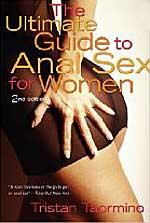

On another forum I read, there’s a conversation going on about anal sex, and specifically about whether or not there are any women who actually enjoy it.

Quite aside from the fact that I know rather a lot of women who enjoy giving it as well as receiving it (and thank God for that!), a surprising number of people maintain, often rather vigorously, that the woman who likes taking it up the ass doesn’t exist. A handful of folks opine that women do it only to please their mates, and that this makes them sad and pathetic creatures (on the idea, apparently, that doing something that makes your lover happy is one of the most stupid things any sad wretch could ever want). Those folks are merely ignorant of the full range and depth of the human sexual experience, which is sad but not surprising.

Another vocal handful, however, were unable to maintain this notion in the face of a considerable number of posters who said “Hey, I like getting jiggy up the butt!” and finally conceded that there are women whofavor anal–but then insisted that these women are inferior as human beings. One poster even wrote, I was brought up to treat woman especially lovers as on a pedestal. All this time, by these statistics I could have been treating half of them like whores.

And I think that speaks volumes, too, about the prejudices that some people carry around with thim regarding the ‘proper’ way for women to be.

It would seem that this man treats women with respect only as far as they behave the way he wants them to, and the moment they deviate from his expectations about how they should be, he tears them down off that pedestal and judges them ‘whores.’ Which is pretty fucked up, if you ask me.

I can’t quite rightly wrap my brain around the notion that a person’s value centers on the way that person acts in bed, nor around the idea that a woman who digs it up the ass, no matter what other qualities she may have as a human being, determines her eligibility for respect.

Yes, I know that there was a time when a woman’s value quite literally depended on her sex; that women were essentially bartered away by their fathers for use as breeding stock, and that in a day without paternity testing and with strict, if goofy, notions of inheritance and property rights, tracking a woman’s sexual activity was important to issues of estate. That’s also fucked up, and it hasn’t been true (at least in the First World) for…err, rather a long time now.

What baffles me is how tenaciously these ideas cling to life.

The guy who wrote the aforementioned bigoted nonsense defended this nonsense with a great deal of heat, at one point comparing anyone who thinks that anal sex is okay with the German Nazi party (I kid you not, though I seem to remember that the Nazis had their own views on anal sex, and it was probably more in line with this guy’s than he might realize).

I wrote recently that when a person holds on to some idea in the face of contradictory evidence, it’s usually because the idea is a distorted reflection of some part of that person’s underlying emotional landscape, but in this particular case I’m quite flummoxed about what that emotional landscape might be. I simply can not figure out why someone would care so passionately, and become so emotionally upset, over the notion that a bunch of women he doesn’t know and will never meet like taking a hard cock up the butt every now and then…or even don’t like teh analz, but think it’s okay if other women do.
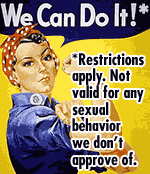

Now we get to the part that might make some folks angry. This is the part where I say that, while musing on these notions that women who like sex are bad, women who get lower back tattoos are women who like sex, and therefore women who get lower tattoos are bad, and on the sorts of faulty wiring that can exist inside a person’s head to make him believe that a woman who likes any kind of sex that he thinks she shouldn’t like no longer deserves respect, I have reached the conclusion that there’s a certain brand of feminism that seems bent on keeping things this way.

In a completely different conversation on a completely unrelated forum, the topic came up, as it often does, about pornography and relationships. Several folks, many of whom identify as feminists, weighed in on the subject with the usual laundry list of criticisms–porn is coercive, porn is degrading to women, porn commoditizes women’s sexuality, that sort of thing. One woman even went so far as to say, without apparent irony, that she has no respect for any woman who would be in porn.

Which, to my mind, is no different from the guy who says he has no respect for any woman who would receive anal sex.

Now, I know that feminism is often sharply divided over issues of porn and sex, with some feminists ardently opposed to it and other feminists ardently in favor of it. I’ve written about my own views on the subject in the form of a parody Socratic dialog on the virtues of porn, but the woman who claimed not to be able to respect anyone who did porn brought up an entirely new absurdity in my mind–the idea that anti-porn feminists have internalized the very patriarchal ideas they claim to oppose, and as a result are swallowing the very same patriarchal ideas about women and sex that they claim to refute.

When your ideological enemy agrees with you about the proper conduct of people, in the very areas where your ideological differences lie, I think it might be time to re-evaluate your ideas.

In a sense, the anti-porn feminists are accepting the core values of patriarchy, merely dressing them in different garments. They are, in fact, accepting the notion that a woman’s sexual choices and sexual expressions should be limited, that women who make sexual choices that they don’t agree with are inferior, and that some part of a woman’s value does indeed rest on her sexuality. They are seeking to abridge both a woman’s right to choose her own sexual expression and her freedom and range of sexual action, by labeling certain forms of sexual expression off-limits.

And perhaps most ironically, the entire argument that porn is inherently objectifying and commoditizing is based on flawed assumptions.

Many anti-porn feminists argue that porn caters to men and reinforces oppressive male-centered sexual roles. Leaving aside the inconvenient fact that many, many women like porn (a fact that anti-porn feminists will often handwave away by the process of inventing stories to explain their motivations, saying things like ‘they only believe they like porn because they’ve been brainwashed by patriarchal society into accepting subservient sexual roles’–that is, when they bother to acknowledge the fact at all), in reality if you look at the most patriarchal, the most repressive, the most rigidly conservative men out there, you will see that those men don’t like porn either.

The idea that porn is the byproduct of repression and patriarchy does not stand up to scrutiny. Socially conservative men, those who most strongly subscribe to the notion of prescribed sexual roles for women, are quite often ardent opponents of porn themselves. These social conservatives–the ones who seek to control women’s sexuality and who feel that women should be ‘pure’ and ‘proper’ and stay within rigid social norms–often will go so far as to say porn should be outlawed.

In fact, the Taliban, arguably the single most sexually repressive, patriarchal, anti-woman group the world has ever seen, ruled that possession of pornography was punishable by death.

The more patriarchal a society is, the more likely that society is to prohibit porn. The more socially conservative a person is and the more a person believes that women must obey rigid gender roles, the more likely it is that that person is opposed to porn. The more threatened a person is by women expressing their sexuality in non-traditional ways, the more likely it is that that person opposes porn. Porn is the byproduct of oppressive male patriarchy? Far from it; oppressive male patriarchy despises porn, and the more strictly a society seeks to impose gender roles on its members, the more strictly that society forbids pornography!

The same holds true for religion; the more socially conservative, sexually repressive a religious doctrine is, the more vigorously that doctrine opposes pornography. Look at the Southern Baptists, whose core doctrine says that a woman’s place is to submit gracefully to the divine authority of her husband. How do you think the Southern Baptist Convention feels about pornography? (Let me give you a hint.)

It doesn’t help, of course, that nobody can even define what porn is. “I can’t define porn, but I know it when I see it,” when it comes to brass tacks, is basically nothing but a way of saying “If it makes me feel a certain way, then it must be bad. If I see something and I don’t feel that certain way, then it isn’t porn, but if it causes certain feelings in me, then it is.” Which is, I rather think, a piss-poor way of defining anything, especially for the purpose of determining if it should be socially accepted or not. (Anti-porn activist Catherine MacKinnon helped author Canada’s anti-porn laws…laws which have enough subjective wiggle room that, in practice, they are routinely applied to gay and lesbian erotica but rarely or never applied to heterosexual erotica.)


There are, it would seem, many feminists who would like to live in a progressive, egalitarian society that treats women fairly, as full and equal citizens whose standing is identical to that of men…yet at the same time like to see this society free of porn.

And I don’t think that’s even possible.

A society which respects women as the equal of men, and which does not value its members on the basis of their sexual activities, will be a society in which there is porn. The more egalitarian that society is, the more mainstream that society is likely to be, for the very simple and obvious reason that there are people who dig making porn.

One anti-porn feminist argument is that porn is coercive. And this is true, in societies that don’t accept porn. It exists in every society, without exception, even in places once ruled by the Taliban–but the more repressive a society is, the more underground the manufacture and distribution of porn becomes. When something goes underground, it tends to become corrupt, driven by the sorts of people who will abuse and coerce for profit. If the making of porn is illegal, which is what tends to happen in patriarchal societies, then the production of porn falls into the hands of criminal enterprise.

Progressive societies tend not to have this problem; there is no need to force women into porn when porn is legal, because, like I said, some people dig being in porn. The human species is vast in its range of expression, and for some folks, being filmed in bed is fun. For other folks, it’s a job, no different than any other, and a damn sight better than some. (You really want to know what objectification and exploitation is all about? Try working at a chicken processing plant, where workers, often poor or minority women, may be forced to wear diapers or piss their pants because their bosses refuse to let them leave the line to use the bathroom.)

Point is, people do, and enjoy, different things. Some women like tattoos. Some women like taking naughty pictures of themselves. Some women like being filmed for Gang Bang All Stars VII. That’s all a normal and natural part of human expression, and like it or not, castigating entire classes of people or valuing them less because they do things that you don’t like does not empower women, nor serve in the interests of freeing women from social constraints on their range of action.

Respect, real respect, must include respecting folks whose choices aren’t like yours, so long as they do not seek to impose those choices on others. This is a test which the Taliban, the Southern Baptists, the folks who label women who like lower back tattoos as ‘tramps,’ and the anti-porn feminists all fail.

Some thoughts on reason, falsehood, and emotional need

When David and I arrived at work last Wednesday, our HR manager was in a pretty foul mood. When David asked how she was, she answered “scared. We’ve just voted in a Muslim terrorist as President.”

Now, Barack Obama is neither a terrorist nor a Muslim; in point of fact, he’s a Christian and a long-time member of a Christian church affiliated with the United Church of Christ. But that’s not really what I came here to talk about; in fact, I’m not really here to talk politics at all. I’m here to talk about what makes people believe outlandish things.


There’s a really interesting two-part essay over on Slactivist about an enduring urban legend surrounding Proctor & Gamble, the company that makes laundry detergent and soap and whatnot. According to the urban legend, an unnamed officer of Proctor & Gamble appeared on some television talk show some years ago and announced that the company donates part of its profits every year to the Church of Satan.

As with all urban legends, the details are fuzzy and change over time. Sometimes, it was the president of the company; in other tellings, it was the CEO. Sometimes it was Oprah; sometimes, Phil Donahue. The name of the person who appeared on the show and the date the show aired are, of course, never given.

The interesting thing about this urban legend is its total absurdity. It’s trivial to disprove; it can be demonstrated conclusively beyond even a single atom of doubt that it just plain never happened. Moreover, its utter absurdity would seem to suggest that no reasonable person could believe it.

The two-part essay is worth reading; you can find part one here and part two here.

The essay asserts that, in a nutshell, the folks who repeat this tale, which has been circulating since at least 1980 and possibly before, don’t believe it’s true; instead, they willingly pass on a story they know to be false, and only pretend to believe it’s true. The author asserts:

Those spreading this rumor can be divided into two categories: Those who know it to be false, but spread it anyway, and those who suspect it might be false, but spread it anyway. The latter may be dupes, but they are not innocent. We might think of them as complicit dupes. The former group, the deliberate liars, are making an explicit choice to spread what they know to be lies. The complicit dupes are making a subtler choice — choosing to ignore their suspicion that this story just doesn’t add up and then choosing to pass it along anyway because confirming that it’s not true would be somehow disappointing and would prevent them from passing it along without explicitly becoming deliberate liars, which would make them uncomfortable.

What I want to explore here is why anyone would make either of those choices. In both cases, the spreading of this rumor seems less an attempt to deceive others than a kind of invitation to participate in deception. The enduring popularity of this rumor shows that many people see this invitation as something attractive and choose to accept it, so I also want to explore why anyone would choose to do that.”

I think this is a very interesting argument–that those who pass on the story know it to be false, since it would seem that the story is so prima facie ridiculous that nobody could really believe it.

But I don’t think that’s the case. I don’t believe that the people who pass on this story know it to be false, but pass it on anyway, Instead, I think the real answer can be found in a comment posted after the end of the first part of the essay, and I’ve been chewing on it for weeks now. It offers, I think, a very useful insight into fallacy of all sorts.

The important bit, which caused something of an epiphany in my own understanding of the human condition, is this bit:

When an untrue story circulates, it’s generally because it expresses some kind of social unease. There may not be razors in the Halloween apples, but it’s a way of expressing the concern that your precious children are going out knocking on the doors of people who may not wish them well. There may not be rat poison in the Mars bars, but it’s a way of expressing the sense that they’re definitely not good for you. Not every Bridezilla story may be true, but it’s a way of expressing the sense that the wedding industry is too high-pressured and perfectionistic. There may not be Satanic abuse going on at day care centres, but it’s a way of expressing a sense of discomfort at women going to work and leaving their children in the care of others. And so on.


Human beings are inherently irrational. We carry around with us a kind of internal model of the way we make decisions: we are posed with a question, we think about the question, we evaluate evidence to support or refute each of the available options, and then we come to a conclusion. But that isn’t how it works at all.

More often, the decision is made emotionally, on a subconscious level, long before we ever start thinking about it. After the decision has been made deep within the bowels of our emotional lizard brains, our higher-order, monkey-brain reason is invoked–not to evaluate the decision, but to justify it.

One consequence of this emotion-first decision-making process is confirmation bias, a process of selective evaluation where we tend to exaggerate the value of anything which seems to support our ideas, and to devalue or discard anything which contradicts our ideas. It’s a powerful process that ends up making the decisions we’ve already made and the things we already believe all but immune to the light of disproof, no matter how compelling the disproof may be.


I’ve written before about how the brain is really not an organ of thought so much as an apparatus for forming beliefs, and how it has been shaped by adaptive pressure to b remarkably resilient at forming, and holding on to, beliefs about the physical world.

The adaptive pressures that gave rise to the belief engine within our heads don’t necessarily select in favor of organisms that generate correct beliefs, for reasons I talked about there. But the beliefs that we form do serve a purpose, and sometimes, it’s an emotional purpose.

The things a person believes can reveal a lot about that person’s underlying emotional processes. Beliefs often reflect, in a garbled and twisted way, the buried perceptions and the emotional landscape of those who profess them. Even the most outrageous, clearly absurd beliefs can be quite sincere, and otherwise sane, rational people will adopt insane, irrational beliefs if those beliefs serve some emotional function.

Looked at in this way, a lot of patently absurd beliefs begin to make a kind of sense. They’re distorted funhouse mirror projections of an underlying emotion, twisted out of all rational shape, and clung to through a powerful set of mental processes that make them seem attractive, even obvious.
The idea that Obama is a Muslim terrorist, ridiculous as it is, is an expression of an emotional state: “I do not identify with this person, he seems alien and strange to me, and I am afraid that he will not make decisions that reflect my needs.”

The notion, sometimes seen in a few of the more extremist corners of radical feminism, that all heterosexual sex is always rape becomes an expression of an emotional state: “When I have had sex, I have felt disempowered and violated by the experience.”

The idea that the government staged the attacks on the World Trade Center is a twisted-up, garbled expression of an emotional state: “I am afraid that my nation’s government is corrupt and evil, and is willing to resort to any means, however extreme, to achieve its own ends.”

This is why these beliefs are so vigorously resistant to debunking, even when the evidence against them is overwhelming. They are not assertions of fact in the way that many other statements are; they are assertions of emotional identity.

And they can not be treated as assertions of fact, even though on their face that’s what they look like.


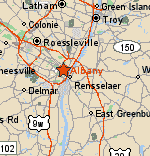
If someone says “New York city is the capital of New York State,” that’s an assertion of fact. It’s easily countered; you can easily show him a map, or point him to Wikipedia, and say “No, the capital of New York State is Albany.” And, if he’s not mentally ill in some way, he’ll probably say “Really? I didn’t know that. Cool!”


But if someone asserts that Proctor & Gamble donates money to the Church of Satan, and you contradict him, he’s likely to respond with anger–in a way that he won’t if you tell him that Albany is New York’s capital. That’s because you’re not contradicting his assertion of fact; you’re telling him that his emotional identity is wrong.

And it’s important to understand that even if a particular belief is wrong, the emotional landscape supporting that belief might not be. Proctor & Gamble does not donate money to the Church of Satan, but what is that belief an expression of? One likely possibility is that the emotional state beneath it looks something like “I do not trust large, faceless corporations to have my interests at heart, and I am afraid that a society dominated by large, faceless corporations may not be responsive to my needs and my values.”

And you know what? That is a perfectly reasonable feeling to have. There very well indeed may be some truth to that idea, even though the specific beliefs that grow from this soil are twisted and misshapen.

Any attempt to debunk these ideas will never succeed if the debunking does not separate the idea from its emotional foundation. Furthermore, the fact that an idea grows from and is nourished by some kind of underlying emotional reality means that even the most otherwise skeptical, rational person can become attached to ideas that are patently false, and that person’s own tools of rational skepticism may not be able to evaluate, or even see, those ideas.

The challenges this notion poses to skeptics and rationalists is worthy of a post in its own right, and will be the subject of Part 2 of this essay.

Some thoughts on modern-day literature

There will come a time
This life you live
Will catch up with you
And no one will be left
When honesty is blind
In ignorance exist the fallen.
We’re begging for the truth

I just returned from a trip to Chicago to visit dayo. The flight’s a little over two hours, plus ancillary waiting-about at the airport after passing through the absurd farce we laughingly call “security,” so I brought a book along with me.

I had quite a lot to choose from. I’ve recently received rather a large pile of books from Amazon, as a result of the not inconsiderable credit I’d built up with them over the past year.

The book I chose is one of the best pieces of literature I’ve read in a very long time. It follows, in a non-linear fashion, the story of a man–a soldier, and a veteran of several wars–who is running from something in his past. The narrative peels back the story of his life, through flashbacks and memories told so deftly that they make Faulkner’s The Sound and the Fury seem positively clumsy and hamfisted by comparison; the main character is illuminated in stages, bit by bit, with a sympathy and a narrative skill that makes every part of the book a delight to read.

The book is Use of Weapons, by Iain M. Banks, and there’s a reason it has not won a Pulitzer Prize. At the very least.

It’s not a very good reason, mind. But there is a reason, and that reason is quite simple: The story is science fiction.

Had it been set in any other genre, in any other setting, the book would be taught in college literature classes all over the country. Oprah would be discussing it on TV, and comparative lit classes would probably be putting the story alongside Tales of the South Pacific and March.

Had it been set in any other genre.

Night comes and the shadows fall
The lights appear
Across the city
I wonder where you are
The words you say are false
There is no compromise
No absolution.

The main character travels in a spaceship instead of a steamship; the battles in which he engages take place on distant planets, not distant continents. Because of that, the story is relatively unknown. And frankly, I think that’s a damn shame. It’s rare that so dark a journey into a character’s mind can be pulled off with such a light touch, and the author’s treatment of the main character is simultaneously sympathetic and unflinching–a neat trick, considering the book’s subject and the character’s history.

I think it’s interesting that even in this day and age we still make broad assumptions about classes of literary works. “This is Serious Literature; that over there is Science Fiction. Serious Literature is real literature; Science Fiction is mindless fluff for overgrown geeks who still play Dungeons & Dragons in their mothers’ basements.

It’s quite rare that a contemporary book can bridge the divide. William Gibson’s Neuromancer is one of the relatively few works of science fiction to be treated as Serious Literature; older works, like those of Jules Verne, occasionally get a nodding respect out of deference to their age, though rarely the respect they deserve. Spaceships and planets, it seems, aren’t thought of as appropriate settings for serious explorations of the human condition.

Which is odd, given that science fiction is arguably the most forward-looking exploration of a species that has over the past hundred thousand years carved its place in the universe by virtue of its ceaseless forward progression in its understanding of the physical universe.

To some extent, I suppose, it’s inevitable–much of science fiction tends to obsess over the nuts and bolts of technological ideas that don’t exist yet. Popular science fiction gives us the sterile banality of Star Trek, or the facile, juvenile universe of Star Wars, without depth or any apparent understanding of what it means to be human.

But pop literature of any sort can be argued to have that same flaw. It’s not like The Da Vinci Code exactly shines a spotlight on the nature of man, or The Bourne Identity plumbs the furthest recesses of the human spirit. Yet nobody would automatically place these works into a mental bin marked “Serious Literature Not Found Here.”

And that’s rather annoying, y’know?

Anyway, it’s a damn fine book, and one I recommend without reservation. Even to folks who think they prefer Serious Literature to Science Fiction.

Things and Stuff: The Weekend

Saturday brought with it a very interesting reinforcement of what is arguably the overriding, and most important, lesson of living in a post-industrial society:

In a world spanned by an instantaneous communication network of global scope, in a nation whose most powerful and most influential sectors are not involved with the digging of ditches or the making of things but rather with the moving of information, it doesn’t matter what you know. What matters most is how you can find what you need to know. The ability to memorize skills or information matters less than the ability to find the skills or information you need, when you need it.

Seriously. On Friday, I did not know how to set up a database, how to add or retrieve information from a database, or how to pass information from a Web browser to a database. Today, I do. Just like that.

We take for granted many things that for 99.9% of human history would seem strange and unfathomable, and I’m not just talking about heavier-than-air powered flight and iPods. I’m talking about the way we learn, catalog, disseminate, and transmit information and knowledge. Google became a billion-dollar company on the basis of a single insight: when the sum total of readily available human knowledge reaches a certain point, the index into that knowledge is worth more than the knowledge itself. If you can’t find it, you might as well not have it, as any good librarian knows.


Sunday was a bird of a whole different feather. The entire day, beginning to end, was spent playing World of Warcraft (which is, really, nothing but a gigantic database of immense proportions that’s accessed through a very specific type of real-time graphical interface). Ran Hyjal Summit, ended up with a new ring and new wrist piece (which are, for some strange reason, still not showing up on Wowarmory…hmm). Finally replaced the Horseman’s Signet Ring I got off the Headless Horseman event last year, which means that I wore that ring for exactly a year and a day.

Sweet.

Now if we could get our collective asses in gear and kill Kael and Lady Vashj, I could complete the quest for Keepers of Time and get another new ring. Plus Kael drops the Tier 6 chest piece, and that’d be pretty sweet.

I got my Onyxia key just three days before they removed the attunement requirement for Onyxia. Dammit.


It’s growing cold. joreth is coming up this evening; she’ll be here for the rest of the week, and on Saturday i fly to Chicago to see dayo. I’ll be in Chicago until Tuesday, if any of the Chitown peeps want to get together. We’re probably going to be at GD on Saturday, at least. cunningminx? scathedobsidian? Anyone?

Got some wood for the fireplace yesterday, then realized that I have no poker, or little shovel thingie, or any of the other accoutrements one normally associates with fires and fireplaces. Got to remember to go shopping for those things tonight before joreth arrives; I hope to do a photo shoot with her and the fireplace at some point this week.

Mmm, fire. I live in a place that has a fireplace!

The Stupification of a Generation…

…or, how to learn to stop worrying and love teh pr0n.

There’s an article that went up on Newsweek’s site this week about a book. The book is about porn, or more specifically “The Pornification Of A Generation.”

Now, it doesn’t take a rocket scientist to figure out that we’re a country that is, not to put too fine a point on it, deeply fucked-up about sex. We are simultaneously awash in sexual imagery and hopelessly sexually repressed, and that tension doesn’t make for healthy attitudes about porn OR sex.

I haven’t read the book that the article talks about, so I don’t know if the book is as badly written, but the article seems to make a lot of unwarranted assumptions and unsupported conclusions. It also uses a lot of over-the-top, emotionally manipulative language (like “I realized porn culture and I were in a death match for my daughter’s soul”), and it’s DEFINITELY been my experience that you can’t really expect reasoned, measured investigation of a complex subject from folks who talk this way.

If you look at the way the article cloaks a lot of hidden assumptions in its use of language…well, let’s just say it sets off my baloney detector1. It doesn’t take long, either; the second paragraph of the article begins “In a market that sells high heels for babies and thongs for tweens, it doesn’t take a genius to see that sex, if not porn, has invaded our lives. Whether we welcome it or not, television brings it into our living rooms and the Web brings it into our bedrooms.”

It’s reasonable to say that porn is more accessible at this point than it has been in the past, but to say that it comes into our lives and into our bedrooms “whether we welcome it or not” is simply stupid. It’s not like “porn” is sitting somewhere inside the Internet with the magical ability to leap through your computer or TV set and, I don’t know, wave naked pictures of Angelina Jolie in front of your face or invade France or something. I personally don’t have that big a taste for porn, and if I don’t particularly feel like seeing any, I don’t. No magic involved; I just don’t go to porn Web sites or watch “Debby Does Dozens XXXVI” on the DVD player unless I…

…actually want to. You know?

Anyway, the article then goes on to say, “But it isn’t just sex that Scott is worried about. He’s more interested in how we, as a culture, often mimic the most raunchy, degrading parts of it—many of which, he says, come directly from pornography. In “The Porning of America” (Beacon), which he has written with colleague Carmine Sarracino, a professor of American literature, the duo argue that, through Bratz dolls and beyond, the influence of porn on mainstream culture is affecting our self perceptions and behavior—in everything from fashion to body image to how we conceptualize our sexuality.”

Which misses the point so spectacularly that if there was an award for point-missing kind of like the Oscars, with actresses in ten-thousand-dollar dresses and limos parked around the block and so on, this guy would be strutting his stuff on the red carpet like Paris Hilton on a bender.

See, here’s the thing. People are interested in and curious about sex; it kind of, err, goes with being human. Basic biological drive, y’know? And we live in a culture that is so repressed about sex that we refuse to even talk about it, yet at the same time we hook into this basic biological drive in advertising and marketing and media, because, well, it works.

So yeah, we’re surrounded by sexualized imagery, but we refuse to talk about it openly. So we create a social environment where kids grow up in a vacuum; the grownups won’t talk to them about sex, the parents are too embarrassed and ashamed to talk about sex, and they’re surrounded by sexual images without any sort of context. Y’think that might get confusing?

This confusion isn’t the fault of the imagery; it’s the fault of chickenshit grownups who refuse to have a grown-up conversation about sex. When you create an environment that says sex is fun and enticing and then you treat the entire topic with a deep, red-faced shame, people are going to get fucked in the head.

And that’s the most reasonable part of the article. The rest of it is like an inverted version of those stories your grandfather told you as a kid; no matter where you go from there, it’s downhill. In the snow. Both ways.

The red-carpet bender continues with this little gem: “All you have to do is live here on a daily basis, and you pick this stuff up through every medium,” says Sarracino, who teaches at Pennsylvania’s Elizabethtown College. “But it’s been so absorbed that it has almost ceased to exist as something separate from the culture.”

Attitudes about sex and sexuality are one of the defining aspects of culture. “Culture” in this context is the tastes, attitudes, ideas, and beliefs that are shared by a society. A shared set of ideas about sex doesn’t exist as something separate from a culture? Thank you, Captain Obvious, for illuminating THAT with a harsh white light that will shine as a beacon of knowledge for generations. You may go now.

OF COURSE sexual attitudes don’t exist as something “separate from the culture.” That’s what culture is. What the captain here is trying to say is something different: namely, that cultural ideas and taboos about sex are changing. And they are. That’s absolutely correct.

But then, wait, it gets better. The very next sentence is this: “The prevalence or porn leaves today’s children with a lot of conflicting ideas and misconceptions, says Lyn Mikel Brown, the coauthor of “Packaging Girlhood,” about marketers’ influence on teen girls. “All this sex gives a misinformed notion of what it means to be grown-up.””

Y’think? I wonder why that is. Could it be that, oh, I don’t know, we’re not giving kids any sort of framing or context in which to place and understand this sexual imagery? Could it be that grownups won’t talk to kids about sex, grownups won’t be honest and direct about sex, and so kids end up inventing their own context? Might it be, just maybe, that if we as a society weren’t so goddamn hung up on having sex, selling sex, depicting sex, and doing everything under the sun except TALKING ABOUT sex, that kids would find it easier to put sex into context?

Take something that people really, really want to do, because it’s fun and it feels good and they have genes that make doing it something of an imperative. Spend a tremendous amount of time perfecting the art of depicting this thing until it’s honed to a razor-fine edge. Surround people with it, and then whenever they ask you about it, snatch it away and tell them they should feel ashamed. Rinse and repeat, oh, I don’t know, thirty or forty thousand times. Think they’ll end up with misinformed notions about what it is? Really? Who knew?

“The authors of “So Sexy So Soon” (Ballantine), which came out last month, believe that part of the problem for children is that they lack the emotional sophistication to understand the images they see.” Yeah. You know why they lack that emotional sophistication? Because we’re so goddamned obsessed with treating children like they’re little china dolls or something that we refuse to give them that emotional sophistication. We deliberately, with the resolution of a Muslim suicide bomber, make goddamn well and sure that kids don’t get the tools they need to understand the images they see, and not only that, we teach them that it’s shameful to even try.

Then we tell them that if they’re not good in the sack, they’re not good people.

YOU try to figure that one out.

“Last year, the American Psychological Association put out a compelling report that described the sexualization of young girls: a process that entails being stripped of all value except the sexual use to which they might be put. Once they subscribe to that belief, say some psychologists, those girls begin to self-objectify—with consequences ranging from cognitive problems to depression and eating disorders.” Mmm-hmm. And this is the fault of who, exactly? Pornographers who kick down the door and wave nudie pictures around in the living room whether we want it or not? Magazines that have learned that making girls feel bad about themselves is a devastatingly effective marketing hook? Parents who fel that their greatest duty as the guardians of society is to ensure that the next generation of bright young people grows up as ashamed and conflicted about sex and sexuality as they are?

My money’s on numbers two and three. I’ve never had anyone force porn into my home against my will. Maybe it’s the lock on the door, I don’t know. Or maybe it’s because nobody is FORCING anything on anyone.

“It’s the porn ideal of sex as commodity in a competitive market—and to see rapper Nelly swipe a credit card through a young girl’s backside in a music video only reaffirms that notion. It’s artificiality as a replacement for authenticity.”

No, it’s adults who are scared to death of authenticity, who leave their children to figure out what all this means because Heaven knows that teaching kids how to understand all of this in context is just way too much to ask.

Listen, this should be obvious. The world is a big and confusing place. Part of a parent’s job is teaching the skills that a child needs in order to learn to make sense of it. That’s what adults do. When we as a society abdicate this responsibility, we can hardly go crying about the results.

1 Carl Sagan, in the book The Demon Haunted World, sets out a list of cognitive tools he describes as a “Baloney Detection Kit.” It’s a great set of tools for spotting flim-flam or sloppy reasoning, and I highly recommend this book.