
Repugnant “Pro-Life” Views on Contraception

I first posted this on Quora in 2017, when we lived in a very different world. Now that Supreme Court Justice Clarence Thomas has explicitly said that Griswold v Connecticut should be overturned on the same grounds the Supreme Court overturned Roe v Wade, and Mississippi governor Tate Reeves (R) has said he won’t rule out a state ban on contraception, and Trump-backed candidates in Michigan and Ohio have called for a Federal law banning contraception, I thought this deserved a repost.

I keep hearing the argument that Griswold is safe because the overwhelming majority of people in the US still think contraception should be legal. Well, that was also true of abortion before Ronald Reagan. People forget how a few decades of persistent, well-funded managing can shift the Overton window.

So let’s take a look at the “pro-life” groups in the United States and see what they say about contraception, shall we?

The largest pro-life group in the US is the Roman Catholic Church, which has no fewer than seven sub-groups within its overall organization dedicated to opposing abortion. The Catholic Church opposes all forms of contraception except the rhythm method across the board.

The second-largest group is National Right to Life. It takes no formal stand on contraception, a policy which it reiterates many times. However, it has consistently lobbied against bills in Congress that make access to contraception easier, as well as against bills that would provide education about contraception both domestically and abroad.

The American Life League opposes contraception. They repeat the false claim many times on their Web site that birth control pills work by inducing abortion. They also claim that other forms of contraception increase abortion, showing statistics that abortion and contraception use in the US increased at about the same time (which is like saying ice cream causes sunburns; prior to Roe v Wade, most places in the US also outlawed contraception). They seek to overturn Roe v Wade and also ban contraception.

The Susan B. Anthony List opposes contraception across the board. The group’s president says, “the bottom line is that to lose the connection between sex and having children leads to problems.”

Americans United for Life, the oldest pro-life organization in the US, opposes all forms of hormonal birth control and IUDs, repeating the false claim that they work by inducing abortion. They oppose measures to teach about contraception, domestically or internationally. They support laws forbidding a company from firing a pharmacist who refuses to sell contraception. They do not have a stated policy on condoms, but they endorse only abstinence-based sex ed and oppose teaching about condoms.

Live Action opposes contraception. They claim that hormonal birth control induces abortion. They also claim that condoms do not work, that statistics showing 97% efficiency of condoms are lies promoted by Planned Parenthood and the “abortion industry,” and that making condoms readily available increases teen pregnancy.

The Family Research Council opposes hormonal contraception and IUDs. They do not have a formal position on condoms, but their Web site does say “we do question the wisdom of making it available over the counter to young girls.” They support a system where hormonal contraception and IUDs are banned, and condoms and diaphragms are available only by prescription.

Focus on the Family opposes hormonal birth control, IUDs, and contraceptive implants. They are neutral on condoms and diaphragms within marriage but oppose making them available to unmarried people. They oppose sex outside marriage across the board.

The American Family Association opposes hormonal birth control and IUDs. They do not formally oppose condoms, but they do oppose advertising condoms, making condoms available for free, and any sex education that mentions condoms.

American Right to Life opposes all contraception. They use scare tactics claiming that hormonal birth control causes cancer and strokes. They support legislation banning hormonal birth control and restricting access to condoms and other barrier forms of contraception.

Campaign for Life in America has no stated policy on contraception.

The Center for Bioethical Reform, the anti-abortion group most famous for showing grisly pictures of dismembered fetuses at protests in front of clinics, opposes contraception. The group’s leader, Mark Harrington, compares condoms to “drugs, gangs, rapes, assaults, and murder” as proof that America is abandoning its moral heritage as a “Christian nation.” He says legal decisions overturning bans on contraception were done by “terrorists in black robes” with a “warped view” of the Constitution.

The Human Life Foundation opposes all forms of contraception except the rhythm method.

Operation Rescue opposes all forms of birth control and states that the only legitimate purpose of sex is procreation.

Choose Life opposes hormonal contraception, IUDs, and contraceptive implants. It endorses the rhythm method, condoms, diaphragms, and sterilization. It supports teaching of barrier methods of contraception.

Coalition for Life opposes contraception across the board. It claims that hormonal birth control and IUDs cause abortion. It states on its Web site that only the rhythm method for birth control should be used, and its Web site urges its members to “help end the ravages of contraception.” It supports legislation to ban all contraceptive methods.

The Right to Life Federation opposes all contraception. Its position is that “abortion, infanticide, euthanasia, and contraception are intimately connected” and that a person opposed to any one of those things must be morally compelled to oppose them all. It claims that use of contraception is statistically correlated with abortion, and supports an across-the-board legal ban on both abortion and contraception.

If you support any anti-contraception group financially, even if you do not oppose contraception yourself, this is the message you are funding.

Make no mistake: Griswold is next.

Some (more) thoughts on cancel culture

Okay, so. Let’s talk about cancel culture.

Cancel culture isn’t what a lot of folks think it is.

You can’t reasonably address the notion of what “cancel culture” is until you first address what it isn’t. Cancel culture is not saying “I don’t like the way that company does business, so I’m not going to shop there.” Cancel culture isn’t “I don’t like what that person did, so I’m not going to watch her movies.” Cancel culture isn’t even “I don’t like what that company or that person did, so I’m going to tell others how I feel about them.”

All those things are simply you making your own choices. No company is entitled to your money; you’re not taking something away from a corporation that rightfully deserves it by not shopping there. No movie star is entitled to you seeing their movies. No TV comedian is entitled to have you watch their shows. No author is entitled to have you read their books.

Cancel culture, if we are to be intellectually honest, is something else. Cancel culture is the idea that someone or some company did (or you think they did) something wrong, so you aren’t going to patronize them, and you are going to try to force other people not to patronize them either.

Probably the classic example of cancel culture in United States history was McCarthyism, where the government used political witch hunts to force people out of their livelihoods because someone said their brother overheard their hairdresser telling someone else they might be Communist.

Anyone who stood by someone accused of Communism was also branded a Communist. Anyone who defended someone accused of Communism was also driven out of their jobs. Anyone who stood up and said “hey, wait a minute…” was branded a traitor and publicly hounded.

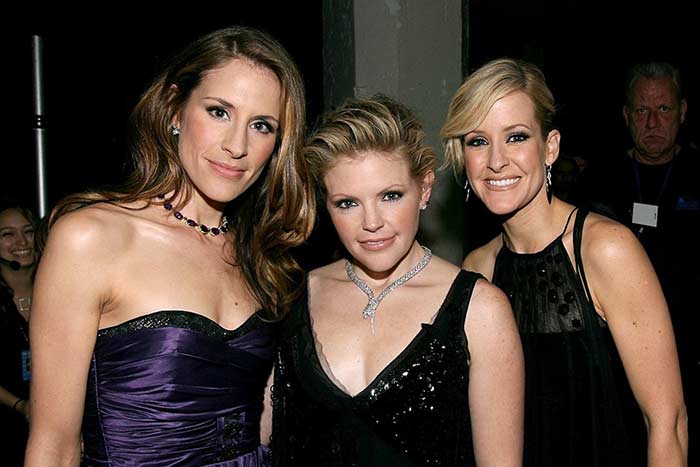
The most dramatic recent example of cancel culture was probably what happened to the Dixie Chicks, who incited the wrath of right-wingers by criticizing the Iraq war.

Many people stopped buying their albums. That’s not cancel culture.

However, they also demanded radio stations stop playing their music. They stalked and harassed managers of radio stations that played their music. They sent death threats to radio DJs who played their music. They phoned firebomb threats to venues that hosted their concerts.

That’s cancel culture.

Cancel culture is not “I will not patronize this person.” Cancel culture is “I will make sure nobody else patronizes this person.”

There are a lot of moving parts to cancel culture; while it predates the Internet (and possibly human civilization), the Internet has made it a flash phenomenon, able to incite enormous fury at the slightest breath.

And while in the past it has frequently been dominated by the political right—I laugh every time an American conservative accuses liberals of “cancel culture,” given the Dixie Chicks thing and the Starbucks thing, cancel culture is neither a left thing nor a right thing. Folks of all political persuasions do it.

Some of the key elements of cancel culture include:

Mass outrage. “Look what they have done! They have criticized our President/sold us out to Commies/said a bad thing/whatever! Outrage!!!” Often, the outrage comes with scanty supporting evidence, and frequently it’s presented with the most emotionally laden spin possible.

Appeal to popular narratives. Narratives are powerful. Human beings are a storytelling species; we understand the world through stories. The stories we tell ourselves—”the government is bad and trying to harm me,” “men are abusers; women are victims,” “nothing an opposing politician says is ever true,” “gay men are pedophiles”—shape our understanding and perception of the world. Stories we hear that fit our narratives tend to be believed without question. Stories that contradict our narratives tend to be rejected without consideration.

These two things often work in synergy. Something that contradicts or violates a narrative we accept will often generate a disproportionate emotional response…not only because it introduces cognitive dissonance, but also because these narratives are:

Tribal markers. The narratives we accept become the way we tell in-groups from out-groups. They are, in a literal sense, virtue signaling and identity politics; the people who believe the same narratives are ‘us,’ while those who reject our narratives are ‘them.’

A clearly defined Good Guy, clearly defined Bad Guy, and clearly defined crime—often, a crime against whatever values once made the Bad Guy a Good Guy. In the political right, this tends to be defiance of authority figures the Right accepts (President Bush, Donald Trump); in the political left, this tends to be perception of or accusation of sexual or social impropriety.

This is why the US left and US right accuse one another of “cancel culture” but don’t see what they themselves do as “cancel culture.” We didn’t cancel the Dixie Chicks; we responded to their unacceptable disrespect of our President! We didn’t cancel that comedian; we responded to defend disadvantaged groups from his attack!

Targeting not only of the person being canceled, but anyone nearby. Cancel culture is, by its nature, an attempt to coerce everyone into shunning the person or entity being canceled. The best way to do this? Target anyone who stands by that person or entity. Doing this sends a clear and unmistakeable message: Defend the person we are canceling and we will ruin you, too. People like to think of themselves as upstanding moral entities who will do the right thing under pressure. Threaten someone’s livelihood or reputation and I guarantee, guarantee, the overwhelming majority of those who think of themselves as good, stand-up people will fold like wet cardboard. There’s no percentage in having your own reputation ruined and your own livelihood destroyed for the sake of someone else. 

Intolerance of dissent. This same targeting happens to people who say “hold up a second, are you really sure this is what you say it is? Are you certain this person did what you think they did? Should we hear from this person?” Reminding someone in the throes of a full-fledged righteous wrath that stories have more than one side invites you to be cast out, set on fire, and nuked from orbit.

Rejection of nuance. Cancel culture thrives on self-righteousness. The people who engage in canceling truly, absolutely, 100% believe they are truly, absolutely 100% right. They truly believe they are on the side of the angels, casting out unutterable darkness itself. The idea that there might be anything other than a purely good side and a purely evil side lets the air out of that self-righteousness, and that invites in feelings of shame and guilt.

The trouble with all of this is it allows for no self-reflection and once started, cannot be recalled. The people who phoned bomb threats to Dixie Chicks venues continue, to this very day, to believe that what they did was right…because once you’ve taken that step, how can you sleep at night if you tell yourself ‘no, actually, I was over the top, I shouldn’t have done that’? Once you’ve accused something of some wrongdoing, even if on some level you know it isn’t true, you can’t take it back without the risk of that same outrage machine turning on you; you have to keep going. 

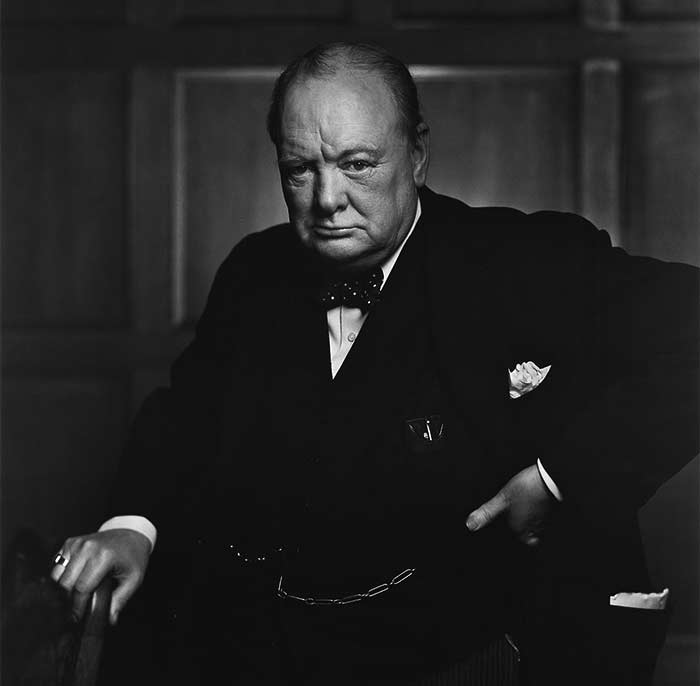
In 1937, Winston Churchill wrote:

Dictators ride to and fro upon tigers from which they dare not dismount.

He was talking about populism, but where populism is the politics of human tribalism writ large, cancel culture is the politics of human tribalism writ small, and the same idea applies. When you’ve saddled up that tiger, you don’t dare dismount lest it stop eating your enemies and eat you instead.

So what does this have to do with political correctness?

“Politically correct” is a fudge phrase. It’s like “respect” that way.

In 2015, a Tumblr user on a now-deleted blog wrote

Sometimes people use “respect” to mean “treating someone like a person” and sometimes they use “respect” to mean “treating someone like an authority”

and sometimes people who are used to being treated like an authority say “if you won’t respect me I won’t respect you” and they mean “if you won’t treat me like an authority I won’t treat you like a person”

So when you hear the word “respect” in a political conversation, that should raise the small hairs on the back of your neck. Odds are good someone’s about to pull a lingusitic switcheroo on you, and if you don’t pay attention, you’re gonna get snookered.

Sometimes people use “politically correct” to mean “treating other people with decency and compassion” and sometimes people use “politically correct” to mean “adhering to a rigid dogmatic orthodoxy.”

And sometimes people will go into a conversation using it the first way, and when you agree you think that’s a fine idea, they’ll point at you and say “See! You’re just trotting out your identity-politics dogmatism!”

And then whatever idea you’d been advocating gets dismissed as empty virtue signaling.

It’s easy, oh so very easy, to pick up the torch and the pitchfork when you hear something that presses your emotional buttons. And yes, you do have buttons, and so do I, and so does everyone.

Outrage is the enemy of reason. It’s easy to get swept up in the righteous fury of outrage. I’ve done it. I struggle to name anyone who hasn’t. That outrage makes you a tool, a weapon in someone else’s hands…and sickeningly often, if you scratch the surface of justifiable moral outrage over some clear and obvious moral wrongdoing, you’ll find something cheap and tawdry beneath.

Something like money. Or influence. Or political power.

The irony is that political correctness of the first sort—compassion, empathy, a sincere desire to see things from many perspectives, a rejection of the easy and convenient narrative—is actually the antidote to cancel culture, which rests on a foundation of political correctness of the second sort.

But political correctness of the second sort feels better. Picking up the torch and the pitchfork feels good. You feel like you’re in the right. You feel like a superhero. You feel like you’re riding into battle against evil itself. And best of all, you can do it easily, from home, without risking anything!

Funny thing about that. If what you’re doing makes you feel heroic without risking anything…maybe it’s not as heroic as you think it is.

“But I’m changing it from within!”

Many years ago, I had an online conversation with a woman who was a devout, practicing Catholic.

She was also a polyamorous, pro-choice sex activist in a live-in relationship with her boyfriend, to whom she was not married.

When I asked her about the contradiction between these two things, she said that she recognized that Catholicism was behind the times on issues like women’s rights and nontraditional relationships, but that she remained Catholic because she wanted to change the Church from within.

I was reminded of that conversation recently when i had another online conversation with a guy who claims to be pro-gay rights and pro-gay marriage, who professes horror at the Republican Party’s treatment of women, who says he is appalled at the way the Republican party uses fear of immigrants and sexual minorities to raise votes, and who says that anti-Muslim sentiment is morally wrong…but who is still a member of the Republican Party and plans to vote the Republican ticket this November.

I asked him how he can, in good conscience, be a part of an organization whose values are so antithetical to his own. He said the same thing: “I want to change the Republican party from within.”

He and the woman I talked to all those years ago had one other thing in common besides saying they wanted to change the groups to which they belonged from within: They were both rather thin on details about what work they were willing to do to make that happen.

Both of them said they want to change these groups from within, but neither one of them was working to make that happen.

Which, in my book, is dishonest.

Changing a large, entrenched organization from within is hard. It requires serious work and serious commitment. It requires sacrifice. If you are a pro-life Catholic or a pro-immigration, pro-gay Republican, you will suffer if you make those beliefs known. You will face condemnation. You will face ostracism.

Working to change an organization takes dedication. If you actually want to change a political party, that means getting involved, deeply. It means showing up at the party’s national convention. It means becoming a delegate or an activist. It means voicing objections when the party attempts to make a platform plank out of hate and fear.

If you actually want to change the Catholic Church, that means becoming part of the church hierarchy. It means going to seminary. It means becoming a respected theologian and integrating yourself into the church’s structure.

Steering a ship requires getting on deck and putting your hand on the wheel.

Neither of the people I spoke to, all these years apart, were doing any of these things. Just the opposite, they were doing exactly what the rank and file are expected to do: go to church, tithe, vote in a straight line for every name with an (R) after it.

This is not how you change a group from within. This is how you signal the group that what it is doing is working.

It does no good to toe the line while secretly disagreeing within the privacy of your own head. If you do that while claiming to be “working for change from within,” you’re being dishonest. You’re running away from the genuine hard work and the real social cost of change.

You do not fight segregation by docilely sitting at the back of the bus like you’re told, then grumbling about it on the Internet. You fight segregation by sitting at the front of the bus, getting arrested, and inspiring others to do the same.

“I am changing things from within” is, all too often, a bullshit justification, a wimpy self-rationalization for complicity in atrocity. If you can not point to direct, tangible things you are doing to create that change, even when–especially when!–it costs you, you are not part of the solution, you are part of the problem. You are not a force for change; you are a participant in the very structures you claim to want to change.

No bullshit, no evasion: if you’re working to change the world, ask yourself, what have I done to make that happen?

Some thoughts on social issues in video games

Unless you’ve spent the last year living entirely under a rock, far from the hustle and bustle of normal life, and entirely without any sort of Internet connection, you’re probably aware to some extent of a rather lengthy fuss about the heart and soul of computer gaming. This fuss, spearheaded by a diverse group of people loosely gathered under a name whose initials are similar to GargleGoose, is concerned about the future of comic book and video game entertainment. They believe that a sinister, shadowy cabal of “social justice warriors”–folks who are on a mission to, you know, right wrongs and uplift the oppressed, kind of the way Batman or Superman do only without the fabulous threads. This cabal, they fear, is coming for their video games. The social justice warriors, if we are to believe GameteGoose, are so obsessed with political correctness that they wish to make every game in the world a sanitized, sterile sandbox where not the slightest whisper of sex or violence may be seen.

Okay, so granted that’s not likely the characterization GrizzleGoose would put to their aims, though I think the general gist is there.

And they’re not entirely wrong, though they’re pretty far from right. There is a battle going on for the heart and soul of entertainment. For decades, comic books and video games have catered to straight white middle-class guys, who overwhelmingly make up the demographic that bought the games, read the comics, and to whom writers, artists, and developers catered with laser focus.

But times have changed, comics and games have gone mainstream, and they’re attracting more and more people who aren’t straight white dudes any more. And as other folks have come into the scene, they have started pointing out that some of the tropes that’ve long been taken for granted in these media are, well, a little problematic.

And merely by pointing that out, the folks talking about these problematic things have provoked pushback. When you live in a world where everyone caters to your exact tastes, the idea that some people might start making some things that aren’t to your liking feels like a betrayal. And the suggestion that there might be something about your taste that isn’t quite right? Well, that can quickly turn into an existential threat.

GooeyGoose has effectively capitalized on that existential threat, rallying straight white dudes into believing they’re the Rebel Alliance who are under attach from the forces of social justice while adroitly handwaving away the reality that when it comes to popular taste in entertainment media, straight white middle-class dudes are and have always been the hegemonizing Empire.

But here’s the thing. You can point out that popular entertainment media is problematic without saying the people who like it are bad people.


I play Skyrim.

Skyrim is an open-world role-playing game where the player takes on the persona of a mythic hero trying to save a world plagued by dragons, a civil war, and the restless undead. It’s almost entirely unstructured, with players having the ability to choose to do just about Anything. Non-player characters the player interacts with offer advice and provide quests, which the player can choose whether or not to do.

It’s a lot of fun to play. I’ve lost quite a number of hours of my life to it, fighting dragons, deciding which side of the civil war to support, participating in political intrigue, exploring creepy dungeons, and exploring a lush and richly detailed world.

It also has some problematic issues.

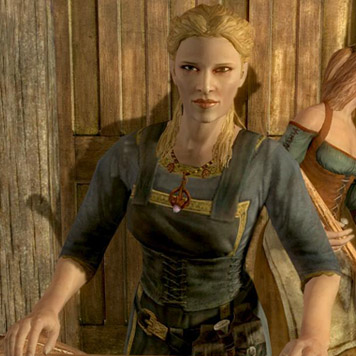
This is Haelga, one of the characters in the game. The player can be given a minor side quest in the game by her niece, who works for Haelga but doesn’t like her very much. Haelga’s niece, Svana Far-Shield, tells the player that Haelga is having sex with several different men, and wants the player to get proof in order to shame and humiliate Haelga.

The way the quest is written, it’s sex-negative as hell. It plays to just about every derogatory trope out there: open female sexuality is shameful, women who are perceived as sexual are “sluts,” and pouncing on a woman with evidence of her sexual attitude is a sure way to humiliate (and therefore control) her.

You might argue that Skyrim is set in a time that is not as enlightened as the modern-day West, but that ignores a very important reality: Skyrim is set in a time and place that never existed. There’s no compelling reason to write sex-negativity into the script. The game works well without it. It’s there not because the distant faux-medieval past was sex-negative, but because modern-day America is.

But that, too, misses a point, and it misses the same point the GiggleGoose folks miss:

It is possible to recognize problematic elements of a game and still enjoy the game.

I recognize that this quest in Skyrim is sex-negative, and that’s a problem. I still like the game.

The people who play these games and read these comic books are not bad people for doing so. The content of the games and comics is troubling to anyone who cares about people other than straight white middle-class men, sure, and it’s certainly reasonable to point these things out when they occur (though they happen so damn often that one could easily make a full-time career of pointing them out). That doesn’t make the people who like them Bad And Wrong simply because they enjoy them.

GiddyGoose believes that saying video games are a problem is the same thing as saying people who enjoy video games are a problem. And if you identify with comic books and video games so strongly that you can not separate your entertainment media from your sense of self, they might be on to something.

But most folks, I think, are able to take a deep breath, step back a half pace, and recognize that the writers and developers have done some really cool, fun stuff, but they can still do better. It would not kill anyone if the quest in Skyrim were rewritten (how about have Haelga’s character replaced by a man? There’s a thought…), or even dropped entirely. Nobody suffers from recognizing that it’s not cool to make fun of people who aren’t like you.

Nobody’s saying that Skyrim shouldn’t exist, or that people who play it are terrible people. I would like to think, on my optimistic days, that that’s an idea anyone smart enough to work a computer can recognize.

“Most likely a sociopath”

As many folks who read me probably know by now (and goodness, I’m doing my job wrong if you don’t!), I’m polyamorous. I’ve been polyamorous my entire life, I’ve been writing a Web site about polyamory since the 1990s, and I recently co-wrote a book on the subject.

A lot of folks ask me if I get negative responses from being so open about poly. And the answer is, no, I usually don’t. In fact, it’s extremely rare that I hear anything negative about polyamory, all things considered. I generally encourage folks who are poly (or in other non-traditional relationships) to be as open as they feel safe in being, both because stigma is reduced when many people are open about non-traditional relationships and because, almost always, the pushback is nowhere near as great as people are likely to think it will be.

But that’s not to say I never hear anything negative. Like this, for example, left as an anonymous comment to a post I made about dating and relationships on a social media site recently:

“This is what a woman had to say about you “Let me put this franklin, frank is a user/manipulator. I am sure he tells the women he is with that by being in a relationship with him and 4 other women that he is “empowering” them. You have to realize that there is a new “modern” type of feminism, these women misconstrue the term femism. The original feminist wanted to feel equal to men, they wanted more opportunities that we (women) are now given due to thier efforts. Nowadays women are empowered in a completely different way, women are mislead (in my opinion by manipulative men such as franklin) to believe that being overtly sexual is empowering, so that is why you see these women bending over backwards for men. I dont know exactly who is misleading women of our generation to believe polyamory is empowering or being overly sexual is but its someone, perhaps the feminists in the media but the question who is behind the media in the first place? I just feel bad for young feminists because they have no true understanding of what it means to be empowered and they are very confused. Franklin is smart and manipulating each girlfriend he has and he most likely a sociopath.””

Formatting, quote marks, and spelling as in the original.

So now you know, the media feminists are pushing women into the arms of sociopaths like me. Curses, my secret is out.

Rant Part II: How Not To Be a Dick To Women

With all the pushback on (and off) the Internet to any suggestion that perhaps men could maybe refrain from treating women poorly, one might get the impression that we were talking about, say, taking all the money the NFL normally makes in a year and investing it in fusion power research or something equally unreasonable. How, the thinking seems to be, can men reasonably be expected to act like decent human beings toward women when we have all these throbbing biological urges? I mean, what if we see a woman, who’s, like, totally hot? Surely acting like a decent human being doesn’t have to apply to women who are totally hot, does it? If we treat a totally hot woman like a human being, how will she know we want to put our pee-pee in her sex burrow? And what about women who don’t make Mister Happy happy…if we treat them like human beings, how will they know we don’t find them attractive?

It’s madness! I mean, really. Treat women as people? All of them? Without constantly getting all up in their faces about whether we want to sex them or not? That’s just…it’s just…it…

…well, it turns out it’s really not that hard to do.

Listen, guys, here it is. You just…think of her like she’s a person. Someone who’s a friend, even. And then you act accordingly.

Listen, I know it sounds totes whack. It goes against everything we’re taught to believe about maximizing our chances of getting to do that thing with our pee-pees. But bear with me. All it takes is a little practice, and then you, too, might be a guy who’s a decent human being and totally not a complete shitcamel.

Let me walk you through some scenarios, so you can get a feel for how this works.

Scenario 1: You’re approaching a door. There are people behind you.

If you hold the door open for people, congratulations! You’re a decent person.

If you hold the door open for women, but not for men, danger! You’re probably a misogynist.

If you hold the door only for women you want to put your pee-pee on, guess what? You’re a shitcamel.

Scenario 2: You’re on an online dating site. You spend six hours pouring your heart out in a carefully crafted message to this cute little something something whose soulful eyes make you think she could be the light of your life, and whose big bazoongas make you want to do that thing with your pee-pee. After you send it, she doesn’t email you back.

If you just go about the rest of your life, go you! You’re a decent person.

If you write her a follow-up email telling her that she owes you a response, uh-oh. Misogyny ho!

If you send her a follow-up email filled with (a) every swear word at your disposal, (b) vivid descriptions of what a bitch she is for wounding you so grievously, (3) angry rants about what unpleasant fate should befall her, or (4) pictures of your junk, I’m afraid the prognosis is: shitcamel.

Scenario 3: You see a woman talking about how creepy it is to hit on women in elevators.

If you listen respectfully and adjust your behavior and expectations accordingly, woohoo! You’re a decent person.

If you respond with a defensive lecture about how you’re totally not one of those guys and she’s just trying to say that all men are rapists, I’m sorry to have to tell you this, but that that’s your misogyny.

If you go on a rant about how she’s totally saying all men are rapists and she deserves to be raped for it…well, there’s only one mathematical equation that accurately models your reaction. You = shit + camel.

Scenario 4: Women are talking about how linking birth control to employment insurance policies basically means their boss gets to tell them how to have sex. You:

…listen to what they’re saying, think about it, and realize that, actually, it is pretty messed up that the person who hires you gets to tell you how the insurance benefits you earn as part of your labor should be used, and having an employer making your decisions in the bedroom is kind of creepy. Go you! Decent person!

…say “well, you know, the employer is paying for this insurance, so the employer controls how it’s used.” Wait, what? The employer is paying a salary too, does that mean the employer gets a vote on what you buy on Amazon.com? Bzzt. Your misogyny is showing.

…say “well, you know, that slut can just pay for it herself if she wants to go slutting around.” Hello, shitcamel! One hump or two?

Scenario 5: You’re out chilling with the boys, and someone tells this absolutely hysterical rape joke. It’s funny because she is violated against her will! Get it? Get it?

You put on your best blank “no, I don’t get it” face, turn to your friend, and say “No, I don’t get it. What’s funny about women being violated again?” Score one for being a decent person! Extra special decent person points if you deliberately construct a social group of people who already get why that shit ain’t funny.

You don’t say anything. After all, if you don’t laugh, that means you’re not like those guys, right? Bzzt! Wrong. If you just sit there, they might assume you’re a little slow, but hey, you’re still just like they are. Sorry, your misogyny (and privilege) are showing.

You laugh, because nothing is as absolutely hysterical as talking about women getting violated! Plus, when those feminist harpies start shrieking about how uncool it is, you get exasperated because clearly they just don’t get it. For God’s sake, it’s only a joke! Free speech! Free speech! Heigh-ho, shitcamel! What’s your camel-made-of-shit encore, putting on blackface and joking about Negroes wanting the vote or something? They’re all just jokes, right? Free speech!

Some thoughts on privilege: Look, it isn’t about your guilt.

I participate in a lot of online forums about polyamory. It’s almost impossible to talk about polyamory without eventually talking about OK Cupid, which is arguably one of the best places online for poly folks to meet each other (I met my live-in partner zaiah there). And it’s almost impossible to talk about OK Cupid without talking about how often women tend to get harassed on online dating sites. Any online dating sites.

And, it’s almost impossible to talk about how often women get harassed, on dating sites or anywhere else, without a whole succession of men trotting up to say “well, I personally don’t harass women! Women act like all men are harassers! I’m totally not like that, and I don’t understand why women don’t talk to me online! I totally deserve to have women talk to me online! If I spend my time writing an email to some woman online I am entitled to a response, even if she doesn’t want to date me!”

And, of course, from there it’s just a short hop to talking about male privilege, and as soon as that happens, inevitably those same men trot up again to say “this talk of privilege is just a way to try to make me feel guilty!”

And I gotta say: Guilt? Seriously? You think it’s about guilt?

Guilt is for things you can control. Feeling guilty over things you can’t control, like the race or sex you were born with, is silly.

If you think talking about privilege is about making people feel guilty, you’re completely missing the point.

It’s about being a decent person.

People who are privileged may still struggle, may not always get what they want, but the whole point is they have a lot of advantages over other people. Advantages they can’t see. Advantages they don’t know about.

Talking about privilege is about awareness, not guilt. When people don’t know about the advantages they have, they act in messed-up ways that show insensitivity to others. Like, for example, telling women who experience harassment on a scale that men can’t even understand how they should feel about it, what they should do about it, and why they should, like, totes respond to ME because I’M not like that! I’M not one of those entitled jerks, and therefore I DESERVE a reply!

The purpose of understanding your privilege isn’t to make you feel something. Not guilt, not shame, not anything else. It’s to help you understand that you have a set of things you take for granted that other people don’t have, so that you can change the way you act.

Got nothing to do with feelings at all.

Change the way you act in small ways. Like, not telling women how they should feel about sexual harassment. Like, not telling inner-city blacks that the police are their friends. Like, listening when women talk abut harassment, instead of just saying “oh, you’re saying all men are harassers.” (Hint: No, they’re not.) Or saying something like “well, I just don’t see color.” (Hint: Not seeing color is something you can only do if you happen to be the privileged color. When you belong to an oppressed minority, you don’t get the luxury of not seeing your status.)

Change the way you act in medium ways. Like, if you are a man with a normal social circle, statistically you probably know at least three harassers and at least one rapist. Seriously. So, when you’re with a group of your friends and someone makes a racial joke or a rape joke or talks about how women are bitches or whatever, speak up. Remember, if you don’t say anything, those harassers and that rapist in your social circle–and yes, they are there, even if you don’t know who they are–assume you’re on their side and think the way they do.

When people make cracks about sending a woman into the kitchen to make a sandwich, or talk about how they’d sure like to get that hot chick drunk and bend her over the table, speak up. Say it isn’t cool.

Yeah, it’s uncomfortable to speak up when all your friends are yee-hawing and back-slapping about how absolutely hysterical that rape joke was. Deal with it. The discomfort you face speaking up ain’t nothing on the discomfort women face just walking down the goddamn street.

Change the way you act in large ways. Don’t vote for political candidates who talk about how only lazy blacks are on welfare or blab about “legitimate rape.”

People aren’t telling you you’re privileged to make you feel guilty. People are telling you you’re privileged because privilege is a system and an institution that benefits you and that you participate in without even knowing it. When you know about it, maybe you can stop participating in it. Maybe, if you’re brave and willing to pull on your big-boy pants, you can even put yourself on the map against it when the folks around you are participating in it.

BDSM Ethics Part 2: Some Thoughts on Making the World Better

In Part I of this essay, I wrote some initial thoughts about the BDSM Pledge Web site. To recap briefly (as if I am ever brief): The BDSM Pledge site is an attempt by Kink.com, a producer of BDSM-related porn, to start to codify a set of guidelines for responsible, ethical BDSM.

This is not really a new idea, of course. Folks have been thinking about how BDSM is distinct from abuse for at least as long as there have been words for consensual BDSM. A lot of folks have coalesced around two short, bumper-sticker-sized expressions: “SSC” (for “Safe, Sane, and Consensual”), and “RACK” (for “Risk Aware Consensual Kink”). They both have the notion of consent in common, but after that, things go a bit off the bend.

The RACK folks like to point out that no activity, from whipping your lover to climbing a stepladder with a hammer in your hand, is really entirely ‘safe,’ and ‘sane’ is often in the eye of the beholder. The SSC folks, on the other hand, see the notion of risk-aware consensual kink as overplaying consensuality to the point where it leads into some decidedly questionable territory; if two folks decide they have a cover-the-submissive-in-chum-and-drag-him-through-shark-infested-waters fetish, does that mean the unfortunate outcome is okay because they both knew the risks and were on board with the idea?

Honestly, I see both points. It makes sense to me that both SSC and RACK are reaching toward something that’s simple in conception but slippery in the details: different people have different tastes, there is no such thing as perfect safety, and as long as the folks involved understand that and aren’t being totally reckless with one another’s safety, there’s value in letting people get down to it.

But I don’t think SSC or RACK are, by themselves, sufficient for ethical BDSM. In fact, I think they’re both so narrow in focus that they miss something really important: There is more to ethics than what you and your lover get up to in the bedroom (or attic or kitchen or dungeon, as your tastes may dictate).

It’s one thing to be ethical to your partner, your confidant, and/or the source of your nookie. It’s an entirely different thing to be ethical toward members of your community, even ones you don’t like, and toward the great mass of humanity as a whole. After all, we as human beings are arguably hard-wired to behave very differently toward people in our inner circle than we are toward acquaintances or strangers. One of the failings I see in many conversations about ethical BDSM is that the discussions tend to focus on the ways we behave toward our partners, but not on the ways we behave toward folks we aren’t involved with. I think that’s a shortcoming of ideas like RACK and SSC; a code of ethics needs to be broader in its scope.


I’ve written before about how we in the BDSM community tend to talk the talk about consent, but we often don’t walk the walk. I have seen behavior at BDSM events and play parties which I think violate the ideas of consent and autonomy, in ways large and small–swatting the ass of that cute submissive who walks by, wrongly believing that just because she’s a submissive so that makes it OK; disregarding people’s boundaries because it’s an acceptable thing to do (after all, isn’t the point of BDSM to challenge people’s boundaries? Right?); even full-on sexual assault. Granted, no community is perfect; take any group of people (folks interested in BDSM, folks with red hair, folks with medical degrees, folks who drive Toyotas) and if it gets sufficiently large you’ll find some bad actors.

But it’s particularly worrisome, to me, to see people behaving poorly in the BDSM community, precisely because the BDSM community claims to value consent so highly.

Consent is the cornerstone of what we do. Consent is the defining element that separates us from abusers. Yet, in spite of that, I have seen far too many examples of non-consensual behavior in the BDSM community for my liking, and more to the point, I’ve seen non-consensual behavior tolerated. That’s something that a code of ethics needs to address.

When we talk about people behaving unethically in the community, it’s surprising how many times it seems that everyone knows who the bad actors are. There’s a good essay on this topic called The Missing Stair over on The Pervocracy. When something bad happens in any community, far too often everyone already who the perpetrators are. The bad actors are like a missing step in a staircase, in that when you become accustomed to jumping over that step, you can forget how dangerous the missing step actually is.

A comprehensive set of ethics must include not only ethical treatment of our partners, but also ethical treatment of other people in the community. And, as an important element of that, it must include creating a community that does not shelter people who behave badly.

I’ve seen the BDSM community close ranks behind a member who sexually assaulted submissive women in the community, without their consent; I’ve seen how people who came forward to talk about the assault were ostracized. This is something that simple slogans like “Safe, Sane, and Consensual” or “Risk Aware Consensual Kink” don’t address. Ethics means more than “I will only engage in consensual behavior toward others;” I think it also extends to “I will not excuse non-consensual behavior on the part of others in my community,” too.

I read recently about sexual assault that took place at Burning Man, and one of the things that struck me about the story was the commenter who said “I’m sure this guy [the rapist] knew someone out there… where were they to keep him in check?”

Which, I think, misses the point. In any community, it is not the responsibility of the people who know the bad actors to keep them in check. It’s everyone’s. If you’re there, that means it’s yours. If I’m there, that means it’s mine.

It is incredibly difficult to intervene when we see something bad happening. It’s easy to ignore evil; it’s easy to rationalize non-intervention. Someone else will do something, we say. It’s not my job to police the community. Where are his friends? They should be the ones to keep him in check. I don’t even know this guy; why should I be the one to step in?

And so, nobody does. The missing stair goes unfixed.


So, let’s get down to the meat of the issue. If I were to invent a set of ethical guidelines for BDSM, what would it include? It’s important to understand that ethics go beyond simply taking responsibility for our own actions; they also extend to not standing idly by while other people behave unethically. And, most importantly, any reasonable code of ethics must include the idea that each one of us bears responsibility for making our community an ethical place.

So I were to invent a set of ethical guidelines for the BDSM community, it would probably look something like this:

• In my interactions with partners, I recognize that their ongoing participation is voluntary, even in total power exchange or M/s style relationships. I recognize the agency of my partners, and I understand that the moment I attempt to do things to a partner that he or she no longer wishes to participate in, or that a partner attempts to do to me that I don’t wish to participate in, we have moved away from BDSM.

• I recognize that my tastes are not shared by everybody, and other people’s tastes may not be shared by me. Because of that, I respect the agency of the people around me. They are more than simply a role; I will not make assumptions about what is and is not permissible to do with someone simply because that person identifies as “at top” or “a bottom” or “a submissive” or “a dominant,” without actually considering that not everyone regards these roles to have exactly the same meaning.

• I acknowledge that unethical behavior is something that can happen in my community, and when it does, that is a reflection not only of the person who is committing the unethical acts, but also on me, and on the rest of my community. I can be judged positively on my willingness to intervene against unethical acts, or negatively on my willingness to look the other way.

• Consent is the cornerstone of ethical behavior. Even small violations of consent are unethical acts. Therefore, I will make consent a priority. Sloppy attitudes about consent, such as swatting the ass of any attractive submissive who walks by, or barking orders to anyone who presents as submissive regardless of whether or not any sort of relationship exists, are not acceptable.

• In addition, I will expect the rest of my community to step up and make it clear that sloppiness about consent isn’t OK. There’s a Geek Social Fallacy that says “Ostracizers are always evil.” This fallacy needs to be recognized for what it is. Folks who behave inappropriately need to be told they are behaving inappropriately. It needs to stop being ignored. A person who witnesses inappropriate or non-consensual behavior in the community and does nothing about it, becomes complicit in it. It is not evil to take a stand against people who behave inappropriately. If I am the person witnessing inappropriate behavior, it is my responsibility to be the person who steps forward.

• I will not behave with hostility toward people, especially women and most especially submissive women, who come forward to report abuse. (When my friend was raped–and let me make clear that this was not an edge case, a fuzzy boundary thing, or an after-the-fact buyer’s remorse thing, but a he-physically-restrained-her-and-put-his-penis-in-her-vagina rape–the amount of backlash she experienced when she came forward to talk to other people about it was astonishing. And not just from self-described dominants or from men; the number of women who responded with some variant of ‘well, if you were REALLY a TRUE submissive then you wouldn’t have problems with this’ was just amazing.) I will make it my responsibility to build a community in which this kind of thing is not acceptable. I recognize that people who engage in victim-blaming and rationalization are part of the problem; whether it is their intent or not, they are providing cover for abusers.

• It is an unfortunate fact that abusers can exist at any level within a community, even among community leaders. This creates a particularly difficult situation, because when abuse done by a community leader surfaces, there can be a powerful incentive to look the other way. Rationalizing is astonishingly easy to do. “Well, I wasn’t there and so I don’t know what REALLY happened, and I’ve hung around with this guy and he seems like an OK dude to me, so you know, maybe there’s nothing really to it, I bet she’s just causing drama…” If I learn about inappropriate behavior in the community but do nothing about it, I become complicit in it.

• Reputation and references alone are not necessarily reliable indicators of a person’s character. When a community punishes abuse victims from coming forward and shields abusers, then says “If you want to protect yourself, just see what other people have to say!” the result is to create an environment that makes it almost impossible to spot the bad actors. Of course people who have had bad experiences aren’t going to come forward and say so; the price is too high. The result is a situation like the one my friend experienced where she asked a lot of folks around the community about her attacker and got glowing reviews, even though he was a serial abuser…because the community is so hostile to people who talk about abuse that none of his previous victims came forward.

• Affirmative consent is important. If someone does not say “it is OK for you to put your penis in me,” I will not put my penis in that person. It’s not enough that she didn’t say “no, you can’t put your penis in me.” I will not assume that simply because I haven’t been forbidden to do something, that means it’s OK to do it. (This does not necessarily mean that it’s not OK to play with consensual non-consent, of course. I personally am a big fan of consent play and consensual non-consent. I talk to my lovers about it before doing it; it is absolutely possible to have affirmative consent to engage in consent play.)

• It is my responsibility to be compassionate and receptive if I am told of abuse within the community. There are significant barriers to disclosure, both institutional in the community and personal in the shame that tends to follow sexual assault. I will not add to these barriers. I will not become part of the reason that victims feel they can not step forward.

• Consent for activity A does not imply consent for activity B. Consent to a light spanking scene does not imply consent to a singletail scene. Consent to being tied up does not imply consent to sexual intercourse. At the end of the day, if person A puts his penis in person B without permission, anything that happened in a BDSM context up to that point is utterly irrelevant; it’s assault and it’s not OK.

• There needs to be less trivializing and minimizing when assault happens. “So he fucked you after you agreed to be tied up. That’s not REALLY rape; I was assaulted in an alley by strangers, and that’s far worse than what you experienced!” is not OK. While it is part of human nature to do this, and identifying with the attacker and minimizing other people’s victimization are part of the defense mechanisms we employ against abuse, this kind of minimization of poor behavior creates an environment where poor behavior is tolerated. A policy of no tolerance for assault, violent or not, in the BDSM community is an important part of ethical BDSM.

• On the flip side of the same coin, it is important to understand that if I am assaulted, the assault is not OK even if I did agree to be tied up first, or even if I did agree to play with this person first. People who are assaulted will often tend to trivialize their own experience. Better policing of the community, less tolerance by members of the community for assault, and better education for what constitutes assault are all important.

• It is not OK to play the “shoulda game.” When my friend was assaulted, a lot of folks came forward to say “well, she shoulda done this” or “you know, she shoulda done that.” When the “shouldas” are about things that happen before the assault (“well, she shoulda got more experience with him before she agreed to let him tie her up,” “well, she shoulda said ‘no’ more plainly”), it’s just plain old-fashioned victim blaming. When the “shouldas” are about things that happened after the assault, they’re a form of abdication of responsibility. After the assault, I heard one person in the community who is generally an otherwise decent bloke say “Well, she shoulda gone to the police after it happened,” and then used that as an excuse not to support her, but to support the attacker instead. We can’t expeect victims to follow some script that we make up in our heads and then withdraw support from them if they don’t follow that script. The community needs to be better at policing itself and enforcing standards of acceptable behavior regardless of whether or not people who are assaulted respond to the assault the way we think they should.

Many of these ideas center around the way we conduct ourselves in our community rather than simply in private. This is necessary, both to create a vibrant, healthy community that does not shield abusers, and to help ensure that our community is not targeted as a haven for abusers by the outside world. Whether we like it or not, and whether we agree with it or not, when members of our community behave poorly, it is a reflection on all of us…particularly if we fail to step up and stop it.


My buddy edwardmartiniii has written an essay on the value of policing our social groups in order to create ethical spaces. He also has some suggestions about fixing the problems we see around us. I have linked to these before, but I think it needs to be mentioned again. If we are to do what it is we do ethically and with compassion, these are important ideas.

To that end, I now wear a blue button on my jacket. That button is a reminder to myself: if I am to be an ethical, compassionate human being, it is not enough that I do no evil. I must also choose not to look the other way when others do evil within my community. If I want a community that does not offer a haven to abusers, it is my responsibility to make that happen.

Some Thoughts on Morality and Power

If someone walks up to you and starts talking to you about good morals and the importance of morality, what’s the first thing you think of?

If you live in the US, odds are pretty good that anyone who wants to talk morality with you is actually talking about sex. How to do it, where to do it, when to do it, in what position to do it, who to do it with…the term “morals,” especially in political discourse, has come to be a synonym for “sex.”

And if the person talking to you is a conservative Evangelical, ten will get you twenty that somewhere in that conversation about morals, you’re going to hear about sex with a partner who’s the same sex as you are–something that seems to be right down at the bottom of the Pit of Immoral Behavior, just slightly below pedophilia and at least two and a half yards beneath genocide on the relative Scale of Morality.

And that’s really weird.

Or at least, it seemed really weird, until I thought about it for a bit.


The word “immoral” isn’t used to describe people very often these days. At least, it isn’t used to describe heterosexual, monogamous, married cisgendered people very often in the court of political discourse. It’s still quite popular among some segments of the conservative religious community, but it generally gets applied to sodomites, gay and bisexual people, transgendered folks, and other folks who don’t fit tidily into the prescribed box of sexual norms…with occasional side-branches directed at atheists, of course.

In the late 1800s, notable cynic Ambrose Bierce defined the word “immoral” to mean “Inexpedient. Whatever in the long run and with regard to the greater number of instances men find to be generally inexpedient comes to be considered wrong, wicked, immoral.”

And I submit that the laser focus on sex that we see in almost any popular political or religious dialog has at its heart a very potent expediency indeed, because it serves to distract us from true immorality, and causes us to focus on that which doesn’t really matter to the betterment of some very evil people indeed.


Take Pat Robertson.

No, I don’t mean take him out behind the chemical shed and shoot him; I mean take him as an example. Pat Robertson has made himself a very wealthy, powerful, and influential man by talking endlessly about morality. Or, more specifically, talking about sexual morality: sex before marriage (he’s against it), homosexuality (against), gay marriage (against), non-traditional sexual unions (against), sex work (against, even though he admits to having employed the services of prostitutes), oral sex (surprisingly, for…as long as it’s between a married man and his wife. He’s silent on the subject of whether or not they can have onlookers watching the act.).

And yet, for all his preaching about morality, Pat Robertson is by any reasonable standards of decency an astonishingly, breathtakingly evil man.

Pat Robertson has yet to meet a wealthy foreign dictator he doesn’t like, at least when it’s economically expedient. He cozied up to Liberian strongman, sex trafficker, and war criminal Charles Taylor in exchange for a gold mining contract in Liberia. He owns African Development Company, a corporation which snuggled up to Zaire’s warlord Mobutu Sese Seko to win rights to so-called ‘blood diamonds’ mined by slave labor.

Or look at “Family Values” candidate and politician Newt Gingrich, who divorced his first wife after an affair, married his mistress, then divorced her to marry his second mistress. Said second mistress, who is still married to him, is apparently spending her time these days doing fundraising for the Romney campaign…on a platform of (wait for it) family values.

Gingrich, despite being a serial adulterer, is perceived by many folks on the right as being “moral,” presumably because hey, he ain’t gay. Yet to anyone who believes that morality lies in treating others with compassion, he is unquestionably an evil man.


This is not a new observation, of course. Many of the people who talk the loudest about “morality,” on both sides of the political divide, are deeply and profoundly evil. Mahatma Gandhi was quoted as saying “I like your Christ, I do not like your Christians. Your Christians are so unlike your Christ.” It’s not exactly a revelation that those who use talk of morality, particularly religious morality, in the public sphere are very often deeply immoral people.

Which is where Ambrose Bierce comes in.

It is not simple hypocrisy that explains the prevalence of evil among those who speak of morals. It is not that we are all born of frailty and error and each of us relates imperfectly to those around us.

It is, rather, a calculated and deliberate expediency.

Pat Robertson, Newt Gingrich, and all their ilk are evil people, consumed by a desire for power and wealth. They do not hide this at all. But there is a dilemma. In a Third World country, powerful strongmen can do pretty much whatever they like, without needing to justify themselves to anyone. But in an industrialized nation, maintaining power and wealth often requires maintaining the general goodwill of the people. How to do that, then, when you are a serial adulterer? How to do that when you own a mine that uses slave labor?

The answer, brilliant in its simplicity and obviousness, is to change the public dialog about what it means to be good, and what it means to be evil.

An evil man can gain the favor of generally good people, if he can set the tone of the dialog about good and evil. If he can redefine “evil” so that, rather than meaning “exploiting slave labor in Third World countries to become fabulously wealthy” it means “having sex in the wrong way,” he not only can deflect attention from his own evil, he can short-circuit the conversation about his own evil before it even begins.


When this image dominates the public dialog about morality, someone is being snookered.

We have come to a place where “morality” means “sex” because that state of affairs is expedient to powerful, wealthy men who want to be able to indulge their lust for wealth and power unchecked.

According to the Bible, it is the love of money which is the root of all evil. It is not premarital sex, nor gay marriage, nor the burning question of whether or not married couples are allowed to give head.

Yet among the Religious right, discussion of money is strangely absent from the morality debate. The beginning and end of morality revolves exclusively around who one has sex with, and under what circumstances.

That didn’t happen by accident. That isn’t a coincidence. It happened because evil men set out, systematically and deliberately, to focus the lens of morality away from their own evil.

Every time we accept this definition of morality, every time we allow the conversation about morality to get bogged down in irrelevant sexual minutia, we work in the service of these evil men.

All sin lies in treating one another poorly. Rather than talking about the morality of gay sex, perhaps we should talk about the morality of slavery. Perhaps, if we re-focus our dialog about morality onto the evil that those who campaign on platforms of morality and virtue do, we will begin to see a better world. I would far rather that Pat Robertson divest himself from his blood diamonds and give the vast wealth he created from slave labor to the poor, than see him continue to hold influence by talking about how immoral we are if we don’t have sex the same way he does.

If homophobic Christians read the Bible, what would the world look like?

When i lived in the South, I will admit I used to eat at Chick-Fil-A all the time. I was dimly aware that they had some sketchy religious leanings or something, and they tended to hire only surrealistically white people to work in their restaurants, but hey, the sandwiches were good.

Well, not really good. But at least better than much of the mediocre fast-food stuff you could get at, say, Taco Bell or Burger King.

I wish I could say that I was surprised to learn that Chick-Fil-A has bought into the virulent strain of anti-gay nonsense that seems to have the self-described Christian conservative bits of society in such a frenzy, but I’m really not. Like I said, I was dimly aware that ther was some kind of right-wing religious something something at play.

But the media attention about Chick-Fil-A and gay marriage got me to thinking. Most self-described Christian conservatives base their opposition to gay marriage on two Bible verses. Leviticus 18:22 reads:

Thou shalt not lie with mankind, as with womankind: it is an abomination.

Leviticus 20:13 says:

If a man also lie with mankind, as he lieth with a woman, both of them have committed an abomination: they shall surely be put to death; their blood shall be upon them.

The rest of Leviticus goes on to say similar things about cutting your beard, wearing clothes made of different fibers, eating shellfish, having sex with a woman on her period, letting different kinds of cattle graze in the same field, and executing women if their husbands cheat on them they cheat on their husbands (seriously, it’s there, Leviticus 20:10).

Most Christians don’t follow these rules, arguing that Jesus made them irrelevant except the ones about homosexuality because those are totally different from the shellfish ones because of reasons, and some will even quote a third Bible verse, Romans 1:26-27, to justify banning gay marriage:

Because of this, God gave them over to shameful lusts. Even their women exchanged natural relations for unnatural ones. In the same way the men also abandoned natural relations with women and were inflamed with lust for one another. Men committed indecent acts with other men, and received in themselves the due penalty for their perversion.

But the Bible, both old and new testaments, actually spends a whole lot more time talking about divorce than it does about homosexuality. Both testaments are very, very clear that divorce is never permitted, and that those who divorce and remarry are guilty of adultery, a sin forbidden by the Ten Commandments, and with the penalty of death according to the old testament…

Um, wait a minute, didn’t we recently see a serial divorcee running on some kind of pro-family, conservative Christian platform?

In fact, the Bible even claims that Jesus, who never spoke about homosexuality at all, had plenty to say about divorce, in Matthew 5:31-32:

And it was said, ‘Whoever sends his wife away, let him give her a certificate of divorce’; but I say to you that everyone who divorces his wife, except for the cause of unchastity, makes her commit adultery; and whoever marries a divorced woman commits adultery.

The Bible has Jesus speaking the same message many more times, in Mark 10:2 and Luke 16:18, for example.

So I wonder…

What would the right-wing Christian pronouncements look like if they actually applied the same thinking on divorce to their supposedly “Bible-based” blatherings about homosexuality? What would happen if you took their hysterical anti-gay screeds and replaced the word “homosexual” with the word “divorce”? It seems a fair substitution; the same moral, Biblical justifications for opposing homosexuality even more strongly apply to divorce, after all.

I started Googling Christian proclamations about homosexuality, which…well, if you have ever felt the need to go trolling on a motorboat down an open sewer, doing that sort of Google search will give you a similar experience. And I took “homosexuality” and replaced it with “divorce.” The results were…interesting.

Clicky here to see what happens!