Horrifying stuff. Decent people all over the internet are reacting with shock and sorrow and rage. As they should.
And yet…and yet…a lot of folks in social justice communities are doing what folks in social justice communities do, getting so worked up into a towering inferno of rage that they behave like the most ignorant MAGA dumbasses they deride, spouting absolute rubbish that is not only not true but cannot possibly be true, and of course shouting down anyone who tries to correct them.
Folks, don’t do this.
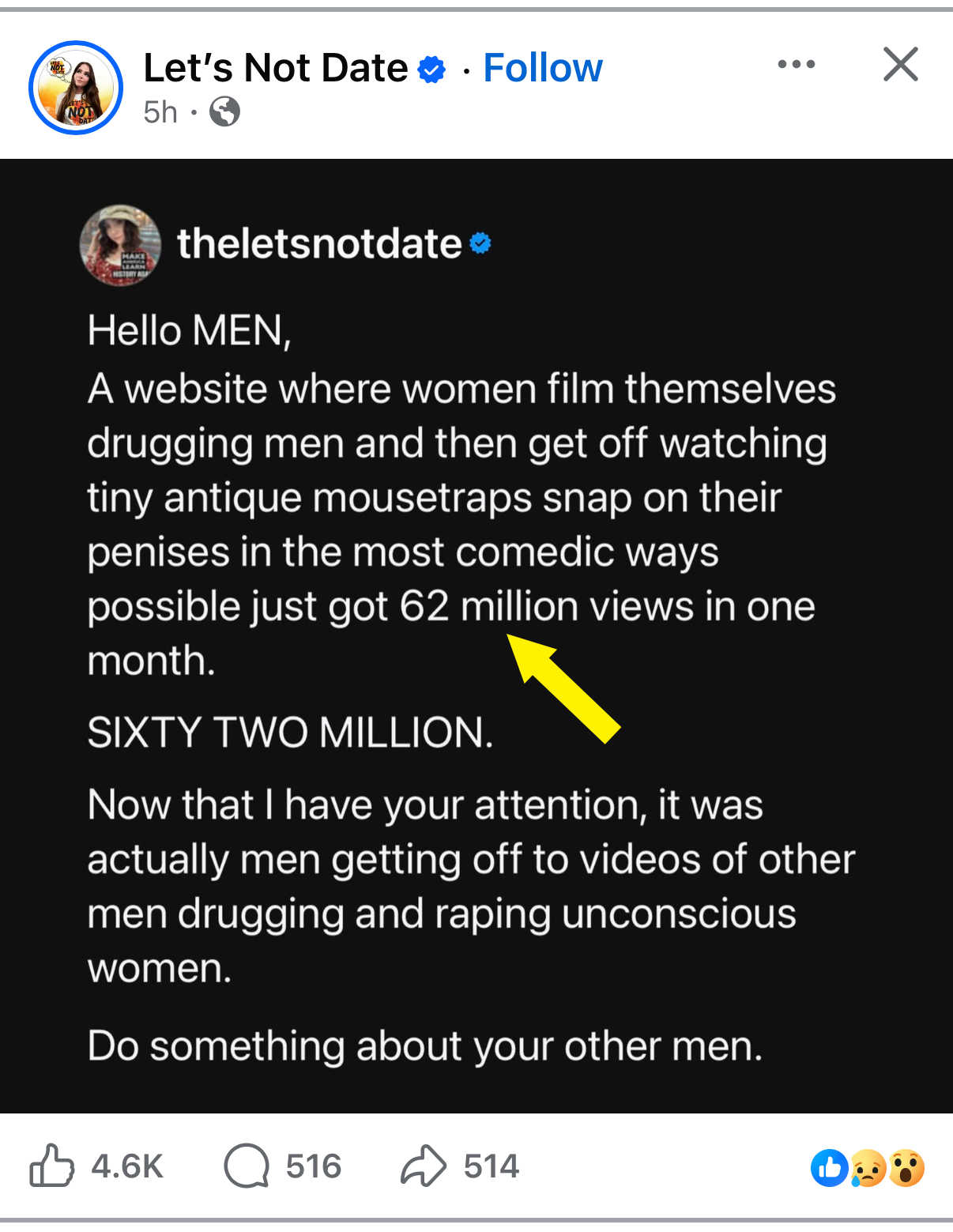
Yes, a large group of men did this. Yes, it’s abhorrent. No, it was not 62 million men. If you’re one of the countless people taking to the Great Online to scream your moral outrage that sixty-two million men could do such a horriffic thing, you are being a dumbass, you do not care about truth, and you are playing into the hands of conservatives who wish to mock, ridicule, and ultimately trivialize moral atrocity.
This is a trend I’ve noticed in social justice communities in North America over the last decade or so: moral outrage first, fact-checking later, truth never.
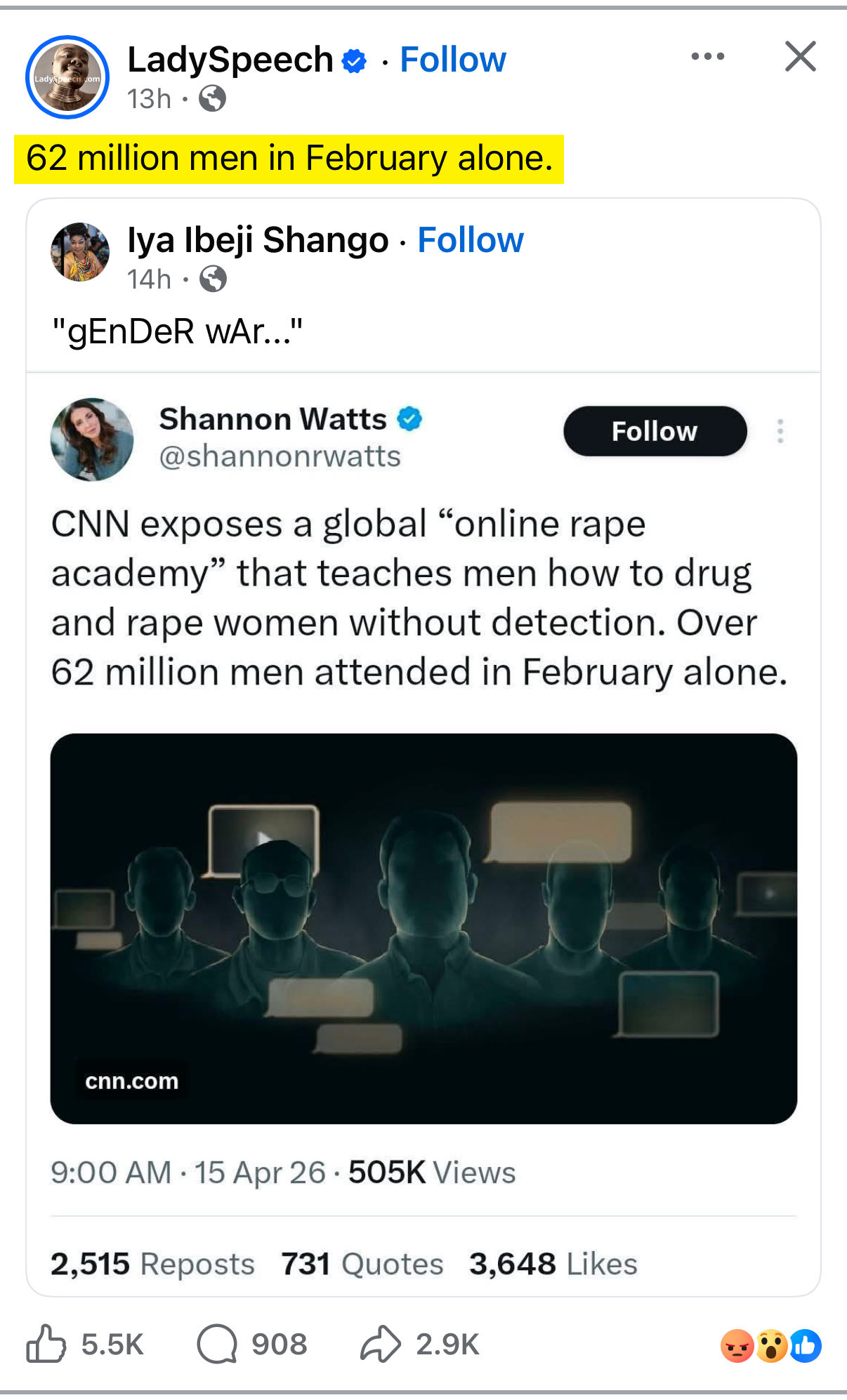
So let’s take a look at the CNN article and figure out where this “62 million men” idea comes from, shall we?
Here it is, in black and white:
Now, yes, this is poorly written (shame on the CNN editors!) and could have been much clearer. So, in the interests of fact and truth, let me spell this out clearly:
There is a site called Motherless. It gets about 62 million visits a month.
On this site was a group of people posting rape content.
That does not mean 62 million people were visiting rape content per month. C’mon. If you’re screaming outrage on the internet, you should know how the internet works.
There is a site called Reddit. It gets about 394 million visitors a month. If someone creates a subreddit called “How to Torture Kittens,” that does not mean that 394 million people a month visit that subreddit. It does not mean 394 million people a month want to learn how to torture cats.
Motherless, like Reddit, is huge. Motherless, like Reddit, has communities of people with different interests. Motherless calls them “groups,” Reddit calls them “subreddits.” Nobody visits every single Motherless group, just like nobody visits every single Reddit subreddit.
I thought this was obvious. Apparently it is not.
Yes, this Motherless group is horrific. Yes, any number of men visiting such a group is too many.
Truth. Matters.
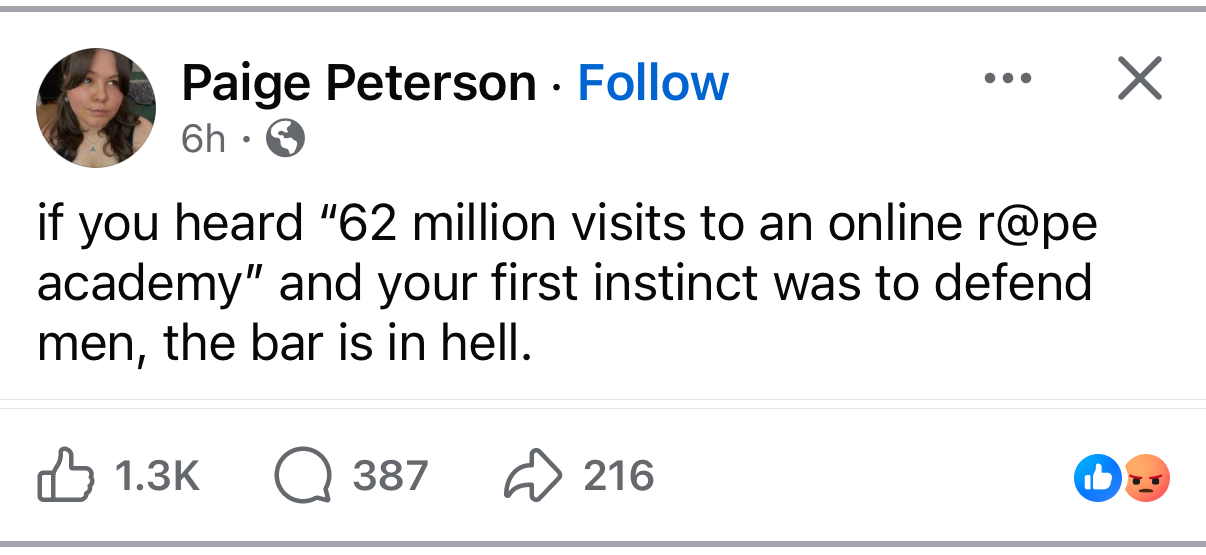
Truth fucking matters. Going into hysterical screeds about “62 million men visiting a r@pe academy” makes those of us who care about social justice look like dumbasses. It makes us look like hypocrites when we insist on fact-checking conservatives. “Hahaha lookit these dumbass liberals, always saying ‘facts this’ and ‘fact-check that’ but when it’s their side they don’t give a shit about facts, LOL.”
It allows social conservatives to weaponize our own insistence on truth and facts against us. It allows people to ridicule and dismiss what we say. “ROFL these liberals, yapping about a ‘r@pe academy’ but they don’t even understand how the internet works, you can’t believe anything SJWs say.”
There can be no justice without truth. The truth is that 62 million men did not visit this Motherless group.
If you think I’m trying to trivialize this horror, you’re dead wrong. There can be no justice without truth. It gets right up my fucking nose when social justice liberals insist on facts and reason when we address the other side, then do the same things we accuse the other side of doing: playing fast and loose with reality in order to score cheap emotional points.
Yes, I know that the CNN article is ambiguous. I see how people acting in good faith reasonably came to the conclusion that 62 million men wanted to learn how to drug and assault their wives. But that’s not what happened, and now that you know that’s not what happened, if you continue to claim that’s what happened, you’re practicing accountability for thee but not for me. We are all accountable to the truth. There can be no justice without truth.
My fellow liberals, do better.
I started down this rabbit hole when I saw a comment on Facebook, where someone had posted about how “62 million men want to r@pe their wives” and then flew into a rage when someone else left a comment basically saying “I wish people would fact check, that number is not correct.” I switched over to my mobile browser to read the original CNN article and when I switched back,t hat post had scrolled off my Facebook feed.
If you’re pissed off about being corrected over something like this, you are the reason so many conservatives view us like this:
You may not see yourself in this meme, you may sincerely believe this meme doesn’t describe you, but other people see it.
If you expect the other side to listen to facts when you fact-check them, then you damn well have to be willing to listen and accept accountability when someone fact-checks you.
Do better. Be better. Facts matter. There can be no justice without truth. We do not win a culture war with the cheap emotional tools of the other side.
Anyone coming into the comments to try to excuse or justify deliberate factual misstatements or to argue that it’s okay to say things that aren’t true because our outrage is pure and our cause is just or that insisting on facts is the same thing as “defending rape” will be blocked permanently and without hesitation.
As I move into my sixth decade of life, I’m posting a series of stories from my past. This is part of that series.
Waaaaay back in the dim and distant time of 1992, a happier and simpler age when we didn’t have a pedophile grifter in the White House, my first wife and I moved to Tampa, Florida, where I got my first job doing graphic arts for a living.
Prior to that, I’d helped publish several small-press ’zines, something I continued to do all through the 90s and into the early 2000s.
A cover of one of the small-press magazines I produced.
In 1992 I thought, I’m doing a lot of this work anyway, why not make folding money doing graphic design?
I started at a tiny studio called Printgraphics. It ended up going out of business quite dramatically, as in “we showed up to work one Monday to find the owners had changed the locks and the office was gutted” dramatically. The owners bailed and, apparently, fled to Mexico to escape business debts, or at least so I was told by one of our vendors who hired a PI to try to track them down, since apparently they owed him rather a large amount of money.
From there I moved to Dimension, a high-end graphics and pre-press shop with a number of really interesting customers. I did prepress, image retouching, and such for clients ranging from Royal Caribbean Cruise Lines to the New York metro lines (in fact, I have a rather entertaining story about trying to produce an immense advertising poster for the NY subway line; more on that at another time, perhaps).
I worked night shift at Dimension, in the wee small hours of the morning when most of the others had gone home, leaving my friend Tony and I with the most intractable, difficult problems to solve. We’d jam to Alice in Chains and Rage Against the Machine while we laid down immense reams of folm on our imagesetters…
…until the day came when the two of us were sitting in the computer room one day and heard an immense crash from the film-strippers room, a huge dark space filled with enormous light tables, where film strippers worked putting sheets of photographic film used to burn printing plates together by hand.
We promptly went to investigate, and I cannot tell you, dear reader, just how spooky it is to walk into a room that’s maybe a third the size of a football field, completely dark except for the dim glow of huge light tables. Seriously, Hollywood horror films had nothing on that. I mean, yes, the spaceship Nostromo in the Alien movie was spooky and all, but it had nothing, nothing, on an abandoned and dark film stripping room.
So there we are, the two of us, trying to figure out what the hell’s going on, when we found a shattered ceiling tile opening to a dark void above us.
Which did not, I assure you, do anything to decrease associations with the Alien movies.
I think Tony saw it first, a quick flash of motion off in one corner. Specifically, an opossum, a large one, that had somehow gotten into the building up above the drop ceiling and couldn’t find its way out again. It fell through one of the ceiling tiles because opossums don’t know how drop ceilings work.
An opossum. Not the opossum, but an opossum. (Image: fr0ggy5)
In that instant, we changed from Hollywood horror movie to Hollywood absurdist comedy. Tony grabbed a trash can, thinking (reasonably enough, I suppose) that if we could somehow get the opossum into the trash can, we could move it outside where it belongs.
Folks, opossums do not like going into trash cans. They will, in fact, resist going into trash cans with every last ounce of their beady-eyed will. To their last breath, they will do whatever they can to avoid trash cans, some vestigal instinct left over from some tragic but poorly-understood calamity in their evolutionary past, I’m sure.
Anyway, what happened next was less Alien and more Benny Hill, with two design geeks chasing an angry and wildly confused opossum through a nigh-abandoned prepress shop at one o’clock in the morning.
Folks, we pursued that opossum through the film stripping room and round the oversized Avantra imagesetter and round the moons of Nibia and ’round the Antares Maelstrom and ’round perdition’s flames before we finally got it in that trash can.
I don’t know how this tale ends for the opossum. We carried it outside, sweaty and exhausted (those little bastards can corner way better than you think!) and it waddled off into the muggy Florida night without so much as a by-your-leave. I do know we left the strangest note for the morning-shift folks that the company has likely ever seen or will ever see.
Why are most Quora Top Writers in the Epstein Files?
The Epstein Files are not files of people who were connected to serial child trafficker Jeffrey Epstein. Or at least, those aren’t the only people in the files. The Epstein Files list everyone ever mentioned in any email Jeffrey Epstein ever sent or received (including spam emails), along with everyone known to be at any public event he attended (including events like movie premieres).
Jeffrey Epstein was on Quora for a time. That means he received the Quora Digest, a regular email highlighting popular answers on the site. The digest emails look like this:
Because I’m a Top Writer, my answers are frequently featured in the Quora Digest. (In fact, for a while one of my answers was featured in the screenshots for the Quora appl on the Apple and Google App Stores.)
Because the Epstein Files list everyone mentioned in any email Jeffrey Epstein sent or received (Bernie Sanders is in the Epstein Files 101 times; apparently Jeffrey Epstein loved to whine about him), and Jeffrey Epstein received the Quora Digest emails, I’m listed in them.
The Internet hates nuance. People would, by and large and speaking across the left-right divide, rather be told who to love, who to hate, and what opinions they should voice rather than, you know, applying reason to their own positions. (Liberals love to laugh at conservatives for doing this, but in my experience and observation liverals are just as prone to it, or possibly more so).
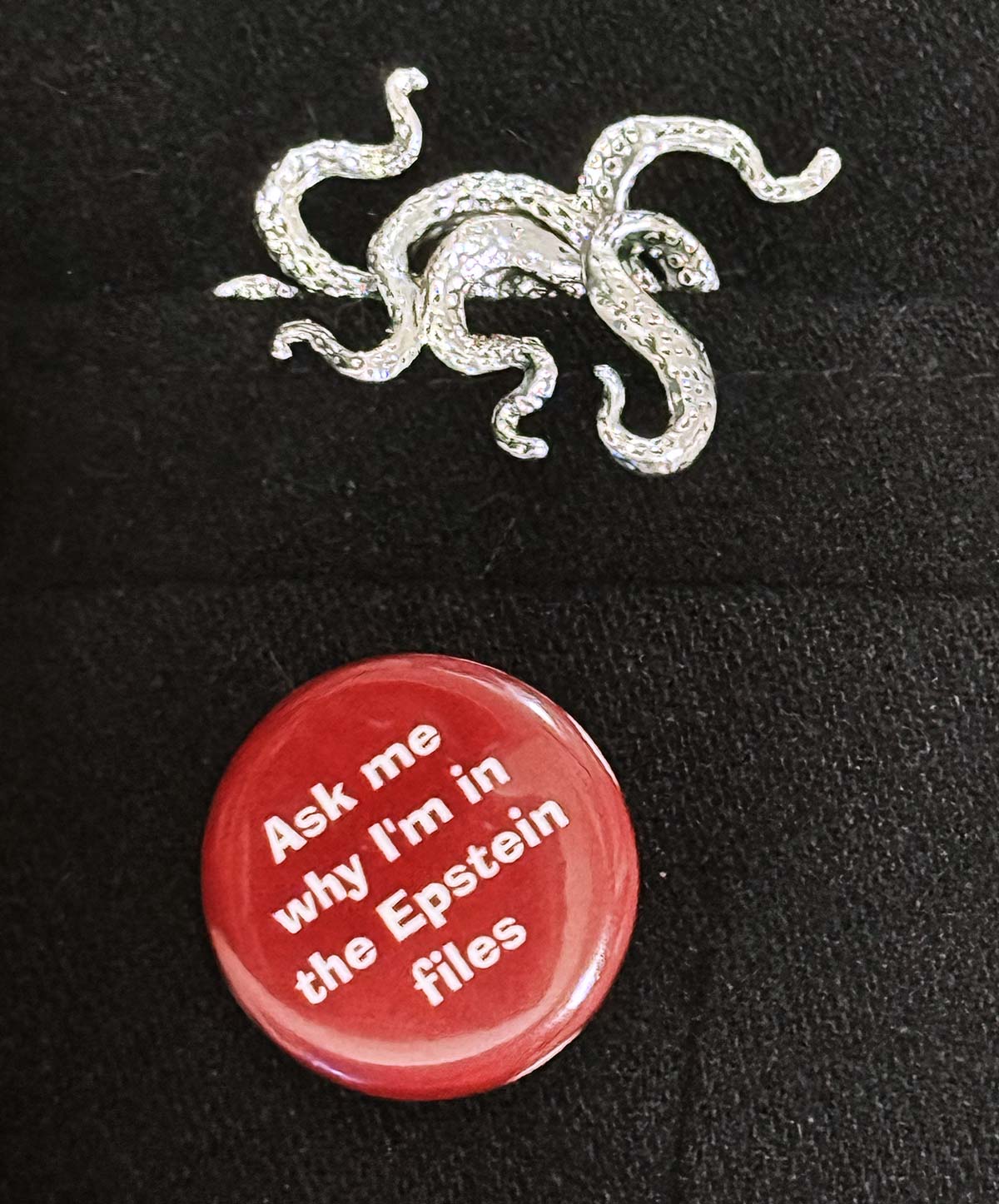
Yes, I am in the Epstein Files. No, I don’t know Jeffrey Epstein, nor have I ever visited Kiddy Diddler Island. (I mean, c’mon.)
I know this is not a fashionable opinion right now, but: Folks, it’s easy to manipulate people with phony narratives and social media stories. Living in a polarized society makes this even easier, and it’s cheap to make yourself feel good with self-congratulatory “moral stands” that give you a nice hit of dopamine when other people tell you how brave and moral you are for casting out the bad people and sending rape threats to women and whatever it is the social media mob tells you to do today. In such an age, principled, fact-based attitudes are a rarity. Try to be one of those.
[Edited to add] A couple of people have asked me what point I’m trying to make here. I thought my point was evident, but apparently I wasn’t as clear as I hoped. So:
“Being in the Epstein files” does not indicate wrongdoing. There are tens of thousands of people named in the Epstein Files. Bernie Sanders is in the Epstein Files. Marilyn Monroe is named in the Epstein Files, and Jeffrey Epstein was less than ten years old when she died.
I am concerned about people doing what the DinoCon organizers did, virtue-signaling and gaining unearned publicity by excluding anyone named in the files. I strongly suspect this will keep happening; while I hope I’m wrong, I predict that over the next couple of years this will become more and more popular.
I’m concerned about it for two reasons:
It’s empty, purposeless virtue signaling. DinoCon is not keeping anyone safe; they’re playing look-at-me, I’m-so-great games. I find this kind of empty moral posturing stupid and pointless at best, actively harmful at worst. I believe this is a moral panic in the making.
More important, this empty posturing diverts attention from actual child abusers who are listed in the files. Already I’m seeing a new narrative emerging on social media: “Look, the Epstein Files are a big nothing-burger. Liberals are making a fuss over them, but Marilyn Monroe is in them! Ha ha ha, look how dumb those liberals are.”
Jeffrey Epstein was a monster. The people protecting Jeffrey Epstein’s influential, politically powerful child molesters are monsters. This is a serious crisis, arguably among the most serious threats to American governance in the last century. Let’s not play self-congratulatory virtue-signaling games with it and let’s not get sidetracked. It should be possible to hold both these ideas simultaneously: they are a serious record of deep, systemic abuse of the most vulnerable by powerful, wealthy, connected men, and also simply being named in them is not, by itself, evidence of wrongdoing.
If we want to see justice, we must be willing to evaluate the evidence critically, rationally, and thoughtfully. Yes, that requires work…but that’s the way it’s always been.
I just sent a very long email to a contact I have at Quora admin, with a cc to Quora’s legal team and the founder/CEO’s personal email address.
I suppose I should have known it was coming. In January od 2023, almost exactly two years ago, I saw my first romance scam account on Quora. It used a photo of golfer and model Paige Spiranac to try to separate lonely men from their money. I reported the profile to Quora moderation 11 times, without any result, so finally, on January 22, 2023, I emailed Ms. Spiranac’s agent. I received a polite reply on January 23, and the bogus profile was banned on January 25, so I assume Ms. Spiranac’s team sent a DMCA takedown.
Too little, too late. The message came through loud and clear: “Quora has weak moderation that is tolerant of romance scammers.”
The floodgates opened. Today, Quora is the Internet’s Ground Zero for romance scammers; there are tens of tousands of fake profiles. I report every one I encounter. A few months back, Quora admins asked me to stop reporting them one at a time, so now I note the profile URLs and report them all in one go at the end of the day, typically 200-300 a day.
Universal law of social media:
Every site that doesn’t take action against romance scammers inevitably becomes a ch*ld p*rn site.
It happens in stages.
First, a romance scammer discovers a site. He (almost all romance scammers are “he”) sets up a profile. It doesn’t get banned. He tells his buddies, who also set up scam profiles. Word spreads.
Pretty soon, there’s a huge number of romance scammers, all fighting for the same pool of lonely, gullible marks.
They start “sniping:” one scammer will start commenting on other scammers’ profiles, trying to cut in on marks who respond to scam posts. They start angling for niche marks rather than shotgunning a general approach: some will pretend to be trans women, some will pretend to be heavy women to try to attract “chubby chaser” marks; some will pretend to be BDSM dommes, looking for kinky marks.
Then come the ones using stolen photos of underage children.
If those profiles remain without getting banned immediately, that sends a signal to the ch*ld p*rn community: This site is tolerant of exploitation of minors.
That’s when they move in: people offering CP/CSAM images for sale. They use all kinds of euphemisms: “cheese pizza” (CP), “hot yummy pizza images.”
At first, these are individual low-level sellers. If these accounts remain without being banned, then the organized CP rings move in.
That’s the background.
This morning, I set a lengthy email to my contact in Quora administration. I sent a cc to Quora’s legal team and to Quora’s CEO.
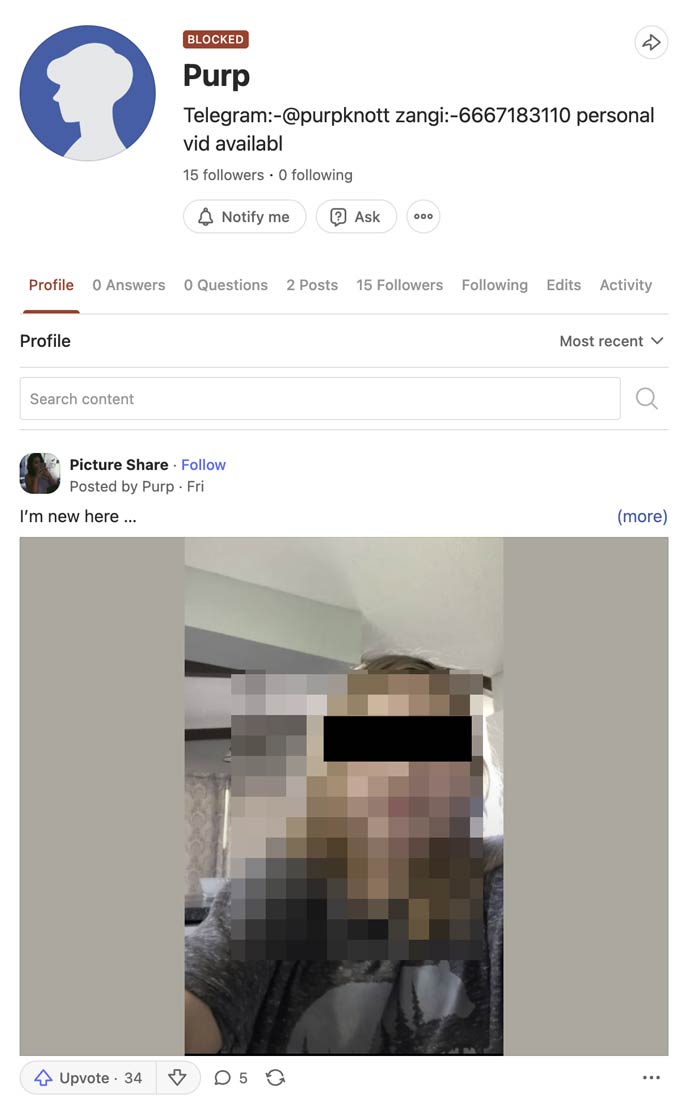
In the past few weeks, the number of profiles openly advertising CP for sale has skyrocketed. Yesterday, I found three organized CP rings operating scores of profiles on Quora.
I call these CP rings the “Evelyn ring,” the “Mornay Ivan” ring, and the “Purple Knott” ring, because of the profile names and the Telegram addresses they use. Out of respect to the victims whose images are being exploited, I’ve pixelated and blacked out the images of the victims; the CP profiles don’t.
The “Evelyn” ring:
The “Mornay Ivan” ring:
The “Purple Knott” ring, which seems to specialize in child bestiality:
Every day I report these. Every day Quora bans most (not all) the accounts I report. Every day there are more. Even though these rings create identical profiles with identical content.
Being stalked on Quora didn’t put me off the site. Getting death threats on Quora didn’t put me off the site. Being doxxed on Quora didn’t put me off the site. Having my content plagiarized didn’t put me off the site. This? This might put me off the site.
My metamour, my girlfriend’s girlfriend, has received some absolutely devastating medical news.
The entire polycule has done an absolutely amazing job of stepping up to support her. In two weeks, I leave for Springfield, where I will join my Talespinner to fly out to London and from there travel to Wales to be with her. The extended polycule did an amazing job of pulling this together in a very short time, and supporting each other to make it happen. My metamours and meta-metamours who were able to even helped the rest of us financially so that we could make arrangements to fly out last minute.
Even complete strangers helped. I would not have been able to go without the kindness of people on social media who offered financial support, completely unasked and unexpected. I am overwhelmed grateful beyond measure for the kindness of people I don’t even know who contributed out of the blue to make this happen.
Thanks to the government shutdown, the FAA is reducing flights at many airports, including PDX. It’s not clear yet whether or not my flight will be one of the ones cut, or what will happen if it is.
United Airlines has offered no-questions-asked refunds on flights ahead of the FAA cuts in air travel…but because international travel isn’t affected by the mandated cuts, they’re only offering me a refund on my domestic flight. I have tickets from Portland to Springfield, then Springfield to London and back, then Springfield to Portland, and right now it’s completely up in the air when (or even if) I will be able to get to Springfield.
I am so goddamn tired of this.
I’m tired of him.
I’m tired of the pettiness. I’m tired of the meanness. I’m tired of the grift, the selfishness, the pointless purposeless malice. I’m tired of his followers, so eager to hurt themselves as long as the people they hate are hurt more.
I’m tired of trying to have empathy for people who are sobbing that they’re losing their jobs or ther farms because he isn’t hurting the people they think he should be hurting. They voted for the leopard and now they’re shocked their faces are being eaten, too.
The stupidity, the venality, the cruelty, the mendacity, the sadistic malignity, I am just so absolutely sick of all of it.
A while back, I wrote about a kink website called “Know Your Sins” using a fake DMCA scam to get backlinks and boost their search results. The site’s owners would send out phony copyright claims, saying they owned images they neither owned nor had nothing to do with, and demanding backlinks to their site or they’d sue for copyright infringement. The site’s owners, Samuel Davis (@Samueld_KYS on Twitter) and Olivia Moore (whose Twitter profile has been deleted), engage in copyright fraud to try to boost their Google search results.
It seems fraudulent copyright scams are something of a growth industry.
About a week ago, I received this email from an outfit calling itself CopyTrack, headquartered in Germany (click to embiggen):
CopyTrack claimed I was using images belonging to their “client,” a Norwegian company owned by a Chinese conglomerate called Yay Images that appears only to license images from other stock companies, and demanding €2,168.76 (about $2,500) in “compensation.”
The images in question on my site are licensed from stock agencies (Shutterstock and Deposit Photos, the latter of which I’ve been using for many years).
A quick Google search shows that Copytrack is a scam, and the owner has been running this scam under a variety of names for years.
I am, of course, far from the only person to be hit with this extortion scheme. You’ll find similar tales from the Brutally Honest Blog, Yvan’s Substack, Ben Tasker, molif, and tons of others; a Google search for copytrack scam produces hundreds of similar hits.
I think Copytrack provides a service that could, potentially, be legitimate. However, they don’t put any effort at all into verifying copyright ownership; they’re a more-or-less entirely automated platform anyone can just upload some pictures to and then send threatening letters to other people, hoping for a payout. They may not, themselves, be copyright trolls, but they facilitate copyright trolls with no mechanism to stop them.
I am fortunate in that I am represented by an outstanding intellectual property attorney, Leonard Duboff in Portland. I simply informed Copytrack that I am represented by counsel and would no longer respond directly to them, and needless to say my attorney hasn’t heard a peep from them.
When I wrote about the Know Your Sins scam, a ton of people emailed me to say they’d received similar fraudulent copyright-scam emails. I got so many that I wasn’t able to respond to all of them (but thank you, everyone who messaged me!).
That suggests the scale of copyright fraud is enormous.
If you’ve received a fraudulent email from Copytrack, I’d love to hear about it! Post a comment here, or email me.
Some while ago, I answered a question over on Quora about whether or not it’s okay to pirate a video game if you can’t afford it. I write for a living, which of course means I take intellectual property seriously. Also, I write for a living, which means I don’t have very much money.
So, as you might imagine, I answered no, it’s not okay to steal other people’s work, even if you can’t afford to buy it, and as an example I used Starfield, the massive single-player role-playing game from Bethesda.
I like Bethesda games. I have, as of the time of writing this, sunk over 1,990 hours into Skyrim and 1,570 hours into Fallout 4. I’ve itched to play Starfield since I first heard of it, but at seventy bucks for the “normal” game and a hundred bucks for the “premium” version, I was like nah.
So, Quora being what it is, one of the kind folks over there bought me a copy, and another friend on Quora gave me a machine that could play it.
Which was amazing.
I now have about 225 hours in Starfield, and it’s so, so close to being a good game, but it just…isn’t.
All the ingredients are there for a truly amazing game except one: the game designers forgot to make it fun.
It’s an innovative game. It’s a pretty game, in places (and in places it’s howlingly bad). It has a bunch of cool, well-thought-out design ideas. It’s just not fun.
So, let’s do a deep dive into why Starfield misfired so badly. Caution: Long essay is long.
Part 0: WTF is Starfield?
It’s Skyrim in space. Seriously, it’s Skyrim in space.
If you know and love Skyrim, you’ll largely know what to expect. You, a blue-collar miner in the ass end of the explored universe, come across a Cosmic Mystery™ that catapults you on an adventure. Along the way, you’ll team up with companions who will guide you (and maybe marry you), you’ll engage in countless battles, and you’ll develop strange powers never before seen, only instead of gaining powers from long-forgotten ancient temples you explore with the aid of your trusty bow and an overpowered Sneak skill, you’ll gain powers from long-forgotten ancient temples you explore with the aid of your trusty laser gun and an overpowered Sneak skill.
You’ll also gather resources to build outposts on widely-scattered planets, rather than gathering resources to build settlements in widely-scattered parts of Boston.
Honestly, this sounded like pure pixelated crack cocaine to me. (Did I mention I’ve over a thousand hours in both Skyrim and Fallout 4?) Take a mashup of Skyrim and Fallout and put them in SPAAAACE!!!!!™? Sign me the hell up! What’s that you say? I can design and build my own spaceships too? You already had me! Let’s do it!
And yet…and yet…
Somehow, it manages not to be nearly as interesting as Skyrim or Fallout. It’s huge—a hundred worlds with endless procedurally generated terrain to explore—but it feels tiny. The main city in Starfield, New Atlantis, is the largest city Bethesda has ever created, but it feels stifling.
So what went wrong?
Part 1: The Bits that Work
Before I do a deep dive into the parts that went off the rails, I want to acknowledge that there’s a lot to like.
The spaceship crafting is amazing.
This is my ship, Anopheles.
This is a ship I have in one way or another been working on for forty years. Back in my high school days, I played in a Traveller pen and paper role-playing game (remember that? The game where you could die during character generation?) with my best friend down the street and the rest of my friends circle. We flew around in Anopheles, named for the mosquito that carries malaria—a tiny, heavily-armed five-person ship, fast and light, with no armor but a hell of a punch.
Later, after university, I ran a hard-SF GURPS Space game for about five or six years, in which the players explored the Rich Cluster, a small globular star cluster with about a dozen habitable worlds all quite close to each other, in which the players flew around getting involved in weird political messes in Anopheles—you got it, a tiny, heavily-armed five-person ship named after the mosquito that carries malaria.
My Starfield ship was again a tiny, heavily-armed craft with a long spine projecting from the front that carries a bunch of particle beam weapons that chew through much larger, more heavily-armed spacecraft.
I had endless fun designing this ship, building it, upgrading it, improving it.
A fair bit of Starfield involves space combat, and the Starfield ship to ship combat system is complicated, with many different classes of weapons (lasers, missiles, railguns, particle beams) that you assign to different mouse buttons. Some weapons are good against shields, some against the enemy hull. You can fire at the enemy in general or target different systems (engines, FTL drive, shields, weapons). You need to use different weapons at different times—projectiles, for example, are effective against a ship’s hull but ineffective against shields, so you use lasers against the shields until they’re down, then switch to—
Ha ha ha ha ha ha ha, I’m kidding.
I mean, that’s how it’s supposed to work, and during combat you’re supposed to think about how you allocate power between different weapons sysstems and engines and shields and such, but as soon as you figure out that particle beam weapons work against shields and ships, you just stop faffing about with all that, put the biggest reactor you can on your ship, load it down with particle beam weapons, and tear through ships four times your size like they’re tissue paper.
The companions are really well done.
At the start of the game, you end up joining a group called Constellation, intent on uncovering the mysteries of the universe. Many of the companions you can choose from are Constellation members, but they’re all different.
The companion characters’ personalities are nuanced, subtle, and complex. The first companion you travel with is so well done that I ended up not starting an in-game romantic relationship with her because she reminded me in subtle ways of the judgmental bossiness of a real-life ex enough to give me the shivers.
Instead, I ended up marrying Andreja, the introverted, possibly-on-the-spectrum badass with the secret past.
Andreja is BAE. And if you marry her, the wedding gift she gives you is amazing. Not, like, in a game mechanics way, but symbolically.
Fallout allows you to romance multiple characters who are all, apparently, totally on board with you having more than one lover. Not so in Starfield, where monogamy is apparently Very Much A Thing and romancing one character means no more nookie from others unless you divorce first. Limitless technological advancement, suburban 20th century American values.
Some of the quests are amazing.
As with Fallout 4, the companion you choose to travel with can give you quests. The quest you get from Sarah starts out seeming pretty predictable, and about halfway through I was rolling my eyes, certain I knew how it would end…but the game surprised me. It’s really well done and handled with exquisite care.
The quest Entangled has you flipping back and forth between two different timelines after an accident in a research facility. It’s nothing like any quest I’ve played in a computer RPG before, it never stops being cool, and overall it’s an absolute blast.
The same corridor in the two different timelines in Entangled
There’s a whole series of quests centered on rising through the ranks of corporate spy/fixer at a megacorporation called Ryujin Industries that I can only imagine was as much marvelous fun to write as it was to play (tip: bump up your Stealth skill before you do it!).
Ryujin’s corporate HQ
The Music
I mean, it’s Inon Zur. Of course it’s good.
I personally like the Fallout 4 soundtrack better—there’s more variety, and the music is less ambient (the main theme and Of Green and Grey still give me chills), but seriously, that man could write music based on his shopping list and it would be amazing. The only video game music that has ever stuck with me like the soundtrack from Fallout 4 are the songs Nightsong and Outlaw Harbor C, both from World of Warcraft.
The “New Game+” system is…um.
I’m honestly not sure whether to put the NG+ system in the Bits That Work section or the Bits That Don’t. So let’s do this:
Part 1.5: New Game+
Starfield has this thing that happens, that Bethesda called “New Game+”, that lets you start a new game without starting a new game.
Okay, so (minor spoilers for the main story):
The game starts out with you, a lowly miner in a miserable backwater, carving out a mysterious possibly-alien artifact from the rock. The moment you touch it, you have a Cosmic Experience with lights and music and trippy visuals, and so you’re tasked to take the strange artifact to Constellation and that kicks off the main adventure.
As you collect more of these ancient maybe-alien artifacts, you find temples that grant you strange powers, and eventually you learn that the artifacts can be assembled into this nexus that lets you skip between alternate universes.
If you choose to leave the universe you’re in for a different universe, it’s like starting a new game: you start out at Constellation with no money, no possessions save for a really freaky-ass Starborn spaceship (because you’re Starborn now, a member of a rarified handful of people with the ability to cross between parallel universes), except that you keep your character level and all your skills and abilities.
Hence, New Game+. You’re starting a new game, only with on old character you’ve already developed.
The good: You can explore all the various ways to end different quests or all the various factions you can side with without actually starting a new game from scratch. Don’t like the way things turned out? Wish you hadn’t sided with that faction? Leave this universe behind for a new one, where nobody knows you and you haven’t done any quests, and start again! It’s a really cool idea.
The bad: Implementation sucks.
I was sad to leave behind Anopheles but eager to see what I could do with this really freaky alien Starborn ship that I got.
Answer: Nothing.
Nothing. You can’t upgrade it. You can’t swap out any parts of it, or customize it, or modify it. You can’t sell it. You can’t do anything with it except customize the furniture inside, and the layout is so weird there’s really not much you can do even with that. One of the coolest parts of the game, and it just doesn’t apply when you flip between universes.
So you’ll probably want to capture, buy, or hijack a ship in every new universe, just so you can, you know, play with the shipbuilding parts of the game.
The cities are all laid out exactly the same way in the alternate universes; every major non-procedurally-generated location is precisely the same. Yet for reasons I cannot comprehend, they act like brand new locations—you can’t fast travel to them without visiting them on foot first, even though they’re all the same.
You shift between universes with nothing. Not even your spacesuit or clothes. You’re given a new spacesuit to go with your new spaceship, but no clothes, no money, no weapons, no tools, nothing. I think it would be far more interesting if you shifted with your clothes, some money, and perhaps a limited amount of equipment—like fifty kilograms or twenty kilograms or whatever. Enough to take some things that you really like, but with a small enough limit you have to make choices.
In the game, the Starborn are all pretty universally assholes, and after you’ve played NG+ you can see why. When you can just blamf to a new universe to escape the consequences of everything you’ve done, the stakes suddenly get very, very low. It would be cool if consequences somehow followed you. In every universe, you keep getting harassed and attacked for no readily apparent reason by other Starborn who seem to think you’re “unworthy,” but there’s no rhyme or reason to it. Maybe if different factions of Starborn reacted differently to choices you made in the universes you left behind? Dunno, just spitballing.
Part 2: Why The Game Misfires
At this point, Bethesda has such a reputation for launching games in a buggy, half-finished state and fixing everything after it goes out the door that complaining feels like piling on.
But still:
It’s buggy it’s buggy it’s buggy oh my God it’s buggy
When I first got the game, it was unplayable. My game system is AMD Athlon/Radeon based, and for a while it would swear the graphic card drivers were outdated on launch every time, even though they most assuredly weren’t.
It would also crash about 25% of the time on loading screens between locations, until I learned to turn contact shadows off in the game settings, which mostly fixed it.
Later patches of the game gradually improved the stability, to the point where I now play for hours without a crash, but it took a while to get there.
While the game doesn’t crash constantly any more, the procedural generation still needs help. It has a weird habit of putting rocks and random boxes and other elements not touching the ground.
This kind of stuff happens very frequently. There are parts of the game where rocks are supposed to be floating in midair, because there’s an “antigravity element” in the game. This isn’t one of them.
Like most Bethesda games, there’s a crafting system. You can modify your weapons and spacesuits, craft pharmaceuticals, and make other items at various types of workbenches.
And the whole system is buggy AF. A workbench will often say that you can’t use it because someone else is using it even when there’s no human being within a light year of you. (Sleeping on a bed sometimes fixes it.)
Or it will say that a workbench is “obstructed” and can’t be used when it’s not. (Shooting the workbench with a gun sometimes fixes it—yes, I’m serious.)
Or you’ll go through the animation to use it and then just…stop, and you won’t be able to craft anything. (Again, shooting the workbench with a gun sometimes fixes it, no idea why.)
The lockpicking minigame
Fuck me, it’s annoying. I actively look for reasons not to pick locks.
Every Bethesda game has a lockpicking minigame. You stick something, whether that’s a lockpick or a bobby pin, into a lock and turn. There’s a “sweet spot” where if you position the lockpick right it opens, otherwise it sticks, and there’s a chance it might break the lockpick. Simple, self-evident the first time you do it, easy…and dull.
So Bethesda said “why not make the lockpick thing an actual game?”
Great idea. Terrible execution.
It’s tedious, it’s complex, there’s almost no on-boarding so you have no idea what you’re doing, and every time you try to pick a lock and give up in frustration you lose a lockpick…and in this game they’re scarce.
It’s not at all obvious how the lockpicking system works, especially when it gets complex with higher-difficulty locks—I’ve read a half dozen tutorials and I’m still often confused (as are other players, judging from the number of tutorials and the comments on them). I predict that it won’t be long until someone makes a mod to skip the lockpicking minigame. When they do, I’m installing it, assuming I ever decide to start playing again.
The outpost system
Jesus Christ on a three-legged tap-dancing camel, the system of establishing colonies on distant worlds is deeply broken—a confusing, poorly thought-out mess that’s the exact opposite of fun.
Fallout 4 introduced a settlement system, where you, the player, can build and secure little towns that attract settlers, build houses, plant crops, set up defenses, create supply lines between settlements, even set up artillary you can use to call down strikes for a certain distance around the settlements.
Starfield takes that system and makes it crappier in every single way.
The ensuckification of the settlement system knows no bounds. It’s complex, obtuse, requires investment of way too many skill points, and the player is thrown into it with no tutorial and no clear guidance whatsoever.
The idea is simple: Different planets have different resources, like iron and titanium and fluorine and whatever. You can land on just about any planet, plonk down a settlement, then place buildings, resource extractors, resource storage, walls, defenses, and so forth. Resource extractors will automatically mine resources, then transfer them to storage bays so you can come collect them later.
Each storage unit can only hold so many resources, though, and it gets tedious to come back and keep picking them up. If only you could make them available wherever you wanted!
Wait, you can!
Maybe. I mean, I think you can? I’m not really sure. I spent hours trying to figure it out and I still have no clue how it works.
You can set up in-system and interstellar shipping lanes between your outposts. Or rather you sorta can, there are ways to do it, but apparently they rely on loading your outpost with Helium-3 or something? That’s what all the online tutorials say, but I was never able to load Helium-3 into any of the transport ships; there’s a place where you supposedly do it, but whenever I clicked on it and hit the Interact key, nothing happened.
I was finally able to set up an outpost on a planet with Helium-3 and connect a Helium-3 extractor to the cargo ship pad instead of to a storage tank and I think that worked. I saw cargo ships come and go, but I have no idea if they actually moved any resources around.
There are dozens of tutorials on Starfield outposts and I read every one and still have no idea how to make it work. Apparently you can move certain resources in certain directions but you can’t link all your outposts to each other like you can link all your settlements together in Fallout 4. They have to be linked in a line, maybe? I don’t know.
While I was fumbling around with it, I somehow got an achievement:
2.6% of all players managed to link five outposts together. That tells me this part of the game is just as confusing to 97.4% of players as it was to me. I had a quest to link an outpost to a city, but I was never able to complete it successfully. Fukifino.
There’s absolutely no in-game explanation for how this works. None. Zero. Zip. I say without exaggeration or hyperbole that if a saboteur had somehow gained employment with Bethesda for the purpose of screwing up their next-gen AAA game, he could not have done a better job of cacking things up than what the game designers did with outposts in Starfield. It’s that bad.
“Poor on-boarding” and “completely opaque game mechanisms” are pretty much the hallmark of Starfield, which I gather from spending a lot of time Googling how to do things in the game put off a lot of players, like a whole lot.
Lord of the Rings is a movie about walking. Starfield is a game about running.
Hope you like big open spaces, because Starfield is the Game of Big. Open. Spaces.
When you play Skyrim or Fallout 4, they feel…dense. You get the sense that you’re actually in a place. Like, a physical place, with roads and shops and pathways through the landscape.
This:
is a pretty typical view from Fallout 4. (Yes, I play on an iMac, what of it?) You have a sense of place. This feels like a real environment. All those buildings? You can go to them, explore them, wander around in them. Every object in Boston was placed by a person.
Starfield gives you 100 planets to explore, but they’re all pretty much the same.
This is a procedurally generated map of a section of a planet in Starfield. It’s a big expanse of nothing with pre-formed buildings plonked down at random locations.
There’s about a dozen or so types of buildings that can be placed: an abandoned cryo lab, an abandoned weapons factory, an abandoned research tower, and so on.
Thing is, every single one of these buildings is identical. The abandoned cryo lab you find on one planet is exactly the same as the abandoned cryo lab you find on a different planet, down to the map, the location of chests, where the enemies are, the location of dead bodies, everything. If you’ve been in one abandoned cryo lab you have, quite literally, been in all of them.
And they’re scattered at random with no rhyme or reason, separated by kilometers and kilometers of empty space, no roads, no nothing. Just “okay, I think I’ll bould a research tower here.” “Yeah, I’m going to put a weapons factory two kilometers away.” “Cool. Is yours abandoned?” “Well, except for space pirates, yeah. Yours?” “Space pirates, yeah.”
You never get the sense you’re actually exploring a space. Even the main cities are just plopped down surrounded by identical buildings placed at random around them. At no time in my 200+ hours did I ever once feel “wow, cool, I am really in a different place!”
Here’s a procedurally generated planet. There’s a randomly placed building in front of me, identical to every other building of its type. 798 meters away is another randomly placed building. If I want to go from here to there, I…
…run almost a kilometer.
No, I can’t get in my ship and fly a kilometer. I have to run. Yeah, it takes as long as you think. You spend a lot of time in this game running across empty terrain from one building you’ve seen a hundred times already to a different building you’ve seen a hundred times already.
In other games, every location is different. You descend into a Dwemer ruin or a grand burial chamber inhabited by undead in Skyrim and they’re all different from each other. Here, you go to Abandoned Cryo Lab #117, pixel for pixel identical to all the other 116 Abandoned Cryo Labs you’ve been in, and filled with the same enemies in the same location…
…and oh, how you will come to hate the Abandoned Cryo Lab. It’s hands down the worst designed dungeon I’ve ever seen in any RPG. (This seems a popular opinion, by the way. One guy online talked about how he simply memorized a path through the Abandoned Cryo Lab and just speedruns through it whenever he finds one.)
The Sooper Sekrit Powers™ Minigame
In Skyrim, your character can unlock “shouts,” kind of like magic spells written in the language of the dragons. Every so often you’ll find a ruin with a “Word Wall” in it. The Word Wall has writing on it in the dragon language, and when you get close, a swirling light surrounds you and you learn a new spell.
Something almost identical happens in Starfield. Every now and then, you find an ancient temple. The ancient temple has a stargate ring-thing in it. You fly through it and you learn a new power, like the ability to alter gravity to fling enemies around, or make a duplicate of yourself in combat.
Pretty cool. Not new or groundbreaking, but pretty cool…
…except that from a gameplay perspective they fucked it up.
When you go into a temple, a Stargate SG1-style ring appears and gravity stops and you fly around. And then you get frustrated because you fly through the ring and nothing happens so you fly through the ring and nothing happens so you get bored and leave.
Then you go online, and you discover that there’s a lot of lens flare around a glowing ball hanging in space and you have to fly through that before you fly through the ring. Nothing in the game tells you that. Nothing. I have no idea how the first player figured it out.
But wait, that’s not really true. See, if you fly through the lens flare then fly through the gate, nothing happens. You have to fly through the lens flare five times (or sometimes four or sometimes twenty, I think it’s on a timer but I’m not sure) and then fly through the gate.
Seriously.
You have to do this over and over and over and over and over and over and over and over and over and over and over and over and over and over and over and over and over and over and over and over and over and over and over and over and over and over and over and over and over and over and over and over and over and over and over and over and over and over and over and over and over and over and over and over and over and over and over and over and over and over and over and over and over and over and over and over and over and over and over and over and over and over and over and over and over, every single time you find a ruined temple. Fly through the lens flare five times and then fly through the stargate and then kill me now please this is so fucking tedious it makes the lockpicking minigame feel like a luxury all-expenses-paid Hawaiian vacation please come back lockpicking minigame all is forgiven JFC.
I don’t know what game designer thought this would be fun, but that person needs therapy stat.
Oh, and then a dude comes out and says you’re not worthy so you shoot him.
The crafting system is completely broken
Fans of Skyrim and Fallout will by now not be surprised to know that Starfield lets you improve weapons and armor and spacesuits and such, just like you can in those other games, but once again they’ve bolloxed it up.
This one is a twofer. You get two, two, two game-mechanical misfires for the price of one!
When you go up a level, you get points you can put into various skills. These skills make you a better shot or let you use boost packs (which are really rather fun) or get more power from your ship reactor or repair ship damage in battle faster or whatever, and just like in previous games, if you want to be able to make the best weapon or armor mods you need to spend points in the skills that give you better access to those mods.
Unlike in Skyrim or Fallout, that’s not enough.
After you’ve spent those skill points, you still can’t do the thing until you also go to a research station and research how to do them. Spending skill points only unlocks the ability to do the research. Doing the research then gives you the ability to modify your gun or whatever.
You have to do this multiple times for each part of your weapon or armor you want to modify…
…and it costs a tremendous amount of resources to do that research.
Which you then have to do over and over again as you gain more levels and spend more points.
It makes modifying your gear incredibly expensive and time-consuming, for what is usually fairly modest gain.
But wait, it gets shittier!
You can find resources on planets you explore, like iron or titanium or whatever. And then you spend resources on research so you can spend more research on making new gunsights or making your spacesuit bullet resistant.
But…
…there is a limit to how much stuff you can carry. There is a limit to how much stuff your spaceship can carry. And holy fucknuggets are the resources heavy.
One of the very first mods released for Starfield, before even the ability to create mods in a sanctioned way had been introduced, was a mod that made resources weigh less because after you’ve spent six or seven trips going to and from your spaceship carrying hundreds of kilograms of resources, you get a bit sick of it. (Oh yeah, that’s a thing: a lot of storage chests in this game have weight limits. Man that gets frustrating fast. Resource management in this game suuuuuuucks. People complained about the same problem in Fallout 76 so the game devs were like “hold my beer.”)
Again, it almost feels like they were intentionally trying to take the fun out of the game.
Reeeeesources!!!
While we’re on the subject…
Fuck me, Bethesda, do you understand what a “spacesuit” does?
Okay, so. You’re running (and running and running and running and running) along a barren empty expanse of nothing, just like you’ve been doing for the past ten minutes, and you find a crack in the ground with argon gas coming out of it.
Never mind how inane that is, suspension of disbelief, yadda yadda yadda, roll with it.
Now, you’re in a spacesuit. I want to emphasize this. You’re in a spacesuit.
Argon is a resource, so you walk over to the crack and collect some argon. Cool!
Only now an alarm goes off and you start taking damage because caution danger poison gas poison gas get away.
Let me reiterate this one more time:
You.
Are.
In.
A.
Spacesuit.
You are in a spacesuit. On a barren and uninhabitable, maybe airless, moon. You’re wearing a spacesuit. A spacesuit is the thing you are in.
And somehow you’re being poisoned.
By this argon.
Which is an inert, noble, non-toxic gas.
While you are in, and I cannot emphasize this enough, a spacesuit. Like, the thing you wear in space.
I don’t even know how to even.
Consensus says: Not a sticky game
I genuinely don’t see myself playing this game for a thousand hours.
I’d planned to play the game long enough to get every achievement you can get, but I gave up with one achievement still to go: reach Level 100. I’m currently level 70something…76, maybe? And I just cannot see myself slogging through what it will take to get to level 100. Ugh.
When you get an achievement, for hitting certain milestones or completing certain quests, you’re also told how many other players have earned that achievement. And judged by that metric, things look…dire.
More than half of players quit before they reach level 25—a level which is, just for the record, not that hard to reach. A bit more than a third have completed thirty missions that you can pick up in any bar or pub.
Less than a quarter finish Entangled, what I think is the coolest quest in the game and one of the best I’ve played in any role-playing game…ouch.
Fifteen percent mod a lot of weapons, in a game where modding weapons is a core mechanic…unfff that’s gotta hurt. These numbers speak to me of a game that just plain cannot capture people’s attention the way Fallout and Skyrim do.
Amazon just released a TV show based on Fallout, which is really quite good. I…don’t see that happening with Starfield. There’s just not a lot of “there” there. The procedural generation stuff…I get it, I get what they were trying to do, really, I get it, but oh my God. There are too few types of buildings and they are all…the…same.
And way too much of this game just feels like a chore. Running back and forth and back and forth with armloads of resources, repeating the same minigames over and over again, and the incomprehensibly baroque outpost system that I still haven’t figured out despite being in that rarified 2.6% of players who get the outpost achievement…how did this not get caught early in the development cycle? This is not a newbie company. This is a company that has an absolute talent for producing fun, immersive, addictive games…why is this game so goddamn dreary?
There’s a new addon to the game due in the next month or two, and I’ve been waiting for it with bated…hahaha no, I literally haven’t thought about it since it came across my Steam feed.
Will I get it? If it’s $7.99, sure. If it’s $19.99, no. If it’s $30, as a quick Google search suggests is likely, not just no but hell no. I got the game as a gift and I just cannot see myself spending money to play it any more.
Now if you’ll excuse me, I think I’ll go roll a new character in Fallout 4.
Trigger warning: Stalking, graphic death and rape threats, doxxing, threats of swatting, impersonation
I’ve been putting off writing this for a while now, because it involves dredging deep into some incredibly ugly stuff.
Most of you know that I’ve been stalked for years by a stalker (or stalkers) who has created fake social media profiles in my name to harass other people, and sent explicit, violent rape and death threats to me, my family, my friends, and those who follow me on social media.
This person, or these people, have made repeated rape and death threats directed at me, my wife, my father, and people who have expressed support for me or been rumored to be connected somehow with me online. They’ve sent death threats containing photographs of my partners. They’ve doxxed my family and partners.
The harassment has escalated over the past three years, as the rape and death threats have become more frequent, more violent, and more graphic. The stalker has escalated to threats of swatting (phoning fake tips to the police to have SWAT teams sent to the homes of the target). My websites have been DDoSed.
Last December, as I was leaving for Florida to help care for my mom, who was in the final stages of terminal cancer, I had an unexpected and rather uncomfortable conversation with Portland PD about an email I’d supposedly sent them saying I was stockpiling guns and the voices were telling me to murder my wife.
Fortunately, I have been documenting and reporting the stalking, rape and death threats, and harassment as it’s happened. The nature of the conversation changed once they pulled up the previous police reports and realized this was part of an ongoing pattern of harassment.
So how did we get here? And what does this have to do with polyamory?
Propaganda and the Poly Scene
So how did we get here? And what does this have to do with polyamory?
My first inkling something weird was going on came when a number of different people, some of whom I hadn’t spoken to in years, all messaged me to say “Do you know someone named Louisa Leontiades? She says she’s a journalist and she’s asking questions about you.” A few of those people sent me screenshots of messages or emails they’d received:
Louisa is a client of a former partner. After the relationship with that former partner ended, Louisa started messaging pretty much every female-presenting person who’d ever interacted with me online, going back through this very blog for decades, looking for women willing to dish dirt.
Next thing I know, somehow there are more “exes” that are accusing me of having “abused” them than the total number of people I’ve ever dated. Few forms of gaslighting are more head-twisty than someone you’ve never dated, never talked about dating, never wanted to date, never had sex with, never talked about having sex with, and never wanted to have sex with telling all and sundry about how you abused her when you were “together.” For a while, I quite literally thought I was going insane.
These “survivor stories,” as Louisa calls them, tended to the bizarre (like the woman who I’ve never been sexually or romantically connected with and never been in the same room with except in passing at a party claiming I abused her by flirting with someone else in front of her), toward the utterly untrue (a former partner claiming I “got her into” BDSM and that a 25-year-old is “too young to consent” to BDSM, when in fact she was interested in BDSM long before we ever met, and the fact her ex-husband wasn’t interested in BDSM was one of the reasons she divorced him), and the technically kind of true if you squint hard enough (my ex-wife claiming she was an “abuse victim” because I yelled at her on the phone once—which did happen—but declining to mention that it happened after we’d separated, when she broke into my house one night while I was out of town, stole a bunch of stuff like consumer electronics, then sold it to buy a new laptop).
As a side note, there’s a lesson here in how to spot the difference between journalism and a smear campaign. If a journalist hears “he yelled at me once on the phone,” he or she will ask followup questions: “Did this sort of thing happen often? What happened?” Ethical journalists also disclose personal or financial connections with the stories they cover.
My goal is not to go through all the rather strange “survivor stories” here. I may end up doing that at some future point, but that’s not the point of this blog post.
Right now, I’m here about the aftermath of these weird, wordy-but-vague accusations, what it says about the way many people see “social justice” as a tool of bullying and control, and how the poly scene’s support for “social justice” led directly to a barrage of rape and death threats against a whole bunch of other people beyond just me.
Louisa published these “survivor stories” from exes and non-exes with results you might predict: the Internet Hate Machine™ cranked up into full gear, I had to lock down comments on my blog because random strangers started posting death threats, I lost friends.
With all the various contradictory stories (“Franklin dated someone ten years younger than he was, he’s obviously an abuser,” “Franklin refused to date me because I’m younger than he is, he’s obviously ageist”), they became a sort of Rorschach test, with different people seeing different things in them. It’s kind of a Gish gallop of accusations.
One dude on social media wrote that I was clearly a bad person, because it was plain to him that I’d written the stories myself as a sort of humblebragging, since the theme to a lot of them is “I knew when I dated Franklin that he was polyamorous but he’s so awesome I wanted him all to myself and he said no.”
Seriously. Someone over on Quora actually said that.
Dr. Elisabeth Sheff, a sociologist and author who serves as an expert witness in court for abuse cases, published an analysis of the “survivor stories” that concluded the stories don’t actually describe abuse.
The poly community as a whole thought about her analysis, set aside their first knee-jerk emotional response, said “huh, I wonder if there’s a reason she might have reached those conclusions,” went back, and re-evaluated the survivor tales with a more considered eye…
Hahahahaha, I’m kidding, that didn’t happen. Instead, the Internet piled on to Dr. Sheff. She was threatened personally and professionally, and received so much harassment and abuse she was forced to back away from the whole situation. You know, classic straight-up bullying.
And it wasn’t just threats. A lot of folks sent her emails that they probably wouldn’t think of as problematic—messages like “don’t you realize you’re just hurting women who have been abused?” and “I’m so disgusted that an academic would support an abuser” and “I used to be such a fan of yours, but this has really made me rethink that,” because they couldn’t even consider the possibility that she might, you know, be right.
After that, things got even weirder.
“I want a just, fair, and equitable society, and I don’t care how many rape threats it takes to get there.”
Now let’s fast forward a bit, to a nonprofit polyamory convention run by a registered nonprofit in London, called “PolyDay.”
COVID interrupted the convention for a couple of years. During the COVID lockdown, a team not previously involved with PolyDay announced they would be taking over the PolyDay name and launching a new for-profit convention under that name.
The organization that owns the PolyDay convention informed these people firmly that it owns a trademark on the name, and they would not be permitted to use it.
Lockdown ends. The organizers of PolyDay announce the convention was on once more. I don’t know if the person who tried to steal the name started the rumor or merely amplified it, but anyway, someone starts a rumor that I own PolyDay, or run it, or somehow profit from it, depending on which version you believe. (For the record, I have absolutely nothing to do with it—I live in Portland, and it is owned and operated by a nonprofit in London.)
As the rumor spread through the North American polyamory scene, people said “Hey, we can look up the history and organization of PolyDay and figure out if this rumor is true.”
Hahahahaha, I’m kidding, that didn’t happen. Instead, a large number of people determined to make a more just and equitable society and stand up for women raced to their keyboards to send a flood of rape and death threats to the scheduled speakers at PolyDay. So many threats of serious violence poured in, the conference organizers canceled the event.
Apparently, threats of rape and murder are how some people think we create a more peaceful, more enlightened Utopia.
And it just kept going. Once this kind of harassment and bullying gets going, it takes on a life of its own. A former BBC and Guardian journalist named Jonathan Kent published a book on polyamory. Someone started a rumor that I profit from the book somehow, or (depending on which version you believe) that I secretly wrote it under his name, or something.
By now, I’m sure you can predict what happened next:
People looked up Jonathan online and realized he’s actually a person, a reporter with a long documented history, and not an alter ego for me? Hahaha no. Of course not.
People harassed him, called for a boycott of his (I mean “my”) book, threatened and harassed his podcasting co-host…because in this brave new world of empathy, compassion, and social justice, that’s what you do. You harass and intimidate anyone you don’t like, or anyone associated with anyone you don’t like, or anyone rumored to be connected to anyone you don’t like, so that one glorious day, if you harass and threaten enough people, you’ll wake to a world of perfect social justice.
Meanwhile, of course, the rape and death threats aimed at me and those close to me kept rolling in. My co-author Eunice and I released a science fiction novel; a bookstore that planned to host a book event got harassed into dropping the event. Some random stranger I’ve never met made a YouTube video about what a terrible person I am, repeating the “survivor stories,” insisted she wasn’t making the video for money, then used it to beg for Patreon donations.
So it goes.
And is still going. People are still following me around on social media, doxxing and threatening my partners, friends, and folks who follow me.
Just like with the “survivor stories” themselves, the stalking and threats have become a Rorschach test of their own. A random woman on Facebook told me, with what seemed like perfect sincerity, I must be making it all up, because men never get stalked, only women have stalkers.
So here’s the thing: The North American polyamory community has a problem.
I want to be clear this is not a problem everywhere. Poly folks elsewhere largely seem to roll their eyes at all this.
But the poly scene in North America is overrun with folks who are okay with using rape and death threats as a way to express themselves, who don’t do even the barest minimum of fact-checking, who are so caught up in righteous fury that sending women anonymous messages saying “I am going to rape you to death, here’s a photo of your house” seems like a perfectly reasonable way to support social justice for women.
Now, if this is you, if you’re one of the people who sat down at your computer to type out threats to Dr. Sheff or to the people scheduled to speak at a conference because you heard a rumor that it was somehow connected to me and couldn’t be arsed to fact-check, this essay is not for you. You are irredeemable and I don’t care what you think of me. I don’t quite understand the mentality of someone who says “I’m going to stand up for women and justice by sending a bunch of people I’ve never met anonymous emails saying I’m going to murder them if they present at this conference,” and honestly I don’t want to. If this is you, fuck off.
If this isn’t you, and you’re on the sidelines saying things like “I don’t know what the hell is going on but I don’t want to get involved,” well, I get it, I really do. I’ve been there myself. I’ve unquestioningly accepted stories because they fit a narrative I believed in, and discovered later that the things I’d been told didn’t actually happen, at least not the way they were presented to me. (I may write about that at some point as well.)
And I’m not saying the fact that a bunch of bullies and Internet trolls have taken it on themselves to send rape and death threats all over the Internet because, you know, that’s how you support women and fight for social justice automatically proves that what I’m saying is true and what they’re saying is false. Only that mmmmaybe it might be worthwhile to look a little closer, you know? After all, if people are wrong about basic things that can easily be checked, like who runs a nonprofit conference or who wrote a book, perhaps it might possibly be worth considering whether or not they’re trustworthy about things you can’t easily verify.
Moving the Overton window
I’d like to believe this is a fairly new thing—that twenty years ago, communities dedicated to egalitarianism and self-determination wouldn’t so quickly embrace this kind of toxic behavior. That’s probably wrong—the same thing was common in the 1970s feminist circles—but I do believe that events like GamerGate brought a new level of toxicity into acceptability.
If you don’t believe bullying and threats are okay, but you really don’t want to (or don’t care enough to!) get involved in other people’s drama (or you really don’t care enough to get involved), so you stay out of it, or you “don’t take sides”, or you choose a default rubric like “believe all women” because investigation is too much effort, well, that’s kind of how we ended up here, in a world where harass and threaten in the name of social justice, because they feel safe in their communities who appear to support them, or at least don’t oppose them.
Just a thought.
Brandolini’s Law, or the Bullshit Asymmetry Principle, tells us it takes longer to refute bullshit than it does to put it out there, and if there isn’t a corollary that tells us this is especially true when people have been told that it’s morally wrong to question the bullshit, there ought to be.
Few subcommunities have figured out how to deal with vague claims of mistreatment that kinda follow common narratives, and anyway few people really have the inclination to try to sort through it all. It’s easier to just assume that where there’s stuff that kinda looks like smoke, there must be fire, and accept a generalized “so-and-so is a bad person even if I’m not exactly clear on what he or she did.” Kinda the way people who still say the 2020 election was stolen say “there are thousands of affadavits about election fraud, it must be true.”
I mean, hell, I’ve done this myself. When you want to do right by the people around you, and you know enough about social justice to understand the uphill struggle people have faced for years getting anyone to take abuse they’ve faced seriously, you default to believing whatever you’re told by anyone who presents as an abuse survivor—a noble inclination, but one that is also easy to exploit.
Abuse is about power and control. When the poly scene went after Dr. Sheff, everyone else got the message loud and clear: Do as we say, or you’re next. Believe what we tell you to believe, or you’re next. Don’t ask questions. Keep your head down. Hate who we tell you to hate, or you’re next.
So perhaps this might be a good guideline: When you see people facing off against each other, with both sides claiming they’ve been mistreated, it might be helpful to ask yourself, “which of these two sides is sending rape and death threats, punishing anyone who steps out of line, and controlling the narrative through intimidation and threats of violence?” Because it’s hard to champion social justice and also think those things are okay.
I know the people sending the rape and death threats are a small minority, whose noise and zealotry make this seem more common than it is. That’s the thing, though: if you want your community to be a good space, sometimes you need to stand up to the bullies.
It’s okay to ask questions and look for more information. Anyone who tells you otherwise is selling something.
Note: Any comments containing abuse apologism, denialism, threats, rationalization, whataboutism, sealioning, or victim-blaming will be deleted.
First up in today’s game of “who fed it and who ate it:” Artificial Intelligence.
AI is everywhere. AI chatbots! AI image generators! And now, AI code assistants, that help developers write computer programs!
Only here’s the thing: AI doesn’t know anything. A lot of folks think these AI systems are, like, some sort of huge database of facts or something. They aren’t. They’re closer to supercharged versions of the autocomplete on your phone.
Which means if you ask an AI chatbot or code generator a question, it does the same thing autocomplete does: fills in syntactically correct words that are likely to come after the words you typed. There is no intelligence. There is no storehouse of facts it looks up.
That’s why AI is prone to “hallucinations”—completely imaginary false statements that the AI systems invent because the words it uses are somehow associated with the words you typed.
AI Fembot says: The Golden Gate Bridge was transported for the second time across Egypt in October of 2016. (Image: Xu Haiwei)
So, code generation.
AI code generation is uniformly terrible. If you’re asking for anything more than a simple shell script, what you get likely won’t even compile. But oh, it gets worse. So, so much worse.
AI code generators do not understand code. They merely produce output that resembles the text they were trained on. And sometimes, they hallucinate entire libraries or software packages that do not exist.
Which is perfectly understandable once you get how AI LLMs work.
In February, then again in March, the developer released updates to a library called “XZ Utils.” The update contained weird, obfuscated code—instructions that were deliberately written in a manner to conceal what they did—but because he was a trusted dev, people were just like 🤷♂️. “We don’t know what this code he added does, but he seems an okay guy. Let’s roll this into Linux.”
He seems a decent fellow. We don’t know what this code does, but what’s the harm? (Image: Zanyar Ibrahim)
Fortunately it was spotted quickly, befure it ended up widely used, so only a handful of bleeding-edge Linux distros were affected, but still:
What the actual, literal fuck, people??!
“This library contains obfuscated code whose purpose has been deliberately concealed. What’s the worst that can happen?”
Jesus. And it’s only March.
Developers should never be allowed near anything important ever.
I keep, on my phone, a list of books I want to write. There’s something wrong with it; somehow, every time I finish a book, I discover the list has grown longer, not shorter. (Side note: You can tell someone’s an amateur whaen they say “I don’t want to show my book to an editor or publisher because I’m afraid someone will steal my idea.” Nah bruh, ideas are worthless, and we all have too many ideas of our own to be interested in yours. The bitter truth of writing is it’s almost impossible to get anyone interested in your book in the first place!)
One of the books on the to-be-written list is a nonfiction work titled A World of Sh*t: Normalizing bad design and lazy craftsmanship. Because man, there’s a ton of it out there.
The way I imagine the book’s title
As I sit here in my parents’ house in Florida, I find myself particularly annoyed by the bad, lazy, incompetent, “we didn’t think this through” design around me.
There’s a term that describes a lot of this crap: “psychic litter.” The expression was coined by David Joiner in the 1990s, to describe small acts of immorality that fall beneath the threshold of conscious awareness.
Take, for example, the Windows installer. It takes a while to install Windows, especially older versions. A lot of that time is spent building the Registry. The Windows installer designers could have pre-built a Registry in the installer itself, which would save almost half an hour on each install, but chose not to because it would mean taking an extra half an hour of their time to build the installer. So rather than spending the half an hour on their end, they chose to waste thousands of man-hours of other people’s time.
This kind of selfishness and lack of care is the essential beating heart of a lot of sh*t design.
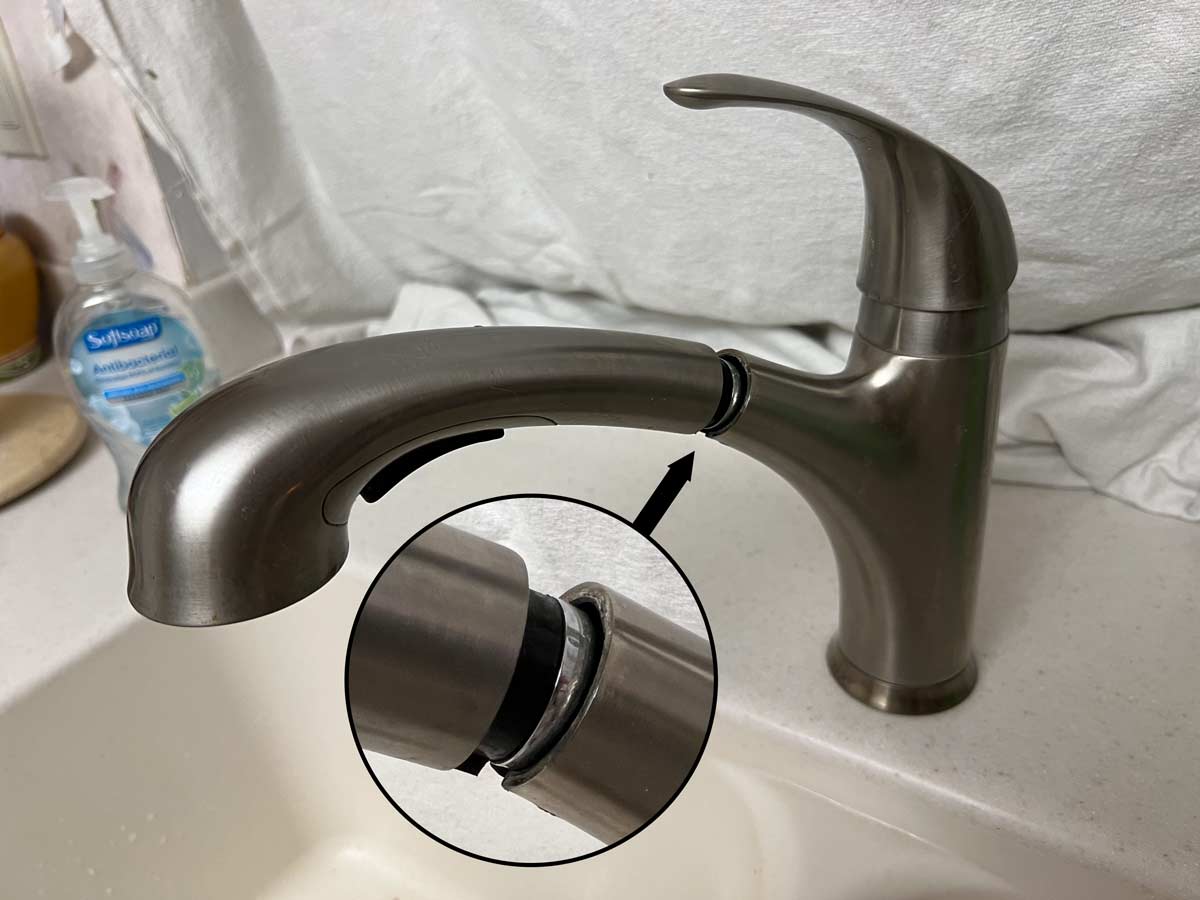
Take my parents’ kitchen faucet (please!).
It’s pretty. It’s sleek.
It doesn’t move.
You literally cannot rotate it between the two sinks, which is, you know, one of the most basic of all faucet functions. It doesn’t turn. At all. They have two sinks, but you can only use the faucet with one of them.
Worse, it’s also a sprayer; the entire faucet removes. Clever, except that it does not, and has never, docked correctly. It has a plastic ring on the faucet that fits a plastic sleeve on the base, but the ring is too large; it doesn’t fit. (I imagine the fact that it’s a sprayer is the reason it can’t rotate, and that would be absolutely perfect for a three-armed user.)
And then there’s this marvel of engineering:
This is the steering-wheel-mounted remote for the car stereo in my parents’ truck, a Toyota Tacoma.
Steering-wheel-mounted remotes for a car stereo are a brilliant idea. And they’re really not that complex. They move the most often-used functions to a place where you need not look away from the road or take your hands off the steering wheel to use them.
This control has four primary buttons: left, right, up, down. Now, thinking about what it’s supposed to do (work a CD player/Bluetooth combo), you might reasonably expect that left and right go to previous and next track, and up and down raise and lower the volume.
And you’d be 100% wrong.
Left skips back 10 seconds in the current track. (Yes, seriously.) Right skips forward 10 seconds. Up goes to the next track, down goes to the previous track.
What about volume? How do you adjust the volume?
You don’t. There are no volume controls on the steering wheel. To change the volume, you have to take your hands off the steering wheel.
Yes, you read that right. They literally believed that forward 10 seconds/back 10 seconds was so important it should be on the steering wheel, but volume? Eh. Who uses the volume controls, anyway?
Every single digital music player I’ve ever used, from the Radio Shack Compact Disc Player CD-1000 my parents got in 1984 to my iPhone today, uses left and right arrows for previous and next tracks. But whatever Toyota intern who designed the car stereo controls, having apparently never used or indeed seen an entertainment sound system before, had his own ideas, and somehow, somehow it passed all the design review steps. Somehow, someone signed off on manufacture.
Skip ahead ten seconds yes, volume control no.
And here’s the thing:
The world we live in today, our world of marvels and miracles, is filled with examples like this.
It’s hard not to believe that the vast majority of industrial designers are anything but lazy and barely competent, unwilling or unable to put any effort into their job (and it certainly feels like they never use the things they design). From consumer electronics to furniture to software to clothing, we live in a universe of shit.
My jacket has a zipper edged by a hem that is exactly the right width to catch the slider as it moves. It is not possible to zip or unzil the jacket without the hem catching the slider at least three times.
Someone designed that. It went through several review steps before it was released to manufacture. And yet, neither the designer nor any of the peple resonsible for reviewing the design ever put the jacket on. (I’m serious when I say you cannot zip or unzip it without catching the slider. Even one test would’ve been enough.)
We live, we exist in a world of sh*t. We don’t pay attention to the way design impacts our lives, and as a result, trivial design failures—failures that can easily be corrected in minutes during the design stage—waste countless person-years of time. In some cases, like car stereos with cluttered or counterintuitive layouts, they kill people.
And we as a society are remarkably okay with that.
I’m not sure what changed, but in the last five years or so, I’ve found it increasingly difficult not to notice shitty design all around me. And once you’ve started to see it, it snowballs. You can’t un-see it.
I would like to live in a world where perhaps people cared about design more. But the problem seems to be getting worse, not better.