
Price: free (donations accepted but not required). I only have a few, but there are more on the way.
The Resist stickers are also back in stock, though I expect to run out of them quickly again.


Price: free (donations accepted but not required). I only have a few, but there are more on the way.
The Resist stickers are also back in stock, though I expect to run out of them quickly again.
I had no idea, when I designed the Resist sticker, that it’d touch such a nerve. My first shipment disappeared in less than two hours. I’m getting messages and emails every day asking when there will be more, so here’s an update:
The first batch have now all been shipped out.
If you ordered five or fewer, you’ll get them soon. You should’ve received a confirmation email in the past few days that your stickers shipped, but unfortunately some of the confirmation emails bounced as spam, so they may not have gone through.
If you ordered ten or fewer before the shopping cart showed zero left, then you’ll also have them soon.
If you ordered more than 10, you will only get ten in the first mailing. If you ordered more than ten after the shopping cart showed zero left, I’ll send some out when the new ones arrive.
Yes, there are more on the way.
The second design will be here next week. Alas, I had no idea what to expect, so I didn’t order very many, only 175. I expect it to be gone the same day it’s available. I’ve ordered more of that design as well.
I’ve made changes to the shopping cart.
My shopping cart fell over under the load. People were seeing weird error messages, or couldn’t check out, or the cart wouldn’t load at all. I’ve completely rebuilt it from the ground up; it still looks the same but it’s running new software underneath that should be a lot more reliable.
Dozens of people asked if there’s a way to tip me.
I’ve added the ability to include a tip in the new shopping cart. For free stickers this is 100% optional, but it’s there if you want it.
I’ve also received a number of donations on PayPal and Venmo. Thank you all so much, it’s been incredible to learn how many people want to support this idea. All of the donations I’ve received, every penny, have gone into ordering more stickers. I have about 1200 stickers on the way that should be here by the end of the month.
Many of you, like over a dozen of you, have messaged to ask if there’s a way to get the stickers in quantities of 100 or 200 or more.
I didn’t make any provision for that because I honestly had no clue so many of you would get behind this project. So, I’ll be making changes to the shopping cart to add a provision to order in bulk. I plan to charge my own cost for this and ship the stickers to you directly from the company that makes them. The price will likely be around $35 for 100 or $45 for 150.
I will need to limit quantities for free stickers.
I’m really sorry. I had no idea this was going to blow up. The Resist stickers will be limited to 10 at a time for free orders or 3 at a time for the first batch of the new design, which I’ll post here and on social media when it arrives.
A bunch of people have asked me if I can make the design available in pins or clothing or other formats.
I’m looking into doing this. I won’t be able to offer free pins and such, so what I’ll likely do if I can find a good vendor is make things like pins, clothing, and holographic stickers a nominal charge (I’m not looking to make a profit from this project), but continue to keep the vinyl stickers free.
Thank you all so much for the incredible support. I can’t tell you how deeply gratifying it is to know I’m not the only one who feels the way I feel about what’s happening to our country right now.

Image: prill
I am in London as I write this, sitting in a lover’s flat overlooking the London city skyline. I was here when I learned the news of the 2024 Presidential election—that hate won over love, bigotry over compassion, spite over benevolence.
I understand the sick despair many of us feel in the pit of our stomach right now. Dark times hover on the horizon. I don’t believe the people who voted so resoundingly against the better angels of our nature realize yet what they’ve done. Some of them likely never will, and for those who do, it will be too late.
I’m not here to analyze what happened, or rail against the stubborn streak of vicious, ugly racist misogyny that has long been part of the American spirit. Others are already doing that, some of them quite eloquently, and I do believe there’s value in understanding what happened, but that is not the most important thing right now.
It’s vital to understand going forward, though I think the answer is grubber, more sordid, and more banal than we might otherwise hope: there has always been this vicious streak of mean-spirited, ugly anti-intellectualism embedded deep in the American national character, that has been with us from the start. It has never changed, and it likely never will in our lifetimes. We are simultaneously the land of can-do optimism and sleazy, seedy execration. These are the two faces of the American civic character, and this week, the ignorance won.
But I want to remind everyone reading this that there is hope. Like the dawning of the sun after a night of terror, this too shall pass.

Image: Jessica Ruscello and mixformdesign
I do not wish to trivialize what is to come. Many people will suffer. My trans and nonbinary friends are terrified right now. Two nights ago, a great many decent Americans discovered just how badly their country hates them, just how deep the ugly river of xenophobia flows through the American psyche.
There will be suffering. There will be blood. There will be ugliness, and violence, and hopelessness, and despair. I do not want to minimize any of the grotesqueries we all see on the horizon.
I will, instead, invite us all to take a deep breath, and remember that the course of history is neither straight nor smooth, but it does tend, in the long term, toward peace and justice.
We have been here before. We have, as a nation, been worse before. We were built on the foundation of slavery and we have never truly stepped away from it. Yet we have made progress, and we will again. It might not seem like it now, but this is a setback, not the end of all things.
I would especially like to remind those of us who feel most betrayed by our fellow citizens, those who voted against their own interests purely out of spite and desire to hurt, not to do the oppressor’s work for him.
I still remember the first time this country elevated this vicious, narcissistic, racist, sexist, conman, this tumor on the American psyche, to the highest office the first time. I remember how the shockwaves echoed through my own personal life, how a person I once loved became a bitter, angry, sullen echo of herself, how she told me directly that she was abrasive and prickly to me simply because, in her words, she felt overwhelmed with hopelessness and despair, and I was the only safe place for her to dump that poisonous emotional sewage.

Image: grandfailure
I learned only a few days ago from a person in my life I love dearly that there’s a name for this. It’s called “lateral violence.” Those who feel oppressed, who feel ground down by an enemy far too dangerous and powerful to fight, release their anger and fear and frustration on one another, tearing into each other with a viciousness that it is not safe to direct outward.
Many of us will do that over the coming year. I would like to invite us all not to do the oppressors’ work for them, not to become a participant in our own subjugation.
This has always been a peculiar and pernicious weakness of those of us on the progressive side, this tendency to turn on our own. Tim Minchin expressed this beautifully:
It cannot, it cannot be okay if the intention of progressives—which I assume it is—is progress forward into a future of more empathy and understanding for more people, it cannot be that the primary mechanism by which we’re going to make that progress is the suppression of empathy and understanding for anyone who doesn’t align with our beliefs. It cannot be that unmitigated expression of furious outrage will somehow alchemize into a future of peace and love.
I understand the impulse toward despair and the anger that it brings. I understand that anger, lacking a safe outlet, is all too easily directed at those around us who are like us, those we think have failed the cause, have not done enough to fight oppression (or perhaps have not fought it in the “right” way).
I understand, too, where this leads.
We cannot do this. We must not do this. The story is not over. The storm will end. We must not, in our rage and hopelessness, turn on one another.
Now, more than ever, if we are to survive what is to come, we must, we absolutely must, support each other. That is the way we get through this. Not by adopting the tools and mindset of our enemy, not by doing our enemy’s work for him, not by tearing each other down because we don’t know where else to direct our feelings, but by holding each other, supporting each other, loving each other. Love does not triumph over hate by becoming hate.
The the arc of the moral universe is long, as MLK Jr said, but it bends toward justice.. This path is never as straight nor as swift as we would like, and sometimes for every three steps forward there is one backward.
It’s okay to feel rage, despair, all those other things. I feel them too. We have a choice: we can use them to lift each other up or tear each other down.
I don’t believe in New Years resolutions. But I have, today, this moment, made a resolution for the next four years.
My resolution is that I will do everything in my power to act with greater kindness, greater compassion, greater benevolence and empathy and grace. I will not allow those who despise these things to destroy them in me. I will not do the oppressor’s work for him. I will not be complicit in my own eradication.
JRR Tolkien believed—indeed, this is one of the central moral lessons of his works—that good triumphs over evil not because good is stronger than evil, but because good works with itself while evil works against itself. We do not defeat bullies by becoming bullies ourselves. That, I think, is our blueprint forward.
I’ve posted this image on my blog before. It is vital to remember it now.

Trigger warning: Stalking, graphic death and rape threats, doxxing, threats of swatting, impersonation
I’ve been putting off writing this for a while now, because it involves dredging deep into some incredibly ugly stuff.
Most of you know that I’ve been stalked for years by a stalker (or stalkers) who has created fake social media profiles in my name to harass other people, and sent explicit, violent rape and death threats to me, my family, my friends, and those who follow me on social media.

This person, or these people, have made repeated rape and death threats directed at me, my wife, my father, and people who have expressed support for me or been rumored to be connected somehow with me online. They’ve sent death threats containing photographs of my partners. They’ve doxxed my family and partners.


The harassment has escalated over the past three years, as the rape and death threats have become more frequent, more violent, and more graphic. The stalker has escalated to threats of swatting (phoning fake tips to the police to have SWAT teams sent to the homes of the target). My websites have been DDoSed.


Last December, as I was leaving for Florida to help care for my mom, who was in the final stages of terminal cancer, I had an unexpected and rather uncomfortable conversation with Portland PD about an email I’d supposedly sent them saying I was stockpiling guns and the voices were telling me to murder my wife.
Fortunately, I have been documenting and reporting the stalking, rape and death threats, and harassment as it’s happened. The nature of the conversation changed once they pulled up the previous police reports and realized this was part of an ongoing pattern of harassment.
So how did we get here? And what does this have to do with polyamory?
Propaganda and the Poly Scene
So how did we get here? And what does this have to do with polyamory?
My first inkling something weird was going on came when a number of different people, some of whom I hadn’t spoken to in years, all messaged me to say “Do you know someone named Louisa Leontiades? She says she’s a journalist and she’s asking questions about you.” A few of those people sent me screenshots of messages or emails they’d received:

Louisa is a client of a former partner. After the relationship with that former partner ended, Louisa started messaging pretty much every female-presenting person who’d ever interacted with me online, going back through this very blog for decades, looking for women willing to dish dirt.
Next thing I know, somehow there are more “exes” that are accusing me of having “abused” them than the total number of people I’ve ever dated. Few forms of gaslighting are more head-twisty than someone you’ve never dated, never talked about dating, never wanted to date, never had sex with, never talked about having sex with, and never wanted to have sex with telling all and sundry about how you abused her when you were “together.” For a while, I quite literally thought I was going insane.
These “survivor stories,” as Louisa calls them, tended to the bizarre (like the woman who I’ve never been sexually or romantically connected with and never been in the same room with except in passing at a party claiming I abused her by flirting with someone else in front of her), toward the utterly untrue (a former partner claiming I “got her into” BDSM and that a 25-year-old is “too young to consent” to BDSM, when in fact she was interested in BDSM long before we ever met, and the fact her ex-husband wasn’t interested in BDSM was one of the reasons she divorced him), and the technically kind of true if you squint hard enough (my ex-wife claiming she was an “abuse victim” because I yelled at her on the phone once—which did happen—but declining to mention that it happened after we’d separated, when she broke into my house one night while I was out of town, stole a bunch of stuff like consumer electronics, then sold it to buy a new laptop).
As a side note, there’s a lesson here in how to spot the difference between journalism and a smear campaign. If a journalist hears “he yelled at me once on the phone,” he or she will ask followup questions: “Did this sort of thing happen often? What happened?” Ethical journalists also disclose personal or financial connections with the stories they cover.
My goal is not to go through all the rather strange “survivor stories” here. I may end up doing that at some future point, but that’s not the point of this blog post.
Right now, I’m here about the aftermath of these weird, wordy-but-vague accusations, what it says about the way many people see “social justice” as a tool of bullying and control, and how the poly scene’s support for “social justice” led directly to a barrage of rape and death threats against a whole bunch of other people beyond just me.
Louisa published these “survivor stories” from exes and non-exes with results you might predict: the Internet Hate Machine™ cranked up into full gear, I had to lock down comments on my blog because random strangers started posting death threats, I lost friends.
With all the various contradictory stories (“Franklin dated someone ten years younger than he was, he’s obviously an abuser,” “Franklin refused to date me because I’m younger than he is, he’s obviously ageist”), they became a sort of Rorschach test, with different people seeing different things in them. It’s kind of a Gish gallop of accusations.
One dude on social media wrote that I was clearly a bad person, because it was plain to him that I’d written the stories myself as a sort of humblebragging, since the theme to a lot of them is “I knew when I dated Franklin that he was polyamorous but he’s so awesome I wanted him all to myself and he said no.”
Seriously. Someone over on Quora actually said that.
Dr. Elisabeth Sheff, a sociologist and author who serves as an expert witness in court for abuse cases, published an analysis of the “survivor stories” that concluded the stories don’t actually describe abuse.
The poly community as a whole thought about her analysis, set aside their first knee-jerk emotional response, said “huh, I wonder if there’s a reason she might have reached those conclusions,” went back, and re-evaluated the survivor tales with a more considered eye…
Hahahahaha, I’m kidding, that didn’t happen. Instead, the Internet piled on to Dr. Sheff. She was threatened personally and professionally, and received so much harassment and abuse she was forced to back away from the whole situation. You know, classic straight-up bullying.
And it wasn’t just threats. A lot of folks sent her emails that they probably wouldn’t think of as problematic—messages like “don’t you realize you’re just hurting women who have been abused?” and “I’m so disgusted that an academic would support an abuser” and “I used to be such a fan of yours, but this has really made me rethink that,” because they couldn’t even consider the possibility that she might, you know, be right.
After that, things got even weirder.
“I want a just, fair, and equitable society, and I don’t care how many rape threats it takes to get there.”

Now let’s fast forward a bit, to a nonprofit polyamory convention run by a registered nonprofit in London, called “PolyDay.”
COVID interrupted the convention for a couple of years. During the COVID lockdown, a team not previously involved with PolyDay announced they would be taking over the PolyDay name and launching a new for-profit convention under that name.
The organization that owns the PolyDay convention informed these people firmly that it owns a trademark on the name, and they would not be permitted to use it.
Lockdown ends. The organizers of PolyDay announce the convention was on once more. I don’t know if the person who tried to steal the name started the rumor or merely amplified it, but anyway, someone starts a rumor that I own PolyDay, or run it, or somehow profit from it, depending on which version you believe. (For the record, I have absolutely nothing to do with it—I live in Portland, and it is owned and operated by a nonprofit in London.)
As the rumor spread through the North American polyamory scene, people said “Hey, we can look up the history and organization of PolyDay and figure out if this rumor is true.”
Hahahahaha, I’m kidding, that didn’t happen. Instead, a large number of people determined to make a more just and equitable society and stand up for women raced to their keyboards to send a flood of rape and death threats to the scheduled speakers at PolyDay. So many threats of serious violence poured in, the conference organizers canceled the event.
Apparently, threats of rape and murder are how some people think we create a more peaceful, more enlightened Utopia.

Image: Crawford Jolly
And it just kept going. Once this kind of harassment and bullying gets going, it takes on a life of its own. A former BBC and Guardian journalist named Jonathan Kent published a book on polyamory. Someone started a rumor that I profit from the book somehow, or (depending on which version you believe) that I secretly wrote it under his name, or something.
By now, I’m sure you can predict what happened next:
People looked up Jonathan online and realized he’s actually a person, a reporter with a long documented history, and not an alter ego for me? Hahaha no. Of course not.
People harassed him, called for a boycott of his (I mean “my”) book, threatened and harassed his podcasting co-host…because in this brave new world of empathy, compassion, and social justice, that’s what you do. You harass and intimidate anyone you don’t like, or anyone associated with anyone you don’t like, or anyone rumored to be connected to anyone you don’t like, so that one glorious day, if you harass and threaten enough people, you’ll wake to a world of perfect social justice.
Meanwhile, of course, the rape and death threats aimed at me and those close to me kept rolling in. My co-author Eunice and I released a science fiction novel; a bookstore that planned to host a book event got harassed into dropping the event. Some random stranger I’ve never met made a YouTube video about what a terrible person I am, repeating the “survivor stories,” insisted she wasn’t making the video for money, then used it to beg for Patreon donations.
So it goes.

And is still going. People are still following me around on social media, doxxing and threatening my partners, friends, and folks who follow me.
Just like with the “survivor stories” themselves, the stalking and threats have become a Rorschach test of their own. A random woman on Facebook told me, with what seemed like perfect sincerity, I must be making it all up, because men never get stalked, only women have stalkers.

So here’s the thing: The North American polyamory community has a problem.
I want to be clear this is not a problem everywhere. Poly folks elsewhere largely seem to roll their eyes at all this.
But the poly scene in North America is overrun with folks who are okay with using rape and death threats as a way to express themselves, who don’t do even the barest minimum of fact-checking, who are so caught up in righteous fury that sending women anonymous messages saying “I am going to rape you to death, here’s a photo of your house” seems like a perfectly reasonable way to support social justice for women.
Now, if this is you, if you’re one of the people who sat down at your computer to type out threats to Dr. Sheff or to the people scheduled to speak at a conference because you heard a rumor that it was somehow connected to me and couldn’t be arsed to fact-check, this essay is not for you. You are irredeemable and I don’t care what you think of me. I don’t quite understand the mentality of someone who says “I’m going to stand up for women and justice by sending a bunch of people I’ve never met anonymous emails saying I’m going to murder them if they present at this conference,” and honestly I don’t want to. If this is you, fuck off.
If this isn’t you, and you’re on the sidelines saying things like “I don’t know what the hell is going on but I don’t want to get involved,” well, I get it, I really do. I’ve been there myself. I’ve unquestioningly accepted stories because they fit a narrative I believed in, and discovered later that the things I’d been told didn’t actually happen, at least not the way they were presented to me. (I may write about that at some point as well.)
And I’m not saying the fact that a bunch of bullies and Internet trolls have taken it on themselves to send rape and death threats all over the Internet because, you know, that’s how you support women and fight for social justice automatically proves that what I’m saying is true and what they’re saying is false. Only that mmmmaybe it might be worthwhile to look a little closer, you know? After all, if people are wrong about basic things that can easily be checked, like who runs a nonprofit conference or who wrote a book, perhaps it might possibly be worth considering whether or not they’re trustworthy about things you can’t easily verify.
Moving the Overton window
I’d like to believe this is a fairly new thing—that twenty years ago, communities dedicated to egalitarianism and self-determination wouldn’t so quickly embrace this kind of toxic behavior. That’s probably wrong—the same thing was common in the 1970s feminist circles—but I do believe that events like GamerGate brought a new level of toxicity into acceptability.
As a friend of mine put it, “never accept unacceptable behavior, or you make it acceptable.” If you believe bullying and threats are okay as long as they’re directed at people you’ve been told are bad, you make bullying and threats okay.
If you don’t believe bullying and threats are okay, but you really don’t want to (or don’t care enough to!) get involved in other people’s drama (or you really don’t care enough to get involved), so you stay out of it, or you “don’t take sides”, or you choose a default rubric like “believe all women” because investigation is too much effort, well, that’s kind of how we ended up here, in a world where harass and threaten in the name of social justice, because they feel safe in their communities who appear to support them, or at least don’t oppose them.
Just a thought.
Brandolini’s Law, or the Bullshit Asymmetry Principle, tells us it takes longer to refute bullshit than it does to put it out there, and if there isn’t a corollary that tells us this is especially true when people have been told that it’s morally wrong to question the bullshit, there ought to be.
Few subcommunities have figured out how to deal with vague claims of mistreatment that kinda follow common narratives, and anyway few people really have the inclination to try to sort through it all. It’s easier to just assume that where there’s stuff that kinda looks like smoke, there must be fire, and accept a generalized “so-and-so is a bad person even if I’m not exactly clear on what he or she did.” Kinda the way people who still say the 2020 election was stolen say “there are thousands of affadavits about election fraud, it must be true.”

Image: Blacksalmon
I mean, hell, I’ve done this myself. When you want to do right by the people around you, and you know enough about social justice to understand the uphill struggle people have faced for years getting anyone to take abuse they’ve faced seriously, you default to believing whatever you’re told by anyone who presents as an abuse survivor—a noble inclination, but one that is also easy to exploit.
Abuse is about power and control. When the poly scene went after Dr. Sheff, everyone else got the message loud and clear: Do as we say, or you’re next. Believe what we tell you to believe, or you’re next. Don’t ask questions. Keep your head down. Hate who we tell you to hate, or you’re next.
So perhaps this might be a good guideline: When you see people facing off against each other, with both sides claiming they’ve been mistreated, it might be helpful to ask yourself, “which of these two sides is sending rape and death threats, punishing anyone who steps out of line, and controlling the narrative through intimidation and threats of violence?” Because it’s hard to champion social justice and also think those things are okay.
I know the people sending the rape and death threats are a small minority, whose noise and zealotry make this seem more common than it is. That’s the thing, though: if you want your community to be a good space, sometimes you need to stand up to the bullies.
It’s okay to ask questions and look for more information. Anyone who tells you otherwise is selling something.
Note: Any comments containing abuse apologism, denialism, threats, rationalization, whataboutism, sealioning, or victim-blaming will be deleted.
[Note: This entry originally started out as an answer on Quora.]
So apparently there’s a dude named Russell Brand. I will admit, Gentle Readers, that I don’t know who he is, except that apparently he does standup comedy and such, and apparently his YouTube videos have been demonetized after he was accused of sexual assault.
Now, I will freely confess to knowing somewhere between zip and fuckall about him, his life, or the accusations. That’s not actually what this essay is about. Instead, I’d like to dive into the murky world of social media, monetization, and the ethics we as a society choose to live by.
I wrote the first version of this essay when a Quora user asked if YouTube has the legal right to demonetize Brand as ‘punishment’ for being accused of assault. Which is completely the wrong question. Punishment is something one does as retribution for an offense. Punishment is about the person being punished. YouTube doesn’t care about him, it cares only about its own brand. He’s not being removed so that YouTube can punish him, he’s being removed because not removing him hurts Google’s cash flow. (Google, naturally, owns YouTube.)
Does YouTube have a legal right to do this? Yes.
Does YouTube have a moral right? Well…that gets complicated. Buckle up, long essay is loooooong.
The legal part is straightforward, so I won’t spend a lot of time on it. When you create a YouTube account and click I Agree, you have signed a legally binding, court-enforceable contract with Google. That contract gives Google the absolute, unlimited, unilateral right to demonetize you or kick you off their platform for any reason or no reason. YouTube’s servers are private property owned by Google, they are not a public forum or a public space, and you are not the customer, their advertisers are the customer.

In the eyes of the law, this is what clicking “I accept” means. If you don’t like the contract, don’t sign. (Image: Scott Graham)
Legally and morally, you have no right to use YouTube or its servers. You are granted a limited, revokable permission to use private property belonging to Google under certain conditions, and that permission can be withdrawn at any time for any reason.
Legally, it’s open and shut. Nothing to see here, move along.
Ethically?
I think an argument can be made that it’s ethically dodgy. Trouble is, the ethical argument isn’t the one people are making.
First off, anyone who tells you “First Amendment my constitutional rights!” in any discussion about social media is an imbecile, and you can safely disregard any ignorant bleatings that issue forth from their pie-hole. You have no Constitutional right whatsoever to use someone else’s stuff for free.
“But it’s a public forum!” No, it isn’t. Shut up, you’re embarrassing yourself. It’s a private server, owned by a corporation and maintained at that corporation’s expense. You have no right to be there.
“But it gives big tech companies too much power!” And? And so? People who own communications media have always had that much power. Social media is, in fact, way more democratized than newspapers or television stations, and guess what? You have no right to march into a television studio and demand they broadcast whatever you want them to on the six o’clock news, or to demand that Time Magazine publishes your manifesto on toothbrush design.

Google data center. This is private property. You have no right to use this for free.

Magazine printing press. This is private property. You have no right to use this for free. (Image: Bank Phrom)
People who own media set the rules for what that medis will carry. That’s the way it’s always been, that’s the way the Founding Fathers intended it to be (many of them were media owners themselves!), and government regulations telling media owners they have to carry your stuff is an infringement on their First Amendment rights.
The actual ethical argument is way, way more subtle, and it’s not about the Constitution, it’s about the kind of society we want to live in.
So liberals and conservatives, as part of the tedious ongoing culture war designed to distract attention from the fact that the conservative party in the US no longer has a party platform or legislative agenda, have latched onto this idea of “cancel culture” as a stick to beat each other with.
Ironic, since liberals and conservatives both do it. It’s just that when they do it, they’re imposing their ideology by force on other people, but when we do it, we are making society safer by choosing to spend our money in ways that promote the ideals we want to see.
It’s asinine because all the folks engaging in this argument, left or right, are liars. They may see themselves as genuinely good people, but they’re still liars. And the thing about seeing yourself as a good person is, you stop watching yourself. You stop asking yourself ethical questions. Once you’ve accepted that you’re a good guy, it follows that what you’re doing must be right, because you’re a good guy, and good guys do the right thing. It’s written on the tin!
I’d far rather be trapped all night in a dark basement with someone who questions his own moral worth than someone utterly convinced he’s on the side of the angels, hands down.
But I digress.
The actual ethical issue is the issue of mob rule: the tyranny of torch and pitchfork.
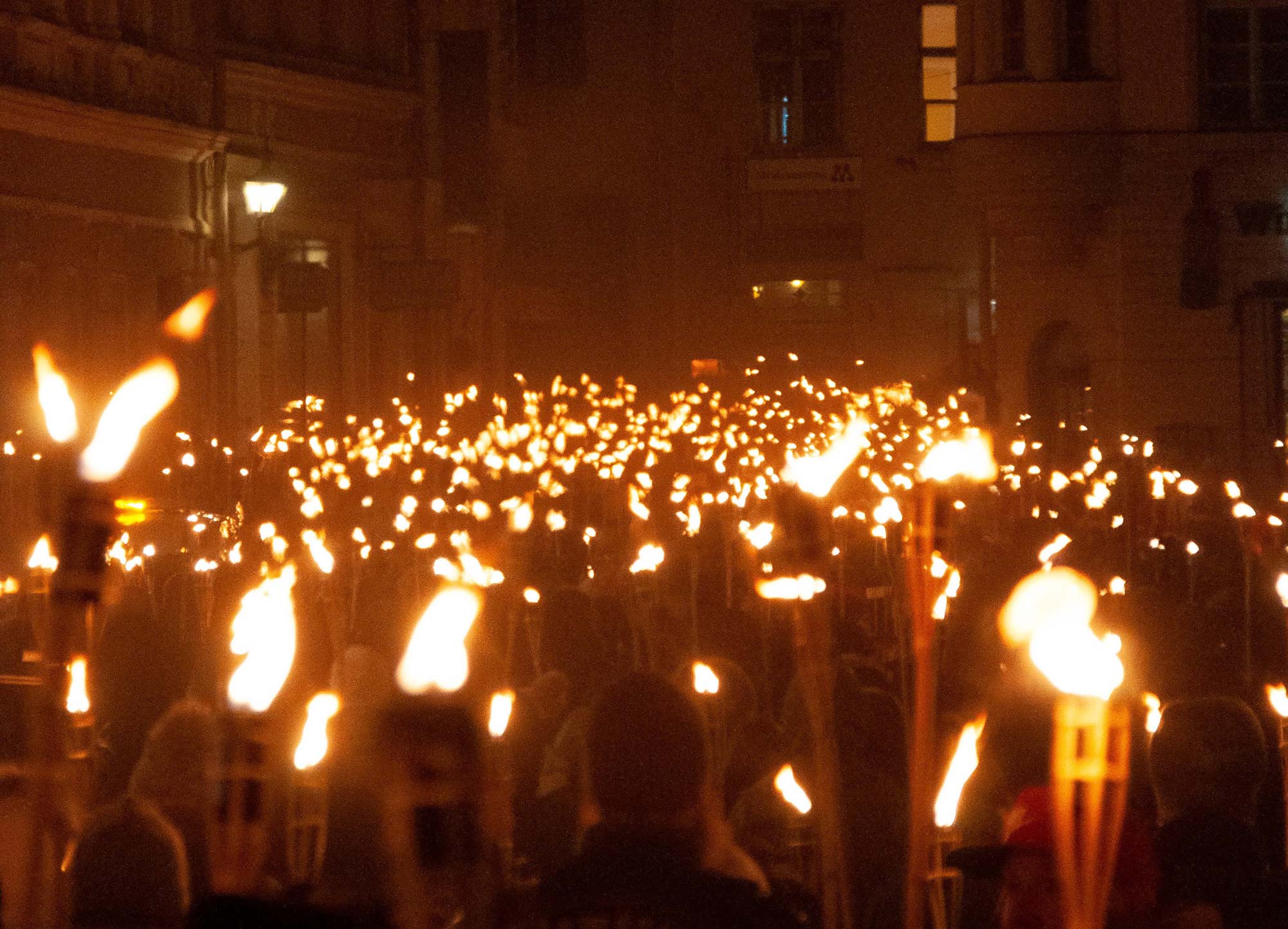
A crowd of “good people” (Image: Hert Niks)
Why does Google revoke YouTube monetization for someone who’s been accused of something bad? Because if they don’t, advertisers will harm their revenue.
Why would advertisers harm their revenue? Is it because the corporations buying the ads are all fed from the milk of human kindness, motivated above all things by the desire to bring justice to the world?
Ah HA ha ha ha ha ha ha ha ha ha ha ha ha ha ha ha ha ha ha ha ha ha ha ha ha ha ha ha ha ha ha ha ha ha ha ha ha ha ha ha ha ha ha ha ha ha ha ha ha ha ha ha ha ha ha ha ha ha ha ha ha ha ha ha ha ha ha ha ha ha ha ha ha ha ha ha ha ha ha ha ha ha ha ha ha ha ha ha ha ha ha ha ha ha ha ha ha nope.
It’s because advertisers fear an angry backlash if they don’t.
Why do advertisers fear an angry backlash if they don’t?
Because the Internet allows people to come together in flash mobs to punish the transgressors on a moment’s notice, and punish those standing next to the transgressors, and punish those who are insufficiently righteous in their zeal against the transgressors, and those who stand next to those who are insufficiently righteous in their zeal against the transgressors, and those who are peripherally associated in any way with anyone associated with the transgressors.
And these Internet flash mobs are fast. Much faster than the speed of Truth or Reason. In fact, in many corners it is considered morally wrong to suggest that maybe people ought to slow down to the speed of reason.
Just like Google has the right to decide you can’t use its servers for free for any reason or no reason, you have the right to decide you won’t buy Happy Pawz Cat Litter™ for any reason or no reason…including that you saw an ad for Happy Pawz Cat Litter™ on a YouTube video about cello tuning and you hate cello music. Or you don’t like the person in the video, or the person who made the video, or the person the video is about. Whatever. Your money, your rules.
And you have the right to tell other people “I really don’t care for Happy Pawz Cat Litter™ and I don’t think you should buy it either.”
So far, so good.
The place it runs off the rails is when “I won’t support X for reason Y” becomes “I will make sure nobody supports X for reason Y, and anyone who disagrees with me is Clearly Evil and must be punished too.”
In other words, it’s about locus of control. I will control how I spend my money: totally okay. I will control how you spend your money: Abusive, bullying, and toxic.
This is often framed as a liberal vs conservative thing. It’s not. It’s an authoritarian vs self-detemining thing.
No matter how pure your intentions or righteous your cause, if you deprive others of the ability to disagree with you, you are a bully.
And that’s the greatest secret of the Internet: it empowers bullies in ways no other technology ever has.
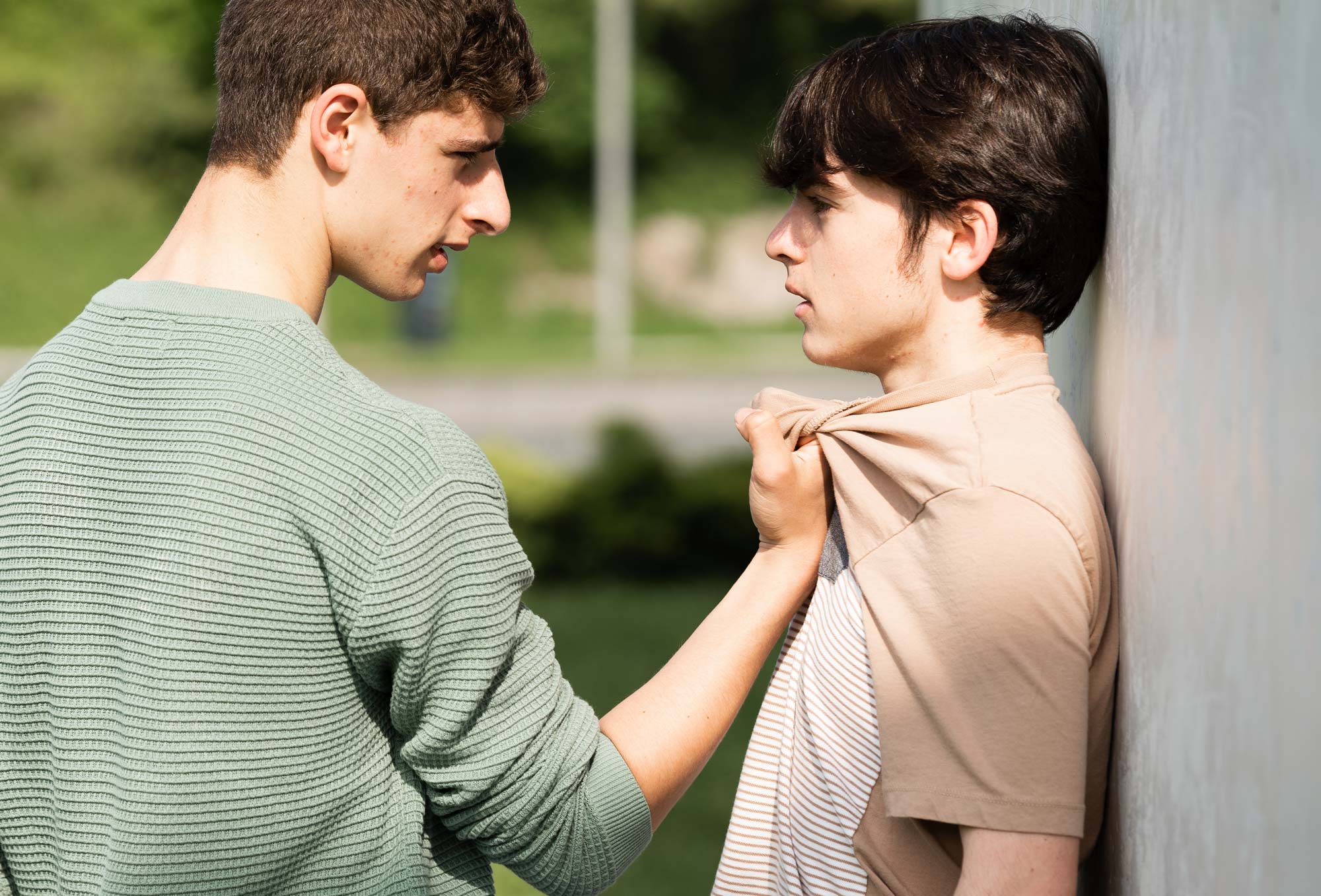
This, but electronically, is the ethical issue (image: egoitz)
Russel Brand may well be a terrible person. If you don’t want to support him, that’s cool. If you believe nobody should support him, that’s cool. If you believe Google shouldn’t give him money for his YouTube content, that’s cool.
If you believe everyone else must think as you do, that’s not cool.
People really struggle with this, because at the end of the day, bullying feels good. There’s a reason it’s such an enduring part of the human experience. And bullying in the name of a virtuous cause? That feels awesome. It feels righteous. You’re Striking A Blow Against Evil! You’re making the world a better, more just place!
You can build utopia if only you can foce everyone to harass, shun, and exclude the people you think should be harassed, shunned, and excluded! Why won’t people see that we will all become more egalitarian and empowered if everyone would just do as I say??? What is wrong with them?
So that’s the world Google lives in: if they monetize the wrong people, there’s a real chance their advertisers will be harassed. I mean, think what happened when radio stations continued to play the Dixie Chicks when the torches and pitchforks crowd started the crusade against them—managers of radio stations were stalked, their families received rape and death threats.
Building Utopia by finding the right people to threaten and bully, amirite?
Now, I will admit I have a dog in this fight. I woke up a while back to discover that a person posing as a journalist had put up a website where a bunch of people claiming to be exes of mine—some exes, some not, some people I’ve never been in the same room with except in passing at a convention or something—were claiming to have been abused by me. It’s a…weird and unsettling experience to have people saying that more exes have come forward with tales of abuse than the total number of exes you have.
Anyway, as a result of that, owners of indie bookstores have been harassed for hosting book events with my co-author and me. People close to me have been threatened. A BBC reporter wrote a book on polyamory, and ended up being harassed after someone started a rumor that I actually wrote the book and used his name. He used to do a podcast; that ended when his co-host was harassed to the point she didn’t feel safe associating with him any more. Even though you can look up his name and yes, he’s actually a well-known and well-established British reporter…who is, in fact, not me.
And most bizarre of all, someone started an Internet rumor that I secretly run a polyamory conference put on by a British non-profit in London, and as a direct result, people scheduled to speak at that conference received a barrage of death threats in a coordinated campaign so serious, the non-profit canceled the conference. A conference that (it shouldn’t be necessary to point out but I’ll say it anyway) I do not run, profit from, or in any other way have connection with—as is easily verifiable because it is, err, run by a British nonprofit, and like all British nonprofits, its managers, members, and finances are all public record.
Not that pitchfork mobs are known for, you know, doing their research.
So I have firsthand experience with this kind of crap.
Now, absolutely none of this has anything to do with whether Russel Brand is a good person or not, whether Russel Brand is guilty or not, or whether Russel Brand deserves (for whatever value of “deserves” one might use) a platform or not.
The point is, it’s totally 100% ethical to say that you won’t spend your money with anyone who supports people you don’t like. Your money, your rules.
There is an ethical issue here. The ethical issue isn’t “but the First Amendment! Freeze peach!” The ethical issue isn’t “but public forum!” The ethical issue isn’t “but Big Tech has too much power!” Anyone yapping about that can forever be ignored.
The ethics are that we live in a world where if your radio station plays music from someone that the Internet horde doesn’t like, your managers will be stalked, their families threatened with rape and dismemberment, and venues that host their concerts will receive bomb threats.
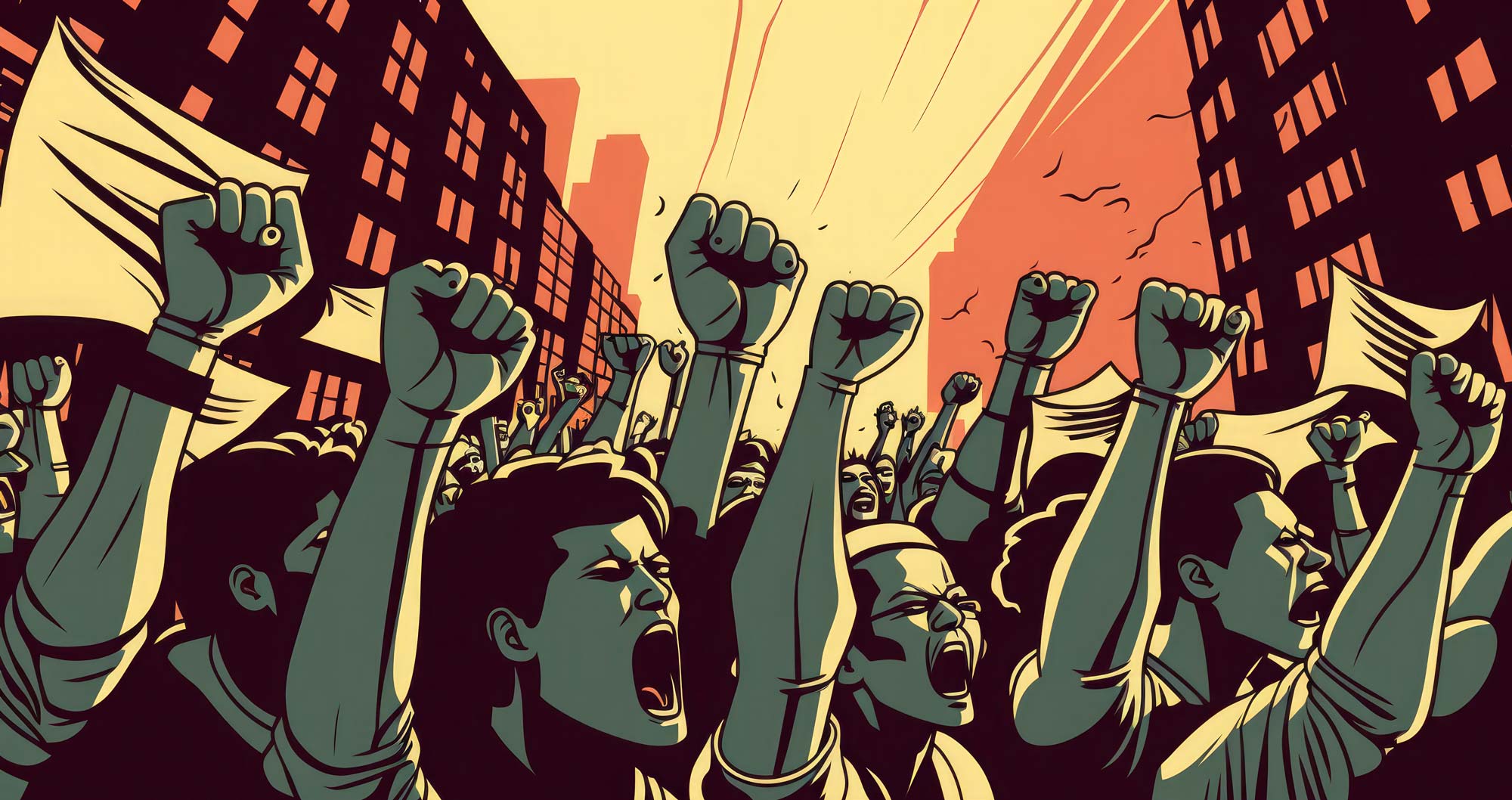
Image: Ahasanara Akter
The ethics are that we live in a world where this sort of thing is so common, and so normalized, and so rationalized, that companies would rather preemptively cut people off if it seems like there’s a possibility that the Internet horde might pick up the pitchforks and torches.
I do absolutely 100% see that as a problem. In fact, I’ll even go one step further and say it might be one of the defining social problems of the modern age, a direct consequence of populism and a sense of entitlement common on all sides of the political spectrum that says “I have the right to send rape and death threats if I think my cause is righteous and just enough—I am doing good with every rape threat I send, I am building a better society one rape and death threat at a time.”
I often wonder how someone sits down at a computer and types out an email describing how they’re going to murder someone on another continent they’ve never met, then clicks Send, dusts off their hands, and says “Today I did the right and just thing, look what a good person I am!”
[Note: This essay originally started out as an answer on Quora.]
If, God help you, you ever read incel or “men going their own way” forums, which I have done, you frequently find a complaint—
Well, hang on, wait. You frequently find many complaints, because that’s pretty much all the incels and MGTOW folks do: whine and complain. One of those complaints you’ll often see is that “men are losing their rights” thanks, of course, to those evil feminist women, hell-bent on stripping men of their natural God-given rights.
The standard answer to this particular whine is, of course, “egalitarianism doesn’t mean you lose your rights, it means women gain rights.” Which is true as far as it goes, but the fact is, yes, men have lost rights because of feminism. In fact, you can look at the changing legal landscape in the United States over the past century and point to specific legal rights men once had that they don’t any more, directly because of feminism.

Photo by author
I was born in the 1960s, so I’ve lived through the rise of modern feminism.
Men have lost rights, both legal and civil, due to the rise of women’s rights.
Here’s a partial list of rights and privileges I as a man have lost just in my lifetime due to women’s rights:
How do I, as a man, deal with that?
Simple: I don’t want to rape my wife. I don’t want to control her money, control her doctor’s visits, or have her arrested as a scold.
In other words, why am I losing my rights? Because the rights I’ve lost are rights that men should never have had in the first place.
That’s the pesky asterisk in “men are losing rights*”. And it’s a different argument than “ha ha ha LOL shut up you haven’t lost any rights.” Men have lost rights. Unpacking why, and whether we shoud’ve ever had them to begin with, is a different conversation, and one I think we need to be willing to have if we are to deconstruct the weird entitlement of the manosphere.
I spend a lot of time on Quora dishing on conservatives, but here’s something that is absolutely endemic among my fellow liberals that absolutely gets on my last nerve.
Way, way too many liberals are more obsessed with moral purity than any Southern Baptist could ever be. Way too many of my fellow liberals are obsessed with absolute moral purity to the point where any disagreement whatsoever becomes an opportunity to summon the torches and pitchforks.
Liberals, especially in matters of social justice (however variously that may be defined), have an unfortunate habit of seeing anyone who agrees with them 98% not as an ally, but as a 2% enemy. And that 2%? Purge it with fire!!

Actual photo of a typical North American liberal whose fellow liberal has just expressed a minor difference of opinion.
It’s as if we liberals fundamentally do not accept the idea that any disagreement can ever arise from a legitimate difference of opinion, priority, or even fact. No, no way. Any disagreement, any difference however slight, can only be active, willful, malicious evil.
Liberals love the fire of righteous anger. We’re addicted to how it feels. Grabbing the torches and pitchforks and setting off on some zealous crusade makes us feel like we’re doing something. And that makes liberals incredibly easy to manipulate. We all have to virtue-signal and signpost our righteous purity, all the time. The insistence on ideological purity creates an atmosphere of fear and oppression, because at the end of the day nobody is pure enough. This fear and oppression leads to dogpiles and mob rule, because nobody wants that zealous rage directed at themselves.
Conservative authoritarianism is blind, mindless allegiance to a person, however corrupt and obviously self-serving. Liberals sneer at conservative authoritarians, but liberals tend to fall victim to an equally blind, uncritical allegiance, not to a specific person, but to group norms and presumed virtues. One Polynesian person on Tumblr complained once that the hashtag #poly made it hard for her to find other Polynesian Tumblr users because polyamorous people used it instead, and from that moment on it was torches and pitchforks for any polyamorous person who self-described as “poly” rather than “polyam” in any context anywhere, on or off Tumblr, because if you call yourself “poly” you are disrespecting disempowered communities of color.
Marshall University professor Greg Patterson ran into this for talking about filler words in different languages. “Filler words” are words that you insert as pauses in a sentence when you’re thinking. “Uh” and “um” are the most common filler words in English.
A common filler word in Chinese is 那个, pronounced “nà ge”. One group of students complained that this sounded too similar to the English N-word, and that, direct quote,
There are over 10,000 characters in the Chinese written language and to use this phrase, a clear synonym with this derogatory N-Word term, is hurtful and unacceptable to our USC Marshall community. The negligence and disregard displayed by our professor was very clear in today’s class. […] We were made to feel “less than.” […] We are burdened to fight with our existence in society, in the workplace, and in America. We should not be made to fight for our sense of peace and mental well-being at Marshall.
Professor Patterson was removed from the class.
Part of the issue is that Patterson is liberal himself, and as much as liberals love going after conservatives, we save a special and particularly fiery rage for fellow liberals who we believe have transgressed our ideology, regardless of how specious that belief might be.
Part of the issue is that Patterson did not immediately grovel. In liberal circles, it is axiomatic that any fellow liberal accused of any transgression is automatically and self-evidently guilty, always, and the only appropriate response is immediate and unconditional apology.
Any other response is always and self-evidently proof of guilt. Denial? Proof of guilt. Confusion? Proof of guilt. Anger? Proof of guilt.
And part of the issue is that nobody wants to be in the line of fire. Once the torches-and-pitchforks mob has been unleashed, everyone is a potential target. Anyone standing too close to the offender is a target. Anyone who voices any support for the offender is a target. Anyone who fails to denounce the target is a target. Anyone who doesn’t denounce the target strongly enough is a target.
If you’re a faculty member and you get a complaint like this, you damn well better remove the professor, regardless of how you feel. If you don’t, you become the next new target. “Look at this faculty dean, supporting institutions of entrenched racism at our university! We’re going to go to the administration! We’re going to go to the alumni!”
So what happens is you make a reasoned, considered, and perfectly rational decision to do as the mob says, because you come to the reasoned, considered, and perfectly rational decision that you don’t want your own life upended by the mob.
Too many liberals are addicted to the feel of this righteous virtue. It feels good. I know; I’ve been there, I’ve felt it. It’s heady. It’s intoxicating. It lets you feel powerful when you’re confronted with the hopeless pervasiveness of institutionalized injustice.
You can’t stop the structural, institutional racism that permeates the American social fabric, but goddamnit, you can do something about this professor that said something you might’ve heard as a slur! And that feels good. It feels powerful.
In a sense, we liberals sacrifice our own as an antidote to the intractability and powerlessness of the injustice around us. It’s dangerous, especially if you’re part of a disenfranchised subcommunity, to attack the institutional structures of oppression head-on. So turning on your fellows becomes a safety valve, a way to deal with the rage and despair you feel every day.
[Note: This post started out as an answer on Quora]
Does silence mean consent? Sexually? No. Clearly not.
If you’re talking about Thomas More’s philosophy of qui tacet consentire videtur (he who is silent seems to consent), it’s…complicated.
I’ve been thinking about this quite a lot lately, and even had a long discussion about it with my co-author Eunice a few weeks back. We fall on opposite sides of the issue, or perhaps on subtly different sides of one aspect of the issue.
Buckle up, bruh, this might get long.
When people say “silence equals consent,” they’re uuuuusually not talking about sex. When More said “qui tacet consentire videtur,” he was responding to a legal question about why he didn’t recognize the king’s dominion over the Church. His answer basically meant “I didn’t object to it, therefore I recognize it.”
In law and international relations, qui tacet consentire videtur means something more like “silence means assent.” That is, if you don’t object to a statement or decision or policy or treaty or something, that is functionally the same as if you had voted “yes” to it.
Okay. So. Here’s the thing:
The same idea often seems to apply in social settings, especially in subcommunities. You’ll see this play out when, for example, people say “if you’re conservative but you don’t speak out against the fascists in your party, you’re basically saying you’re one of them.” Or “if you’re Muslim but don’t speak out against the violent extremists among you, you’re basically saying you agree with them.” (Whichever way you personally may fall on the political spectrum, dear reader, it always feels less comfortable when it’s turned around, doesn’t it?)
Now, I’ve seen this happen in a subcommunity that I used to belong to. I get how it works.
The thing Eunice points out, and I agree with, is qui tacet consentire videtur only applies if it’s safe to speak dissent. If you risk being beheaded for publicly saying that the king does not rightfully have dominion over the church, then keeping your mouth shut is not automatically assent.
The place we differ is whether or not remaining silent in the face of immorality is a morally defensible act.
Now I get it, I really do. If you live under the Taliban’s rule and you’re Muslim, you maybe might want to think twice about raising your voice in objection to extremism, or you and your family are at very real risk.
Where I think things get muddier is when you’re not at risk of having your head separated from your shoulders, but rather you don’t speak your dissent because you’re worried it will cost you social standing. Or friends. Or your position in your community. You know, something that’s not your life or your freedom.
Where Eunice and I differ is she’s way more patient than I am with people who don’t speak out about things they sincerely believe are wrong when doing so may cost something.
She believes, if I may take the liberty of stating her position as I understand it, that we all have the right to set for ourselves our own personal level of acceptable risk, and what we are willing to put on the line for our values. It is not necessarily wrong to decide the consequences for speaking dissent are more than we are willing to pay.
I’m a lot more hardline about it. I believe that, to quote Jon Stewart:
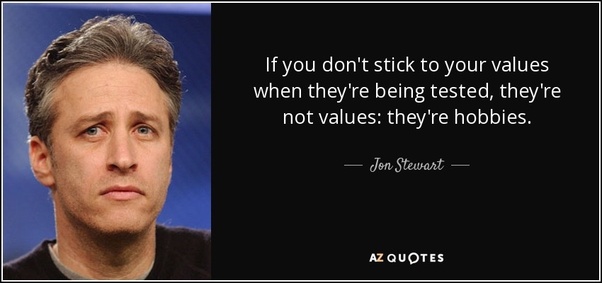
If you don’t stick to your values when they’re being tested, they’re not values, they’re hobbies.
If you make your values a part of your identity, but fail to express them whenever they might cost you something, then yes, your silence, functionally, does mean assent.
The only thing necessary for the triumph of evil is for good men to do nothing. The problem is, evil can make it expensive enough that nobody wants to be the first one to do something.
It’s like a criminal holding 30 hostages with a six-shot revolver. If everyone stood up, they’d win. But the first one to stand up is getting shot, so nobody wants to be the first one to stand up, so everyone meekly complies with the criminal and allows him to tie them up, so now he can kill all 30 at his leisure.
There’s actually a scene in a Marvel movie, of all things, that nicely illustrates the dilemma of qui tacet consentire videtur:
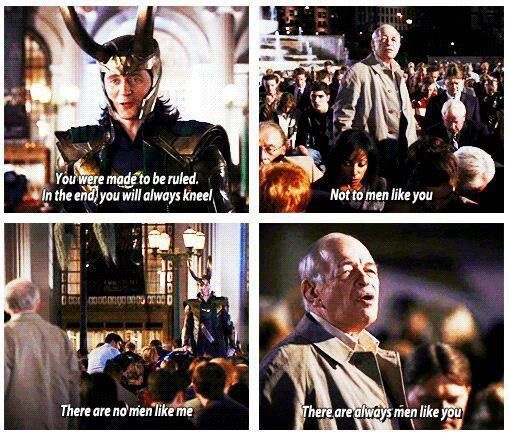
At what cost our dissent? Most of us would like to look in the mirror and tell ourselves we are like this man. Almost nobody actually is. I’ll bet folding money that most people will keep silent in the face of things they are think are wrong even if the cost of speaking up is quite small.
—–
When I posted this on Quora, a friend remarked that in his opinion, Eunice’s position shows greater empathy than mine; that is, Eunice is less hard-line than I am because she’s more sensitive to the plight of the person placed in the position of not being able to speak up without facing the community’s retaliation.
I chewed on that idea for weeks. I had a sense that there was something missing from that idea, but it took me a while to put my finger on what it was.
In situations where, for example, someone is in the closet as a member of some sexual or ethnic morality for fear of the community’s reaction if he comes out, I agree. That’s absolutely a reasonable choice, and deserves respect and compassion. In fact, I’ve chosen to live openly, as I’ve said in my memoir and also at events back as far as the 90s, in part because I can. I’ve never had a job that would be at risk because someone finds out I’m polyamorous, or family that would disown me.
In that sense, I’m privileged, and I know it, and it’s because I’m privileged I want to do whatever I can to make it easier for the next person to be open.
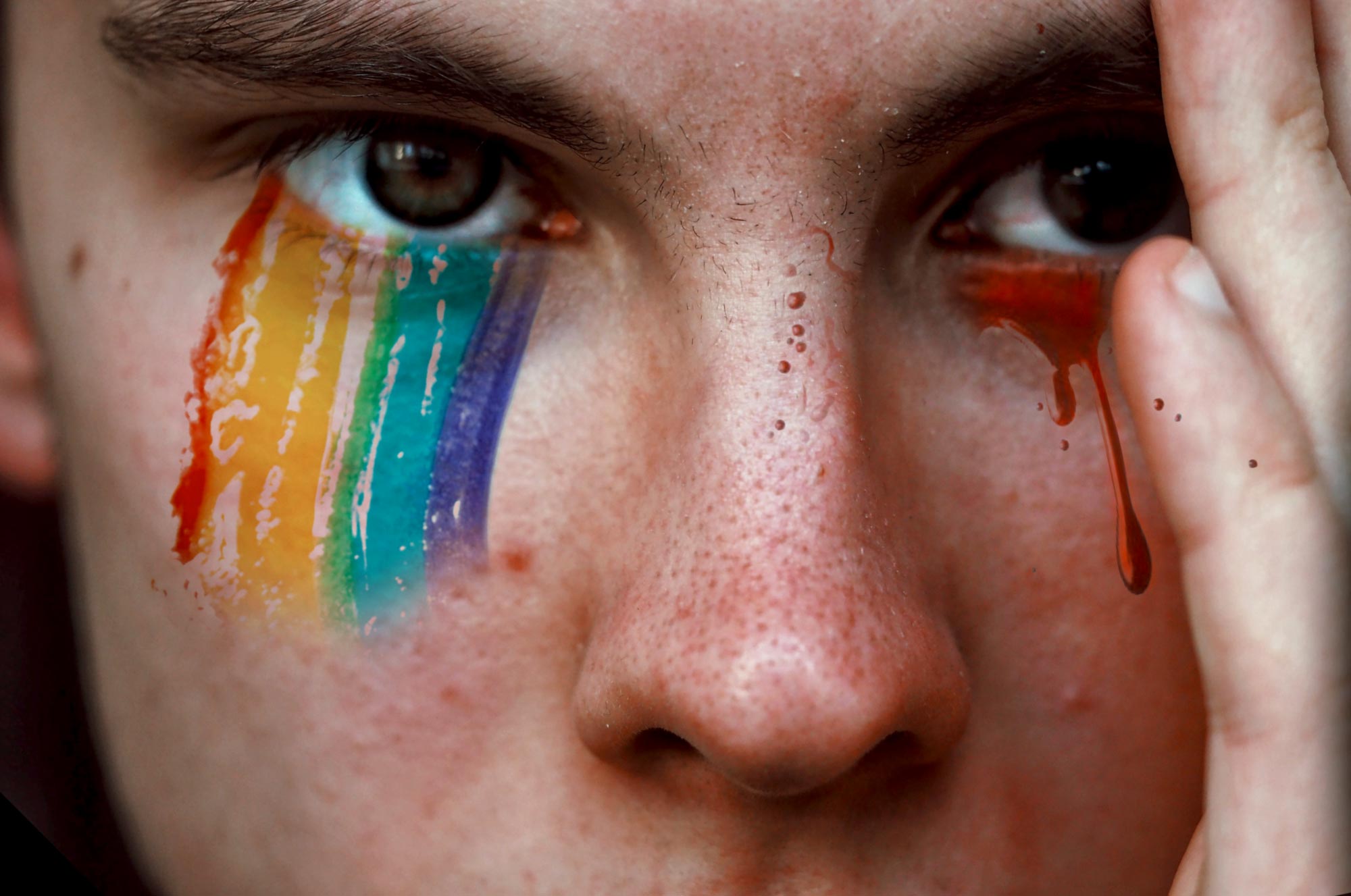
Image: Adrian Swancar
What I’m talking about here is slightly different from being in the closet, though. This answer is more about being silent in the face of things you know to be wrong—not silence in the sense of “I am silent about my own sexual orientation because I am worried people will harm me,” but in the sense of “I see people like me harming those who come out of the closet, and I’m silent about that because I don’t want those people to attack me too.” I do think those are two different situations, and in the latter, being silent to the bigotry of others does serve as assent to their bigotry.
If I as a straight person don’t stand up to homophobia, am I complicit in it? If I as a man don’t stand up to misogyny, am I complicit in it? I personally think the answer is yes.
The part about empathy is what triggered that realization, because it’s precisely empathy that makes me draw that bright line. I think that it’s easy to have empathy for the straight person who doesn’t stand up to the homophobe, because most of us identify with that person and it’s easiest to have empathy for those who are like us.
But the person who most needs empathy isn’t the straight person too scared to speak up, but the gay person being targeted in the first place.
Yes, it’s important to have empathy for the straight person who’s worried about being targeted by the bigots, because yes, bigots can and do come after those on the “side” of the disfavored group—look at, for example, American white nationalists who target Black people but also target “race traitors” they perceive as siding with Black people against their own race.
But in that particular case, who do we empathize with more? Who drives our compassion: the white person who is afraid of being branded a “race traitor” and harassed by the white nationalists, or the Black person at the receiving end of their hate?
I see that bright line not because I don’t empathize with the white guy who doesn’t want to draw attention to himself from the bigot, but because I do empathize with the person who has to live with that bigotry when nobody is willing to speak up.
Well, to start with, nobody in the world actually wants social justice.
There. I said it.
Okay, lots of people sincerely believe they want social justice; the people who say they want it aren’t lying, exactly. It’s way more complicated than that, and a lot happens between “I’d like to live in a just world” and “I am going to work to make a just world happen.”
Buckle up, this answer is gonna get loooooong.
Let’s start here: The real world is complicated. Really, really complicated. You might think getting your scanner/printer to work with Windows is complicated, but that’s peanuts compared to socioeconomic and geopolitical reality.
And people, even smart people, handle complexity poorly.
Topical case in point: What’s happening in Israel and Gaza right now.

Image: Mohammed Ibrahim
If you want to understand what’s happening, you need to know quite a lot of history from the 1940s on. There’s a lot of “there” there: the Israeli offer, turned down by the Arabic population; the reasons Egypt and Jordan closed their borders to the Palestinians; the history of Hamas, which is both a terrorist organization and also a government (and before that, the Muslim Brotherhood); the way Egypt has deliberately played the Gaza refugees as political pawns…it’s complicated and ugly and no side has totally clean hands, but even understanding where the balance lies requires a pretty thorough history lesson…
…and oh God that’s, like, sooooooo complicated, whyyyyyyy can’t someone just tell me who the good guys are and who the bad guys are?
That’s the thing: a lot of people want to treat actual, real-world political situations like football matches or WWF wrestling, with a clearly defined good guy and a clearly defined bad guy, so they know who they’re supposed to root for.
Even people who start out genuinely, sincerely interested in social justice can easily get bogged down.
That’s the heartbreaking thing about, you know, empathy and compassion. When you sincerely want to leave the world in better shape than you found it, you soon find yourself fighting an uphill battle. Injustice doesn’t exist because someone woke up one day and said “Hey! You know what? I think I’ll be a dick to other people today!”
Injustice exists because entrenched economic, social, and political systems with roots thousands of years deep have entrenched ways of doing things because the people atop those systems benefit from doing things that way.
Fighting against that is hard. It grinds you down. However energetic and idealistic you were when you started, it pulverizes you.
Nobody has infinite time. Nobody has infinite energy.
Which is fine, except that most people want to believe themselves to be one of the good guys, on the side of Truth and Righteousness and Justice, even when we don’t want to—or can’t!—do the work of getting there. It’s not enough to say “You know what? I’m not informed enough about this to have a reasonable opinion.” Oh, no, no, we want to take sides but we don’t want to invest the time or labor in making sure we pick the right side.
We just want to know who to blame.

Knowing who the bad guy is helps define us as the good guy. If we’re against the bad guy, that makes us good, right? Right?
So what do we do?
We develop heuristics. Cognitive shortcuts. Quick and dirty rules of thumb to simplify complex situations and help guide us toward the ‘right’ team to root for. These fast and easy heuristics, at least in theory, cut through all the tedious drek of having to learn all that history and become informed of the goals and grievances of all the players and untangle a knotty and nuanced tangle that’s been all balled up for decades.
But here’s the thing:
Heuristics are not subtle. They’re fast intuitive guidelines that substitute for actual understanding. They feel right, but that doesn’t mean they are right.
Those heuristics—“believe women,” “always side with the most historically oppressed,” whatever they are—gradually become rules, then social tribal markers, then symbols of moral purity. Heuristics become adopted by tribes as ways to tell the in-group from the out-group. If you see a hashtag like #believewomen, you can probably make a pretty good guess about the politics of the person who subscribes to it.
Before long, it actually becomes morally wrong not to obey the heuristics.
Enforcing moral purity becomes a way to feel powerful, to feel like you’re accomplishing something, in the face of the overwhelming hopelessness and despair that comes from fighting an entrenched system day after day and ending each day with nothing to show for it.
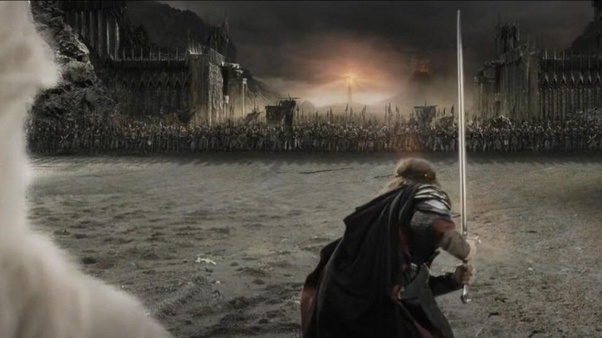
What it feels like to care about justice
Say your crusade is animal welfare, for example. You’ve fought for years and what do you have to show for it? There are even more factory farms now than when you started. Consumption of animals is up, not down.
But then let’s say Bob, your staunch and stalwart ally, your comrade in arms, reveals that he’s not a vegan…he thinks it’s okay to eat fish. And…and…and eggs. And he wears leather belts.
You can’t end factory farming, you can’t stop the senseless slaughter of animals…but hey, you can rally the troops against Bob, because he betrayed the cause! You can destroyed his reputation and cast him out! Look! Look! You accomplished something!
This is inevitably what happens in social justice circles. We end up here because:
People tend to think of “social justice” as a left thing, but this process knows no political bounds. Those on the right do it just as often—they simply don’t call it “social justice.”
But the same things still apply: they have a way they want the world to be; changing the world requires tremendous amounts of effort and work; people don’t have limitless resources; they fall back on simple rules to tell them who the good guys and bad guys are; those simple rules become tribal markers; before long, it becomes morally unacceptable even to question those simple rules.
We see the world not at it is but as we are. We invent narratives to describe the world, and to tell us who the good guys are, and who we should be in order to think of ourselves as good. Anyone who can co-opt those narratives can control the lines between Us and Them, the boundaries that define our tribes.
So here we are. We’re terrible at nuance, we don’t have tome to get informed, so we let the hashtag mentality do the work for us.

It’s hard to see your heroes die.
So James Cameron’s new Avatar movie is out, and the Internet is in a tizzy. This isn’t actually about the movie, or James Cameron, much as I love Aliens (I’ve seen it 167 times and it keeps getting more inspiring every single time I see it; I spent two years designing a sex toy based on the xenomorph facehugger…yeah, it’s like that).
But I didn’t come here to talk about the movie, or James Cameron. I came here to talk about virtue signaling, and white saviors crusading against white saviors, and offer some hot takes that will almost certainly lead to angry emails in my inbox.
Before we dive in to the rage, let me say that when I talk about “virtue signaling,” I don’t mean Virtue Signaling™, the brand that the American right uses to tarnish any display of empathy or compassion that suggests one is anything other than a complete sociopath. (I expand a little on the distinction between virtue signaling and Virtue Signaling™ over here.)
Okay, let’s do this.
James Cameron and the Synthetic Rage Machine
Back in 2009, James Cameron, of Aliens and Terminator 2 fame, made a movie called Avatar. I watched it, thought it was really good, watched it again, and then forgot about it. It’s showy but, like cotton candy, it melts quickly, leaving nothing behind.

Avatar was fluff. Fluff that was a bit problematic, with its overtones of “white hero saves the noble savages” tropes, but fluff.
However, it made more money than a televangelist with a coke habit, so it was perhaps inevitable there would be a second.
Now the second movie is here, and the liberal internetverse is aflame with acrimony, because if there’s one thing the modern-day liberal is absolutely certain of, it’s that the path to a kinder, more just, more empathic and inclusive society starts with screaming hate.
The issue, which I will confess I haven’t done hours of research about as I don’t actually have much interest in the second Avatar movie, appears to be the issue of cultural appropriation, leavened with a heaping teaspoon of white-saviorism. If you want a dive down the rabbit hole, you can find out more here and here and here and here, and good luck to you.
Predictably, the outrage spread like wildfire on Twitter, where people eager to show other people how much they supported the indigenous without, you know, actually doing anything inconvenient or costly to support the indigenous took to their keyboards:

Oh, no, wait, sorry, wrong Twitter outrage.
Ahem. The outrage spread on Twitter, where one particular Tweet was copy-pasted (not retweeted, not shared, but posted word for word) about 6,000 times, according to Google, not including posts on locked accounts. I won’t bother to link to any of them—you can find them if you want—but I will say they were even copy-pasted by people I once had genuine respect for. People I used to look up to. It’s hard to watch your heroes die.
Now, here’s the thing:
I’m not saying that Avatar isn’t problematic. I’m not telling you to see it…I’ve enjoyed not watching it, and I look forward to not watch it again. This isn’t really about Avatar at all, it’s about public masturbation.
All those thousands of copy-pasted tweets, all those people publicly proclaiming their support for indigenous people in the same way by repeating other people’s words—they’re wanking. “Look at me! Loot at me! Am I a good person now? I’m saying the right things. That makes me a good person, right? Right? Look at me!”
Virtue vs Virtue Signaling
How do you tell the difference between virtue and virtue signaling?
Virtue makes the world a better place. Virtue signaling makes you feel better about yourself.
When I look at Tweets about supporting underprivileged indigenous people by not watching a movie, I can’t help but think, “Point to the person who has a better life because you didn’t watch this movie. Point to a tangible improvement in someone’s quality of life because you didn’t watch this movie. Point to the hungry person who was fed because you didn’t watch this movie. Point to the village that had no water but now has a new well because you didn’t watch this movie. Point to the sick child that now has medical care because you didn’t watch this movie.”
What? What’s that you say? Speak up. A little louder, please, I can’t hear you.
Oh, really? You didn’t actually improve anyone’s life? You just…didn’t watch a movie? That’s…that’s it?
Then shut the fuck up. You’re not supporting anyone. You’re showing off for the other people in your social set.
See, I could understand respecting someone who said “You know what, this movie has problematic aspects. An average theater ticket costs $15. Instead of watching it, why don’t you take that $15 and donate it to this particular fund that serves this particular underprivileged community in this particular way.”
If you do that, at least you’re actually benefitting someone besides yourself, even if it’s only in a small way. You’re actually, you know, making a tiny change in the world.
But if you’re not willing to do that? You’re showing off. Your “virtue” is empty, pretentious posing, benefitting nobody but you, a way for you to brag to people in your peer group without actually expending anything more than the barest minimum effort. You copy-pasted a sentence into Twitter! Ooh, you’re so courageous, posturing to win praise from your friends. Looking at you, making a difference in the world.
Paving the Way to a Better World
It doesn’t have to be this way.
The thing I like about my fellow progressives is that we—well, most of us, anyway—do sincerely want the world to be better tomorrow than it is today. We do genuinely want to live in a world that is more egalitarian, more open, more honest, more compassionate, more fair.
No matter how many “this is the world the Liberals want” memes the alt-right makes.
But too many progressives want something else more than we want a better world: We want to know where the lines are between Us and Them. Why? Because we want—indeed, need—to feel superior to someone. The most right-wing, hardcore Evangelical Baptist has nothing on an average urban progressive when it comes to sanctimony.
(Side note here: the irony of white men riding in to save the day against white saviors by copy-pasting Tweets, rather than, you know, actually saving anyone…well, if there were a Nobel Prize for Irony, I’m not saying it would win, but it would definitely be a contender.)
Tim Minchin put this superbly:
It cannot, it cannot be okay if the intention of progressives—which I assume it is—is progress forward into a future of more empathy and understanding for more people, it cannot be that the primary mechanism by which we’re going to make that progress is the suppression of empathy and understanding for anyone who doesn’t align with our beliefs. It cannot be that unmitigated expression of furious outrage will somehow alchemize into a future of peace and love.
If you want the world to be better when you wake tomorrow than it was when you woke today, but you want to bask in the warm glow of your own righteousness while you make empty gestures of great vengeance and furious anger those who dare tread too close to the line between Us and Them even more…
You.
Are.
Part.
Of.
The.
Problem.
The next time you sit down at your computer to blast evil from the comfort and safety of your keyboard, you brave and noble cultural warrior, you, but you cannot point to a single person whose cause you champion who actually ends up tangibly better off for it…mmmaybe don’t, okay?
Merry Christmas. May 2023 bring you less virtue signaling and more virtue.
Even if real virtue is harder.