Adventures in Europe, Chapter 7: My hat, it has three corners…

With all the noodling about we did at one of Peter the Great’s many winter palaces, I realized that I knew him half as well as I should like, and I disliked him less than half as well as he deserved. Monomaniacal thirst for unlimited power aside, he was actually quite a fun-loving guy, in a sort of bloodthirsty, “I’m a raving psycho who does pretty much whatever I want to do all the time” kind of way.

Our tour guide with the ear-bending name told us the story of the Punishment Flask he kept handy at all state dinners, for example. We got to get a look at it; a large, ornate crystal decanter which Peter kept filled with vodka. Apparently, or so the story goes, the last person to arrive at any state dinner, be it one of his generals or the visiting King of Prussia, would be made to drink all the vodka in the flask at one gulp.

So, yeah. Take a frat boy and give him limitless resources, and you get Peter the Great.

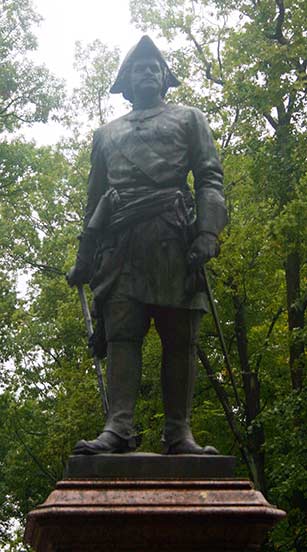
There is a statue of the man in the gardens of the first Winter Palace we visited, and I must say, I was quite astonished when I saw it.

Those of you who have a military background and are reading this will no doubt spot one small but nevertheless surprising detail on this statue: Peter the Great has a hat that sucks.

His hat is lame. Totally, thoroughly, irredeemably lame.

Now, given the Law of Military Hats I talked about earlier, you would expect this to mean that Peter’s military adventures would be more suitable as subject matter for Looney Tunes cartoons than for history books.

And you’d partly be right. His early experiments in military adventurism against the Ottoman Empire mostly resulted in him getting his spleen handed to him on the end of a fork. A finely-wrought, richly decorated fork, adorned with elaborate and intricate calligraphy reading, in Turkish, “Suck on that, you silly-hatted bastard!”

But Peter discovered a loophole in the Law of Military Hats, which would forever rewrite the history of the world and which would hold out a beacon of hope for other similarly unfortunately-hatted monomaniacal dictators for decades after his death.

When he returned, minus his spleen, from his defeat at the hands of the Ottomans, he set about building a huge navy, the better to sail against the Swedes, who at the time controlled the Baltic Sea and all the trade therein, largely on the basis of shooting at anyone sailing across it who they didn’t like.

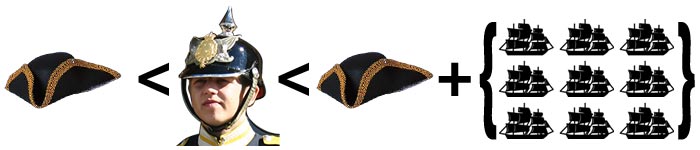
And it worked. As it turns out, a silly hat plus a huge naval armada beats a scary hat. Mathematically, it looks something like this:

Armed with this secret knowledge, Peter and his huge naval armada sailed into battle against the Swedes, well-equipped to hand those Swedish bastards their spleens on forks–a strategy refined by the Ottomans but perfected by Peter with the invention of the three-tined serving fork.

The ruler of Sweden at the time, Charles XII, refused to accept the notion that he could be de-spleened by a man with so silly a hat, and despite getting his ass kicked by Peter and his huge naval armada, kept on fighting until he himself was killed in battle. His people said “whoa, dude, we totally didn’t see that coming!” and conceded that Peter had in fact got the best of him, hat notwithstanding.

Once done, Peter turned his attention to matters of state, such as building great big gold statues of burly half-naked men with rippling muscles who gushed copious amounts of fluids from somewhere around their waists.

Peter the Great had problems.

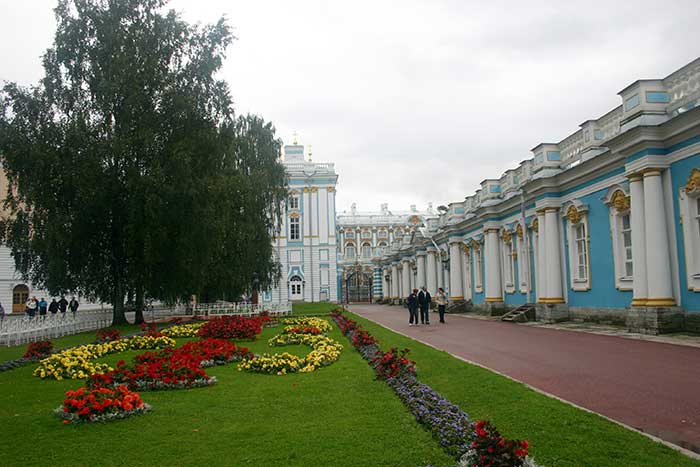
We didn’t actually go inside the palace proper, or the palace improper either. Instead, we wandered around the grounds for a while, making snarky comments about Peter’s issues and marveling at the naked women with the strangely-shaped breasts, until our transportation arrived to take us back across the bay.

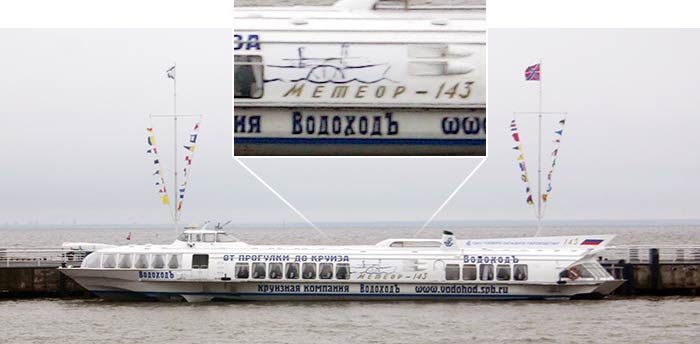
And what transportation it was! The heart of the eight-year-old that lives in my chest sang in joy when I realized we would be riding on…

…a hydrofoil! A real, honest-to-God, motherfucking hydrofoil!

Hydrofoils are cool. Take a normal boat, put it on skis, and when the boat starts going fast enough it lifts right up out of the water like some kind of ultra-cool science-fiction boat on motherfucking skis.

I was a bit perplexed, I will admit, by the drawing of the paddlewheel boat on the side of our hydrofoil. When you get right down to it, a paddlewheel boat is, technologically speaking, about as far as it’s possible to be from a hydrofoil while still being in the general class of “self-propelled things that float.” It’s a bit disconcerting, like stepping into an F-22 Raptor and finding a drawing of the Wright Brother’s plane on the instrumentation.

There are good reasons for hydrofoils, and I’m honestly a bit perplexed we don’t use them more often. When you are in a thing that floats, whatever it might be, your success at moving the things that floats through the stuff it’s floating in depends on two factors: the stickiness of what you’re floating in, and its density.

Below a certain speed, the viscosity of the stuff you’re floating in rules the math. The more viscous it is, the more energy you have to exert to push the thing you’re floating in through it. This is a constant factor for any stuff you’re floating in, and short of leaving and putting your thing that floats into a different stuff, you’re stuck with it. So you make your thing that floats as smooth as possible, to try to minimize the friction from the stuff you’re floating in.

Above a certain speed, though, the density of the stuff you’re floating in becomes more of a factor, because in order to get your thing that floats through the stuff you’re floating in, you have to shove the stuff you’re floating in out of the way. The faster you move, the faster you have to shove the stuff you’re floating in out of the way. Eventually, you reach a point where adding more and more horsepower to the thing you’re floating in doesn’t actually make you go any faster; it just makes a bigger bow wave in front of you, caused by the limitation in the rate at which you can shove the stuff you’re floating in out of the way.

Hydrofoils solve that problem by lifting the boat right up out of the water, so the boat displaces very little of it and there’s almost nothing that you need to shove out of your way. Because of this, they’re fast. However, unlike racing boats, which just naturally have a very shallow draft, they’re also stable. The skis-and-stilts arrangement prevents the boat from ending up head over teakettles whenever they encounter the slightest ripple, so they work well in calm seas or in rough seas. And did I mention they’re fast?

Anyway, back to the story.

I was even more excited by the prospect of riding in a hydrofoil than I was by the prospect of looking at a bunch of statues of naked women with odd breasts. I really do have the heart of an eight-year-old sometimes.

We sat down and pulled away, and the whole time I was thinking “Wow, these things are supposed to be fast, this is going to be so much fun!” So it was with some disappointment that I noticed, as we left the dock, that we really didn’t seem to be moving with any alacrity at all.

I remember thinking, just before I turned to look out the window, something along the lines of “Well, maybe the captain’s going to wait ’til we get farther out into the bay before he opens it holy mother of God!” And that was the weirdest part of the ride.

In a normal boat, you see, when you’re going fast you feel it. The boat jerks and bounces and heaves itself up out of the water, and you can tell you’re hauling ass.

Being in a hydrofoil doesn’t feel at all like being in a normal boat. There’s little sensation of speed at all. You get none of the bump-and-fall of a more conventional boat; instead, it feels a bit like being in a large passenger jet that’s encountered some very, very mild turbulence, just enough to make your coffee move a bit in your cup. And this despite the fact that we were hauling ass like Captain Kirk chasing some half-dressed Orion slave girl with green skin.

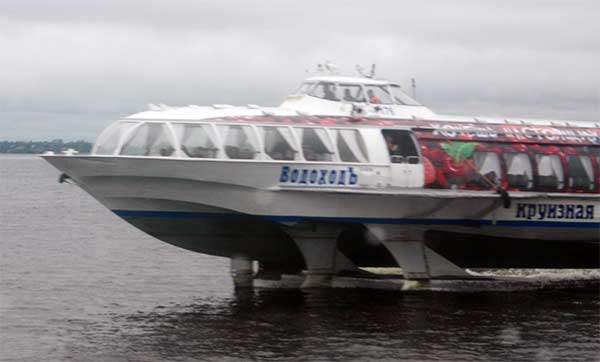
Another hydrofoil came whipping by us at about warp nine jillion or so, and I barely had time to snap a pic as it flew by:

And one of the most utterly bizarre things about it all was that even when we shot by a tugboat faster than Dick Cheney chasing an accidentally dropped quarter, we left no wake at all.

The whole experience was inspiring in the way that I’ve never quite experienced before. I came away from the winter palace of Peterhof with a feeling that when I grow up, I want to be a monomaniacal dictator with an insatiable thirst for power, just so that I can have a hydrofoil of my own.

And, y’now, spray people with spurts of liquid ejected from…err, never mind.

Adventures in Europe, Chapter 6: In Soviet Russia, vacation has YOU!

I’ve never been to Eastern Europe before. I’ve also never run naked through a plate-glass window before either, or been dragged behind a motorcycle through thumbtacks and rubbing alcohol either. Had you asked me, say, five or ten years ago, I’d have said that any of those options looked about equally appealing–and, to be honest, equally likely.

So it was with a considerable sense of irony that I approached Russian passport control in St. Petersburg, our next port of call after the Note From zaiah That Broke My Sister’s Brain incident, with my American passport in hand. He who laughs last, laughs all the way to the politburo, or something like that.

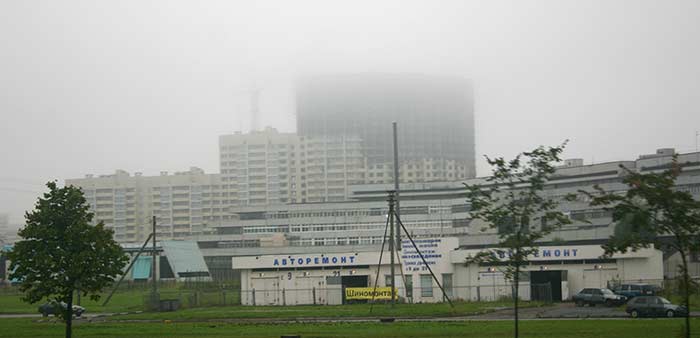
My first impression of St. Petersburg outside passport control was about what I expected the former Eastern bloc to look like: nondescript concrete apartment buildings, still under construction, shrouded in gray fog.

I was surprised to find the rest of St. Petersburg was quite colorful and lively. We had a tour guide whose name I didn’t catch either time she said it, who was actually quite a cutie, and tended to wear very American clothes. Including, at one point, a jacket with “Washington State” printed on it.
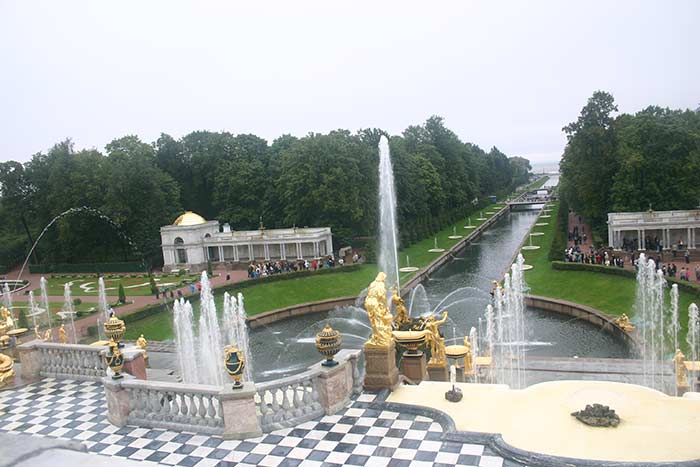
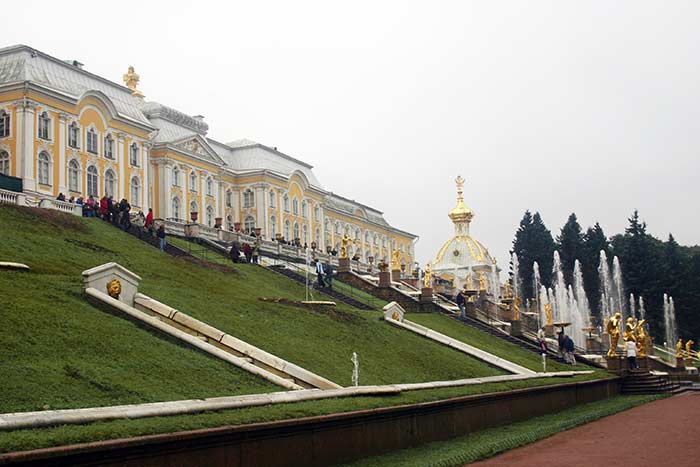
St. Petersburg is not technically named after Peter the Great, even though he founded the city. Apparently, or so the story goes, that level of arrogance would not have been accepted by the Russian people, a proud (but not that proud) folk who valued the principles of humility, modesty, and monomaniacal lust for power in a leader. It would not be until the Bolshevik Revolution that the Russian character would be tempered sufficiently for a city named directly after a political figure, which is why St. Petersburg would later be renamed Leningrad, before everyone realized what an astonishingly colossal douchenozzle Lenin actually was and changed its name back again.

All of this was explained to us, minus the word “douchenozzle,” by our tour guide of the unpronounceable Russian name. We zipped out into the city in the back of a Ford SUV, which fact by itself says almost all you really need to know about the fucked-up geopolitics of the dying days of the twentieth century. Once the many names of St. Petersburg had been illuminated with a harsh white light, we set out on our way to find out how Peter the Great (whose name only coincidentally happened to share a passing similarity with that of the saint of the saint he chose to name the city after, just so that’s perfectly well understood) actually lived.

The answer, as it turned out, was “rather like a fraternity brother with unlimited wealth and unlimited power, and more than a few…confusions about his sexual identity.”

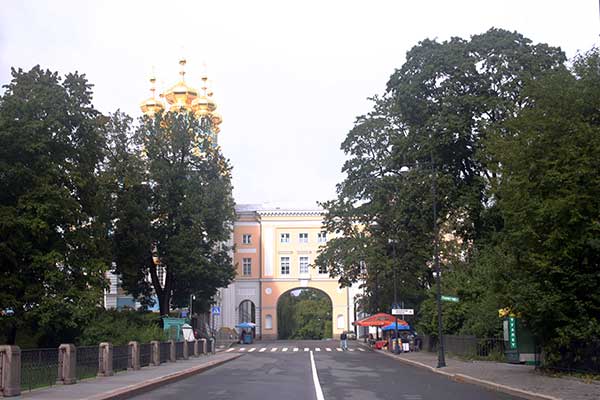
Our driver, Igor, drove us through the streets of St. Petersburg past Stalin-era office buildings toward the old Winter Palace of Peter the Great.

Or perhaps I should say, toward a Winter Palace of Peter the Great. He had several, you see. When he got bored with one, he built another, and it should probably be mentioned here that Peter the Great appeared to have a case of attention deficit disorder that gave him the attention span of a lightning bolt, at least with respect to residences. It’s remarkably easy, as it turns out, to build a whole bunch of palaces when you have 200,000 slaves to do your construction work for you.

Anyway, the particular Winter Palace we visited was situated on the Gulf of Finland, which is basically a cold body of water that points more or less toward Sweden. According to our guide, building a palace on the water’s edge was Peter’s way of thumbing his nose at the Swedes, with whom he’d fought a war or something.

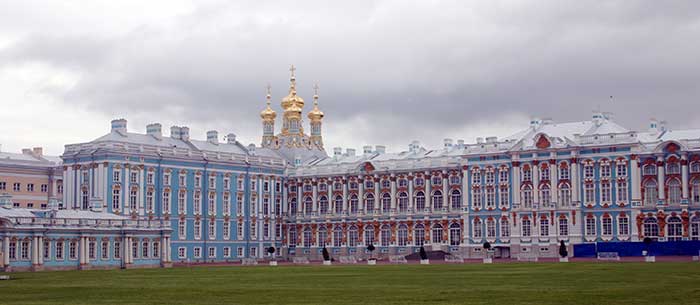
And what a palace it was. The Swedes may keep a stockpile of ostentation in reserve at the carefully-guarded Royal Palace in Stockholm, but Peter put his ostentation everywhere.

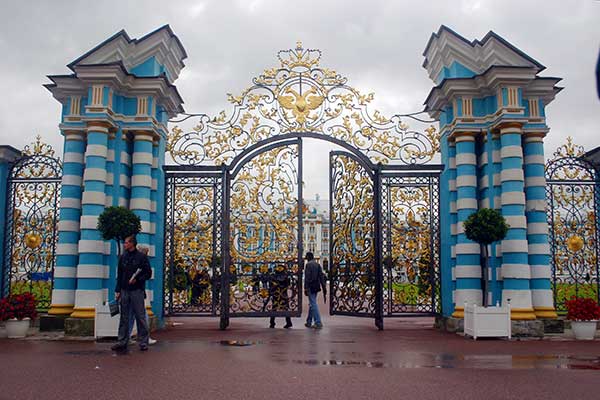
When we got out of the SUV and rounded the corner, through the gates and down a hill, I wasn’t quite prepared for the sort of ostentation that leaped out from behind a nondescript bit of wall and ambushed me like a strung-out mugger trying to carve a name for himself on the cold Russian streets armed only with an attitude, a bag of lead shot, and a strategic stockpile of ostentation that’d give Liberace a stroke.

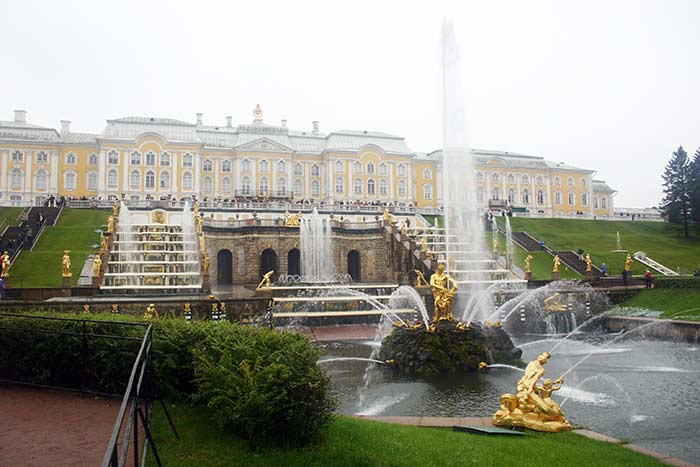
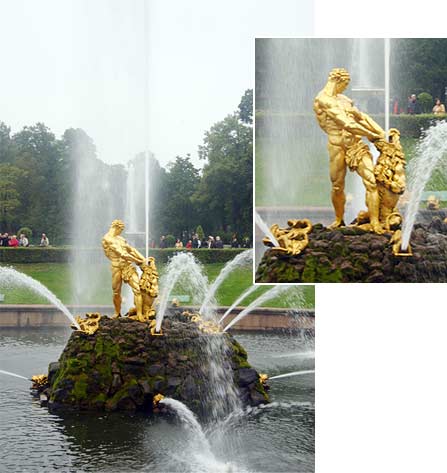
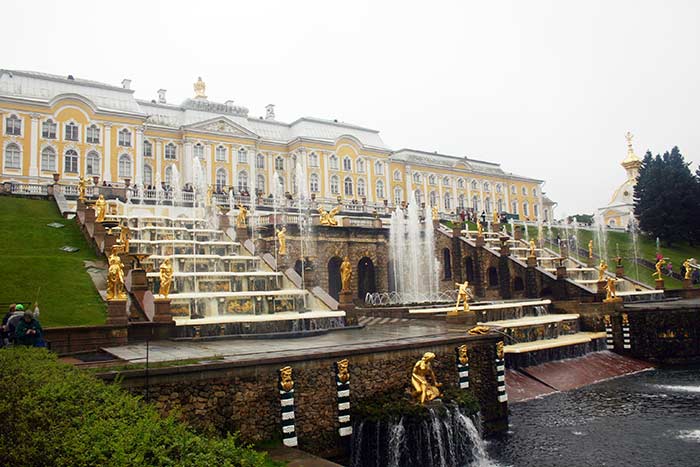
This is what you see when you walk around the main building and then stop. Which you will, when your brain figures out what your eyes are telling it.

Yes, it’s real gold. The statues, nearly all of which spurt a constant spray of water forty feet in the air, are covered with it.

The roof of the building is covered with it. The architectural detailing is trimmed in it. Hell, the wildlife wandering the palace grounds is plated in gold. The squirrels shit little droppings gilded in gold.

There are worse jobs than being a groundskeeper here.

And this isn’t really even the full effect. As you move around, the ostentation runs up to you on quick little cat’s feet and punches you in the eyes.

Our buddy Peter had an obsession with huge, larger-than-life statues of mostly naked men with bulging muscles and rippling sinew, performing manly feats of manliness. He also had an equally consuming obsession with fountains that spurt–nay, gush–huge pulsing jets of water high into the air.

Yeah, it’s like that.

And what statues they are, too. Husky, well-built men, reaching down with powerful hands to pull hard at the jaws of fearsome monsters, from whence issue great spurts of frothy white water, in wet spurts of testament to their manly manliness:

It goes without saying, I think, that Peter the Great had problems. Though in his defense, you might too, if you were named after male genitalia.

The fountain above, our lovely guide explained, was a symbolic reference to Peter’s wartime victories over the Swedes. The strapping and virile man of the muscles and sinew represents the Russian nation; the lion represents the Swedish nation; and the huge jet of water coming out of the lion’s mouth represents Peter the Great’s penis. Or something.

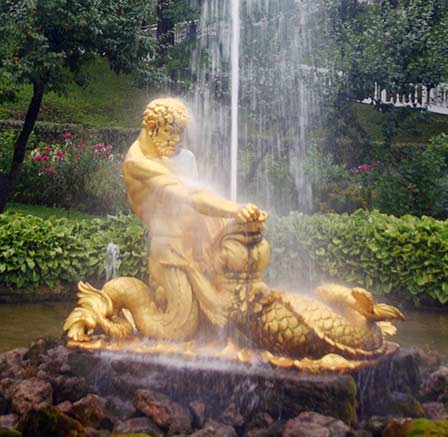
This same general motif carries through most of the fountains, like this one here:

This particular statue, in which a perhaps bit over-muscled sea god tears open the jaws of a sea monster, is symbolic of Russia’s naval victories over Sweden. The surrealistically buff sea god represents Russia, you see; the sea monster stands for Sweden; and the jet of water represents…well, you get the idea.

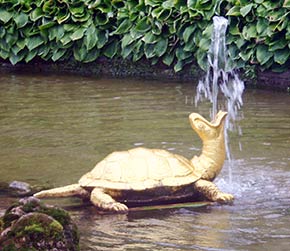
As for this one:

…well, I’m not quite sure what the turtle represents. But the way its suspiciously elongnated neck spouts a frothy jet of water, I think it’s safe to say that it probably stands for…

Yeah, did I mention Peter the Great had problems?

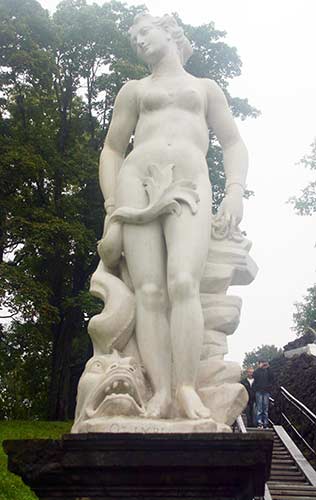
Now, to be fair, not every single statue on the grounds was of a strapping man who spent way too much time at the gym or engaged in combat that caused water to spurt from somewhere down around waist level. There were, in fact, a handful of statues of the fairer sex, in similar states of undress.

Though I couldn’t help but notice something very odd about them.

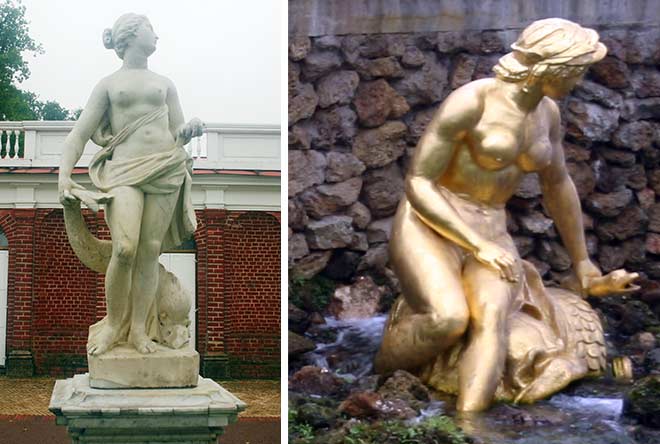
All the statues of women, and I do mean all of them, have the same breasts. And they don’t look quite natural, if you get my drift.

Now, I am aware that breasts come in all shapes and sizes, and I have seen some remarkable breasts in my life. Breasts to cause temperatures to rise and trousers to fall. Breasts to make the Pope kick a hole in a cinder-block wall. And I say this as objectively as any person really can, as I’m not even that much of a breast man.

But I have never in all my days seen breasts shaped quite like that. Yet all the naked statues of women I encountered on my entire time in Eastern Europe–and believe me, there are lots of naked statues of women in Eastern Europe, as I will probably talk about in another installment of this travelogue–have the exact same breasts.

The artists seem to quite like this particular mammarian architecture. Not only are all of the statues of naked women in Eastern Europe cut from the same cloth, chesticularly speaking, but they often seem to wear similar expressions, as if to say “Why yes, they are that magnificent, and thank you very much.”

Which is all more than a little weird, and maybe just the slightest bit creepy. Just a smidge, you understand.

Even the bizarre mutated deep-sea lifeforms that swam the depths of Peter’s fevered imagination would seem to agree. Take a look at this fishy fellow, who might have just swum from some Cthluhu-inspired undersea lair to swallow the souls of the mortal, had he not been struck down by the chesticular magnificence of our young lady of stone here:

“Indeed they are, ma’am. Now watch, as I cover your delicate flower of womanhood with my wet and slimy tail, the better to…”

Okay, I admit it, I got nothing.

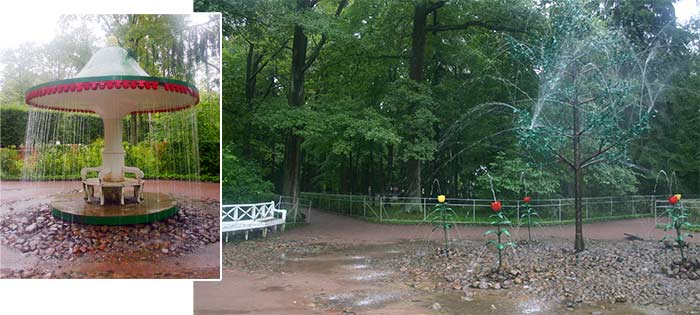
Ahem. Anyway, back to fountains. It seems Peter the Great’s obsession extended beyond plumes of water pumping high into the air. He was also quite fond, evidently, of seeing jets of water gushing all over his guests. And, in classic frat-boy-with-unlimited-wealth-and-power style, he planted booby traps throughout his fountain gardens just so he could spray all over unsuspecting people.

The fountain on the left is pretty straightforward. Normally, the water is off; there’s no sign this is actually a fountain. However, when an unsuspecting mark–say, one of his mistresses, or the visiting King of Prussia–sits on the fountain, water starts spraying from all around the edge of the umbrella…and it doesn’t stop when the unfortunate mark stand back up.

The one on the right is tricksier. It’s a metal sculpture that looks like a stylized tree that shoots water. Pretty, huh? Now, see that little cobblestone pathway on the left-hand side? Some of those cobblestones are rigged. When a mark steps on a rigged cobblestone, water jets hidden beneath the edge of the little white benches there start spraying all and sundry in the area with powerful blasts of cold water. (Some tourists set it off while they were waking along the path. Great fun.)

It bears repeating, I think, that Peter the Great had problems.

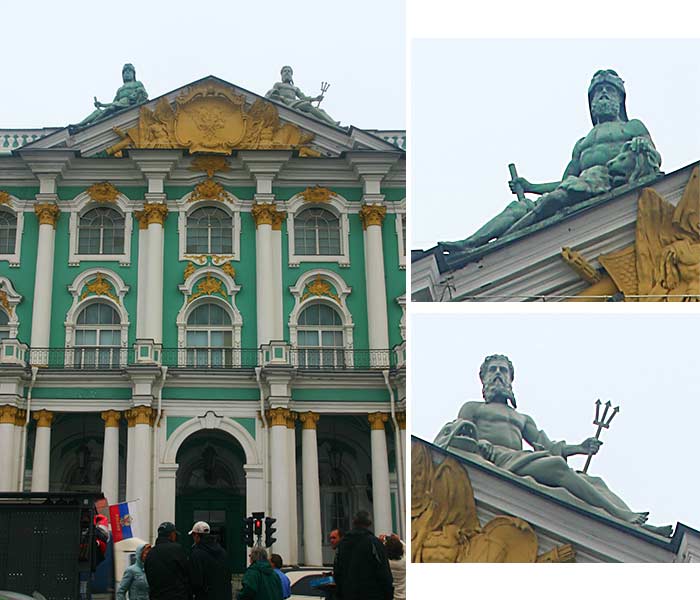
Peter the Great really loved his navy, by which I mean he really loved his penis. This statue of the sea god Neptune occupied a prominent place near the guest quarters:

The statue, according to our tour guide, represents Russia’s naval might. The long, stiff, hard trident he holds firmly in his hand represents…

I can’t. It’s too easy. At this point, I’m shooting fish in a…never mind. Let’s just call the whole thing off.

Adventures in Europe, Chapter 5: But if it’s made of steel, how do it float?

I was sad to bid goodbye to Stockholm, that beautiful if inconvenient jewel of the North, where nuclear-powered icebreakers are required just to get in to the office for three months out of the year.

Our next port of call was Helsinki, which doesn’t have a syndrome named after it, in Finland, which does. Finland, the place where you need a nuclear-powered icebreaker just to get from your kitchen to your living room for eleven months out of the year, is known mainly for being the Soviet bloc’s answer to Canada. It’s a wintery nation covered mostly in snow and ice, politically married to its powerful neighbor on account of ’cause when your only exports are hockey, ice weasel pelts, and rhinovirus, dissing the superpower to your south is economic, and possibly literal, suicide.

I didn’t get off the ship in Finland, owing to an unfortunate early-morning mixup with the tour plan. For some reason, I thought we were going on the Finlandization tour, where Princess Cruise Line passengers are forced into close proximity to a Disney Cruise Lines ship and tacitly threatened with military invasion if they don’t switch their allegiances. My parents thought they were going on the Helsinki tour. It turns out they were right, on account of cause there is no Finlandization tour.

So I took advantage of my unexpected day aboard ship to make some self-portraits for zaiah back at home. No, you can’t see them.

About this time, and possibly as a result of exposure to Finland’s ice weasels, a norovirus scare swept through the ship. Noroviruses are a family of extremely contagious viruses that cause all sorts of unpleasant gastrointestinal distress, and apparently, when it happens on a ship it is A Big Deal.

So the captain made several announcements throughout the day that anyone who felt ill should call the ship’s medical officer at once.

Now, I don’t know what exactly the poor sots who felt ill expected would happen if they called the ship’s medical officer. In fact, I didn’t know myself what would happen to a poor sot who called the ship’s medical officer. Turns out that what happened to these luckless souls, of whom I thankfully did not number myself, was right out of that one movie where the CDC comes and barricades all those people who have contracted the zombie plague in that one building, and they spent the rest of the movie killing each other or being eaten by zombies or something, only without the zombies.

Seriously. People showing symptoms ended up being quarantined in their rooms for the duration of the cruise. Like, as in “not allowed to leave” quarantined. I have no idea if they got refunds on the cruise or not. I imagine the vacation pictures were frightfully dull.

Though I could be wrong about that, I suppose. zaiah quite liked the pictures I sent her from my stateroom while I was aboard. So you never know.


The following day was spent at sea, as shipgoing folks say. To break up the monotony of a day spent at sea, which I rather thought was the whole point of a cruise in the first place, the crew declared that that evening would be a formal evening, with all the passengers expected to dress in suits and ties and such for the evening’s mediocre meal.

Did I mention the food? You’re always supposed to talk about the food when you talk about a cruise. It’s in the requirements. Section 117, paragraph 9, subparagraph 3. Cruise line operators have perfected the fascinating and arcane art of taking food that sounds heavenly and making it taste like something you’d get at a high school cafeteria. It’s incredible! I don’t know how they do it.

So anyway, I’d been warned of this possibility in advance, and I had in fact brought a suit.

To be fair, I didn’t actually bring it because I was looking forward to eating institutional food while wearing it. That was only the excuse. The real reason I brought it was to see how seinneann_ceoil looked in it. The answer, as I had suspected, was “quite ravishing.” I even have proof!

Note: What lies beneath this link may not be safe for work. Click here at your own risk.

We interrupt this stream of vacation posts…

…for a bit of very funny, very clever pro-rationality ranting disguised as beat poetry. joreth and the rest of the Squiggle, this one’s for you!

Adventures in Europe, Chapter 4: More Stockholm for Your Syndrome

Stockholm is a picturesque city.

The Old Town district/island is filled with narrow, picturesque cobblestone streets lined with picturesque buildings under a picturesque sky. Seriously, it’s so picturesque you could take a picture of it. An actual, literal picturesque picture.

These picturesque streets all lead to the town center, Storatorget. The Old Square is about as picturesque as you can get, what with its beautiful old fountain and its charming, colorful old buildings and such.

The place is steeped in history, pigeon droppings, and blood. Back in the early 1500s, one of Sweden’s leaders, Christin II (or “Christin the Raving Psycho,” as his followers affectionately called him), decided this very town square would be just the place to take all of his political opponents and chop off their heads. The picturesque roads ran with the picturesque blood of his picturesque fallen enemies, whose picturesque entrails were left scattered about the picturesque square as a warning to others. Ah, those whacky countries with their whacky royalty and their whacky mass-executions-in-the-town-square ways!

Today, it’s a good place to stop for a sandwich.

It’s flanked on one side by the imposing facade of the Nobel Museum, dedicated to celebrating over a century of achievement in medicine, peace, physics, chemistry, literature, economics, and irony. (Little known fact: Henry Kissenger is the only person ever to win a Nobel Prize twice in the same year, when he won the Nobel Peace Prize in 1973 for his work on helping to keep the war in Viet Nam alive, and the Nobel Prize in Irony that same year for winning the Nobel Peace Prize.)

The Nobel Prize itself is named after the man who went down in history as being the man who didn’t want to go down in history as an arms dealer who invented dynamite and smokeless gunpowder, so decided after he was dead to leave his money, which he himself no longer had any use for, to establish a series of prizes for people whose work most benefitted mankind each year and Henry Kissenger.

After this part of the tour, which as per usual didn’t involve actually going into the Nobel Museum, we hopped a boat for the water portion of the tour. Our tour group broke up at this point, with those who had opted for the Stockholm Syndrome package being hit over the back of the head and tossed into the back of a nondescript Chevy panel van, and the rest of us herding into a tour boat.

Stockholm from the water is an interesting blend of old and new, with bland apartment buildings across the water from ancient palaces that serve as monuments to decadence that would make Larry Ellison blush.

From the water, we passed by the Riddersholm Church, about which I can find very little. It appears to be an ancient church with a long, hard iron steeple thrusting proudly into the sky to symbolize the grandeur of God. And also the architect’s penis.

Stockholm is ringed with locks, which are used to manage the flow of water into the sea. I’d never actually passed though a lock before, and it was all very exciting. One minute we were at sea level, and the next, thanks to the miracle of modern technology, we were fourteen feet above it.

When the locks were first built, a small but vocal group of people opposed this new technology. They were concerned that the engineers and ironsmiths were playing God, tampering with nature by changing the level of water to suit their own whims; and they were worried that if the engineers made a mistake, they might accidentally create an unstoppable army of giant mechanized killer robots, who would travel through the lands in an orgy of death and destruction. Today, the descendants of those same people say something similar about genetically modified food.

While we were passing through the lock, this kindly old gentleman stood on the bank catching fish:

It had never occurred to me that a lock might be a good place to fish, but apparently it’s as easy as catching fish in…well, in a large walled chamber with movable gates in the front and back that let fish in but don’t let them back out very easily.

Before we returned to our floating hotel, we passed by the home of the American ambassador to Sweden.

The American ambassador to Sweden presides over such important official duties as “attending parties,” “attending state functions,” “telling the Crown Princess that she looks good in that hat,” and “drinking brandy.” In exchange for four years of selfless service to his country under such harsh and grueling conditions–a job for which he must be eminently qualified, and own a tuxedo–he spends his off-duty time here, in quiet contemplation of the money he spent and the palms he greased to attain his position, where he can use his not inconsiderable talents toward the betterment of his fellow man. Much like Henry Kissenger.

Adventures in Europe, Chapter 3: Stockholm

The day after it departed, our enormous floating hotel and overpriced shopping mall cruise ship pulled into port in Stockholm, Sweden.

I say “pulled into port,” but the reality is closer to “crawled slowly into port with the gingerness of an 18-year-old virgin undressing a girl for the very first time, halfway expecting to find a bear trap underneath her bra strap.”

My parents decided to take one of the ship’s many shore excursion packages. We debated for a while which package to buy–the Stockholm Old Town Tour, the Stockholm Water Excursion, the Stockholm Syndrome Tour. I voted for the last one; everyone else who had been on it really seemed to like it. (One reviewer said “After taking this tour, I fell in love with Stockholm, but I don’t know why!”) My parents didn’t listen to me, though–they felt that if I wanted to be drugged, bound, and thrown into the back of a van, I could do that when we got to Russia.

We ended up doing the Old Town tour. Stockholm is splattered across several islands; Old Town is the central island, where past royalty built their palaces, plotted coups, and lost wars.

The bus disgorged us in front of the Storkyrkan, an ancient Protestant church right across the street from the royal palace.

Our tour guide was very, very enthusiastic about the Storkyrkan. You see, the Storkyrkan is the place where the Swedish crown princess had just got married. And the Swedish crown princess’s wedding was a very beautiful thing, you see, and the whole country was just absolutely delighted that Parliament had agreed after eight years of courtship to give her the go-ahead to marry her beloved personal trainer, you see, and when they got married in the church it was on TV, you see, and there were all these flowers, and…

Now, personally, she seemed just a little too enthusiastic about it all to me, like maybe she needed to adjust her Ritalin dosage a bit. I’m not suggesting that it wasn’t a gorgeous ceremony, mind, but frankly, getting that invested in someone else’s marriage seems more than a bit…weird to me. You see.

Of course, needing to have an act of Parliament in order to get hitched also seems a bit weird to me, so what do I know. Ah, those whacky countries with their whacky royalty!

Her enthusiasm for the Storkyrkan didn’t extend to actually taking us inside. We did, however, get to see this statue outside of it:

The statue celebrates the victory of St. George over the Dragon, where “St. George” was apparently some mercenary who came into Sweden to champion the causes of Truth, Justice, and Lutheranism, and the Dragon was the Catholic Church. It’s all very complicated, but apparently some dude rode into town and offered to help Sweden fight in some battle or other if they would in exchange agree to worship some invisible guy the way he wanted them to instead of the way some other dude wanted them to, and they said OK, and he did, and he won, and they all converted to his invisible-dude-worshipping ways, and they put up a statue filled with symbolic imagery, which they then spoiled by explaining it at great length to any tourist who will listen. Or something.

So yeah. Dude hitting a dragon, which represents the Catholic Church, from the back of his horse, which represents the Power of Truth, with his sword, which represents his penis.

The statue is a stone’s throw from the Royal Palace itself. Not that I would recommend throwing stones at it, seeing as how it’s guarded at all times by an ever-rotating contingent of palace guards drawn from all branches of Sweden’s formidable military.

This guy was on duty when we passed through the gates:

I know some of the folks who read my blog have a military background. You guys will recognize instantly that the formidable headgear this guy is wearing sends a clear and unmistakable message: this is a man with whom you should not fuck.

For those of you unversed in the military arts, almost the entire history of military endeavors comes down to hats. Throughout history, armies have poured vast resources into researching and developing the hat. The hat is how you can tell the power of an army. Armies with cool headgear almost invariably triumph over armies with less cool headgear. Spikes, buckles, shields, feather dusters, and all sorts of other accoutrements have been used throughout history to send clear messages to the opposition: Our hats are far more grandiose than yours. Prepare for annihilation.

The history of the West looks something like this:

So it is clear, even to a casual observer, that this guard is someone you simply don’t mess with, unless you wish to dine upon your own spleen forthwith.

Now, about the Royal Palace.

I have no pictures of the inside of the Royal Palace. Photography is strictly forbidden within the Palace, for reasons of national security. I can’t tell you what I saw, but I can tell you that there is some serious, weapons-grade ostentation in there. The Royal Palace is the Swedish national stockpile of ostentation. How much? Well, the OUTSIDE of the Royal Palace has waterfalls built into every corner, and gold-plated engraving in the stone:

Once you get within those walls, we are talking about a level of ostentation that induces heart arrhythmia in the very young or the very old. We’re talking about ostentation the likes of which a mere grasshopper like Lady Gaga can scarcely even begin to comprehend.

We’re talking about gold inlays in the doorjambs and frescoes on the ceilings. We’re talking about marble hand-quarried from the deepest forests of Brazil by nude young maidens between the ages of 18 and 24 (inclusive) who come from all-female tribes of bellydancers and who have never known the touch of a man. We’re talking about dining rooms that could swallow up a 747 and fart out half a dozen Piper Cubs. We’re talking about bedrooms where one could comfortably host a game of rugby, with enough room on the sidelines for three Roman orgies, a military procession, and the entire team of Budweiser Clydesdales.

Today, the Royal Palace is a museum. And one of the residences of the royal family. And the place where official ceremonies and receptions are held. And the site of the annual Nobel dinner. And the official meeting place of the heads of state. And a site for public lectures. And a ballroom. And state apartments for visiting dignitaries. And another museum. At the same time. And you thought Graceland was over the top.

The palace is divided into sections, with the western part representing the king and the eastern part representing the queen. The king and queen, each accompanied by the Royal Academy of Spelunkers, could wander for years in this place without ever once crossing paths–making it by far the most successful example in Western history of how the artifice of the royal architect is instrumental in maintaining harmony within the Royal Family and, so, within the nation.

The bill just for dusting the place comes, I’m told, to about two decimal places greater than the entire gross national product of half the world’s nations. This has led to a crisis within Sweden, as thousands of antiquities-dusters, fleeing the collapse of the Soviet Union, have swarmed across Sweden’s borders seeking jobs within the Royal Palace. The fiercely protective and politically connected Swedish Brotherhood of the Ancient Duster, Sweden’s trade union representing national dusters, wipers, washers, cleaners, and others, has used its considerable influence to generate a popular backlash against the foreigners with their cheap synthetic Chinese-made feather dusters. With billions of krona at stake, this chapter in Sweden’s turbulent political history is still being written.

Adventures in Europe, Chapter 2: Life on the high seas

I generally am not a fan of cruises, truth be told.

Cruise ships generally feel to me like floating hotels with overpriced shopping malls attached. I’ve never been much for shopping malls; the appeal, so obvious to any 14-year-old girl, is totally lost on me. I do rather like hotels, and I’m more than a little fond of getting up to all sorts of serious hanky-panky in them of the type that gets the staff talking, but sharing a stateroom with my sister rather than a partner puts the kibosh on that.

Having said that, modern cruise ships are awe-inspiring structures. They’re big. Really, really big. I mean, it’s hard not to be impressed by the bigness of the size of them. They’re big and they’re massive and they’re driven by power plants that probably produce more energy than all the industrial machinery of, say, the year 1800 combined.

While we were pulling out of Copenhagen, I couldn’t help but wonder what the world balance of power would look like if this thing were suddenly transported backward in time to, say, 1770 or so. It’d be an impregnable floating nation-state!

Well, until it ran out of fuel, anyway. And yes, this is the kind of thing I think about. All the time.

So we set sail on our impregnable-steel-nation-state-cum-floating-hotel-and-gift-shop straight into a storm front that was impressive and spectacular in the way only storm fronts over the Baltic can be.

I quite like dramatic thunderstorms. Especially when i can stay indoors and watch.

A few hours later, as we were passing through the tail end of the storm, the sky got SERIOUSLY dramatic. If I were of a more religious bent, this sight probably would have turned my mind to thoughts of God’s promise to Noah that if he decides to kill me and everyone else in the world, he’ll do it by burning me alive or burying me in rubble or something like that, rather than drowning me, in his infinite mercy.


My stateroom was on the Deck 13 of the ship. Or, rather, my stateroom was on what would have been Deck 13 except that there wasn’t a Deck 13; the deck numbers jumped straight from 12 to 14 in a transparent attempt to throw the Universal Forces of Malign Evil off the scent, or something.

Now, I’m not quite sure how that works, exactly. I have a couple of working hypotheses, though. One of them is that the Universal Forces of Malign Evil aren’t too bright:

Captain Malevolent: This is it! We’re on the thirteenth deck. Now, my minions, the hour of our ascendence is at hand! Begin opening the warm, moist, suspiciously vaginal Portal to Hell, like in that one movie!

Demonic Underling: Um, sir, we’re on the fourteenth deck.

Captain Malevolent: What?! How can this be? Quickly, back to the elevator! We will open the Suspiciously Vaginal Portal to Hell one level down!

The FORCES OF EVIL get into the SHIP’S ELEVATOR and go down ONE FLOOR

Captain Malevolent: Now then, hear me, my minions! The time of our ascendency is at hand! Begin opening the–

Demonic Underling: Sir, this is the twelfth floor.

Captain Malevolent: What is going on here? We can only wreak evil on the thirteenth floor! Everyone knows this! How can we have been flummoxed so easily? Curse you, clever human elevator-button-markers! Curse you!

My other hypothesis is that the sorts of people who believe in superstitions about the number 13 generally can’t count.


The day after leaving port, while I was poking around on the ship wishing for something to do that didn’t involve gambling, buying stuff, eating, or portals to Hell, I watched the moon come up through the ship’s rigging. Apparently, even modern ships have rigging, if I understand the meaning of the word “rigging” correctly.

I also ended up having to do some work. I do have to say, though, that if you have to work, there are worse places you can do it from than here:

Take that, corporate CEOs! My office view is better than yours! Now take your $100,000,000 salaries and your corporate jets and…err…

…give them to me, if you don’t mind. I’d really like that.

Adventures in Europe, Chapter 1

I haven’t been around on LiveJournal a great deal lately, largely because I’ve spent the last month or so running around Eastern Europe, Great Britain, and France.

Now, I didn’t actually plan to do this thing. In fact, had someone told me ten years ago that I’d one day be traipsing around Eastern Europe on an American passport, I’d have looked at her like she’d suggested I try marinated roadkill with a side order of lightly grilled mongoose kidney. I am, after all, a child of the eighties; I still remember a time when the Soviet Union was the Source of All Evil™, before they were demoted and that position was offered to the Iraqis.

Which, if I were them, I would have declined. But whatever. Anyway, my parents decided to go on a cruise through the Baltic, because places like the Bahamas have been done to death (and once you’ve seen one gorgeous, sun-drenched island paradise, you’ve really seen them all). And, while they were at it, they decided to invite me along as well.

So late August had me flying across the Atlantic with my knees in my nose. Now, I’ve always thought that intercontinental flying was something of a luxury. I keep seeing all these ads for these flights where buxom stewardesses hand-feed you strawberries and champagne before you recline your chair into a sleeper pod and wake up in a different country…

…no, not so much. Ten hours with my knees in my nose, more like it.

Though the plane I took out to Denmark, where the cruise began, did have laptop power outlets in the seats. Let me say that again for people who haven’t quite grasped the awe-inspiring level of cool in that statement: The plane. Had laptop power outlets. In the seats.

It would have been even cooler if I hadn’t purged my laptop of nearly everything interesting, in preparation for going through British customs during the second half of the trip. More on that later.


So as it turns out, Copenhagen is more than just a brand of chewing tobacco. It’s actually, apparently, a town. In Denmark. Which is, I gather, a country.

We, by which I mean my family and (some hours later) I, arrived in Copenhagen the day before the cruise was to leave, which gave us an evening to explore the city.

One of the first things I noticed about this strange land was the striking iconography. I don’t know if it’s the fact that they see visitors from many lands who speak many languages, or the fact that Denmark was settled in 463 BC by nomadic tribes of warring graphic artists and pre-press technicians, but everywhere you look, striking symbols and icons abound.

For example, i saw this symbol everywhere in Copenhagen:

It showed up on road signs, banners, billboards, and even the ancient Copenhagen Central Train Station, built in the late 1800s by the Danish, a race of warrior breakfast pastries.

Another striking icon I saw all over the place in Europe, particularly throughout Copenhagen, was this one:

I asked some guy I met what the symbol meant. He gave me a weird look and said “It means if you see an Agent, you do what we do. Run. You run your ass off.” He also offered me a drink that tasted like engine degreaser. Man, Europeans will drink anything.


The hotel we stayed in was across the street from Tivoli Gardens, which is (I’m told) one of the world’s oldest amusement parks, and the place that gave Walt Disney the inspiration for the various Disney properties that have been entertaining tourists and infuriating the French for decades.

Tivoli Gardens is actually quite lovely.

Especially at night, when it’s lit up with enough lights to make Michael Jackson’s former choreographers blush.

It’s also home to the world’s tallest sit-in-a-chair-attached-to-a-spinny-thing-by-chains thingummy. I rode on this thing, which offered “breathtaking panoramas of the city.”

Which was complete rubbish.

You can’t actually see squat of the city when you’re a zillion feet in the air spinning around at warp 7 with 200-mile-an-hour icy cold wind blowing in your face. All in all, the experience was a lot like skydiving: a few minutes of unpleasant, bitingly cold wind, and then you’re back on the ground thinking “I spent how much for that?”

But hey, now I can say I’ve ridden the world’s tallest spinny thingummy with chains. So that’s something, I guess.

Jen

seinneann_ceoil at the castle we’ve been staying in in France. Picture might not be safe for work, depending on where you work and how flexible your IT department is.

Mild nudity, lots of sexy

Still more on the Map of Non-Monogamy

[Edit]: Can’t get enough non-monogamy? Check out the book!

The Map of Non-Monogamy I’ve posted on my journal already keeps generating a ton of email, and I’ve realized that there is still another category of non-monogamous sexual behavior missing from it.

So, here it is yet again, in what is hopefully the final revision (ha!). The Map has gotten quite a lot more complicated, and I’ve added a number of new examples and clarified some of the old ones. I’ve also added borders around the various overlapping sections to make them easier to see. Oh, and polyamory intersects with swinging now–it was supposed to from the beginning, and I’m not quite sure why it didn’t.

I’m still getting quite a bit of email about the Map, so for the record: Yes, you can re-post or re-blog it provided you give credit and a return link. A couple of folks have emailed asking for permission to translate it into different languages. Same thing; feel free to do so provided you give credit and a return link.

If you translate it or blog about it and you’d like me to link to your translation or article, let me know! I’m also planning, eventually, to add a Sexual Informatics section to the Xeromag.com Web site, which will have this and all the other sexual informatics charts and maps I’ve done, probably in a more interactive format.

As before, click on the picture to see a much, much larger version.