Complicit in a Complicity

Since I first moved to Oregon, one of the things I’ve been most struck by is the quantity and quality of the scenic natural beauty around here, which the state leaves carelessly lying all over the place. It’s been part of life since the move, so it’s fitting that when zaiah and I decided to have a commitment ceremony, we would do it in a place that had a particular abundance of it lying about.

The place we chose was the ruins of an old stone cottage in a large park here in Portland. This particular park has a ruined stone cottage a short hike from the road, that we thought might make a lovely place for a gathering of friends and family.

We first started mooting the idea of a commitment ceremony about a year or so before it happened. One of the things that was important to both of us was the idea of a ceremony that wasn’t just about the two of us, but that was about our entire extended networks. Being part of a polyamorous network can be a bit tricky, sometimes, in that there is a tension between dividing up into couples and honoring all of the people who are important to you. zaiah and I wanted a ceremony that showed our commitment to each other, but also to the people we have chosen to make part of our families.

Even the name we chose, borrowed from figmentj, was an expression of the fact that this is something that involves all of us. Rather than a commitment ceremony, we opted to call it a “complicity,” and to make everyone who attended an accomplice in our union.

Not everyone in our extended networks was able to show up. In particular, my sweeties emanix and figmentj weren’t able to be there. A lot of people did make the trek out to Portland, though, including my entire Florida network–people I don’t get to see nearly often enough.

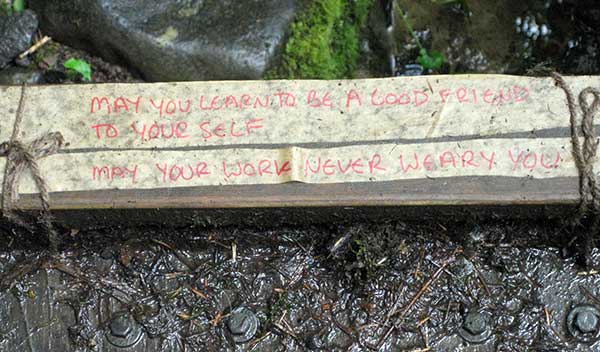
We gathered together and hiked out to the ruins of the stone cottage. Along the way, we passed over a small foot bridge where someone unknown had written good wishes on strips of masking tape and placed them on the path.

I have no idea who wrote this, or why, but I think these are good sentiments.

As I’ve mentioned, Oregon is known for the abundance and exuberance of the scenic natural beauty it manufactures and scatters about the landscape. Even the walk up to the stone cottage was drenched in it, which can be a bit disorienting for folks from places like Florida, where scenic natural beauty is kept tightly guarded and is sold in small parcels by licensees of the Disney corporation. The Florida part of the network paused along the way to recover from the onslaught of gorgeous, which they had developed little natural resistance to.

That’s my sweetie joreth, her boyfriend and my former archnemesis turned apprentice datan0de, my partner Shelly, datan0de‘s wife femetal, redheadlass, and her partner zensidhe. These are folks who have been my family for a decade or more, datan0de‘s attempts to eradicate me, destroy the world, and crush all of you beneath the massive iron treads of his robotic war machines notwithstanding.

When they had recovered sufficiently, we finished the journey out to the stone cottage. We’d tried to be selective in the number of folks we’d invited to this part of the Complicity, but it was still a bit of a tight fit.

My friend edwardmartiniii graciously agreed to oversee the whole shebang, and did an absolutely fantastic job of it. Here, he is seen at the start of the Complicity asking for volunteers to be given over to the Great Old Ones, so as to appease them and call down their blessing of protection upon all who attended. My friend Amanda volunteered; I’m sure going to miss her.

KIDDING! I’m kidding. Of course I jest. There were no sacrifices to gods ancient or modern; for one thing, where would we even find a virgin these days?


Why yes, don’t mind if I do!

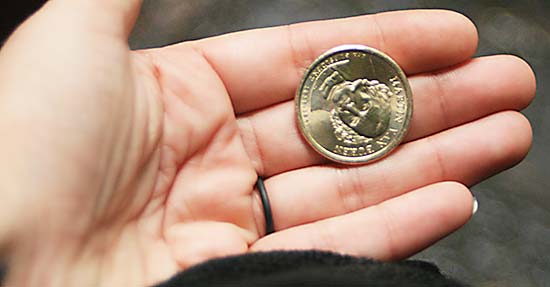
One fo the central parts of the ceremony involved passing out dollar coins, which everyone made a positive wish on and then placed in a container. As people left, they drew out a coin, to bring into the world with them with a wish for good things.

I like the idea of mindfully passing out something which represents a desire for good. The wish itself may not have any material effect on the coin–there is no metallurgic Transubstantiation at work here–but the idea that this represents something is a powerful one, I think.

A part of the ceremony that we’d planned for quite some time was the creation of human Langdon charts, using lengths of rope to indicate the connections between the various people there.

What we hadn’t really counted on was the size and complexity of the network, and how much space (and rope!) it would require. Plus, with not all of our sweeties in attendance, it would have been impossible to create a full chart anyway.

But we were able to map out bits of it. Here are zaiah and I with the Florida part of the Squiggle:

We also did Langdon charts centered only on certain parts of the network. Here’s zaiah‘s Portland portion of the network:

Here’s the bit that centers on me, with the partners who were able to make it (emanix and figmentj, you were both sorely missed!):

It’s fascinating to me how human communities of all sorts tend to follow the same structure. If you map romantic connections in poly networks, or business contacts on Linkedin, or friends networks in a large company, you see the same patterns emerging: most folks have small numbers of connections, with a smaller number of people forming large numbers of connections that act as bridges between different groups. There’s something really interesting lurking somewhere in there. I’d love to make some software that lets people easily and quickly create charts of their poly networks, and then analyzes the network and puts the data into a database somewhere.

I still like the idea of doing photographic Langdon charts. I’d very much love, if everyone in my network could ever get together in one place, to do a photo that shows all of us. Perhaps if I suddenly find myself receiving a suitcase full of cash from shadowy government figures in exchange for, like, foiling a plot to hold the moon for ransom or something, I will fly all of us out to Easter Island to do a picture with all those funky statues of giant heads. Or, less ambitiously, maybe I’ll just register www.humanlangdonchart.com or something. (Anyone know a good database programmer?)

But I digress.

I won’t say that I am lucky to live the life I do. I don’t think that’s accurate, for reasons that I outline here. But I will say that I am profoundly grateful for, and humbled by, the people who I have chosen to be my family, and who have chosen me as well. These are all people who, every day, make my life richer simply by being who they are.

Of Android, iOS, and the Rule of Two Thousand, Part I

A year and change ago, I traded in my iPhone 3G for an Android phone.

I blogged about my initial experience and first impressions of Android here. The phone I got was a then top-of-the-line HTC Sensation 4G, which was at the time I got it T-Mobile’s flagship Android phone. And for a short while, I quite liked it.

A lot can change in a year. When the new iPhone comes out in a couple of weeks, I plan to jump back to iOS and never look back.

Before I go any further, I should take a moment to step back and talk about how I feel about computing devices. I’ve been using computers since the days of the TRS-80; I got my first computer in 1977. And computer Holy Wars have been around for just as long. Back then, it was the TRS-80 vs. the Apple II vs. the Commodore 64; today, it’s Windows vs. Mac vs. Linux. Same song, different dance. What’s amazing to me is that even the arguments haven’t changed very much.

A lot of it, I reckon, comes from good old-fashioned need for validation. When you get a computer or a smartphone, you’re actually buying into an entire ecosystem, one that has a relatively high cost of entry (it takes time–quite a lot of it–to learn an operating system, and if you buy any software, you’re locked in at least to some extent to your choice. Sure, you can do what I do and run Mac OS, Windows, and Linux side by side in virtualization, but doing that has a significant barrier to entry of its own; it’s not what typical home computer users do.)

It;s hard to admit that when you’ve just spent a lot of dosh on a new box and crawled up that painful learning curve to teach yourself how to use it, you might have made a mistake. So people validate their choices, largely by convincing themselves of how awful the alternative is.

I’ve been using (and programming) Microsoft-run boxes since the days of MS-DOS 2.11 and Macs since System 1.1. In that time, I’ve developed a principle I call the Rule of 2,000, which put simply says that anyone with less than 2,000 hours’ worth of actual, real-world, hands-on experience with some platform or operating system is completely unqualified to hold an opinion about it, and anything they say about it can be safely disregarded.

So now I have a years’ worth of Android experience under my belt. What have I learned from it? Well, I’m glad you asked.


PART I: THE HARDWARE

Let’s start with the phone itself. My HTC Sensation, on paper, looks a lot better than an iPhone. It has a larger screen, a significantly better camera than what was available from Apple at the time, a replaceable SD-Micro card that means upgrading storage is quick and easy to do, and a 4G LTE data connection. By the specs, it is a phone significantly superior to the iPhone at the same time.

One of the problems that computer–and, lately, cell phone–Holy Warriors have never quite grasped, though, is that technical specs don’t tell the whole story. In fact, tech specs by themselves don’t make for a compelling product at all, except perhaps to a handful of rabid geeks. Steve Jobs grokked this. Geeks don’t.

The HTC Sensation suffers from a number of design flaws, probably the result of engineering choices designed to keep costs down.

When you hold a Sensation and an iPhone, the Sensation feels cheap. It has a removable cover, which allows easy replacement of the battery…but the cover isn’t especially tight and doesn’t fit as well as it could, making the phone feel a bit creaky. It’s plastic rather than metal and industrial glass. Geeks will claim that the packaging doesn’t matter, but they’re wrong; even the most hardcore geek would be unlikely to buy a computer housed in a plain cardboard box.

More importantly, though, I am currently on my third HTC Sensation, in a bit over one year.

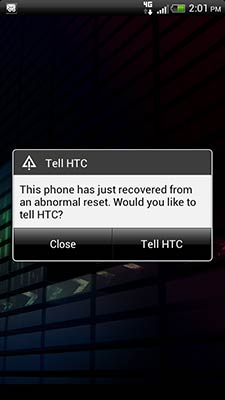
When I got the Sensation, zaiah urged me to pay for the unlimited replacement warranty, and I’m glad I did. The phone has failed twice on me, both times in exactly the same way. First, the GPS starts acting flaky, taking longer and longer to acquire a signal. Then, the phone starts getting really hot when the GPS radio is on. Finally, the GPS radio fails completely, and any attempt to run a program that uses the GPS causes the phone to either freeze so hard I had to take the battery out to reset it, or crash and reboot.

I quickly got accustomed to seeing these screens in this order:

Those of you who have met me in person know that I have the navigational sense of a drunken baboon on acid; when I don’t have GPS, it is a Very Big Deal. The second phone’s GPS finally failed completely while I was on my way to a distant city a couple hours’ drive from home to meet with a new sweetie, and probably cost me at least an hour and a half spent with her…but I digress.

You will note that the signal bars in these screenshots are all over the map. This has been an unending part of my experience with Android, though I think it’s more down to T-Mobile than to Android itself. T-Mobile advertises full 4G coverage in Portland, and that’s technically true, though there are more holes in that coverage than there are in Ayn Rand’s understanding of American history. I can be traveling down Stark street right outside my house and go from awesome signal to no signal and back again in the span of six blocks. At one friend’s house, I have zero coverage, but at the corner shop down the street, I have four bars. WTF, T-Mobile?

Now, it’s possible I’m a statistical fluke and there’s nothing intrinsically wrong with the GPS radio in the Sensation. However, when I took the second failed phone into the T-Mobile store to request a replacement, the bearded hipster behind the counter told me his Sensation had the same fault as well, so I doubt it.


WAIT FOR IT…WAIT FOR IT…

An issue this phone has always had since Day 1 is a perceived sluggishness and general, overall lack of responsiveness.

I’m not 100% sure if this is a hardware or software issue. Certainly, the processor and RAM in this phone were both much better than in my iPhone 3G, so it should have plenty of grunt for a fluid UI. Yet using this phone often feels like trying to wade through frozen molasses in zero G. I saw, and still see, these messages frequently:

I tried rather a lot of faffing to make the phone more responsive (using a task killer to kill unnecessary processes and services, that sort of thing), and never got it to be good. The update from Android 2 to Android 4 was supposed to take care of a lot of this issue, but it would seem that “taking care of the issue” really meant “putting a prettier wait icon on the dialog.” (That’s Android 4 in the middle, up there.)

This is, I think, down to both hardware and software; a lot of the UI in iOS is hardware accelerated, because Apple makes the hardware and therefore can be sure that it will have the GPU to support hardware acceleration.

One interesting thing about Sense, HTC’s user interface: When you touch the screen, background processes and background updates to the UI are totally suspended. This means that, for example, when you start to slide from one panel to the next, the clock freezes. It also means you can’t do screen captures when you have your finger on the screen–something that’s actually significant, and that I’ll get to in part 2 of this piece, where I talk about the software.


OH, WHO’S A DIRTY PHONE? YOU ARE! YOU DIRTY, DIRTY PHONE!

Most of the time, I keep my phone in my pocket.

As it turns out, with the Sensation, that’s not a very wise thing to do.

The Sensation, like nearly every other smartphone I’ve used, has a little wake/sleep button on the top. You press it to wake the phone up. With the Sensation, the button’s mechanism is part of the back case, which wraps around the top; the button is just a little bit of plastic that presses down on the actual switch, mounted to the phone’s circuit board.

The plastic bit isn’t well sealed against dust and debris. When I say “isn’t well sealed,” what I mean by that is “isn’t sealed at all.”

Now, maybe the engineers who designed it have Class 5 cleanrooms in their pants. I don’t know. I do know that my pants are a considerably less clean environment.

In practice, what that means is that little bits of dust and grit get into that button, gradually rendering it inoperable. There’s a ritual I have to go through every couple of months: take the back off, blow all of the crap out of that little button, put the back on again. This is not something I experienced with my iPhone, despite years of carrying it in some astonishingly grungy pockets.

Even if you do have a Class 5 cleanroom in your pants, you’re still not well-advised to carry your Sensation there, because of an odd quirk the phone has which I’ve never been able to figure out.

Well, perhaps it’s less a quirk than a habit. Every so often, usually a few times a week, the phone will suddenly start heating up, until it becomes uncomfortably warm. All three of my Sensations have done this.

I’ve never found a pattern to it. It can happen when the cell signal is weak or strong. It can happen when the phone is on 4G or WiFi. It happens with no discernible background activity going on. There seems to be no rhyme or reason to it. I’ll just be riding in the car or sitting in front of the computer watching Netflix or hanging out with a bunch of friends, and wham! My pants are scorching hot. Rebooting the phone usually, but not always, solves the problem.


Technical specs do not, of and by themselves, make for desirable hardware. I really, really wish more people understood this.

Most of my complaints about the hardware of the Sensation come down to the same thing: attention to detail. Whether it’s attention to detail in the switch or attention to detail in the user interface, detail matters.

Geeks love hardware specs. DGeeks drool over the newest processor with twenty-four overclocked turboencabulators per on-die core and hardware twiddlybits with accelerated inverse momentum. And I think that’s a problem, because they don’t get that hardware specs by themselves aren’t enough.

Attention to detail is harder. It’s not enough to have the fastest possible processor in your phone, if the user interface is sluggish. It doesn’t matter if the phone has a shiny OLED backlight if dirt and grit keep getting into it because nobody paid close attention to the little plastic button on top.

Android is in a lot of ways the triumph of the geek over the designer. True Believers like to brag that Android outsells iOS phones because the geek cred of Android is so much better; personally, I suspect that it might have something to do with the fact that you can buy an Android phone for about $75 without a contract, and get one for free with a contract, from a large number of different places.

But that’s not really the issue. The issue, as I see it, is that my Sensation is clearly a superior phone on paper to my old iPhone, but the experience of owning it has left a very bad taste in my mouth.

Detail matters. Little things matter. The Android contingent of the Holy Warriors had an opportunity to make me a convert, and they failed.

In the next part, I’ll talk about the software, and how even after several major revisions, Android still has some things it can learn from iOS.

Apple v. Samsung: Nickelgeddon and Number Illiteracy

In case you haven’t seen the news that’s been lighting up the tech sector these days, Apple recently sued Samsung for multiple patent violations concerning Samsung’s cell phones allegedly knocking off iPhone design and technology, and won, to the tune of $1 billion in fines.

There’s a rumor going around the Internet that Samsung is planning to pay the fine in nickels, shipping, or so it’s said, 30 trucks to Apple’s headquarters stuffed full of small change.

Now, that sounds wildly implausible to me, on a number of levels. First, it seems like getting one’s hands on a billion dollars’ worth of nickels would be an extraordinarily difficult thing to do. Second, it seems to me that a billion dollars’ worth of nickels would occupy one hell of a lot more than 30 trucks.

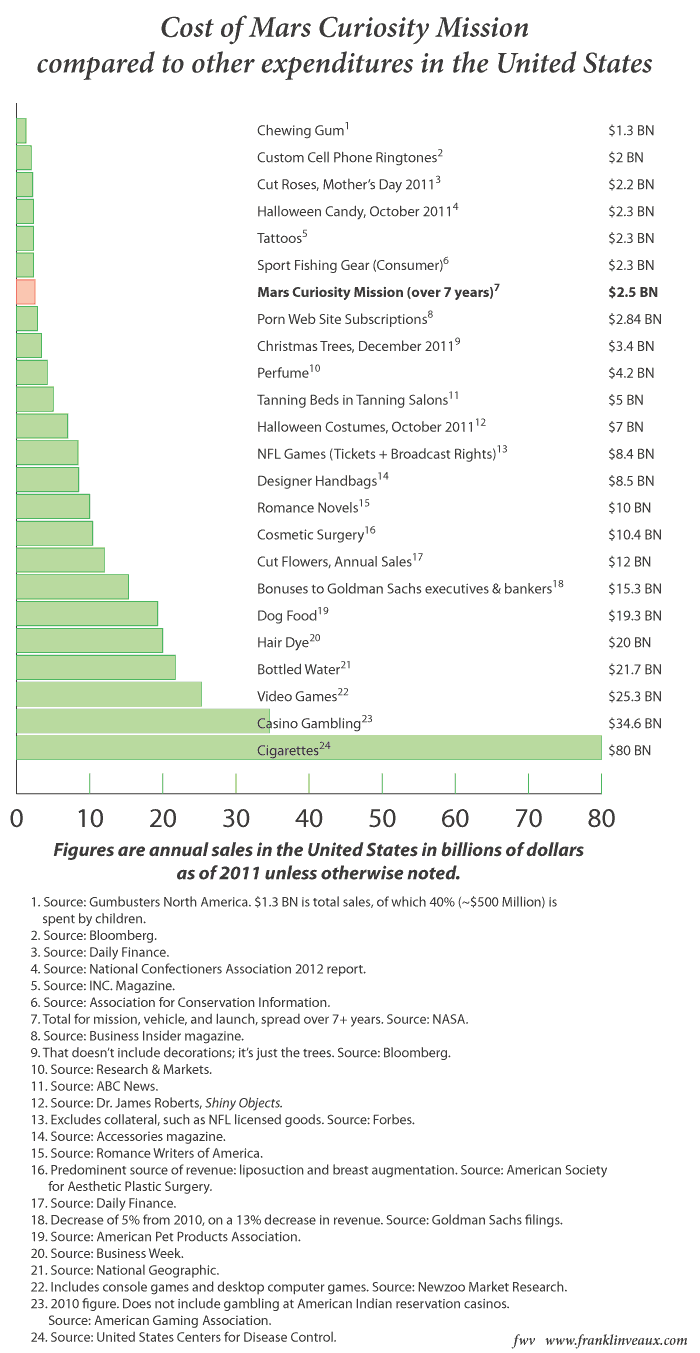
One of the things I often complain to zaiah about is something I call ‘number illiteracy’. As soon as anyone starts talking about numbers higher than a thousand or so, people’s eyes glaze over and that little drop of drool forms on the corners of their lips. A million, a hundred million, a billion…these all seem like synonyms for “really big” to a lot of folks. Hence folks complaining about the money spent on the Mars Curiosity rover without realizing that we Americans spend about the same amount on Halloween candy every October…but I digress.

Just for giggles, I did a rough, back-of-the-envelope estimate of what it would take to pay a billion dollar fine in nickels.

A billion dollars in nickels is 20 billion nickels, or roughly 64 nickels for every man, woman, and child in the entire United States. That is almost the entire number of nickels in circulation; the total number of nickels that exists is estimated by the Treasury Department to be around 25 billion or so.

A nickel weighs a sixth of an ounce, so 20 billion nickels weighs in at 208,333,333 pounds, or 104,167 tons, give or take a few hundred pounds. In the United States, a tractor trailer rig traveling on public roads is permitted to weigh no more than 80,000 pounds (gross) by law. A typical tractor trailer rig weighs in at roughly 20,000 pounds, leaving no more than 60,000 pounds for cargo. (From a quick Google search, it seems most commercial truckers won’t haul more than 50,000 pounds, but since I know fuck-all about shipping I’ll be generous and go with the 60,000 pound limit.)

At 60,000 pounds per truck, a billion dollars in nickels would require 3,473 trucks. Since a semi trailer is 53 feet long (not including the cab), the trailers, lined up end to end with no cabs, would make a row roughly 35 miles long.

I did a quick Web search to see what the shipping cost would be. From Samsung’s US headquarters to Cupertino, home of Apple, the cheapest rate I could find on my quick-and-dirty search was $503 per half ton, or $104,792,002 for the whole shebang. That’s about $105 million in shipping charges, though I bet a job this size might qualify for a bulk discount.

So now you know.

Edited to add: When zaiah and I first talked about the problem of sending a billion dollars in nickels, we were driving and didn’t have easy access to Google, so we made an even rougher back-of-the-envelope calculation, using guesswork, imagination, and the XKCD “if I can throw it, it weighs about a pound” rule. I can throw four rolls of nickels, so I guessed that four rolls would be about a pound.

The first approximation of an answer we came up with, which we figured might be within half an order of magnitude or so of the right answer, was 4,000 trucks. Later, with Google and a calculator and a lot of legwork, we came up with what you see above. So, go us!

Science is cool!

This…is a real animal. It’s called a Tardigrade, and it’s a (barely) macroscopic animal about half a millimeter long. It has eight legs and can survive exposure to hard vacuum. It belongs to a sister phylum to arthropods, though these guys technically aren’t arthropods.

This particular image comes from The Scientist, where it’s a finalist in their annual science image contest.

The next time you’re watching Star Trek and you see a supposedly ‘alien’ species that’s really just a white 21st-century human with a wrinkly nose, think about the amazing diversity of body plans right here on Earth, and then think about how profoundly unlikely that would be.

If homophobic Christians read the Bible, what would the world look like?

When i lived in the South, I will admit I used to eat at Chick-Fil-A all the time. I was dimly aware that they had some sketchy religious leanings or something, and they tended to hire only surrealistically white people to work in their restaurants, but hey, the sandwiches were good.

Well, not really good. But at least better than much of the mediocre fast-food stuff you could get at, say, Taco Bell or Burger King.

I wish I could say that I was surprised to learn that Chick-Fil-A has bought into the virulent strain of anti-gay nonsense that seems to have the self-described Christian conservative bits of society in such a frenzy, but I’m really not. Like I said, I was dimly aware that ther was some kind of right-wing religious something something at play.

But the media attention about Chick-Fil-A and gay marriage got me to thinking. Most self-described Christian conservatives base their opposition to gay marriage on two Bible verses. Leviticus 18:22 reads:


Thou shalt not lie with mankind, as with womankind: it is an abomination.

Leviticus 20:13 says:

If a man also lie with mankind, as he lieth with a woman, both of them have committed an abomination: they shall surely be put to death; their blood shall be upon them.

The rest of Leviticus goes on to say similar things about cutting your beard, wearing clothes made of different fibers, eating shellfish, having sex with a woman on her period, letting different kinds of cattle graze in the same field, and executing women if their husbands cheat on them they cheat on their husbands (seriously, it’s there, Leviticus 20:10).

Most Christians don’t follow these rules, arguing that Jesus made them irrelevant except the ones about homosexuality because those are totally different from the shellfish ones because of reasons, and some will even quote a third Bible verse, Romans 1:26-27, to justify banning gay marriage:

Because of this, God gave them over to shameful lusts. Even their women exchanged natural relations for unnatural ones. In the same way the men also abandoned natural relations with women and were inflamed with lust for one another. Men committed indecent acts with other men, and received in themselves the due penalty for their perversion.

But the Bible, both old and new testaments, actually spends a whole lot more time talking about divorce than it does about homosexuality. Both testaments are very, very clear that divorce is never permitted, and that those who divorce and remarry are guilty of adultery, a sin forbidden by the Ten Commandments, and with the penalty of death according to the old testament…

Um, wait a minute, didn’t we recently see a serial divorcee running on some kind of pro-family, conservative Christian platform?

In fact, the Bible even claims that Jesus, who never spoke about homosexuality at all, had plenty to say about divorce, in Matthew 5:31-32:

And it was said, ‘Whoever sends his wife away, let him give her a certificate of divorce’; but I say to you that everyone who divorces his wife, except for the cause of unchastity, makes her commit adultery; and whoever marries a divorced woman commits adultery.

The Bible has Jesus speaking the same message many more times, in Mark 10:2 and Luke 16:18, for example.

So I wonder…

What would the right-wing Christian pronouncements look like if they actually applied the same thinking on divorce to their supposedly “Bible-based” blatherings about homosexuality? What would happen if you took their hysterical anti-gay screeds and replaced the word “homosexual” with the word “divorce”? It seems a fair substitution; the same moral, Biblical justifications for opposing homosexuality even more strongly apply to divorce, after all.

I started Googling Christian proclamations about homosexuality, which…well, if you have ever felt the need to go trolling on a motorboat down an open sewer, doing that sort of Google search will give you a similar experience. And I took “homosexuality” and replaced it with “divorce.” The results were…interesting.

Clicky here to see what happens!

“But why aren’t we spending it on CHILDREN? Think of the CHILDREN!”

So for those of you who’ve been living under a rock for the last couple of days: Yesterday, something amazing happened.

No, I don’t mean the US soccer Olympic team beating Canada by one point in a dramatic overtime goal. I mean something really amazing. Something mind-blowing.

We took a one-ton nuclear-powered robot rover and threw it 350,000,000 miles, then landed it on the surface of another planet using cables from a flying rocket-powered robot crane.

And it worked. That’s the cool thing about science: It works whether you “believe” in it or not.

However, as always happens whenever NASA does something amazing, a bunch of people have trotted out all sorts of nonsense about how we shouldn’t be spending money on space exploration when there are so many problems back here on earth. I went to a Curiosity landing party at the local museum of science and industry, and sure enough, someone posted something on the Facebook page for the event something to the extent of “I wonder how many children will die from lack of clean water while we land a probe on Mars” or something.

Now, I have been told that it’s technically illegal to beat these folks. And I’m sure their hearts are in the right place; they’re not trying to be anti-intellectual, they just have little sense of the size and scope of the economy, nor how much money gets spent on space exploration, nor how much money we spend every year on things that we really could do without. And they seem to have an either/or mindset as well, as if to say that every dollar that goes to space exploration is a dollar that is taken away from needy children as opposed to being taken from, say, the Pentagon’s budget for paper clips.

Now, I think that doing things like, oh, finding out if there is life on other planets in our solar system represents a better investment of money than, for instance, buying T-shirts with pictures of NFL logos on them–something we typically spend about four times more per year on than we do on trying to learn about the universe.

So I spent some time doing a bit of research, and I’ve put together a handy-dandy chart that shows the cost of the Mars Curiosity mission, compared to the cost of some other things we might be acquainted with. The chart is a little lopsided, in that it shows how much we spend per year on other things, and the cost of the Curiosity mission so far represents seven years’ investment; to make things more representative, the bar for the Curiosity mission should be 1/7th as long as it is here.

Since we aren’t technically allowed to beat folks who complain about the cost of space exploration, hitting them over the head with this chart will have to do instead. (Figuratively! Figuratively! You can’t literally hit folks with it unless you, I don’t know, print it out and wrap it around something first. Which, as I mentioned, is technically illegal.)

So now when someone says “Why are we wasting money on space exploration instead of fixing problems here at home?” you can say “Why are we wasting even more money on Halloween candy, Christmas trees, or perfume, or football games?” I don’t think I’ve ever heard anyone say “We shouldn’t spend money on perfume when there are so many problems here at home.”

Because, you know, spending money on perfume is way more important than finding out whether or not there is life not on this world.

Interview: So your girlfriend has read 50 Shades; now how do you start with BDSM?

A short time ago, I received an email from a writer for Men’s Health magazine who’d found me online and wanted to interview me about BDSM. Specifically, the interview was about how someone who’s read the book 50 Shades of Grey and found the ideas in it interesting might take the next steo and start exploring BDSM in a relationship.

The interview was focused mainly on maledom/femalesub dynamics, presumably because that’s the type of D/s described in 50 Shades. As of writing this, the issue of Men’s Health containing the interview isn’t on the newsstands yet, but I’ve received permission from the interviewer (@ peachesanscream on Twitter) to post a raw transcript of the interview here.


I’m writing an article for Men’s Health magazine as a beginner’s guide to BDSM. The idea behind it is that their girlfriend has read 50 Shades of Grey and they’ve experimented with sex toys, but now they want to go a bit deeper into BDSM.

I was wondering if I could please ask you a few quick questions and in return credit you in the article?

I realize that 50 Shades of Grey is credited with helping to popularize the idea of BDSM, but I don’t think it’s actually a very good introduction to the subject. It’s a fantasy story, and as fantasy it doesn’t paint a good picture of BDSM. It’s a bit like taking marriage and relationship advice from the Disney movie “Sleeping Beauty,” only with the added problem that many of the activities described in 50 Shades aren’t very safe.

Still, it is helping to open a dialog about BDSM. If it helps open the door for people who ‘ve always wanted to explore spicing up their relationship but haven’t been able to figure out how, that’s awesome.

Role play: how do you get started? How can a man act dominant without being mean or scaring his partner? Things like eye contact, instructions, body language etc?

As with any new thing in a relationship, you get started by talking. Sounds simple, right?

The hard part is that we live in a society that does not teach us how to talk openly about sex. It can be scary to talk about exploring something new; what if your partner says no? What if your partner thinks you’re weird? What if you try it but it doesn’t work? Does that mean your partner will reject you? How do you bring it up? Is it normal to want to do these things? It’s easier to just not talk about it.

Getting started with role-playing (or with any other kind of BDSM) requires being able to talk about it, and that takes courage. The best way I know of to start that conversation is directly, with “Hey, you know, I love having sex with you, and there are some things that I would like to try. I think it might be fun to explore ___. What do you think?” As tempting as it is to try to bring things up indirectly, by dropping hints, that almost never works. After all, if it’s something that’s too scary for you to talk about directly, why would it be reasonable to expect your partner to be willing to talk about it directly?

Communication is important because being dominant is different for every person. What one person thinks is sexy, another person would find intimidating and a third person would find mean. Some people like the idea of having their partners tie them down; other people don’t like that, but might want to be held down; still other people don’t want to be restrained at all, but might be turned on by the idea of being spanked; and other folks might not like any of that but be thrilled by their partner telling them what to do. All of those things count as “acting dominant.” It’s important for the dominant partner to learn what gets the other person going (and what doesn’t), because this sort of thing really only works if it works for everyone.

Talking about what turns you on and what you don’t like is the key to creating a safe, happy, healthy space to explore things like role-playing or dominance.

What sort of things should he say?

That’s something that depends on the people involved. The most wonderful thing about BDSM is there isn’t just one way to do it. It’s something that every couple creates themselves out of the things that turn them on.

Sometimes, a good way to have a conversation about what you’d like your partner to say or do can be started by reading erotica. If there’s some passage in 50 Shades or a letter in a letters magazine that revs your engine, sharing it with your partner and saying “I like this, what do you think?” can help get the conversation going.

Whatever he (or she; it’s not only men who are dominant!) might say, one important trick is to say it with confidence. A simple “Go into the bedroom and wait for me” spoken with confidence is a lot sexier than the most elaborate scenario spoken with hesitation.

One of the things I personally enjoy is taking my lover close and whispering in her ear exactly, in precise language, what I would like to do to her body. It’s fun to do this in public, say if we’re out running errands, to help prime the pump and get us both thinking sexy thoughts. When we get home, she will know what to expect.

Another thing I’m quite fond of is lying in bed close to my lover, snuggled up against her while I tell her how to touch herself.

As with anything else, different people have different tastes. Exploring, experimenting, and finding what works is the key.

What about verbal abuse? Is it ok to call women names eg. filthy slut, during sex? How does he know not to go too far?

One thing I believe quite strongly is that abuse is never appropriate.

Having said that, anything that is consensual and done for the pleasure of everyone involved isn’t abuse. If a woman is aroused by her lover whispering filthy things in her ear and calling her dirty names, that’s very different from a stranger on the street calling her the same names. The first one is not abuse; the second is.

I have had partners who like being called names during sex and partners who don’t. For me, it can be fun and sexy, if it’s something she likes. I can often tell how a lover will respond to this kind of verbal play by asking her “Do you like being a dirty girl?” while we’re making out. If she finds that arousing, it’s usually pretty obvious.

This is something that a lot of men have difficulty with. I’ve talked to many men who have partners who’d like to try dirty talking, but the men don’t know how to start. There are a couple of things that can make it hard: fear of feeling silly, and a deeply-ingrained belief that it’s wrong to talk to women that way.

Fortunately, both of those things tend to go away pretty quickly with practice. There’s nothing wrong with feeling a little awkward when you try something new. After all, nearly everything we do is awkward the first time; remember how awkward it was the first time you tried to ride a bicycle? And it’s never wrong to talk to a woman the way she wants you to talk to her. In fact, treating someone the way they want to be treated is, to me, the highest kind of respect. I can say all kinds of dirty things to a lover, call her all kinds of sexy names, and still keep in mind that it’s a form of role playing; it doesn’t actually mean that I don’t respect her, or that I think less of her.

What signs should he look out for that she’s offended? How can he tell if he’s gone too far?

That comes down to communication again, and to paying attention to what she likes and how she responds. The simplest way I know of to find out how far is too far, or what a woman does and doesn’t find sexy, is to ask her!

Different people have different tastes in dirty talk. Some women love being called a dirty, filthy slut, but don’t like words that go to their self-worth, like “stupid” or “worthless.” Some women love the C-word, some women hate it, and some women don’t have strong feelings one way or the other. And, of course, some women don’t care for dirty talk at all.

It gets a bit complicated because most of us, no matter how well we know ourselves, have a hard time predicting how we will react to something new. I’ve known women who believed they wouldn’t like dirty talk, but who found it arousing when they were turned on. I’ve known women who liked reading stories involving dirty talk but didn’t like it in real life. That’s all a normal, natural part of human variability.

So the only way I know of to stay within the lines and keep it fun and exciting is to go slowly and to pay attention. Start simply–“Are you a dirty girl?” Invite a response. And, as always, talk about it.

Do you have any other tips for how a man can play the dominant role as a beginner in BDSM?

Whenever you try anything new, it won’t always go 100% the way you expect it to 100% of the time. Be willing to be surprised. There may be times when your partner has an unexpected reaction to something, and you have to stop what you’re doing. That’s OK. It doesn’t mean you’re doing things wrong; it just means that when you explore something new, things won’t always be perfect.

A lot of people who talk about BDSM talk about it from the perspective of taking care of the submissive partner and being aware of the submissive partner’s limits. But it’s also important to understand that being in the dominant role can make you feel vulnerable, too. Dominants also have limits, and it is possible for something to happen that triggers a reaction in the dominant partner. The people involved should keep the limits and responses of the dominant in mind, too.

BDSM is about exploring pleasure and trust together. When you look at it from the outside, it can seem like one person doing things to another person, but it’s really more about two people doing things together, but in different roles. The goal is to have fun. If you’re doing that, it’s all good.

Unlike what you tend to see in books and movies, BDSM doesn’t have to be serious all the time. Sometimes, it can be very silly. There’s a game I like to play called the “two frogs” game. A frog has two eyes and four legs, so two frogs have four eyes and eight legs. I’ll say “Three frogs! One frog! Four frogs!” and if she doesn’t respond instantly with the right number of eyes and legs, she gets spanked. It’s very silly, but also a lot of fun.

How do you broach the idea of using stronger sex toys such as nipple clamps on your (female) partner? (( we’re assuming that they’ve already experimented with sex toys at this point. So it’s not totally virgin **ahem** ground)) Should you start by squeezing her nipples during sex, then asking her after? Is there a smooth way to do this?

I’m a big fan of communication in a relationship, as you’ve probably guessed. A good general rule abut sex that I’ve found works pretty well is don’t just do things and hope for the best; talk about them first. You can’t always be expected to know where someone’s boundaries are, and you don’t want to find them by accident.

When it comes to anything, from using a vibrator to using nipple clamps to chaining my partner to the wall and spanking her until she’s squirming, I find out whether or not she’s interested by talking to her about it. A great way to do this is by discussing fantasies (and this is a two-way street; talk about the things that interest you, and also encourage her to talk about the things she fantasizes about). And remember that being receptive is also a two-way street…if you’d like her to be open to the idea of having nipple clamps on her, you can’t freak out if you discover she’d like to use them on you!

A lot of people ask me “How can I get my girlfriend to do so-and-so?” I think that’s the wrong approach. You don’t GET your partner to do things for you; this person is your lover, not a circus animal. Instead. you talk about things you’d like to explore, you listen when she talks about things she’d like to explore, and you find the overlap.

How do you broach the idea of trying anal sex? Is there a non-offensive way to do this? Should you try touching her there first to see how she’d react?

People tend to be touchy about their asses. Legions of bad advice columns in Cosmo magazine aside, I don’t think it’s a good idea to go poking at a lover’s ass and hope for the best.

Is there a non-offensive way to ask? Sure! “I’m interested in exploring anal sex. How do you feel about it?” Talking directly and openly about what interests you is never offensive, provided you’re okay with hearing “no” as an answer. To me, it only becomes offensive if you have an expectation that the answer has to be “yes.”

And remember the part I said about being receptive to what she has to say if you want her to be receptive to what you have to say? If she says something like “You know, I’ve always wondered if it would be fun if I stick my finger up your bum while I give you a blowjob” and you freak out about that idea, then you can’t really expect her to be calm about the things you suggest. It’s okay if that idea doesn’t appeal to you, just like it’s okay if anal doesn’t appeal to her; if she suggests something that doesn’t work for you, a simple “Well, that doesn’t really do it for me” is enough.

How can you gain her trust enough to get her to cede control to try light bondage? Would it be something like agreeing safe words before? Or using ties that don’t tie up too tightly? Or maybe letting her try it on you first or using your hands?

I don’t think that you “get” someone to trust you. Instead, I think people trust you when you are a trustworthy person. There is no secret to getting people to trust you other than being a person who deserves trust.

Part of the way that you earn trust is by respecting your partner’s boundaries. Part of it is by treating your partner with respect and compassion, even if she says things that surprise you or that turn you off. And I shouldn’t really have to say this, but part of it is by being a person who’s honest, someone who can be relied on to behave with integrity.

I had an acquaintance many years ago who was a serial cheater; he would brag about all the women he’d cheated with, and he tended to go through partners pretty quickly. He always wanted to try bondage, but he never found a woman who would say “yes.” I think on some level all the people he slept with knew that he couldn’t be trusted. One of his partners, for a brief time, was a model. I was a photographer at the time, and I did a bondage photo shoot with her. He was very surprised when he saw the pictures, because he’d asked her about trying bondage and been told “absolutely not.”

I think that people often are apprehensive about trying new things in the bedroom, and bondage is no exception. Starting with light bondage is perfectly appropriate, as is agreeing on a code word that means “untie me right now.” I also advise that people keep a pair of bandage scissors handy when they explore for the first time. You can get these for a couple of dollars at any drug store. They have one pointed blade and one rounded blade, and they’re designed to be slid underneath a bandage to cut it off without risking cutting the skin. If you get into trouble with bondage, they’ll cut your partner free in seconds.

Being willing to respect a partner’s limits, being willing to show that you are trustworthy, being willing to suggest ideas without trying to pressure your partner into saying “yes,”and being willing to talk about what you can do if things go wrong goes a long way toward creating a safe environment for exploring bondage.

Are there any important points that I should include?

Safety!

Safety is a bit tricky, because sometimes what feels safe and what is safe are miles apart.

For example, when we think about bondage, a lot of folks think “pink fuzzy handcuffs.” But I know several serious, die-hard, long-term kinksters who won’t play with handcuffs because they’re just too dangerous. A lot of people who first dabble with tying their lovers up might use silk sashes or nylon stockings, because they feel less intimidating than using ropes or leather cuffs. But these, too, are dangerous.

Handcuffs are dangerous because they are completely inflexible and they put a lot of force on a very small area. If you struggle when you’re wearing handcuffs, it can be surprisingly easy to do permanent damage to the bones or nerves in your wrist, and it can happen very quickly.

Silk and nylon can have a tendency to pull tight, making them almost impossible to untie. They can also cut off circulation without warning. When you get into trouble, it can be hard to get them off quickly. Ropes are a lot safer for bondage, which is why kinksters use them.

It’s usually a good idea for people exploring BDSM to create a “safe word,” which is a special word that means “stop, really, I mean it.” Especially if you’re trying role play scenarios where words like “no” and “stop” are part of the role play and don’t really mean “no” or “stop.”

There are a lot of resources out there for people who want to learn how to explore these things safely and respectfully. My own Web site at www.xeromag.com has a beginner’s guide to BDSM and a list of resources, and there are many more as well.

Some thoughts on being out

One of the many questions that inevitably comes up in almost any poly discussion group,usually multiple times, is the question about being open about being polyamorous.

The same thing comes up in kink-related social groups, and I imagine in just about any other alternative sexuality group you can name.

Now, I’m a big fan of openness and transparency. There are a lot of reasons for that. On a philosophical level, I do not believe there is anything to be gained by pretending to be something you’re not, and I don’t see how deceiving people who would shun you if they knew the truth actually benefits anyone. (To my mind, if someone–your family, say–loves you only so long as they don’t know the truth about you, then they don’t actually love you. They only love an imaginary projection of you, and that love is conditional on you agreeing not to do anything that might spoil the projection.)

On a practical level, it’s hard to find other people like you when everyone is closeted. If I am polyamorous, and I’m in a room with ten other poly people but none of us are open, all eleven of us might be thinking “Wow, I wonder where I can go to meet other poly people? It’s so hard to do!”

But there’s one objection to openness that I hear all the time, and that’s what I’d like to talk about here. A lot of folks say “I’m not open because it’s nobody else’s business how I live my life.” And to some extent it seems true, but there are problems with that idea.

Before I talk about those, though, I’d like to back up a little and talk about the way I grew up.


I spent my elementary and middle school years growing up in the rural Midwest. This is where I lived:

See that clump of trees on the right? It’s where my old house is. We lived outside a tiny town called Venango, Nebraska, population (at the time) 242.

I’ve written about a trip I took as an adult through Venango, with lots of pictures, in my blog here. Time has not been kind to the town. It’s half deserted; many of the houses are boarded up, and the school closed a long time ago. The most eerie thing about it is the total and complete absence of children. We stopped at the playground behind the school when we visited it. All of the playground equipment is covered by a fine dusting of rust, and when we turned the merry-go-round, rust drifted off it in flakes. I have to think that if there was even one child left in the entire town, the playground wouldn’t be this disused.

It was no picnic for me growing up there. I was the stereotypical geek as a kid; I was into model rocketry, and I owned a TRS-80 computer, the only computer of any sort in a 40-mile radius. (I know this because the only other computer within any distance was an Apple II belonging to the owner of the business my mother worked at in the next town over, about 45 minutes away; he used it to do bookkeeping.)

There were eight people in my middle school class, the largest class the school had seen in years. While I was teaching myself the basics of aeronautics, electronics, and Z-80 assembly language programming, the main topic of conversation among my peers were the relative merits of the Denver Broncos vs. the Dallas Cowboys–a discussion that often involved a great deal of heat but never seemed to get resolved, no matter how many times it was hashed out.

So it’s safe to say I grew up alienated from all the people around me.

Which is pretty unpleasant. I was able to partially mitigate the fact that I had no friends when my parents got me a 300 baud telephone modem, and for quite literally the first time in my life I was able to encounter, if only in a crude way, people who were kind of like me.

As alienated as I was, I still had some things going for me. One of the things I noticed growing up was the casual, offhand racism that permeated the Midwest; the people around me were quite confident that whites were better than blacks, even though most of them had, quite literally, never once met a person who was black. Even as an outcast, I still had some measure of privilege; it’s hard to say how much better or worse things might have been had I been a football-loving African American, or (worse yet) geeky and also black.

My parents moved to Florida when I started high school, so all at once I went from having eight people in my class to having two thousand. For the first time in my life, I met other people who were like me. I was still something of an outcast from most of the folks around me, of course; the fact that there were other geeky, nerdy people in the school didn’t mean we weren’t a distinct minority. I was still introverted and painfully shy back then, but at least I had a social circle, something that was totally new to me.


What does this have to do with being out about polyamory? Quite a lot.

After my first year in college, I made a conscious decision: I did not want to be introverted or shy any more. I deliberately and systematically set about learning the skills that would get me there. I started choosing different kinds of people in my social circle. If I found a social situation that made me uncomfortable, I deliberately kept putting myself in it.

It was about this same time that I started realizing that I was kinky and poly, as well. Prior to starting college, I wasn’t a sexual being in any meaningful sense of the word; I barely even recognized that boys and girls are different.

But even before I was interested in sex or relationships, I still knew I was polyamorous, though there was no language for it. The stories about the beautiful princess forced to choose between her suitors never quite made sense with me; if princesses live in castles, which seemed axiomatic to me when I was a kid, why wasn’t there room for all of them?

As a person newly interested in sexual relationships, that idea stayed. Why on earth should I expect someone to pledge her fidelity to me, simply because I fancied her? On the face of it, the idea just made no sense.

Growing up alienated seems to have had a positive side effect; I found out that being isolated from a social circle is inconvenient, but it isn’t fatal. I learned that I could find ways to interact with people like me, first online and then in person. And I learned that things like “being shy” and “having poor social skills” weren’t death sentences; they were things I could learn to cope with and skills I could acquire.

So in that sense, having an isolated childhood didn’t really leave that much of a mark on me. i was resilient enough to make choices about who I wanted to be and then find ways to be that person.


In the 1990s, which is positively antediluvian as far as the Internet goes, I started working on a Web site. (The Wayback Machine only started capturing the poly section of the site in 2000, for reasons I don’t completely understand.)

The goal in making the site was to create the resource that the younger version of me would have found valuable. When I actually started doing this polyamory thing, I didn’t have the advantage of being able to learn from other people’s mistakes, which meant that I had to make my own…and while experience might be the best teacher, sometimes the tuition is very high.

The site became a whole lot more popular than I expected it to be, which pretty much finished off any chance I might have to be quiet about being polyamorous. Not that there was ever much chance of that to begin with, but still.

So I’ve never been closeted. Not even a little bit.


Which takes us back ’round to the issue of what business it is of anyone else’s.

On the face of it, “it’s nobody’s business who I’m involved with” seems to make sense…except that, in a very real sense, it is.

We live in a society that sanctions only one kind of relationship, and tends to stigmatize others.

When a person wears a wedding ring and says in casual conversation “My wife and I went to dinner last night,” that person is validating those social conventions. He could say that it’s nobody’s business how he conducts his romantic affairs, of course; but the simple act of wearing a wedding ring is a public declaration of a very specific kind of relationship. And it’s hard to talk about the things we do, even casually, without talking about the people we do them with, and what those people’s relationships are to us.

When folks at poly get-togethers talk about being closeted, by far and away the most common thing they talk about is being afraid of other people’s reactions to learning the truth. Essentially, it boils down to a very simple idea: “I want to control information so as to control the way people interact with me.” The fear of being shunned, and the extent to which people are willing to jump through hoops to control information and to create the impression of normalcy in order to avoid that fear, is sometimes quite remarkable.

I’ve never had the fear of how people will react to me for being polyamorous (or kinky or anything else). I’d like to think it’s because I’m, like, all evolved and stuff, but it’s really a lot simpler. I know what it’s like to be totally alienated from my peers. I know that I can survive it. I know that I can create my own social circles and my own family. I’ve met that monster under the bed. It has no power over me. If there’s a monster under my bed, fucker better pay me rent, just like anyone else living here.

I realize that I am in a privileged position about this. I work for myself; I don’t have to worry about a conservative employer firing me if they find out how I live my life. I’m not in the military. (Under the Uniform Code of Military Justice, adultery is a crime, punishable by dishonorable discharge, prison, or both.) I am not financially dependent on a family that would disown me if they found out. I don’t have children who might be vulnerable to being taken away, or an ex-spouse who can use polyamory against me in a custody hearing.

So I can be open about who I am, and I don’t have to worry about suffering for it.

And that’s kind of the point.

In a world where it really was nobody’s business how we conduct our private lives, nobody would have to worry about these things. Nobody would have to worry about getting fired or getting a dishonorable discharge or losing children because of being polyamorous. The fact that there are people who do have to worry about these things means that much of the world tries to make it their business how we conduct our romantic lives.

Polyamory, and homosexuality, and BDSM, and all kinds of other non-socially-sanctioned relationship structures are perceived negatively in part because people don’t often see them, and it’s easier to vilify something that you don’t see every day. Like the racists in Venango who’d never laid eyes on a black person, when you don’t have the experience of seeing something yourself, it’s easier to project all your own fears onto it.

When those of us who have a privileged enough position to be able to live openly choose to do so, we help create a visible face for polyamory that makes it that little bit harder for others to vilify or marginalize us. So in that sense, it very much is other people’s business what I get up to; by creating institutions which can be used against folks who are polyamorous, they’ve made it that way, whether we like it or not. By creating the social expectation that people in officially sanctioned relationships can advertise their relationship status but people who aren’t, can’t, they’ve made it that way.


Columnist Dan Savage started a campaign aimed at teen gays and lesbians called “It Gets Better.” Part of the campaign is to do exactly what edwardmartiniii talks about in this essay: namely, to speak up when we see something wrong.

If the alienated, disenfranchised me from 1977 could see the me from 2012, he’d be amazed. The person I am today is the person the elementary-school version of me fantasized about being, and more.

But it took a lot of work to get here. And that’s why it matters. By being open about who I am, not only do I live my life without compromise, exactly the way I want to; I help make it that much easier for other people who, right now, don’t have a social group where they belong. I think that everyone who, like me, is in a position to be able to be out without risk, does a service to others by choosing to be so. It does get better, because we make choices that help make it better.

How the Skeptics Community Fails at Decency

Edit: 12:04 PM Pacific time Apparently, the problem has been resolved. Non-LiveJournal users can now see the blog post and its comments.


Last night, I posted a rather lengthy essay about misogyny and bias in the skeptics and freethought community. This morning, I woke to discover that at some point during the night, LiveJournal had for some reason evaporated that post for anyone who isn’t logged in (or isn’t a LiveJournal user). It can still be accessed by its URL directly, but it doesn’t appear to anyone who isn’t logged in and goes to the top level of my blog.

The post is here, for people who are having trouble seeing it. Unfortunately, it also appears that non LJ users (or users who aren’t logged in) can’t see or leave comments. I have an LJ support ticket open on the issue.

If liveJournal is not able to resolve the issue, I plan to delete and re-post the essay. This may lose those comments which have already been posted, sadly. Or I may re-post the essay as a new blog post with a pointer to the old comments, if I can figure out a graceful way to do so.

Skeptics and Misogyny and Privilege, Oh My

Since my blog post about the discussion about polyamory on the JREF forums, I’ve been poking around on the forums some more. Somehow, I managed to stumble across a thread relating to accusations of misogyny in the skeptical community, stemming from an episode at TAM last year.

TAM is an annual convention of skeptics and rationalists hosted every year by the James Randi Educational Foundation. It’s one of the largest such conventions in the country.

Apparently, a prominent blogger named Rebecca Watson was harassed at TAM last year. And the fallout from her complaint about it, which I somehow managed to miss almost entirely, are still going on.

I don’t read many skeptic or freethought blogs, which is probably how I missed the first go-round. A bit of scouting on Google, and a perusal of the JREF forum, shows an astonishing amount of anger, most of it of the “how dare this emotional woman tell us we’re misogynists!” variety. Which is more than a bit disappointing, when it isn’t downright rage-inducing.

In the interests of fairness, I have to say that I totally get why folks who identify as skeptics and rationalists might be especially resistant to suggestions that they are behaving inappropriately, especially with regards to sexism. A significant number of folks in the skeptics community identify as atheist. It takes quite a lot of effort for many people, especially people raised in a religious family, to break away from religious faith and embrace the ideas of rationalism and skepticism.

Once you do, there is a temptation to think of yourself as being more enlightened because of it. Things like racism and misogyny? They are those relics of patriarchal religious orthodoxy. I’m not a misogynist! I’m not a racist! I left that behind when I let go of religion. I don’t think that women are placed below men by some sort of divine pronouncement. I’m not the one trying to make women into second-class citizens. How can I be sexist?

I can remember going through a thought process something like this myself, back when I was a teenager in the process of giving up on the idea of religion.

Years later, when I was first introduced to the notion of invisible privilege and the ways that society creates a bubble of special advantages around men, it felt quite weird to grapple with the notion that I might be the beneficiary of misogyny, or even be guilty of misogynic behavior myself, without even being aware of it.

So the reaction of folks in the skeptics community when confronted with inappropriate behavior at a conference might be understandable, though it’s still disappointing. And maybe I’m naive, but the level of vitriol coming from some parts of the skeptics community against Ms. Watson and her supporters is completely over the top…and appalling.


All that is kind of beside the point, though. Yes, it can be tough to recognize the invisible sea advantages that we swim in, just as it might be hard for a fish to recognize that it’s wet.

But here’s the thing. It seems to me that anyone, regardless of whether or not he recognizes the many ways that society provides him with an invisible set of advantages that other people don’t have, who hears someone say “I feel threatened” or “I don’t feel safe here,” should start by listening.

I do believe that most of the folks in the skeptical community–indeed, most people in general–sincerely don’t want to be misogynistic (or racist or otherwise guilty of bias or oppression). And if someone claims to be a rationalist, it seems to me that if he is approached by someone else who says “I feel marginalized in this environment,” the desire to find out whether or not a problem actually exists, and to fix it if it does, should logically outweigh that little emotional voice that says “But that can’t possibly be true; I’m not like that!”

So at this point, I’d like to talk to all the guys reading my blog. Especially white guys, and most especially white guys who think that they aren’t sexist or racist. The rest of you can…I don’t know, cover your ears or something. Ready? Okay.

Listen. Guys. If you are at a conference or a sci-fi convention or something, and someone comes up to you and says “I don’t feel safe here,” you listen. And then you say “I’m sorry to hear that. This isn’t the sort of environment I want to create. What can I do to help fix the situation? What would it look like if this space were more welcoming to you? Have I participated in any way in making this space feel hostile to you, and if I have, what can I do to make it right?”

This is really, really simple It’s called “being a decent human fucking being.”

Now, I know what you’re thinking. It’s probably some little thing that’s gotten way blown out of proportion, right? There’s not really a problem; this person is just being oversensitive. Right?

And that is one possibility, sure.

But seriously? Given the history of treatment of women and minorities in this society, and given how goddamn hard it is to be aware of the advantages you have over folks who aren’t as white or aren’t as male as you are, that probability is pretty goddamn remote. A lot more remote than you think it is.

Doesn’t matter, though. You aren’t going to find out if there’s merit or not if you don’t (a) listen and (b) consider the possibility that there’s some validity to the complaint.

And while we’re at it, let me tell you what you don’t do.

You don’t say “Well, I don’t see a problem here.” That just makes you look like an ass. If there’s a problem with sexism or racism and you’re a white dude, of course you’re not going to see the problem. Duh.

And you don’t say “That doesn’t sound like that big a deal to me.” That just makes you sound like an even bigger ass. If you haven’t had the experience of what it’s like facing constant systematic exclusion–and believe me, as a white dude, you probably haven’t, any more than I have–you’re not really in a position to tell whether or not it’s a big deal.

And seriously, if you say anything, and I do mean anything, along the lines of “All these feminists are just out to get men” or “You’re just being hypersensitive” or, God help you, “you must be on the rag,” you don’t sound like an ass, you ARE an ass. You’re part of the problem. Whether you think of yourself as biased or not, the simple fact that you can think along those lines kinda proves the point. That setting isn’t welcoming because you’re one of the people who is making it that way.

Look, I know it can be hard to acknowledge that you have been given advantages simply by virtue of who you are; I felt the same way. It’s a bit like trying to look at your own back.

But you’re a rationalist, right? C’mon, you can figure this out. Treat it like an intellectual puzzle; that is exactly what it is.

And in the meantime, put aside the emotional response–because that’s what it is, an emotional response, and listen.


Yes, it can be a little tricky to navigate this stuff. So in the interests of helping to promote better understanding for everyone, I’ve created a handy clip-and-fold guidebook that you can print out and carry in your wallet. Clicky on the picture for a PDF version!