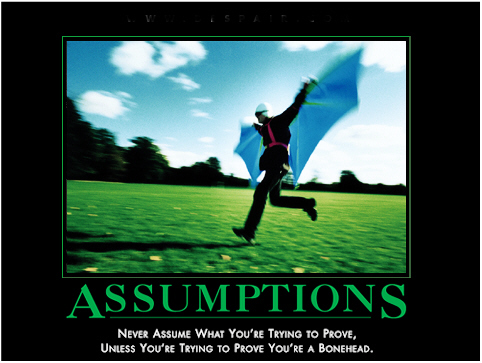
Some musings on time management

A couple of days ago, I got an email asking me about time management in a polyamorous relationship.
The email read, in part, “I am married and we’re having trouble finding time managing our one unit as time is always a consideration. So I was just curious if in poly relationships certain people have certain nights, or how you avoid conflict if 2 of your partners want to do something with you on the same night or weekend. How are potentially emotionally charged situations avoided?”

My own experience with time management is likely to be different from a lot of other folks, because I don’t really manage time; it manages me. (“In Soviet Russia…”) As a result, I don’t do Google Calendars or iCal or anything like that; hell, I can barely make it into the office at a consistent time each morning.

My reply:

One of the things I’ve found in my own experiences in polyamory is that a lot of time management issues are resolved quite nicely when partners get along with one another and with the partners of their partners. I’ve found that relationships do need a certain amount of ‘alone time,’ and that having two partners can mean having less time to spend with each of them–but not nearly as much as you might suspect. Since it’s possible to spend quality time with more than one person, having two partners doesn’t mean that each of them gets only half your attention.

In any family, even a conventional nuclear family with two adults and a couple of children, it’s always possible to have scheduling conflicts. What do you do if your spouse wants to go see a movie, but you’d rather stay home and catch Battlestar: Galactica on TV? What do you do if your child has a school play on the same night that your spouse is due to receive an award from a professional organization? These kinds of problems can happen in any home, and reasonable people can find reasonable ways to accommodate everyone’s needs. The same is true of a poly relationship.

To use a real-world example, I have had a situation where one partner wanted to go out dancing and another wanted to go to a movie. Simple solution: all three of us did both.

Part of being a reasonable person, in any kind of relationship, is accepting the fact that nobody gets everything he wants 100% of the time. Flexibility is important, and I suspect that flexibility is actually one of the keys to happiness, no matter what your relationship structure looks like.

Another good tool in poly relationships, which is valuable but often overlooked in any relationship, is the notion that you can’t expect to have what you want if you don’t ask for what you want. Often, people will make tacit assumptions about the behavior of their partners, without actually clearly saying what their expectations are, and then become hurt and angry if the expectations aren’t met. It’s not enough to say “The new Batman movie is coming out next Friday;” instead, it’s important to communicate expectations clearly, and say “the new Batman movie is coming out next Friday, and it’s really important to me to go to the opening with you.” Just that little bit goes a surprisingly long way toward helping to resolve scheduling difficulties and hurt feelings.

In some poly relationships, people do set up regular “date nights” with specific partners, so that everyone has a sense of what to expect from the schedule. I don’t do that myself, but then, I’m not much of a scheduler. For folks who are, that’s an awesome tool to help let everyone know what to expect–though I would say that it’s also important to be somewhat flexible about it. Life isn’t always tidy, and should a conflict come up or should a partner become ill or injured, I think it’s reasonable to be able to rearrange the schedule without causing undue grief.

For me personally, I like spending time with all my partners, and I like having the ability to spend time with more than one partner at once. I also do not feel cheated or like I have lost something if my partner’s other partner goes along too. For example, I really enjoy going out to dinner with my partners and their partners as well. Part of healthy, successful polyamory, I think, is in knowing and accepting that not all of the time you spend with someone will be one-on-one time. (And frankly, I think that’s a benefit; I’ve met some awesome people through my partners, people who have become my friends independent of our connection by dating the same person.)

Any relationship can have time management problems. A person starts working longer hours at the office, a person picks up a new hobby, a person starts spending more time with friends, a person starts playing video games–when these things happen, nobody really asks questions like “don’t you have trouble managing your time?” Nobody (well, nobody I’ve ever met, anyway) says “If you start taking up photography as a hobby, I am going to want to start scheduling the time you spend doing it, because I want to be able to limit the amount of time you spend away from me.” Polyamory’s no different, yet we often see it as different. Good time management skills are the same regardless of the nature of the demands on one’s time. It feels different when we think “My lover is spending time with her other lover” than if we think “My lover is spending time in the darkroom,” yet from a practical perspective, the same sorts of tools for managing time still apply.

Some thoughs on fear, hope, and the world that we make

My sweetie zaiah is in town for the week, and last night I slept curled up beside her with a young kitten sleeping under the covers on my hip.

The kitten is actually zaiah‘s reason for being here. She went to her new home this afternoon; she was bought by a family here in Atlanta. zaiah arrived in town yesterday, kitten in hand, and met the kitten’s new family today.

This, ladies and gentlemen, is Ruby. Ruby is a sixteen-week-old, aqua-eyed bundle of fluffy, fuzzy joy in a convenient carrying package.

I immediately fell in love with her. She is inquisitive, curious, happy, eager, and above all else, she is absolutely, utterly fearless. Ruby lives in a world where everything from the box on the shelf to the mysteries beyond the closet door are filled with delight and wonder. In her world, every person is her friend, and she takes charming delight in meeting new people. Every other animal wants to play with her, every change in her environment is cause for celebration.

It didn’t take Ruby long to make herself right at home. She bounded out of her carrying cage, checked me out enthusiastically, and rubbed against my hand for a while. Then she bounced around the apartment with unrestrained glee, heedless of Liam following her about like a shadow. She played with David for a while, checked out his Bowflex (surely the world’s biggest and most entertaining kitten amusement park, when it comes right down to it–lots of things to crawl under, lots of dangling things to bat at). Finally, when she reached that kitten stage of “Noo! I’m so tired I can’t keep my eyes open any more, but I want to keep playing!” she bounced back into my bedroom to curl up under the covers with me for bed.

There’s a lesson we could all learn from Ruby, about how our perceptions of the world shape the reality.


Many New Agers like to think that the principles of quantum mechanics prove that the world is created by our perceptions. This isn’t true in a literal sense, at least not the way they think it is; one of the problems of science is that it uses a highly specialized vocabulary, and words like ‘observer’ when used by a physicist don’t mean what they do in the common vernacular.

Nevertheless, our assumptions, expectations, and beliefs do change our experience of the world.

I’ve written before about the phenomenon of confirmation bias–the natural, unconscious tendency of human beings to see and give special weight to anything that confirms our beliefs, and to disregard things that contradict our beliefs. People who believe that psychics can predict the future will remember occasions when a psychic has seemed to make a prediction that comes true, but forget the dozens of predictions that didn’t come true. People who believe that women are poor drivers will remember the woman who cut them off in traffic, but forget the man who did. And so on.

Scientists have to deal with confirmation bias all the time. Medical tests are set up as double-blind tests, so that not even the doctor or the researchers know which is the placebo and which is the real drug, to help prevent confirmation bias. Researchers will intentionally look for evidence that proves their hypothesis wrong, rather than evidence that proves their hypothesis right, in part because confirmation bias makes it far too easy to see evidence that seemingly supports a hypothesis. (This is one of the ways you can spot flim-flam artists and pseudoscience, by the way.)

As strong as confirmation bias is when you’re dealing with intellectual beliefs, though, it’s a thousand times more devastating when you’re dealing with emotional responses.


On another forum I read, the subject has come up about relationship agreements, and specifically about relationship agreements in polyamory.

Often, people who choose to explore any kind of non-monogamous relationship face a great deal of trepidation. We’re told, daily, from the moment we’re born, certain things about relationships, like “if your partner really loves you he will never want anyone else” and “if your partner has sex with some other person, your relationship is doomed.”

Folks who know, intellectually, that these things are not necessarily true may nevertheless feel emotionally threatened by the reality of a partner taking another lover. And, quite commonly, one of the ways they seek to address this is to sit down and negotiate a set of rules to help them feel more secure and help guide them through the perceived hazards of non-monogamy. This is probably the single most common approach I’ve personally seen amongst folks, especially married couples, new to polyamory.

This does have something to do with Ruby the kitten. Hang on, I’m getting to that.

These contracts are sometimes quite detailed. This contract, for example, is a 7-page PDF that specifies, among other things, what pet names an ‘outside’ lover is and is not permitted to use, what words an outside lover is and is not allowed to use to describe a relationship, and what kinds of sex ann outside lover is an is not allowed to have.

It’s nothing, however, compared to another contract I’ve seen, which I seem no longer have a link for, that spells out (in over 40 pages of single-spaced type) all of the above plus the positions an outside lover is permitted to have sex in, the number of miles a member of the primary relationship is allowed to drive to go on a date, what restaurants a member of the primary couple is not permitted to bring any other partner to, and so on.

And I can’t help but marvel, as I read these contracts, at how brilliant they are as testaments to fear and insecurity.


Now, I’m not trying to say that people in a relationship should never make any rules or agreements. As I’ve said in the past, I think there are some rules that are not only valuable but necessary. Rules about joint ownership of property and children, for example. I also think it’s wise for non-monogamous–and monogamous, for that matter–sexual partners to negotiate safer-sex boundaries.

It seems to me, though, that many of the agreements people make about non-monogamy, particuarly when it comes to things like amount of time that people are permitted to spend with other partners and the activities people are permitted or forbidden to engage in with other lovers, reveal a great deal about the assumptions they make.

And none of what they reveal is good.

Rules of the sort you’ll find in the contract I linked to above seem predicated on one very simple assumption: “Polyamory is a threatening and scary thing, and if I don’t keep my lover on a very short leash, my lover is going to stomp all over me and then destroy our relationship.” That assumption is in turn resting on a deeper assumption, like the elephant standing on the world-turtle’s back: “My lover doesn’t really want to be with me. I’m really not all that great. There’s nothing particularly special or desirable about me; my lover would really prefer to be with someone else. If I give my lover free reign to do as he pleases, he’s going to realize that and leave me.”

Now, I used to have a cat named Snow Crash. Snow Crash is in all respects the polar opposite of Ruby. He found changes in his environment to be frightening and upsetting, and would hide under the sink when things changed. He was deeply suspicious of strangers, and tended to run when someone new came over.

Snow Crash and Ruby live in the same world–a world where some change is good and some change is threatening, where some people are kind and some people are not. But their experience of the world is very, very different.


Your experience of the world depends to a great degree on the assumptions you make. The machinery of confirmation bias assures it.

If you believe that your partner really does not value you and does not want to be with you, you’ll find confirmation of your worst fears in everything you see. Do you feel like you aren’t special? Then if your lover calls his other lover by the same name as he calls you, or takes his other lover to your favorite restaurant, you will feel replaceable. Do you feel like your lover doesn’t value your relationship? Then if your lover is ten minutes late coming home from a date, your mind will go to visions of all the fun he’s having without you and the revulsion and disgust he feels at having to return to someone as worthless as you, rather than to the idea that it’s raining outside and the traffic must be a mess.

These assumptions become particularly insidious and particularly toxic when they are incorporated into your self-image. Do you think “I am a jealous person” rather than “I am a person who sometimes feels jealousy”? Do you think “I am an insecure person” instead of “I am a person who occasionally feels insecure”? Then your jealousy or your insecurity will become mountains made of stone, because changing your sense of self is always difficult.

So naturally, confronted with these immense mountains of stone, you will be tempted to go around rather than through. Nobody likes to feel unloved or valueless in the eyes of a partner. If oyu start from the assumption that these things are true, and you make that assumption a part of your self-identity, then you can become quite helpless in the grip of these feelings, and it can start to feel reasonable to keep your partner on a short leash, if only to make yourself feel better.

But here’s the thing, and it’s a point I’ve touched on before:

If your assumptions are true, and your partner really would rather be with someone else, then rules will not save your relationship. If your assumptions are false, and your partner does value and cherish you, then rules are unnecessary.

Think about what it means to start with a different set of assumptions. Think about what it means to start with this: “My partner loves and cherishes me. My partner is with me because he wants to be with me, and because I add value to his life–value that nobody else can ever add. If I have a problem, then my partner will want to work with me to solve it, because my partner cherishes me and wants to honor our relationship. I am a person, unique in all the world, who my partner chooses because he sees that value in who I am.”

When you start from that assumption, your perception of the world changes. You will tend to see things which confirm your assumptions, good or bad; start with positive assumptions and you will see the truth of them, just as if you start from negative assumptions you will see evidence to support them.

The same is true for the assumptions themselves. Start from a place that you are a jealous, insecure person and that’s just the way you are, and it will become your reality. Start from the assumption that you are a person who sometimes feels jealous or insecure, but there are things that you can do and choices you can make to address these insecurities and jealousies, and that will become your reality.


It does not bother me if my lover goes to my favorite restaurant with a date, or if a lover calls someone else by a pet name that she uses on me. I do not write contracts forbidding these things because they can not challenge my sense of self. I know that my lovers value and cherish me, and make choices that honor our relationship, because they want to be with me.

It is a simple thing, to start with a different set of assumptions. Not always easy, perhaps, because assumptions become well-worn grooves in your brain, and creating a new track takes work. There is comfort in the familiar, including in familiar assumptions.

But who do you think is happier, Ruby or Snow Crash?

Some evolving thoughts on veto

I have written in the past about the concept of “veto” in polyamory; specifically, about relationship agreements, common in polyamorous relationship circles, which allow one’s partner to say “I don’t like you dating so-and-so. I forbid it. Your relationship with so-and-so is now over.”

I am no great fan of such rules, as long-time readers of this blog will no doubt be aware. Really long-time readers will also be aware that I have come from relationships which did permit veto power, and my thinking about veto has changed over time.

Today, something I read over in Greta Christina’s blog, in a post not directly related to polyamory at all, really crystallized for me just how much my attitude toward veto has changed. She wrote:

I’m not even going to get into the borderline-evil concept that people in relationships have veto power over their partners’ friends. This is just R-O-N-G Rong, stupidly and evilly wrong, in all but the most extreme circumstances. (“My partner is making friends with the man who tried to murder me.” Okay, you have veto power. Everyone else, shut up. Your partner is a free agent, with the right to make their own damn friends independent of you.)

Now, she was writing about friendships, not romantic relationships. But in thinking about the post, I realized something I haven’t put into words yet:

I have come to believe that veto power in romantic relationships, too, is a borderline-evil concept, that is in practice stupidly and evilly wrong.

I’m sure that’s probably pissed off at least some of you. Believe me, I know how seductive the idea of having a veto is, and how reassuring it can be. It calms all kinds of fears; it makes things seem less threatening; it gives you an out–if that other person starts stepping on your toes or making you feel displaced, one word and he’s gone.

That doesn’t change the fact that it’s stupidly and evilly wrong.


Earlier today, in a different forum, I read a post by a person who wrote “I’m a big fan of veto power – I have four kids and nothing should be allowed to break up my primary relationship, since it will affect them more adversely than anyone else.”

This is probably the most common reason I’ve seen put forth for veto–the idea that it will prevent anyone else from breaking up a relationship. Emotionally, it feels seductive, and it seems to make perfect, brilliant sense; if I share my partner with Bill, and Bill comes to replace me in my partner’s heart, that’s bad, right? But as long as I have veto, I just say the word and Bill is gone. Problem solved; relationship saved; threat neutralized. Right?

Well, no.

For starters, if you’re relying on a rule to save your relationship, it’s already one-quarter doomed. A relationship agreement can not prevent a person from breaking a relationship agreement; if it could, no relationships would ever fail.

More to the point, though, it misses something I think is much more obvious, and much more important. It starts from the assumption that new relationships are a threat; if I allow my mate to become intimate with someone else, this will, of necessity, endanger me. Our relationship will surely fail if I don’t put it on a tight leash. Without a veto, this “polyamory” stuff is scary and hazardous and I need veto or else my partner will leave me.

So the million-dollar question is, if you believe that, why be polyamorous in the first place?

Because here’s a nasty little truth, you see: If you share your partner with Bill, and Bill comes to replace you in your partner’s heart, and you feel threatened and defensive so you order your partner to end the relationship…what makes you think your partner will obey? After all, by the time Bill has become a threat to your relationship, it’s already too late, right? If your relationship is so feeble that someone else can just slide in and usurp you that easily, why would your partner listen to you?


There is an assumption at work here which I find kind of interesting. It’s the assumption that one’s partner will, if left to his own devices, leave.

There’s a profound lack of trust there. The psychological comfort of veto is born of mistrust, insecurity, and fear. It is birthed in the fires of a belief that my partner does not want to be with me, not really. My partner is only with me because nobody better has come along; our relationship is tenuous; I can not trust my partner to make decisions which honor and respect our relationship. I need the power to compel my partner to be with me, because without that power, it’s all over.

In short, I must use veto power to save my relationship, because without veto, my partner won’t choose to save my relationship.

And that’s a little fucked up.


Here’s another idea to try on for size: If your relationship is healthy and good, you don’t need veto. If your relationship is not healthy and good, veto won’t save it.

Because that’s the way of it, seriously. People stay in relationships not because rules tell them to stay, but because they choose to stay. If your partner no longer loves you, vetoing Bill won’t make your partner love you. If your partner doesn’t want to be with you, then veto won’t make your partner want to be with you. If your partner wants to replace you with a better model, then veto won’t, and can’t, prevent that.

Sorry, but it’s true. Having a veto arrangement feels good; it makes you feel safer and more secure. But the feeling is a lie. It does not provide real safety or real security. In the end, your partner loves you, or doesn’t; your partner wants to be with you, or doesn’t; no rule will make the difference.

It might, however, chase your partner away.


If veto rules only offered the psychological illusion of security, and that’s all they did, they’d be fine. People wrap themselves in illusory security for the sake of their own mental health all the time.

But here’s the thing. Veto rules have consequences–some of them subtle, some not so subtle. And those consequences can corrode your partner’s relationships and your own.

I’ve talked before about the slow, far-reaching damage that can be done to a relationship by veto; how every time you kick someone your partner cares about out the door, you hurt your partner, and how the long-term accumulation of hurt can undermine and poison your relationship with your partner. In the end, that’s one of the single biggest factors in my own breakup with my ex-wife; the gradual accumulation of a series of hurts, inflicted, ironically, in the name of “protecting” our relationship. So I won’t go over that again.

What I will do, though, is something that I scarcely ever see done, and talk about things from the perspective of the third person, the one to whom the veto can, theoretically, be applied.

People seldom do this. I’ve seen this, in books and in conversations and in all the relationship rules I’ve heard about. Over and over, people approach polyamory with no though to the needs or feelings of the newcomer to the relationship.

And that’s a little fucked up, too.

When you’re terrified of losing something, it can be all too easy to become so wrapped up in that fear that you become blind to the consequences of your actions. If you truly believe that polyamory might mean the end of your relationship, it’s easy to chase security so hard that you become blind to your own selfishness. A veto arrangement is the equivalent of opening your front door to a guest, shotgun in the crook of your arm, and saying “Welcome! Come on in! Make one wrong move and I’ll splatter your brains out the back of your head. I just baked a pie; would you like some?”

Radical thought, here: The new people coming into your relationship are human beings. They have rights, and they are entitled to being treated with respect and compassion. They are not The Enemy. They are not faceless demons of your subconscious; they are not the physical embodiment of your insecurities and your abandonment fears. A little respect goes a long way.

To be the third partner in a relationship that permits veto is to have the sword of Damocles hanging over you. You think you’re insecure? You think that polyamory sounds threatening and scary to you? Imagine how it feels to the person who’s told, “One word from that person over there and I am obligated to kick you to the curb. That person has absolute right, without appeal, to take away anything you build with me, in an instant, for any reason or no reason at all. Just sayin’.” How well do you suppose those shoes fit?

You think you’d feel good if your lover said that to you?


One of the biggest fears that many folks face is the fear of being old news. Everyone who’s ever fallen in love knows the giddy rush that comes with a new relationship; there’s a time when your lover is bathed in light, and every blink of your lover’s eyes makes your heart go pitter-pat.

When you’ve been with someone for a while, the glow fades. Then along comes someone new, and you get to watch your lover fall in love all over again, only this time it’s not with you. You’re the old news now; you’re not all shiny any more. You’re the person who leaves dirty dishes in the sink or doesn’t take the trash out or does all those other not-perfect things that not-perfect humans do; and you can’t compete with the shiny, right?

And veto is the only way to cut through the shiny if things go seriously off the tracks, right?

Okay, let’s flip that around. You’re the new guy coming into a relationship; you don’t have anything yet. You’re confronted by a person who has a history with your new love; someone who your new love has dedicated time and effort with; someone with whom your new love shares a thousand smiles and a million little secret experiences, a long list of in jokes and pleasures and intimacies great and small. This person owns a piece of your new love’s heart that you can’t even begin to guess the shape of.

Who’s at a disadvantage now?

Yes, the new shiny is fun, while it lasts. Yes, it’s intoxicating. Yes, your lover is getting wrapped up in feelings that you’ve lost, and is going to be enraptured with this new person in ways that he’s not enraptured with you any more. Guess what? That’s nothing compared to what you have. The weight of history you share with your lover is something that new person feels more profoundly than you feel the lack of shiny, believe me.

Even if you do everything in your power to make that person feel welcome–and by the way, veto ain’t a way to do that–the fact is your shared history is something that is always going to be there. It is always going to be the subtext of that person’s relationship with your lover. You don’t even need to trot it out and rub the new guy’s face in it; it’s there. If anyone has cause to be intimidated, it’s him, not you.


The new shiny can, to be sure, make folks lose their heads and make decisions they might not otherwise make. I’ve seen many folks use this as a justification for a veto arrangement. “Hard to get past that new relationship energy,” I’ve been told. “Might need a veto power just to keep things from getting all whack and heading over the cliff.”

What about communication, instead? Not having veto does not mean not having a voice. You know how to talk to your lover, right? Do it!

Look, not everyone in the world is a good person, I know that. Not everyone acts in good faith; not every connection works out; not every relationship is positive and healthy. That’s the way it is. Every so often, it might come to pass that your lover makes a poor choice; good judgment comes from experience, and experience comes from poor judgment.

Here’s a thought: Assume that your lover wants to make good choices. If you see problems, say so. Explain your concerns. Treat your partner like a functional adult.

One of the most evil, insidious things about veto is the way it infantilizes grown adults. Veto is, by its nature, the antithesis of maturity. Where adults make their own decisions, veto assumes that people cannot be trusted to make decisions for themselves. Where adults try to choose what’s right for themselves and their partners; veto assumes that people must be held in check, or they will run off and destroy their existing relationships. Where adults exchange ideas freely as equals, veto terminates conversation. Veto arrangements deprive those who agree to them of the one quintessential defining element of adulthood: self-determination. They reduce the person bound by veto to the status of a child, and the person holding the veto to the status of a caretaker, not a partner in a relationship freely chosen between equals.

All that, and they don’t even do what they are intended to do. The person who obeys a veto is a person who is already committed to making the relationship work! Obeying a veto is painful–more painful than the person pulling it out is likely to realize.

If your partner is committed to making your relationship work, veto is unnecessary. If your partner is not committed to making your relationship work, veto is worse than useless.

Some thoughts on noticing differences

“But what if he compares me to somebody else?”

That’s a question I hear, often, in conversations about polyamory. Oh, I get the usual questions–how do you decide who’s sleeping with whom, don’t you get jealous, how do you find poly folk, that sort of thing. But surprisingly often, someone will ask “What if he compares me to somebody else? What if he has two lovers, and he compares me to her?”

Now, honestly, I think that’s a good thing. I want my lovers to compare me to their other lovers, for reasons I’ll get to in a minute. But first, let’s unpack the question a bit.


The question assumes quite a bit of subtext. When someone asks me “What if he compares me to his other lover,” the subtext I see inside the question is the assumption that such a comparison would go badly. Presumably, a person who believes himself or herself to be absolutely the bee’s knees wouldn’t approach being compared with other folks with fear and trepidation.

So I think the question “What if he compares me to his other lover?” has an implicit “…because she must be better than I am, and so if he does that, he’ll realize what a pathetic loser nobody I am” attached to the end.

Which is, of course, nothing but good old-fashioned insecurity at work. Insecurity is a good news/bad news kind of thing; the good news is that insecurity is really not that hard to beat; with practice, I think that just about anyone can learn the habits of security. The bad news, naturally, is that the process of letting go of insecurity is scary and uncomfortable, and the discomfort can sometimes seem worse than the insecurity itself.

At least for a little while. Learning security doesn’t actually take all that long, and insecurity lasts indefinitely if untreated, so the scales tip pretty decisively if you take the long view…at least, I think they do. But you gotta take the long view.

All that aside, though, it definitely seems to me that a person won’t fear being compared to other people unless there’s some kind of voice somewhere in the background of that person’s head telling him that the comparison is apt to end badly, so I think the question itself is very revealing.

Most questions are, though, when you get right down to it, especially questions about relationships. I had a person ask me once…but no, that’s a whole ‘nother post itself.


There’s an irony, in that the fear of being compared to someone else can actually mask a great source of security. And that security comes from knowing that you, and everyone around you, is unique and therefore irreplaceable.

When my partners compare me to their partners, they’ll probably notice similarities (I tend to have a taste for women who like geeky gamer poly guys, so they’ll probably have other partners who are–wait for it!–geeky poly gamer guys), and they’ll notice differences. And the differences are what make us individuals, not interchangeable commodities.

I think the question “what if he compares me to others?” assumes, in addition to a presumption that the comparison will end badly, the notion that such a comparison would reveal which one is “best.” ‘Cause, you know, if Joe thinks that Cathy is best and Jane is second-best, then Joe would naturally prefer Cathy to Jane, right?

And who knows? Maybe there are some folks out there who would do something like that–evaluate their partners to find out which one is “best,” then stay with that person ’til someone better came along. Now, personally, I think folks like that can be spotted pretty easily. I also think if I am with a person like that, I’d want to know about it as soon as possible, so that I could dump their sorry ass and find a partner who, y’know, actually wanted to be with me ’cause they value me.

But I also have seen people stay with partners who don’t appear to like them very much because they believe that if they leave, they’ll never find another partner again as long as they live, and will be doomed to a solitary life forever and ever, amen–so they gotta take, and try to keep, what they can get.

Which brings us, of course, right back around to insecurity again.


Now, my partners are about as different from one another as you could possibly imagine. They all have some things in common, of course–they’re all women, for one. They’re all unusually intelligent, for another. And they’re all polyamorous; my days of dating monogamous partners are over.

But other than that, they’re very different from one another–physically, psychologically, philosophically, practically. And when I spend time with my partners, yes, I notice the differences.

It would be impossible not to. Shelly’s taller than I am; figment_j is shorter. It’d be well-nigh impossible not to notice that I have to stand on tiptoes to kiss Shelly and look down to kiss figment_j. When I sleep next to one of my sweeties, my arm wraps around dayo differently than it does around joreth. (Actually, figment_j even commented on that the last time I saw her; physically, when we’re lying next to each other, we fit together much differently than she and her other sweetie do.)

And in terms of personality, my partners are even more varied than they are physically. Some of my sweeties are extroverted; others are introverted. Gina loves sushi; joreth doesn’t eat seafood. Shelly is a math geek; dayo loves sports cars. Gina has the same deadpan sense of humor I have; joreth is prone to cynicism; figment_j is an optimist in cynic’s clothing, even on her worst days. And yes, I notice these differences. Be a bit bleedin’ impossible not to. Hell, I cherish these differences, because every one of them is what makes each of the people who has blessed me by being part of my life unique.

And isn’t that the point?

When you compare your lovers, when you notice the similarities and differences between your lovers–this is a necessary and inevitable consequence of seeing your lovers. Not as faceless, interchangeable units, but as human beings. You can not know a person, not in any meaningful way, without noticing those things that make that person unique.

It’s not about comparing them on a stepladder to figure out which one is “best”–lessee, Gina gets four points for loving dogs, ’cause dogs are cool; joreth gets six bonus points because she hates the novel Stranger in a Strange Land, and I don’t like it either1–and the one with the most points wins. ‘Cause, y’know, the one with the most points is the best one.

Instead, it’s about seeing each of my partners for exactly who she is. When you do that, you see that each person is someone who adds value to your life–value that any other person can’t.

And that, my friends, is awesome.


1 figment_j believes I don’t appreciate Heinlein the way I should. I’m willing to give him another go–I last read a Heinlein novel more than ten years ago, and I still have one of his books she recommended which I haven’t read on my “to be read” list–so we’ll see.

Some thoughts on sex and relationship

Count von Count as a metaphor for passion

All of life can be placed on a continuum, with Count von Count on one end and the Cookie Monster1 on the other.

The Cookie Monster loves cookies, and Count von Count loves peanut butter and jelly sandwiches. But the nature of their love is much, much different. Cookie Monster is all animal passion in his love; he stuffs all the cookies in his mouth all at once, and doesn’t even care that the crumbs all go flying out. There is no reason, no sanity, in his love. It’s am explosive, fiery love, a love that consumes everything it touches.

The Count, on the other hand, lines up his PB&Js, and counts them. Then he eats one, and counts them again. He knows how many are left, but that doesn’t matter. For him, the love of his PB&Js is a cerebral thing. He savors the process. He draws out his passion, delighting in the intellectual joy.

I am very Count von Count about sex. I love savoring it, I love drawing it out, intellectualizing it, drawing in and tasting my lover’s responses.

“Oh God oh God oh God I’m going to–”
“No, you’re not. Not yet. Perhaps I will just…move…slower. Or maybe…”
“Nooooooo!”
“…stop…touching…you…altogether.”
“Pleaseohpleaseohplease I need to I need to!”
“What do you need to do?”
“Oh pleaseJesusGodI’msoclosepleasepleaseplease!”
“You are, are you? So if I just do THIS…”
“OhfuckohfuckNOOOO!”
“…or maybe press just a little bit harder, like THIS…”
“OhgodohgodAAAAAIGH!”
“…or perhaps move a little bit more, like THIS…”
“NonononononoYESYESYES!!!”

And amazingly enough, I have partners who keep coming back. Even when I start off a session by saying things like “I’m going to hurt you now. You can scream if you want to.”

I had the opportunity to accompany feyscorruption to a play party recently, and she, too, keeps coming back. I’m not yet quite sure what sort of relationship she and I are building, but so far it’s different in kind from most of the relationships I’ve built in the past…or at least it feels that way to me.


In the past, I was in a long-term poly/mono relationship with a partner who, I think, never fully trusted me (or at least, never fully trusted polyamory), and seemed to me to believe that if she didn’t keep me on a pretty short leash I’d end up running all over the place.

At that time, I generally seemed to stabilize at about three relationships. For a very long time, I was involved with her, feorlen, and a partner M, and things remained that way for quite some time. Longer, in fact, than the median lifespan for conventional marriages in the US which end in divorce.

After my marriage ended, I still seemed to stabilize at three relationships; Shelly, joreth, and serolynne. At least for a while.

Since I’ve moved to Atlanta, though, things have changed rather a lot, and become rather a lot less well-defined.


On epiphanies and habits

My past displays a reason
The past displays a cause
And I know that we will never be the same
‘Cause it’s the elements that make us who we are

My path betrays my reason
My hope betrays my cause
And if I ever find a way
You know I’d follow through, I’d carry on
But the elements have made us who we are

Shortly after I moved to Atlanta, I met figment_j. She was quite a surprise to me; but then, the people in my life often are. One could argue that it’s because I have never once gone out seeking a partner, and rather keep myself open to whatever connections form on their own; looked at another way, it could be argued that I’m reactive rather than proactive in relationship.

Shortly after we connected, she moved to New Jersey. Our relationship seemed to falter after that, in part because I’m not really good at long-distance relationships.

Cue the irony here; all of my relationships are currently long distance, some more long distance than others. Yeah, I know. Polyamorous and multi-partnered and all of my partners are a ways away. I’m doing it wrong.

Part of the problem is that I’m very unstructured in my life–so unstructured that accidentally clicking on a link to Google Calendars has been known to cause me fourteen points of aggravated damage. I Just Don’t Do Structure. She and I communicate differently, and for whatever reason, the things she needed to feel valued felt to me like obligations, which made it difficult for me to provide them. In the end, I think she did not feel valued by me, and we sort of called the whole thing off.


So there I was, on my way back from playing with feyscorruption at two o’clock in the morning, with the moon grinning down like a Cheshire cat at me, and I was (what else?) processing. Count von Count, and all that. And it occurred to me, I don’t really assert my needs in relationship.

I do talk about needs in relationship, and I do ask my partners about their needs in relationship. In fact, feyscorruption and I have had a conversation about what she’s available for.

But, y’know, saying “What are you available for in relationship?” is not the same thing as saying “I would like a relationship with you.” It seems the same to me, because (at least from my perspective) I wouldn’t ask a person I wasn’t interested in a relationship with, and the subtext of “What are you available for in relationship?” sounds to me like “I would like a relationship with you,” but the two still aren’t the same.

And interestingly, that very night figment_j called me, and let me know that the door was still open to a relationship with me.


In my past, there were certain things that were most definitely Not Okay in the context of my old relationship. Proactively seeking out new partners and making myself available for big-R Relationships with them definitely Was On That List Of Not Okay.

Problem was, I was available for relationship, so when they formed (and they did), those relationships tended to be Not Okay, too.

Now, I learned some bad lessons from this. One of the lessons I learned was that being reactive rather than proactive in relationship was a Good Thing. I’ve never developed, and still don’t have, a good set of tools for laying out the boundaries of my romantic relationships; instead, I tend to follow my partners’ lead, and allow my partners to shape and form the path the relationship will take. That passivity is a bug, not a feature, in the environment I live in now.

As I’m fond of saying, habits can become ruts, paths that we take simply because at some point we stop seeing any other way.


On choices and consequences

you are so far from home…

They turn me alone, not today
In you, this void just goes away
In this distant foreign land
I won’t be forgotten

Complicated, I know; life’s this way
And you’re half the world away
And my hold’s slipping from your hand
As I walk you to the gate

It’s also a feature, too, this lack of proactivity in relationship. It give me flexibility.

When I met Shelly, I saw in her things I had never seen in anyone before. I recognized so many things I valued on such a deep level that it felt like being struck by lightning. Even her recognition of the Void resonated with me.

I did not know, of course, how profoundly my connection with her would change everything. Nor did I know that Shelly was a dragonslayer; to be honest, I don’t believe she did, either. That recognition has been extraordinarily expensive, and at the same time a gift beyond all price. There is in her a passion, as methodical as the Count and as fiery as the Cookie Monster’s, and every time I am reminded of it I am awed and humbled by it.

There is not any part of life that Shelly does not live with passion, and there is not part of life that Shelly does not face with an unflinching, razor-sharp intellectual honesty. She probed and prodded the weak spots in my relationships, the thousand little compromises I’d made and the choices I’d made without consciously being aware I’d made them. There are, I think, few people who can stand up to that relentless probing and pushing; it is no accident that she has often been surrounded by people who are not like her and do not understand the value she brings.

Eventually, there came a time when the pushing and probing of the fault lines in the life i had built led to a tiny earthquake, far beneath the water, an almost imperceptible slip of those faults.

Even the smallest of seismic shifts can create a wave, deep underwater, that presents itself as no more than a ripple on the surface, a few inches high…yet when it reaches the shoreline, is revealed for the gargantuan tidal wave it is. Wen that wave surfaced, it altered the landscape forever. There are certain compromises I will never make again, and I believe I am a better person for it.

That is the gift beyond price Shelly gave me–the tools to remake my life in a way that allows me to be who I am.


Our relationship today looks nothing like it did when it began four years ago. She has set herself down a path that has re-forged her in the fires of her own passion. The life of a dragonslayer is not an easy one. We no longer live together, and I rarely see her these days. In almost every important way, she is no longer the person she was when I met her.

I am flexible in relationship. A relationship that came attached with expectations would have, I think, become brittle and fractured by now. But our relationship, because it is allowed to be whatever is is, today is as strong as it has ever been. Time and distance don’t matter. I have, over the past four years, been able to watch her unfold and blossom, and I feel uniquely privileged and honored to be able to be part of that.


In the past, I have generally tended to stabilize at about three relationships. Today, I have somewhere between four and six, depending on how one defines the word “relationship.” Over the past year, I’ve been forced to examine many of the most basic assumptions I make about sex and relationship, and to learn skills that I have never needed before.

And in all of that, there is a sense that distance does matter. Distance makes it seductively easy to continue to add partners, almost indefinitely; because I live alone, and because any long-distance partnership necessarily imposes limits on the time and attention which I can make available to someone, there seems to be a vast amount of unused potential for relationship that is not touched by my current partnership arrangements.


Back to sex

I’mm drawing your lines with my hands
I’m weaving the dream that never ends
I don´t play hide and seek with you, dear
when i touch you

You know that you love it
You need it
For sure

Aiming fingers searching secret pleasures
Roaming where your river seems so deep
you know I’m going on
i like the song you’ll sing for me
when i touch you…

I am very Count von Count when it comes to sex. So much, in fact, that I quoted Francis Bacon during a conversation about sex with feyscorruption recently.

Okay, so that’s a little over the top, perhaps. Particularly when the conversation came as it did on the heels of a different conversation with a very charming woman who may identify herself if she so chooses which included lines like “I am going to take you now. You may come if you want to, but there are rules. You are only allowed to come if it hurts. Now, be a good girl and ask me to rape you.” (Yes, the people in my life have some very interesting and exotic tastes. Yes, I share those tastes.)

We live in a society that promotes a virulent and particularly destructive, I think, double standard about sex. Men who have a number of partners are studs; women who have a number of partners are tramps and whores. The conversation touched on that double standard a bit; women who embrace their sexuality openly, enthusiastically, often run the risk of losing the respect of the people around them, because, y’know, good girls just don’t do that sort of thing.

There’s another irony there, at least with me, because, you see, I am more likely, not less likely, to respect any person who embraces all of himself or herself, and who makes conscious, deliberate choices about what to be, even when (or especially when) those choices run counter to the generally accepted ways to live.


Next week, I leave to spend thanksgiving with dayo. I have not seen her in a long time; in fact, our relationship is nearly a year old at this point (almost exactly a year old, depending the point at which one might choose to call it a “relationship”), and these past couple of months have been the longest time we have gone since the relationship began that we have not seen each other.

I could not, two years ago, have predicted the path that would led to her life intersecting with mine. And at this point, I can not imagine my life without her in it.

There’s a saying: “People come into your life for a reason, a season, or a lifetime. When you figure out which it is, you will know exactly what to do.” The part that saying gets wrong is in failing to understand that sometimes, it may be some or all of the above. I have been blessed, in my life, to be able to share some part of it with all of the people who’ve touched it; and I’ve been particularly blessed with being able to share it with people who have been there for a reason, a season, and a lifetime. dayo is, I believe, quite possibly all of these.

However, that doesn’t mean that I’m not going to do some very dirty, very evil things to her poor hapless naked body when I get my hands on it.

1Yes, I know he’s now the Vegetable Monster, and that “cookies are a sometimes thing.” Blasphemy, it is. Edit: So apparently, rumors of the Cookie Monster’s demise have been greatly exaggerated. Whew!


The Internets are working at the new apartment! Yay!

This is one of a very, very few friends-only posts I’ve made…in fact, I think it’s the second.

So Thursday I did an interview with a writer for WebMD about polyamory. The article, which to my knowledge isn’t finished yet, will supposedly be on the front page of the Web site when it’s done.

I discovered that I’ve done these interviews often enough now that I can pretty much predict how they’ll go. Initially, the writer said it’d take 15-20 minutes, which I knew was a bit ambitious; it ended up taking nearly an hour.

There’s a sort of standard flow to an interview about polyamory given by a person who’s not at all familiar with it. Usually, they start out using terms like “polyamory,” “open marriage,” “open relationship, and sometimes “swinging” interchangeably, which prompts a brief segue down the road of “polyamory can be seen as one type of open relationship, sort of, but not all poly relationships are open and not all open relationships are polyamorous.”

From that point comes a list of questions about the interviewee:

“How long have you been polyamorous?”
“How many partners do you have?”
“Do your partners know about each other?”
“Have your partners met each other?”
“What do you mean, they like each other?”
“You and your partners hang out with each other and do things together???!!
“Your partners have OTHER BOYFRIENDS?
“And you like them???!!!!11!!11!”
“Don’t you get jealous?”

From there, things generally move into Phase II of the interview:

“Do you think everyone should be polyamorous?”
“What makes you want more than one girlfriend?”
“Why isn’t one person enough?”
“Of your girlfriends, which one is your main girlfriend?”
“I’ve heard polyamorous people have ‘primary’ and ‘secondary’ partners. Which one is your primary?”
“Which one do you want to live with?”
“Do you have group sex?”
“Do you ever think you’ll settle down?”

That generally brings us into Phase III, which is:

“What about children? Isn’t it confusing for children?”
“I talked to someone who said he broke up with a polyamorous partner. Doesn’t that mean polyamory doesn’t work?”
“What do you get out of being polyamorous?”

I’ve made this post friends-only because it often happens that people who ask me for interviews have read my journal first. Im not trying to ridicule the questions that I’m usually asked; that’s not actually the point here at all.

Instead, I think these questions serve to illuminate just how deeply ingrained cultural ideas about sex and relationship are. These interviews inevitably take more than 15-20 minutes because in many cases it takes longer than that just to deconstruct the assumptions behind the questions to the point where the answer is intelligible. I also think it’s interesting that cultural ideas about sex and relationship are so much a part of a person’s background understanding of the world that even completely different people, having no contact at all with one another, giving interviews in different formats at different times for different types of publications, will ask more or less the same pattern of questions in more or less the same order.

When interviews about polyamory appear on the Web, one can expect the same pattern of comments and responses, too.

One of the things that consistently strikes me when I view reader response to a Web article about polyamory is how much the responses say, not about polyamory, but about the person making them. We all tend to re-create the world in our own image; “I think this is wrong because it is inevitable that someone will get jealous” translates, for example, to “I personally would be jealous, and can not conceive that another person might not be.”

New poly article in The Orlando Weekly

The Orlando Weekly has published an article about polyamory, which appeared in the newspaper yesterday and is now available online. It focuses primarily on joreth and her relationships with her partner Ki and me. The Web site’s registration and login process seems to be broken at the moment, so as of right now it does not appear to be possible to leave comments. [Edit]: Apparently the login and commenting system is working now.

Polyamory and the Prisoner’s Dilemma…

…or, how to quit worrying and love your partner’s other partners.

Right now, I’m about midway through reading the book How We Know what Isn’t So: The Fallibility of Human Reason in Everyday Life, by Thomas Gilovich. As the title suggests, it’s essentially a catalog of the various cognitive traps, reasoning errors, and other fallibilities that lead to people to “knowing” things that aren’t true. (sarahmichigan, if you haven’t read this book yet, I suspect you’d quite like it.)

The book talks about a lot of reasoning problems that you might expect: confirmational bias, for example, and intuitive problems with randomness (the human brain is so highly optimized for seeking patterns that it’ll find patterns even in random data, and on top of that, random data do not necessarily “look” the way we expect them to, and in particular aren’t fractal in nature; it’s perfectly reasonable to flip a coin a bunch of times and see heads come up five or six times in a row…but I digress).

It also discusses people’s tendency to make evaluations based on missing or absent data; if, for example, you believe that people who have less than a certain GPA should not be admitted to college, because they would tend to do poorly, so you admit only people with a high GPA and you notice everyone doing well, you might be tempted to believe smugly that your decisions are good and your impulses correct, but you are missing the very data that would confirm or deny your hypothesis. because you refuse to let people with a low GPA in, you have no way to know if their performance would be poor or not.

And it discusses self-fulfilling prophesies, in the context of the Prisoner’s Dilemma.


A quick recap for anyone who may be unfamiliar with the Prisoner’s Dilemma: a Prisoner’s Dilemma problem is any situation where two people can choose to cooperate with one another or to work against one another, such that if they both cooperate they both gain something, if they both defect they both lose something, but if one cooperates and one defects, the one who cooperates loses catastrophically and the one who defects gains tremendously.

It got its name from the way it was originally couched: Suppose you and a complete stranger, who you’ve never had any contact with before, get together to commit a crime. You are caught in the middle of committing the crime and whisked away by police to separate cells, with no opportunity to speak to one another. The police interrogate you separately, and tell you that each of you is being given the following choice: you can keep quiet, or you can testify against the other.

If you both keep quiet, there is only circumstantial evidence against you, and you’ll both likely be convicted of lesser charges and go to prison for two years each.

If you both testify against each other, each of you can expect a ten-year prison sentence.

If one of you keeps quiet and the other testifies, the person who keeps quiet will be imprisoned for twenty years, and the person who testifies will get off scott-free. What do you do?

The best possible outcome is for both of you to shut up. However, if you have any doubt whatsoever about your partner’s willingness to shut up, then you better testify, because if he testifies and you don’t, you’re in big trouble! Since he is using the same reasoning as you are, then if he doubts you, his best course of action is to testify. Since both of you can’t predict the action of the other, what will probably happen is that both of you will testify (and spend the next decade behind bars) rather than both keeping your mouth shut (in which case oyu’d both be freed in one-fifth the time).

Things change a bit if you play this game iteratively. Suppose that you have money and you wish to buy something from someone else, but because of the nature of what you want to buy (maybe it’s illegal, maybe selling it exposes the other person to risk), you can not simply hand him the money and have him hand you the goods. So you set up an arrangement: the two of you will never meet or speak, but every week at the same time you will leave a bag under the old stone bridge with money in it, and he will leave a bag behind the mill with the goods in it.

Again, you have a choice. You can leave the money or you can leave an empty bag. He can leave the goods, or he can leave an empty bag. If you leave and empty bag and he leaves the goods, bonanza! That week you got the goods for free. If you leave money and he leaves an empty bag, suck! You lose the money. If you both leave empty bags, well, you still have your money, but what you really wanted was the goods. And so on.

Knowing that you will be repeating this transaction every week changes the situation a bit. Do you always leave the money? Sometimes leave money and sometimes leave an empty bag?


Gilovich, who is a psychology researcher, has run Prisoner’s Dilemma problems on a large number of volunteers, and writes about the trends he’s noticed. People who naturally tend to be cooperative spot that tendency toward cooperation in others, especially during iterative Prisoner’s Dilemma problems, and quickly adopt an all-cooperation policy. Every week they leave the bag of money, every week the other player leaves the bag of goods, and everyone is happy.

On the other hand, people who tend to defect–to turn against the other player–will force cooperative players to start to defect themselves, out of self-preservation. If the other person leaves you an empty sack two weeks in a row, you’re likely to stop leaving money in your sack, simply because you no longer trust the other person. In other words, his actions have made you begin playing a defecting strategy, even though your desire was to play a cooperative strategy.

This is actually a post about polyamory. Hang on, I’m getting to that.


Gilovich writes that people who start off adopting defecting strategies tend to have a world view that says other people are basically bad, the world is basically an evil place, others are motivated by selfishness and greed, and people on the whole generally suck. This world view is then confirmed by the fact that all the partners they play the game with defect, and start leaving empty bags. In other words, he says, a Prisoner’s Dilemma strategy of defecting against the other player is rooted in a self-fulfilling prophesy. You go into the game believing that the other player will defect, so you start out by defecting, and then–surprise!–the other player starts to defect. Even if his impulse was to cooperate. Your actions created the situation you expected, and thus, your view that the world is a hostile place is confirmed.

The connection between a hostile Prisoner’s Dilemma strategy and self-fulfilling prophesies was new to me, and naturally, it instantly created a new connection between Prisoner’s Dilemma problems and polyamory in my head.


I tend to see a lot of people in poly relationships who are very uncomfortable with the idea of meeting a lover’s other lovers. This is among the single most common source of angst I’ve noticed for people who are polyamorous, especially if they’re fairly new to polyamory.

Meeting a lover’s other lover presents a host of opportunity for cooperation or defection. You can reach out to the other person and try to make that person feel welcome; you can be closed up and defensive to that person; you can even be actively hostile to that person. And, of course, your lover’s lover has similar choices.

Reaching out to someone makes you vulnerable. If two people both reach out to one another, then things will tend to go more smoothly; but if one person reaches out and the other is defensive or hostile, the consequences for the person who reaches out can be pretty dire. A strictly rationalistic approach might suggest that the best strategy is to be defensive, because if you’re defensive, you have nothing to gain but nothing to lose either, whereas if you reach out, you might gain something–but you might lose a great deal, as well.

And there’s no question that your expectations about the other person, and your behavior upon meeting that other person, can easily become a self-fulfilling prophesy.

Suppose you start out, prior to the meeting, by believing that your partner’s new love is a conniving, self-centered bitch (or bastard), determined to undermine your relationship and to take your partner away from you. If you go into your first meeting with this belief, I guarantee it’s going to show. Your partner’s other partner is going to be able to tell that you don’t trust him (or her), that you’re looking for reasons to dislike him (or her). So that person is likely to behave defensively, even if the first impulse might otherwise have been to reach out to you. You look at the defensive reaction, and say “See, look! I told you this person was bad news!”

And that’s before we even get to the issue of confirmational bias, which is a whole ‘nother can of worms altogether.


So are we left, then, with the grim conclusion that the only rational way to meet a lover’s new lover is to be defensive, even knowing that this defensiveness is likely to trigger the very thing we believe we’re defending against?

Thankfully, no.

In 1980, a pair of researchers studying Prisoner’s Dilemma problems sponsored a tournament. Attendees were invited to write computer programs that played iterative Prisoner’s Dilemma games against each other. Each could use whatever algorithm the attendees liked. The goal was simple: maximize one’s profits.

ow, at first blush it might seem that an all-defect strategy is the best way to do this. Problem is, if everyone adopts this strategy, then nobody profits at all. So people submitted a number of strategies, some of them very complex. Start out cooperating, then start defecting if the other program cooperates, and you’ll get the booty for free. Or cooperate much of the time, but randomly defect. Some programs attempted to analyze the other programs, looking for patterns in their moves and then computing a strategy for maximizing profits against those patterns.

In the end, the program that won, consistently, was also one of the simplest. It employs a basic strategy that can be summed up in the words “cooperation” and “forgiveness,” and it goes by the name “Tit for Tat.”

Tit for Tat is an incredibly simple approach: On the first round, cooperate. On each additional round, do whatever your partner did last time. If your partner cooperated, continue to cooperate. If your partner defected, defect, then see what your partner does this round; if your partner’s defection was a one-time deal and he cooperates, go back to cooperation.

This is an amazingly resilient strategy. Against a player who defects all the time, it defects all the time; against a player who always cooperates, it cooperates. Against a player who occasionally defects, it occasionally defects, but it doesn’t hold a grudge; if the other player returns to cooperation, it returns to cooperation. Simple as it is, in iterative Prisoner’s Dilemma problems, it’s virtually unbeatable.


That’s a good strategy for life, too. I’ve seen, and been involved in, relationships that were wrecked because one partner entered a relationship with another partner from an attitude of suspicion and mistrust, and then created the same suspicion and mistrust in the other partner. Tit for Tat shows that when we start from a spirit of cooperation, we both come out ahead; winning does not need to be done at the other person’s expense, and indeed, in an ongoing relationship, there is no winning at the other person’s expense. Either both players win or both players lose.

Tit for Tat is not naive; if the other person defects, so does Tit for Tat. But Tit for Tat doesn’t hold grudges either; if the other person then begins cooperating, then Tit for Tat does, too. Forgiveness is simply sound strategy.

In a very literal sense, you make the social environment you live in. People take their cues from you. Even in a world of people who adopt a hostile, defecting strategy, it is possible to do well. On your first move, cooperate. Open yourself. Invite this other person into your life. Only if it is not reciprocated–only then do you become defensive, and stay that way only for as long as the other person is defensive.

Sometimes, it’s the simplest approaches that work the best.

Some thoughts on the closet as self-imposed exile

Go to any meeting or join any mailing list on alternative subcultures, especially sexual subcultures, and one of the most common topics of conversation you’ll see again and again is the conversation about “coming out.” Do your parents know that you’re gay? Do you share the fact that you’re polyamorous with your co-workers? Do your fellow game enthusiasts know you’re kinky?

You’ll find a huge range of responses, ranging from “I am who I am and fuck anyone who doesn’t like it” to “I would never, ever dare breathe the slightest whisper to suggest that I did not conform to social norms in every way.” And you’ll find just as many reasons for these attitudes.

On the “I am completely closeted” side of the equation, many of the reasons center around a few simple ideas: fear of tangible loss (“If my ex found out I’m poly, he might try to take custody of my child,” “If my boss found out I’m gay, I’d be fired”), fear of being judged (“My parents would never approve,” “My friends would think I’m a slut if they found out I have two lovers”), fear of emotional loss (“My friends would not like me any more if they knew I was bisexual,” “My mother would disown me if she knew I have two husbands”), and that sort of thing.

On the flip side, you’ll find the same arguments often trotted out to counter these ideas (“If more people asserted their rights to child custody who were openly pagan/gay/whatever, the social structures and stereotypes that allow such people to be cast as unfit parents would fall,” “if someone loves you and then, after learning the truth about who you are as a person, withdraws that love, then that person never loved you to begin with,” “you can not love someone you do not know,” “if your friends only like you as long as you project a false image of yourself to protect their own prejudices, you need a better class of friend.”).

You’ll also see arguments in favor of remaining closeted based on the specific situation of the person in the closet (“I’m in the military,” “I work for a church that condemns homosexuality”) and arguments that rebut those arguments (“You had a choice about joining the military,” “If you’re gay and working for an organization that promotes disenfranchisement of gays, you’re shooting yourself in the foot and working against your own interests.”) And ’round and ’round it goes.

Now, I’m firmly on the side of “I am who I am and fuck anyone who doesn’t like it.” I do not see the advantage of pretending to be someone I’m not, nor see any compelling reason to protect others from the emotional consequences of their own prejudices. But that’s not actually what I’m here to talk about. I’m here to talk about a more subtle, and potentially more insidious, problem that can arise frm remaining tightly closeted, especially in polyamorous relationships–with acknowledgment to feorlen for starting me thinking along this path.


Doing the abuser’s work: the closet as exile

One of the first, earliest hallmarks of a classic abusive relationship, counsellors and mental health professionals will say, is a relationship in which one person seeks to isolate his or her partner, cutting the victim off from friends and family, controlling who the victim may socialize with, and seeking to limit the victim’s contact with other human beings.

This is a useful tool for an abuser. A situation where one or more people are denied access to contact with other people creates an environment where a person may not notice destructive, unhealthy aspects of the relationship. Often, a relationship’s dysfunctions are invisible from the inside; without someone from the outside to say “Whoa, dude, that’s totally fucked up!” it becomes easy to be blinded to even the most blatantly destructive, unhealthy things in a relationship.

Even outside the context of abuse, the presence of extra, uninvolved pairs of eyes is often useful for finding the broken parts of a relationship. Little, everyday problems are seldom unique; in a world of billions of people and fourteen thousand years of recorded history, someone somewhere has had whatever problem you’re having before. Experience is the best teacher, the saying goes..but sometimes the tuition is very high. Learning from other people’s mistakes is less costly than learning from your own. Having a support network of friends who are close to you makes solving problems of all sorts far easier.

But what happens when a person digs himself a nice little cave at the back of the closet?

In extreme cases, he does exactly what an abuser would do to him, only he does it to himself. When a person refuses to share the reality of who he is with the people around him–even with friends and family–e does more than live a lie, and he does more than project a false façade to appease the prejudices of others. He cuts himself off from his support mechanisms; he isolates himself from the very people who might be there to say “Dude, that’s fucked up!” if things start to go wrong. He creates barriers between himself and those people who might be able to help him solve problems or spot weaknesses in his relationship. He removes his own ability to bounce ideas off of others. He creates a breeding ground where unhealthy habits can fester and grow, unchecked by the light of day.

And that really sucks.


In discussions about the values of openness, i often see people arguing the perils and potential consequences of coming out. What I rarely see, though, is acknowledgment of the fact that remaining closeted has a price, as well.

And the more I think about it, the more I think the price of remaining closeted can sometimes be greater than what might at first be obvious.

The culture of secrecy can lead to a mindset of avoidance, of not talking about uncomfortable things even within the relationship. If one builds a reflexive habit of concealing the truth, it’s hard to put down that habit even when talking to someone on the inside. At worst, in the most extreme cases, it can lead to precisely the type of dark, inward-burrowing isolation that the abuser seeks to impose on a victim, only self-inflicted and therefore even more internalized.

Your life is your own. It belongs to you and to nobody else. Live it as you will–but be aware of all the potential costs of your decisions.

Anyone in Tampa fancy a trip to the Castle?

Shelly and I and her other partner and his wife will be in Tampa from Friday through Sunday this week (the weekend of the 28th). We’ll definitely be at the Castle on Friday, and perhaps on Saturday as well. Anyone who’s in the area and fancies an evening of dancing Gothy goodness, drop me a line (tacitr (at) aol (dot) com) or leave a message here.

In unrelated news, as memes go, this seems somewhat fitting:

Haiku2 for tacit

say you just made the
dumbest business decision
of your own evil

@
Created by Grahame