Some thoughts on post-scarcity societies

One of my favorite writers at the moment is Iain M. Banks. Under that name, he writes science fiction set in a post-scarcity society called the Culture, where he deals with political intrigue and moral issues and technology and society on a scale that almost nobody else has ever tried. (In fact, his novel Use of Weapons is my all-time favorite book, and I’ve written about it at great length here.) Under the name Iain Banks, he writes grim and often depressing novels not related to science fiction, and wins lots of awards.

The Culture novels are interesting to me because they are imagination writ large. Conventional science fiction, whether it’s the cyberpunk dystopia of William Gibson or the bland, banal sterility of (God help us) Star Trek, imagines a world that’s quite recognizable to us….or at least to those of us who are white 20th-century Westerners. (It’s always bugged me that the alien races in Star Trek are not really very alien at all; they are more like conventional middle-class white Americans than even, say, Japanese society is, and way less alien than the Serra do Sol tribe of the Amazon basin.) They imagine a future that’s pretty much the same as the present, only more so; “Bones” McCoy, a physician, talks about how death at the ripe old age of 80 is part of Nature’s plan, as he rides around in a spaceship made by welding plates of steel together.
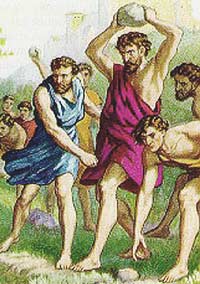

Image from Wikimedia Commons by Hill – Giuseppe Gerbino

In the Culture, by way of contrast, everything is made by atomic-level nanotech assembly processes. Macroengineering exists on a huge scale, so huge that the majority of the Culture’s citizens by far live on orbitals–artificially constructed habitats encircling a star. (One could live on a planet, of course, in much the way that a modern person could live in a cave if she wanted to; but why?) The largest spacecraft, General Systems Vehicles, have populations that range from the tens of millions ot six billion or more. Virtually limitless sources of energy (something I’m panning to blog about later) and virtually unlimited technical ability to make just about anything from raw atoms means that there is no such thing as scarcity; whatever any person needs, that person can have, immediately and for free. And the definition of “person” goes much further, too; whereas in the Star Trek universe, people are still struggling with the idea that a sentient android might be a person, in the Culture, personhood theory (something else about which I plan to write) is the bedrock upon which all other moral and ethical systems are built. Many of the Culture’s citizens are drones or Minds–non-biological computers, of a sort, that range from about as smart as a human to millions of times smarter. Calling them “computers” really is an injustice; it’s about on par with calling a modern supercomputer a string of counting beads. Spacecraft and orbitals are controlled by vast Minds far in advance of unaugmented human intellect.

I had a dream, a while ago, about the Enterprise from Star Trek encountering a General Systems Vehicle, and the hilarity that ensued when they spoke to each other: “Why, hello, Captain Kirk of the Enterprise! I am the GSV Total Internal Reflection of the Culture. You came here in that? How…remarkably courageous of you!”

And speaking of humans…

The biological people in the Culture are the products of advanced technology just as much as the Minds are. They have been altered in many ways; their immune systems are far more resilient, they have much greater conscious control over their bodies; they have almost unlimited life expectancies; they are almost entirely free of disease and aging. Against this backdrop, the stories of the Culture take place.

Banks has written a quick overview of the Culture, and its technological and moral roots, here. A lot of the Culture novels are, in a sense, morality plays; Banks uses the idea of a post-scarcity society to examine everything from bioethics to social structures to moral values.


In the Culture novel, much of the society is depicted as pretty Utopian. Why wouldn’t it be? There’s no scarcity, no starvation, no lack of resources or space. Because of that, there’s little need for conflict; there’s neither land nor resources to fight over. There’s very little need for struggle of any kind; anyone who wants nothing but idle luxury can have it.

For that reason, most of the Culture novels concern themselves with Contact, that part of the Culture which is involved with alien, non-Culture civilizations; and especially with Special Circumstances, that part of Contact whose dealings with other civilizations extends into the realm of covert manipulation, subterfuge, and dirty tricks.

Of which there are many, as the Culture isn’t the only technologically sophisticated player on the scene.

But I wonder…would a post-scarcity society necessarily be Utopian?
Banks makes a case, and I think a good one, for the notion that a society’s moral values depend to a great extent on its wealth and the difficulty, or lack thereof, of its existence. Certainly, there are parallels in human history. I have heard it argued, for example, that societies from harsh desert climates produce harsh moral codes, which is why we see commandments in Leviticus detailing at great length and with an almost maniacal glee who to stone, when to stone them, and where to splash their blood after you’ve stoned them. As societies become more civil more wealthy, as every day becomes less of a struggle to survive, those moral values soften. Today, even the most die-hard of evangelical “execute all the gays” Biblical literalist rarely speaks out in favor of stoning women who are not virgins on their wedding night, or executing people for picking up a bundle of sticks on the Sabbath, or dealing with the crime of rape by putting to death both the rapist and the victim.

I’ve even seen it argued that as civilizations become more prosperous, their moral values must become less harsh. In a small nomadic desert tribe, someone who isn’t a team player threatens the lives of the entire tribe. In a large, complex, pluralistic society, someone who is too xenophobic, too zealous in his desire to kill anyone not like himself, threatens the peace, prosperity, and economic competitiveness of the society. The United States might be something of an aberration in this regard, as we are both the wealthiest and also the most totalitarian of the Western countries, but in the overall scope of human history we’re still remarkably progressive. (We are becoming less so, turning more xenophobic and rabidly religious as our economic and military power wane; I’m not sure that the one is directly the cause of the other but those two things definitely seem to be related.)

In the Culture novels, Banks imagines this trend as a straight line going onward; as societies become post-scarcity, they tend to become tolerant, peaceful, and Utopian to an extreme that we would find almost incomprehensible, Special Circumstances aside. There are tiny microsocieties within the Culture that are harsh and murderously intolerant, such as the Eaters in the novel Consider Phlebas, but they are also not post-scarcity; the Eaters have created a tiny society in which they have very little and every day is a struggle for survival.


We don’t have any models of post-scarcity societies to look at, so it’s hard to do anything beyond conjecture. But we do have examples of societies that had little in the way of competition, that had rich resources and no aggressive neighbors to contend with, and had very high standards of living for the time in which they existed that included lots of leisure time and few immediate threats to their survival.

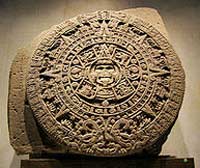
One such society might be the Aztec empire, which spread through the central parts of modern-day Mexico during the 14th century. The Aztecs were technologically sophisticated and built a sprawling empire based on a combination of trade, military might, and tribute.

Because they required conquered people to pay vast sums of tribute, the Aztecs themselves were wealthy and comfortable. Though they were not industrialized, they lacked for little. Even commoners had what was for the time a high standard of living.

And yet, they were about the furthest thing from Utopian it’s possible to imagine.

The religious traditions of the Aztecs were bloodthirsty in the extreme. So voracious was their appetite for human sacrifices that they would sometimes conquer neighbors just to capture a steady stream of sacrificial victims. Commoners could make money by selling their daughters for sacrifice. Aztec records document tens of thousands of sacrifices just for the dedication of a single temple.

So they wanted for little, had no external threats, had a safe and secure civilization with a stable, thriving economy…and they turned monstrous, with a contempt for human life and a complete disregard for human value that would have made Pol Pot blush. Clearly, complex, secure, stable societies don’t always move toward moral systems that value human life, tolerate diversity, and promote individual dignity and autonomy. In fact, the Aztecs, as they became stronger, more secure, and more stable, seemed to become more bloodthirsty, not less. So why is that? What does that say about hypothetical societies that really are post-scarcity?

One possibility is that where there is no conflict, people feel a need to create it. The Aztecs fought ritual wars, called “flower wars,” with some of their neighbors–wars not over resources or land, but whose purpose was to supply humans for sacrifice.

Now, flower wars might have had a prosaic function not directly connected with religious human sacrifice, of course. Many societies use warfare as a means of disposing of populations of surplus men, who can otherwise lead to social and political unrest. In a civilization that has virtually unlimited space, that’s not a problem; in societies which are geographically bounded, it is. (Even for modern, industrialized nations.)

Still, religion unquestionably played a part. The Aztecs were bloodthirsty at least to some degree because they practiced a bloodthirsty religion, and vice versa. This, I think, indicates that a society’s moral values don’t spring entirely from what is most conducive to that society’s survival. While the things that a society must do in order to survive, and the factors that are most valuable to a society’s functioning at whatever level it finds itself, will affect that society’s religious beliefs (and those beliefs will change to some extent as the needs of the society change), there would seem to be at least some corner of a society’s moral structures that are entirely irrational and completely divorced from what would best serve that society. The Aztecs may be an extreme example of this.

So what does that mean to a post-scarcity society?

It means that a post-scarcity society, even though it has no need of war or conflict, may still have both war and conflict, despite the fact that they serve no rational role. There is no guarantee that a post-scarcity society necessarily must be a rationalist society; while reaching the point of post scarcity does require rationality, at least in the scientific and technological arts, there’s not necessarily any compelling reason to assume that a society that has reached that point must stay rational.

And a post=scarcity society that enshrines irrational beliefs, and has contempt for the value of human life, would be a very scary thing indeed. Imagine a society of limitless wealth and technological prowess that has a morality based on a literalistic interpretation of Leviticus, for instance, in which women really are stoned to death if they aren’t virgins on their wedding night. There wouldn’t necessarily be any compelling reason for a post-scarcity society not to adopt such beliefs; after all, human beings are a renewable resource too, so it would cost the society little to treat its members with indifference.

As much as I love the Culture (and the idea of post-scarcity society in general), I don’t think it’s a given that they would be Utopian.

Perhaps as we continue to advance technologically, we will continue to domesticate ourselves, so that the idea of being pointlessly cruel and warlike would seem quite horrifying to our descendants who reach that point. But if I were asked to make a bet on it, I’m not entirely sure which way I’d bet.

Science: Not perfect, but just a bit better than most other systems

On another forum I read, someone made the claim that in science, politics and general human fallibility get in the way of learning the truth just as they do in all other areas of philosophical endeavor, and ended with “Science is little more or less immune to this effect.”

Which is, when it comes right down to it, totally wrong.

The entire point of using the scientific method as a means to understand the physical world is that science is, at least slightly, more immune than most other human endeavors. There are three reasons for science’s resilience when compared to other human institutions: skepticism, replicability, and peer review.

Skepticism means deliberately mistrusting your data, even if it says something you really really really really want it to say. Science works very hard to get rid of things like confirmation bias. It’s not always perfect, but at the end of the day it’s pretty damn good.

Replicability says that if something is true, it’s true for everyone, regardless of belief or political persuasion. If I measure the gravitational constant, and some guy in Iran measures the gravitational constant, if our measurements are correct they will be the same. No matter what philosophical, political, or religious differences we have.

Peer review means nothing is taken on faith. There are no holy fathers in science, no infallible popes. No matter how renown, popular, or revered a scientist is, if he’s wrong, he’s wrong. Einstein got some things wrong. So did Newton. Everyone’s work is checked. Nobody’s work is taken at face value. Everyone’s data is analyzed. Everyone’s results are scrutinized. From time to time, a scientist might try to bully his way into acceptance, sure; scientists are, after all, only human. But peer review has a way, eventually, of correcting their errors.

No human endeavor is perfect, but those built-in checks do mean that science tends to be self-correcting to a degree that most other human endeavors are not.

It is this fundamental attribute of the scientific method–its self-correcting process–that is the single most valuable thing about it. The scientific method does not guarantee happiness or justice or peace or validation. It does not guarantee that the results it offers will be what we expect them to be, or even that they will be comprehensible to us; the more we learn about the laws of nature on a very small and a very large scale, the stranger they seem to our intuition. It offers only one thing: the ability to model the physical world in a way that is consistent with observable reality.

But that one thing it does, it does very, very well indeed.

Some Thoughts On Dating Black Belts

Many years ago, some folks on a mailing list I read posted a challenge: Write a biography of yourself in exactly six words.

I came up with “Much love, only a few mistakes.” Shelly suggested it should really be “I am not a beginner’s relationship.” As it turns out, both of those things are more closely related than they might seem; the missing bit that connects them was provided by an Aikido dojo I belonged to for about a year.

It’s not so much that I am not a beginner’s relationship, but that relationships generally, I think, go best when one makes a point of only dating people who have black belts at life. This is an idea that’s both simpler and more complex than it seems.


A lot of folks–including, to be fair, me, back before I started doing Aikido–have a mistaken idea about what it means to be a black belt in a martial art. The general notion is that once a person becomes a black belt, she has gained a mastery of the art, and is now an unstoppable ass-kicking machine. The reality is almost the opposite. Earning a black belt means that one has mastered the basics of the art–completed, essentially, the beginner’s level course–and is now ready to move on to the difficult (and more interesting) bits.

As my Aikido sensei used to say, “When someone earns a brown belt, they tell everyone. When someone earns a black belt, they usually don’t tell anyone.” Becoming a black belt means understanding how much there always is still left to learn; one of the things that goes along with being a black belt means knowing that there are still a whole lot of folks who are better at just about everything than you are. Mastery is a process rather than a state of being. And despite all that, people who’ve earned a black belt are expected to teach others, to lead boldly, even while being aware that having a black belt doesn’t actually signify mastery. (He was actually quite wise; he also used to say “Americans have bad knees,” which is undisputable in its essential truth.)

We have this image that someone with a black belt is a virtuoso, unshakeable in her grasp of the art, express and admirable in form and moving, faultless in every movement, infallible in the execution of every technique. In reality, black belts can fall on their asses just as well as beginners can; they’re just more likely to do it in complex and innovative ways, that’s all.

Which is not to say that there is no difference between a novice and a black belt. The black belt does have some mastery, but it’s a mastery of the basics, not a mastery of all that there is to learn. A black belt understands the general ideas, has a grasp of how to move through space, has an understanding of her body and the essential fundamentals of leverage and kinesthetics, and understands what it feels like to be moving in the correct way. Even if she’s falling on her ass while she’s doing it. (There are some wonderful outtakes from various Bruce Lee movies on YouTube, showing him, among other things, whacking himself with a pair of nunchucks and snagging his foot in his opponent’s shirt during a missed kick; Jackie Chan has injured himself so many times during missed grabs, falls, and in one case being hit in the head with a helicopter(!) that he’s broken nearly every bone in his body multiple times and is deaf in one ear.)

The point is that having a black belt doesn’t make someone infallible, nor mean that that person has entirely mastered everything there is to know about the art in question. It simply means that there’s a certain base level of competence that’s been established, though even the best black belts can still trip over the occasional invisible imaginary turtle shell and fall flat on their faces while walking across a perfectly smooth floor.

Which brings us to life, and why I’m not a beginner’s relationship.


I’ve actually had several partners tell me that I’m not a beginner’s relationship, in several different contexts. And I think it’s true. As a form of shorthand, I’ve long said that I make it a policy only to date grownups…but it’s occurred to me that I’ve only rarely thought about what exactly that means, and so it’s become a shorthand even to myself.
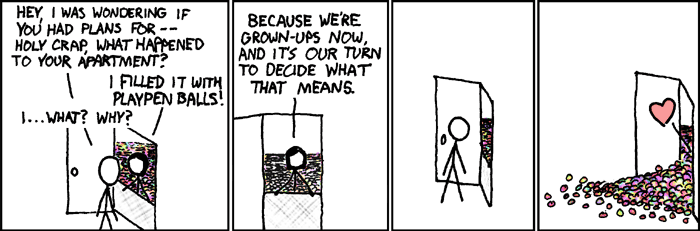

There’s been a bit more turbulence than I’m normally used to in my romantic life over the last couple of years, so I’ve been mentally chewing on what it means to be a grownup, and to choose partners who are grownups. The word “grownup” comes with a lot of attached baggage–we tend to think of grownups as being not a whole lot of fun, as being responsible rather than spontaneous, as choosing what’s most convenient over what’s most daring, as being more concerned about the mortgage than about making life worth living–and that definitely isn’t who I want in my romantic life. So these days I’m more inclined to say that I prefer to date people who have a black belt at life.

But what does that mean?

It certainly doesn’t mean someone who’s mastered everything that life can throw at them. That’s an unrealistic standard in the extreme, and anyone who thinks he’s reached that particular bar probably lacks imagination.

Rather, it means someone who has a handle on the basics. And I don’t necessarily mean the basics of filling out an application for title insurance or fixing a stopped-up drain, though those things are certainly good.

The basics I want in a partner are the basics of conducting a life with respect, compassion, and decency toward other human beings, which has a lot less to do with the mechanics of life and a lot more to do with the passion for life.

In a way, that’s a bit like porn. It’s hard to define precisely what that looks like, though I do tend to know it when I see it. Were I to make a list of the things that a black belt at life understands, it might include things like:

Feelings are not (necessarily) fact.

Just because I feel bad, that doesn’t necessarily mean that someone else has done something wrong. Just because I feel good, that doesn’t necessarily mean that what I’m doing is right.

There is more to life than avoiding awkwardness or discomfort. Sometimes, awkwardness and discomfort are an inevitable part of learning and growth. Sometimes, they point to places where I can improve.

There are better ways to deal with the things that I feel than to direct other people around or through my feelings.

Life is what happens to you while you’re making other plans.

The world is filled with beauty and chaos and joy and sorrow and pain and uncertainty and fear and ecstasy and heartache and passion. All these things are part of life’s song; to fear any of them is to fear life itself.

Life rewards those who move in the direction of greatest courage.

You can not expect to have what you want if you do not ask for what you want. Open, honest, fearless communication is not only the best way to build a healthy relationship; it is the only way.

Fear of intimacy is one of the greatest enemies of happiness.

Conflict is inevitable. We are all on different journeys, and sometimes there is turbulence between us. Dealing with conflict can be done without creating drama.

None of us is perfect. All of us makes mistakes. As grownups, we accept responsibility for our mistakes, without externalizing blame, and pardon reciprocally the mistakes of others.

The times when compassion is the most difficult are the times when it is most necessary.

Being slighted, offended, or hurt by someone else does not justify treating that person poorly. It is easy to vilify those who have hurt us, but they are still people too; even if we can not be close with them, even if we must be guarded, there is no rationalization for evil toward them.

Understanding one’s own boundaries is an important part of understanding one’s self.

Being uncomfortable is not, of and by itself, a reason not to do something, nor to forbid someone else from doing something.

Integrity isn’t in what you do when things are easy; it’s in what you do when things are hard.

Security comes from within, not from outside.

It is impossible to be generous if all you can feel is fear of loss. Things change; nothing is forever. Fear of loss robs us of joy and compassion.

Love is not scarce; it’s abundant. The greater you fear its scarcity, the harder it is to find.

Expectations, especially when unspoken or unexamined, can become a poison. Revel in what things are rather than what you want them to be.

A life of optimism leads to greater joy than a life of pessimism. Look for the best and you’ll often find it; look for the worst and you’ll often find it, too.

There is more to life than going from cradle to grave by the path of least resistance. Conformity is not a virtue, and open expression is not a vice.

To censor one’s self for the sake of propriety, expectation, or social norm kills the soul and drains the color out of life.

The world is the way it is, not the way we want it to be. Wanting something to be true does not necessarily make it true.

There are probably more, I’m sure.

Now, I don’t want to give the impression that being a grownup necessarily means mastery of every single thing on this list. Not every black belt can do a spinning back kick.

Nor do I mean to imply that perfection in all of these things is the minimum acceptable standard of performance. Many of the things on this list require constant practice; if there is a person in the world who has reached perfection in any of them, I have not yet met him. Or her.

Some of them are even things that I struggle with. Lately, for example, I’ve been feeling a bit of a tug-of-war between vulnerability and safety; in the past couple of years, I have made a conscious effort to allow myself greater vulnerability, and have been hurt because of it. I have not quite developed a solid set of skills for quickly evaluating who it is safe to be vulnerable to, as I have spent most of my life getting to know people slowly, over a long period of time. As a result, I have on a few occasions recently allowed myself to be vulnerable to people who have not treated me compassionately, and that’s something I don’t yet know how to handle with grace.

There is, I think, always one more thing to learn. Whether we’re talking about martial arts or life, there’s always a new lesson, waiting in the next fall or the next heartache. I don’t expect, or even want, partners who are perfect. In fact, I’d bet that anyone I meet who strikes my interest is probably better than I am at doing at least one of the things on this list, even if there are things on it that she hasn’t learned yet.

One part of the Dunning–Kruger effect is that people who are highly skilled often rate themselves poorly. It is okay for a black belt to have self-doubt; this is, like entropy, an inescapable part of existence. Understanding that, too, is part of being a black belt at life. I know that there are skills I still need to learn, but I am also confident that I have the ability to learn them. If there’s a foundation upon which all these other things are built, that is probably it.

When we are young

When we are young, we imagine dragons and elves, magic and wizards, heroes swooping down on flying carpets to save the day. As we grow, we long to see these things. We long to catch a glimpse of a dragon soaring over the mountains at sunset, to see with our own eyes the magic of the elves.

We are told that there is this thing called “science,” and science takes away magic. Science says there are no wizards, no elves, no magic carpet rides, no dragons spreading their wings in the last rays of the sun. And it hurts.

For many, the impulse is to reject this thing called “science,” this destroyer of dreams, so that we can live, if even only a little bit, in the world of magic and make-believe.

But for those who do not do this, for those who want to see the world for what it is, science offers us more than our imaginations. Instead of dragons and elves, instead of wizards and magic, we are offered a universe that is ancient and huge and strange beyond our dreams. We are offered a place where galaxies gigantic beyond our comprehension collide in ferocious cataclysms of creation and destruction, where strange objects that can never be seen tear holes through the fabric of space and time, where tiny things flit around and appear in two places at once. We are offered magnificent weirdness far stranger than the paltry ordinariness of wizards and dragons–for what are wizards but men with a litany of parlor tricks, and what are dragons but flying dinosaurs with matches?

Some who reject science still see, however vaguely, the faint glimmers of the wonder that it offers, and so they seek to appropriate its fancy words to fuel their imaginings of dragons and elves. “Quantum!” they cry. “Quantum thus-and-such, which means magic is real! We make the world just by looking at it; we are rightfully the kings of creation!”

And when told that their crude and fuzzy grasp of this hateful thing called “science,” this shatterer of dreams that comes in the light of day to steal their dragons away, says no such things, but actually something else, they react with derision, and scorn, and contempt. “Science,” they say, “is just opinion. It is religion, full of popes and magistrates who declare reality to be what they want, and not what I want.”

For them, I feel sad. In their desire to wrap themselves up in the imaginations of youth, they turn their backs on things far more fantastic than they can dream.

I love science. It does not steal magic away from us; it shows us magic far more awesome than we could ever otherwise know.

Of Puppies, Favorites, and Why I Suck at Monogamy

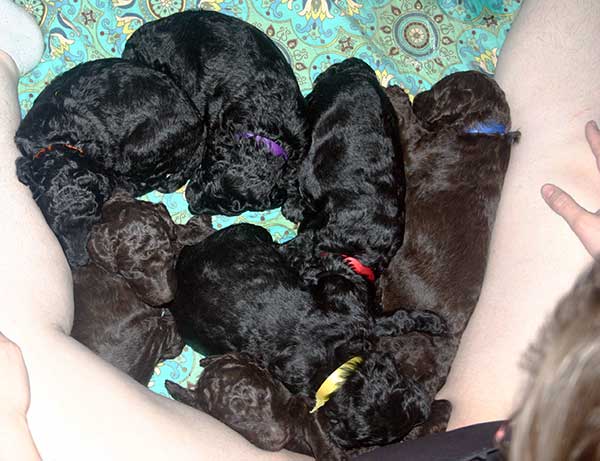
A couple of nights ago, zaiah and I were feeding puppies.

This is something we do every night. And every afternoon. And every morning. And…well, pretty much all the time, really. They hunger, you see. They have appetites, and their appetites must be sated, else our sanity will be destroyed, its shattered slivers sucked into the maw of the great dark beyond.

On this particular evening, she was making fun of me. Every time I took a puppy into my lap, I said, “You know, I think this one might be my favorite.” And meant it.

We’ve been calling them by the color of their collar. (We debated naming them after computer programming languages–“Here, Java! C’mere, Perl! Good boy, Python!”) but zaiah made the point that we don’t want to give them names which might unduly influence whoever adopts them.

And they are all my favorite puppy.


Purple is absolutely my favorite of the whole bunch of them. She is lovely; we’ve informally started referring to her as “sweet face,” because she has such a nice face. She’s affectionate and loving, nuzzling into you when you hold her. She gazes soulfully into your eyes when you feed her. For the first couple of weeks, she would sing herself to sleep after she ate.

My real favorite, though, is Blue. He’s the largest of the bunch, a gentle giant who is gregarious and outgoing. He responds strongly to people, coming over with his tail wagging whenever anyone walks near. He’s filled with energy and enthusiasm, and joy just radiates out of him.

But my favorite out of all of them would have to be Yellow. He is by far the most playful of the bunch. He enjoys rolling the ball around his pen, which is incredibly cute, and he likes playing with his imaginary friend, which is even more cute. He’s smart and companionable and loves wrestling with people.

When it comes to my favorite puppy of the litter, though, that would have to be Pink. She’s quiet and sweet-tempered, a cuddly and affectionate little girl who loves reaching up to kiss your nose. She is absolutely heart-melting in her trusting devotion to the people around her.

Though, to be honest, I think my favorite might be Green. He’s smart, strong-willed, and opinionated. He bounds around the pen wrestling with his brothers and sisters, and any human who will show him attention–“C’mon! I can take you! Let’s go! Arooorooroo! Isn’t this FUN?”

My favorite puppy would doubtless be Red. She is mercurial, one minute playful and the next minute snuggly. She also loves to gaze into your eyes while she eats, and her favorite thing in the world is to fall asleep with her head on your arm. She’s a master of the game “I’ve Got Your Nose,” which she plays with Blue, Green, Yellow, and any person who gets close enough.

And finally, I’ve saved my favorite puppy for last. Orange is sweet-tempered and loving; she bonds easily with people, to the point that she often prefers scritches and snuggles to food. Ever since the day she was born, one of her favoritest of all things is to snuggle into the crook of your neck and fall asleep there, making contented little noises the whole time.

This is, you see, why I’m rubbish at monogamy. Pick just one? Really? When there is a whole world out there, full of joy and love and life? Why would someone want to do that?

Some thoughts on SOPA and Copyright

Anybody who’s tried to use the Internet today is no doubt aware of the “SOPA strike.” A lot of major Internet sites, including places like Wikipedia, WordPress, and Reddit, are blacked out in protest of proposed US legislation called the Stop Online Piracy Act. this legislation, which has been intensely lobbied for by powerful interests such as the Motion Picture Ass. of America and the Recording Industry Ass. of America, propose to stop copyright infringement by non-US sites and protect rights holders. It and its companion the Protect Intellectual Property Act were drafted by people with little technical understanding of the Internet in ways that circumvent normal due process of law. Each contains provisions by which purported rights holders can order the wholesale removal of sites from the Internet, without judicial oversight or review, and each requires ISPs, content hosts, and Web site owners to police user-generated content and remove it if they believe it might infringe on someone’s intellectual property rights.

Needless to say, both pieces of legislation are deeply flawed. They amount to prior restraint on expression, which is not permitted by the US Constitution, and they threaten to undermine the domain name system that’s central to how the Internet works. All that is a given.

The Recording Industry Ass. of America and the Motion Picture Ass. of America have both demonstrated themselves to be clumsy, arrogant, and hamfisted in their approach to copyright. The movie and recording industries are both firmly wedded to business models that are rooted in last century; neither has shown any inclination to change as technology changes. (The Motion Picture Ass. of America has, rather comedically, published a statement in which they say that anti-SOPA protests are a “gimmick” that will “turn us all into corporate pawns.”)

Robert Heinlein perhaps put it best when he said, “There has grown up in the minds of certain groups in this country the notion that because a man or corporation has made a profit out of the public for a number of years, the government and the courts are charged with the duty of guaranteeing such profit in the future, even in the face of changing circumstances and contrary to public interest. This strange doctrine is not supported by statute or common law. Neither individuals nor corporations have any right to come into court and ask that the clock of history be stopped, or turned back.”

But… but… but…

In all the debate about SOPA, there is an elephant in the room that nobody is talking about.


The elephant in the room is that people who create things deserve to be rewarded.

The current crop of Internet users is in many ways incredibly entitled. There is a very deep vein of hatred for the idea of intellectual property throughout the Internet generation. A surprisingly large number of people seem to feel that if someone created it, they deserve to be able to have it.

I have often made the mistake of wading into Internet conversations about copyright, and been astonished by the viciousness and entitlement that I see there. A lot of the arguments are based on a profound ignorance of what copyright is, but even more arguments are based on a hatred of the entire concept of intellectual property that seems to be rooted in the notion that anything I want, I should be allowed to have, as long as it isn’t made of physical atoms. It’s amazing, terrifying, and sad in equal proportion. And I can see why content creators get exasperated.

For example, in a recent debate about copyright on Facebook, one person made the assertion that a person whose work is copied without pay should be flattered by it, and “enjoy the fact that what you have written/drawn/painted/shot has moved so many people that they wish to pay you the compliment of forwarding your work to others to enjoy.” Another person made the even more astonishing claim that “copyright is a tool of privilege” that “keeps art away from the poor,” an opinion he followed up with “Art shouldn’t be sold, it should be shared and traded.” He then followed up with the notion that “talent is a birth-given privilege,” artistic ability and creativity can not be learned, and selling an artwork or a song is inherently a tool of oppression because it’s a way for privileged creative people to exploit those who lack the ability to create by denying them art that can improve their lives unless they pay for it.

The amount of entitlement these arguments reveal can scarcely fit in a double-decker bus. It turns the idea of privilege on its head (what of the poor, disadvantaged person who has invested a great deal of time and effort in learning a skill; should she not be allowed to be rewarded for that effort?); it demonstrates a breathtaking level of entitlement (if I like some bit of artwork and I think it makes my life better, I am entitled to have it no matter what it cost to produce and no matter how much work went into its creation); it relegates the production of art to only those wealthy enough to do it as a hobby, and that any creative person who isn’t wealthy should, I don’t know, work at McDonald’s or something rather than creating; it spits in the face of the notion that people whose work benefits society deserve some measure of benefit themselves; and it cheapens and degrades the considerable effort that artists put into acquiring and building their skills.

And this is, amazingly, not an isolated opinion. It’s a worldview I see reflected again and again and again, everywhere the subject of copyright comes up.


People who hold these ideas can not, I think, be persuaded otherwise. A person who feels entitled to something will construct rationalizations about why his entitlement is justified, whether it’s by imagining creativity as some inborn thing like race or sex, or inventing a moral system whereby anyone who does something that could make another person’s life better like create a painting or, I don’t know, haul away garbage is ethically obligated to do so for free. Such people will often spout platitudes like “True artists do it for the love of art, not for money,” setting up a false dichotomy that ignores the fact that creative people also have to eat. This argument also creates a system whereby an artist’s merits are judged not on her technical proficiency or her ability to illuminate the human condition, but rather on how much stuff she gives the speaker for free.

Other arguments against copyright are based on simple ignorance of what copyright is.

Some of these are as inevitable as arguments like “Oh, so I should tell my partner every time I take a crap?” which I have heard, without fail, every single time I’ve ever seen a discussion about whether or not willfully withholding information from a lover is lying, or “So if someone asks me if her butt looks fat in these jeans, I should say yes?” that crop up as sure as night follows day in any conversation about the value of honesty. I have, to date, never once seen any conversation about copyright in which some person doesn’t say “Well, you better not use the word ‘copyright’ because I have a copyright on it!” or “There’s no such thing as an original idea.” These people don’t understand even the most basic principles about copyright; they simply don’t know that a word or a sentence can not be copyrighted, or that copyright covers only a particular expression of an idea rather than the idea itself.

Other ideas about copyright that are just as common and just as wrongheaded include such notions as “If it’s been posted in a public place, that means it’s legal to copy it,” which is approximately as inane as believing that if a car is parked in a public lot, that means it’s legal to drive off with it; and the idea that as long as you credit the person who made a particular piece of art, it’s permissible to copy and redistribute it at will.

These ideas are the Creation Science of copyright. They’re firmly woven into the fabric of beliefs held by a very large number of people, and they’re absolutely bogus. An emergent view that comes from these mistaken ideas is the smug, self-congratulatory notion that by copying someone else’s work, the person copying it is doing the creator a favor; after all, it’s giving the creator more exposure, right? (One has to wonder what good it is to have this “exposure” if we accept the notion that it’s wrong for someone to want to be rewarded for creating things of value, but that’s a subtle argument that’s generally lost on the caliber of debate one normally sees surrounding the idea of copyright.)


People who create things of value deserve to be rewarded for that creation, no less than people who build cars or make computers or cook McDonald’s burgers. This is a fundamental axiom without which there is no benefit in creation for any purpose save as a hobby. If we do not accept that idea, then what we are doing is we are saying that as a society we do not want the contribution of talented, creative poor people who can not support themselves in some other way; only the independently wealthy with plenty of time on their hands and the means to support their creation need apply. If I intend to invest in a camera, or canvas and paint, or studio recording equipment, I better do it without any expectation that my investment will be rewarded in any tangible way, and so I’d better have enough money to do so without the expectation of return. This idea is, I think, self-evidently horseshit.

Copyright matters. Intellectual property is important. This is not something that will go away, and because of it, the issues that drive dismal piles of misbegotten dreck like SOPA and PIPA aren’t going to vanish tomorrow.

SOPA and PIPA are at this point almost certainly dead in the water, and that is as it should be. But that doesn’t change the fact that the Internet is swarming with poorly-informed and entitled people who sincerely believe they have the right to have other people’s work for free, and so we can reasonably expect to see proposals for more legislation like SOPA and PIPA to appear tomorrow, and the next day, and the next. This. Is. Not. Going. Away.

It is absolutely, undeniably true that there is more than a little hypocrisy at work in the attempts of organizations like the MPAA and RIAA to take the moral high ground about copyright while lobbying for legislation that does an end-run around protected speech. It is unquestionably true that, to a large extent, the copyright problems they face are a monster of their own making, the result of hanging on to antiquated business models that simply no longer apply. It is also true beyond a shadow of a doubt that both of them, the RIAA in particular, have long histories of treating the actual creators they employ very poorly indeed, giving their artists only tiny dribs and drabs of money while executives profit obscenely on their work. All of these things are true.

But not one of these observations is an argument against the idea that people who create novel things deserve to be rewarded for them. We would not say that an inventor, a creative person who applies her talents to solving practical problems, should do so merely for the love of inventing, nor that “true” inventors would never charge for their inventions; and most of us would probably find it quite laughable if someone were to say that an inventor who sold her invention was an oppressor, using her innate privilege to deny other people of things that can benefit their lives unless they pay her.

So why is it that we are willing to accept these ideas when they are applied to someone who uses her talent to create photographs or paintings instead of widgets?

SOPA sucks. But the notion that people are entitled to benefit from others’ work for free also sucks. We are, or we should be, on the same side here; our lives are made richer by the artistic expressions of others, and so we should want to encourage creative people to create. Even if they’re not independently wealthy.

Some thoughts on sex positivity

A lot of folks use the terms “sex-positive” (usually in reference to themselves) or “sex-negative” (usually in reference to people they don’t much like, or society as a whole), but rarely seem to define exactly what those terms mean. There’s a lot of heat surrounding them, but very little light, and I’ve seen a lot of conversations in the BDSM and poly communities turn into “I’m more sex-positive than you” slagoffs. Go out on the Web and it doesn’t get much better; a lot of the definitions I’ve seen offered up for sex positivity don’t really seem to be well-formed (the rather dreadful Wikipedia article makes it seem like little more than no-rules hedonism, whose adherents get down with one another “with few limits;” sex-positive activist Carol Queen sees sex-positivity as recognition that there are “millions” of sexual orientations, and then goes on to talk about it primarily in terms of gender politics). These kinds of conversations seem to dance around the most important ideas behind sex-positivity without actually addressing them head-on, and I think they paint sex positivity in an erroneous light.

First off, sex positivity isn’t (necessarily) about sexual behavior. It’s not about how many people you shag, nor in which position you shag them, nor what you do with them after you’re done shagging. It is possible to be asexual and still be sex-positive. And on the flip side of the same coin, it’s possible to have a dozen lovers with whom you shag in the Monkey And Crane With Hand Grenades On A Trapeze position in three-day thirteen-way marathon orgies while still being sex-negative. The number of partners you have doesn’t define sex-positivity.

It’s also not about having an anything-goes attitude toward sex. I once had a person online claim that being sex-positive essentially means little more than embracing total hedonism as the only sexual ethic; his argument was that the term “sex positive” means seeing all sexual activity as a positive thing, and that since nobody actually does that for real (few people, for example, are willing to make the argument that nonconsensual sex is OK), sex positivity doesn’t actually exist.

And sex positivity is not about dismantling cultural norms. Just as it is possible to be asexual and still be sex-positive, or to have wild kinky sex with twelve partners at the same time and still be sex negative, it is possible to be married in a monogamous relationship with one spouse and live in a suburban house with a white picket fence while still being sex positive. You can not tell whether someone is sex positive or sex negative simply by looking at their sexual arrangements.

Sex positivity at its core is simply the recognition that there is more than one “right” way to have sexual relationships. It is an acknowledgement that human sexuality is incredibly diverse, that different people have different tastes and relate to sexuality in different ways, and that as long as everyone is having sex with consenting adult partners, there is nothing intrinsically wrong with sex, regardless of the way people relate to it. In short, it’s a deliberate refusal to place one’s own sexuality on a pedestal and proclaim it the “right” way to have sex.

Sex positivity is not about how many people you have sex with. I’ve talked, for example, to a person who is polyamorous and who has several sexual partners, who believes that having sex with anyone you don’t love”degrades” and “cheapens” sex, and is therefore wrong. Sex positivity embraces sex for a wide variety of reasons. Some people like to have sex simply for pleasure, without attaching expectations of emotional commitment to it. That is OK, provided that the sex is freely consented to by the people involved.

Sex positivity is not about having sexual relationships in any specific form. Some sex-positive activists see traditional pair-bonded monogamy as inherently disempowering and therefore bad, and say that being sex-positive means seeking to overturn heterosexual monogamy. Monogamous relationships are absolutely right for some people; there is nothing wrong with choosing to have sex with only one other person, just as there is nothing wrong with choosing to have sex with two, or five, or more.

Sex positivity is not (necessarily) about sex for pleasure. Nearly every person I’ve talked to and every Web site I’ve read about sex positive relationships focuses on sex as a natural and healthy thing to do for pleasure, which it is. But people choose to have sex for a number of reasons. Sex for procreation is a valid reason for sex. So is sex for profit. While it may make many folks squeamish, exchanging sex for money is a perfectly valid reason to have sex. Believing that a person who engages in prostitution is inherently less worthy than a person who has sex only for pleasure is not sex positive. Believing that all people who exchange sex for money are always disempowered and are always victims is likewise not a sex-positive attitude. Fundamentally, people have the right to control their bodies, and this extends to the right to choose when, how, and for what reason to have sex. Absent any coercion, sex for money, in any form from traditional prostitution to cam sex to production of porn films, is just as valid as any other consensual form of sexual expression.

Sex positivity is not (necessarily) about gender identity or orientation. I’ve heard the claim that all people are bisexual, and that anyone who is sex positive must embrace the notion that sexuality should ignore gender identity. The fact is that you can no more say “all people are bisexual” than you can say “all people have two legs.” Some people are attracted only to folks who have the same gender identity they do, some people are attracted only to folks who have a different gender identity than they do, some people are attracted (to varying extents at varying times and in varying circumstances) to members of many gender identities; while there is not necessarily a 1:1 correlation between gender identity and biological sex, there often is; and all this is a normal part of ordinary human variability. It is not necessary to identify as bisexual or pansexual in order to be sex positive. It is not necessary to have sex with partners of different sexes in order to be sex positive. Heterosexual cisgendered people can be sex positive.

Sex positivity is not about enshrining sex as a sacred act. I’ve spoken to folks in the tantric sex community who claim that in order to be sex positive, one must embrace the “spirituality” and “sacredness” of sex. For some people, sex does create feelings of spirituality, and that’s fine. But it doesn’t have to. Sometimes, it’s just about the orgasm. Sometimes, it’s just about friendship. Sometimes, it’s just about finishing the movie. The fact that it can be spiritual doesn’t mean it has to be.

Sex positivity isn’t (necessarily) about hedonism. Some people seem to have little or no drive toward sex; other people seem to take no particular pleasure from sex. A person may choose not to have sex, and that choice is just as valid as the choice to have sex. A person may choose to have sex for reasons other than physical pleasure–for reproduction, say, or for the gratification of a partner, or to scratch a biological itch–and that, too, is just as valid. A person is free to limit his or her own sexual expression, and provided that person does not then impose that limitation on other people, that person can still be sex positive.

At the end of the day, people have sex for a lot of different reasons, none of them intrinsically more “right” than any other. If you look at two (or three or fifteen) consenting adults having sex and say “Hey, what they’re doing might not be what I would do, or might not be happening for the reasons I’d do it, but that’s still a valid form of sexual expression nonetheless,” that’s probably a sex-positive attitude. The instant you start attaching thoughts of “They are more debased than I am because their reasons for having sex aren’t as good as mine,” you’ve stepped away from sex positivity, seems to me.

We’re all human beings, which means we all come factory-equipped with a tendency to see our own motivations as purer and more evolved than those of others–especially when we don’t understand why anyone else wouldn’t do something the way we do it. To be sex positive, it is necessary to take a conscious step away from that natural human impulse.

Some thoughts about atheists

I’ve been seeing an uptick lately in popular media about atheism. A lot of these things I’ve been seeing start with “Atheists are…” and then lay out the premise that folks who don’t believe in some kind of supernatural god have all sorts of negative characteristics, whether they be fat or immoral or selfish or whatever.

And a lot of these “atheists are” statements are just silly. Some of them, like “atheists are sexist,” are both silly and also filled with apparently unconscious irony, given the history of organized religion; others, like “atheists are immoral,” are silly and also point to an inability on the speaker’s part to conceptualize an internal code of ethics. But all of them are silly.

And so, I’d like to present this handy, pocket-sized guide to some of those silly ideas, and the reality.

Claim Atheists are immoral I: Atheism offers no framework for morality.
Fact It is possible to construct a rational framework for morality without reference to anything supernatural. For example, racism can be shown to be immoral simply because it hurts everyone–the racist and the subject of the racism alike. The first surgeon to perform open-heart surgery was black; had he not been permitted to go to medical school because of his race, as was the norm at the time, many people would have died because he would not have made the contributions he did. Michael Shermer has written a book, The Science of Good and Evil, that lays out a framework for morality which doesn’t depend on a supernatural entity.
Commentary Claiming a supernatural agent as the framework of morality can lead to some spectacularly, catastrophically immoral consequences–as was the case in 2010 when Pope Benedict XVI, a man whose purported job it is to interpret morality, decreed that ordaining women into the clergy was an immoral act that was equal to pedophilia. When a person who dedicates his entire life to the interpretation of morality as defined by a supernatural entity runs off the rails so badly, it is because he has lost touched with the effects of people’s behavior on other people–which is, after all, the core purpose of morality.

Claim Atheists are immoral II: Atheists can not have a framework of morality. Morality can only come from a god or gods.
Fact Religions do not set the standards of morality; they just reflect the moral ideas that people already have. In a society where slavery is common, the religious institutions tend to say that slavery is OK; when societies say that interracial marriage is bad, the churches agree. When the social mores change, so do the religions.
Commentary When morality is seen as a list of arbitrary rules handed down from a god, then anything that is on that list, no matter how atrocious, is viewed as ‘moral.’ Morality that comes from compassion, on the other hand, does not justify acts of atrocity. (I have actually written an essay about how morality as defined by organized religion has steered us wrong and let society down.)

Claim If you don’t believe in a god, you have no reason to behave in a good or moral way. Atheists have no reason not to murder or rape or commit other immoral acts.
Fact Even without god, there are consequences for violent acts. Going to prison is a pretty good reason not to run around committing rape or murder, no matter what you believe or don’t believe. No society can survive that permits its members to do these things; even an atheist society still outlaws rape and murder. More to the point, though, being an atheist does not mean being without compassion. In fact, if we look at the prison population in the United States, the vast, overwhelming majority of inmates–including violent inmates–identify as religious (primarily Christian), so clearly being religious does not guarantee moral behavior!
Commentary The people who argue that if there isn’t a god, there is no reason not to commit murder are really scary. Basically, they are saying "I can not imagine having an internal sense of morality. The only reason that I am moral is I think I will get punished if I am not. If I believe that my god will let me get away with rape or murder, I’ll do it." Those aren’t folks I would trust with my silverware, my wallet, or my life.

Claim Atheists are arrogant.
Fact Atheism sees humanity as a part of the universe, not set above it. Atheists do not believe that human beings are the centerpiece of all creation; to call humanity the highest point of all the universe is extremely arrogant.
Commentary Many theists believe that the entire world–whose surface is 75% covered with water–was created specifically for man, who has no gills. To my ears, someone who says that the supernatural creator of the universe cares specifically about his life, even down to what job he works and what kind of car he drives, and that he can know what that creator wants from his fellow man, sounds pretty arrogant to me…

Claim Atheists are immoral III: Atheists just want to be free to commit immoral acts.
Fact Atheists don’t believe that there is a god or gods. This has nothing at all to do with morality; many devoutly religious people commit grotesquely immoral acts, and many non-religious people are quite moral.
Commentary If a person wants to commit immoral acts, Christianity is actually a pretty good belief system to allow him to do so. Christianity teaches that the consequences of immoral acts are only temporary (after all, if you kill someone and he goes to heaven, he’s not really gone–at least not forever) and that all it takes is prayer and repentance to wash away any immoral act. Atheists can not fall back on the idea that immorality is only temporary, that someone is not really dead after he has died, or that the right words spoken to someone in the sky will make the consequences of immorality go away.

Claim Atheism is based on faith I: Atheism is a religion.
Fact Atheism is a non-belief in a god or gods. This is a religion in the same way that not betting on horses is a form of gambling, not collecting stamps is a hobby, and bald is a hair color. If you don’t believe that there is a god or gods, you’re not practicing a religious belief.
Commentary The notion that atheism is a religion seems to be held primarily by folks who can not imagine not accepting the idea that the world is under the control of a god or some gods. A lack of belief in a god is not in any meaningful way a religion; there are no sacred objects, texts, or ideas in atheism, nor any of the cultural, doctrinal, social, or philosophical elements that are characteristic of a religion.

Claim Atheists are actually Muslim.
Fact Muslims believe in a divinity (the same dvinity as Christians and Jews, in fact) and believe that a man (Muhammad) was the prophet of that divinity. They also believe that a book attributed to Muhammad was directly inspired by that supernatural god. Atheists accept none of these things; ergo, by definition, atheists are not Muslim.
Commentary The idea that "atheists are actually Muslim" appears to have originated with a handful of American Fundamentalist Protestant sects. There is a convoluted rationale behind it, which starts with the notion that atheists do not actually not believe in god; in all honesty, though, it looks to my eyes like little more than an attempt to take one group of people who some folks feel justified in hating, Muslims, and turning this bigotry on another group of people, atheists, that they also wish to hate.

Claim Atheists are actually polytheists.
Fact A person who denies the existence of a supernatural entity of any sort most probably denies the existence of multiple supernatural entities.
Commentary The notion that atheists are polytheists appears to have originated with a conservative Muslim named Jaafar Sheikh Idris. It’s the flip side of the "atheists are Muslim" argument; Islam tends to despise polytheism. The argument claims that science, evolutionary biology, and nature are revered and imbued with supernatural powers and abilities by atheists, and therefore atheists worship these things as gods. It’s not clear where the church services are held…

Claim Atheism is based on faith II: Atheists have just as much faith that there is no god as believers have that there is.
Fact Even legendary atheist Richard Dawkins, in the book The God Delusion, says "There almost certainly is no god." Not "There definitely is no god," but "There almost certainly is no god."
Commentary There are atheists who assert that a god or gods definitely do not exist. Atheism, though, is defined by the lack of belief that a god or gods exist (an “atheist” is literally “not a theist”), which is not the same thing. Even theists feel confident asserting that a god or gods don’t exist, as long as we’re talking about a god or gods outside their belief system. Few folks would claim that it is a statement of faith to say that Apollo does not exist or Odin does not exist (or even that Santa Claus does not exist).

Claim Atheism is based on faith III: Atheists are closed-minded about god.
Fact Atheists believe that there is no evidence to believe that there is a god or gods, and that listening to people talk about a god or reading books presumed to be sacred do not qualify as "evidence." Not believing in something is not an act of faith. Faith lies in believing something without direct corroborating evidence; if I say there are invisible leprechauns in my garden, that’s faith, but if I say there is no evidence to support the notion of invisible leprechauns at all, it’s not.
Commentary One of the key difference between every atheist I’ve ever met and every believer I’ve ever met is about evidence. If you ask an atheist "Is there evidence that will convince you of the existence of a supernatural divine entity?" she will almost certainly say "Yes, there is," and probably even be able to spell out what that evidence would look like. If you ask a believer "Is there any evidence that would convince you that there is not a god?" the answer is almost always "No; I will continue to believe there is a god no matter what evidence to the contrary I see." That shows a huge difference between faith and atheism.

Claim Atheists are miserable, unhappy people.
Fact All the atheists I’ve met personally tend to be optimistic and filled with joy.
Commentary If we are fallen spiritual beings, then we can not be any more than what we are right now; if we are the natural result of natural law, then there’s no upper limit to what we might become. Many religions teach that the world is something to be endured. For example, many Christians believe the world to be a burden that should be rejected, while many Buddhists see life as the result of undesirable attachment, and the goal of a spiritual path to be the end of attachment so that the cycle of rebirth is broken. These ideas inherently turn away from the world. Atheists see the world as an amazing, awe-inspiring, incredible, wonderful thing, filled with sublime beauty and working in intricate, subtle, and ultimately comprehensible ways. This is, I believe, a far more optimistic, and happier, view of the world.

Claim Atheists are angry at god.
Fact This makes as little sense as being angry at Santa Claus or the Keebler elves. It’s hard to be angry at something you don’t believe even exists!
Commentary I’ve met some atheists who are angry at being made to foot the bill for tax-exempt institutions that teach things which they see as destructive and harmful, or at the results of writing superstition into penal codes, or at the horrific human cost of the anti-intellectual, misogynistic, and homophobic ideas that permeate many religions, but anger at the machinery of institutional organized religion is not anger at god.

Claim Atheists are fat.
Fact In the US, there’s a strong correlation between obesity and conservative parts of the country, with the most religious state in the US (Mississippi) also having the greatest per capita incidence of obesity. There’s a great map to that effect here.
Commentary The notion that "atheists are fat" comes from Conservapedia…the same source which says that E=mC2 is a liberal plot.

Claim Atheists think that everything in the world came from nothing.
Fact The current model of cosmology is that everything in the universe came to be from a singularity whose total mass energy is that of the universe and whose size was less than the Planck constant, which is not "nothing."
Commentary Many, though of course not all, theists of various stripes reject scientific models of the physical world–regardless of any evidence supports those models. Unfortunately, the folks who reject those models tend not to understand them; so you get misunderstandings like this one and the one below.

Claim Atheists think that everything in the world came to be by random chance.
Fact Cosmology suggests that random fluctuations in the initial makeup of the universe were the seeds from which large-scale structures formed; evolutionary biology suggests that small random variation in individuals is the seed upon which natural selection works. However, the large-scale structures in the universe and the formation of different species of organism are both the result of NON-random forces, such as gravity and adaptation, working on those initial variations. The things we see around us are NOT the result of random chance; they are the result of forces which act to preserve certain kinds of variation, and so accumulate non-randomness over long periods of time.
Commentary As with the notion that atheists believe everything came from nothing, this particular misconception comes from a misunderstanding of principles of astronomy and evolutionary biology.

Claim Atheists are hateful. Atheists hate religious people.
Fact Atheists may hate the effects of organized religion on society–bans on stem-cell research, women being burned alive in rural Hindu areas if their parents don’t pay sufficient dowries, women in Afghanistan and Saudi Arabia being kept as virtual prisoners in their homes, and so on–but that’s a different thing from hating people. When it comes to hating individuals, it’s hard to beat fundamentalist theists, who will often proclaim all sorts of horrific torture and atrocity awaiting any person who does not accept their worldview. If atheists claimed that believers would be subject to eternal torture, it’d be easier to claim atheism as "hateful."
Commentary Imagine what would happen if an atheist were to make a claims about believers similar to the one that the former US president made of atheists: "No, I don’t know that atheists should be considered as citizens, nor should they be considered patriots. This is one nation under God." –George H. W. Bush, August 27, 1987.

Claim Atheists are like Hitler.
Fact In 1922, Hitler gave a speech in which he said, "My feeling as a Christian points me to my Lord and Saviour as a fighter. It points me to the man who once in loneliness, surrounded by a few followers, recognized these Jews for what they were and summoned men to fight against them and who—God’s truth!—was greatest not as a sufferer but as a fighter. In boundless love as a Christian and as a man I read through the passage which tells us how the Lord at last rose in His might and seized the scourge to drive out of the Temple the brood of vipers and adders." Upon his rise to power, Hitler banned atheist organizations throughout Germany. In the book Mein Kampf, he wrote "Hence today I believe that I am acting in accordance with the will of the Almighty Creator: by defending myself against the Jew, I am fighting for the work of the Lord."
Commentary "Hitler was an atheist" is a standard part of Christian trope in the US and parts of Western Europe, but it isn’t true. That doesn’t really matter, though. If the atrocities of Hitler (and other figures, such as Stalin and Pol Pot) can be laid at the feet of their supposed non-belief in the supernatural, then it seems reasonable to lay the atrocities of believers upon their belief in the supernatural. You can’t have it both ways, saying that non-belief leads to atrocity but then excusing believers who commit atrocity by claiming that there’s no association between their religious beliefs and the evil things they do.

Claim Atheists are sexist.
Fact Atheist activist organizations tend to have more men than women in them, but it’s a chicken or egg problem. Many mainstream magazines aimed at women, like Ms. magazine, like to portray atheism as sexist, which discourages women who otherwise identify as atheist from coming out of the closet.
Commentary Given a world in which Orthodox Jews spit on, beat, and/or arrest women who want to worship at the Wailing Wall, Muslim countries in which honor killing is seen as acceptable, Hindo countries where women can be burned alive in "cooking accidents" if they displease their husbands, Catholic leaders who say that allowing women into the clergy is as immoral as child rape, and Baptists who say that the role of the woman is to submit gracefully to the divine authority of her husband, the claim that atheists are sexist is a bit…odd. There are misogynist atheists, to be sure, just like there are misogynist believers; the difference is that I have never seen a misogynist atheist who tries to set up organized systems that tell other people THEY should be misogynist, too!

Claim Atheists think that life has no meaning.
Fact Many atheists think that life has the meaning we give it, not the meaning that is imposed on us by a divinity.
Commentary "We exist to worship a divinity" is not, in my opinion much of a meaning, really.

Claim Atheists think that there is nothing beyond human understanding.
Fact There are many things that are still not understood. That’s why scientists still have jobs, and haven’t all packed up and gone home.
Commentary Many people feel a need to believe in something greater than human understanding; it’s part of the drive toward everything from religious belief to belief in ghosts to belief in UFOs and alien abductions. The natural world is absolutely filled with beauty and wonder that’s way beyond simple human stories about Sasquatch or space aliens, but I think that many people don’t see that…which is a damn shame.

Claim Atheists are selfish.
Fact There is a strong correlation between secularism in a country and care for the poor. Secular Western nations like Sweden and the Netherlands consistently have better social programs, greater peace and stability, and a smaller division between the rich and poor as more religious nations. (Note, however, this assumes a nation that is secular because its citizens freely choose to be so, not a totalitarian nation whose dictators force atheism on people. Totalitarian nations tend not to be stable, peaceful, or prosperous, regardless of whether the dictators are religious theocrats or atheists.)
Commentary Many religious people claim that without a belief in a god or gods, there is no reason for altruism. Leaving aside the fact that all cooperative societies benefit from altruism, when we look in the United States we see that many secular charities exist, and that the largest donors to charity, men like Warren Buffett, tend to be non-religious. Also, religious charities often tend to use donated money for the promotion of religious values not necessarily directly connected to charity; the Salvation Army uses money to promote ideas opposing homosexuality, and the Mormon church has spent millions on TV ads against gay marriage, which is millions of dollars they do not have for charitable endeavors.

Claim Atheists don’t recognize the good that religion does.
Fact On the contrary–atheists simply don’t think that believing in a god or gods is necessary in order to DO the good that religion does.
Commentary Many religious folks credit religion for the good that is done in its name–for example, by saying that the good works of Catholic charities proves the goodness of god and of religion. Theses same folks, though, when asked about the atrocities perpetuated by religion, dismiss religious responsibility, saying things like "Those were just men claiming to do things in the name of religion, but the religion wasn’t responsible for the evil they did." Again, you can’t have it both ways. You can’t credit religion with the good that people do in its name but dismiss the evil that people do in its name; either religion motivates people or it doesn’t.

Some Thoughts On Being Amazing

There’s a graphic floating around on the Internet right now that’s kind of bugging me.

It’s a pretty enough image, don’t get me wrong. It shows a beautiful woman standing in the falling snow, with words over it. The words are all spelled correctly, there’s no extraneous “Warning, the letter S is approaching!” apostrophe where there shouldn’t be one (the prevalence of which in common use is itself an ongoing source of annoyance to your humble scribe), and it uses a lovely script font. I’m not going to bother to re-post it here, but overall it’s not a badly done bit of Photoshop.

What bugs me is what the words say. They, read, in that lovely script font:

If She’s Amazing, She’s Not Easy.
If She’s Easy, She’s Not Amazing.

And it pisses me right the fuck off.

Now, I don’t know if they mean “easy” as in “sexually promiscuous” or “easy” as in “easy to get close to.” It doesn’t really matter; both readings are pretty odious.

On the surface, I can kinda see what the artist intended, sorta, maybe. He or she was probably driving at a point that, in all fairness, is reasonable; if you think a person is amazing, you should be willing to invest in her (or him), and not necessarily to expect that a relationship will come easily or without effort. To some extent, it’s a fair point; things worth having are worth working for.

But regardless of whether or not the unknown artist intended to make that point, I don’t think it’s the point that is actually being made.

If She’s Amazing, She’s Not Easy.
If She’s Easy, She’s Not Amazing.

Taken on its most superficial level–that is, with “easy” meaning “sexually promiscuous”–it’s simply old-fashioned, sex-negative slut-shaming of the most boring and tedious sort. I’ve met some folks who are sexually “easy,” at least for the right partners, who are pretty bloody amazing, thank you very much–smart, educated, driven, successful, literate, happy, fulfilled, insightful, incisive, and on at least one occasion even quite skilled at spinning fire. To suggest that a woman’s amazingness varies directly with how tightly she keeps her legs closed is misogynistic, sure, but it’s such a banal, humdrum sort of misogyny it’s scarcely even worth talking about. Either the essential stupidity of such an attitude is glaringly self-obvious to someone, or it’s entirely inaccessible to him. Either way, it’s so lacking in subtlety or depth that it’s not even interesting.

And it doesn’t even exaggerate misogyny to the point that it becomes social commentary, making misogyny a target of sarcastic ridicule the way this graphic does1.

But I am willing to give the person who created it the benefit of the doubt, and assume that such a blatant reading of sex-negative claptrap isn’t what was intended.

I think, though I could be wrong, that rather than trying to be patriarchal and sexist, the person who created the image was trying to say “An amazing woman won’t be easy to get close to, so one should be prepared to put in the work; a woman who is easy to get close to isn’t going to be nearly as amazing.”

And even that reading is pretty fucked up, if you ask me.

If She’s Amazing, She’s Not Easy.
If She’s Easy, She’s Not Amazing.

The first thing I thought when i read this was, “easy to who?” A person who is amazing might very well be easy to get to know and to become close to, if she finds you to be amazing as well. On the surface, there seems to be a very deeply buried, tacit subtext of “I’m not terribly amazing myself, so it sure would be hard for me to get the attention of someone who is.”

And hell, sometimes being a person who takes risks, who engages the world, who is open and transparent, who is willing to run the risk of living a life unencumbered by a fortress of walls and defenses, is part of what makes a person amazing. Even my pet kitten, who lives in a world that is filled with joy and for whom every new person is a friend, knows that.

The flip side, the idea that a person who is easy to get close to won’t be amazing, is not only absurd, it’s a slap in the face to those who are amazing and who choose to live their lives openly and without fear. Writing off a person as not being sufficiently “amazing” merely because that person is easy to engage seems to me to be profoundly short-sighted.

There’s a deeper, more sinister kind of yuck buried in the sentiment as well.

If She’s Amazing, She’s Not Easy.
If She’s Easy, She’s Not Amazing.

Tucked neatly beneath the surface of this sentiment is an underlying assumption: that it is her job, as an amazing woman, not to be easy, and it is your job, and the person who is attracted to amazing women, to work to pierce that wall.

Yep, it’s the same thing we see in Chanel ads and swing clubs and women’s magazines at the grocery checkout: women are the gatekeepers, men are the pursuers. She is amazing, and her role is to make pursuit of her hard; you are the schleb who wants her, and it is your role to pursue her until you wear down her resistance. Don’t settle for second-best! Don’t take the woman who’s easy to catch! She won’t be as amazing as the woman who is.

And that kind of gender-stereotypical rolecasting is, if anything, even more corrosive than the simpler, more boring kind of misogyny in the first reading. The fact that the elegantly-dressed woman in the photo, standing out in the snow in her expensive cocktail dress, was conventionally pretty in the bland sort of Vogue-esque kind of way, sort of underscores that point a bit.

At least I think so, anyway. But then, I seem to have a statistically disproportionate number of amazing people around me, so perhaps I’m just jaded.


1 At least, I assume the Cinderella image is intended to mock misogyny. It certainly feels like social-commentary-through-comedic-exaggeration to me.

Adventures in Europe, Chapter 8: I thought hermits were solitary!

After an afternoon of wandering amongst statues of mostly-naked men spurting great gouts of spray everywhere, we left Peterhof by hydrofoil to visit yet another palace, this one belonging to Catherine the Great.

Well, kind of, anyway. Story was, if I got it from our tour guide of the polysyllabic name correctly, that Peter the Great’s daughter Anna decided, when he died and she took over as monomaniacal despot of unlimited power, that his palace was a total dump. She resolved not to have to live in such a trash heap of a place, and commissioned one of her own, this time with knobs that went to eleven. Or twelve.

So she got an architect, explained how she wanted something a lot less cramped and frumpy than Peter’s old digs, and set him loose. She was so pleased with the result that she made him Court Architect and promoted him to four-star general or something. (Quite how a person’s skill at making over-the-top buildings that’d cause the Pope to blush qualifies said person to be a military commander is a detail that escapes your humble scribe.)

So apparently a year later, Anna dies, Catherine takes over the country in a royal coup, and the poor luckless bastard who’d just been promoted into the ranks of the aristocracy ends up getting banished or executed or something, simply by virtue of being a dude that Anna liked. That’s the way it works with royalty–what one hand giveth, the other hand taketh away, and then shoots you in the head or some damn thing.

The palace is now the Hermitage, one of the world’s largest museums. It looks like this. (I didn’t take this picture, I snarfed it from their Web site. I couldn’t get far enough away to get a decent shot.)

Yeah, it’s like that. Catherine, a few thousand of her closest friends, and a few more thousand people who weren’t actually friends with any of them but were reasonably good cooks or seamstresses or something and also had the misfortune to be born into the servant class, which is something they should’ve thought about when they were choosing parents, actually lived here.

The entrance features the same half-dressed, buff sea-god motif that Peter was so fond of.

I imagine the conversation between these two goes something like this:

Buff half-dressed god #1: “Look, as I pet my lion while holding my long, hard rod in my hand!”
Buff half-dressed god #2: “Look, as I pet my strange, jagged-toothed fish-thing from the sunken city of R’lyeh, while I hold my long, hard trident in my hand!”
Buff half-dressed god #1: “Good day to you, sir, and to your weird fish-thing from the depths of mortal’s nightmares!”
Buff half-dressed god #2: “Good day to you, too, and to your lion, and to your rod as well!”
Buff half-dressed god #1: “Let us go down, impregnate some women, and toy with some mortals for sport!”
Buff half-dressed god #2: “Capital idea, old chap. Let us do just that!”

While we were crossing the street toward the entrance, a Russian street vendor selling T-shirts out of the back of his car approached me and offered me a shirt for ten American dollars. When I saw the shirt, I had to get one.

I got it mostly because I sell a “KGB” T-shirt from my online T-shirt shop, so the irony of buying a “McLenin” T-shirt from a street vendor in the former Soviet Union was too good to pass up.

And the more I thought about it, the more perfect it was. A Russian street vendor selling souvenirs to tourists in American dollars, featuring a blatant trademark infringement that’s also a commentary on the fall of the Soviet Union? It’s also, as my sister pointed out, the thinnest T-shirt I’ve ever seen, so all that and shoddy quality too. Now that there is really everything you need to know about the fucked-up geopolitics of the post-Soviet world, it is.

Our transaction complete, the diminutive Russian guide of the brain-shattering name ushered us inside. Once in the foyer, the very first thing we saw was a cat curled up on one of the benches flanking the door.

It was quite a placid cat, utterly unconcerned with the throngs of people all around it.

Our tour guide explained that the Hermitage keeps about five or six cats on the premises as a defense against rodents, since one of the biggest challenges faced by museum curators is rodents and insects that have developed a taste for fine artwork.

I had to pet the cat (over, it must be said, the objections of my father, who quite dislikes cats) before we could venture any farther into the Hermitage’s hallowed halls.

There is a story that when the Bolsheviks overthrew the Russian Tsars, their first impulse was to burn all the palaces to the ground, but they opted to keep them as museums instead–with a propagandistic eye toward inflaming the working classes with fury at the tsars’ decadent lifestyles. The Bolsheviks themselves did plenty to inflame the working classes with fury at them, so I’m not quite sure how that worked out.

Being a monomaniacal Russian despot is a little bit like being Texas. Everything is bigger, and you execute a lot of people. For example, take the stairway leading up from the foyer in the Hermitage. You know how people always put little knobs or carved balls or something on the ends of the banisters, so that actors in Chevy Chase movies can at some point slide down the banister and catch their testicles on them? Yeah, crank those babies up to 12 and you end up with something like this:

It’s probably a good thing Peter the Great was dead by the time Catherine rolled into power, else his punishment flask might’ve looked like that. I’m not really sure what one would do with that thing, short of execution by vodka; the bigness of its size diminishes its utility as a thing to put stuff in considerably. But it certainly is…big.

The Hermitage itself is big. Really, really big. Our guide claims, with a good degree of credibility, that if one were to tour its entire exhibit space and spend one minute looking at each item in their collection, one would be there for about seven years and change. We were there on the one-hour plan, which meant either traveling through the museum at an average speed of Mach 2.4, or seeing only about one-onehundedth of one percent of their collection. Lacking adequate heat shielding and dorsal stabilization for the former, we opted for the latter.

The hallways throughout the Hermitage look something like this.

Every square inch of every surface is covered in paintings and frescoes and reliefs and tilework. The yellow stuff is mostly gold. The overall effect is jaw-dropping, in a sort of over-the-top, confused mishmash of priceless artwork that looks like it was just kind of haphazardly thrown into the air like Ping-Pong balls shot at high velocity from a liquid-nitrogen-powered cannon. (Which I saw a few nights ago, in fact, and it took down part of the ceiling of the building we were in, and the cops got involved, and…but I digress.)

It all looks like this. The whole. Fucking. Place.

My sister, after we’d been walking around with our jaws scraping on the ground for a bit, made a snarky comment along the lines of “Isn’t it amazing what you can do by climbing over the backs of the underclass?” Now, my sister, as I may have mentioned before, is a lawyer, specifically a lawyer who works in the field of contract law. And she said this without apparent irony, as she took advantage of some of her ample leisure time as a privileged First World Westerner to visit a less-privileged country while on vacation from the job at which she earns probably three or four times the median US income and, I don’t know, like eighty-seven million times the average Third World salary or something.

But, honestly, she’s right. I was thinking something similar right before she said it.

And yet…and yet…

I understand the urge to be surrounded by beauty. I get that the Russian leaders were incredibly privileged monomaniacal despots who owed their incredible standard of living to the tyranny and atrocity with which they ruled, I really, really do. I also get that it doesn’t have to be that way. Just a single dollar collected over a single year from each person in the US–an amount of money well within the means of anybody, including the homeless–would probably be sufficient to endow a place of beauty on the scale of the Hermitage, and I think creating beauty is something that has value.

Architect Frank Lloyd Wright wrote that art for art’s sake is a philosophy of the well-fed. I get where he was coming from, but I’m not as cynical. Maslow’s hierarchy of needs would seem to suggest that art is a fleeting and ephemeral thing, attainable (or even relevant) only where our more base needs are being met, but honestly, Maslow can blow me. Were that true, how then did Der Kaiser von Atlantis, an opera written by a Jewish composer being held at the Nazi Terezin concentration camp, come to be? The idea that art is only meaningful to people who are otherwise well-fed and content is something I find not only false, but repugnant. Art, done properly, illuminates every part of the human condition, even–perhaps especially–the bits that are most unpleasant and sordid.

So, yes, I get that the over-the-top exuberance of the palace that is now the Hermitage was built on a foundation of human suffering. I also get that it, more than any of the military misadventure or matters of state that occupied the Russian treasury during the reign of Catherine, is a lasting testament to the human spirit. Had this particular palace never been built, I daresay the suffering of the Russian serf would have been not one whit lessened. As long as we are stuck with the idea of monomaniacal tyrants willing to commit atrocity–and, Russia’s history being what it is, I suspect that was inevitable–there are far worse things they could have done, and did do, than be a patron of the arts.

Though that won’t, I daresay, prevent me from getting snarky about some of that art in my next installment.