Some still further evolving thoughts on veto and metamour relationships

I have spent a lot of time thinking and writing about metamour relationships and veto in polyamory. And everything I’ve written about this in the past was not only wrong, but wrongheaded. Just about everything you’ll see about this in poly forums and communities is wrong, wrongheaded, or both. I don’t think there’s a graceful solution to this problem, and if there is, the entire poly scene has yet to find it.

Buckle up, this might get long.

So first, what I’ve said about this in the past:

A long time ago (late 80s/early 90s), I would have said the answer to a situation where you’re dating two or more people who absolutely positively cannot get along is veto. You create a situation where if your “primary” partner has an issue, you have a mechanism where your primary partner can put the brakes on, say “I cannot be happy if you’re dating so-and-so,” and that’s it. This mechanism is simple, it protects your existing relationships, it’s clear, and it’s easy to understand.

It’s also, as I learned through bitter experience, tremendously destructive.

For one thing, it doesn’t acknowledge basic human nature. People fall in love. If you are in love with someone and you lose that relationship, you end up with a broken heart. Giving someone the authority to say “I require you to break up with this person you love because I say so” is pretty much guaranteed to end in a broken heart, and breaking your lover’s heart—even if your lover agreed to give you the power to do so, is not a good long-term strategy for the health of your relationship.

Some non-monogamous folks try to deal with this by adding the hilariously wrongheaded idea “you aren’t allowed to fall in love.” As if emotions could obey rules… If that worked, you could simply say “let’s pass a rule forbidding feeling jealous” or “let’s pass a rule forbidding feeling angry” and be done with it.

It’s obvious why that won’t work, yet people think a rule forbidding falling in love will? Really? Ooooookay, then.

What’s worse is veto intrinsically rewards bad behavior. If I don’t want you dating so-and-so, for whatever reason, then I can pick fights with so-and-so, antagonize so-and-so, and then say “We can’t get along, I veto so-and-so.” See, the thing is, sometimes the problem is the “primary” partner. When that happens, a veto in a literal sense rewards poor behavior.

So if not veto, what then?

After my now-ex-wife vetoed someone I was deeply in love with many years ago—a veto that directly caused the chain of events that ultimately led to divorce—I went the other way. My new policy became “All models over 18.”

That means, basically, all the people I’m involved with are fully grown adults. Fully grown adults are capable of working out between themselves how they interact. For me to try to tell two other human beings that they have to get along or that they should be friends is controlling, intrusive, creepy, and gross.

And, like veto, it ultimately doesn’t work. You cannot tell Bob and Jane they have to like each other. Bob and Jane are human beings—real, actual people—not lifestyle accessories. They have their own desires, motivations, strengths, weaknesses, internal awareness, history…it’s not my place to tell them what kind of relationship they must have with each other. That’s for them to work out. I can’t control them.

That works right up until it doesn’t.

So veto isn’t the answer, and telling your lovers they have to get along isn’t the answer, and focusing on your own relationships with the assumption that your lovers are all grown adults who should be able to sort things out themselves isn’t the answer.

Talking assumes everyone is coming from a place of objective rationality, not emotion. Have you seen people? It also assumes everyone is acting 100% in good faith 100% of the time, so the solution to problems is simply more information, and again, have you seen people? If the problem is not “they simply lack information,” then “if we talk about it and provide the missing information, everything will be okay” won’t work.

Yes, I know poly people say “communicate, communicate, communicate.” Yeah. Here’s the thing: solutions to complex problems that are short enough to fit on a bumper sticker almost never work.

So what is the solution?

¯\_(ツ)_/¯ Fuck if I know. Here’s what I do know:

Fact: You can’t tell grown adults what to do, and you can’t tell grown adults they have to like each other, or even get along.

Fact: Saying “I demand you get rid of this partner I don’t like” is harmful not just to that person, not just to your lover, but to you and your relationship.

Fact: Problems between people are often rooted in a complex snarl of emotions, jealousy, envy, personality conflicts, differing values, differing motivations, differing upbringing, different assumptions, and maybe even good old-fashioned pheromones, so pithy bumper-sticker solutions like “communicate, communicate, communicate” aren’t likely to succeed. They’re just deepitudes—platitudes that sound all nice and shit, but aren’t nearly as profound as they seem.

Fact: You can say “I won’t be with people who don’t get along with my other lovers,” but that opens the door to sufficiently skilled manipulators to exercise indirect control over your other partners.

Fact: Prioritizing existing relationships over new can reward bad behavior and can prevent new partners or potential partners from saying “hey, there is legit something unhealthy going on in your current relationship.”

Fact: You can set boundaries like “if you argue with each other in my presence I will leave the room,” which might help protect your own mental health, but it doesn’t actually solve the problem.

Fact: Saying “not my circus, not my monkeys, you folks sort this out” and taking a step back and lead to you becoming a non-player character in your own relationships.

Fact: Saying you won’t involve yourself in relationships that have too much arguing or fighting leaves you open to what I call Veto By Drama: Even if you don’t have a veto, don’t like veto, don’t ever want to be involved with veto, one partner can do a Veto By Drama simply by making another relationship so volatile and drama-filled you throw up your hands and say “that’s it, I’m done.” And if you have one or more manipulative partners, it can be pretty tough to identify the source of the drama!

Fact: You can say “One of my selection criteria is that I’ll only date people who fit well with my existing partners,” but again if your existing relationships are unhealthy that simply rewards bad behavior, cuts you off from people who might legit be able to point out the unhealthy dynamic, and it becomes mathematically untenable for n>3 or 4 or so.

Where does that leave us?

Beats me. I don’t have a solution, but I sure do admire the problem.

“Support Our Police,” the Thin Blue Line, and the hypocrisy of the right

The American Republican party portrays itself as the party of law and order, the party that supports the police, the party that understands the thin blue line that stands between anarchy and chaos. “Vote for us! We stand against the anarchy of the liberals!”

Yet when we look at right-wing media these last few weeks, we see the forces of American conservatism, the “law and order” party, blasting the Capitol police who stood against the rioters and insurrectionists on January 6. Night after night, millions of Americans tune in to watch right-wing talking heads vilifying the police for hours at a stretch.

What gives? How can this be? Isn’t this the rankest, vilest sort of hypocrisy, so blatant that even the strongest partisan must be appalled to see it?

No. I don’t think so. What we’re seeing is something else, and within the context of the alt-right, their behavior makes a warped sort of sense.

To understand what is happening now, and why the American right doesn’t consider their vilification of the Capitol police hypocritical, I think we need to understand John McClane, the Hero’s Journey, Rugged Individualism, the American monomyth, and authoritarianism. Those are the ingredients that make up that particular toxic brew.

Many people, especially those who lean toward social hierarchy, want to see the police as the classic hero, waging epic battle against the forces of evil like John McClane in Die Hard. Free of the entangling bureaucracy of a stifling and incompetent bureaucracy, they can take the fight directly to the baddies.

Why is this necessary? Look at the Hero’s Journey. It’s a fundamental part of the Hero’s Journey that the hero is set apart from society during the great conflict. The police hero as an archetype transcends the normal rules of society. He works outside the rules because the criminal works outside the rules.

This whole concept of heroism is deeply, deeply steeped in rugged individualism. The hero engages in single combat with the forces of darkness. The hero stands or falls on his own. The hero depends on his own resources and wit. Think about all the classic hero tropes: the sheriff from out of town in spaghetti westerns who rides in to save the townspeople unable to save themselves, Arnold Schwarzenegger going toe to toe with the predator in some far off jungle, everything about Batman…in their role as hero, they transcend the normal rules to fight on their own, self-reliant and solely responsible for deciding the rules of engagement.

We (meaning Smericans and those influenced by American culture) are steeped in this idea of heroism and the Rugged Individual because it’s woven deep into the American monomyth, and has been since the days before the United States was the United States. John Galt is a clumsy, badly-written, lowbrow-posing-as-highbrow interpretation of the American monomyth, created by an American immigrant as an unironic (but still unintentionally funny) expression of all Ayn Rand believed was good and strong in the American character.

When American conservatives refer to police as “heroes,” they don’t mean “people who work for the community.” They mean something quite different: the archetype of the Campbell hero, the hero of a Hollywood big-budget action flick, Arnold going after the Predator. That kind of hero doesn’t obey the rules. They mean “hero” in a very specific and literal sense.

In fact, it’s insulting to think that kind of hero even should follow the rules. Rules are for the weak, for those who don’t have what it takes to be heroes. That kind of hero understands what needs to be done and is willing to do whatever it takes to git er done.

Why do we like that image?

Authoritarianism.

That mentality of police relies on the idea that police are the heroes keeping the forces of evil at bay. They protect our freedoms from the Other, and our sacred freedoms must be defended through strict order and harsh justice.

It’s why American conservatives can say they support our men in blue and fly thin blue line flags, then turn around and ridicule, attack, and condemn the Capitol police who fought against the insurrectionists. To reasonable people, that looks like hypocrisy. To the people who do it, it’s not. Those police weren’t heroes. Those polce stood against the heroes, against the people who went outside the system to right an “injustice” and git er done.

It’s also why they celebrate police who kill unarmed Black people. There’s a deep element of racism writ in this mindset. The police went outside the system to confront the Other, the enemy within us who is not of us, the people who don’t obey the rules, who don’t know their place.

Seen in this light, it’s the Capitol police, not the insurrectionists, who broke the social contract. They aren’t the heroes of this story. By acting against the heroes, they deserve condemnation.

As weird as this mindset might seem, it’s what a lot of conservatives truly to believe, and it’s why pointing out the apparent hypocrisy of flying a “thin blue line” flag whilst throwing the Capitol police under the bus won’t gain any traction among the American right.

The crowdfunding for Divine Burdens is now live!

She had been in exile for three hundred and seventeen days when everything changed. Her exile from the City happened with little fanfare. A somber group of High Priests, Priestesses, and Clerics representing the major temples in the City informed her that she was to be banished. They gave her durable clothes, a few simple tools, and a small amount of food and water. They told her the Providers throughout the City would no longer respond to her. Then they escorted her to the shield. She stepped through, condemned to spend the rest of her days wandering the Wastelands. There were no friends to see her off; by the time she was exiled, she had no friends left. For the first few days, she treated it like a game. She had always thought of the Wastelands as some vast, barren desert, but once she was past the enormous automated farming towers with their spiraling ramps loaded with crops, she found an endless series of rolling hills, lush and forested. She spent the first couple of days near the City. She tried to steal food from one of the tower farms. The farm drones blocked her, giving her unpleasant shocks whenever she tried to force her way past them. She threw rocks at the drones, which bounced off their outer shells with no effect. On the third night of her exile, she attempted to sneak back into the City. The shield, which for all her life had been no more a barrier than a fog bank, became as hard and impenetrable as stone.

Divine Burdens, the second book in the Passionate Pantheon series of far-future, post-scarcity science fiction erotic novels I’ve co-authored with Eunice Hung, is now available for pre-order on Indiegogo!

This novel is a bit of a change from The Brazen Altar, the first in the series. While that book was Utopian science fiction kinky erotica, this one is dark erotic horror.

Eunice and I think that science fiction can be used to explore the edges of human sexuality, just as it can be used to explore other aspects of what it means to be human. The world of the Passionate Pantheon is a post-scarcity wonderland ruled by AIs worshipped as gods by the citizens, largely through ritualized group sex. You’ll find tentacles, runs through a forest that bends to the will of the AI gods, sacred parasites that grow inside a host and exude potent aphrodisiacs, and kinks so exotic they don’t even have names.

Plus if you back the crowdfunding, not only can you get an eBook or a signed paperback of Divine Burdens before publication date at a super-cheap price, you can also get a kazoo ball gag inspired by the drone on the cover! Back the crowdfunding now!

New book crowdfunding coming soon!

What a strange few years it’s been.

In 2010, I met Eunice Hung at an orgy in a castle in France. (Not a sentence the ten-year-old me ever expected the adult me to type.) We kept in touch with each other after that, occasionally brushing past one another at poly network get-togethers.

In 2018, at another orgy (this one in a manor house in Lincolnshire), we decided to write a novel together. Eunice had created a magnificent, wondrous far-future post-scarcity science fiction world ruled over by benevolent AIs who the people worshipped as gods, primarily through ritualized group sex. She told me about it, I said “that would be a marvelous setting for a book!”, and the world of the Passionate Pantheon was born.

In 2020, we finished three books set in this world. The first, The Brazen Altar, published last May.

The second, Divine Burdens, publishes this October. It’s a radical shift from The Brazen Altar—where that book was upbeat Utopian fiction, this one is dark erotic horror.

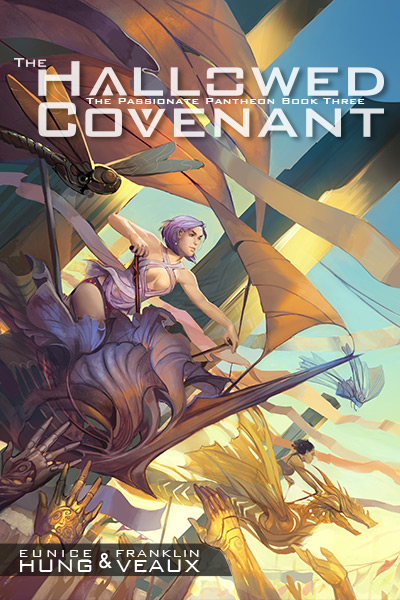
The third, The Hallowed Covenant, publishes Spring 2022.

Writing these books has been an amazing experience. You can read them on the surface level as far-out super-kinky porn (seriously, these books have kinks so exotic they don’t even have names), but hidden in the subtext is a lot of philosophy and some very complex worldbuilding.

We just finished the first draft of a fourth novel in the series, tentatively titled Unyielding Devotions, and we’ve sketched out a fifth book we’ll be working on when the other two novels we’re currently writing in completely unrelated genres are finished.

The first book is selling quite well, despite the fact it was banned from Amazon for sexual content, or so they say. (Apparently books like Daddy Don’t Pull Out and Stretched By Daddy at the Waterpark are okay with them, but Utopian science fiction theocratic erotica is beyond the pale. No, I don’t understand it either.)

Anyway, starting this coming Sunday, July 18, 2021, you’ll be able to pre-order Divine Burdens on Indiegogo at a reduced price.

And just because it’s completely absurd, one of the backer perks you’ll be able to get is a special edition Passionate Pantheon kazoo ball gag, inspired by one of the drones on the front cover!

Eunice and I are also doing a virtual book event on Saturday, July 17, 2021 at 11:00 AM Pacific time/7:00 PM London time. Save the date! You’ll need Zoom to attend. The last virtual book event we did was scheduled for an hour and a half but ended up running four and a half hours as we did a deep dive into everything from the writing process to the philosophy of the Passionate Pantheon to post-scarcity societies. Bring questions!

What is the Hunter Biden story?

Note: I originally wrote this as an answer on Quora

The Hunter Biden story is a fascinating piece of disinformation and agitprop.

I’ve been following it closely, partly because it’s an interesting political story and partly because I’m an avid infosec enthusiast and I actually know how emails work.

I was, to be honest, surprised when the “Hunter laptop” scam first began that anyone actually believed it. If you know even a little bit about how email works, it’s plain as snow in December that the story was fake. The supposed “Hunter Biden emails” that were released were released as PDFs, with no headers, from email domains that do not exist. I was like “Really? People are falling for this? God damn conservatives sure are gullible.”

But in the time I’ve been in Florida helping to care for my mother, I’ve realized that isn’t fair.

My dad is older (he’s 82), he uses email every single day, but he has not the slightest clue how it works and he cannot define the word “domain,” much less explain what a domain is or spot an invalid email domain.

And honestly, a lot of people, on the left and right, are that way. It’s not that conservatives are stupid, it’s that to most people, email is magic. And they don’t ever see email headers, so it doesn’t look suspicious if someone shows them a fake email with no headers. And, like my dad, they don’t know what a domain is, so if you show them an email with a clearly bogus “from” address they don’t even blink.

In that sense, what looks like a crude, hamfisted attempt at second-rate disinformation is actually pretty savvy. It’s propaganda aimed at a very specific audience: an audience that is not technically savvy, but—and this is the important part—has also been indoctrinated to distrust “elitist experts” who think they know better. So this audience (1) doesn’t have the technical skill to see through even a very crude, simplistic scam and (2) will automatically respond to anyone who points out the scam with “neener neener I don’t believe you!!!”

It’s been a very interesting lesson in 21st-century propaganda. Forging a real email is hard. Email is trackable and traceable. It passes through many computers and it leaves traces in every one. You can not easily forge a realistic, believable email even if you have nearly unlimited resources…

…but you don’t have to.

If the target of your propaganda is people with the limited technical knowledge of my father who have also been told to distrust experts, it’s not necessary.


Now, having said that, parts of the scam are very sophisticated.

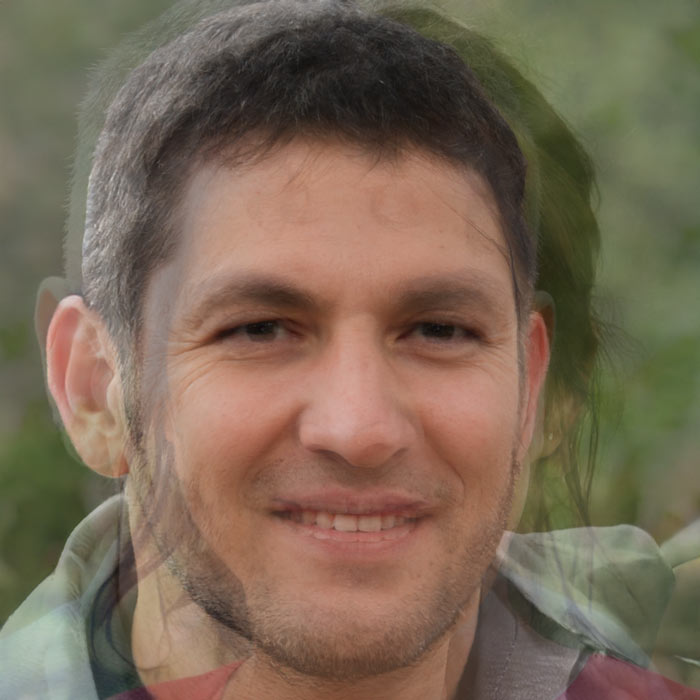
This is Martin Aspen.

Martin Aspen wrote a 64-page dossier documenting corruption in Hunter Biden’s business dealings in China, which was released by security firm Typhoon Investigations.

Martin Aspen does not exist.

Typhoon Investigations does not exist.

The photograph of the person you see here is not a picture of a person. It was created by a GAN—a type of deepfake machine learning computer program.

If you’re not familiar with these, I recommend you visit the site This Person Does Not Exist.

Every time you refresh the browser, you will see a photograph of a different person. None of the photographs are real. None of the people exist. The photographs are all created by machine learning deepfake programs.

Anyway, back to Martin Aspen.

Martin Aspen does not exist. His photo is a computer-generated deepfake. His resume lists companies he’s never worked for, universities that have no record of him, and security firms that don’t exist. The entire dossier was faked.

Fifteen, twenty, thirty years ago, this level of fakery would require the concerted effort of a nation-state’s intelligence team to do. Today, a single reasonably skilled person can do it. I can do it. You can do it.

How a fake persona laid the groundwork for a Hunter Biden conspiracy deluge

And the thing that’s most fascinating about all of this, besides the fact it shows how fragile and easily manipulated the public perception is? Proving that the document was fake will not change a single mind.

The Hunter Biden saga has revealed two things:

  1. Small groups of individuals, even a single person sitting in a bedroom, can create agitprop and disinformation campaigns that would only a short time ago have been the envy of entire government intelligence teams.
  2. People want to believe. They’re simply looking for an excuse. Modern propaganda does not need to be subtle. It doesn’t need to be well-done. It doesn’t need to stand up to any scrutiny. It merely needs to give people an excuse to believe what they already want to believe.

A frantic flight

A bit over three weeks ago, I got a frantic call from my dad. My mom had been hospitalized after she complained of a headache and then collapsed. The doctors, he said, were investigating, but didn’t yet know what was wrong.

A few hours later, he called back choked up. “You better get down here,” he said. The doctors had found an aneurysm and rushed her into emergency surgery. The surgeon was unable to repair the aneurysm because her arteries were too fragile. She was not expected to survive.

I made the fastest plane reservation I could find. A day and a half later, I was in the air, headed to Florida. I met my wife at the airport and we went to my parents’ house in Cape Coral, where I’d lived from the time I was in high school until I moved out for good, nearly 40 years ago.

Florida is, I’m told, the world’s #5 hotspot for COVID-19. Southwest Florida is deep, deep Trump territory: pickups with enormous “TRUMP 2020” flags, huge “Trump!” signs along the side of the road, and not a mask in sight. These people believe, I mean really believe, that COVID-19 is a Democrat hoax and masks are a ommunist plot.

And they’re dying for that belief. Visiting my mom in the hospital was like stepping into the set of a disaster movie, or maybe a developing nation. So many patients, the hospital was parking people on stretchers in the halls.

By the time I got to the hospital to see her, my mom had been moved out of the ICU, because, they said, they had 30 people in line for that bed behind her. When I visited, she was awake and alert, and her mind was still as sharp as always. (She had some scorching things to say about late-stage capitalism vis-à-vis American healthcare, in fact.)

She improved rapidly over the next few days. When her doctor was convinced she was no longer bleeding internally, he sent her home–not because she was ready to come home, but because they needed the bed.

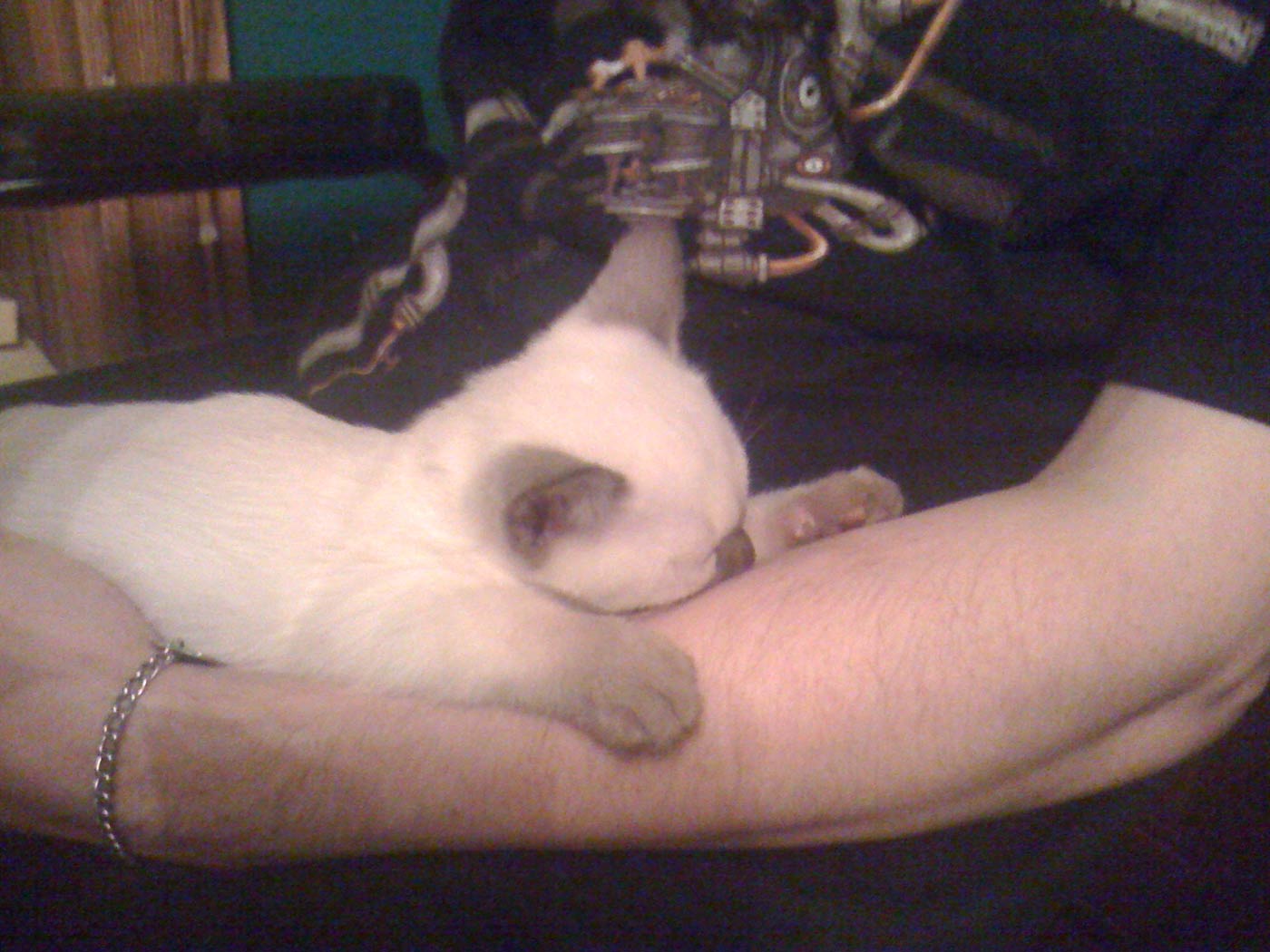
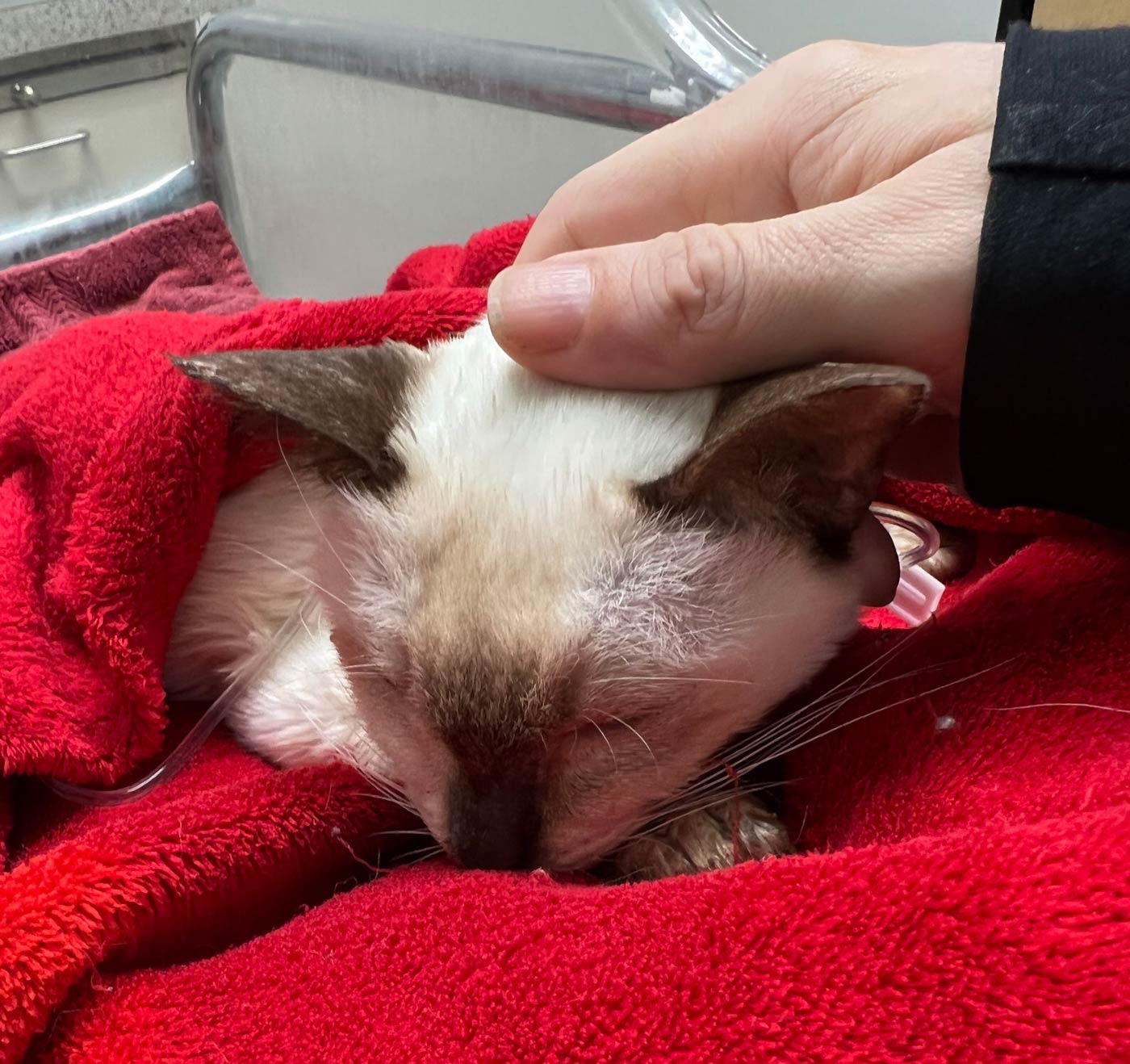
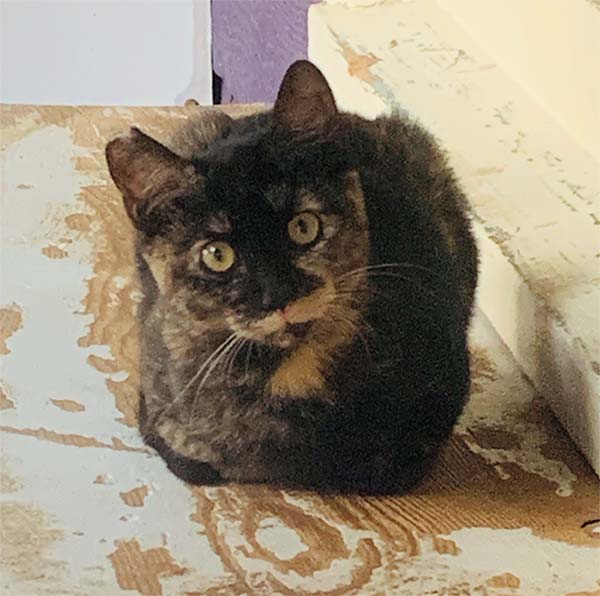
My mom has two gorgeous Tonkinese cats.

Her cats were overjoyed to see her, even though she was weak AF.

My sister, my wife, my dad, and I all helped care for her. The doctors had told us to expect the worst–“She could go to sleep and never wake up,” her surgeon said–but my mom is a resilient woman and she doesn’t follow anyone’s script. I went down to Florida believing I would never see her again, but it turns out it’s dangerous to count her out of anything.

five days after being released from the hospital, she was already up and around, reading and cuddling with her cats.

Two weeks after she was released from the hospital, you’d never know there’d been anything wrong with her.

Health care professionals are still visiting her at home–they did release her from the hospital way before they should have, after all–but man, I gotta say, my mom is awesome.

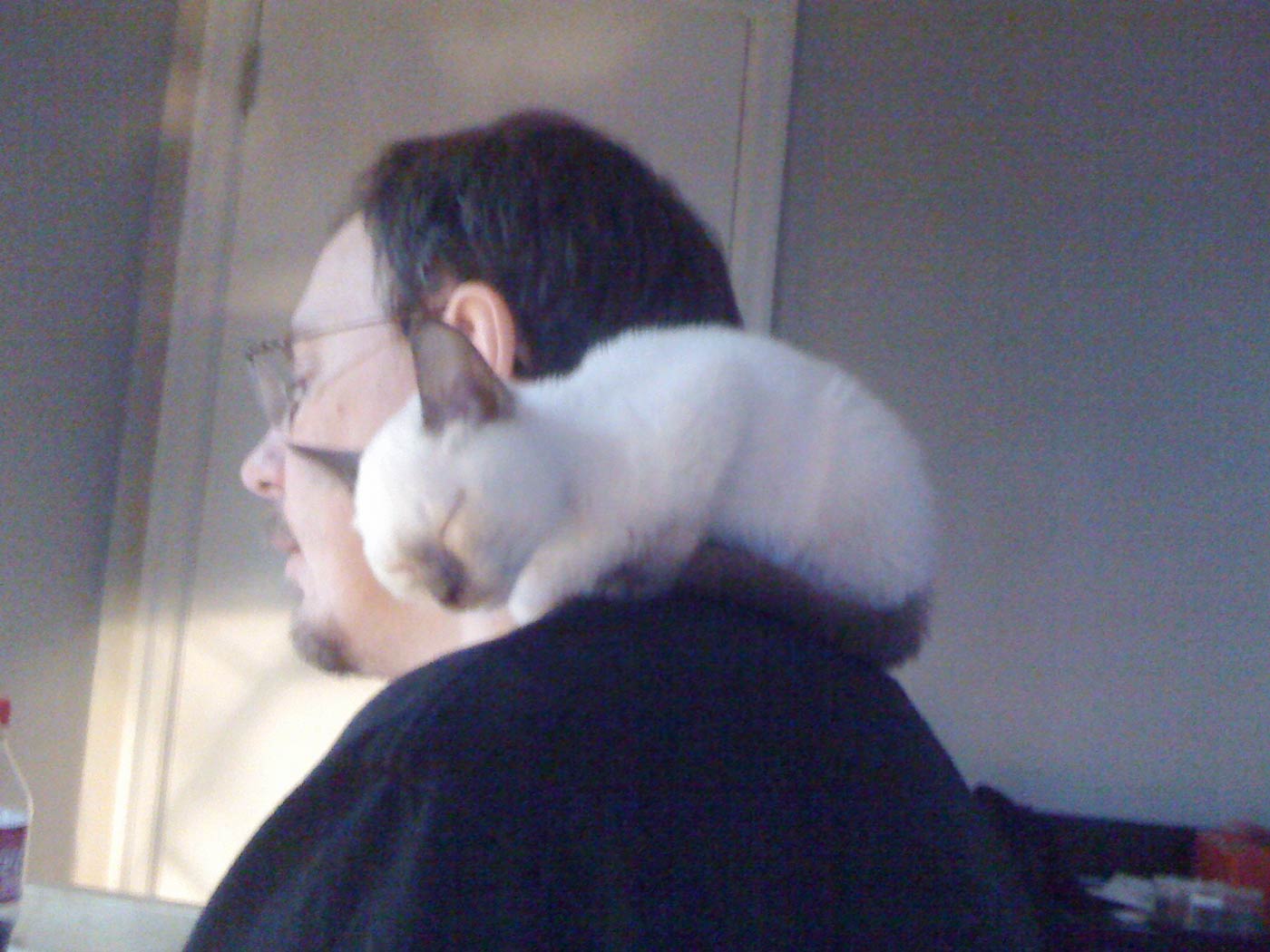
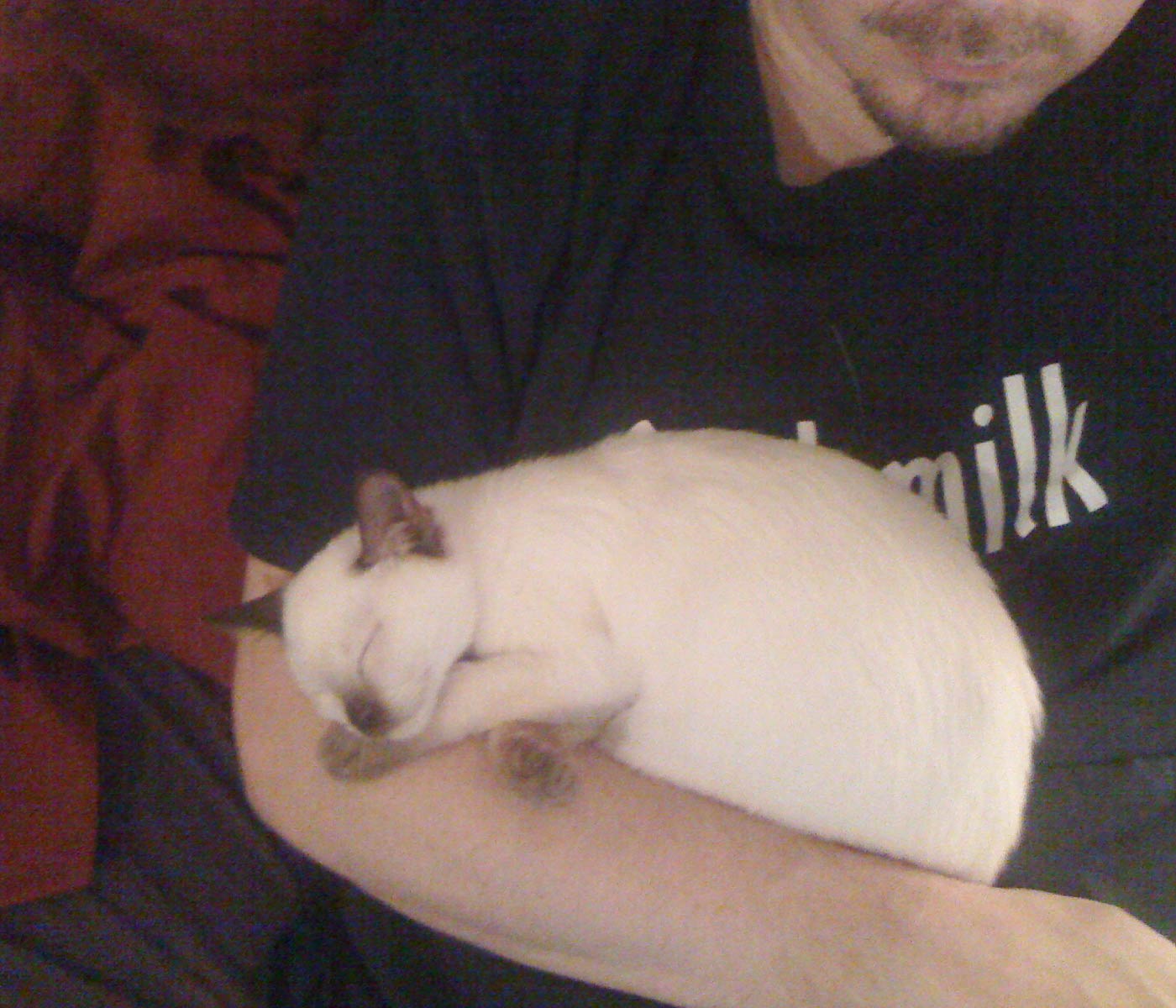
Her cats decided my jacket was theirs.

The entire time I’ve been down here, we played a game called “Franklin moves his jacket somewhere the cats can’t get to it and the cats find it and sleep on it.”

The kitchen in my parents’ house has recessed, indirect lighting in the ceiling. Whenever I went to cook, one of her cats, Thelma (they’re called Thelma and Louise, for reasons that are obvious when you meet them), would jump from floor to chair to counter to refrigerator to lightwell and sit in the lightwell watching me. Silently judging me. Inspecting all that I did, which clearly did not rise to her standards.


I am not very good at handling grief. My girlfriend Zaiah says I share emotions like joy and excitement easily, but I have very little experience with things like sadness and grief.

I’ve been incredibly fortunate. I’ve never lost someone close to me. I’ve never attended a funeral. I think few people my age have been so fortunate.

My parents are both in their 80s. There will come a time when they are no longer here. The older I get, the more grateful I am to them; they did a bang-up job raising me. Even though I only see them once every few years or so, I’m still not sure I’m ready for a world without them.

Right now I’m in Orlando with my wife, working on an RV we hope to drive cross country late this year, stopping at abandoned amusement parks to do photography along the way. Next week I fly back to Portland.

I am so incredibly relieved that my mom is doing well that I can’t even express it in words. I am profoundly grateful for the time I’ve been able to spend with her.

Mom, you’re awesome. Thank you. For everything.

When big tech gets careless: Google Forms spam

So lately, I’ve seen a thing in my inbox. Well, I mean, I see a lot of things in my inbox, but this is an annoying thing: 419 scams inside Google Forms invites.

I’m getting a ton of these:

Google forms spam

In spam fighting communities, these are called “419 scams,” from Section 419 of the Nigerian criminal code. Most of them originate from Nigeria, and they’re a form of scam called “advance fee fraud,” where the scammer promises to give you a lot of money if you just pay these fees (bank certification fees, wire transfer fees, blah blah blah whatever) in advance. You pay all the fees and then you get…nothing. That’s it. That’s the whole scam.

I’ve noticed an absolutely enormous uptick in 419 scam emails using Google Forms as well. In fact, I’ve spent the past few weeks collecting examples and figuring out what’s happening, and I think I have a handle on what’s going on.

419 scams are a large, bulk-market business. Maybe 1 person in 10,000 is dumb enough to fall for these scams. (Fun fact, the scammers use the slang term “maga” to refer to the dupes fooled by these scams; in a pidgin of English and Yorùbá often used by these scammers in Nigeria, “maga” means “fool.”) That means a 419 scammer has to send a lot of emails to succeed.

But spam filters, especially Bayesian filters, have become really, really good at detecting 419 scams. In fact, many spam filters actually have “probably 419” as one of their identifiers for spam email.

Enter Google.

Google lets people send emails for free using Gmail. However, Gmail mail gets passed through normal spam filters, which flags the bulk of 419 scams.

However, Google has a service where you can create a Google Form and then invite people to visit your Google Form. And for some reason I don’t understand, outgoing invitations from Google servers for a Google Form don’t pass through Google’s spam filters—don’t ask me why.

Furthermore, the Google Form header or HTML wrapper or something seems to prevent client-side or email-host-side spam filters from identifying the emails as 419 scams, too. Why? ¯_ಠ

For whatever reason, 419 scams that appear within the body of a Google Form invitation fly right past spam filters. As soon as the 419 scammers discovered this, they were all over it like flies on cowshit. At the moment, I’m receiving several of these emails an hour.

It started a few weeks ago and shows no sign of letting up. I’ve emailed Google’s abuse team multiple times about it but so far no reply.

Check out my new book!

2020 has been a bit shit, no question about it. However, it’s also been the most creative year of my entire life, in no small measure because I’ve been spending all my time at home away from people.

I’m pleased to announce that one of the many projects I’ve been working on, a new novel with the delightful Eunice Hung, is now coming to fruition.

We have written the first in a series of far-future, post-scarcity erotic science fiction theocracy novels called The Passionate Pantheon. May I present: The Brazen Altar.

The book doesn’t publish until May 1, 2021, but you can get a copy before then and also help show there’s a market for smart, literate erotica with nuanced characters and rich worldbuilding! The book is live now on Indiegogo, and you can get it early for less than cover price!

The followup novel, Divine Burdens, publishes Fall 2021. Want to find out more about the world of The Passionate Pantheon? The Web site for the series is live! I guarantee you’ve never seen erotica anything like this before.

Apple Silicon and losing our legacy

[Edit] This post sparked a conversation on Ycombinator!

I am concerned about Apple’s move to its own home-grown processors.

It’s not because I’m worried about the new silicon, or Apple’s ability to make high-performance CPUs, or even because I am worried about changing architectures. I survived the move from Motorola 68K processors to PowerPC, and PowerPC to Intel.

I’m still using High Sierra on my 2016 MacBook Pro. I still have legacy 32-bit software I use professionally, and I also boot this computer into Windows with Boot Camp to play games like Fallout 4 and Witcher 3 that won’t run in Parallels.

I am concerned about the switch to Apple Silicon because I’m worried about what it means to archivists and historians.

I understand why Apple is doing it. I get it, I do. But I’m really worried about what it means to the legacy of the late 20th century.

Desktop publishing revolutionized human communication. It’s hard to overstate what a Big Deal desktop publishing was. It arguably democratized communication more than any other invention since the printing press. It fueled an explosion of creativity and led to a boom in the underground ‘zine scene.

PageMaker, the first DTP software, revolutionized entire industries…plural. Overnight the entire publishing community moved to it.

And, of course, mergers and acquisitions happened as the disruption shook itself out. Aldus, the startup that created PageMaker, got swallowed by Adobe. Quark arose to compete, and a lot of the industry jumped ship, since QuarkXPress was objectively better. Then Adobe created a new program, InDesign, which was objectively better than QuarkXPress, and the industry moved on. That’s how capitalism is supposed to work, right?

But here’s the thing:

A vast chunk of the history of desktop publishing, including countless underground ’zines of significant cultural and historical value, are still tied up in old files. Old files that can still be accessed, albeit with difficulty.

InDesign CS6 can open PageMaker and QuarkXPress documents. Later versions dropped the ability to open PageMaker files.

Old Mac emulators like SheepShaver can open even older files, by running ancient PowerPC apps directly. I recently rescued a bunch of old ‘zines I published in the early 90s this way.

But a window is closing.

It’s starting to close even without the move to Apple Silicon. When I set up a SheepShaver PowerPC Mac emulator to install the software to rescue these files, one of the pieces of software tried to contact activation servers that went offline in 1999. I had to do a bit of hacking to get the software to install.

I opened PageMaker 4 files in PageMaker 6, opened the PageMaker 6 files in InDesign CS6, and opened the InDesign CS6 files in InDesign 2020.

I opened Macromedia Freehand files in Freehand, saved them as EPS, opened the EPS files in Illustrator 6, saved them, and opened them in Illustrator 2020.

Now here it gets tricky.

InDesign CS6, the last modern app that can read a PageMaker file, won’t run on new versions of macOS because it’s 32-bit only.

It won’t run in emulators like SheepShaver because it’s OS X only.

SheepShaver and InDesign CS6 both won’t run on Apple Silicon.

We are on the cusp of losing the ability to open PageMaker files completely.

In a perfect world, someone would write a Mac emulator that lets you emulate a High Sierra Mac on Apple Silicon hardware, just like SheepShaver lets you emulate a PowerPC Mac on Intel hardware. If you can bring old software and old emulators with you, those people—historians, digital archivists, and the like—can, with enough faffing, still recover the rich legacy of information from the early days of desktop publishing.

But for various arcane technical reasons, writing an emulator for x86–64 on ARM is a huge undertaking, something beyond what an open source project is likely to do. I honestly don’t see the open source community writing a Mac emulator that will run High Sierra on Apple Silicon. Emulating x86 on ARM is an enormous project, one that requires a well-resources company to do.

A company like…Apple.

It turns out Apple has done this. It’s called Rosetta 2 and it’s built into Big Sur.

What I’d like to see is Apple donate code to emulate an Intel processor on ARM to the open source community, so they can build an emulator for Intel Macs. This would permit access to ancient files and legacy software—albeit with rather a lot of faffing—and permit access to apps and files all the way back to the PowerPC (and 68K, since the PowerPC system 9 has a 68K emulator). This would, I feel, show corporate responsibility on Apple’s part, without really costing them anything. The Intel emulation is already done.

But without that? I really do feel we as a society are, in the relentless march of late-stage capitalism, destroying part of our own history simply because there’s no profit in keeping it.

And that worries me.

Fragments of SquiggleCon: Two mottes one bailey

If you’ve read my blog for any length of time, or for that matter been on the Internet for any length of time, you’ve probably encountered the phrase “motte and bailey argument” or “motte and bailey doctrine” before.

A motte and bailey argument is an argument in which you believe something, but you don’t really have a good justification for it. So when you’re attacked, you retreat into a different, much more specific belief, for which you do have a good argument. When the attack is over, you come back out to your original, more general belief, the one that’s harder to justify.

An example of a motte and bailey argument I hear in polyamory circles all the damn time is this one:

“You need to have a veto in your relationship if you want your primary relationships to stay healthy.”

“Veto doesn’t necessarily keep relationships healthy. In fact, using a veto on someone your partner loves can break your partner’s heart, and if you break your partner’s hert then you are going to damage your relationship.”

“But a veto just means you can discuss your concerns with your partner! It means you can talk about problems you see in their other relationships! You favor open communication in your relationships, right?”

“Yes.”

“So you agree, all poly relationships need veto.”

In this argument, the bailey is a need for veto, usualy understood to mean the unilateral and unquestioned ability to end a lover’s other relationship. This is a difficult position to defend, so when called, a person may retreat into the motte (“When I say ‘veto,’ I’m only talking about open communication!”), then, when the argument is over, go back to advocating for unilateral and unquestioned ability to end a lover’s other relationship.

The Motte and Bailey argument comes from a style of fortification called a “motte and bailey,” which is a place where an area of land that’s difficult to defend (the bailey) is overlooked by an easily defensible structure (the motte). If raiders or an enemy army or whatever show up, you evacuate the bailey, bringing all the people into the motte. The he motte can be defended from attack. When the attached tack is over, everyone goes back out into the bailey.

Okay, so now that you’re up to speed…

The town of Lincoln in northern Britain is home to a motte and bailey castle, called, appropriately enough, Lincoln Castle. Naturally, I had to visit.


Lincoln Castle was built somewhere around 1068 or so, and has been in use continuously ever since. It’s an unusual motte and bailey structure in that it actually has two baileys. The motte is a smooth, round valley between two hills. Naturally, since if one is good, two must be better, William the Conquerer built two baileys, one on each hill, and there you have it.

Originally, the motte was completely enclosed by a wood fence, and both baileys were built of wood. It was replaced over the years centuries with beefier fortifications of stone. Today, nothing remains of the original wood structures.

Lincoln Castle is still in use today–the castle is now the courthouse and, from what I gather, capitol building for Lincoln. The rest is an open-air museum. We had a blast running around the place.

Here’s a view from one of the two mottes, looking down into the bailey. The round structure on the left is the fortified gate through the outer wall. The red brick structure to the right is an old Victorian-era prison. The round tower in the background is the second motte, because you know what they say about mottes: you can never stop at just one.

Here’s what’s left of the second motte, seen from the middle of the bailey.

As soon as I found out that Lincoln Castle has two mottes, I immediately, on that very spot, registered the domain name twomottesonebailey.com — though I have absolutely no idea what I will use it for. Suggestions?

The second motte, which is in much better shape than the first. The tower still exists, though most of the rest of it is now a broken, hollowed-out shell in which it would be tremendous fun to film a cheesy low-budget movie.

See what I mean? This place is just screaming for orcs or spectral knights or some sort of special effect where mist flows through the windows before congealing into an undead sorceror or something.

The fortification has two gates, one on each side. Breaking in through one of these gates would be a nontrivial undertaking for sure. In the background, between the two trees, is a place where the wall widens into a large round structure that contains cells where prisoners due to be executed were chained up prior to being hanged–more on that in a minute.

Here’s the actual “castle” bit of Lincoln castle. It has been the administrative center and courthouse for Lincoln for…oh, for longer than the country I live in has been a country, honestly. It’s still used today, which is why I have no photos of the inside. Tourists aren’t allowed in, being that it’s a functional courthouse and all.

The Victorian prison. Touring this was interesting. Whenever I see something like this, I always wonder how many innocent people were sentenced here, and how many people ended up here for political rather than criminal justice reasons.

The inside had rather more windows than I expected, though I suppose in an age without electric lights, that makes sense.

Prisoners were kept in cells lining both sides of the stacked corridors. The building is divided into two halves, one for male and one for female prisoners. More on that in a minute, too.

Some of the cells were used by the prisoners to do tasks like washing laundry, making bedrolls, or stamping license plates.

This left fewer cells for actual housing of prisoners, so they were stacked in like cordwood.

Though to be fair, I have stayed in a hostel whose accommodations were roughly similar.

This being Victorian times, God was kind of a big deal (those Victorians were quite the bunch of God-botherers, even as they did the most ungodly of things), so of course the prison had a chapel, and of course, attendance was mandatory.

Each pew was a separate room, divided from its neighbors by a little door, presumably to make it more difficult for the prisoners to shank each other during services, that being considered rather uncouth and all. The prisoners could not see each other, but the person delivering the sermon could see all the prisoners, cleverly combining the functions of a chapel and a panopticon into one (a Chapelopticon? Panchapelcon? I don’t know). Thus do we see religion reflected in architecture. God sees you, so stop doing that thing you do with your private parts ands that feather duster, you pervert.

I was, while we toured the prison, engaging in cybersex with a lovely woman who lives in Waterloo, Ontario, which was a bit freaky. I have now imprinted on Victorian prisons as arousal triggers. There’s no way that can go wrong.

So yeah, executions. The Victorians were big on ’em. They’d kill you just as soon as look at you. Steal something? Say something bad about the king? Poke a badger with a spoon? You’re a dead man walking.

Or women. They were remarkably egalitarian in the judicial application of death.

They had special cells in that bulge in the wall I mentioned earlier. They look like this:

Each one had a steel ring set in the wall, to which they would literally chain the condemned.

On the appointed day, after the crowds had gathered, they’d unchain the people, lead them out into the bailey, and kill them for the entertainment of the guests justice and peace of the land.

And yes, there were crowds. Big ones. People who lived in houses near the walls would rent out second-story rooms with a view at exorbitant rates to folks who wanted a good view. Apparently, there was a full-on riot on execution day when the star of the show had ruined everyone’s entertainment by committing suicide earlier on–the people demanded to see someone be killed, but the prison didn’t have anyone else to kill that day, and it was all a hell of a mess.

I guess that’s what happens before the age of Marvel superhero movies.

So anyway, one of the Victorian prison wardens was a man of Science, who installed a telescope in one of the mottes so he could look at the stars. Err, yeah, that’s right, the stars. To look at. In the sky. Stars.

Remember how I said the prison was divided into a male and a female wing? Female prisoners were kept in the back, and allowed into an outdoor courtyard behind the motte.

Here’s a view from the observatory the warden built for his telescope.

…yeah. Apparently, from what our tour guide said, he had sevral illegitimate children with several different female prisoners.

Those whacky Victorians, amirite?


There is one other bit I don’t have photos of, because photos aren’t allowed in the super special room where it’s kept: the Magna Carta.

Yes, the Magna Carta, one of the original handwritten copies. It’s here, in a climate controlled room with the text of the thing up on the wall.

And there, right at eye level smack dab in the middle of this enormous wall of text, is Clause 54:

No one shall be arrested or imprisoned on the appeal of a woman for the death of any person except her husband.

Even back then, women’s voices were never taken seriously.