
Eve and I are in a log cabin deep in the woods, finishing our book on polyamory, More Than Two. The forest is quite lovely. I took this during one of our regular afternoon walks.

Eve and I are in a log cabin deep in the woods, finishing our book on polyamory, More Than Two. The forest is quite lovely. I took this during one of our regular afternoon walks.
Computer programming is a tough job. It’s not for the faint of heart or the fair of sex. It’s grueling, high-stress work, demanding that you sit on a comfortable chair in an air-conditioned office for hours on end, typing on a keyboard while looking at a monitor. Women just aren’t rugged enough for that.
Plus, as everyone knows, women can’t code. At best, they can maybe contribute in their small way to large open-source projects, but really, they’re much better suited for accessorizing PowerPoint presentations written by real coders. Manly coders.
If this is the world you live in, bro, I’m afraid I have some really bad news for you.
I’d like to introduce you to someone. This is Augusta Ada King, Countess of Lovelace. She was a lady’s lady, an aristocrat who lived in the 1800s and who did all of the things young women of noble birth did back then–danced, wrote poetry, and penned long flowery letters to her tutor.

She also wrote the world’s first computer program in 1842, in the margins of a technical document she was translating from Italian into English.
Yes, you read that right. Ada was so fucking baller she wrote code before computers had even been invented. You think you’re hardcore because you can use agile development strategies to link a big data repository to a high-performance querying front end without SQL? Pfaff. This woman invented coding before there was anything to code on.
And then there’s this woman, who could kick your ass sideways, steal your lunch, and then fart out code better than anything you’ll ever be capable of if you live to be a thousand years old.

This is “Amazing” Grace Hopper. She took leave from Vassar to join the Navy, where she invented or helped invent the entirety of all modern computer science, including nearly every wimpy-ass tool your wimpy ass laughingly refers to as “coding.” Compared to her, you’re nothing but a little kid playing with Tinker toys. Tinker toys she invented, by the way.
Yeah, I know, I know. You think you’re all badass and shit because you can get your hands right down there and compile a custom Linux kernel with your own task scheduler that reduces overhead for context changes by 16%, and…
Ha, ha, ha, ha, you are just so cute! It’s absolutely precious how you think that’s hardcore. That kind of shit is duck soup. Seriously, no-brains-required duck fucking soup compared to what she did. That C compiler you love so much? Grace Hopper invented the whole idea of writing code in a language that isn’t machine code and then compiling it to something that is. She was the one who came up with the notion of a “compiler” (and wrote the very first one ever), pausing along the way to invent code testing and profiling.
Thanks to her, you’re living in the lap of luxury. you can write code without having to know the exact DRAM timing. You have conditional branches and loops–neither of which existed when she started programming the Harvard Mark 1. (She made loops by taking long strips of paper tape and, no shit, taping their ends together to get the computer to execute the same code again.)
You want to see hardcore programming? I’ll show you hardcore programming:

This is what real hardcore coders do. No compilers, no syntax checkers, just a teletype machine and a bunch of fucking switches that change the computer’s memory and registers directly.
And you know what? For her, that was luxury. She and all the other early computer programmers–almost all of whom were women, by the way–started out programming by plugging patch cords into plugboards, because that’s how they rolled, motherfucker. Fuck keyboards, fuck front-panel switches…those things were soft. If you wanted to code back then, you needed a postgraduate degree in mathematics, an intimate understanding of every single component inside the computer, and the ability to route data with your bare fucking hands.
Grace Hopper was so badass that when she retired from the military, Congress passed a special act to bring her back. Twice. And then when she retired for real (for the third time), the Navy named a guided missile destroyer after her.

Trust me when I say you will never be this badass, bro.
So the next time you see something like this:
and you think that girls can’t code, just remember girls invented coding. And invented the tools that finally let softies like you play at being programmers. They did the heavy lifting so programming could be easy enough for noobs like you.
I know, as I have mentioned before, approximately fuckall about the Marvel comic universe. I have heard of Captain America, but I’ve never read any of the comic books nor seen the first movie. So when the Internetverse was all abuzz for this new movie, filmed on a budget $95,000,000 higher than the cost of India’s Mars probe currently winging its cold and lonely way to the Red Planet, I was quite possibly the only citizen of the United States not consumed by the fires of anticipation. What wonders would the movie bring? How would it advance the franchise? Beats me. I don’t even know who Captain America is.
I am talking, of course, about the second (but for me, the first) installment of the Marvel cash juggernaut:

As the movie begins, we see Sonic the Hedgehog Captain America out on his regular morning jog, where he’s trotting around Washington’s tourist attractions at an average speed of approximately 40 miles an hour without even sweating, because sweating is gross and Captain America doesn’t do gross things. He zips past the Comic Relief, then zips past the Comic Relief again, then zips past the Comic Relief yet again–you know, just to make the point. The engage in dialog, of the sort that tells you we will be seeing more of the Comic Relief later in the movie. The plot wedges here for a few moments when suddenly, Sonic America Captain Hedgehog is notified that a Situation has developed and he should Prepare For Extraction. Quite why he’s out jogging when it’s clear he is in far better than great shape and has superhuman abilities is never adequately explored, given that we as the audience are left with the distinct impression that failure to get enough exercise is not really on the good captain’s surrealistically short list of character flaws.
The rest of the movie goes something like this…
I haven’t been writing much here lately, because I have been hard at work writing our book about polyamory. At 160,000 words, it’s well north of the New Testament and a bit north of The Two Towers in size. It turns out polyamory is complicated, and we have a lot to say about it.
However, I’m taking a break from writing about polyamory because I’ve started seeing this meme pop up all over the Internetverse, and it’s reached the point where I have to say something about it. I think it’s symptomatic of the problem of privilege.
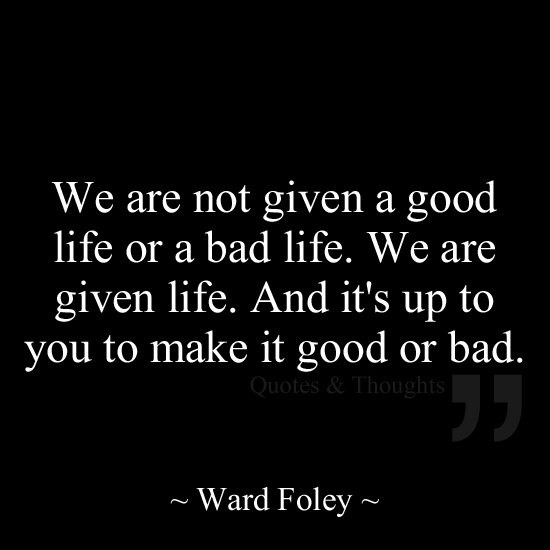
I get what it’s trying to say. Really, I do.
But it’s wrong.
Yes, some people are given a bad life or a good life. We do not all start from a neutral place. Take this kid, for example. He would, I’m sure, be quite happy to have been given a life that was neither bad nor good:

This photo, by South African news photographer Kevin Carter, won a Pulitzer Prize. It documents the effects of famine in Sudan, in which more than 70,000 people died. Carter later committed suicide; in his suicide note, he wrote, “I am haunted by the vivid memories of killings and corpses and anger and pain…of starving or wounded children, of trigger-happy madmen, often police, of killer executioners.”
Look at this kid. Then look at wealthy heiress Paris Hilton, out doing what she does best (which is, near as I can tell, “getting photographed partying”):
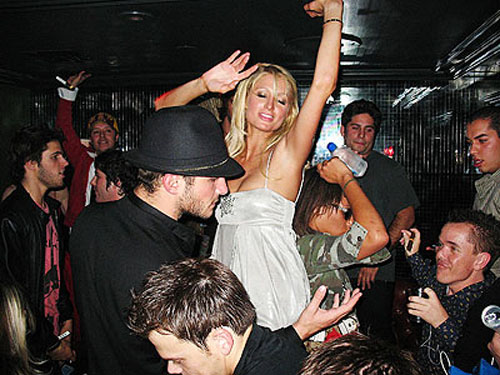
Then look back at the slave labor camps in North Korea, which are used to punish political dissidents “to the third generation.” People are born in these slave camps, grow up, and die (often of torture, beatings, or starvation) here, without ever knowing anything else.

The meme might more accurately say “white middle-class Westerners born into progressive democracies are not given a good life or a bad life.” But to be fair, perhaps that’s what’s meant by “we.”
For those who aren’t white middle-class Westerners in progressive democracies, there most definitely are good lives and bad. Not all lives have the same opportunity for choice and direction. Not everyone can choose to better their conditions; those born into North Korean Labor Camp 15, which is believed to hold as many as 30,000 slaves, certainly can’t.
Like I said, I get the point of the meme. I am a huge believer in empowerment myself; I have written a great deal about how the choices we make affect our lives, for good or ill.
But I also recognize that, to a large extent, this is a privilege–one that should properly belong to everyone, but doesn’t. Not everyone can choose to make their lives good or bad. The way we’re born matters; Paris Hilton can shrug off bad choices that would destroy many people who are born into a less privileged position, and just keep on keepin’ on.
Yes, make choices that make your life better. Yes, move in the direction of greatest courage. But when you do, don’t forget to be grateful that you can. It’s not your fault that people are born into situations horrifying beyond anything you can imagine, but it’s your responsibility to acknowledge that not everyone is in the same position as you are. Some people are given a bad life. If you’re not one of them, you’re fortunate, but don’t forget they exist.
And if your response is “lighten up, it’s just a Facebook meme!”–perhaps you aren’t paying attention.
My sweetie Shelly has written another blog post over at More Than Two. I hope one day to be as wise, compassionate, and insightful as she is.
This post is called “Winter Is Coming,” and it’s about how entering relationships that disempower us can destroy us, even if we knew the conditions when we signed on. There’s a good deal of stuff about the relationship history between her and I in there, and some of that was painful to me to read.
I think there are warnings in here for anyone contemplating a prescriptive polyamorous relationship. We often say that any relationship structure is A-OK as long as the people involved consent to be there. I am not entirely sure that’s true. There are some arrangements which, by their very nature, are not only thickly sown with the seeds of coercion, but almost guaranteed to allow those seeds to germinate…and the cost is very high.
You can read the essay here. Here’s the teaser:
But primary/secondary structures tend to leave a special kind of emotional wreckage. While I freely admit that it is often a mutually beneficial model for all involved, there is a hidden trap. Because sometimes we walk into this structure, with heart in hand, and sometimes our partner meets us there. And then the structure becomes a maze of slamming doors and booby traps. When your partner meets you with real intimacy and love within an externally enforced and non-negotiable framework of limitations, the emotional experience of the relationship is of being simultaneously pulled in and violently shoved out. The cognitive dissonance is even worse. Self-advocacy is often interpreted as homewrecking, and disruptions to the status quo are seen as a hostile act. Remember, you signed up for this, you’re breaking the contract, you’re the bad guy. But don’t be cruel and break his heart, don’t be disruptive and speak for your own. just… just want something else, feel something else, BE SOMEONE ELSE.
So, there is a special place, at the bottom of all of that, where you realize that the only truly “right” thing you can do is just… find a way to disappear. But not with an explosion (you drama queen). Just find a way to disappear quietly so that no one notices. Do the right thing and just…go away.
I woke up late this morning, had breakfast, made some tea, checked my Twitter feed (as one does), and in amongst all the pictures of cats, half-naked selfies, BDSM porn, and links to articles about neurophysiology and evolutionary biology that make up my Twitter feed, I noticed something very odd. About 15% of my Twitter followers were posting things that look like this:


And imagine my surprise when one of the accounts posting these types of messages belonged to me; namely, my Promiscuity Keepers Twitter feed, where I post links to articles about sex and sexuality.
So it appears there’s a pretty large attack going on against Twitter right now. I am not sure if the attack is simply a brute-force hack against account passwords, or if the hackers have somehow penetrated Twitter itself and made off with lists off accounts and (hashed? hashed and salted? exposed?) passwords. Because of the suddenness and number of accounts compromised, my gut says it might be an attack on Twitter’s servers directly, rather than a brute-force attack against individual accounts. (The password I use is, of course, a long string of letters and numbers, rather than, say, the word “password” or “secret” or the other hideously insecure passwords people often use.)
I logged in to my Twitter account (after some faffing with Twitter’s “forgot my password” link) and discovered something interesting: The hackers are authorizing malicious Twitter apps with read/write access, presumably to mass-broadcast spam to many Twitter accounts at once.
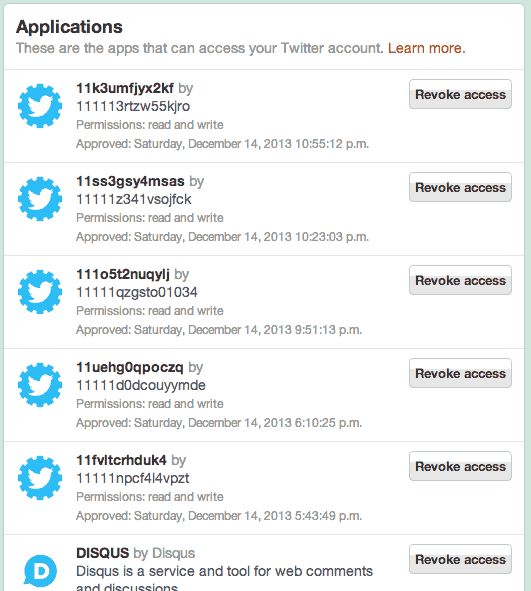
Resetting a password on a hacked account without revoking access to these malicious apps will allow the hackers to retain control of the account. It’s possible the hackers are using these malicious apps to gain control of the hacked accounts directly, by forging permission to allow the account to authorize the apps.
In any event, the Spamvertised links all point to a Web site hosted by a German Web hosting firm called
Naturally, I downloaded one of these files, then uploaded it to Virustotal for analysis. And, unsurprisingly, it’s malware:

InstallMonster is a malware package designed to cheat online advertisers out of money for the virus writers. Whenever a user of an infected computer clicks on certain Web links, the malware changes the link in such a way as to make it seem like the click came from a revenue sharing, advertising, or affiliate marketing site, and the malware writer receives a small commission for the click.
The malware is sold openly from a Russian-language site called

So to recap: Attackers are gaining access to large numbers of Twitter accounts and using them to spam malware. The malware is an off-the-shelf package designed to allow its users to profit from click fraud; the malware authors operate a site hosted on
IF YOUR TWITTER ACCOUNT IS HACKED: It’s not enough just to change your password! You must also go to your Apps control panel in your profile and revoke access to the malicious apps!
With all the pushback on (and off) the Internet to any suggestion that perhaps men could maybe refrain from treating women poorly, one might get the impression that we were talking about, say, taking all the money the NFL normally makes in a year and investing it in fusion power research or something equally unreasonable. How, the thinking seems to be, can men reasonably be expected to act like decent human beings toward women when we have all these throbbing biological urges? I mean, what if we see a woman, who’s, like, totally hot? Surely acting like a decent human being doesn’t have to apply to women who are totally hot, does it? If we treat a totally hot woman like a human being, how will she know we want to put our pee-pee in her sex burrow? And what about women who don’t make Mister Happy happy…if we treat them like human beings, how will they know we don’t find them attractive?
It’s madness! I mean, really. Treat women as people? All of them? Without constantly getting all up in their faces about whether we want to sex them or not? That’s just…it’s just…it…
…well, it turns out it’s really not that hard to do.
Listen, guys, here it is. You just…think of her like she’s a person. Someone who’s a friend, even. And then you act accordingly.
Listen, I know it sounds totes whack. It goes against everything we’re taught to believe about maximizing our chances of getting to do that thing with our pee-pees. But bear with me. All it takes is a little practice, and then you, too, might be a guy who’s a decent human being and totally not a complete shitcamel.
Let me walk you through some scenarios, so you can get a feel for how this works.
Scenario 1: You’re approaching a door. There are people behind you.
If you hold the door open for people, congratulations! You’re a decent person.
If you hold the door open for women, but not for men, danger! You’re probably a misogynist.
If you hold the door only for women you want to put your pee-pee on, guess what? You’re a shitcamel.
Scenario 2: You’re on an online dating site. You spend six hours pouring your heart out in a carefully crafted message to this cute little something something whose soulful eyes make you think she could be the light of your life, and whose big bazoongas make you want to do that thing with your pee-pee. After you send it, she doesn’t email you back.
If you just go about the rest of your life, go you! You’re a decent person.
If you write her a follow-up email telling her that she owes you a response, uh-oh. Misogyny ho!
If you send her a follow-up email filled with (a) every swear word at your disposal, (b) vivid descriptions of what a bitch she is for wounding you so grievously, (3) angry rants about what unpleasant fate should befall her, or (4) pictures of your junk, I’m afraid the prognosis is: shitcamel.
Scenario 3: You see a woman talking about how creepy it is to hit on women in elevators.
If you listen respectfully and adjust your behavior and expectations accordingly, woohoo! You’re a decent person.
If you respond with a defensive lecture about how you’re totally not one of those guys and she’s just trying to say that all men are rapists, I’m sorry to have to tell you this, but that that’s your misogyny.
If you go on a rant about how she’s totally saying all men are rapists and she deserves to be raped for it…well, there’s only one mathematical equation that accurately models your reaction. You = shit + camel.
Scenario 4: Women are talking about how linking birth control to employment insurance policies basically means their boss gets to tell them how to have sex. You:
…listen to what they’re saying, think about it, and realize that, actually, it is pretty messed up that the person who hires you gets to tell you how the insurance benefits you earn as part of your labor should be used, and having an employer making your decisions in the bedroom is kind of creepy. Go you! Decent person!
…say “well, you know, the employer is paying for this insurance, so the employer controls how it’s used.” Wait, what? The employer is paying a salary too, does that mean the employer gets a vote on what you buy on
Amazon.com ? Bzzt. Your misogyny is showing.…say “well, you know, that slut can just pay for it herself if she wants to go slutting around.” Hello, shitcamel! One hump or two?
Scenario 5: You’re out chilling with the boys, and someone tells this absolutely hysterical rape joke. It’s funny because she is violated against her will! Get it? Get it?
You put on your best blank “no, I don’t get it” face, turn to your friend, and say “No, I don’t get it. What’s funny about women being violated again?” Score one for being a decent person! Extra special decent person points if you deliberately construct a social group of people who already get why that shit ain’t funny.
You don’t say anything. After all, if you don’t laugh, that means you’re not like those guys, right? Bzzt! Wrong. If you just sit there, they might assume you’re a little slow, but hey, you’re still just like they are. Sorry, your misogyny (and privilege) are showing.
You laugh, because nothing is as absolutely hysterical as talking about women getting violated! Plus, when those feminist harpies start shrieking about how uncool it is, you get exasperated because clearly they just don’t get it. For God’s sake, it’s only a joke! Free speech! Free speech! Heigh-ho, shitcamel! What’s your camel-made-of-shit encore, putting on blackface and joking about Negroes wanting the vote or something? They’re all just jokes, right? Free speech!
I participate in a lot of online forums about polyamory. It’s almost impossible to talk about polyamory without eventually talking about OK Cupid, which is arguably one of the best places online for poly folks to meet each other (I met my live-in partner zaiah there). And it’s almost impossible to talk about OK Cupid without talking about how often women tend to get harassed on online dating sites. Any online dating sites.
And, it’s almost impossible to talk about how often women get harassed, on dating sites or anywhere else, without a whole succession of men trotting up to say “well, I personally don’t harass women! Women act like all men are harassers! I’m totally not like that, and I don’t understand why women don’t talk to me online! I totally deserve to have women talk to me online! If I spend my time writing an email to some woman online I am entitled to a response, even if she doesn’t want to date me!”
And, of course, from there it’s just a short hop to talking about male privilege, and as soon as that happens, inevitably those same men trot up again to say “this talk of privilege is just a way to try to make me feel guilty!”
And I gotta say: Guilt? Seriously? You think it’s about guilt?
Guilt is for things you can control. Feeling guilty over things you can’t control, like the race or sex you were born with, is silly.
If you think talking about privilege is about making people feel guilty, you’re completely missing the point.
It’s about being a decent person.
People who are privileged may still struggle, may not always get what they want, but the whole point is they have a lot of advantages over other people. Advantages they can’t see. Advantages they don’t know about.
Talking about privilege is about awareness, not guilt. When people don’t know about the advantages they have, they act in messed-up ways that show insensitivity to others. Like, for example, telling women who experience harassment on a scale that men can’t even understand how they should feel about it, what they should do about it, and why they should, like, totes respond to ME because I’M not like that! I’M not one of those entitled jerks, and therefore I DESERVE a reply!
The purpose of understanding your privilege isn’t to make you feel something. Not guilt, not shame, not anything else. It’s to help you understand that you have a set of things you take for granted that other people don’t have, so that you can change the way you act.
Got nothing to do with feelings at all.
Change the way you act in small ways. Like, not telling women how they should feel about sexual harassment. Like, not telling inner-city blacks that the police are their friends. Like, listening when women talk abut harassment, instead of just saying “oh, you’re saying all men are harassers.” (Hint: No, they’re not.) Or saying something like “well, I just don’t see color.” (Hint: Not seeing color is something you can only do if you happen to be the privileged color. When you belong to an oppressed minority, you don’t get the luxury of not seeing your status.)
Change the way you act in medium ways. Like, if you are a man with a normal social circle, statistically you probably know at least three harassers and at least one rapist. Seriously. So, when you’re with a group of your friends and someone makes a racial joke or a rape joke or talks about how women are bitches or whatever, speak up. Remember, if you don’t say anything, those harassers and that rapist in your social circle–and yes, they are there, even if you don’t know who they are–assume you’re on their side and think the way they do.
When people make cracks about sending a woman into the kitchen to make a sandwich, or talk about how they’d sure like to get that hot chick drunk and bend her over the table, speak up. Say it isn’t cool.
Yeah, it’s uncomfortable to speak up when all your friends are yee-hawing and back-slapping about how absolutely hysterical that rape joke was. Deal with it. The discomfort you face speaking up ain’t nothing on the discomfort women face just walking down the goddamn street.
Change the way you act in large ways. Don’t vote for political candidates who talk about how only lazy blacks are on welfare or blab about “legitimate rape.”
People aren’t telling you you’re privileged to make you feel guilty. People are telling you you’re privileged because privilege is a system and an institution that benefits you and that you participate in without even knowing it. When you know about it, maybe you can stop participating in it. Maybe, if you’re brave and willing to pull on your big-boy pants, you can even put yourself on the map against it when the folks around you are participating in it.
I’ve just posted a new essay over on the More Than Two book blog. This essay literally came to me in a dream; I had a dream that I was working on this blog post with Eve while we were working in a nuclear power plant, and for some reason I had long hair. There were also inspectors and other things to contend with in the dream, as there always are.
Anyway, when I woke up I raced to the computer and started writing it down, and it came out pretty close to what it was in my dream. The essay is about ethical agreements in poly relationships; it’s an attempt at answering the question “Well, aren’t any poly arrangements OK as long as all the people involved agree?” Here’s the teaser:
Communication, honesty and consent are values the poly community promotes heavily, and these ideas do seem to be intrinsic to strong, ethical relationships. But the more I think about these ideas, the deeper the rabbit hole goes.
Communication and honesty are complex topics that can easily fill a book. Consent seems more straightforward; either we agree to something or we don’t, right? I’ve often heard people say, “As long as everyone agrees to a structure or a set of rules, everything’s good.”
On the surface, that seems reasonable. And yet, I think it’s easy to lose track of how slippery the idea of “consent” can be.
There are a lot of ways to run off the rails on the way to a seemingly consensual agreement. I woke up this morning thinking about this, and somewhere in my foggy pre-caffeinated state I tracked down three ways that an agreement might appear consensual without quiiiiite rising to the level that would be ideal for ethical relationships…
You can read the entire blog post here. As usual, feel free to comment here or over there.
Last month, my sweetie Eve and I celebrated our one-year anniversary with a trip into Oregon’s desert. I took many pictures, which I may one day find the time to post and write about, but I particularly like this one: the sun setting over the John Day Fossil Beds.