Yet Another List o’ Linky-Links

Once again my Web browser is devouring half of my system’s available RAM and more swap space than you can shake a stick at, so it’s time once again for a long list of links.

Including naturally enough, some Watchmen-related links.

I’ve got several real posts brewing, none of which I’ve actually had time to write (just got home from the office, if that’s any indication), so without further ado, here we go!

Science

Obama to lift restrictions on stem-cell research

Obama Science Memo Goes Beyond Stem Cells

If Obama accomplishes absolutely nothing else in his entire term in office, if he does nothing to stop the pointless and expensive war in Iraq or right the capsizing economy, then his presidency will still be an epic win. Abandoning religious ideology in favor of actual, genuine science is one of the most important things this nation can do. First World superpowers keep their position only by dint of their technological and scientific basis, yet in the past eight years under anti-intellectual Republican rule, the US slipped to #22 in the world in terms of financial support for basic scientific research.

Rewiring the Brain: Inside the New Science of Neuroengineering

This is an incredibly exciting time to live in. We’re closing in on being able to understand and manipulate the stuff of the universe on the smallest scale possible, and we’re also closing in on the ability to understand in ways never before possible the most fundamental things that make us who we are. These areas of exploration bring incredible promise.

New Scientist: Humans may be primed to believe in creation

I’ve written before about how the brain is not an organ of thought so much as an organ for generating beliefs–a “belief engine,” if you will–and this research shows that a predisposition belief in purpose is a very strong component of that belief engine.

Missing Link Between Fructose, Insulin Resistance Found

For the first time, a concrete, documented mechanism between fructose and fructose-containing sweeteners and diabetes is uncovered.

Sociology

Catholic Church excommunicates doctors who perform lifesaving emergency abortion on 9-year-old rape victim; take no action against her rapist

The Vatican uses the line “life must always be protected” to justify the excommunication, in apparent ignorance of the irony that without the abortion, the young rape victim, and the babies, would have died.

Bush: ‘Sanctity of Human Life Day’

In the last days of his Administration, former President Bush declared Jan. 18 to be “National Sanctity of Human Life Day.” Apparently, the sanctity of human life doesn’t apply to the citizens of Middle Eastern nations that happen to be geographically close to other nations that were responsible for terrorist attacks on us.

Steve Pavlina: 2009 Focus – Intimate Relationships

So there’s this guy who is…well, I’m not exactly sure what he is. He seems to be a motivational coach (or “personal development” coach, whatever that is). Anyway, he writes a blog, and in his blog he says that 2009 is the year he’s going to explore polyamory. And he linked to my site on his list of resources.

Bizarre

Photos of abandoned Russian ships frozen in ice

I really, really, really, really want to visit this place. The Russians have always been amazing at taking urban decay to the next level, and this place is just beautiful.

The Most Amazing Star Trek Collectible of All Time

If by “amazing” you mean “horrifying beyond all human reason.” The commentary is priceless.

Watchmen condoms: We’re society’s only protection

If you want your schlong to look just like Dr. Manhattan’s, now’s your chance! These blue condoms come in a flip-top case with the smiley face on the front, and …yeah. I have nothing else to add.

Long List o Linky-Links

Since my Web browser currently has a zillion pages open (and is consuming mass quantities of RAM as a result), and since I can’t use the browser on my iPhone because the maximum possible number of pages is open, it’s time once again to share the wealth and post another Grand List of Linky-Links.

In today’s assortment, we have a wide variety of links for your edification and viewing pleasure.

Ready? Here we go!

Society & Politics

New Scientist: Conservatives are biggest consumers of porn

Not that it’s really a surprise to anyone. I’ve long suspected that many social conservatives fall into one of two broad camps: closeted self-loathers, and people who are really only concerned with the appearance of propriety rather than with actual propriety.

Business Week: Portland, Oregon is America’s unhappiest city

Uh-oh. And I’m planning to move there shortly!

Lesbian Nation: Chronicles of the Lesbian Separatist Movement

In the seventies, a movement arose among lesbians who believed that the key to sexual and social freedom lay in withdrawing entirely from American society–including, in many cases, refusing to interact with or even speak to men. Battle too long, and you become the thing you’re fighting against.

Science

Will You Perceive the Event that Kills You?

My favorite link on the list. Will you even be aware of the thing that ends your life? The human sensory apparatus and nervious system are so slow that we are constantly living in the past–about 300-500 milliseconds in the past, to be exact. Many of the things that can kill you do so in less time than that. Interesting stuff, including a rundown of the sequence of events in a car crash, and how far behind your awareness of those events will lag.

Researchers solve mystery of deep-sea fish

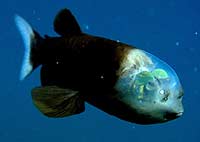
Meet the barreleye–a fish with nostrils that look like eyes, a transparent head, and tubular eyes that swivel up and down entirely inside its head. Man, there is some seriously weird stuff in the deep ocean.

Natural selection: Darwin’s God-killer

Two centuries after Origin of Species and people STILL don’t actually know what evolution is. (Hint: If you’re thinking “survival of the fittest,” you ain’t really got it.) Is this idea really a “god-killer”? Of course not. But it does demolish one very specific notion of god–the idea that the world was created in six literal 24-hour days exactly six thousand, four hundred and some odd years ago.

Junkfood Science: Why we think overeating causes obesity

There are many things we all know are true that actually aren’t. Turns out that the notion that people are overweight simply because they eat too much is one of them. The history of a fascinating study on food and food deprivation, which probably would not be possible today ’cause it would violate ethical guidelines on human research.

Globe and Mail: Canadian researchers turn skin cells into stem cells

The new technique is easier and safer than previous techniques to coax mature cells back into becoming stem cells.

Mermaid Dream Comes True Thanks to Weta

Weta Digital, the company that did the special effects for the Lord of the Rings movies, has a lot of experience with advanced prosthetic effects. So when a girl with no legs approached them with the idea of making her a functional mermaid prosthetic, they said “Sure!”

2009: Shaping up to be a bad year for anti-vaccinationists

Everything under the sun has its conspiracy theorists. Terrorism has its 9/11 “truthers.” The space program has its moon hoax conspiracy nutters. Geologists have the flat-earthers and the young-earthers to contend with. And the medical community has, among others, the anti-vaccination nutters. Difference is, the moon hoaxers and flat-earthers don’t put other people’s lives at risk. 2009 looks to be a bad year for this particular breed of nutter.

Sex and Relationships

The Single Best Working Assumption for Drama-Free Relationships

Sometimes it’s the simple things that are most effective.

Control Tower: The Hot Bi Babe

Yes, I know it’s an old article, but Mistress Matisse lays it on the line about why those zillions of married poly-in-theory couples will not likely find that hot bisexual woman they’re looking for.

And finally, here’s an old video circulating YouTube about the evils of pornography, though it has an interesting historical footnote:

The footnote? The person who made this video is none other than Charles Keating.

Keating, for those who don’t remember him, was an anti-sex, anti-porn moral crusader for many years, and joined President Reagan’s Meese Commission on Pornography in an attempt to lobby for tough anti-porn laws.

He later went on to embezzle about $1.2 billion from Lincoln Savings and Loan, singlehandedly triggering the collapse of the entire S&L industry. To Keating, you see, porn = immoral, stealing the life savings from working families = perfectly moral.

Another List of Linky-Links

Today’s crop of links covers a lot of territory, from cutting edge science stuff to LOLcat perversaions. Off we go:

Science

Our World May Be a Giant Hologram

A device intended to look for gravity waves may instead have provided evidence confirming a strange hypothesis that space itself is composed of subunits, and that there is a “smallest possible unit” of space.

Scientists Stop the Ageing Process

Researchers at the Albert Einstein College of Medicine report the ability to prevent ageing in the cells of a mouse liver by blocking the accumulation of protein detritus.

What’s In the Vault?

Vaults are cool nanoscale, spontaneously self-assembling structures within cells…and nobody knows what they do.

Humor

Яolcats

LOLcats as seen through the prism of Stalin-era Soviet propaganda ideology.

Caligula for President

Uncomfortable truths about American democracy, helped along with a little black humor. “In thrall to the natural, inexorable, cyclic states of empire, the American government is finally beginning to sprout hair on its lip and smell like all the others, and is almost beginning to resemble an adult superpower, in regard to the vast, regrettable and boringly predictable evils of monarchic leadership.”

I Want to Be a Kitten

An antidote to the previous link.

LOLkink

Because sometimes BDSM is just funny. Warning: Not safe for work.

Technology

Military Investigates Amnesia Beams

With a flash of light. Seriously.

Philosophy

The Idiocy of ‘Defamation of Religion’

Some folks, and some nations, are seeking to make “defamation of religion” a crime. Why that’s a profoundly stupid idea.

Well, that’s unusual…

For what may arguably be the first time in its history, the Catholic Church has anticipated a new technology, rather than lagging a few centuries behind, as is more traditional.

Last year, Pope Sidious I Benedict XVI announced the addition of seven new deadly sins to the old list of seven deadly sins (which, frankly, I believe is flawed to begin with). On the new list is genetic engineering, which th Vatican defines broadly to include anything which changes DNA.

Eleven months later, researchers announced a major breakthrough in fighting HIV: a therapy that extracts the patient’s cells, genetically alters them to make them resistant to the AIDS virus, and then re-introduces them into the patient’s body.

The circle is now complete, as Darth Vader says. For the first time, with the newly updated list of deadly sins, the Catholic Church has a complete, end-to-end policy on HIV:

It’s wrong to wear condoms to prevent the spread of AIDS, and it’s wrong to use gene therapy to treat AIDS.

Like many other religions, the Catholic Church has long viewed HIV as a behavioral problem, and felt that rigorous control of sexual expression, rather than condom use or research, are the ideal solution. They don’t go quite as far as to say that HIV is a punishment from God, but approaching HIV as a behavioral problem rather than a n epidemiological one still falls flat to me.

Folks who think that HIV is a consequence of an immoral lifestyle or a punishment for wickedness would do well to consider the case of a man who called in to the Playboy Radio talk show I was a guest on several months ago; he was HIV positive not because he’d had wild, deviant unprotected sex, but because he witnessed a car accident. One of the accident victims was thrown through the windshield and badly lacerated. In his efforts to save her life, he cut his hand on the glass and was exposed to her blood. She was HIV positive; now he is, too. Frankly, and I want to be very clear on this point: any omnipotent, merciful, benevolent god who is OK with that can suck my cock kiss my ass. If there is a god who would be fine with that, I think such an entity is manifestly and plainly not worthy of adoration.

But I digress.

Sin lies only in hurting other people unnecessarily. All other “sin” is invented nonsense. The idea of criminalizing lifesaving research by holding that certain forms of medicine are inherently sinful–and not just sinful, but mortal sins–that’s a level of wrong I can’t quite even find the words for.

Still sick…

…and I’ve got just two words for that. Code signing.

Seriously. Code signing.

Viruses work because our cells contain machinery which will read, accept, and translate any RNA strands they see into proteins. Any RNA strands they see. Including RNA strands injected into our cells from viruses, or RNA strands transcribed from DNA injected into our cells from viruses.

Which is, from a security standpoint, pretty fracking stupid.

Code signing, I’m telling you. If our genetic material were signed with some sort of unique code that means “yes, this really does come from us, it’s safe to translate this RNA and build this protein,” and the transcribing and translating machinery would refuse to process RNA that wasn’t signed, then viruses could inject their bits into our cells from now ’til Doomsday and it wouldn’t mean diddly.

Code signing. Just one more reason why if we were designed by some Grand Creator, he wasn’t very good at his job.

Biochemistry and sex…and hey, multiple orgasms!

A few days ago, someone on my flist posted something that had a casual mention of a drug that is used to cause lactation. I don’t remember who it was, or what the post was actually about, see, but I ended up getting sucked down the Intertubes for hours because if ot, and it was some hours before I re-surfaced in the middle of a lake many miles away.

Lactation in human beings is largely mediated by a hormone called, naturally enough, “prolactin.” But that’s not the interesting bit. The interesting bit is about sex.

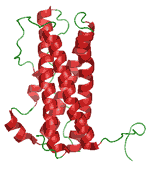
This is prolactin. It’s a hormone produced by human beings in the breast during breast feeding (it causes the production of milk) and in the brain during orgasm. As is typical with many hormones, it serves double duty and has a number of different roles; evolutionary biology never starts with a clean slate, so we get hormones in one part of the body repurposed to do something completely different in another part of the body (and we also get fucked-up design night mares like the knee…but I digress).

Its role in the brain is interesting. it’s what keeps you from wanting to fuck all the time.

When (most) people have an orgasm, there’s a drop in sexual arousal immediately afterward. There’s usually a refractory period, during which you can’t get off again, and there’s a generalized, overall decrease in libido. The length of time it lasts varies all over the map; for some folks it’s a few minutes, for other folks it’s the rest of the day, or at least until the rerun of “Buffy the Vampire Slayer” is over. Prolactin is the cause.

When it’s released in the brain during and after orgasm, the role of prolactin is to stomp all over your arousal like it was a narc at a biker rally. A while ago, a bunch of scientists far better at getting funded than I am worked out a way to get paid for watching people masturbate; they found some heroic volunters, hooked them up to blood sampling equipment, then monitored the levels of various hormones in their blood while the volunteers masturbated to orgasm. The experiment was repeated with volunteers who could experience multiple orgasms.

What they found, aside from the fact that getting paid to watch women masturbate is really hot, is that the production of prolactin is directly correlated to the post-orgasmic crash; the prolactin remains in the body for hours (or longer); while the level of prolactin is high, arousal is difficult or impossible; and people who have multiple orgasms don’t have this spike in prolactin in their blood after they get off.

All this, I already knew.


Being the transhumanist that I am, which is often just a way of saying being the pragmatist that I am, I’ve long thought that the easiest path to becoming multiply orgasmic would probably be to develop a drug that blocks the action of prolactin. Snap, job done. Take a pill, get off again and again and again and again. And then some more after that.

What I didn’t realize was that such drugs already exist.

So here I am, reading LJ, and I find a passing reference to a drug that induces lactation. Since I hadn’t heard of it before, I do what I always do with novel words or ideas–I consulted the Oracle at Google.

The Oracle at Google is wise and all-knowing, but she can also be a temperamental and difficult oracle, for she often sows her information with the seeds of more things you didn’t know, which in turn lead to more things you didnt know, and still more things you didn’t know, inducing you to submerge yourself in the waters of human knowledge and not come up for air until you’re reading about the history of Hadrian’s Wall when all you’d asked for was perhaps the best ways to trim a cat’s claws.

Anyway, lactation can be induced in women by means of drugs that enhance the action of prolactin, or that stimulate prolactin production. Lactation can also be prevented, naturally enough, by drugs which block the effects of prolactin, of which there are two, cabergoline and bromocriptine.

Now, there are a lot of other reasons why you might want to block prolactin, which have nothing to do with lactation. Excess prolactin is responsible for a number of other conditions; certain forms of pituitary disease cause excess levels of prolactin, which can lead to cancers, arthritis and other autoimmune diseases, and a whole host of other stuff you don’t want. So there’s a medical need for drugs that block prolactin.

As it turns out, there’s a relationship between prolactin and a completely different compound, the neurotransmitter dopamine. Dopamine also serves multiple functions. It’s the neurotransmitter that signals nerves in your voluntary motor centers of your brain; when you think about moving your arm, your motor centers produce dopamine, which turns into the nerve impulses that make your arm actually move.

It’s also a key component of the so-called “reward center” of the brain that mediates feelings of pleasure; when you delight in anything from a beautiful painting to the knowledge that you’re getting paid to watch people masturbate, dopamine is the reason. And dopamine mediates much of the sexual system of the brain, including the functions that cause physical arousal.

Dopamine and prolactin are mutually antagonistic. Dopamine tends to inhibit the function and production of prolactin, and excess prolactin tends to inhibit the function of dopamine. For that reasons, things that are antagonistic to prolactin tend to enhance the function or quantity of dopamine in the brain, and vice-versa.

Okay, so here’s where things get really cool.


There is a devastating disease called Parkinson’s disease which results in gradual, irreversible destruction of the dopamine-producing cells in the motor area of the brain, which leads to gradual, creeping paralysis. Because it’s caused by the loss of dopamine-producing cells, anything which acts to stimulate the production of dopamine in the brain will tend to reverse the paralysis, so dopamine-enhancing drugs are often used to treat Parkinson’s.

Now, as I’ve already mentioned, drugs that block prolactin tend to enhance dopamine, and vice versa. The drug bromocriptine is a prolactin antagonist and a dopamine agonist; for that reason, it’s often used to treat both Parkinson’s disease and certain pituitary disorders that cause excess prolactin production. The down side is that it has a number of fairly nasty side effects in some people, including such unpleasantness as psychosis.

Cabergoline is another drug that works the same way as bromocriptine; like bromocriptine, cabergoline is used to treat Parkinson’s disease and pituitary disease. It, too, blocks prolactin and enhances dopamine, and it has fewer nasty side effects.

One interesting side effect reported in both men and women being treated for things like Parkinson’s is multiple orgasms.

Which is a hell of a side effect, if you ask me.

In fact, cabergoline (and, to a lesser extent, bromocriptine) are sometimes prescribed off-label to counteract the sexual side effects of antidepressants (which modify the action of dopamine), and as treatments for sexual dysfunction.

So it turns out, as is often the case, that not only was I right in thinking that a prolactin-blocking drug might allow folks to have multiple orgasms, but that, as usual, other folks had already beaten me to the punch.

The moral lesson here is to be careful what you write about in your LiveJournal. The simple mention of an unfamiliar word can suck someone down into the bowels of the Internet for hours on end, and not only that, can spread viral-like through LiveJournal psts to other folks, who may get sucked down for hours on end plumbing the depths of biochemistry or stellar nucleosynthesis, as this post in shiva-kun‘s journal so aptly shows. In the interests of getting things done in the office, I hereby ask that all the folks on my friends list refrain from posting anything interesting, and instead confine themselves to discussions of reruns of “Friends” for the next three days, kay?

Fragments of Dragon*Con: Saturn

One of the (few) panels I actually managed to drag myself to at Dragon*Con was a panel on the Cassini space probe currently poking around Saturn. The panel was hosted by Trina Ray, who works as Science System Engineer for the Cassini program at NASA–which is a pretty damn cool job to have, if you ask me.

In all fairness, it wasn’t the panel I had wanted to see. The panel I’d intended to see, whose name I don’t even remember now, was full; the Cassini panel was next door, and relatively empty, and my feet hurt. So in we went.

It turned out to be one of the best panels of the con.

The Cassini mission was originally intended to explore Saturn and one of its moons, Titan. Along the way, it’s discovered some strange and interesting things, particularly with regards to another of Saturn’s moons, Enceladus.

Now, Enceladus doesn’t really seem, at first glance, like a terribly interesting body. It’s basically a ball of ice about the size of Arizona; cold, distant, orbiting around Saturn like…well, like a big lump of frozen water.

Ah, but the universe is a vast and surprising place, full of weirdnesses too countless to apprehend.

Cassini has, among other things, instruments capable of analyzing and determining the chemical makeup of the matter around it. When it comes to pass that those instruments, while the ship is passing near a giant ball of ice, suddenly register a great deal of water, and then just as suddenly register bupkis, one parsimonious explanation is that the instruments are on the fritz. Another explanation is that there’s a massive honking big jet of water spewing for hundreds of miles out of the big lump of frozen water, but that doesn’t make any sense, does it? Big, cold lumps of frozen water aren’t usually in the habit of spewing out gigantic jets of liquid water, much to the relief of folks who own freezers everywhere.

Now, if there is a big jet of water spewing out of a ball of ice, it’s the sort of thing you’d expect to be able to see, particularly if you arrange to look for it when it’s backlit by the sun. Some rejiggering of orbital mechanics and other rocket-science stuff later, the Cassini was able to take a picture in just that sort of situation, and here’s what it saw:

Lookit that! A big honking jet of water.

Now, this isn’t the sort of thing you’d expect if you were talking about a ball of ice orbiting a distant gas giant. Enceladus is cold. It’s bright white, so it reflects most of what little sun is available from so far away. In fact, it’s actually, for the most part, the coldest object in orbit around Saturn, with surface temperatures near the equator of around -315 degrees Fahrenheit.

And yet, it’s spewing out jets of liquid water. Which is weird. It’s also hot at the poles. Which is weirder. And the heat is concentrated in weird stripes at the south pole, which is weirder still:

So what we’ve got here, basically, is a ball of ice that’s not really a ball of ice at all. It’s being heated by some internal process, it’s spewing out jets of water through fissures in the icy surface, these jets of water have all migrated (or possibly rotated the entire moon) so they’re exactly at the south pole, and…

Oh, wait, I forgot to mention something. It’s not just water. It’s also got organic molecules of various sorts in it.

What we’re left with, then, is a moon that’s got a crust of frozen water with a liquid core of molten water, in much the same way that the earth has a crust of solid rock with a liquid core of molten rock. The water within the moon spews out in huge plumes via a process called “cryovolcanism”–and how cool is that word, by the way? Cryovolcanism. The moon’s south pole is covered with cryovolcanoes.

And they spew out a lot of water. In fact, it looks like the largest ring around Saturn, the E-ring, is created by Enceladus. The ring is a vast structure of little tiny ice crystals, which come from these cryovolcanos on the moon’s surface.

Now, let’s sit back and think about this for a bit.

We have heat. We have liquid water. We have organic molecules. We have, in Ms. Ray’s words, a compelling reason not to ditch the Cassini, when it reaches the end of its life, on Enceladus.

Because, you see, those are the basic ingredients necessary for life–heat, water, organic molecules.


Now, if you look at most conventional science fiction, you see that a great deal of it is concerned with life in outer space–something which has never been demonstrated, but which nevertheless seems rather likely. And much of the bulk of this kind of science fiction concerns itself with life as it might exist in places that are like earth.

Which shows, I think, a failure of imagination.

The human imagination, as I’ve often said, is surprisingly feeble. When given a stunningly vast universe filled with all manner of weirdness, we set our imaginary stories in places that look like Wyoming. When confronted with the breathtaking diversity of biology just here on earth, the best we can come up with is imaginary creatures like Bigfoot–half man, half ape, all lame. When we ask ourselves how such a marvelous, beautiful place as the universe could come to be, the best we come up with is a bearded old guy who created the earth (whose surface is seventy-five percent water) exclusively for man (who has no gills), and since that epochal moment of creation has largely confined himself to a near obsession with women’s clothing and the occasional vaguely Mary-shaped swirl in somebody’s French toast.


I came away from the panel impressed all over again with the majesty and incredible, mind-boggling wonder and beauty of the physical universe. This stuff is so incredible, so fantastical, so amazingly bizarre and splendid that it’s hard to understand how anyone, confronted with this, could not be awed by the complexity and surprises the universe has to offer.

After it was over, Shelly turned to me and said “How come more people know about Britney Spears’ sister than know about this?” And you know, I don’t have an answer.

Some thoughts on complexity and human consciousness

A couple weeks ago, I decided to take out the trash. On the way to the trash can, I thought, “I should clean out the kitty litter.” Started to clean the litterbox, and thought, “No, actually, I should completely change the litter.” Started changing the litter, then realized that the cat had dragged some of it out on the floor. “Ah, I should get out the vacuum,” thought I.

Next thing you know, I’m totally cleaning the apartment, one end to the other.

On my way out to the dumpster, I started thinking about hourglasses. And that’s really what this post is about.


If you have ever watched the sand falling in an hourglass, you know how it goes. The sand in the bottom of the hourglass builds up and up and up, then collapses into a lower, wider pile; then as more sand streams down, it builds up and up and up again until it collapses again.

I don’t think any reasonable person would say that a pile of sand has consciousness or free will. It is a deterministic system; its behavior is not random at all, but is strictly determined by the immutable actions of physical law.

Yet in spite of that, it is not predictable. We can not model the behavior of the sand streaming through the hourglass and predict exactly when each collapse will happen.

This illustrates a very interesting point; even the behavior of a simple system governed by only a few simple rules can be, at least to some extent, unpredictable. We can tell what the sand won’t do–it won’t suddenly start falling up, or invade France–but we can’t predict past a certain limit of resolution what it will do, in spite of the fact that everything it does is deterministic.

The cascading sequence of events that started with “I should take out the trash” and ended with cleaning the apartment felt like a sudden, unexpected collapse of my own internal motivational pile of sand. And that led, as I carried bags of trash out to the dumpster, to thoughts of unpredictable deterministic systems, and human behavior.


The sand pouring through the hourglass is an example of a Lorenz system. Such a system is a chaotic system that’s completely deterministic, yet exhibits very complex behavior that is exquisitely sensitive to initial conditions. If you take just one of the grains of sand out of the pile forming in the bottom of the hourglass, flip it upside down, and put it back where it was, the sand will now have a different pattern of collapses. There’s absolutely no randomness to it, yet we can’t predict it because predicting it requires modeling every single action of every single individual grain, and if you change just one grain of sand just the tiniest bit, the entire system changes.

Now, the human brain is an extraordinarily complex system, much more complex both structurally and organizationally than a pile of sand, and subject to more complex laws. It’s also reflexive; a brain can store information, and its future behavior can be influenced not only by its state and the state of the environment it’s in, but also by the stored memories of past behavior.

So it’s no surprise that human behavior is complex and often unpredictable. But is it deterministic? Do we actually have free will, or is our behavior entirely determined by the operation of immutable natural law, with neither randomness nor deviance from a single path dictated by that immutable natural law.

We really like to believe that we have free will, and our behavior i subject to personal choice. But is it?


In the past, some Protestant denominations believed in pre-ordination, the notion that our lives and our choices were all determined in advance by an omniscient and omnipotent god, who made our decisions for us and then cast us into hell when those decisions were not the right ones. (The Calvinist joy in the notion that some folks were pre-destined to go to hell was somewhat tempered by their belief that some folks were destined to go to heaven, but on the whole they took great delight in the idea of a fiery pit awaiting the bulk of humanity.)

The kind of determinism I’m talking about here is very different. I’m not suggesting that our paths are laid out before us in advance, and certainly not that they are dictated by an outside supernatural agency; rather, what I’m saying is that we may be deterministic state machines. Fearsomely complicated, reflexive deterministic state machines that interact with the outside world and with each other in mind-bogglingly complex ways, and are influenced by the most subtle and tiny of conditions, but deterministic state machines nonetheless. We don’t actually make choices of free will; free will appears to emerge from our behavior because it is so complex and in many ways so unpredictable, but that apparent emergent behavior is not actually the truth.

An uncomfortable idea, and one that many people will no doubt find quite difficult to swallow.

We feel like we have free will. We feel like we make choices. And more than that, we feel as if the central core of ourselves, our stream of consciousness, is not dependent on our physical bodies, but comes from somewhere outside ourselves–a feeling which is all the more seductive because it offers us a way to believe in our own immortality and calm the fear of death. And anything which does that is an attractive idea indeed.

But is it true?


Some folks try to develop a way to believe that our behavior is not deterministic without resorting to the external or the supernatural. Mathematician Roger Penrose, for example, argues that consciousness is inherently dependent on quantum mechanics, and quantum mechanics is inherently non-deterministic. (I personally believe that his arguments amount to little more than half-baked handwaving, and that he has utterly failed to make a convincing, or even a plausible, argument in favor of any mechanism whatsoever linking self-awareness to quantum mechanics. To me, his arguments seem to come down to “I really, really, really, really want to believe that human beings are not deterministic, but I don’t believe in souls. See! Look over there! Quantum mechanics! Quantum mechanics! Chewbacca is a Wookie!” But that’s neither here nor there.)

Am I saying that the whole of human behavior is absolutely deterministic? No; there’s not (yet) enough evidence to support such an absolute claim. I am, however, saying that one argument often used to support the existence of free will–the fact that human being sometimes behave in surprising and unexpected ways that are not predictable–is not a valid argument. A system, even a simple system, can behave in surprising and unpredictable ways and still be entirely deterministic.


Ultimately, it does not really matter whether human behavior is deterministic or the result of free will. In many cases, humans seem to be happier, and certainly human society seems to function better, if we take the notion of free will for granted. In fact, and argument can be made that social systems depend for their effectiveness on the premise that human beings have free will; without that premise, ideas of legal accountability don’t make sense. So regardless of whether our behavior is deterministic or not, we need to believe that it is not in order for the legal systems we have made to be effective in influencing our behavior in ways that make our societies operate more smoothly.

But regardless of whether it’s important on a personal or a social level, I think the question is very interesting. And I do tend to believe that all the available evidence does point toward our behavior being deterministic.

And yes, this is the kind of shit that goes on in my head when I take out the trash. In fact, that’s a little taste of what it’s like to live inside my head all the time. I had a similar long chain of musings and introspections when I walked out to my car and saw it covered with pollen, which I will perhaps save for another post.

On credulity

It should come as a surprise to nobody that the much-hyped “discovery” of a Bigfoot corpse in Georgia was revealed today to be a hoax. A common, cheap Halloween costume, some opossum entrails, a cooler, and a whole lot of overheated gullibility combined to form a perfect storm of stupid. Profitable stupid, to be sure, but stupid nonetheless.

The man who orchestrated this hoax, incredibly, has been caught doing Bigfoot hoaxes in the past…and yet, people still took him seriously.

Now, I don’t give a toss about Bigfoot. But I do think there’s an interesting lesson in here.

Folks want to believe in things like Bigfoot and the Loch Ness Monster and astrology and UFOs and the divine love of Our Savior Jesus Christ and a whole lotta other unlikely and sometimes downright nonsensical things. And in fact we may even be hardwared to believe them. Human knowledge is a history of two steps forward, one step back; we no longer believe that solar eclipses are caused by gigantic marauding dragons pursuing the sun across the sky, but we do believe that our office mates are snippy and the coffee maker is on the fritz because of the motion of a tiny, tidally locked ball of rock with a large iron core.

All these things, from Bigfoot to psychics, are woven together by the common thread of irrationality. And no matter how many times a conman gets caught with an ape mask and a handful of animal guts, folks can predictably be relied upon to say “Well, this particular guy was a shyster, but Bigfoot still exists!”

But I didn’t actually come here to talk about Bigfoot.

Instead, I came here to talk about physics.

How are the two related? Through the common languages of money and credulity.


The hottest area of venture-capital investment in the US right now is alternative energy. Solar power, wind power, thermoelectric power–if it involves getting energy without burning stuff, people will invest in it.

And it’s in this environment that anyone with a scientific-sounding yarn and a pair of brass balls can score millions.

The problem with the Georgia Bigfoot hoaxsters is that they set the bar too low. You might make a few thousand dollars duping folks who like to believe in big, hairy ape-men running around upstate Georgia, but if you really want to score the dough, you need to think bigger. And the notion of limitless power from tap water is not a bad place to start.

This is an old-school scam, of course–I remember reading a plot in the newspaper comic Gasoline Alley a couple of decades ago that centered on one of the main characters being scammed by an elaborate con involving a car that could run on water. And today the Web is littered with Web sites offering to sell gizmos, usually for hundreds of dollars, that promise you can boost your mileage by running your car on water.

Still small potatoes, though.

Oh, no. To score for real, you gotta aim your sites not at average consumers, but at venture capitalists themselves. And what better way than by claiming to have discovered that all of modern physics is completely wrong, and that you can get limitless power from tap water by creating an entirely new state of matter?


That is exactly what a guy named Randell Mills has done, and he’s scoring big. A while back, he claimed that he has discovered a new state of hydrogen, which he calls the “hydrino,” that involves moving the electron closer to the nucleus than the laws of physics permit. It makes no difference that the math doesn’t work, nor that the book he wrote on the topic appears to be equal parts flawed math and text plagarized from other textbooks. What’s important, as any good Bigfoot “researcher” knows, is that it sounds good–and more importantly, that it talks about things that people really, really, really want to believe in.

The second part can make up for a lot of flaws in the first. We really, really want to believe that the world has meaning and purpose, and to that end we are willing to accept a great deal, and not look too closely at things that support what we’ve already decided we’d like to be true.

And a great many people want this notion of the “hydrino” to be true.


Randell Mills has been talking about hydrinos for quite some time now. Nearly twenty years, in fact. And he’s proven to be remarkably skilled at piggybacking his notion onto whatever other ideas happen to be getting attention at the moment.

When “cold fusion” was all the rage, he proposed that it worked because the hydrogen in the water was being converted into hydrinos, and the hydrinos were what was fusing. No real explanation for why this should be, mind you; but that’s a minor matter. The publicity is what’s important.

Now, with the price of oil high and alternative-fueled cars in the news, he’s proposing that fuel cells that work on hydrinos could provide limitless energy from tap water–and he’s scored fifty million dollars of venture capital funding to that end.

Never mind that in nearly two decades he’s never made this idea work. Never mind that current models of the behavior of hydrogen atoms have been verified experimentally over and over again. Never mind, even, that he’s been promising a major breakthrough since 1991, a breakthrough that’s always just a little bit of money away.

He keeps bringing in the money because investors want to believe.

And not just for obvious reasons.


Yes, it is true that the lure of owning the one invention that will bring an end to the era of Big Oil is powerful. Yes, it is true that anyone who wins on alternative energy is likely to win in the billions, at least. And yes, it is even true that the next big invention is likely to be surprising and to come from an unpredictable place.

But there’s another reason that Mills is so successful at scamming folks, and it has to do more with sociology than with technology. We all want to believe we can run our cars on water, but we also very much hate and fear science, and we all want to be able to laugh at those pointy-headed, superior scientists in their white lab jackets and say “Ha! You were WRONG! Ha, ha, ha!”

Randell Mills doesn’t exist in a vacuum. His success is very much a product of anti-intellectualism. We simply don’t like science, we don’t like the people who do it, and we want to give a giant “fuck you” to the people we hate so much. What better way than to buy into a gizmo that lets us drive cars on water and also proves all those complicated scientific theories are wrong?

And it’s not a stretch, really. Most folks are only dimly aware of hat an “atom” is, and haven’t the faintest idea of what a “ground state” is. Why not believe that it’s possible to shrink a hydrogen atom way down smaller than it’s supposed to be? And as long as we’re believing that, why not also believe that you’ll get a whole lot of power to run your car by doing it? Hey, it could happen, right?

Fifty million dollars in venture capital later, the math still doesn’t work and the idea is still bunk, but when you start with investors who don’t have the background to understand why the idea is bunk, but are itching to be able to say they helped knock a lot of know-it-all eggheads off their pedestals…well, the result really shouldn’t be surprising, I suppose.


I spend a lot of time talking about credulity and gullibility. Sometimes, people ask me why I, or anyone else, should care. What’s the harm in folks who believe blindly in Bigfoot? Who cares if people believe in things without evidence?

Randell Mills is the answer to that question. Credulity has a price. Sometimes, the price is financial; gullibility and anti-intellectualism allow people to be manipulated into parting with cash; they make for easy marks. Sometimes, the price is in human lives. Anti-intellectualism is what lets people believe that chlorinated water is bad.

All these things are related. And in the rush to believe what we want to believe, in the desire to be seduced by someone who will tell us the things we really want to hear, we sometimes forget to check our facts.

Hey, folks, let’s play!

icedrake posted a question in this conversation thread which I thought might deserve wider discussion. On the subject of intentional, functional body modifications, his challenge was to put together a list of desired augmentations. The augmentations should be something reasonably attainable within the next decade; assume that money is no concern. For bonus points, say why you want it.

My own list:

Subdermal BlueTooth controller/display combination

Availability: Now (sort of)

This is a subdermal black and white programmable tattoo, with built-in BlueTooth connectivity. It’s powered by your body’s own metabolism (using a nifty little fuel cell that runs on blood). It can be programmed by any BlueTooth device, so the display can be changed at will, and in theory at least can even show streaming 3G media. (I’d love to watch The Matrix on this thing!)

No new technology here; we can make it with off-the-shelf parts, though there’s no plan at the present for commercialization.

Why I want it: The idea of a direct, implanted interface with other devices is just too cool for words. On a geek cool scale from 1 to 10, with 1 being “not cool” and 10 being “übergeek,” this clocks in at about a 27.4. I am a big fan of tattoos and a big fan of wireless communication; combining the two is just…well, a geekgasm of cool. And it’s functional!


Implanted rare-earth magnets that offer the ability to feel electromagnetic fields

Availability: 1-3 years, or now (with potential problems)

A tiny (about the size of a grain of rice) rare-earth magnet is coated with silicone and surgically implanted in the fingertip beneath the skin. It reacts to electromagnetic fields, and its close proximity to the sensory nerves in the fingertips allows the wearer to feel such fields. You can run your finger over a power cord and tell if it’s plugged in or not, feel the hard drive in your computer spin up, trace the path of power cables through the wall, and even feel the electromagnetic field emitted by the grocery store anti-shoplifting sensors.

People have done this now, but the art of coating the magnets with silicone is still in its infancy. many people who have these magnets implanted end up rejecting them. Even a microscopic breach of the silicone jacket around the magnet causes the body to destroy the magnet, which often leads to infection. A lot of folks in the body-mod community are working on this problem. It’s a simple enough engineering challenge; with the right funding and research, it could be licked in a week. Body-mod enthusiasts don’t exactly have access to funding or to cutting-edge engineering or biomedical know-how, so I said 1-3 years on this one.

Why I want it: We live, every single day, immersed in an environment we are completely unaware of. We’re bathed constantly in electromagnetic fields of all kinds, and yet we’re totally blind to them. Adding a new sense opens up a new world; it’s like being born deaf and suddenly being given the ability to hear.

This ability is useful for a number of practical reasons; but forget those. It’s being given sight when you’re blind, touch when you’re numb. Anything that promises a whole new sense gets my vote!


Respirocytes: artificial mechanical red blood cells

Availability: 7-10 years (maybe)

The most speculative of the near-tech things on this list, respirocytes are nanoscale machines which could be injected into a person, and which perform the basic functions of red blood cells–transporting oxygen to the tissues and carbon dioxide away from the tissues of the body. They do this job, at least in theory, thousands of times more efficiently.

A person injected with a therapeutic dose of respirocytes would, if the technology works, be able to do things like hold his breath for half an hour, run at top speed without breathing for ten minutes, and even survive with his heart stopped for half an hour or more.

Actually making these things will require some pretty fancy work in nanoscale fabrication. The idea is pretty simple; it’s the execution that’s the tough part. The basic technologies are sound, but we’re not very good at making moving parts on the required scale yet.

Why I want it: It’s hard to know where to begin.

First of all, these offer a tremendous insurance policy against heart attack, injury, or environmental dangers that affect breathing. With medical technology as it is now, a person who drowns or suffers a heart attack and does not receive medical attention within minutes is likely to die or suffer irreversible brain damage; these expand the window of time tremendously. They also protect against things like dying in a fire (most people killed in building fires die of smoke inhalation, not burns), counteract the effects of weakened cardiopulmonary organs, and just generally make a person a whole lot more resilient.

On top of that, I suspect that we’d likely find that one of the limiting factors on brain functioning, the efficiency with which the brain can be supplied with oxygen, might be removed. I have a sneaking feeling that a person shot full of respirocytes would probably feel, and think, a lot better.


Okay, that’s enough for now. A lot of the things I want are likely more than ten years past the horizon, more’s the pity. How ’bout you folks? Your turn now!