I for one welcome our new AI overlords

I’ve been thinking a lot about machine learning lately. Take a look at these images:

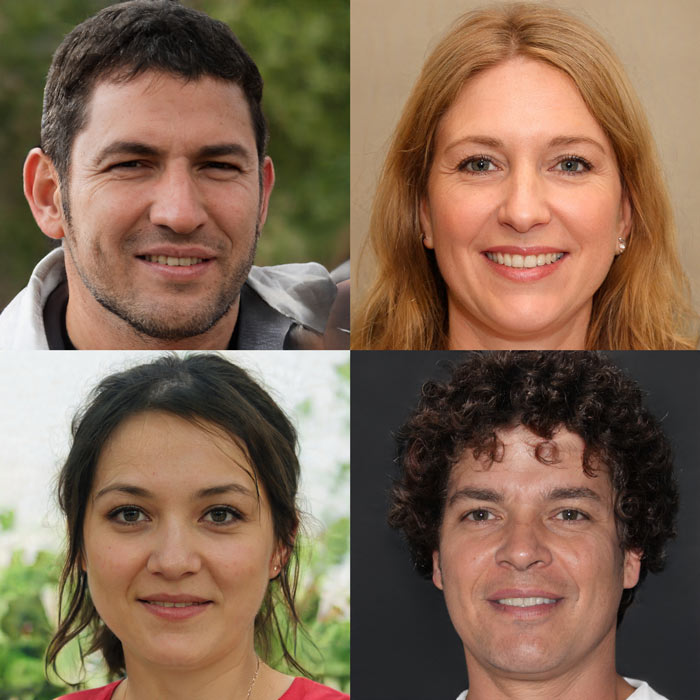
Portraits of people who don't exist

These people do not exist. They’re generated by a neural net program at thispersondoesnotexist.com, a site that uses Nvidia’s StyleGAN to generate images of faces.

StyleGAN is a generative adversarial network, a neural network that was trained on hundreds of thousands of photos of faces. The network generated images of faces, which were compared with existing photos by another part of the same program (the “adversarial” part). If the matches looked good, those parts of the network were strengthened; if not, they were weakened. And so, over many iterations, its ability to create faces grew.

If you look closely at these faces, there’s something a little…off about them. They don’t look quiiiiite right, especially where clothing is concerned (look at the shoulder of the man in the upper left).

Still, that doesn’t prevent people from using fake images like these for political purposes. The “Hunter Biden story” was “broken” by a “security researcher” who does not exist, using a photo from This Person Does Not Exist, for example.

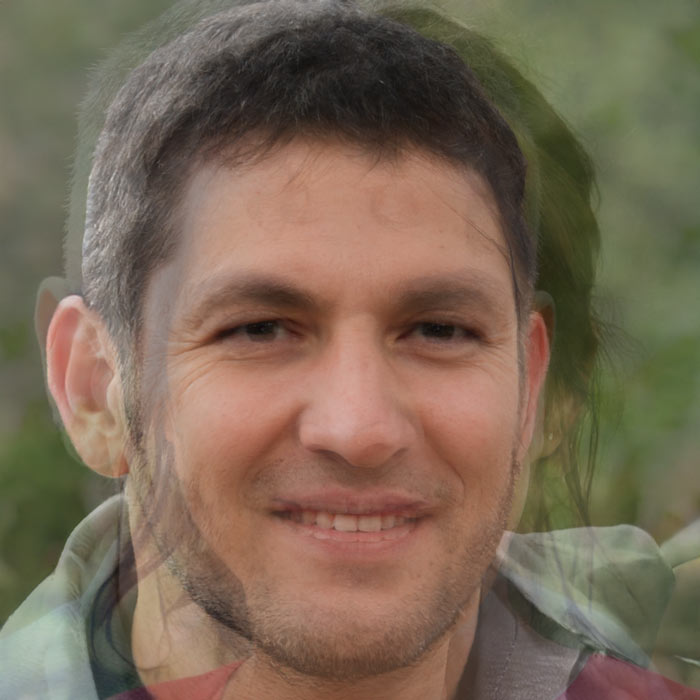
There are ways you can spot StyleGAN generated faces. For example, the people at This Person Does Not Exist found that the eyes tended to look weird, detached from the faces, so the researchers fixed the problem in a brute-force but clever way: they trained the Style GAN to put the eyes in the same place on every face, regardless of which way it was turned. Faces generated at TPDNE always have the major features in the same place: eyes the same distance apart, nose in the same place, and so on.

StyleGAN fixed facial layout

StyleGAN can also generate other types of images, as you can see on This Waifu Does Not Exist:

waifu

Okay, so what happens if you train a GAN on images that aren’t faces?

That turns out to be a lot harder. The real trick there is tagging the images, so the GAN knows what it’s looking at. That way you can, for example, teach it to give you a building when you ask it for a building, a face when you ask it for a face, and a cat when you ask it for a cat.

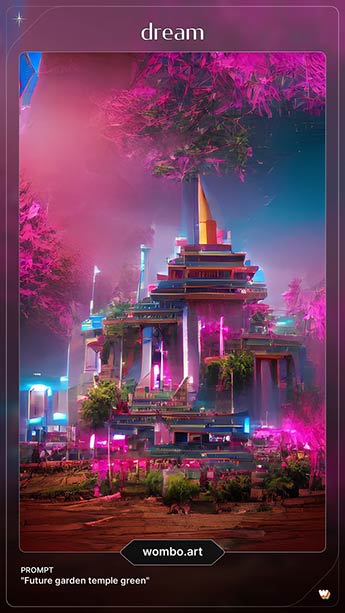
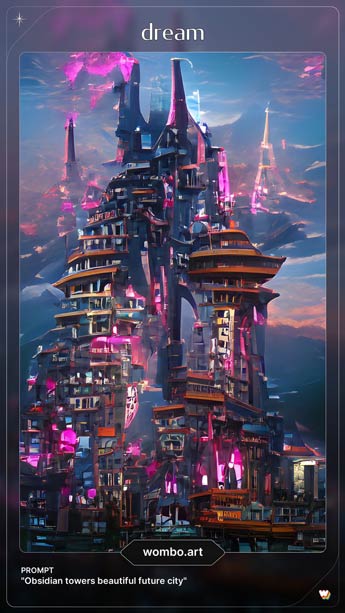
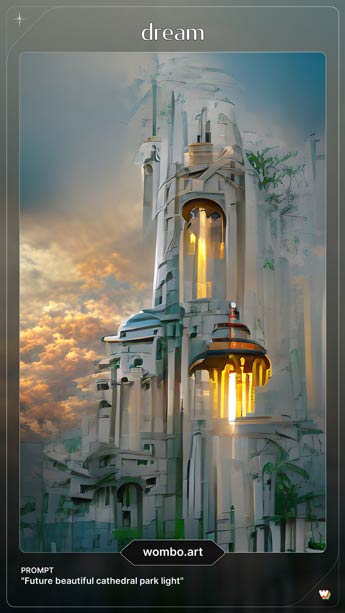
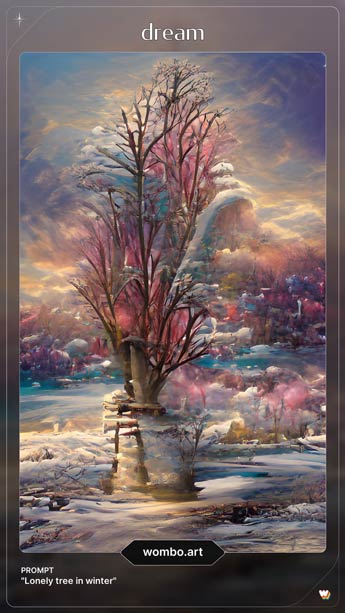
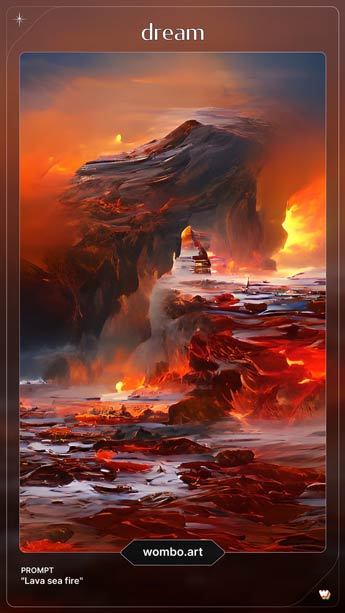
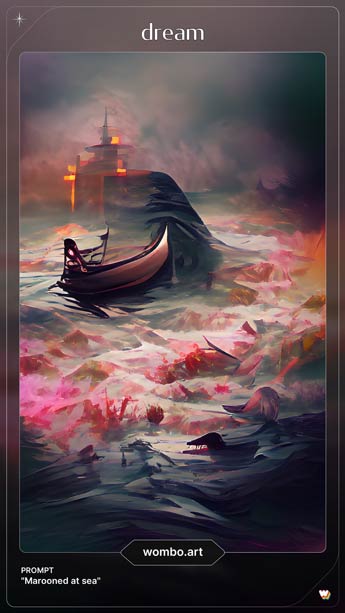
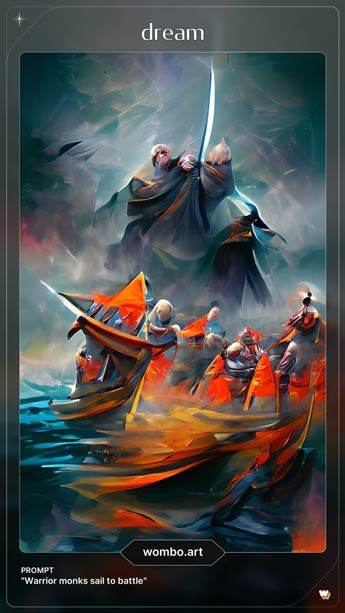
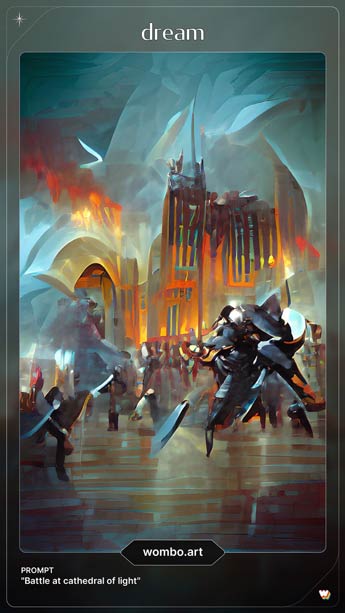
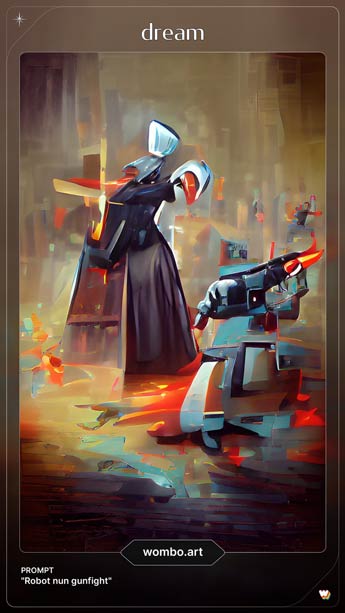
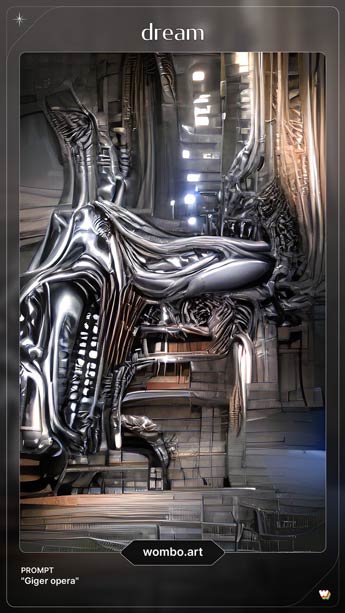
And that’s exactly what the folks at WOMBO have done. The WOMBO Dream app generates random images from any words or phrases you give it.

And I do mean “any” words or phrases.

It can generate cityscapes:

Buildings:

Landscapes:

Scenes:

Body horror:

Abstract ideas:

On and on, endless varieties of images…I can play with it for hours (and I have!).

And believe me when I say it can generate images for anything you can think of. I’ve tried to throw things at it to stump it, and it’s always produced something that looks in some way related to whatever I’ve tossed its way.

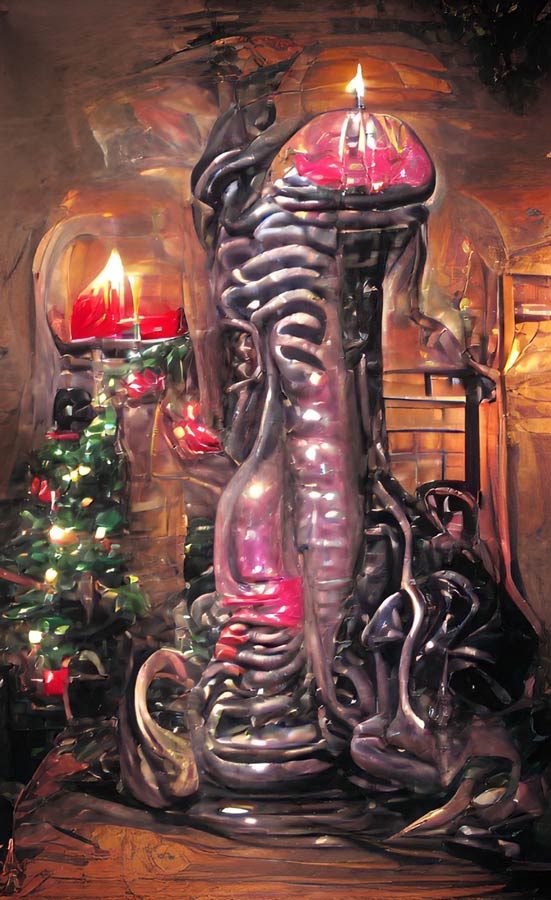
War on Christmas? It’s got you covered:

I’ve even tried “Father Christmas encased in Giger sex tentacle:”

Not a bad effort, all things considered.

But here’s the thing:

If you look at these images, they’re all emotionally evocative; they all seem to get the essence of what you’re aiming at, but they lack detail. The parts don’t always fit together right. “Dream” is a good name: the images the GAN produces are hazy, dreamlike, insubstantial, without focus or particular features. The GAN clearly does not understand anything it creates.

And still, if artist twenty years ago had developed this particular style the old-fashioned way, I have no doubt that he or she or they would have become very popular indeed. AI is catching up to human capability in domains we have long thought required some spark of human essence, and doing it scary fast.

I’ve been chewing on what makes WOMBO Dream images so evocative. Is it simply promiscuous pattern recognition? The AI creating novel patterns we’ve never seen before by chewing up and spitting out fragments of things it doesn’t understand, causing us to dig for meaning where there isn’t any?

Given how fast generative machine learning programs are progressing, I am confident I will live to see AI-generated art that is as good as anything a human can do. And yet, I still don’t think the machines that create it will have any understanding of what they’re creating.

I’m not sure how I feel about that.

Fragments of SquiggleCon: Two mottes one bailey

If you’ve read my blog for any length of time, or for that matter been on the Internet for any length of time, you’ve probably encountered the phrase “motte and bailey argument” or “motte and bailey doctrine” before.

A motte and bailey argument is an argument in which you believe something, but you don’t really have a good justification for it. So when you’re attacked, you retreat into a different, much more specific belief, for which you do have a good argument. When the attack is over, you come back out to your original, more general belief, the one that’s harder to justify.

An example of a motte and bailey argument I hear in polyamory circles all the damn time is this one:

“You need to have a veto in your relationship if you want your primary relationships to stay healthy.”

“Veto doesn’t necessarily keep relationships healthy. In fact, using a veto on someone your partner loves can break your partner’s heart, and if you break your partner’s hert then you are going to damage your relationship.”

“But a veto just means you can discuss your concerns with your partner! It means you can talk about problems you see in their other relationships! You favor open communication in your relationships, right?”

“Yes.”

“So you agree, all poly relationships need veto.”

In this argument, the bailey is a need for veto, usualy understood to mean the unilateral and unquestioned ability to end a lover’s other relationship. This is a difficult position to defend, so when called, a person may retreat into the motte (“When I say ‘veto,’ I’m only talking about open communication!”), then, when the argument is over, go back to advocating for unilateral and unquestioned ability to end a lover’s other relationship.

The Motte and Bailey argument comes from a style of fortification called a “motte and bailey,” which is a place where an area of land that’s difficult to defend (the bailey) is overlooked by an easily defensible structure (the motte). If raiders or an enemy army or whatever show up, you evacuate the bailey, bringing all the people into the motte. The he motte can be defended from attack. When the attached tack is over, everyone goes back out into the bailey.

Okay, so now that you’re up to speed…

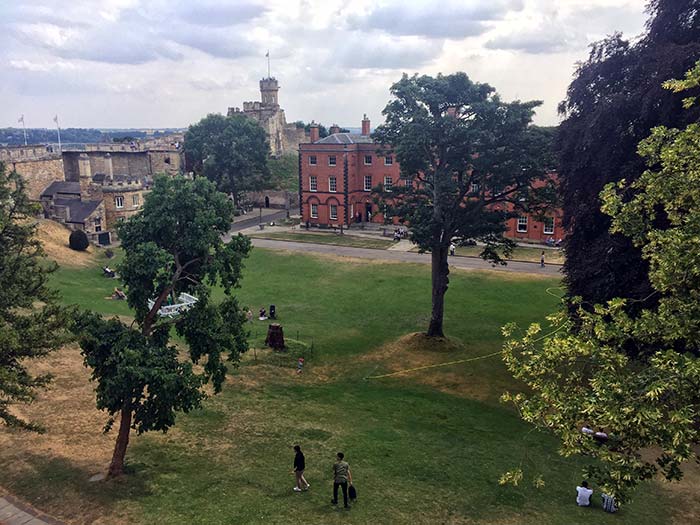
The town of Lincoln in northern Britain is home to a motte and bailey castle, called, appropriately enough, Lincoln Castle. Naturally, I had to visit.


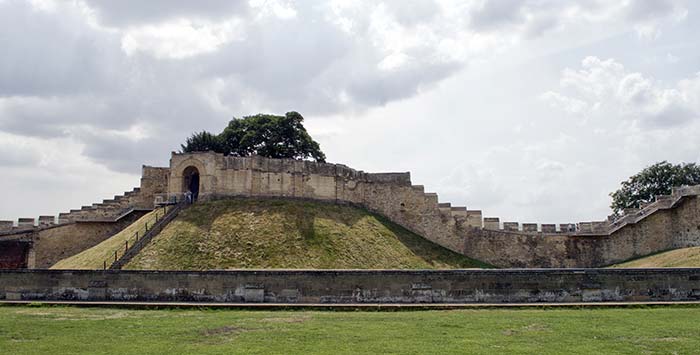
Lincoln Castle was built somewhere around 1068 or so, and has been in use continuously ever since. It’s an unusual motte and bailey structure in that it actually has two baileys. The motte is a smooth, round valley between two hills. Naturally, since if one is good, two must be better, William the Conquerer built two baileys, one on each hill, and there you have it.

Originally, the motte was completely enclosed by a wood fence, and both baileys were built of wood. It was replaced over the years centuries with beefier fortifications of stone. Today, nothing remains of the original wood structures.

Lincoln Castle is still in use today–the castle is now the courthouse and, from what I gather, capitol building for Lincoln. The rest is an open-air museum. We had a blast running around the place.

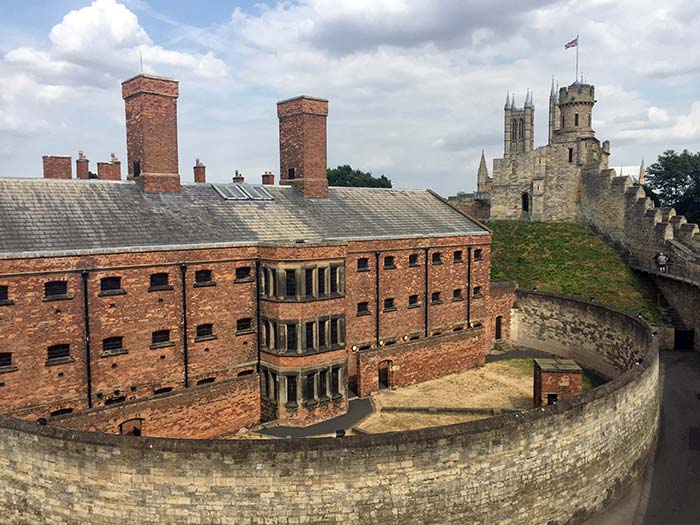
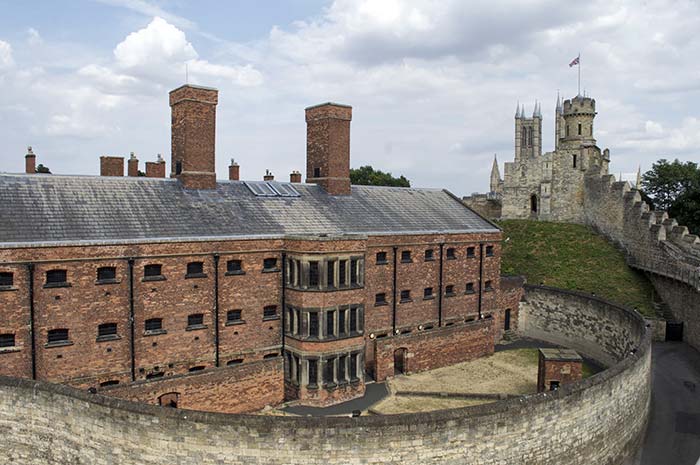
Here’s a view from one of the two mottes, looking down into the bailey. The round structure on the left is the fortified gate through the outer wall. The red brick structure to the right is an old Victorian-era prison. The round tower in the background is the second motte, because you know what they say about mottes: you can never stop at just one.

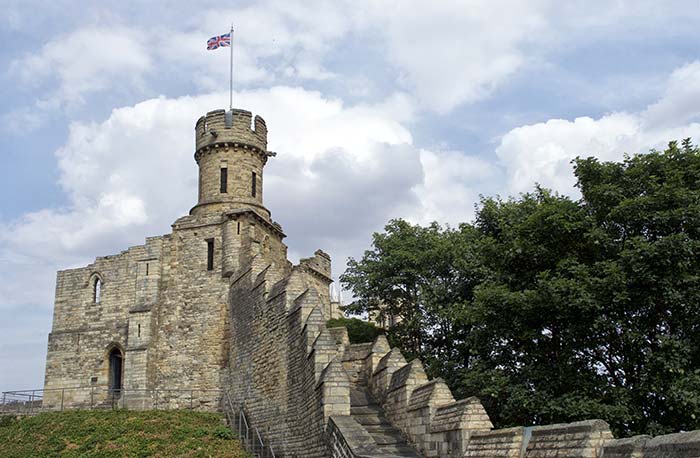
Here’s what’s left of the second motte, seen from the middle of the bailey.

As soon as I found out that Lincoln Castle has two mottes, I immediately, on that very spot, registered the domain name twomottesonebailey.com — though I have absolutely no idea what I will use it for. Suggestions?

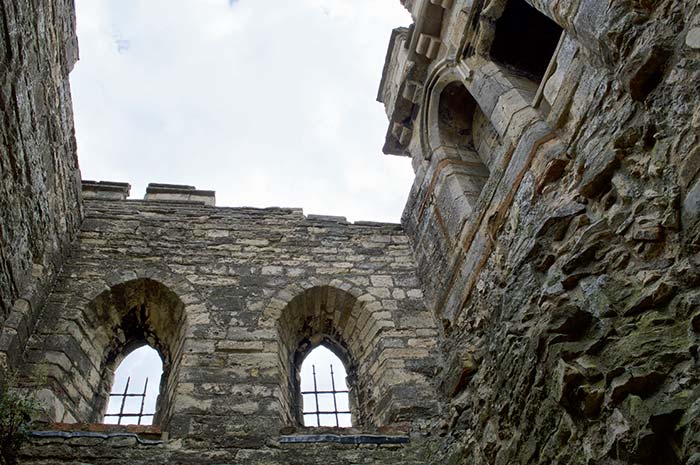
The second motte, which is in much better shape than the first. The tower still exists, though most of the rest of it is now a broken, hollowed-out shell in which it would be tremendous fun to film a cheesy low-budget movie.

See what I mean? This place is just screaming for orcs or spectral knights or some sort of special effect where mist flows through the windows before congealing into an undead sorceror or something.

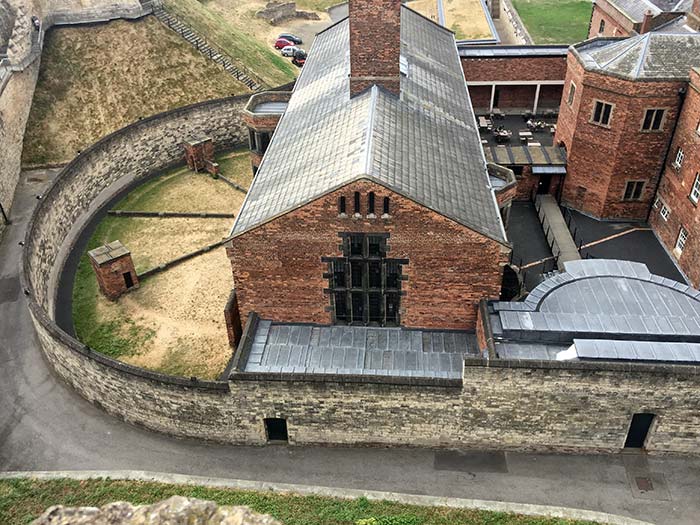
The fortification has two gates, one on each side. Breaking in through one of these gates would be a nontrivial undertaking for sure. In the background, between the two trees, is a place where the wall widens into a large round structure that contains cells where prisoners due to be executed were chained up prior to being hanged–more on that in a minute.

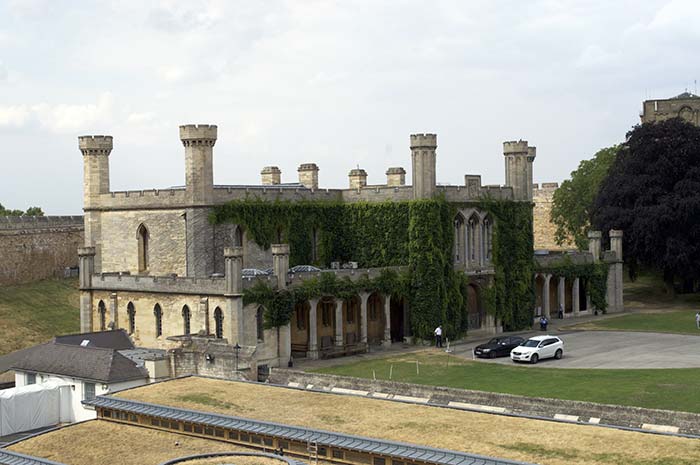
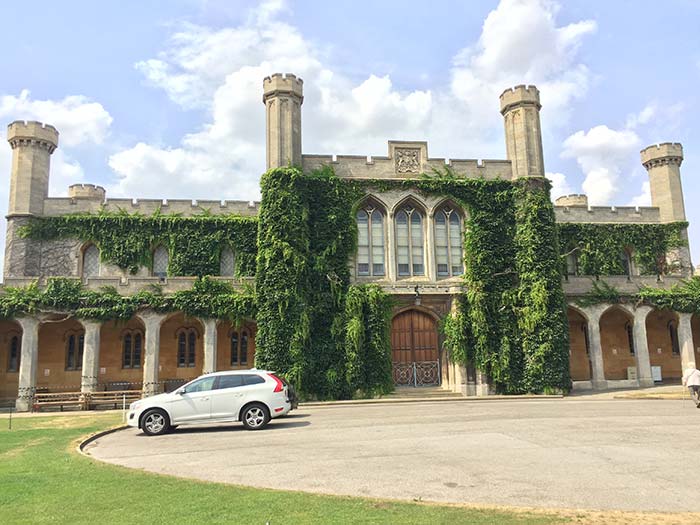
Here’s the actual “castle” bit of Lincoln castle. It has been the administrative center and courthouse for Lincoln for…oh, for longer than the country I live in has been a country, honestly. It’s still used today, which is why I have no photos of the inside. Tourists aren’t allowed in, being that it’s a functional courthouse and all.

The Victorian prison. Touring this was interesting. Whenever I see something like this, I always wonder how many innocent people were sentenced here, and how many people ended up here for political rather than criminal justice reasons.

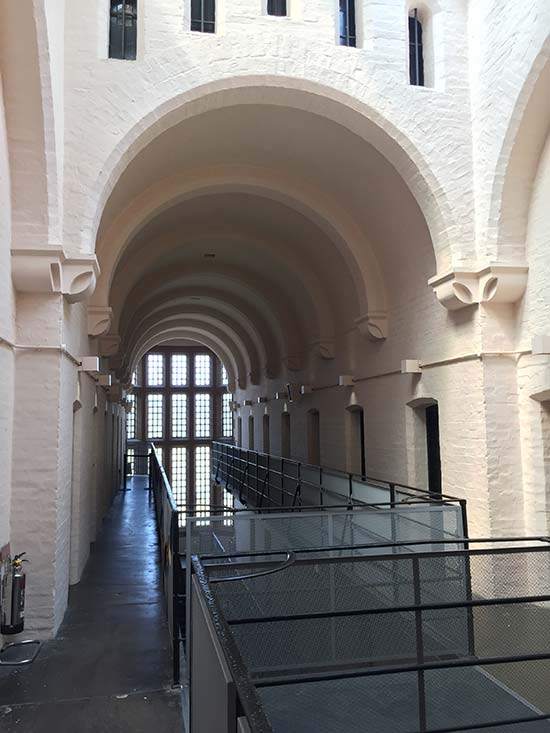
The inside had rather more windows than I expected, though I suppose in an age without electric lights, that makes sense.

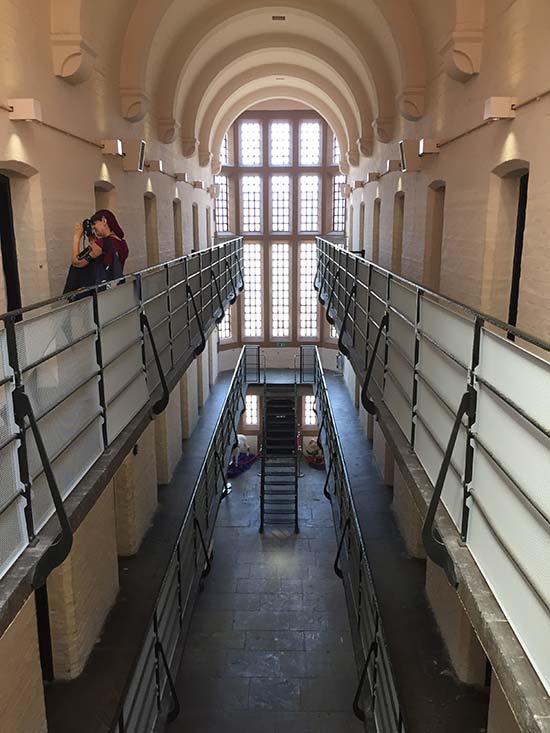
Prisoners were kept in cells lining both sides of the stacked corridors. The building is divided into two halves, one for male and one for female prisoners. More on that in a minute, too.

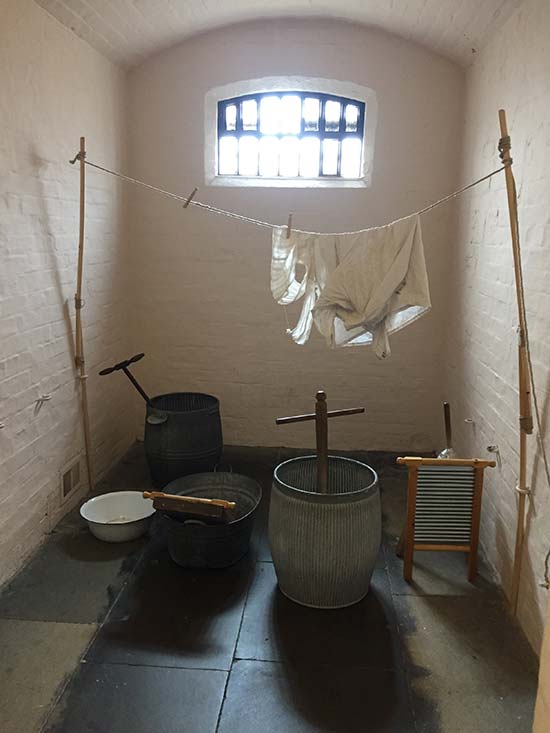
Some of the cells were used by the prisoners to do tasks like washing laundry, making bedrolls, or stamping license plates.

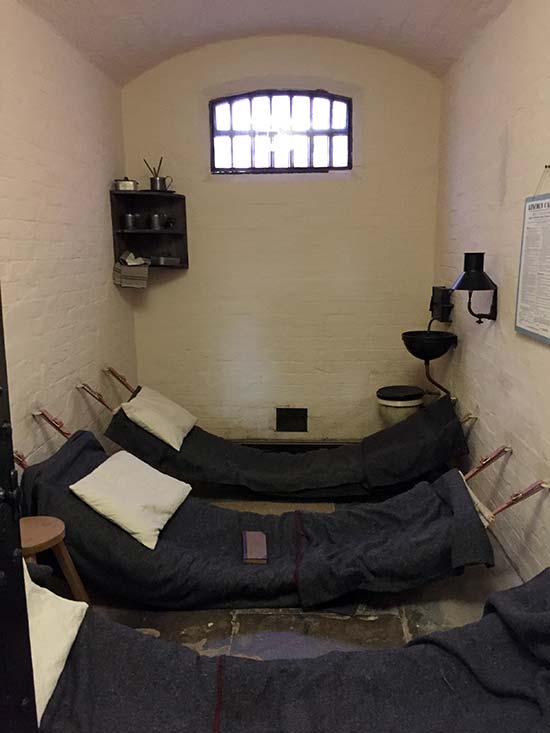
This left fewer cells for actual housing of prisoners, so they were stacked in like cordwood.

Though to be fair, I have stayed in a hostel whose accommodations were roughly similar.

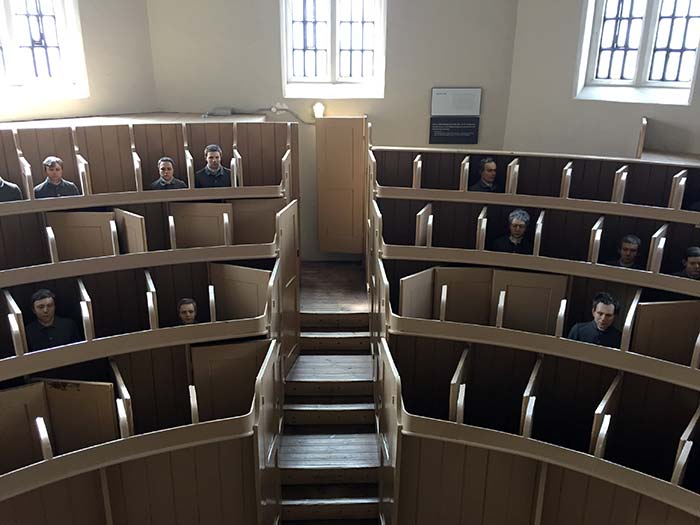
This being Victorian times, God was kind of a big deal (those Victorians were quite the bunch of God-botherers, even as they did the most ungodly of things), so of course the prison had a chapel, and of course, attendance was mandatory.

Each pew was a separate room, divided from its neighbors by a little door, presumably to make it more difficult for the prisoners to shank each other during services, that being considered rather uncouth and all. The prisoners could not see each other, but the person delivering the sermon could see all the prisoners, cleverly combining the functions of a chapel and a panopticon into one (a Chapelopticon? Panchapelcon? I don’t know). Thus do we see religion reflected in architecture. God sees you, so stop doing that thing you do with your private parts ands that feather duster, you pervert.

I was, while we toured the prison, engaging in cybersex with a lovely woman who lives in Waterloo, Ontario, which was a bit freaky. I have now imprinted on Victorian prisons as arousal triggers. There’s no way that can go wrong.

So yeah, executions. The Victorians were big on ’em. They’d kill you just as soon as look at you. Steal something? Say something bad about the king? Poke a badger with a spoon? You’re a dead man walking.

Or women. They were remarkably egalitarian in the judicial application of death.

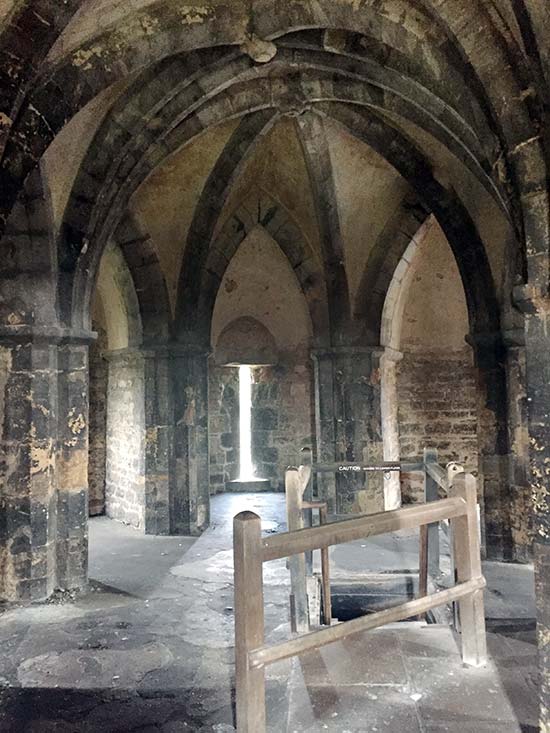
They had special cells in that bulge in the wall I mentioned earlier. They look like this:

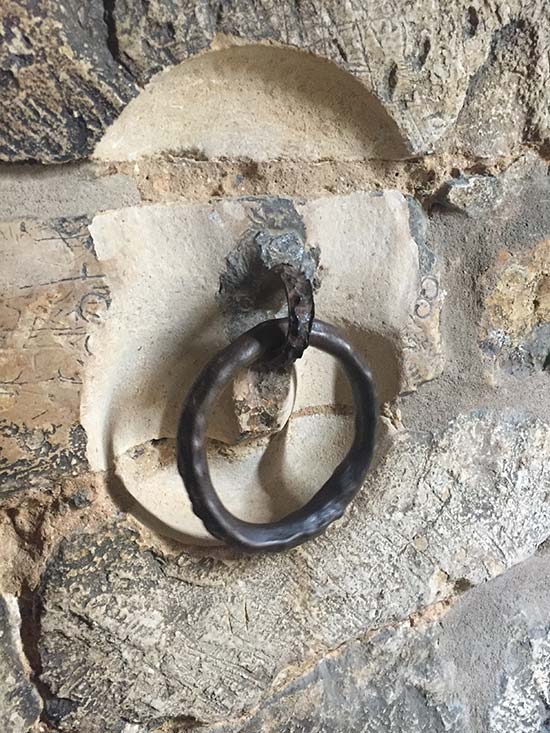
Each one had a steel ring set in the wall, to which they would literally chain the condemned.

On the appointed day, after the crowds had gathered, they’d unchain the people, lead them out into the bailey, and kill them for the entertainment of the guests justice and peace of the land.

And yes, there were crowds. Big ones. People who lived in houses near the walls would rent out second-story rooms with a view at exorbitant rates to folks who wanted a good view. Apparently, there was a full-on riot on execution day when the star of the show had ruined everyone’s entertainment by committing suicide earlier on–the people demanded to see someone be killed, but the prison didn’t have anyone else to kill that day, and it was all a hell of a mess.

I guess that’s what happens before the age of Marvel superhero movies.

So anyway, one of the Victorian prison wardens was a man of Science, who installed a telescope in one of the mottes so he could look at the stars. Err, yeah, that’s right, the stars. To look at. In the sky. Stars.

Remember how I said the prison was divided into a male and a female wing? Female prisoners were kept in the back, and allowed into an outdoor courtyard behind the motte.

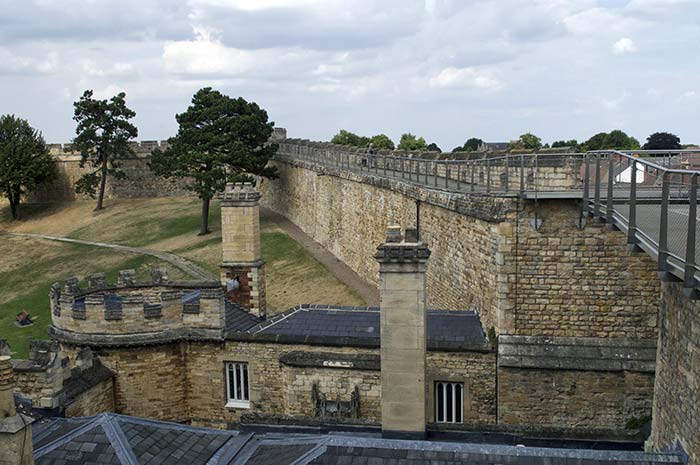
Here’s a view from the observatory the warden built for his telescope.

…yeah. Apparently, from what our tour guide said, he had sevral illegitimate children with several different female prisoners.

Those whacky Victorians, amirite?


There is one other bit I don’t have photos of, because photos aren’t allowed in the super special room where it’s kept: the Magna Carta.

Yes, the Magna Carta, one of the original handwritten copies. It’s here, in a climate controlled room with the text of the thing up on the wall.

And there, right at eye level smack dab in the middle of this enormous wall of text, is Clause 54:

No one shall be arrested or imprisoned on the appeal of a woman for the death of any person except her husband.

Even back then, women’s voices were never taken seriously.

Fragments of SquiggleCon: Writing Erotica

The various evil things spearheaded by my crush notwithstanding, being able to spend time with her in Europe was fantastic fun.

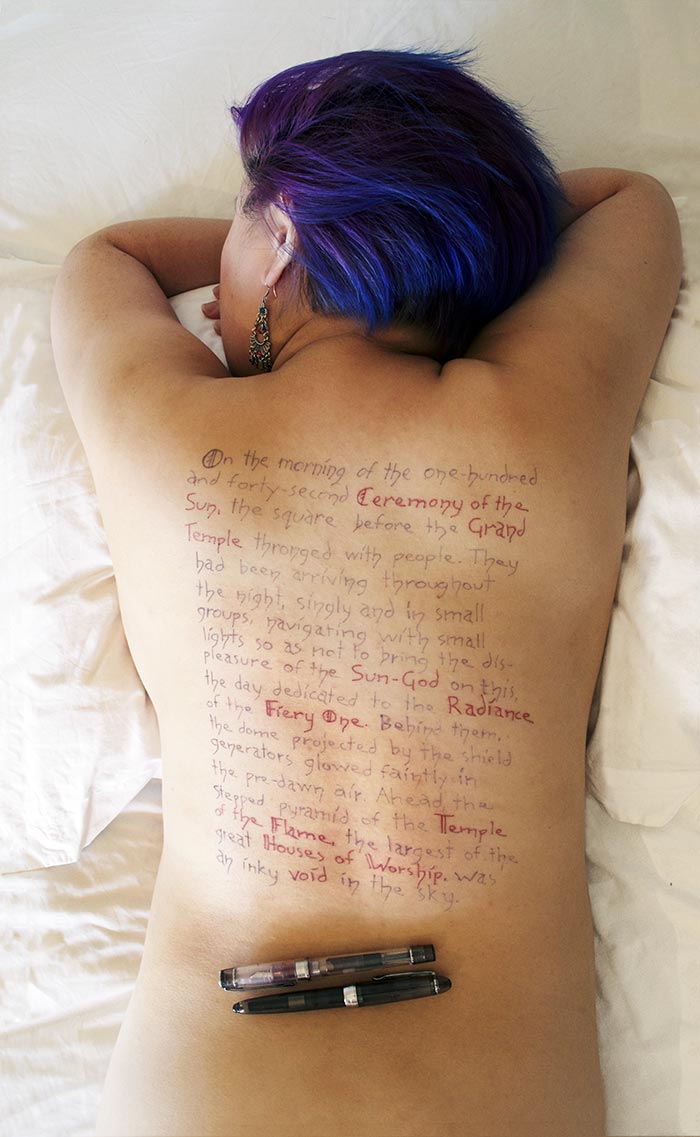
For the past several months, we’ve been talking about collaborating on a writing project. She has built a fascinating world—a quasi-steampunk, high-tech, post-scarcity society with advanced biomedical technology ruled over by more or less benevolent AIs, worshipped as gods, who are fascinated by human sexuality, and so have bent the entire society toward the intersection of sex and religion.

It’s a fun (and hot!) place to visit. We want to create a book of erotic short stories set in that world.

While we were all in Europe, she and I officially started that project…using her body as a canvas. She brought a collection of fountain pens with her. I spent a couple of hours in the orgy room, beginning the writing of the book..on her back.

This his is, I think, probably the most unusual way I have ever started writing a book.

I have no idea when it will be finished; there are a number of writing projects ahead of it, and I’m still shopping for a publisher. (I am considering pitching it to Cleis and Circlet.) Still, I’m really excited about this book!

As a side note, writing on human skin with a fountain pen is remarkably difficult. Also, remarkably fun.

Fragments of SquiggleCon: Black Iron in Lincoln Cathedral

I’m now back in the US after spending a week in Europe with the extended poly network, in which we rented a manor in the English countryside for debauchery and mayhem (an event we called “SquiggleCon 2”), followed by a week in Boston with my crush, who is now my “um, something something relationship,” as we’re calling it.

Now, a week in the rural English countryside with more than a dozen sex-positive, kinky people might seem invitation to nonstop orgiastic bliss, and you wouldn’t necessarily be wrong to think so.

But having reached A Certain Age, namely, that age where orgies and similar sexual shenanigans are not exactly a rare event, but being in the English countryside is, Joreth and I took a couple of days off to explore the nearby towns.


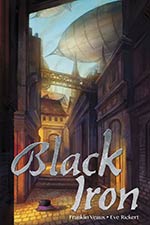
As regular readers may already know, my first professionally published novel, Black Iron, comes out this October. It’s a Discworld-style romp through an alternate 19th-century England, one where Queen Victoria doesn’t exist, the Protestant Reformation never happened, the Colonies are still Colonies, and the British don’t drink tea. It features a princess and a ruffian and an overworked police constable and undead things made of other things.

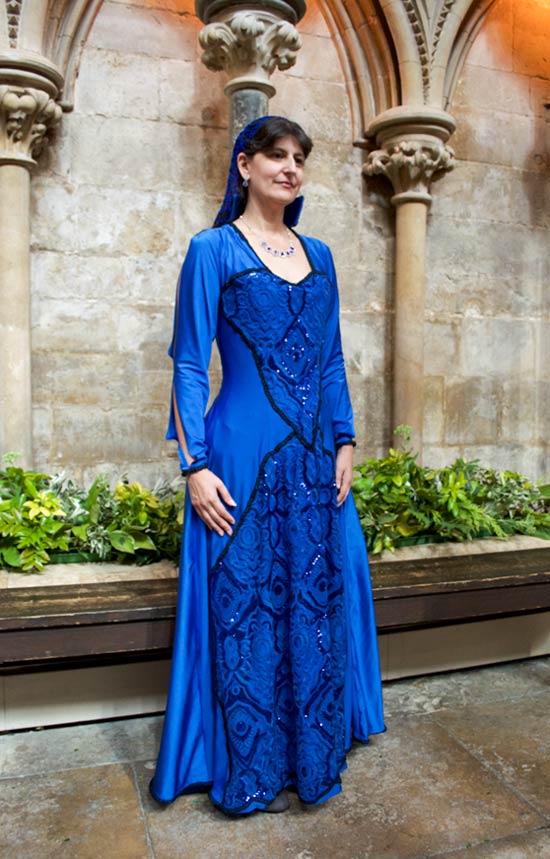
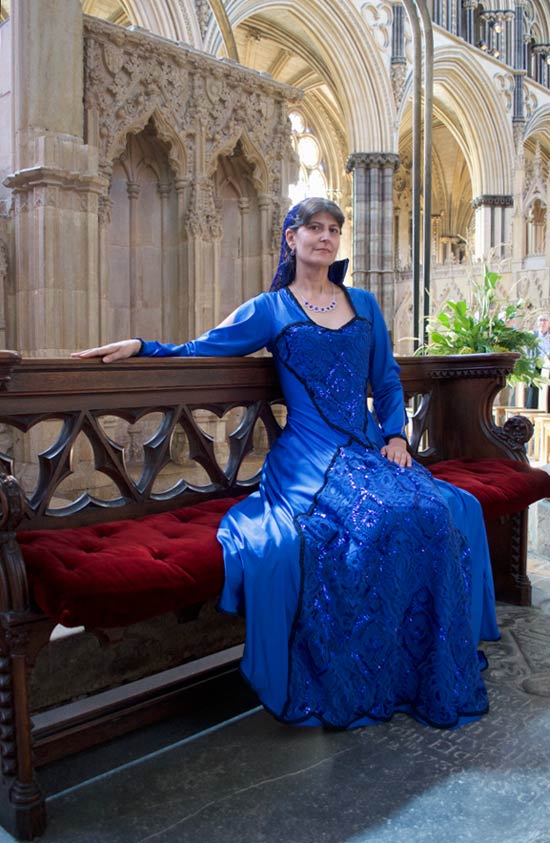
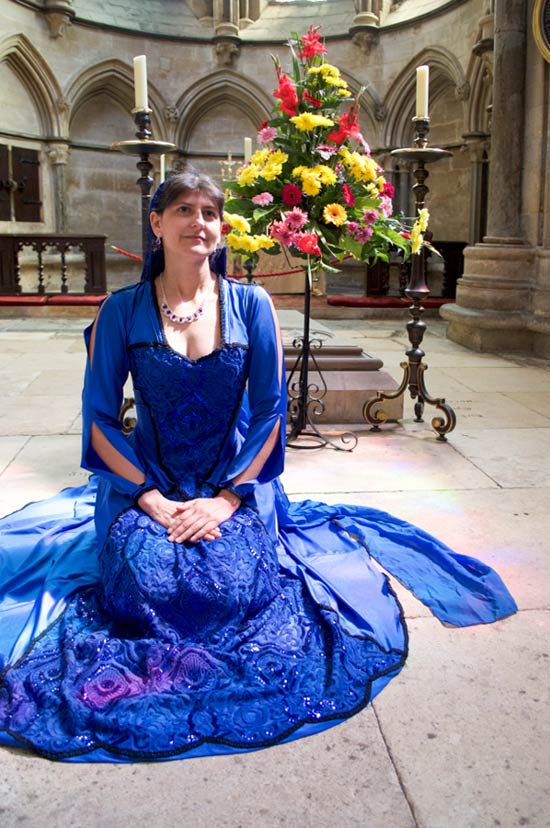
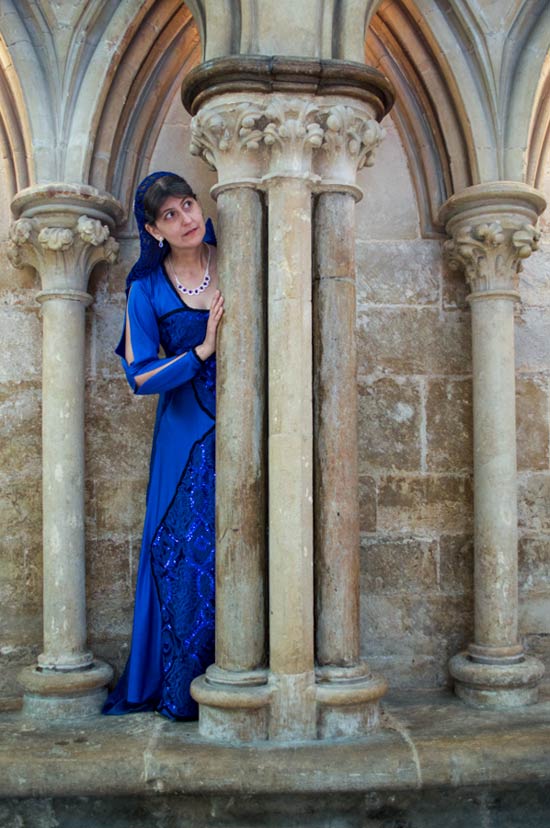
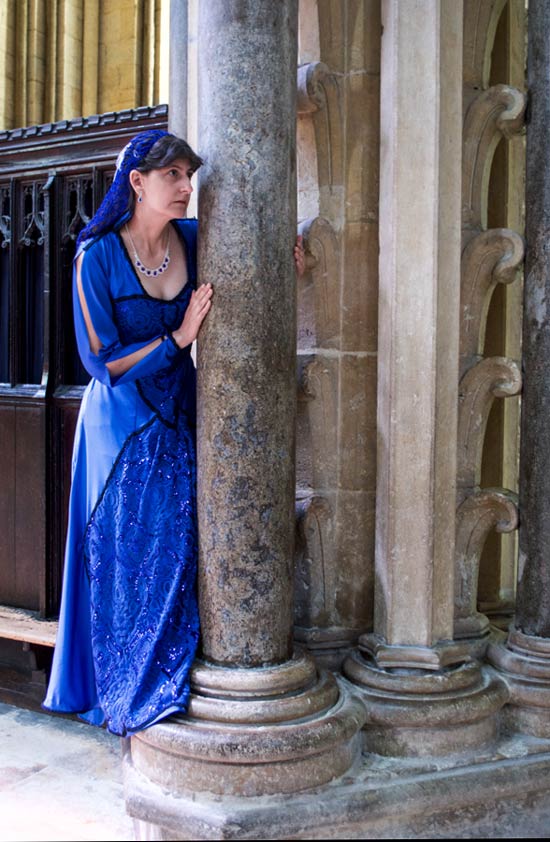
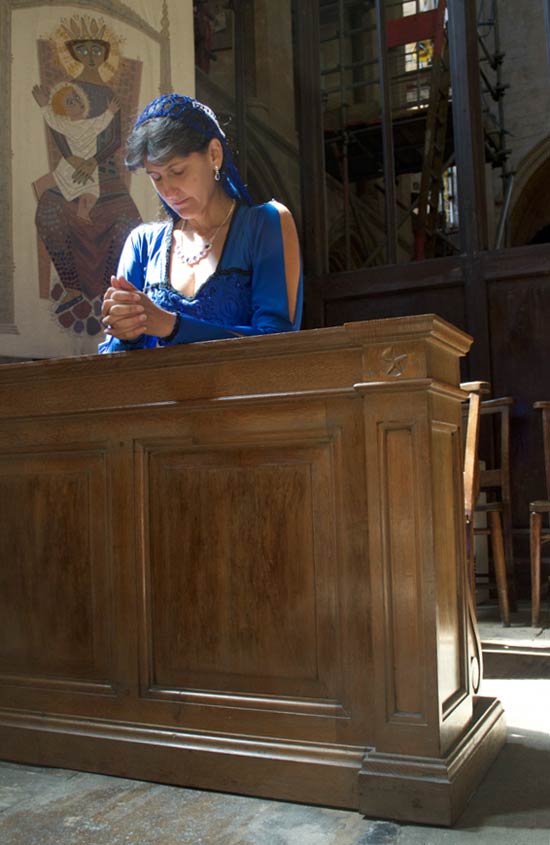
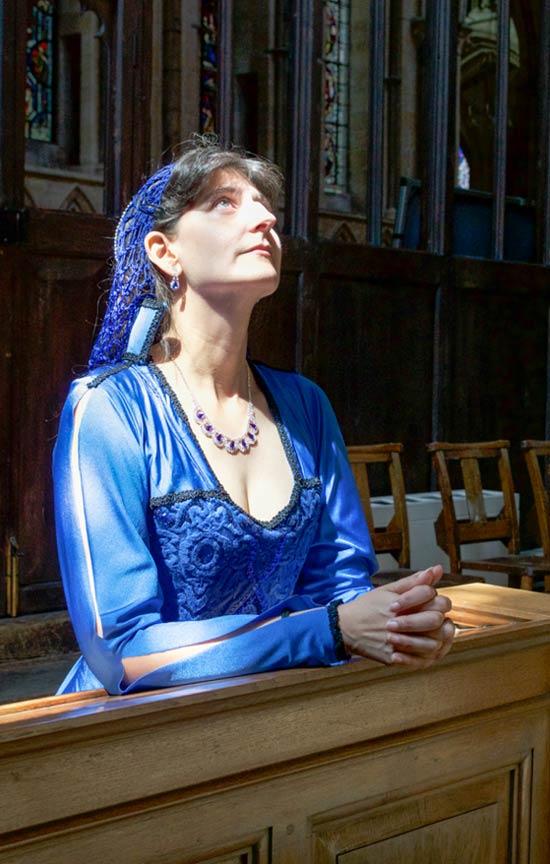
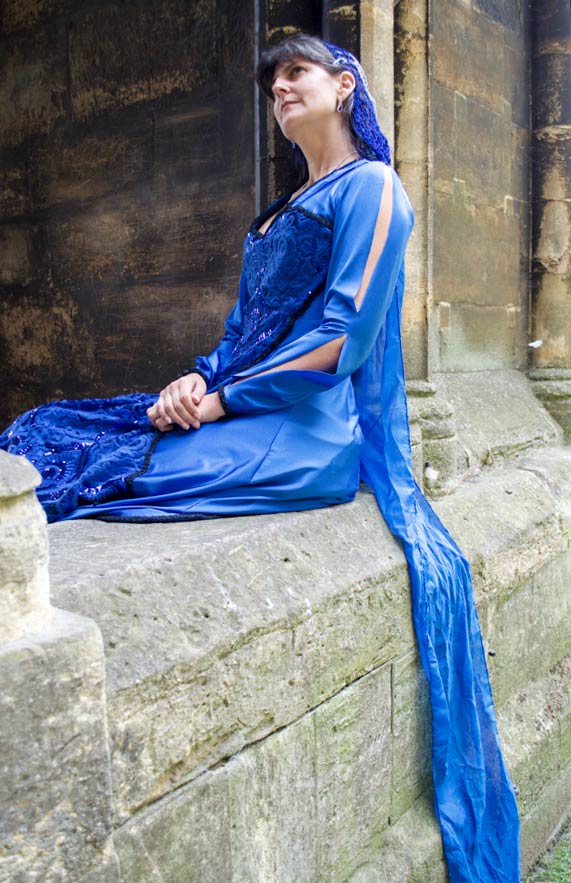
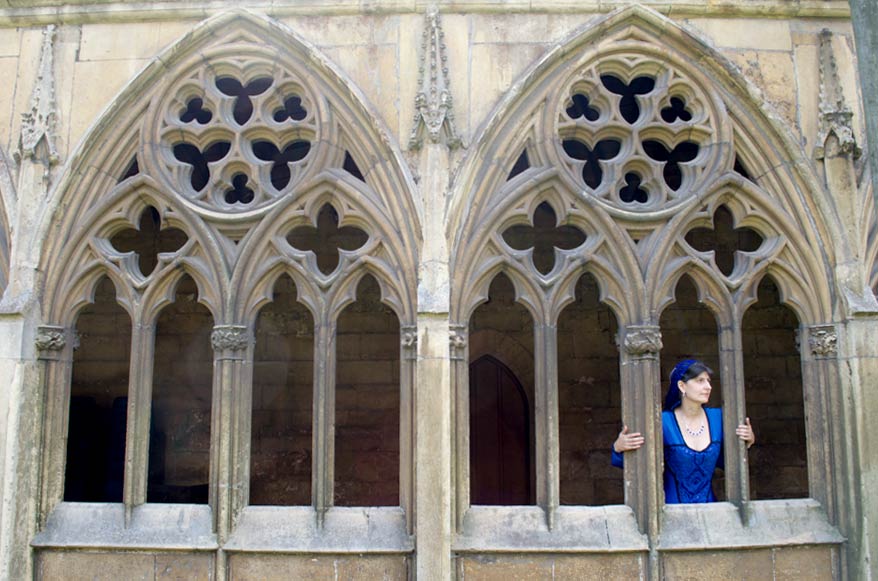
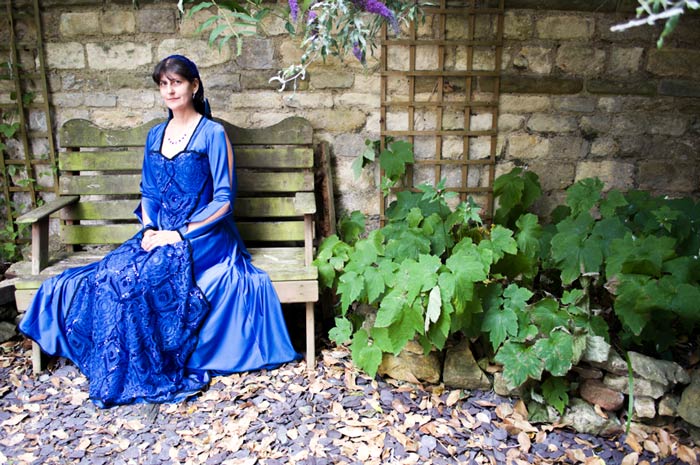
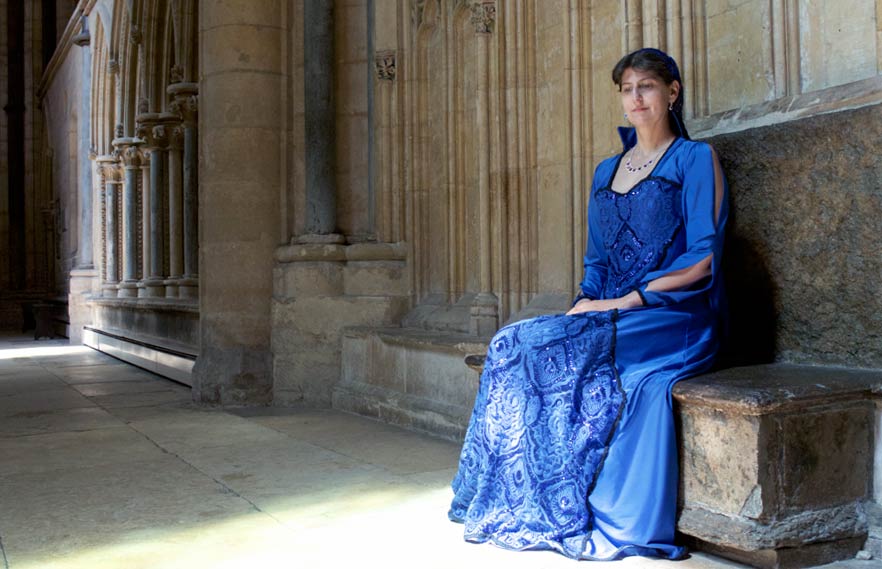
Inspired by one of the scenes in the book, in which the Lady Alÿs, the aforementioned princess, is attending a formal dance aboard Queen Margaret’s airship when she witnesses a strange little man Peter Pan over the edge in the wake of an Unfortunate Discovery, Joreth decided to make a dress modeled after the one the character wore to the dance. And since there’s no cosplay like cosplay in an 800-year-old Gothic cathedral built atop a 1,000-year-old Norman church, we packed up, headed into Lincoln, and did an all-day photo shoot in a magnificent cathedral.

Lincoln Cathedral is magnificent indeed. I’ve been to some amazing houses of worship—I’ve seen Mass at St. Peter’s in Rome and at Notre Dame; I’ve visited the Church of the Savior on Spilled Blood (Церковь Спаса на Крови) in St. Petersburg, Russia; I’ve looked out over Reykjavík from atop the peak of Hallgrímskirkja in Iceland; and I’ve climbed the 409 steps to the top of St. Mary’s Church in Gdańsk, Poland—but Lincoln Cathedral may be my favorite. It’s immense and beautiful and grand and awe-inspiring, and I spent two days of my seven days in England there.


Joreth and I literally spent a solid day running about Lincoln Cathedral, camera in hand, and I think some of the images we got are quite grand. Take a look!

Two Chaosbunnies in the Desert: Bodie, part 3

Part 1 of this saga is here. Part 8 of this saga is here.
Part 2 of this saga is here. Part 9 of this saga is here.
Part 3 of this saga is here. Part 10 of this saga is here.
Part 4 of this saga is here. Part 11 of this saga is here.
Part 5 of this saga is here. Part 12 of this saga is here.
Part 6 of this saga is here. Part 13 of this saga is here.
Part 7 of this saga is here.

Bodie, California was a Victorian-era gold mining town high in the mountains between California and Nevada. The Victorians weren’t very big on human rights, or treating workers well, or sex, or just about anything else, but there is one thing they liked very much, and that was technology.

At some point, today’s cutting-edge tech will look as hopelessly antiquated as the detritus littering the ruins of Bodie. But tech always starts somewhere, and the Victorians were all for embracing the bleeding edge, especially where it making money.

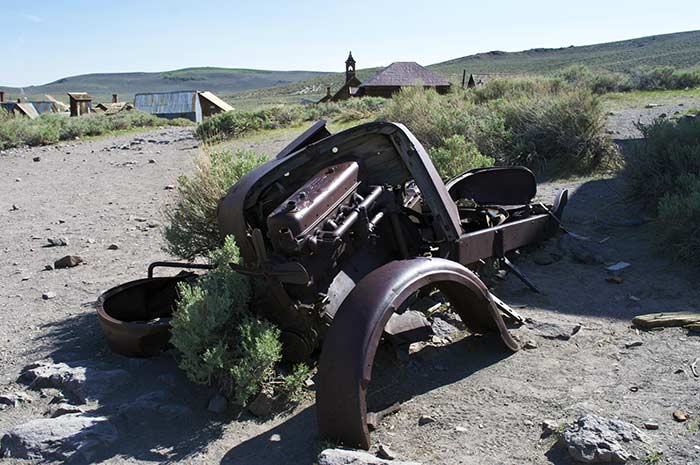
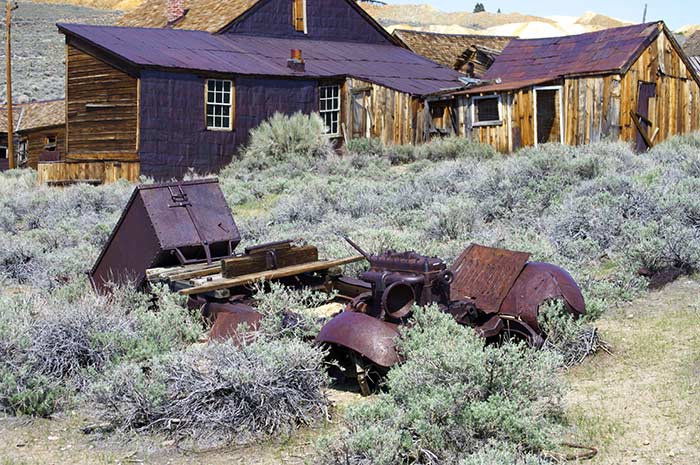
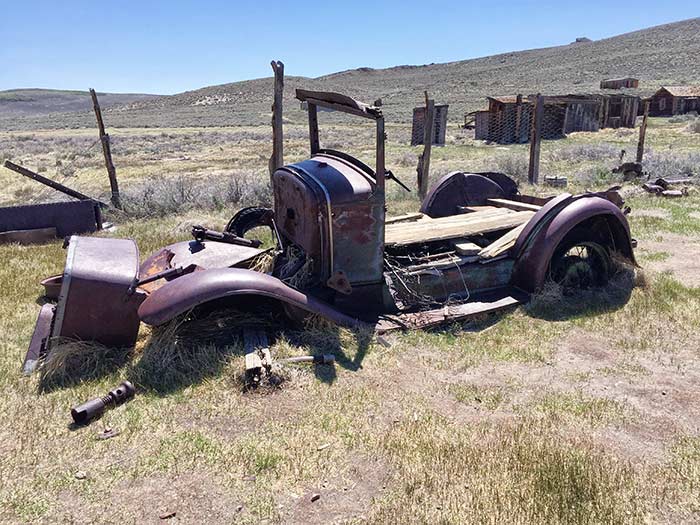
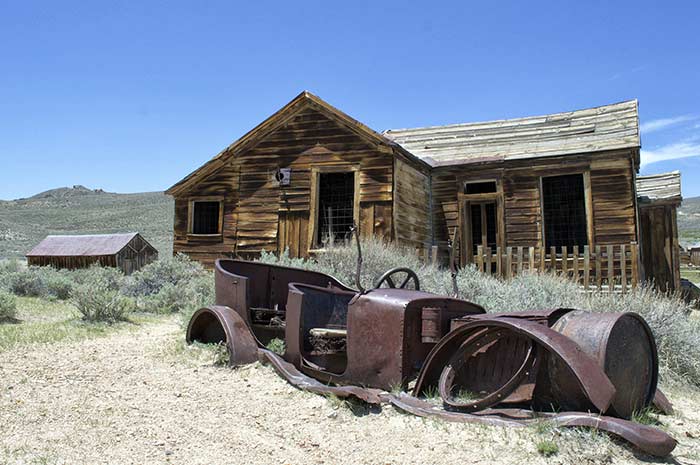
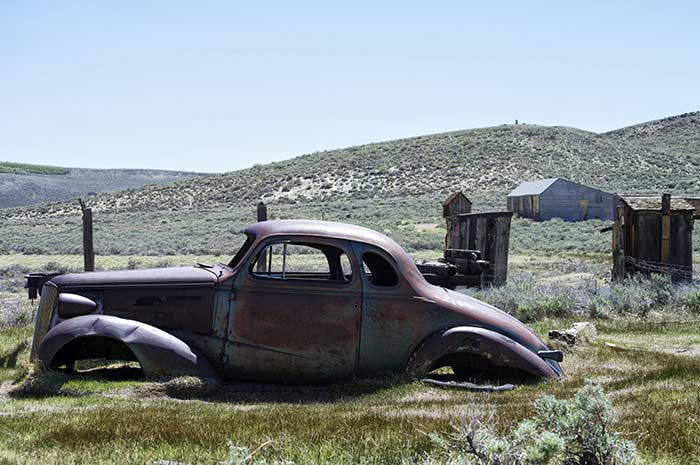
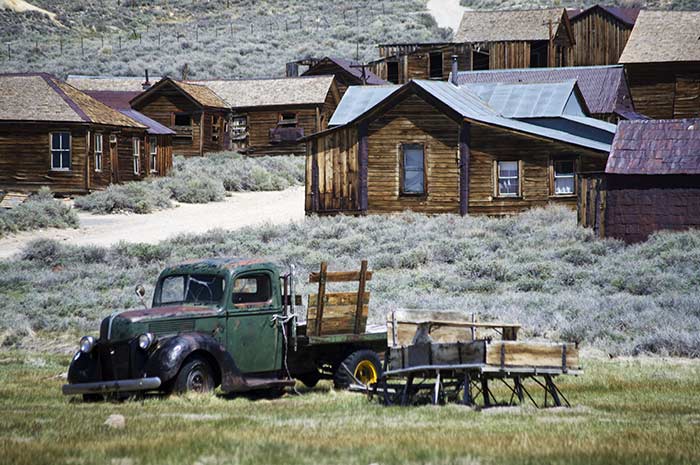
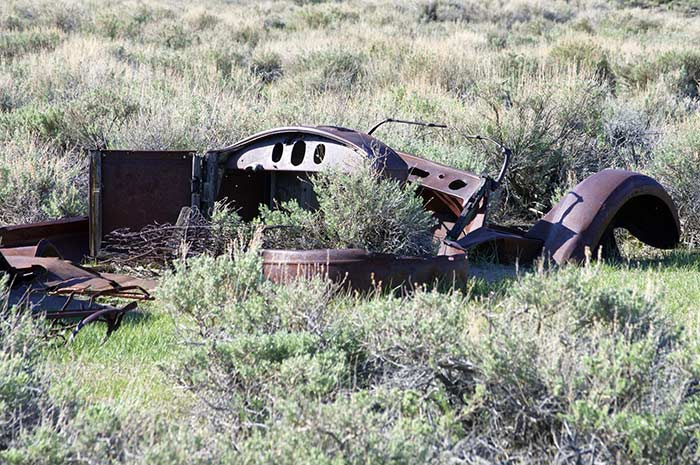
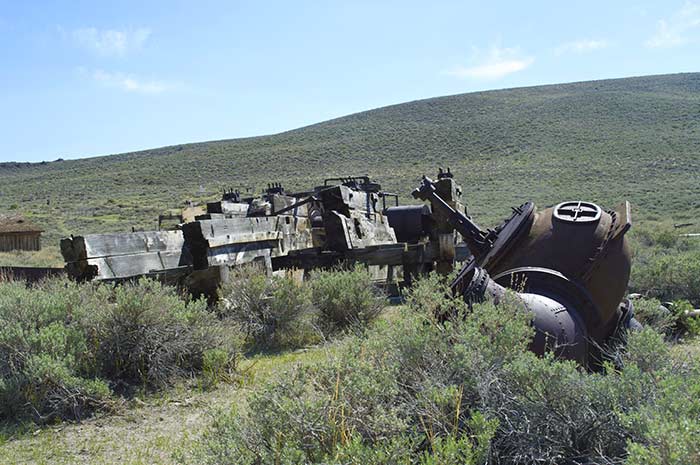
One of the many places Bodie kept up with the state of the art was transportation. When the town was founded, horses and stagecoaches were the order of the day, but that changed as the automotive arts gained ground. Today, the ruins of ancient cars lie scattered all over what’s left of the town.

The residents of Bodie were willing to adopt any new technology that offered to make their lives better or, more to the point, more productive. They may not have had a sewer system, they may have dug their wells directly downstream of their outhouses, but they were on top of mechanization as soon as it was out of beta.

And the trend of abandoning old tech where it lay and replacing it with new didn’t end with mining or stamping machines. The derelict wrecks rusting quietly into the hills span years of the automaker’s art.

They also used whatever worked. In the winter, snow in Bodie could get two stories deep. If that made it most practical to let the horseless carriages get buried and break out the sleds in winter, that’s what they did.

Some of the abandoned cars look personal; others look like working vehicles.

There’s a certain sleek beauty to the lines of this one, I think.

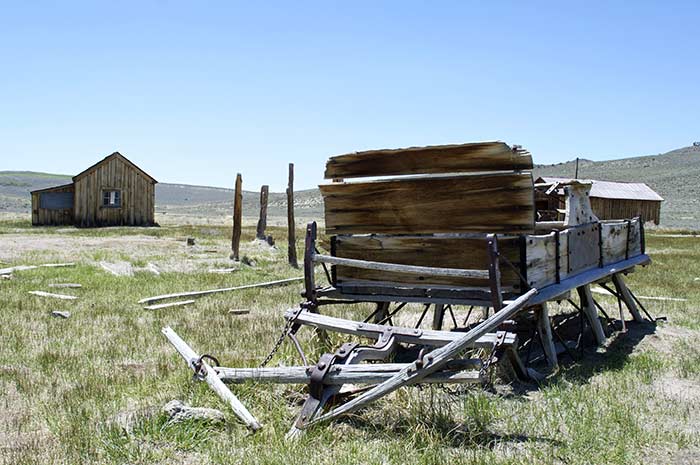
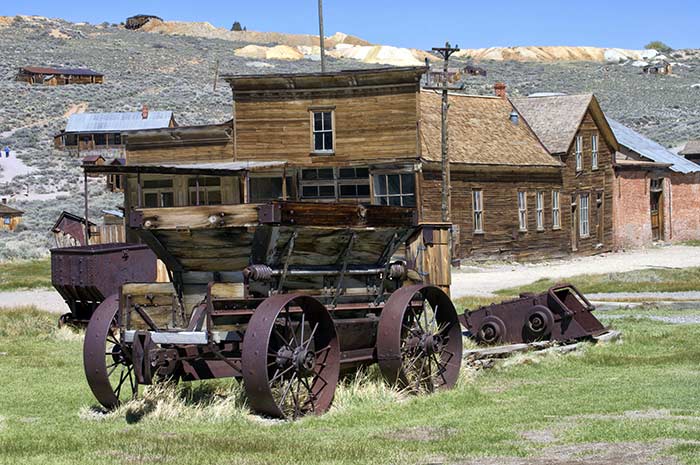
Compare that to the severe utilitarianism of this (possibly horse-drawn?) ore cart.

But they weren’t technofetishists. Their approach to technology was relentlessly, brutally practical. If it worked, they used it. As many of the vehicles dotted about Bodie are old tech as new.

This is a different relationship to technology than many of us have today. They wanted things that worked, not things that were new. If it helped them get gold out of the ground, they used it, and that was that. It’s hard to imagine that utilitarian a mindset today. “New iPhone? Why? My phone makes calls just fine.”

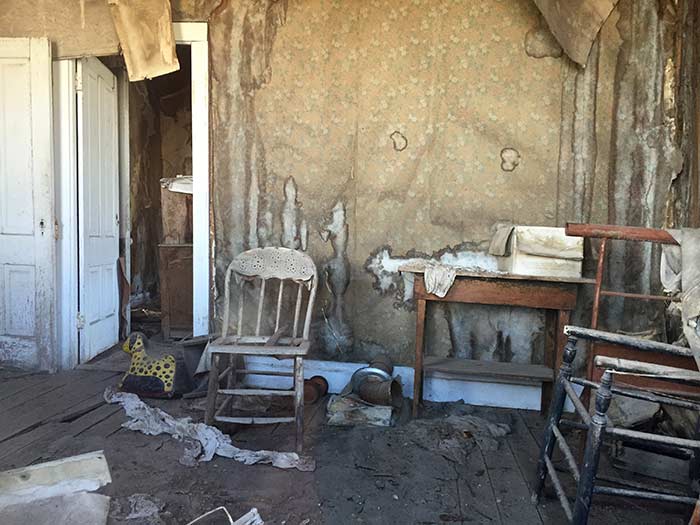
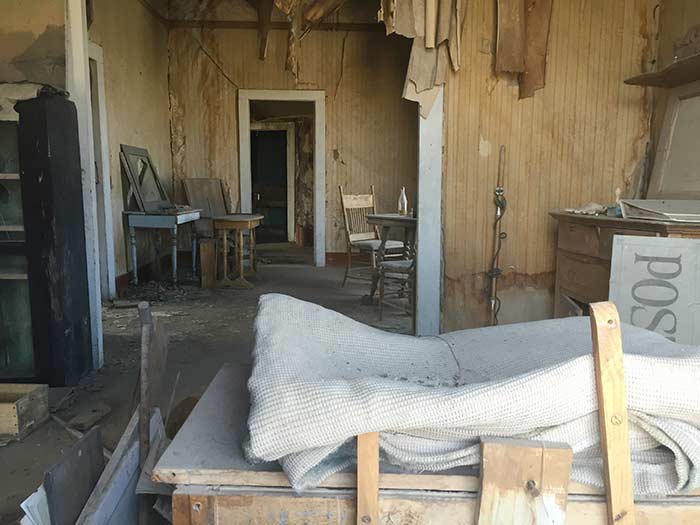
One of the creepiest and most splendid things about Bodie is the fact that when the gold left, so did the people, sometimes with such abruption it seems as thought they forgot to pack.

In reality, it’s more like they didn’t bother to pack. It’s difficult to get up and down the mountain even today; in a time when the only way in our out was by stagecoach (on a toll road!), there would be little incentive to take anything with you that could easily be replaced when you got wherever you were going.

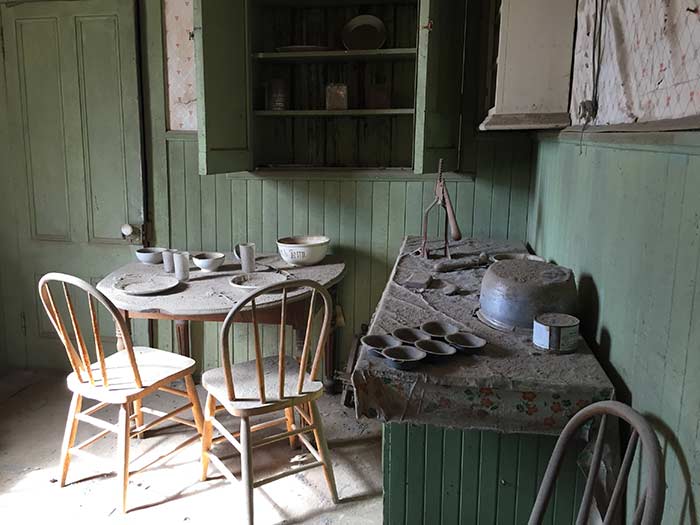
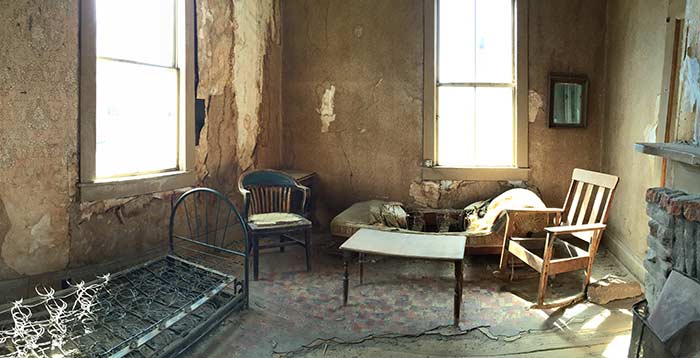
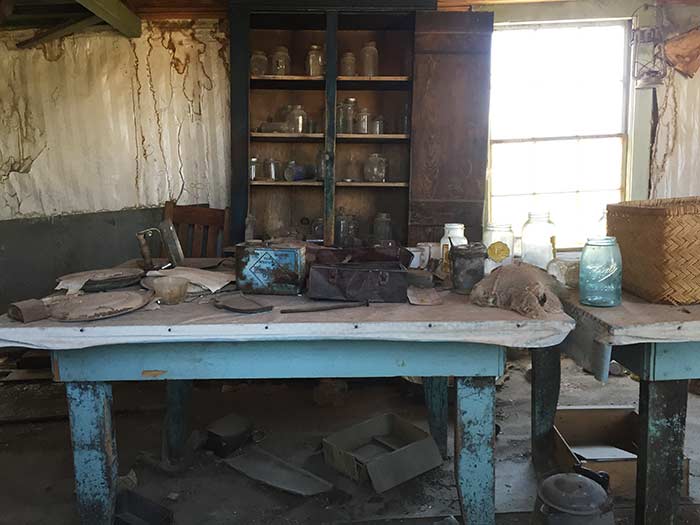
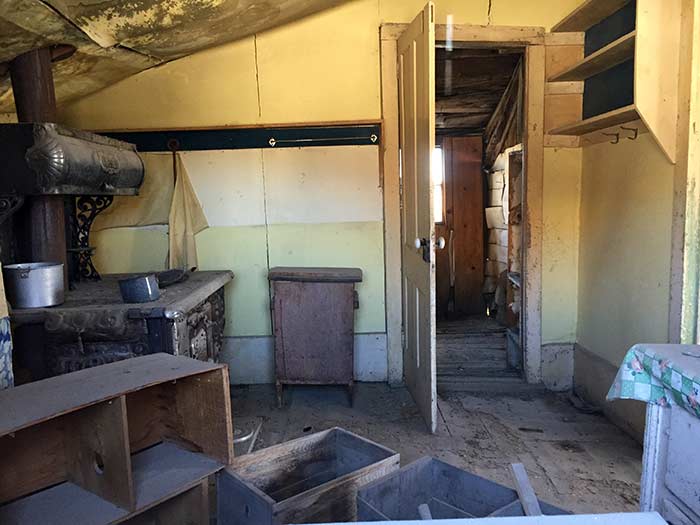
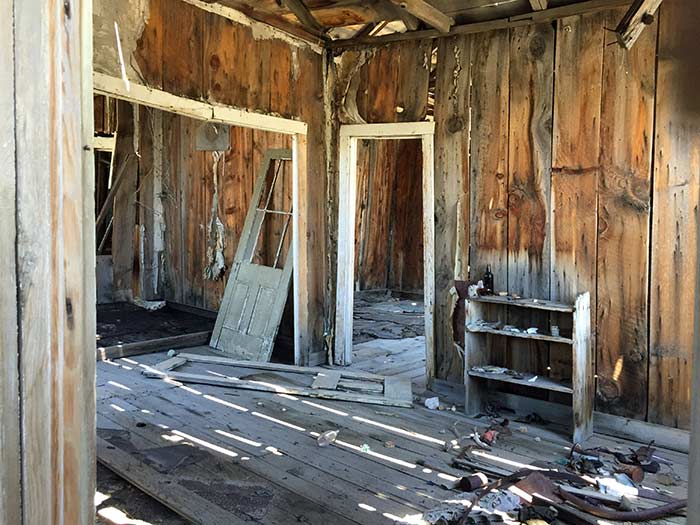
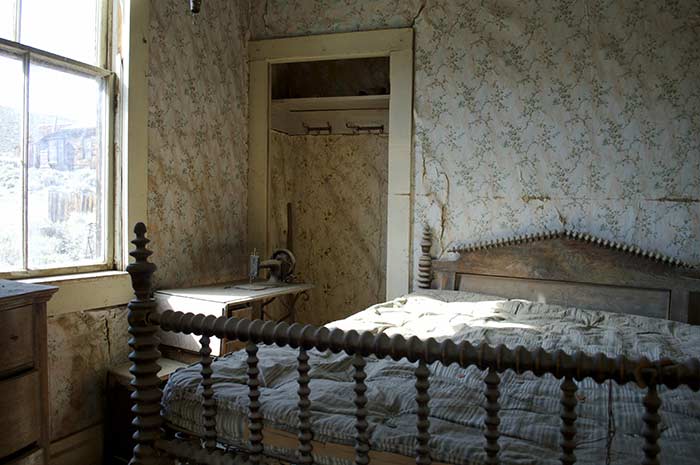
So the buildings in Bodie have rooms that look like their owners stepped out a half-century ago to pop on down to the store for milk and eggs, and never came back. It’s both unsettling and marvelous.

The cast-off child’s toy in this room is a reminder that people raised their kids here, in this inhospitable mining town with its brutal heat and bitter cold and chimneys belching mercury fumes.

Bodie had its own post office, which doubled as the postman’s living quarters.

This was someone’s home. Someone cooked meals here, sang songs here, experienced joy and sorrow here, lived here.

It’s hard to forget that countless lives played out here, from beginning to end. These people lived in an inhospitable place, in a different time, but they lived here, and they experienced the same range of feelings that you and I feel.

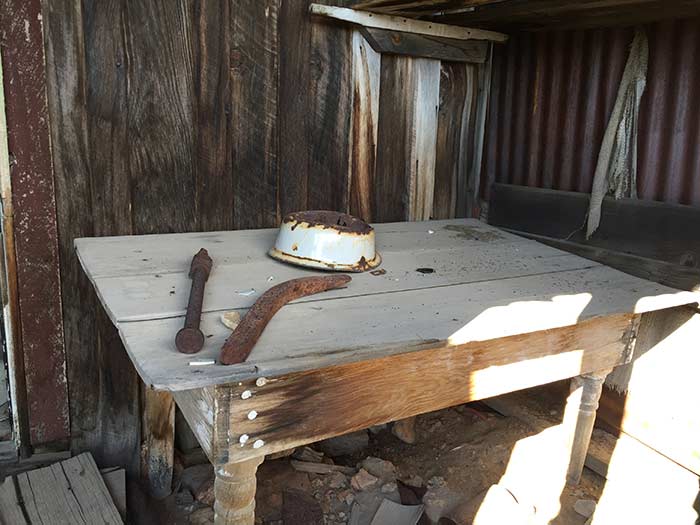
This was, first and foremost, a working town. The town had a blacksmith. Apparently, according to the tour guide, this was it. I have no idea what those things on the table are.

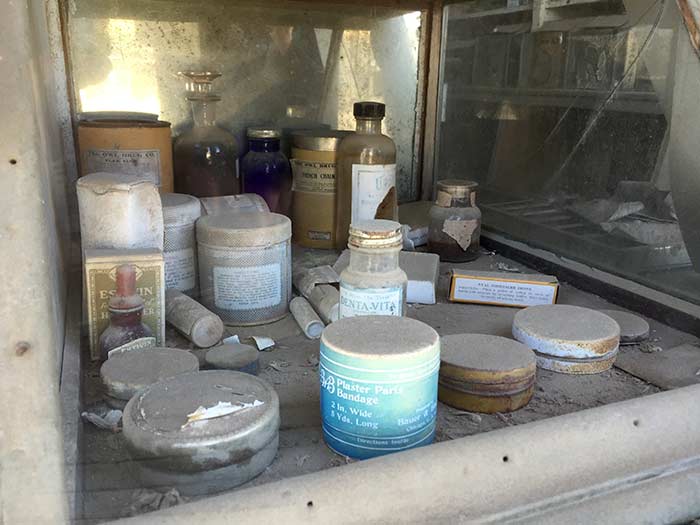
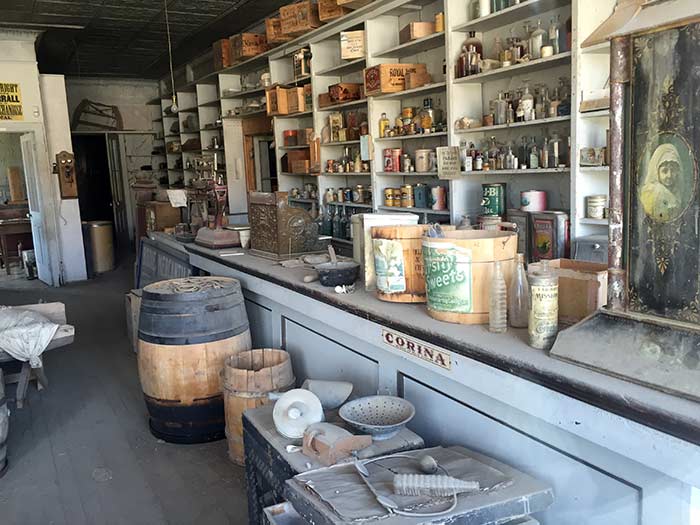
The general store looks very much like it did when the town was at its peak, at least if you ignore the film of dust that has fallen like a funeral shroud over it all.

I bet the aspirin was a guaranteed best seller.

The plaster bandages too, I reckon. Industrial accidents in the stamping mill were horrifying.

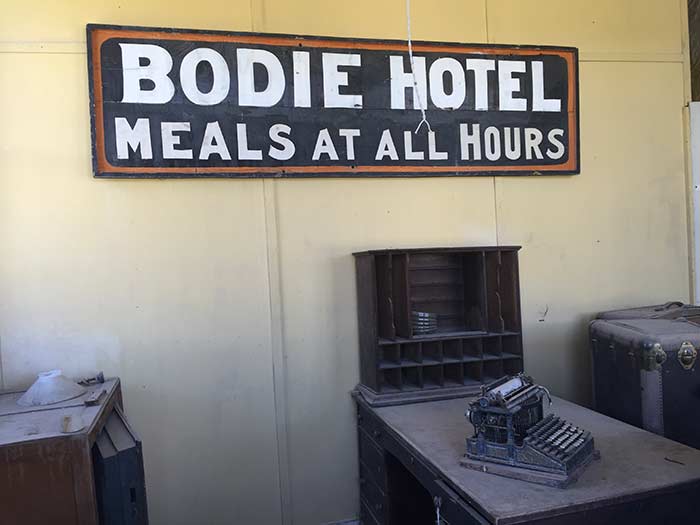
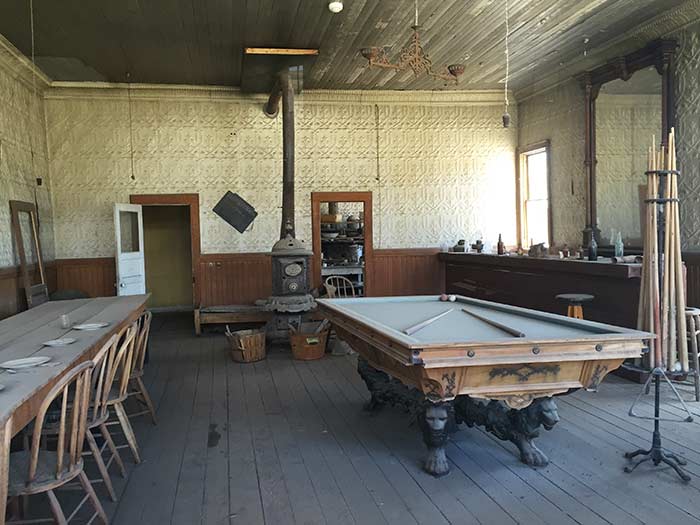
The Bodie Hotel is one of the best-preserved buildings still remaining. The sign says “meals at all hours,” and I believe it. This place probably never slept.

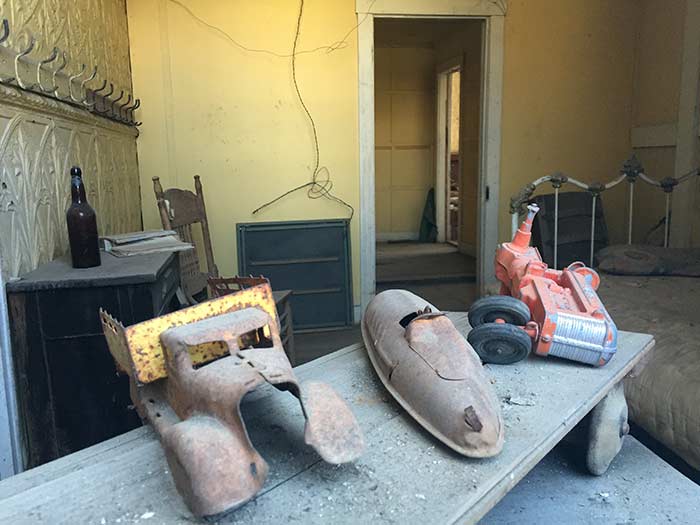
This room still has a bunch of toys, long abandoned, and what looks like it might be a proto-skateboard of some description.

I wonder if the child these belonged to was sad to give them up.

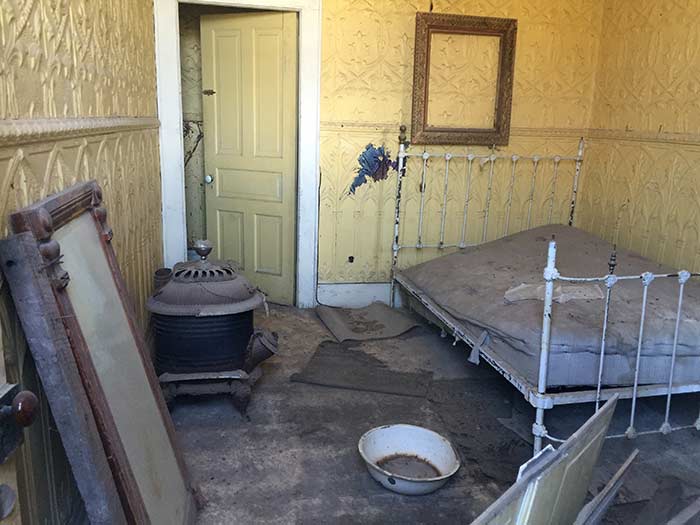
This room looks expensive to me.

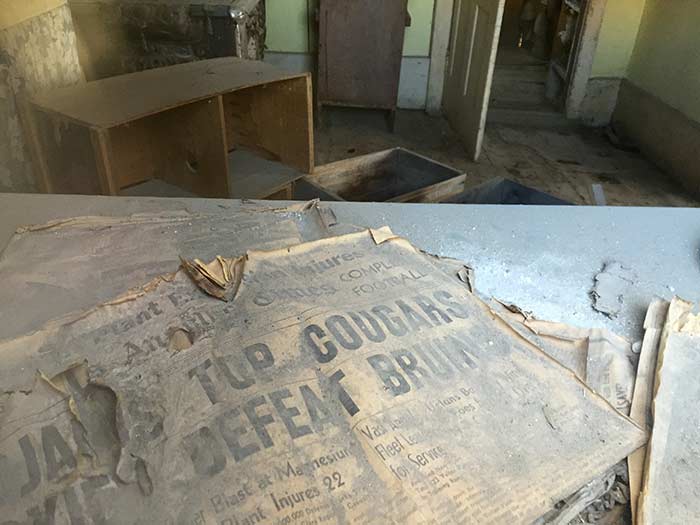
The headline is less interesting to me than the article beneath it: “Blast at magnesium plant injures 22.” There are people today who want to abolish OSHA. How short our memories are.

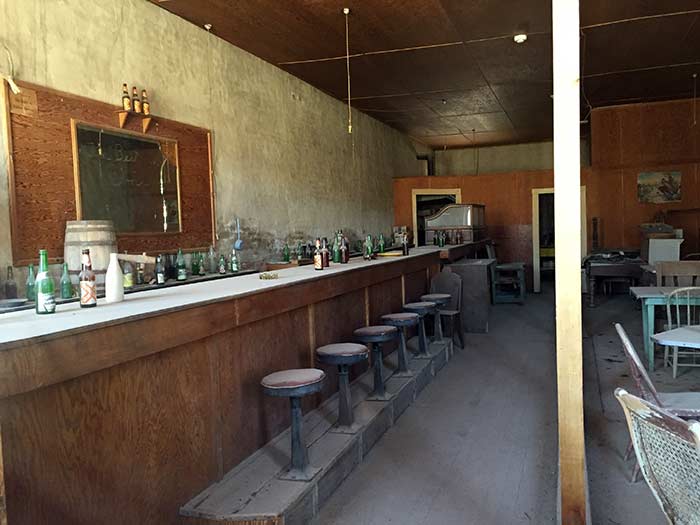
Bodie at its peak was home to many, many taverns. Today only one remains.

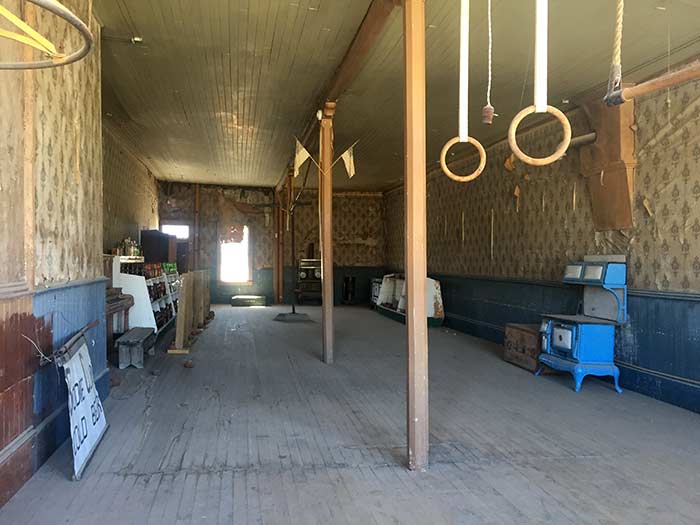
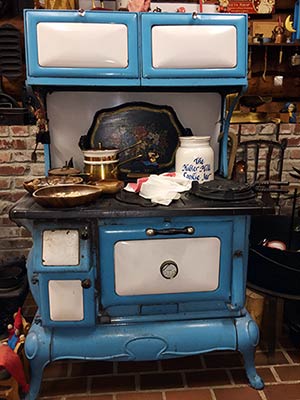
Next door to the sole remaining tavern is a gym. And you want to know something freaky? The cabin where Eve and I wrote More Than Two has that exact same model of hob.

Seriously. The exact same model. Check this out:

Freaky!

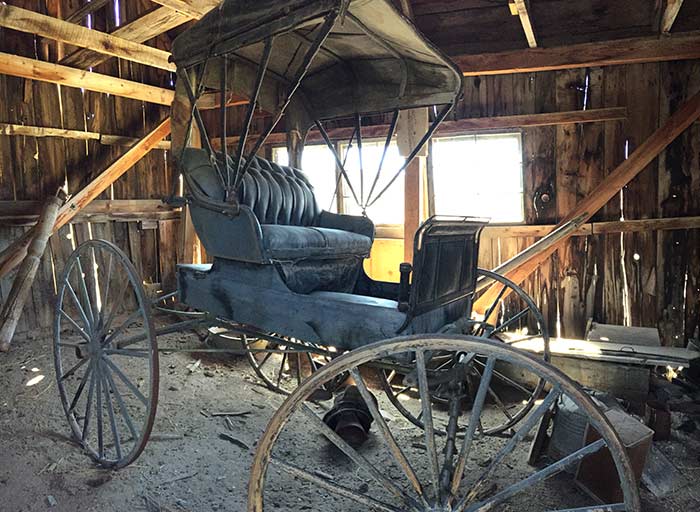
One of the guides explained that this was a “buggy,” as opposed to a “stagecoach.” There’s a big difference, apparently (and in fact the toll road into town had different tolls for buggies, wagons, coaches, and freight wagons).

We left Bodie as the sun grew low, and headed out to…well, that is a story for next time.

Two Chaosbunnies in the Desert: Bodie, part 2

Part 1 of this saga is here. Part 8 of this saga is here.
Part 2 of this saga is here. Part 9 of this saga is here.
Part 3 of this saga is here. Part 10 of this saga is here.
Part 4 of this saga is here. Part 11 of this saga is here.
Part 5 of this saga is here. Part 12 of this saga is here.
Part 6 of this saga is here. Part 13 of this saga is here.
Part 7 of this saga is here.

Bodie, California is a classic nineteenth-century California gold rush town. It’s high atop a mountain in the desert, and every part of the town exists for one purpose alone: to facilitate the extraction of gold from the surrounding hills.

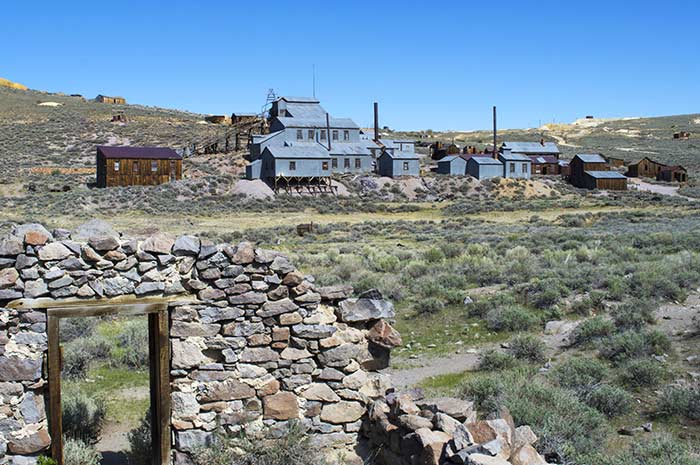
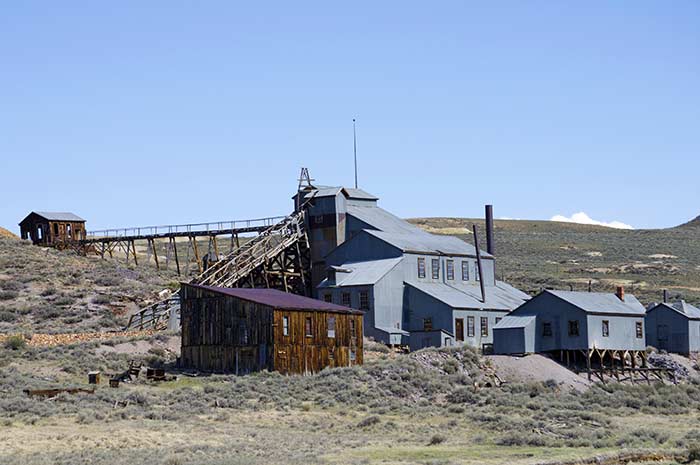
The whole of the town exists to support the stamping mill, the large gray building about which everything else revolves. On our second day there, Bunny and I toured the stamping mill. This can be done only as part of a twice-daily guided tour group. The stamping mill, you see, represents the absolute apex of Victorian-era technology, and Victorian-era technology was not exactly built on a foundation of safety first. Even when it hadn’t been abandoned for nigh on a century.

This is a view of the mill from what’s left of the bank, which was, not coincidentally located right across the street.

In principle, a stamping mill is relatively straightforward. Ore goes in the top. It’s crushed into a fine powder—”about as fine as flour,” the tour guide said—by large mechanical hammers. Then, and this is where the famed Victorian indifference to human life really shines, the powder is sifted across a pool of mercury. The mercury reacts with gold to form a mercury-gold amalgam, which becomes a semi-solid mass that workers roll up into a ball and stick in a safe (I swear I am not making this up).

The rock doesn’t stick to the mercury and is discarded. The ball of hideously toxic mercury-gold amalgam is then, get this, placed in a furnace, where the mercury is boiled off, leaving molten gold behind. The molted gold is poured into bars, assayed, and then shipped off down the mountain.

The whole fearsome, dangerous, mind-bogglingly toxic process begins with getting bits of gold ore into the top of the stamping mill, which is done via conveyor belts.

Rain or shine, summer or winter, the gold ore is hauled into the small brown wood building behind the mill, situated atop a hill because Bodie often saw 20 feet of snow in the winter and the mine operators were stubbornly unwilling to let a little thing like that stop the flow of money. The building in the foreground with the very narrow chimney is the furnace where the mercury was boiled off, and I can’t believe I’ve now typed that phrase twice.

The mercury. Was boiled off.

Jesus.

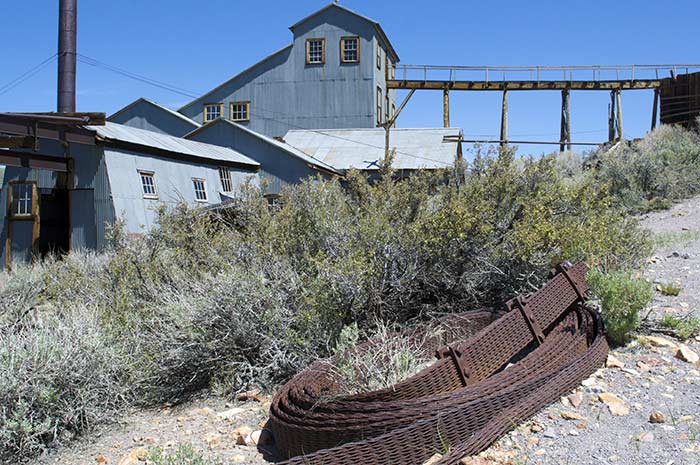
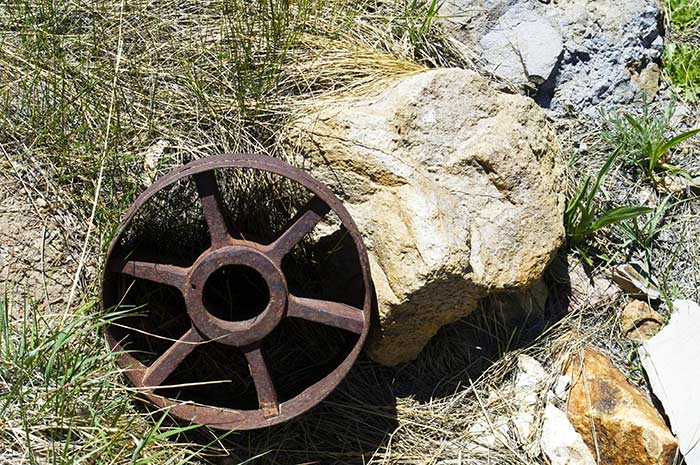
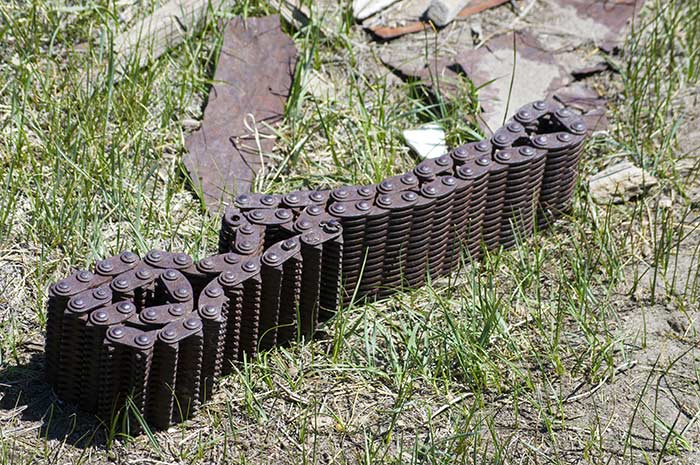
Bodie is about money. That’s it. From stem to stern, everything about the town was in service of making money. The Victorians, ever practical, used whatever new technologies would help with that endeavor, and cast off whatever bits of technology were no longer useful. Even now, the ground around the mill is littered with broken bits of machinery, like this cast-off drive belt made of woven iron.

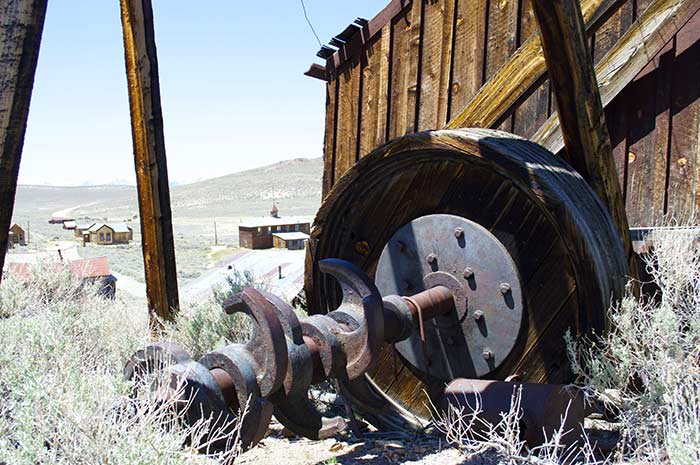
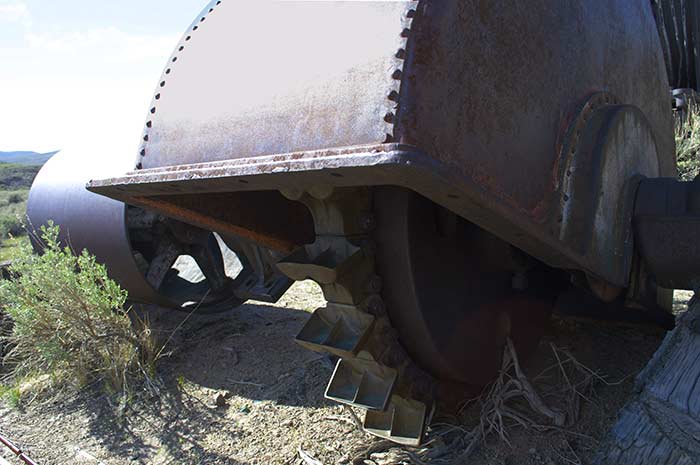
Or this enormous camshaft. His thing was mounted to an axle driven by an absolutely huge, room-sized steam engine or, later in Bodie’s history, an almost equally ginormous electric engine. The camshaft spun around and as it did, the cams lifted and then dropped hammers that crushed the rock. The hammers were more than a story long and weighed over a thousand pounds apiece. The din, according to the tour guide, could be heard halfway up the mountain. Workers wore cotton in their ears to keep from going deaf.

It didn’t work; deafness was a common problem among stamping mill operators. So were horrifying industrial accidents, mercury poisoning, and in at least one case, being sliced in half by a drive belt.

This being a Libertarian paradise, an injured, poisoned, or deafened worker was fired, given a couple of hours to pack, and kicked out of town.

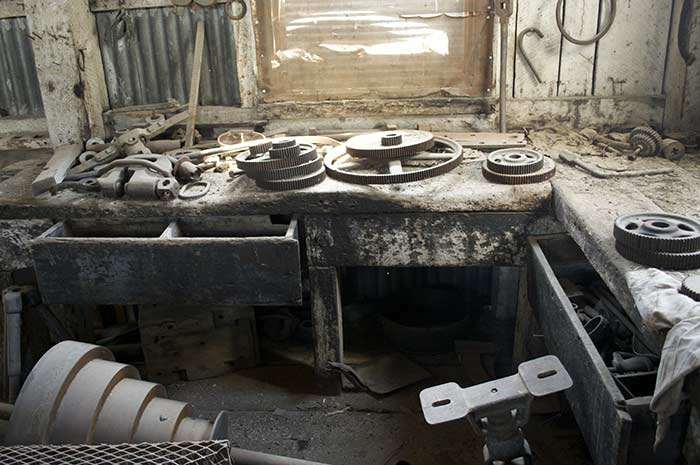
Our tour started with the machine room, which was, naturally, the second most important part of the stamping mill. The mill had a state-of-the-Victorian-art workshop, with lathes, presses, and other metalworking equipment able to repair or even fabricate almost any part the vast machine required.

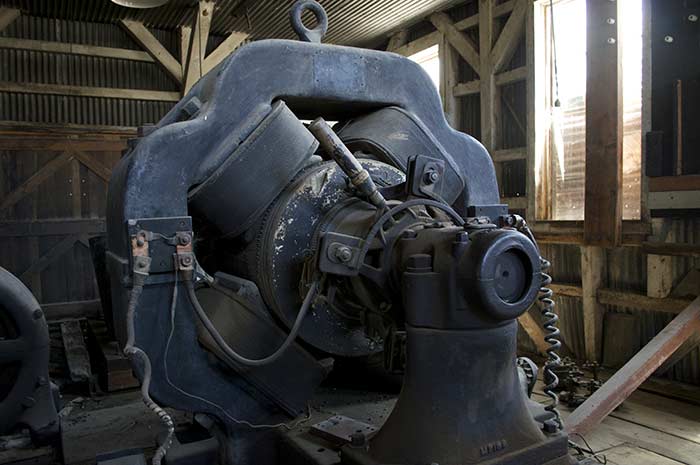
This is all that’s left of the huge electric motor that once ran the place. The Victorians were as pragmatic as they were reckless with the lives and safety of others. The mill had multiple stamps, each of which had multiple hammers. They reasoned that it was cheaper to build one enormous engine to power all that than to make numerous smaller engines to power each hammer individually. That presented a single point of failure, true, but as the saying goes, an airplane with three engines has three times as many engine problems as an airplane with only one.

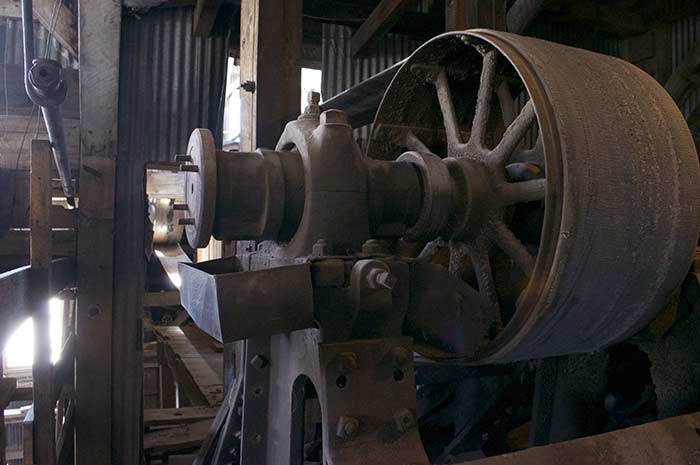
The engine turned this pulley, which fed power to the rest of the mill via the biggest belt you’ve ever seen. It was, according to our guide, this belt that once cut a luckless worker in half.

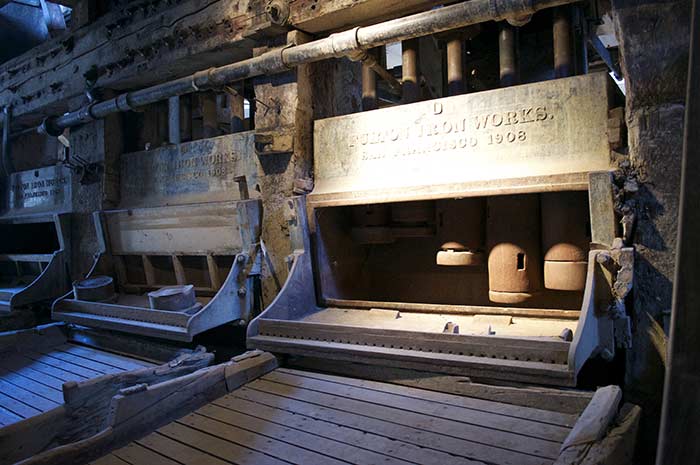
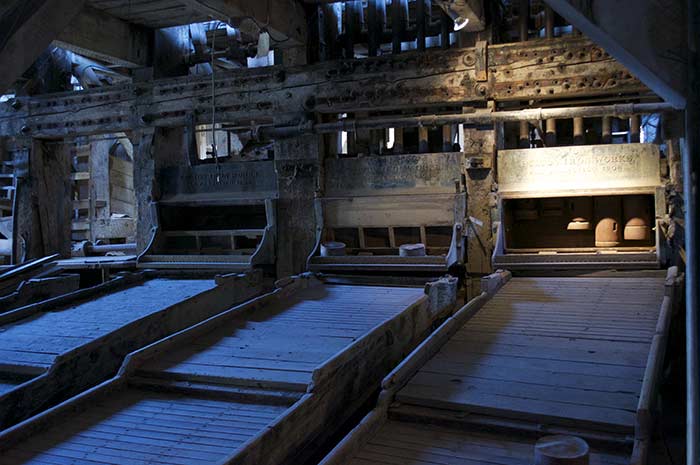
This is the business end, literally, of the stamping mill: the stamps themselves. Each hammer is a ten-foot-long iron rod with a hook on the top end and a several-hundred-pound iron weight at the bottom end. The camshaft spins, lifting and then dropping all the hammers, and crushing everything beneath them into very, very fine dust.

The dust then poured down the slide and onto the pools of mercury.

Across from the stamps is yet another workshop, this one equipped with large metal-turning lathes to manufacture oversized parts. I say that is if everything in this entire building wasn’t oversized. We make things smaller and smaller; the Victorians, on the other hand, were size queens. If a part didn’t weigh a ton and a half, it was firmly in the province of jewelers and watchmakers, not machinists. It’s a wonder they could make a pocket watch any smaller than a manhole cover.

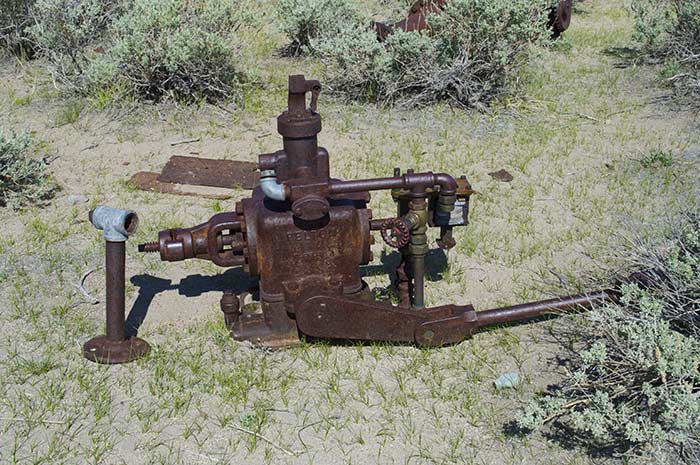
Once out of the mill, which even today probably violates a dozen EPA regulations on mercury exposure, we wandered around some more, looking at the old-school mining equipment scattered like weird metal vegetation.

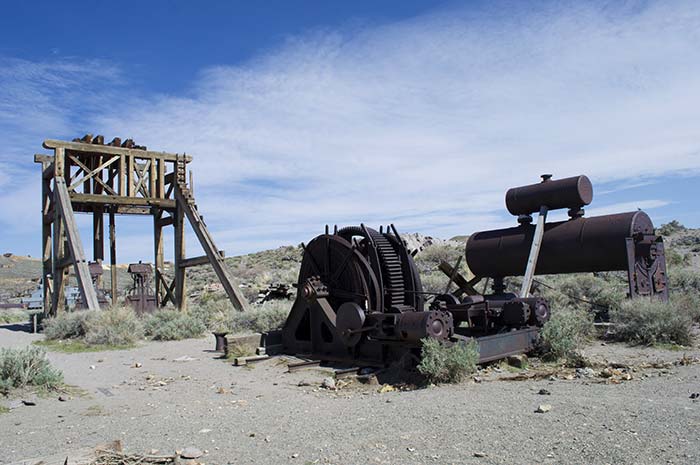
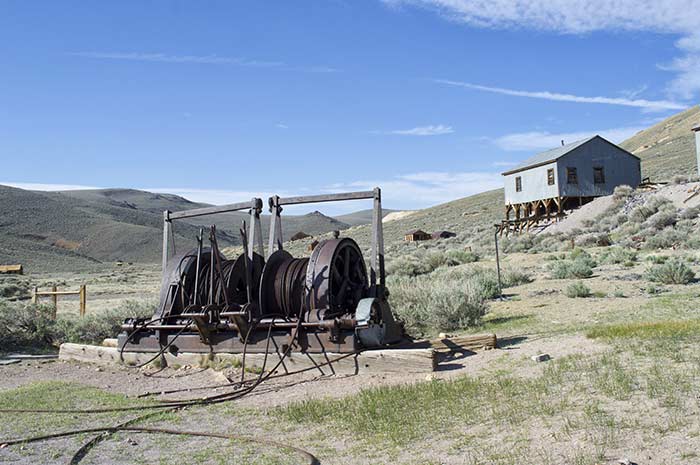
Like this steam-powered elevator that lowered miners into the deep shafts.

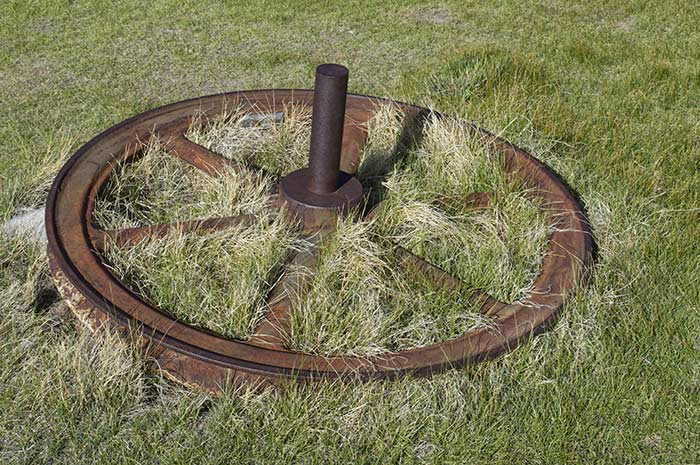
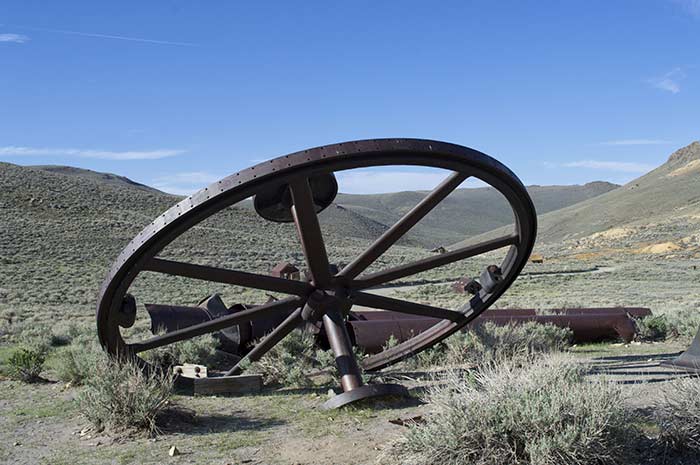
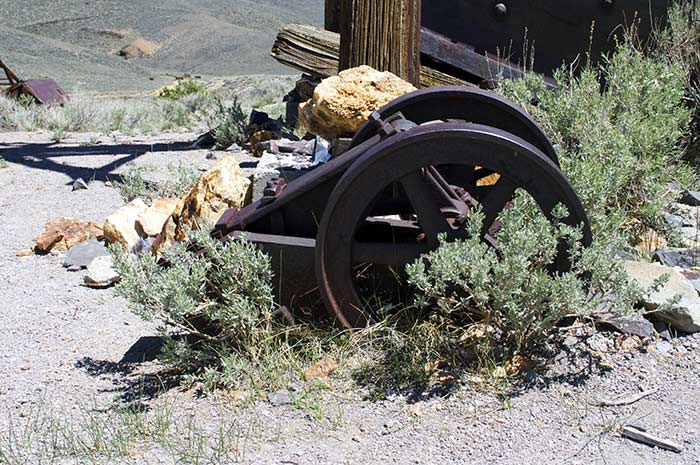
When I say the castoff bits of Victorian tech were everywhere, I mean everywhere. You can’t walk anywhere in Bodie without tripping over, stepping on, or stubbing your toe on it. The Victorians believed the only thing better than iron was more iron. Subtle they were not.

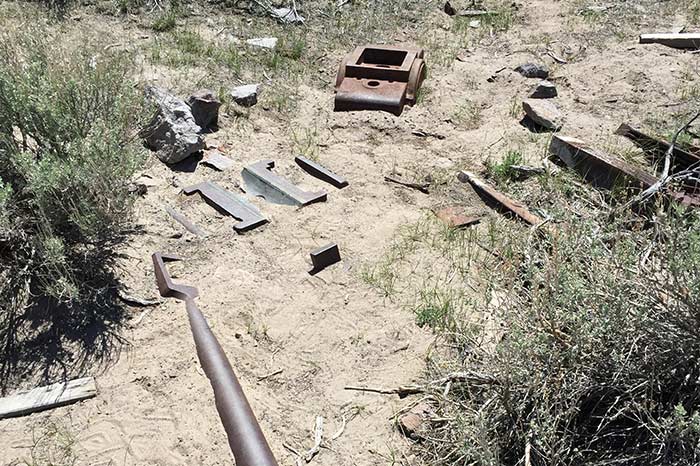
The rod in the foreground of that last photo is one of the tops of the giant hammers from the stamping mill. You can see the hook that engaged the cams in the camshaft that lifted and dropped them. If a particular hammer or stamp needed to be fixed, the worker would take a block of wood, reach in to where the camshaft ran through the top of the stamps, and jam the piece of wood in under the hook to hold that hammer up…because, naturally, they wouldn’t stop the mill just for a paltry thing like service.

Workers lost their fingers doing this. They were fired and given a couple hours to leave.

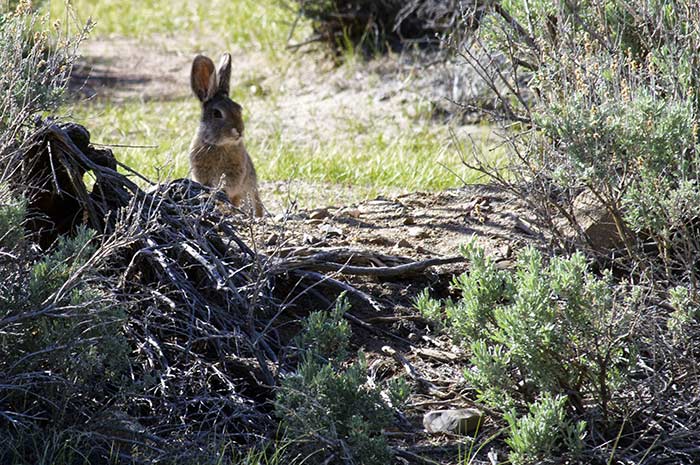
When we came back out, Bunny and I saw…a bunny. A real, honest-to-God Bodie bunny, right there watching us.

This was not the end of our adventures in Bodie, or in fact of our adventures period; I still haven’t got to the copulating dinosaurs yet. Stay tuned!

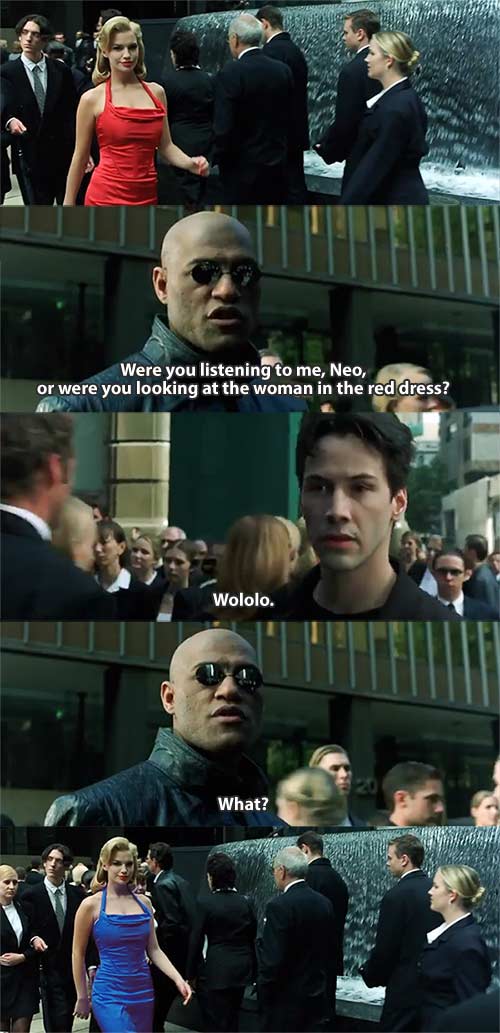
Kickin’ it Old-School: Wololo

I’ve rediscovered a love of the old real-time strategy game Age of Empires II, which might arguably be the apex of the Golden Age of RTS games.

Those of you who share my love will get this joke.

Two Chaosbunnies in the Desert: Bodie, Part 1

Part 1 of this saga is here. Part 7 of this saga is here.
Part 2 of this saga is here. Part 8 of this saga is here.
Part 3 of this saga is here. Part 9 of this saga is here.
Part 4 of this saga is here. Part 10 of this saga is here.
Part 5 of this saga is here. Part 11 of this saga is here.
Part 6 of this saga is here. Part 12 of this saga is here.

We are nearing the end of this tale, gentle readers, but what an end it is.

Bunny and I piled into the Adventure Van, headed to where we had heard of a large ghost town called Bodie, an 1800s gold-mining town in the rugged mountains of eastern California. Bodie was a–

“Hey, pull over!” Bunny said.

I pulled over near this apparently abandoned(?) building advertising bail bond services. Seemed legit.

We took some pictures, tromped about for a bit, then climbed into the Adventure Van once more, headed for Bodie. Bodie was a thriving gold mining town with more than ten thousand residents at its peak, located at more than eight thousand feet elevation in the Sierra Nevada mountains. It was a huge and fantastically profitable gold mining town, producing tens of millions of dollars (in 1850s dollars!) in gold. Miners were paid $4 a week for dangerous, heavy physical labor under grueling conditions; of that $4, $2.75 per week was deducted for room and board.

You get there by following a narrow dirt track up and up and up into the mountain. Bodie is well off the beaten path, in much the same way that a manned excursion to Mars is not a jaunt down to the local grocery store. Fortunately, it was not a terribly steep grade–stagecoaches loaded with gold had to be able to make the trip, after all–and the Adventure Van was up to the journey with a minimum of grumbling.

We drove for a couple of hours. “I hope this is worth it,” I said. Bunny said something noncommittal.

It was worth it.

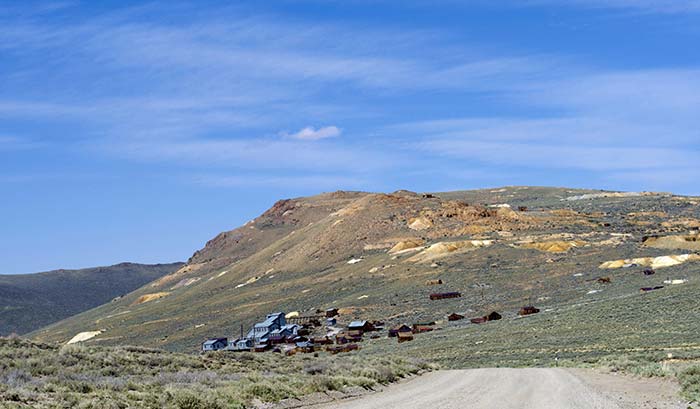
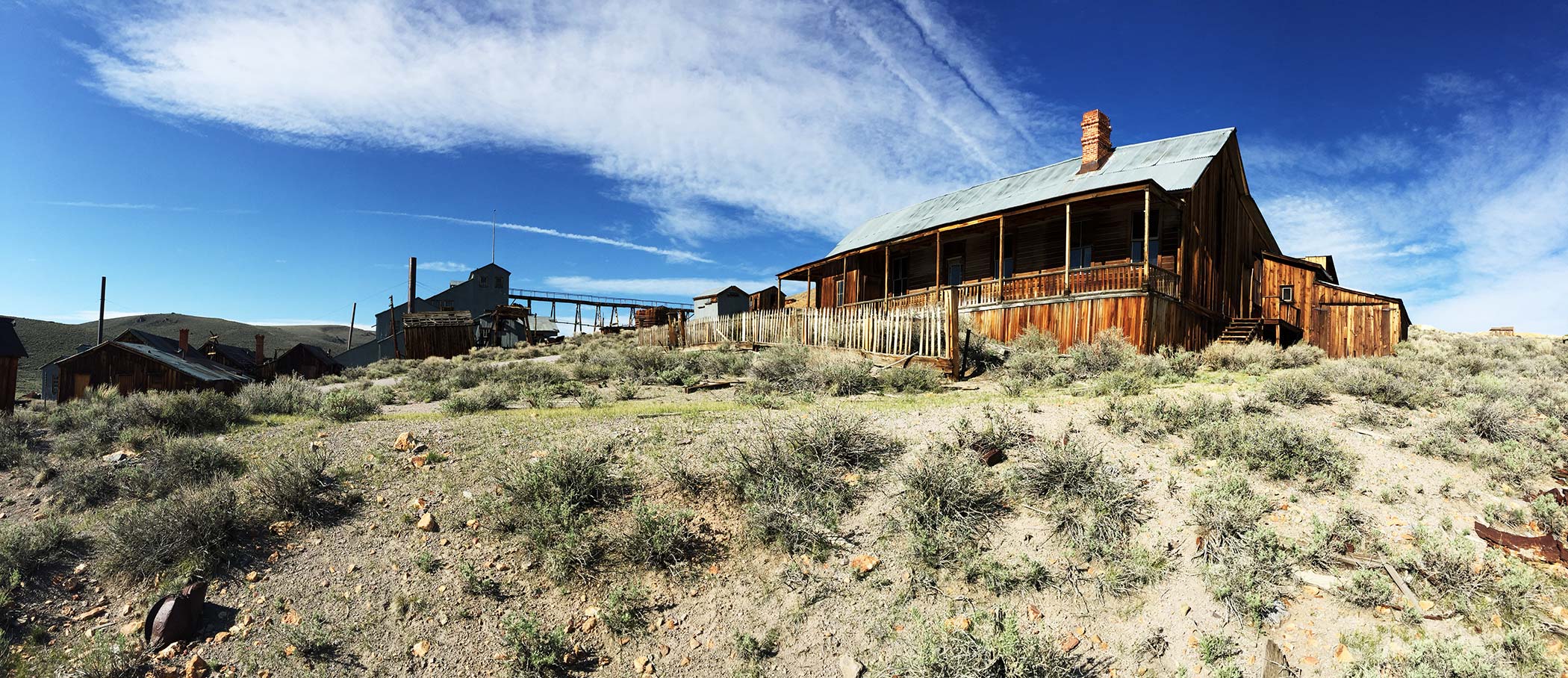
When at long last you’ve traveled up to the summit of the Bodie Hills, the first thing you see from the road, aside from a “State Park” sign, is this.

This was the jackpot, the mother lode, the Platonic ideal of a Western ghost town. This, gentle readers, truly was the bee’s knees.

We parked–with, I must confess, some excitement–and left the comforting shelter of the Adventure Van into the dry, dusty heat of Bodie, California.

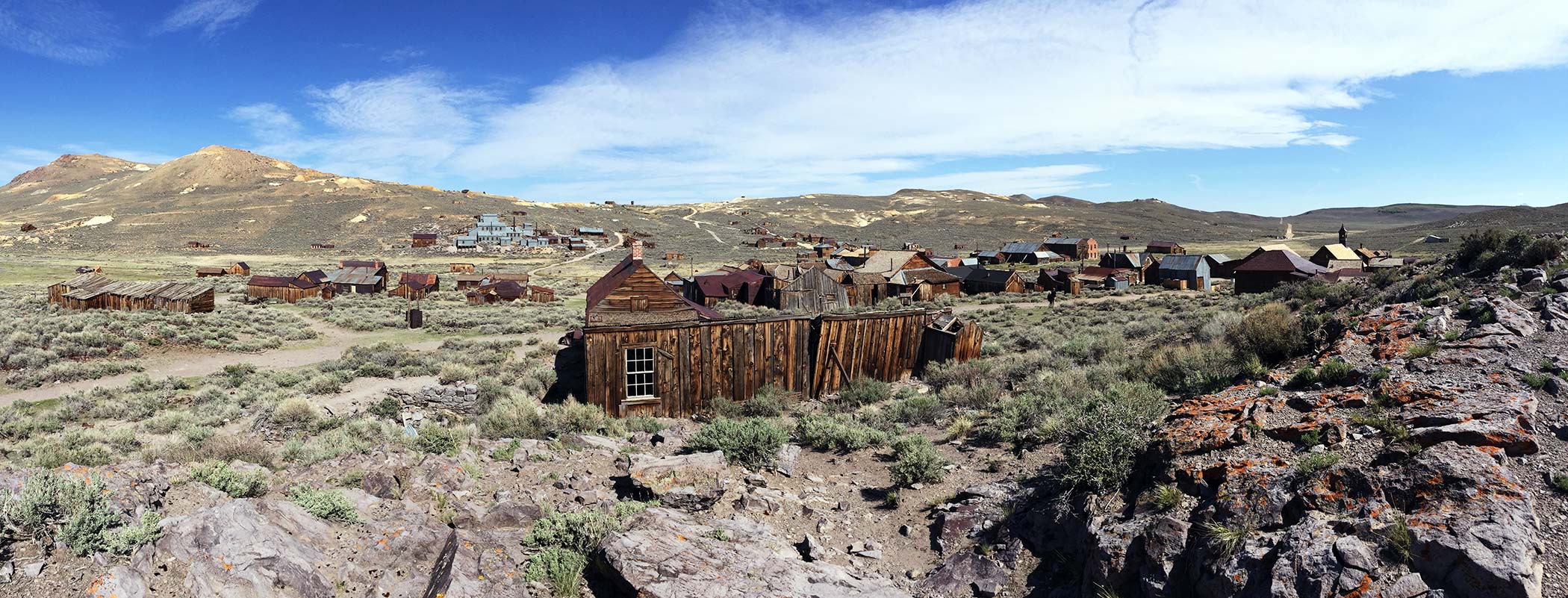
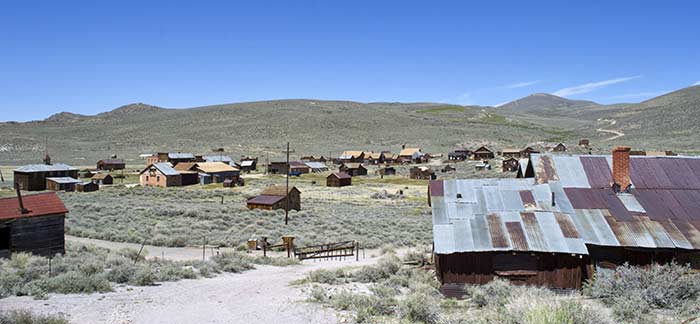
The moment you step out of the parking lot, thoughtfully provided for you by the California Department of Parks and Recreation, you walk up a slight rise and see…this.

This small picture can not do justice to how amazing this place is. Click on the picture to see a (much) bigger version.

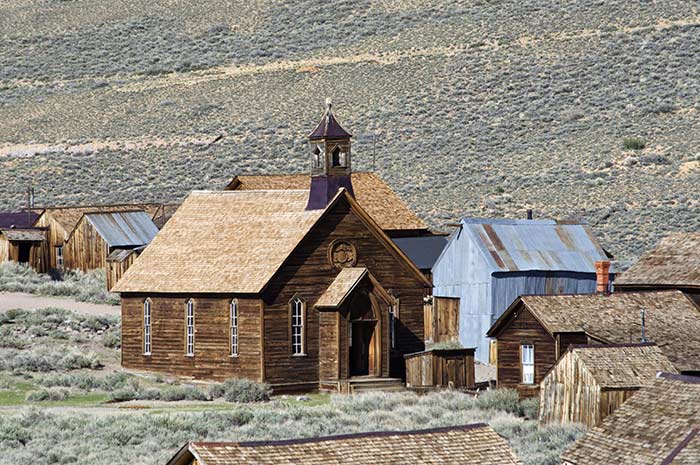
Less than a quarter of the town remains; the rest burned to the ground quite some years ago. At its peak, the town had sixty-five saloons, numerous brothels, and several churches that one could go to for absolution of one’s sins, which were numerous indeed. Bodie was by all accounts a very violent place; common hobbies included murder and various lesser crimes. According to one of the tour guides we spoke to, it’s not uncommon for people who do heavy labor at high altitudes without proper acclimatization to suffer psychotic breaks.

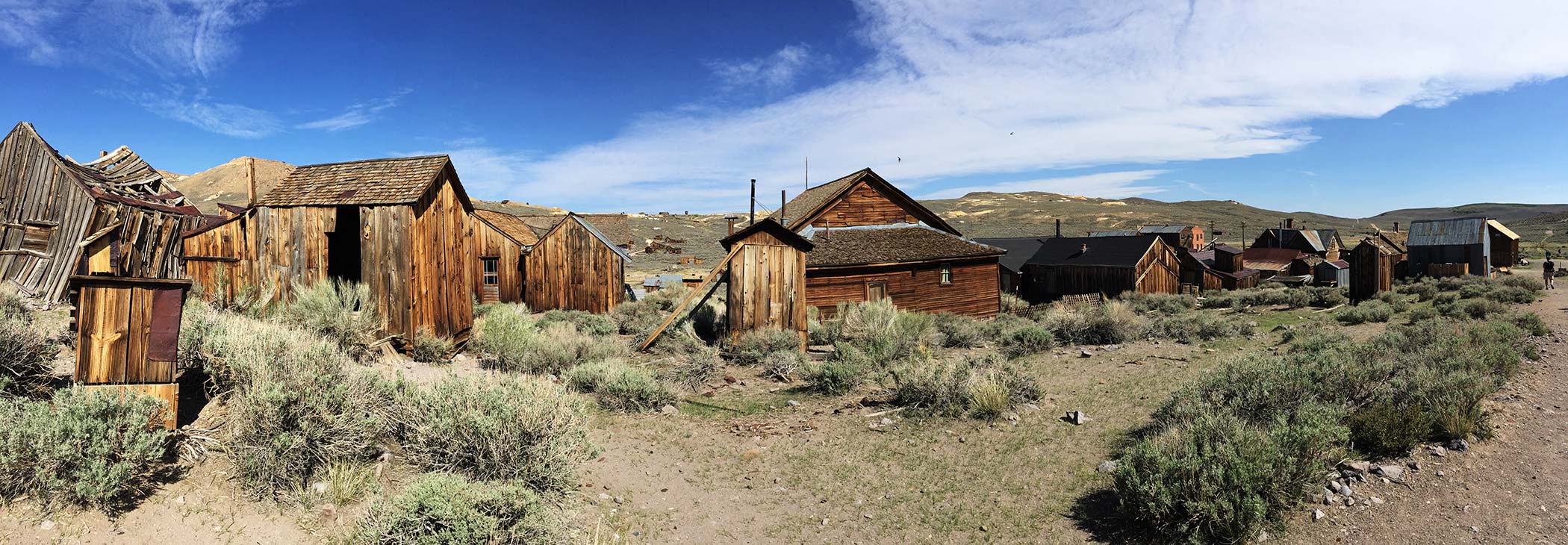
Bodie had an extensive network of roads, all unpaved. Again, click on the picture to embiggen.

The large gray building on the left-hand side of the first picture is the stamping mill, the entire reason for Bodie’s existence. I plan to write an entire post about that stamping mill. Raw gold ore was carried to the stamping mill, where the rock was crushed to a powder as fine as flour, and gold was extracted from it by a process that was absolutely and completely bonkers and showed a careless–indeed reckless–disregard for the life, health, and safety of the people who worked there. More on that later.

Bunny and I eventually spent two days in Bodie, wandering around taking pictures–many hundreds and hundreds of pictures. I’ve condensed the trove down to about eighty or so, which will likely take several posts to work through. Apologies in advance for what I’m about to do to your bandwidth, O readers.

Life in Bodie was not particularly pleasant. The air at eight thousand feet is thin. During the summer, the temperature routinely exceeds a hundred degrees Fahrenheit; during the winter, twenty feet of snow is not uncommon. Everything from building supplies to construction equipment had to be carried up the mountain. There was one road that climbed into Bodie from the west, ran straight through town, and exited to the east. Naturally, as it was the only way into or out of Bodie, it was a toll road (buggies 25 cents; carriages 75 cents; discounts for firewood and mining gear).

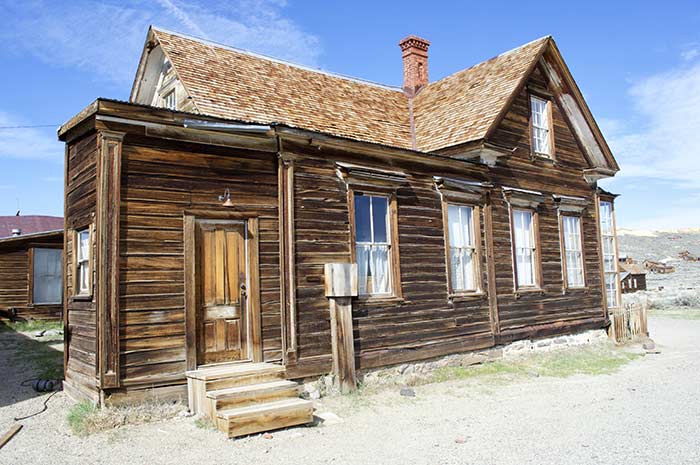
The houses we saw tended to be quite small and simple, save for this one, a veritable mansion belonging to the overseer of the stamping mill. You can click this picture to embiggen it, too.

The tour guide didn’t say, but I suspect the stamping mill overseer made rather more than $4 a week.

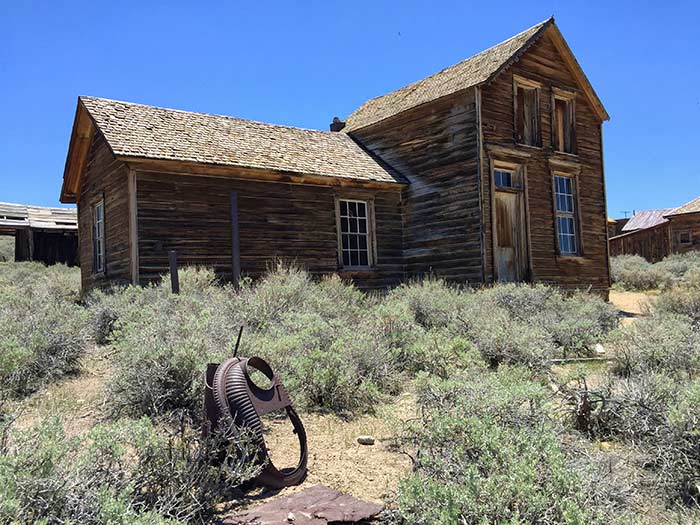
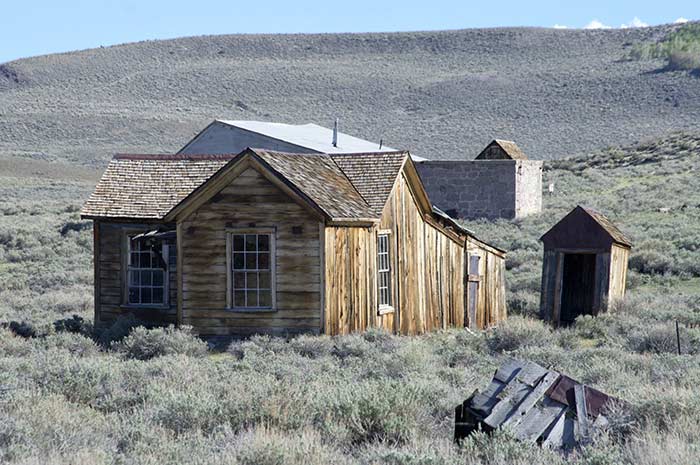
This place was more typical of the houses in Bodie.

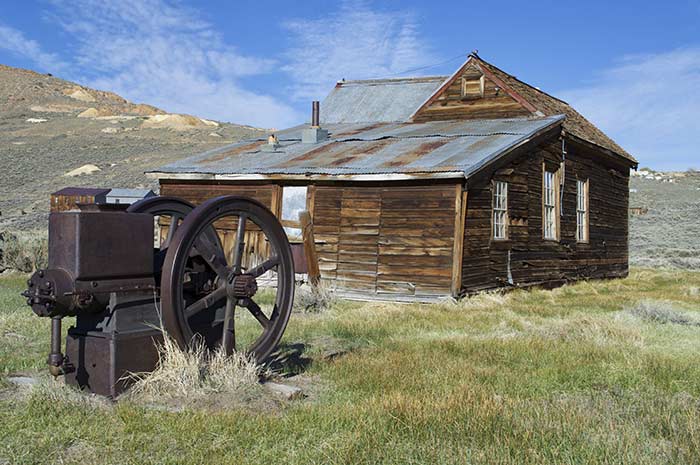
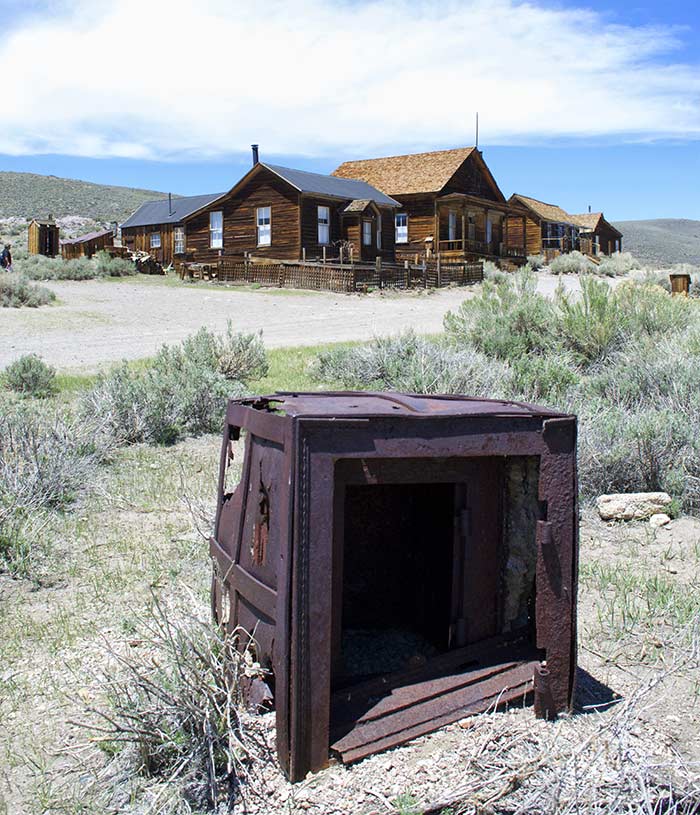
You’ll notice the remnants of derelict machinery in the foreground. Bodie is littered with abandoned equipment rusting quietly into the desert; it’s everywhere.

Even with all its violence and squalor, Bodie was the absolute pinnacle of Victorian technology. It was on the cutting edge of mining industry, and there was no new, experimental mining tech they would not use if it would increase the rate at which they could mine or process ore. The town of Bodie was a bit like the Silicon Valley of the 1800s–it was absolutely state of the art for new machinery and new techniques.

Bodie was abandoned rather abruptly when the mines stopped being profitable. All that tech was left where it was, because Bodie is so remote and inhospitable that it simply wasn’t worth carting it all back down the mountain again. So now it lies scattered everywhere, remnants of what was once innovative, up-to-the-minute industrial know-how.

In fact, I’ll probably dedicate an entire post just to various bits of cast-off technology we found littering the countryside.

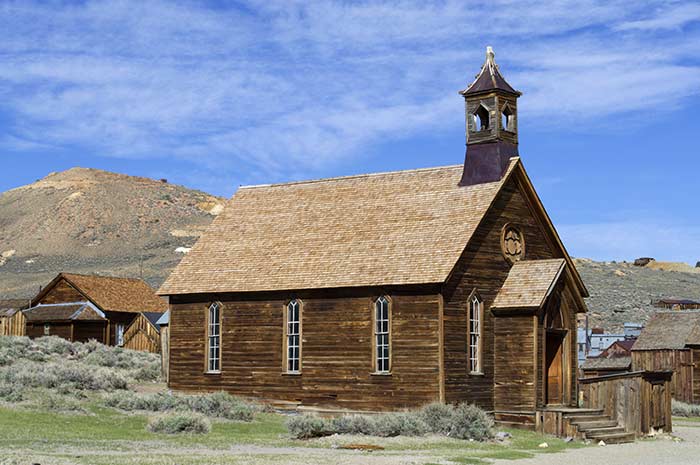
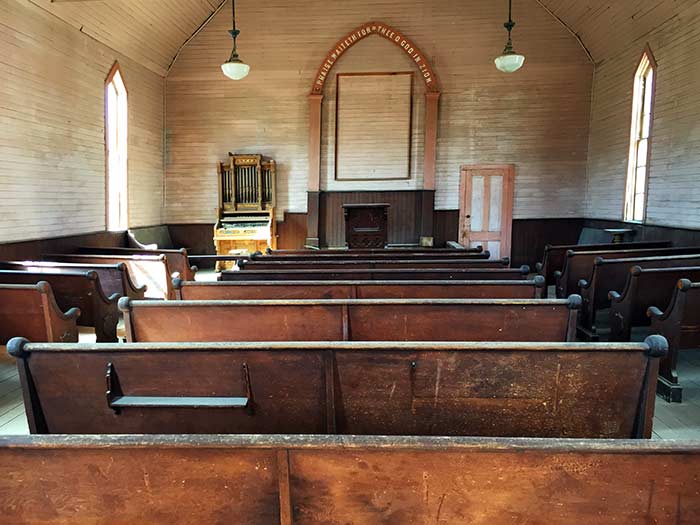
At one time, Bodie sported several churches. Today, only the Methodist church still stands.

The writing on the archway in the back reads “Praise waiteth for thee O God in Zion.”

The buildings are in remarkably good shape because of the foresight of one person, James S. Cain, who, as people left, offered to buy their houses or shops for a dollar. Since they were leaving anyway, and there was little of value remaining, almost everyone agreed. He continued to work the mine, making far less money than it had produced at its peak but still enough for him to turn a modest profit. Later, he hired guards to protect the deserted town from looters and vandals.

In the early 1960s, what was left of Bodie became a protected state park.

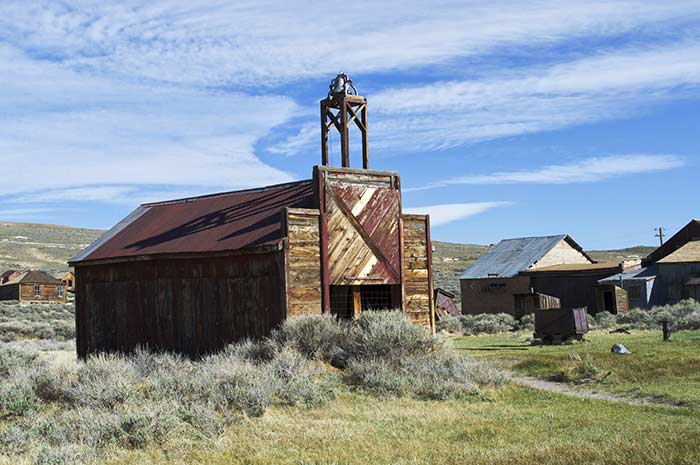
Being a closely-packed, densely-populated town made entirely of wood in deep desert, Bodie had several fire stations, only one of which remains.

In the 1930s, after the town was all but completely deserted, a fire swept through it, destroying a significant percentage of the remaining buildings, including all of the brothels (of which there were once many) and all of what had once been Chinatown.

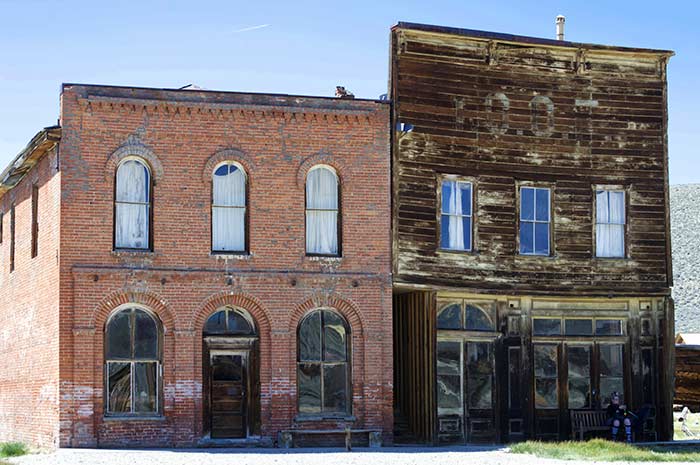
Only a few of the buildings along what used to be Main Street survive, including a tavern and a gym.

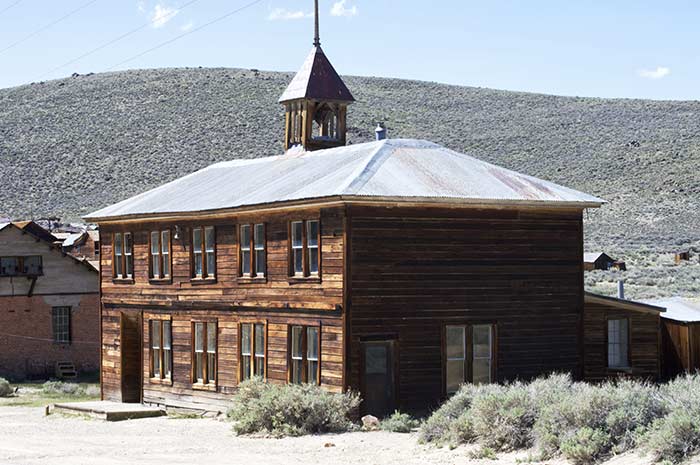
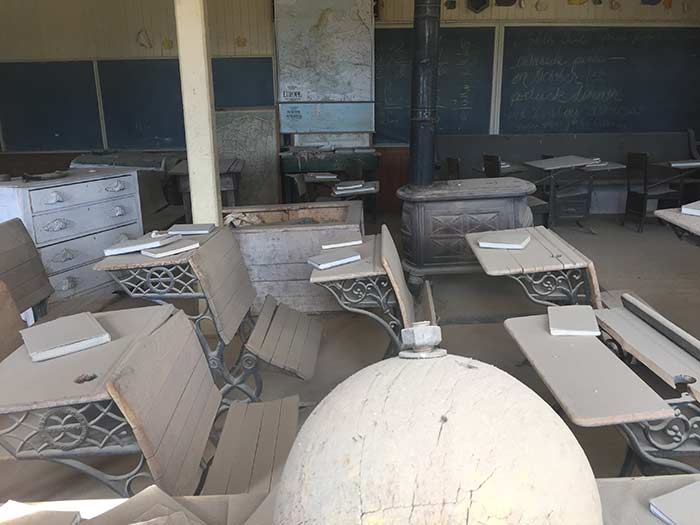
At its peak, Bodie had a significant enough population of children that it featured a large, two-story school. I’m not sure I would have tried to raise children here, but hey, that’s me.

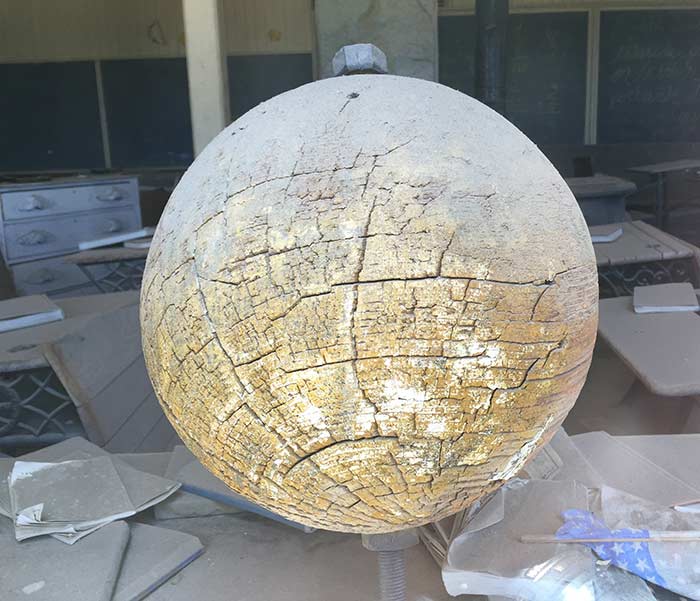
This is what happens if you leave an 1850s-era globe in a window exposed to harsh ultraviolet light for over a century. I think this is amazing.

The sun really is brutal at 8,000 feet. Bunny and I both got sunburned right through our clothes–something that, I gather, is quite common at that altitude. Wish I’d have known about it before we were there!

The mill overseer’s digs, as I mentioned before, were quite luxurious.

“Luxury” is not the first word that springs to mind to describe most of the other housing, but the accommodations weren’t really that bad, considering. That is, if you can get past the harsh environment with its blistering heat and brutal cold, the violence, the long hours of backbreaking labor without insurance or OSHA regulation, and the lack of medical care or sanitation.

It’s hard to imagine what this place must’ve been like when it was home to tens of thousands of people, when we see only the few remnants that are left.

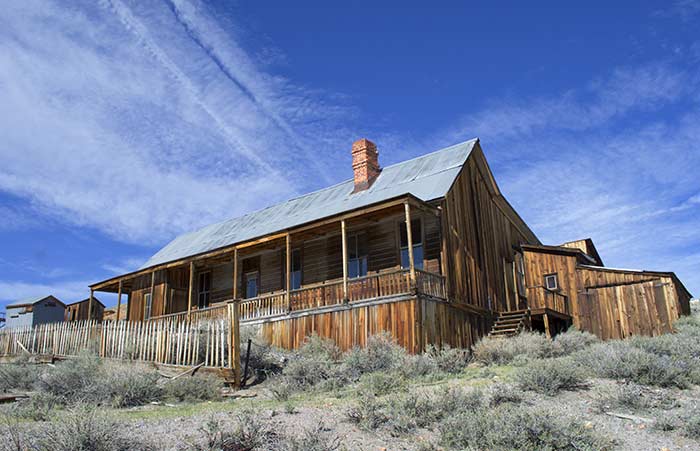
One of the nicest houses we found was located a good distance from the mill that was the hub of Bodie’s economic activity. It was huge, even larger than the mill overseer’s mansion, and crafted to a much higher standard. I’d love to know the story of whoever lived there.

Bodie had its own prison–necessary given the proximity to extremely valuable resources, the general criminal proclivities of many of its inhabitants, and the tendency of hard manual labor at high altitude to produce psychosis.

It also had a rather large cemetery, which included a special wing just for infants. Infant mortality in Bodie was frighteningly high, with cholera one of the leading causes of death.

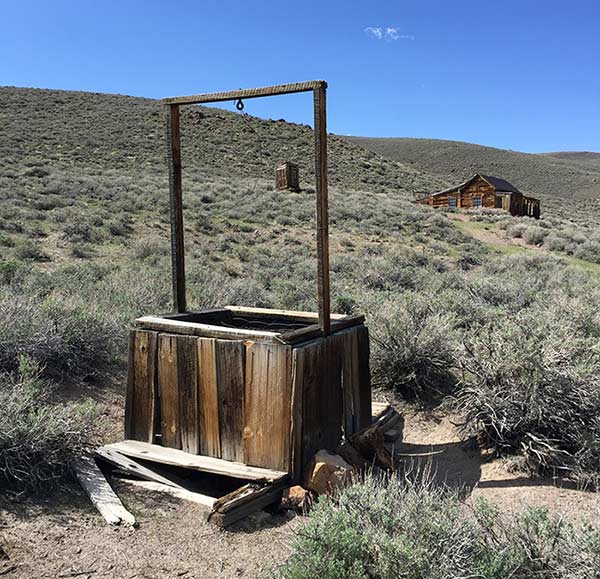
The Victorians knew rather a lot about steam technology but rather less about medicine. All the buildings had outhouses; there was no sewer system. Outhouses were built near houses, and higher areas were more desirable for houses. Water came from wells, which were easier to dig in low areas. So a common pattern you see over and over throughout Bodie is outhouses located just up the hill from a well.

We arrived in Bodie late in the afternoon and soon had to make our exit. I asked one of the park rangers where the closest town was. She said we could go back out the way we came, which would take us to a town about an hour away, or we could continue through the town and go down the other side of the mountain to get to Aurora.

We opted for the latter. It turns out that either I radically misheard her, or she was playing a trick on us. Aurora, you see, is a ghost town in Nevada, even more inhospitable and inaccessible than Bodie.

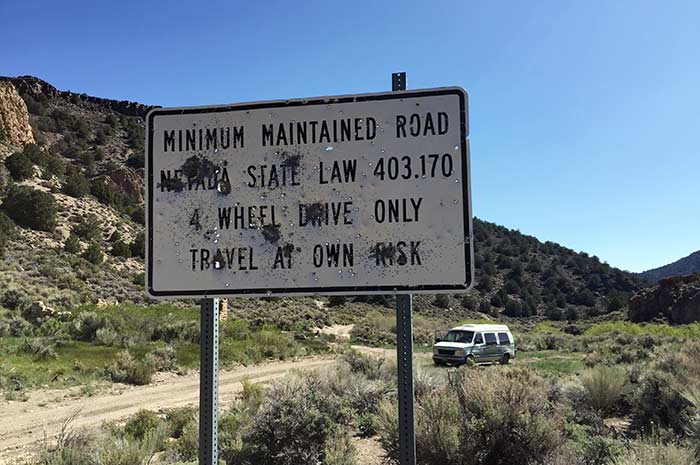
We got to the base of the mountain and discovered we could go no further. The Adventure Van simply wasn’t up to what passed for a road. So we camped for the night at the base of the hill, near a sign that warned us not to travel any farther.

The next day, we drove back up the mountain to Bodie, which will be the subject of the next chapter.
Some thoughts on being fifty

Three days ago, I celebrated my fiftieth birthday.

Well, perhaps “celebrated” is too strong a statement. I was in the middle of an allergy attack that made me miserable, so I spent it faffing about on the computer rather than engaging in the kind of orgiastic bacchanal that one might expect from an Internet sex gargoyle.

In any event, in between faffings on the Internet, I spent some time musing about what an absolutely bizarre trip it’s been, and some time cleaning in my writer’s loft. These two things are related, as it turns out, because in the process of cleaning I came upon some old photographs.

I started the journey through life in New Jersey. Before I was a year old, I realized that living in New Jersey was a bit rubbish, so I moved to Idaho, taking my entire family with me. My parents drove a Volkswagen Bug, something which apparently left quite an impression. What can I say? I was struck by the elegant simplicity and robustness of the design.

We stayed in Idaho long enough for me to pick up a sister, then bounced around the Great Midwest for a while, where I picked up the hobby of model rocketry. There is, it seems only one battered and scuffed Polaroid photo exists from this particular time in my life–peculiar, when one considers that model rocketry was pretty much the greatest thing in my life for quite a long time.

And yes, that’s a plastic model of a Romulan bird of prey from the original Star Trek on my desk. Don’t judge me.

I had a computer back then as well, a Radio Shack TRS-80 Model 1 that was a Christmas gift from my aunt in 1977. That thing might have saved my sanity. I didn’t have any friends while I was growing up in Venango, Nebraska, but who needs friends when you have a computer and a bunch of rockets?

Radio Shack published the complete schematic of the TRS-80. Seriously, you could walk into the store and buy not only the schematics but also books on how to modify it, and a complete, commented disassembly of the ROM chips–something that is beyond unthinkable today.

I modified the computer extensively, spray-painted it black, and overclocked it. Stock, it had a 1.77MHz Z80 8-bit processor, which I modified to work at 2.44 MHz (which caused some software to break) or at approximately 4 MHz (which caused it to malfunction frequently and required that I set it in a tray full of plastic bags of ice). The yellow LED you see in this photo would come on when I ran it at 2.44 MHz, the red LED would come on at 4 MHz. My parents were often horrified to see it spread out all across my bed, which was the only work space I had.

I kept it until I was almost 40, purely from nostalgia.

In my memoir The Game Changer, I talk about taking two dates to my high school senior prom. This wasn’t because I was suave with the ladies; it was because one person asked me to the prom, I said yes, another person also asked me, I said yes again, and it didn’t even occur to me that this might be a problem.

Fortunately, they were both totally cool about the whole thing. I took them both to dinner before the prom, which raised a few eyebrows.

Only two photos from that prom exist that I’m aware of, and I found both of them. Yes, I’ve always been a weird-looking motherfucker.

Until recently, I have not been much into partner dancing, though I do love to dance. My high school senior prom might’ve been the last time I partner danced until I was in my 40s.

I had a storied checkered educational career. I went to school at Lehigh University, where I discovered, and feel in love with, a Digital Equipment Corporation DECsystem-20 mainframe. Ours was a forbidden love. There were certain…allegations from the faculty of less-than-completely-aboveboard activities involving that mainframe. “Computer hacking,” they said. Also, “your scholarship is revoked.” And “don’t come back.”

I bounced around for a bit, worked fast food for a while, then ended up going to school in Florida again. Sadly, that part of my life is poorly documented–if any photos exist from that period, I don’t have them.

I did find this photo of me, taken in April of 1991, the last year I was in college.

My early childhood experience with my parents’ Volkswagen led to a long-term love for the cars, of which I’ve owned two. The first car I ever owned was a 1969 Bug; my third car was a 71 Bug, which, like my computer, I modified extensively.

There’s a passage in The Game Changer in which I talk about how absolutely clueless I was about sex and relationships, and how I could not recognize even the most obvious attempts at flirting:

Worse, I was in that awkward stage of male development where I was so desperate to try to figure out how to get girls to pay attention to me that I completely missed it when girls paid attention to me. Prior to that afternoon at Jake’s place, Caitlin and I had spent quite a lot of time together. We were great friends. But when I look back with wiser eyes, I can see she was trying in a thousand ways to tell me she was open to more.

One particular evening, I drove her home from work in my beat-up Volkswagen Bug. We sat in the car in front of her house talking for a while. She complained there was something on the seat digging into her butt. She dug around for a bit and came up with a small machine screw—a leftover, no doubt, from the work I’d just done replacing the back fenders with the half-sized fenders popular among people who liked to take Volkswagens through deep mud. “Hey!” she said brightly, holding it up. “Wanna screw?”

The whoosh of her flirt passing over my head might have sucked all the air out of the car had the windows not been open. It was years before I realized she’d been flirting with me all along.

This is the car in which that happened.

From about 1978 or so on, I had been involved heavily in the computer BBS scene. A BBS was the forerunner of modern Web forums–a computer running special software connected to a phone line, which you could dial into and leave messages on (text only, generally) at agonizingly slow speeds. Most BBS systems could only accommodate one user at a time, so if you called while someone else was logged on, you’d get a busy signal. Popular systems were constantly busy, so you’d set your computer up to keep redialing, over and over, until it got through, then alert you when it made a connection.

I was on systems with names like CBBS-Chicago, Pirate-80, and Magnetic Fantasies. When I started school in Sarasota, I ended up with a roommate who was, like me, an enthusiastic TRS-80 hacker and BBS fan. He ran a BBS called The Wyvern’s Den. I thought “hey, I can do that!” and started a BBS of my own, called a/L/T/E/R r/E/A/L/I/T/Y.

I ran A/R for about six or seven years, on a TRS-80 Model 4 that had been heavily modified. The IBM PS/2 computer had just come out, and the PS/2 systems used 3.5″ floppy drives that had a design defect: they were prone for going out of alignment. IBM would replace them under warranty and then, rather than taking the five minutes to fix the floppy drives, would just throw them out. I went Dumpster diving behind an IBM repair shop one evening, came out with a big pile of 3.5″ floppy drives, cleaned them up, aligned them, and connected them to the TRS-80 by way of a custom hardware interface I designed and built. These became the storage for the A/R message boards. You can see two of them, sitting bare without cases, to the right of the computer in this photo. There’s a third one sitting on the shelf just behind the center of the computer, and a fourth one under the 5.25″ floppy in the foreground on the right.

TRS-80 floppy drive controllers were only supposed to be able to access four floppy drives, but it turned out to be possible to instruct the floppy controller to access two drives at the same time, so with a bit of software trickery and a 4-line-to-16-line demultiplexer chip, you could actually get them to talk to up to 16 drives at once.

There’s a wooden box just barely visible in the right-hand side of the picture. It held a power supply that powered all the floppy drives. I used to warn guests to the apartment, “don’t touch that, you’ll get electrocuted.”

I was a late bloomer sexually, but made up for it through the rest of my life. In the late 90s, I developed a prototype of an Internet-controlled sex toy. It rose up out of a toy I’d developed in the mid-90s that was designed to be plugged into a telephone line and controlled by the tones from a Touch-Tone phone. My former business partner and I tried to bring it to market, with less than stellar success.

We designed a plastic cabinet for it, which we made with a vacuum-forming rig we built. We had a run of circuit boards made, and I would sit for hours at the kitchen table with a soldering iron in my hand putting components on them. The company we’d hired to fab the circuit boards made a mistake in the fabrication, so each board required reworking as well.

We called the device “Symphony.” This is the very first one we ever sold. It’s supposed to have the name “Symphony” screen printed on the front; somehow, this one ended up without the screen printing.

And now, decades later, Im still exploring the intersection of sex and technology.

From high tech to low tech: in the early 2000s, I was invited to speak at Florida Poly Retreat. One of the classes I taught was in how to build a trebuchet, a Medieval siege engine. During the course of that workshop, we designed and built a working model trebuchet.

The T-shirt I’m wearing in this photo reads “Catapultam habeo. Nisi pecuniam omnem dabis, ad caput tuum saxum immane.”

Even after my divorce from my ex-wife Celeste, which story forms the backbone of The Game Changer, I kept this habit of extensively hacking any computer I own. (That continues to this day; I’m typing this on a MacBook Pro that has had its DVD drive removed and replaced with a second hard drive, and the first hard drive has been replaced with an SSD.)

My partner Amber and I moved into an apartment together after the divorce. The living room looked like this.

I kept the TRS-80s and an Apple Lisa, even though they’d largely been retired by this point. The black thing stuck to the ceiling is an Apple //c monitor, spray-painted black. It had a green screen monochrome display that accepted a composite video signal, so it was easy to pipe just about any video into it. Most of the time, Amber and I had it showing Bladerunner on a loop. When I played World of Warcraft, though, I would pipe that to it instead.

Amber and I ended up rescuing two cats during the time we lived together. One, a rather handsome tabby, had climbed a tree to the third story of the apartment building next to ours, jumped from an overhanging branch onto the roof, and then realized he couldn’t get back down. He cried piteously for days. We threw food up to him until we could figure out a way to rescue him. We named him Snow Crash.

The other adopted Amber when we were out walking in a large park late one night. We heard a cat meowing from under some bushes. When we turned around, a cat came catapulting out straight for Amber and jumped up into her arms. She refused to let go, holding on to Amber until we walked all the way back to the car, then insisting on accompanying us home. We named her Molly, for the character Molly Millions in Neuromancer.

So here I am, fifty years old, and what a peculiar thing it is to be a human being. Life is amazing.

When I was a child living in Venango, the bus that took me to school would drive past a church with a sign out front that had pithy sayings on it intended to inspire us to live better lives. One day, that sign said “Your life either sheds light or casts a shadow.” I knew, at eleven years old, there was something wrong with that, but I didn’t have the words to describe what. Now, almost forty years layer, I understand: it’s bullshit. We are all, every one of us, made of light and shadow, good and evil.

I have screwed things up and hurt people. I have been hurt. I have gotten things wrong, made mistakes, been careless with the hearts of others.

I have also experienced the most amazing love. I have known and been loved by people who are so remarkable, I consider myself privileged merely to have known them. I have learned things and gotten some things right.

We are all made of light and shadow. It is on all of us to treat each other with care. We’re all confused. Being human is fundamentally weird and more than a little scary. We’re all making this up as we go along, even those of us–especially those of us–who try to pretend we Have It All Figured Out.

I’ve spent thirteen and a half billion years, give or take, not existing, and fifty years existing. That’s enough of a sample size to tell me that existing is better. It’s harder, sure. We have to do stuff. We have to make choices. You don’t have to make choices when you don’t exist. Making choices means sometimes we make wrong choices, and making wrong choices means sometimes we hurt people. Hurting people sucks.
I carry a lot of regrets with me. There are many things I have done that I wish with all my heart I could undo–times when I have not been as careful as I should be, perhaps too preoccupied with my own fears to be properly gentle with other people. It’s a consequence of being plonked into existence without a user’s manual.

We all get banged up a bit on the journey through life. But despite that, I would not trade a goddamn minute of it for anything. I am flawed and I make mistakes. All the people I know are flawed and make mistakes. And yet, this brief moment we share in the sun is a gift of inestimable value. I am grateful for every moment of it, and I hope to be here in existence for much, much more.

Two Chaosbunnies in the Desert: Disaster in Black Rock Desert and Reconnecting with my Roots

Part 1 of this saga is here. Part 7 of this saga is here.
Part 2 of this saga is here. Part 8 of this saga is here.
Part 3 of this saga is here. Part 9 of this saga is here.
Part 4 of this saga is here. Part 10 of this saga is here.
Part 5 of this saga is here. Part 11 of this saga is here.
Part 6 of this saga is here. Part 12 of this saga is here.

In ther North American continent is a state called Nevada. In that state is a desert. This desert has the rather ominous name of Black Rock Desert, and it’s noteworthy for two things: rich hippies who get together once a year to have sex, do drugs, and build implausible things; and for being one of the most inhospitable places North America has to offer. The latter fact may bear some relationship to the former, as it is, I gather, only sex and drugs that make the place bearable.
In the 1800s, people came to this place in search of riches. Most of them found only pain. Some of them found lead, and presumably also pain.

In my various attempts to research ghost towns online, I came across a reference to Leadville, an abandoned mining town high in the mountains in Black Rock Desert, not too far from Gerlach. Google Earth showed the place quite plainly, and it seemed interesting, so with considerable optimism we set off two chaosbunnies in a 1992 Ford van.

Black Rock Desert is, as it turns out, no place for two chaosbunnies in a 1992 Ford van.

I told Siri to navigate us to the ruins, having given up on Google Maps, which had plainly shown it knows fuckall about turn-of-the-century mining roads. We headed down a long, straight paved road into the desert, me driving, Bunny drinking tea.

“Turn here,” Siri said. There was a conspicuous lack of place to turn–nothing but straight road and fence. I turned around.

“Turn here,” Siri said. The road onto which we were supposed to turn continued in its stubborn failure to exist.

“Turn here,” Siri insisted.

“Maybe Siri doesn’t know where we are,” Bunny suggested.

I kept going. Eventually, after quite a lot of faffing, we discovered the road Siri expected us to turn on, about half a mile from where Siri thought it was.

I say “road.” Of course, I jest. The thing we ended up turning onto was less road than two narrow rutted tracks through desert wasteland. Still, we’d managed to take the Adventure Van into some unlikely places before, so off we went.

And went. And went. And went. The road trail rutted track was narrow enough and rough enough that we were forced to move at about five miles an hour or else risk breaking an axle, and the remains of Leadville was some considerable distance into high desert. We drive along for an hour or two, and started heading up, the road trail rutted track hugging the edge of a mountain that rose abruptly from the desert floor.
We didn’t realize we were playing a game with the desert–a game the desert was determined to win.
We continued climbing, up and up, until we just…didn’t any more.

The van didn’t break down, precisely. The engine kept revving, but the van simply stopped moving. The tires didn’t spin, the van just…stopped. Even in low gear, the engine turned but the wheels didn’t.

I shut off the engine to keep from burning up the transmission, which would have left us well and truly buggered. The road kept getting steeper ahead of us, leaving the inescapable conclusion that we were not going to be visiting Leadville.

We both got out, Bunny looking perhaps a bit more grumpy than I.

From our vantage point, we could see the “road” we’d driven in on. I say “road” in scare quotes because, while it was much more a road than the one leading to Susanville, it still wasn’t what any reasonable person would describe as a proper road at all, though there certainly was quite a lot of it.

That left us with the not inconsiderable task of getting back down. You know that scene near the beginning of the movie Serenity, where the spaceship Serentiy is making reentry and part of the heat shield falls off, and Mal says “just get us on the ground” and Wash responds with “That part’ll happen pretty definitely”? It was a bit like that. I knew we could get the van off the mountain; I just hoped we could do it without arriving in disassociated condition.

My first thought was to put the van in reverse and back down the mountain. I knew turning around was a non-starter, what with the narrowness of the road and the steep cliff on the side and all, but, thought I, that’s why they invented reverse, right?

The desert had other ideas.

The ground was soft and the incline was steep and we were carrying luggage on a rack sticking out the back of the van, and these things all conspired to cause the back of the van to dig into the ground as soon as I tried backing it up.

So with forward, backward, and turning around all off the table as options, that left little choice save “pray for a miracle,” “learn to fly,” “unload all of our gear from the van, take the luggage rack off the back, and try again,” and “wait out here to die.”

Bunny and I aren’t particularly inclined toward miracles, we’d opted to take the van and leave the X-wing fighter at home, and Bunny seemed to have very strong feelings about not dying out in the middle of the desert, so with some resignation and a bit of grumbling, we started unloading the van. Half an hour later, we’d offloaded hundreds of pounds of stuff and carried it down the mountain a bit to where the road, such as it was, widened enough to, with a bit of maneuvering. we thought er could turn the van around, provided we didn’t have a morbid fear of death.

That just left backing the van down the road without tipping off the side and arriving at ground level in disassociated condition. I will save you the descriptions of the white-knuckle bits of that endeavor, as there are plenty of white-knuckle bits still to come in future installments of this story, and instead just say that by dint of much agony and a few close brushes with an untimely demise, we were able to get the Adventure Van back down off the mountain, loaded up once more with gear, and pointed in more or less the right direction, whereupon we left the desert the same way we came in: slowly, and with great concern over the possibility of a broken axle.

Back on the road again, we beat a retreat from the desert. As we left the boundaries of Black Rock Desert, I squinted off into the distance. “Is that water?” I said. Bunny made a skeptical noise. I stopped the van and got out to look. It looked a bit like water, maybe, but it seemed…I don’t know, dryer somehow.

It was, as it turns out, salt, not water. There is collectively not enough water in this picture to drown a gnat.
Final score: Black Rock Desert 1, chaosbunnies in an ancient Ford van 0.

We set off down the road, wallowing in the misery of our defeat and drinking tea. As the sun set, we made camp on the side of the road, still wallowing in the misery of our defeat. Bunny made pasta to go with our wallowing, and we resolved to make it to Bodie, the next (and last) ghost town on our itinerary, the following day.

The following morning, we were up bright and early before noon, and headed off toward California. The day was clear, and the promise of success loomed in–

“Hey, what’s that?” I said.

“Looks like a billboard, maybe?” Bunny said.

“No, I don’t think so,” I said. “Is that–?”

I pulled over. It was.
For those of you born after the advent of the Internet and broadband, there was once a thing called a “drive in.” Imagine a movie theater–no, not like that, a theater with only one screen. Outside. With a big parking lot in front of it. You would drive your car there and sit in it while you watched the movie. A little speaker about the same size and quality of a fast-food drive-through speaker was mounted at each parking space, but we people didn’t care because you didn’t go to a drive-in to watch the movie, you went to a drive-in to make out and/or have sex in the back of the car while a movie played somewhere in your general vicinity.

Changing demographics have not been kind to the drive-in industry.

We got out and poked around a bit. When this drive-in was abandoned, it happened all at once, it seemed.

Drive-ins had a small shack where the projection equipment was housed, and where the employees made popcorn. Before the movie started out, people in silly hats would come to your car and ask if you wanted popcorn. Then they’d run to the projection shack, make your popcorn, take it out to you, and let you get on with having sex.

We picked our way across a a field littered with broken glass and bits of rebar and electrical cable to the projection shack, which was an absolute catastrophe.

In a previous life, I was once a movie theater projectionist (at a regular theater, not a drive-in). To be fair, the projection booth I worked in wasn’t really a whole lot more tidy or organized than this.

I felt weirdly nostalgic, picking through the rubble of the projection booth. There was a fine layer of dust over everything, so it didn’t look like anyone visited frequently. Not even the local greasers with their pompadours and their muscle cars seem like they can be arsed to come out here all that often.

The concession stand was separated from the projection booth by a wall that ran down the length of the projection shack, without a door through it; the projection booth had its own door, and you couldn’t go from the concession stand to the projection booth. This seems to be typical from what I remember of my movie theater days. The projectionist occupies the most lofty stratum of the theater employee hierarchy, and the booth is his castle; riffraff like ticket sellers and concession workers aren’t permitted in his domain.

There was one lonely piece of graffiti in the concession stand, scrawled without any genuine effort at artistic merit on what was left of the popcorn machine. Honestly, the neighborhood truants, delinquents, and hoodlums really seemed to be phoning it in.

We made our way back to the van and headed off toward Bodie, which would prove to be the shining jewel of the trip. I have much to say about Bodie, and many many pictures. Those will wait for the next installment.