
On the Nature of Things

“Never do your enemy a small hurt. Never let your enemy know he’s your enemy until it’s too late.”

A few weeks ago, I loaned my copy of Machiavelli’s The Prince to Shelly.

Her reaction? “I don’t see what the fuss is all about. I don’t understand why so many people find Machiavelli offensive. He’s just writing the truth. It seems pretty obvious to me.”

Which, of course, is precisely why people find him offensive. He writes, in plain and accessible language, without flinching, the truth about some part of what makes us what we are.

But I didn’t come here to talk about Machiavelli. I came here to talk about illusion.

We do not see the world as it is, we see the world as we are

Or perhaps, as we want it to be.

Machiavelli’s The Prince has been banned in a multitude of places. So have books like Lord of the Flies and Kafka’s The Trial. These books don’t impugn religion or offend sexual mores, yet people find them threatening nonetheless.

It’s all about the sex

There’s a conversation going on elsewhere on LiveJournal right now about the value of honesty–or more specifically, about the value of telling one’s lover if one cheats on that person.

Many people will weigh in in favor of deceit, of course. That’s not surprising; a self-serving rationalization to justify avoiding the consequences of one’s behavior is about as common as a snowflake in Maine.

What’s surprising, though, is the number of people who say that if a lover were to cheat on them, they would not want to know. Indeed, many people don’t even want to know something as basic as their lover’s past!

Take off your shoes, and we will keep you safe

When I flew to San Francisco for MacWorld last month, boarding was delayed because the airline security people asked the passengers to put their shoes on the X-ray conveyer belt.

People do not act in accordance with the truth; they act in accordance with what they believe to be true

All of these things–prefering a lover’s lie to the truth, putting your shoes on the conveyer belt, banning a book–are really the same. Ultimately, each of these things serves to protect an illusion.

As human beings, we continually re-invent the world around us. To some extent, this is necessary; our perception of the world is limited by our senses and by our past experience. Filtering is a necessary way to make sense of the world.

But the person who bans The Prince, the person who prefers a lover’s lie, and the person who puts his shoes on the converer belt are all engaged in something more. They are actively seeking to protect and preserve an illusion–a deliberately constructed, carefully maintained falsehood.

The Prince is threatening because it exposes an illuson about human nature. It shatters the fiction that people are basically good and just, that we are far too enlightened to be manipulated in these ways. Machiavelli rubs our noses in our own human weaknesses, in the fact that not only can we be manipulated and led, but that, ultimately, we like to be manipulated and led. It’s easier than doing the work ourselves.

People like to preserve illusions about their lovers, and about themselves–they like to fabricate a fantasy in which true love conquers all, their lovers are faithful and act with integrity, that their lover’s lives and their lover’s past did not exist before that wonderous day when they fell in love.

People don’t always seek romantic relationships because they want to know the truth about themselves and their partner, and want the intimacy that knowledge brings; often, they seek romantic relationships because they are trapped between fear of loneliness on one side and their own insecurities on the other. Such a relationship benefits from fiction; the fiction is easier than the truth, because the fiction protects insecurity and the truth does not.

And the shoes on the X-ray belt? They create the illusion of security, without actually creating real security. Real security is expensive. Real security is inconvenient.

A commercial passenger flight would be far safer if the baggage on the flight were matched to a passenger on that flight in every instance,a nd if the airlines took steps to make sure a person could not put a package onto an airplane without actually boarding that airplane himself.

But this checking (which is standard on some non-US airlines) creates logistical complication and expense; and at the end of the day, the airlines know that the risk of terrorist attack is incredibly slim anyway. It is not, in the final analysis, worth the effort and expense to create real security; the illusion of secuirty is good enough to keep people flying.

Reality is a scary place

In the real world, people are lazy and want to be led. In the real world, people can and do betray their vows, and sometimes, those actions have consequences. In the real world, people make mistakes, and those mistakes affect others. In the real world, the universe is not especially interested in coddling insecurities. And in the real world, dedicated people with patience and evil can and sometimes do find a way to knock an airplane out of the sky, and flying without risk has never been and will never be possible.

And in spite of all that, the real world is still a better place to live. When we rise above our illusions, we become more enlightened.
Things to Consider

The devil’s work has many tools, but a lie is the handle that fits them all.


The enemy of my enemy is my tactical consideration.


Live like you’re going to die tomorrow, love like you enjoy having your heart broken, dance like you don’t know you’re a klutz. (My archnemesis Eric)


Never trust a skinny cook or a poly person with a twin-sized bed.


Happy Happy Joy Joy

I got my needles today! Yay!

Last week, I ordered 125 sterile needles from a medical supply store, since Shelly and I want to try doing some needle play. They arrived today…yay us!

Which reminds me, in an indirect way…Shelly’s thinking she wants to head down to Fetish Factory some time soon to expand her wardrobe, and I figure as long as we’re driving all the way down to Ft. Lauderdale, we might as well stick around for one of their parties. Hey, gadget_girl, you listening? When’s the next party down there?

Some thoughts on happiness

Very few experiences in life are pure. Almost nothing is completely good or completely bad.

A person who sees the good in life and a person who sees the bad in life both see the truth of things. The reality they live in, however, is very different.

Happiness is a choice. There is plenty in the world to make create happiness, and there is plenty in the world to create unhappiness. The world you live in is your decision. The world itself cares little which reality you choose; it will provide whatever you need to be happy or unhappy. The world you live in is up to you.

Aaaargh!

I want to release the new version of the chat program I’m working on, but the Windows build isn’t working. I currently have three open bug reports on file against the Windows compiler…it’s all compiler bugstuff. Grr.

Things I Want

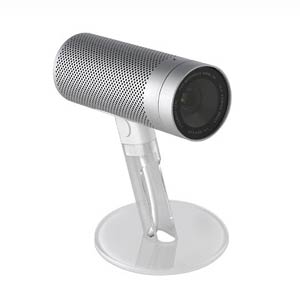
I really, really, really want an iSight camera for my computer.

No, not for any real, legitimate, pressing reason; I just want one. I’d probably only use it to make pr0n, which I would no doubt inflict on LiveJournal readers and on whatever poor sap was unwise enough to help me get one. And what’d be the point of that?

Some thoughts about language

These are some random musings that came out of a conversation with Shelly this morning, and out of a conversation on a mailing list I read.

Language is a tricky thing. We use language to express our concepts and worldview, both to ourselves and to each other, yet many people have a fuzzy grasp on language, and use language in ways that are not terribly effective. As a result, people may often fault language in situations where it’s the use of language, not the language itself, that’s the problem.

You’ll see this in the way people use language to describe themselves. Example: I’ve heard people say things like “I don’t call myself ‘bisexual,’ because people think that bisexuals will sleep with anyone, and I won’t sleep with anyone. So labels are wrong, and I don’t use labels to describe myself.”

Well, no, that idea puts the cart before the horse. The problem is not “labels are bad;” the problem is that people use labels in inaccurate ways. The term “bisexual” is neutral with respect to the number of sexual partners a person has, or how selective that person is about sexual partners. The term “bisexual” has a very specific meaning–a meaning which has nothing whatsoever to do with that person’s political identity, partnership strategies, or promiscuity.

People use the word “bisexual” in a fuzzy and distorted way; they say “bisexual” when they mean “promiscuous,” and this fuzziness distorts their perceptions of people who are, in fact, bisexual. But that doesn’t mean nobody should self-identify as “bisexual;” it simply means that people should learn to use language clearly and accurately.

Words have meanings. We express oursieves in language; fuzzy language leads to fuzzy expression.

Rather than say “I don’t use labels,” which is both silly and impossible–labels are nothing more than the language we use to describe ourselves, and without labels we can not describe ourselves–the better approach, I think, is to examine the labels, and see how well they work once the fuzziness is removed and they are applied with precision. A bisexual person is a person who is sexually attracted to or sexually involved with persons of both physical sexes. It does not mean “promiscuous,” but when you say “I don’t use the word “bisexual” because I’m not promiscuous, you have not only deprived yourself of a tool to describe yourself, you’ve accepted the fuzzy, distorted, and inaccurate language of others.

Labels, when properly applied, are descriptive, not conscripted; and they are precise, not fuzzy. A label describes who you are; it does not define who you are.

If a prson is attracted to members of both sexes, then it might be reasonable for that person to say “I am bisexual;” where it becomes unreasonable is when someone says “I am bisexual; bisexuals wear Birkenstocks and vote Deomcrat; therefore, I should wear Birkenstocks and vote Democrat.” Labels are descriptive language; descriptive language *describes.* You don’t change yourself to fit the label; you use labels that fit yourself.

The conscriptive use of language is often particularly evident in the poly community. Labels like “primary” and “secondary” are especially prone to this sort of abuse; people will say “I want a secondary relationship. Let’s see, a secondary relationship looks like this; therefore, I will seek to make my relationship look like this.” Just as there’s a vast chasm between saying “I am bisexual because I feel this” and “I feel this because that’s how bisexuals feel,” there’s a vast gulf between “My relationship is secondary because it looks like this,” and “my relationship looks like this because that’s how secondary relationships look.” There is nothing wrong with labels and there is nothing wrong with descriptive language, as long as the language fits the reality, rather than the reality fitting the language.

As an afterthought, from Shelly: Labels still have descriptive value even in those situations where people’s use of the labels is not 100% accurate. If you say “I don’t call myself ‘bisexual’ because peoplemight believe something that’s not true about me, like I’m promiscuous,” you neglect the fact that if you don’t call yourself ‘bisexual,’ people will definitely believe something that’s not true about you.

The state of the world and other stuff

It pays to advertise

There’s a billboard near my house advertising a local motel. For the past five years or so, every headline on that billboard has been something like “Sleep with me tonight, my wife won’t mind” or “Sleep with my hubby tonight–he’s had 23 since ’93 (awards, that is),” with a picture of the owners beneath the headline.

I always more or less assumed the owners were swingers. The new billboard that recently went up, however, is dominated by an enormous picture of a parrot–and the rest of the billboard, advertising a tie-in with a local attraction, has nothing to do with parrots at all.

Okay, so they’re poly. Cool.

Just me and a baseball bat, Lord, just me and a baseball bat

I have several clients who’re being slammed by the Novarg virus–not because they’re infected, but because their email servers are getting swamped by people who are infected.

It blows my mind that in this day and age people are still dumb enough to download file attachments they get in their email.

Just let me have half an hour alone with the virus writer, just me and him and my baseball bat, please, Lord…

A few whacks of that bat are reserved for Comcast and other broadband service providers who allow their networks to be flooded with the virus and don’t notify the owners of the infected computers, and who connect new customers to broadband without teaching them about firewalls and viruses and phishing scams and Nigerians. I really, really think broadband ISPs should be obligated to tell new customers about these kinds of dangers, and I really, really believe that ISPs who have reason to believe their customers’ machines are infected should disconnect those customers from the Internet until the problem is fixed.

And now for something completely different…

I’m working on a peer-to-peer chat program for Macs and PCs (and soon Linux), mainly because I want to teach myself about TCP/IP networking. I’m also adding encryption to the chat program, largely because i feel I don’t know enough about the nuts and bolts of how encryption works, and I feel I should learn.

It’s been stuck for a while, because I haven’t been able to get the encryption (an implementation of RC4) working properly. I finally had a flash of insight last weekend while I was in Miami for Graphics of the Americas, and two nights ago, I got it to work. Yay me!

Of course, Shelly asked me who needs secure, end-to-end encrypted, point-to-point chat besides kiddie porn dealers, which is an interesting question.

Yes, I know she said it largely in jest, but it deserves a serious answer, because plenty of people feel that encryption in the hands of private citizens benefits only criminals.

I’m not one of those people. i believe that people have certain basic rights to privacy, and that a country which encourages and values free expression must make it safe to express ideas and opinions that are unpopular.

Popular speech doesn’t need protection. Unpopular speech, on the other hand, is a very different matter. i happen to hold unpopular social, religious, and political ideas myself, and I am well aware that there are people in this world who hate me for it and who would, if they had the chance, use those unpopular ideas against me in any way they could. I do not trust those people not to read my mail, listen in on my telephone conversations, and even eavesdrop on my Internet connections if they can, even though all these things are illegal. Those who oppose unpopular speech can’t always be bothered with trivialities like ethics or the law.

I know there are other secure chat applications out there; my own program is mostly an exercise in learning networking and secure encryption. But I do plan to make the newest build available on my Web site when it’s working properly, and if someone can use it to exchange ideas privately, all the better.